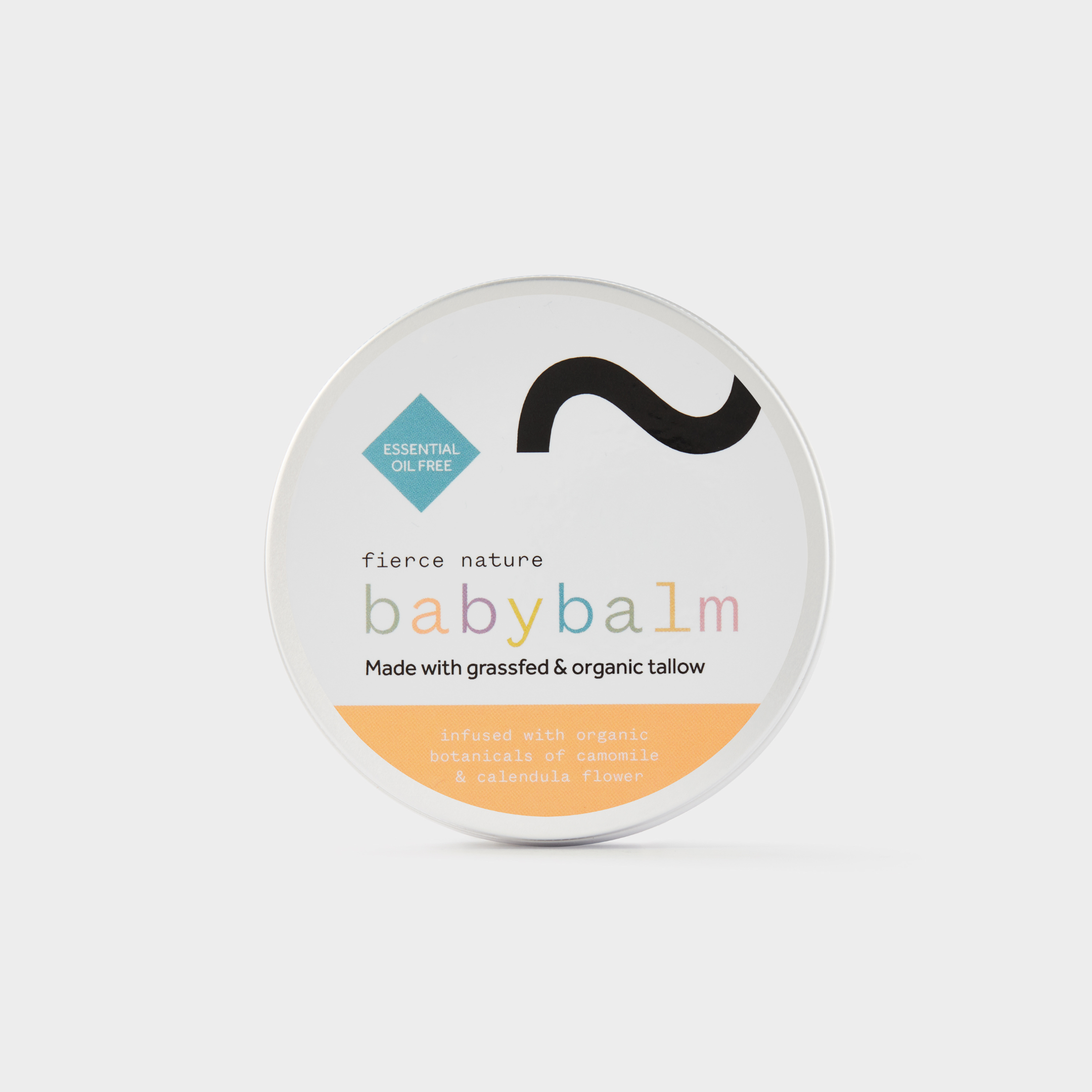
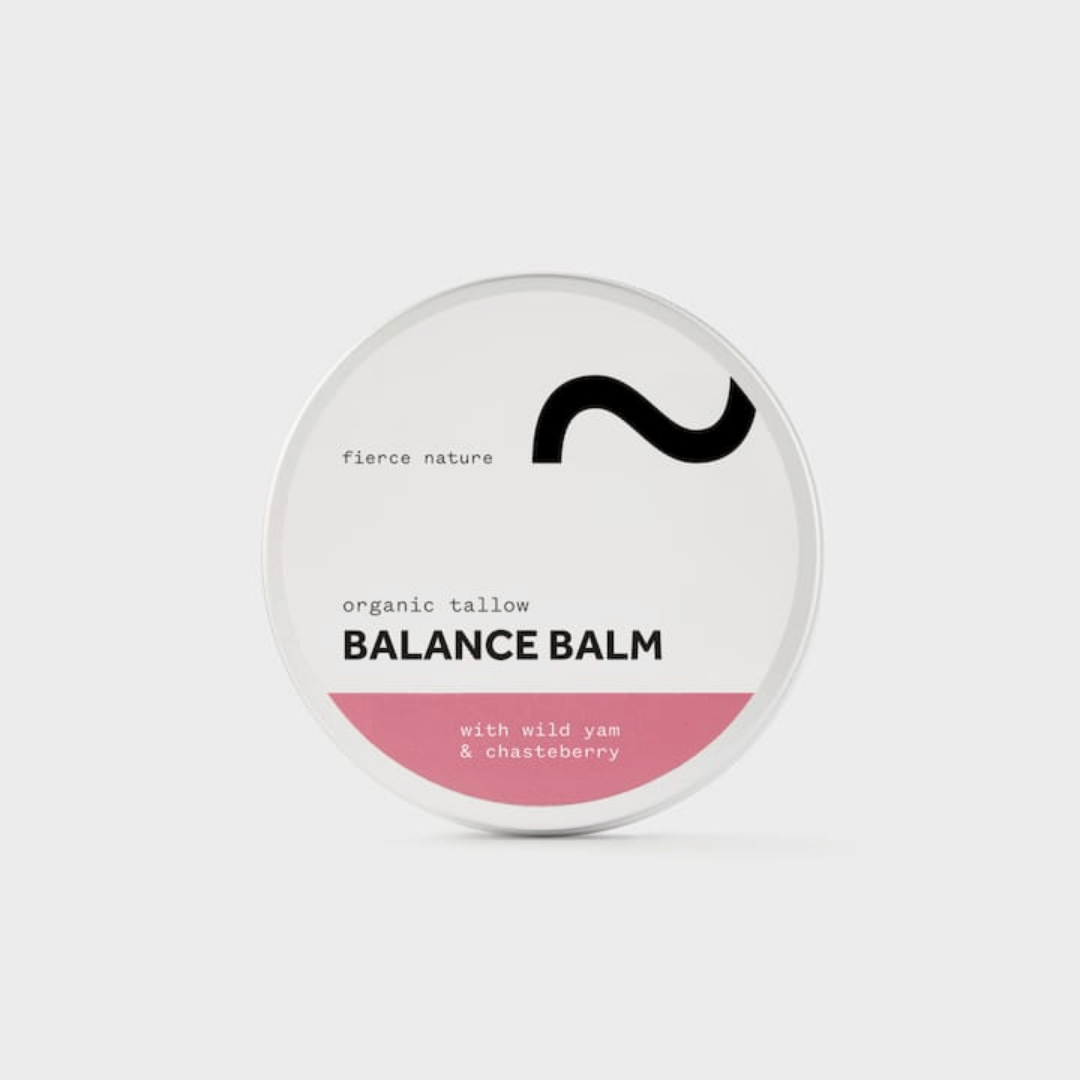
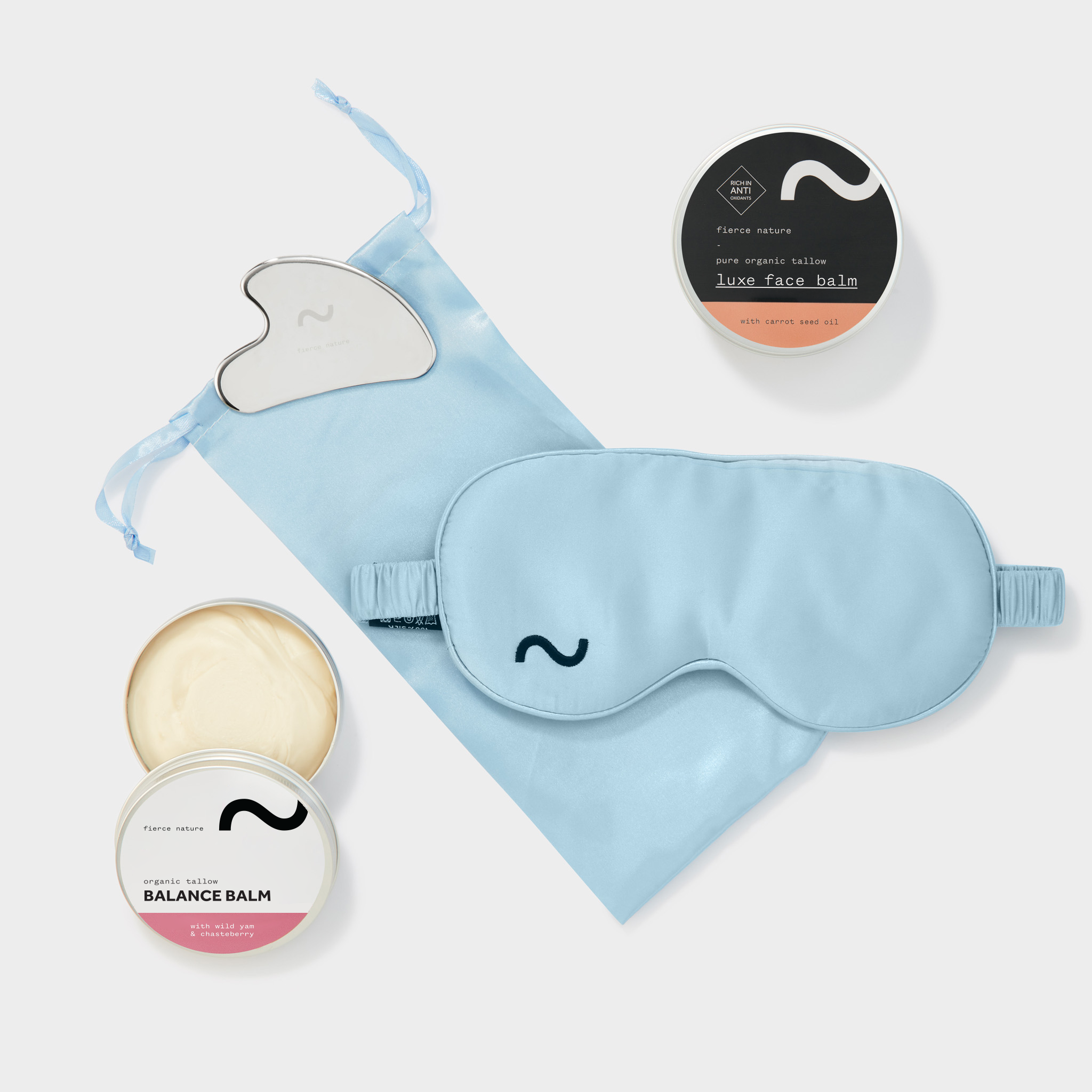
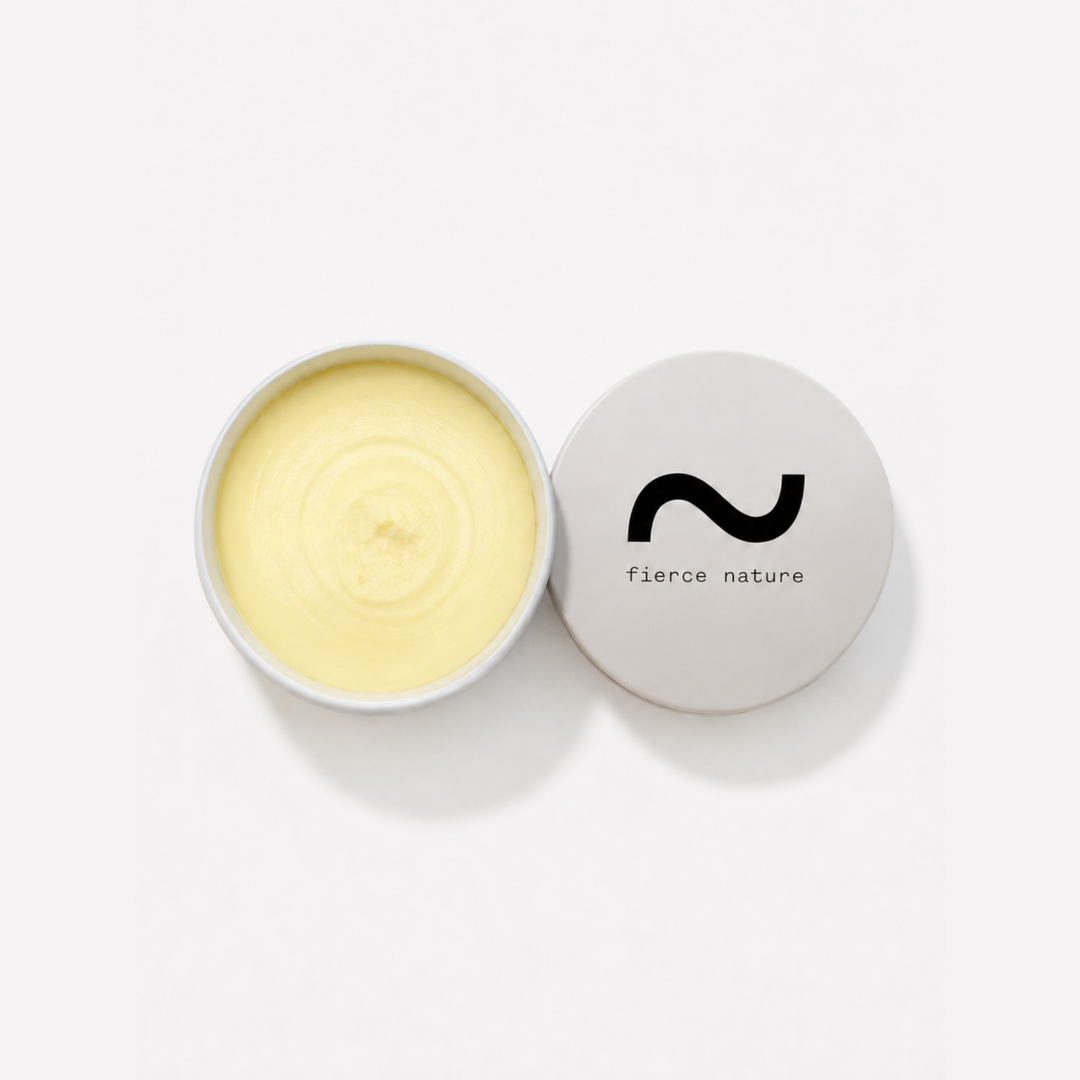
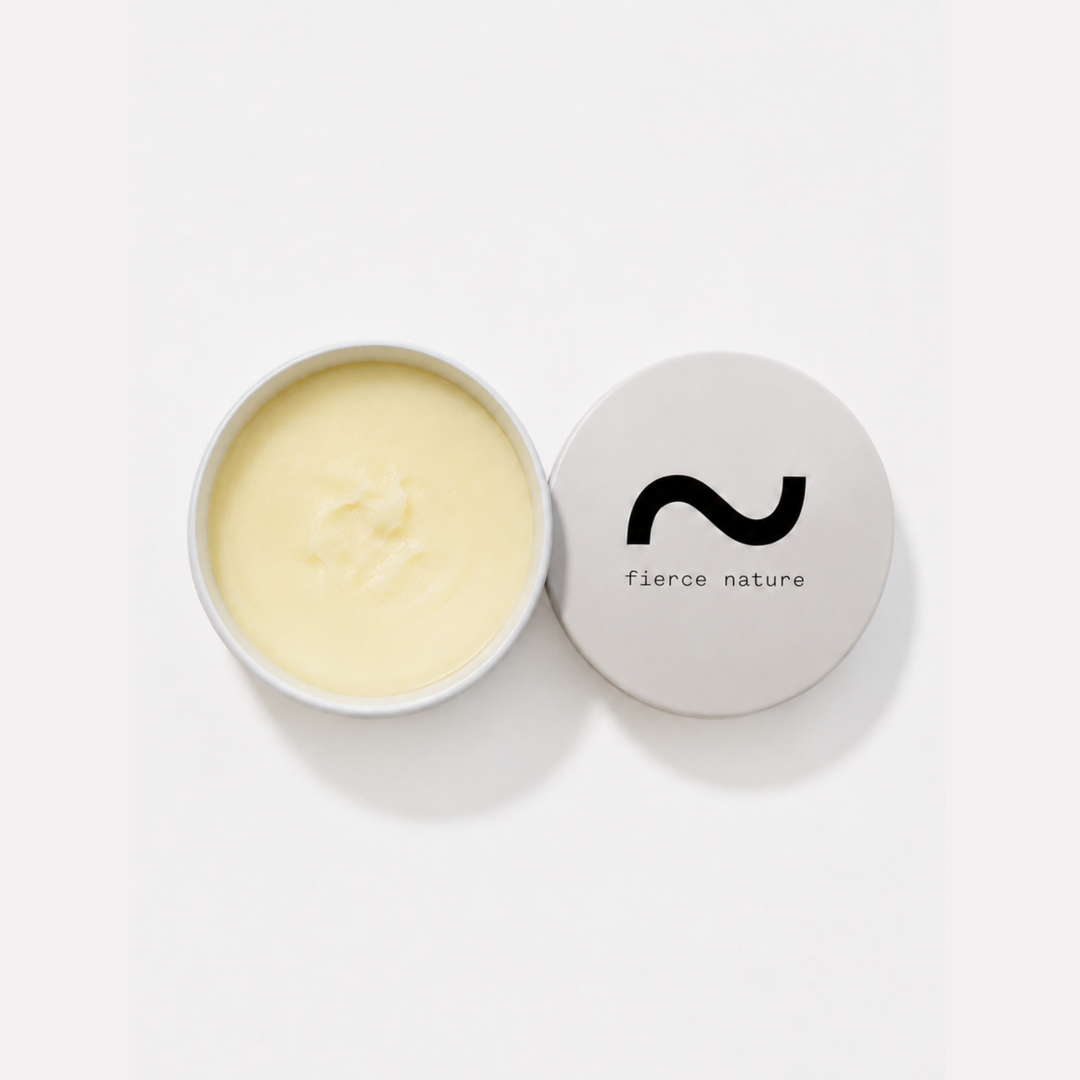
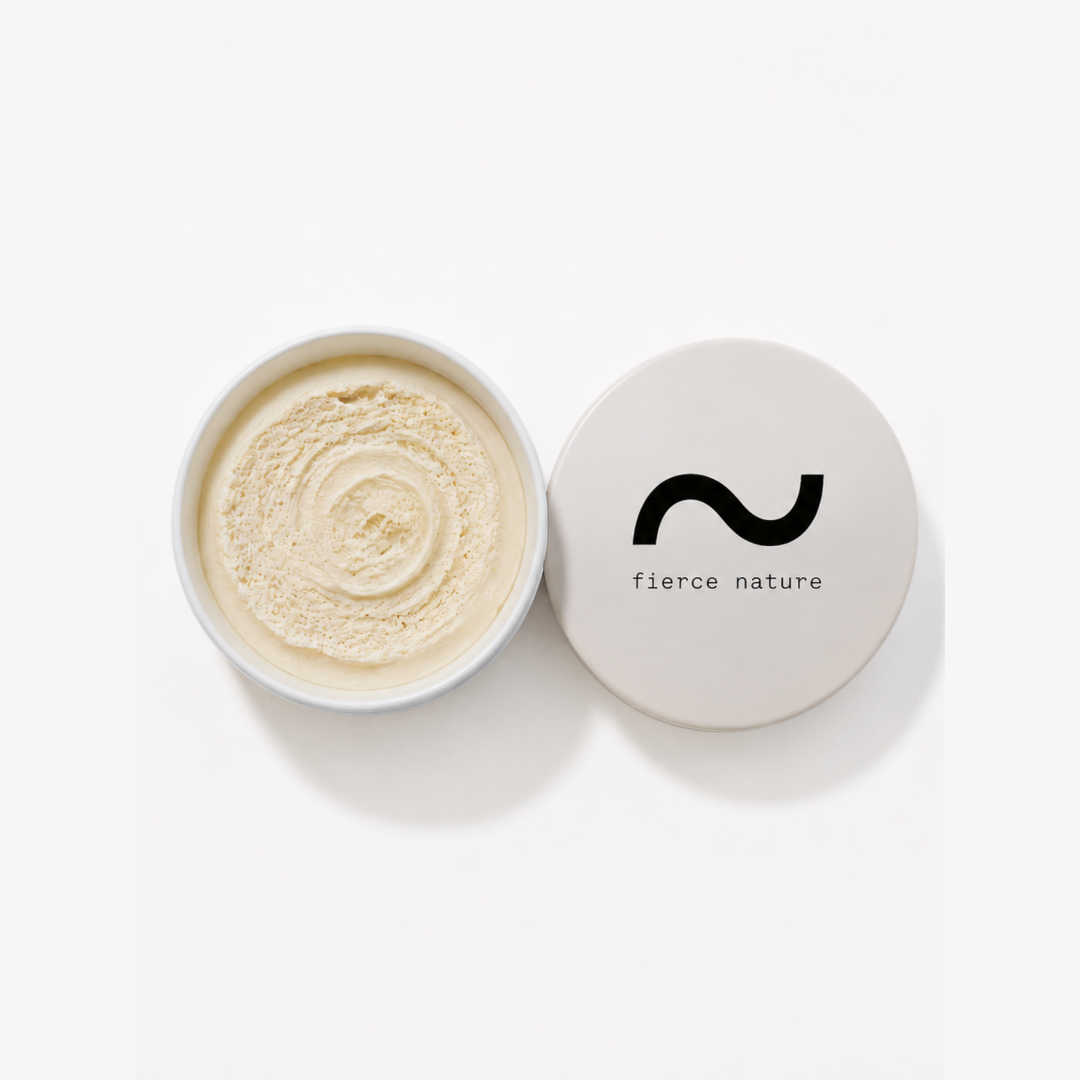
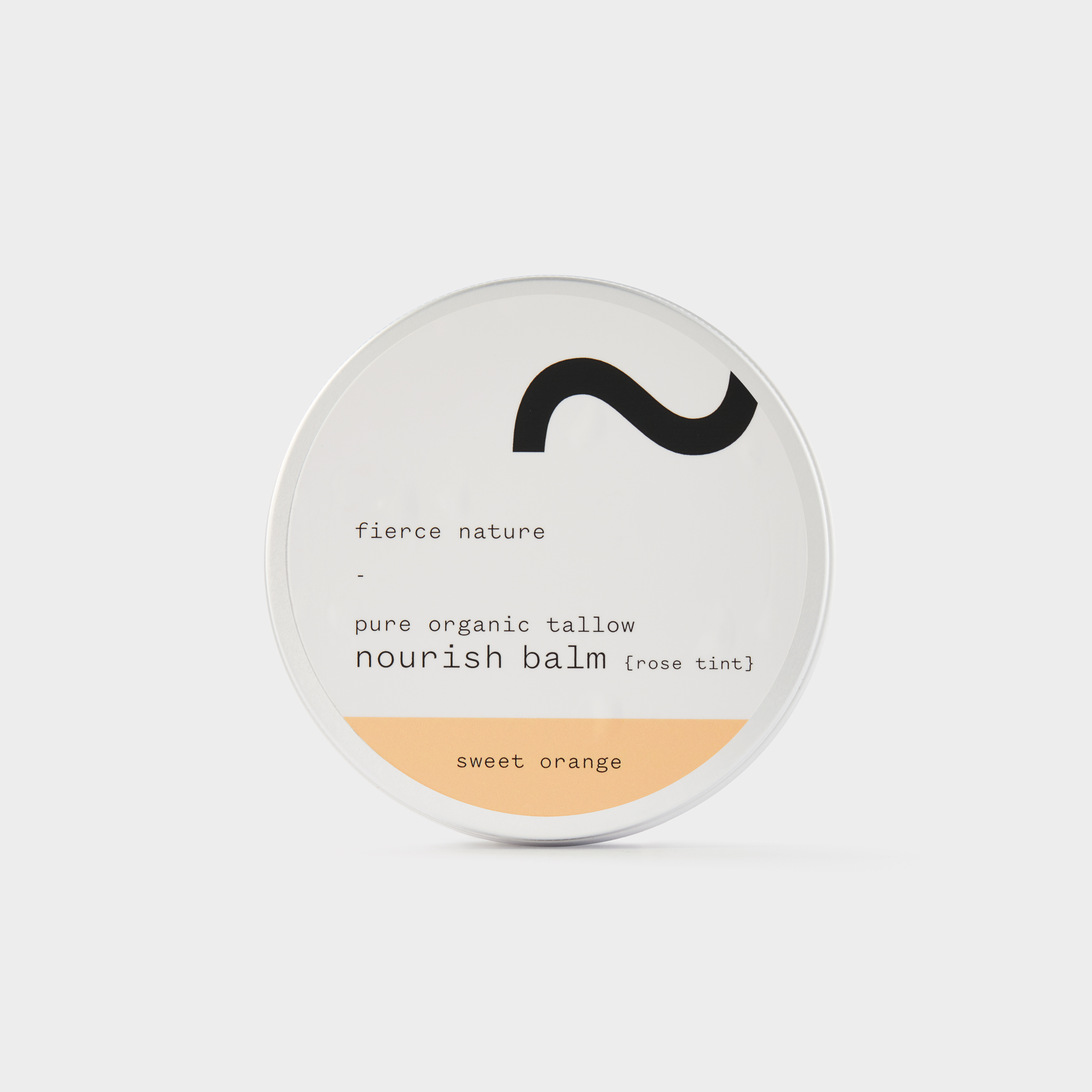
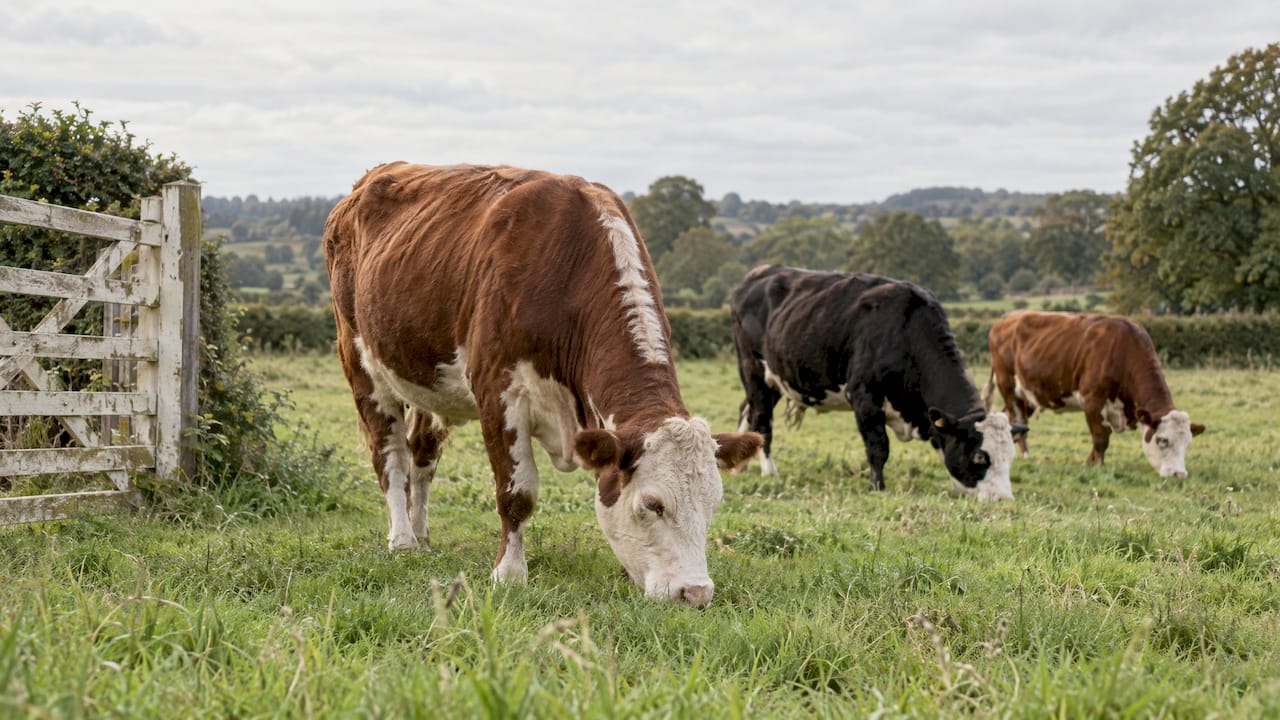
Natural ingredients
•
Kind to skin
•
A healthier planet
Wir haben Ihnen eine E-Mail mit einem Link zum Aktualisieren des Passworts geschickt.
Passwort zurücksetzen
Wir werden Ihnen eine E-Mail zum Zurücksetzen des Passworts schicken.
Tallow vs Squalane: Which Moisturiser Suits Your Skin?
Ralph Barrozo
0 Kommentare
Tallow and squalane both soften skin, but they do it in very different ways. Squalane is a light, fast-sinking oil that is usually made from plant sources and stabilised in a lab. Tallow is a rich, skin-like animal fat that sits on the surface and wraps dry skin in comfort. If your skin feels tight, rough or reactive, especially on the body, hands, lips and cheeks in a British winter, a tallow balm gives you more of what dry skin is actually missing. That is why we built our face and body balms on organic tallow.
Below, we explain what each ingredient is, how they feel, what the research says, and how to use them well.
Fierce Nature
fiercenature.co.uk
Nourish Dry Skin with Tallow
Explore handmade UK face and body balms made with pure organic tallow and naturally sourced ingredients.
Tallow is rendered fat from cattle (or sheep). It is rich in oleic, palmitic and stearic acids, and it makes a nourishing, protective balm for dry skin.
Squalane is a lightweight, stable emollient made by hydrogenating squalene. It is not simply olive oil, and it feels much lighter than a balm.
For dry, weathered or sensitive-feeling skin, a tallow balm gives deeper, longer-lasting comfort. Squalane suits the lighter end of the routine.
Apply either within a few minutes of bathing, while skin is still slightly damp, and patch test anything new.
Online claims about any skincare ingredient can run ahead of the research, so choose a short, transparent ingredient list.
Tallow is fat that has been gently rendered, meaning melted down and strained, from cattle or sheep. People have used it for centuries in soap making and as a skin emollient, a substance that softens and smooths the skin surface.
Its make-up is the interesting part. A 2024 scoping review by Russell and colleagues describes tallow as rich in triglycerides, including oleic, palmitic, stearic and linoleic acids. These are fatty acids that also turn up naturally in the skin’s own oils, which is one reason tallow feels so familiar on the skin and why so many people with dry skin reach for it.
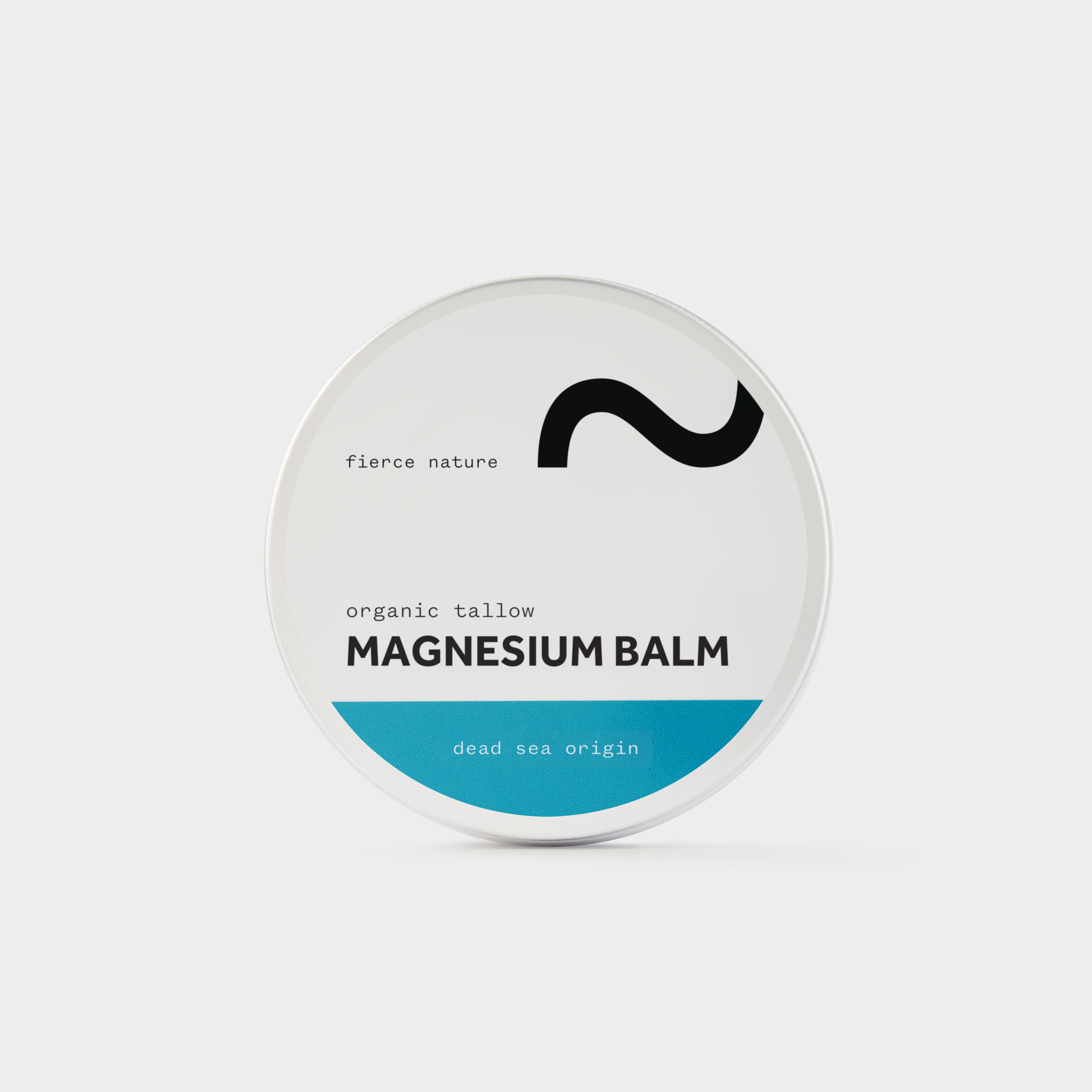
Our balms start with pure organic tallow from grass-fed animals, handmade in the UK with naturally sourced ingredients. We believe the foundation matters: if you are putting something on the largest organ of your body every day, you should be able to read the ingredient list and recognise what is in it. Our formulas are designed for deep nourishment, using tallow’s naturally occurring vitamins.
What squalane is, and what it isn’t
Squalane has a slightly confusing name because it sits right next to another word, squalene. Here is the difference in plain terms.
Squalene (with an “e”) is a natural oil found in human skin, plants and animals. A 2025 review in the Journal of Integrative Dermatology reports it makes up around 13% of the sebum, the skin’s own oil, that we produce. On its own it is unstable and can go rancid when exposed to air.
Squalane (with an “a”) is what you get when squalene is hydrogenated, which means hydrogen is added to make the molecule more stable. That stability is why it is the version used in cosmetics. Cleveland Clinic explains that squalene is converted in this way precisely because it can oxidise and turn rancid.
So is squalane just olive oil? No. Squalane can be made from plant-derived squalene, and olives are one common source, but the finished ingredient is a distinct, processed molecule. It is not a bottle of olive oil.
The practical upshot: squalane is a refined, lab-stabilised ingredient, while tallow is a traditional, whole-fat ingredient. That difference in character explains most of what follows.
Tallow vs squalane at a glance
Tallow
Squalane
Origin
Rendered fat from cattle or sheep
Hydrogenated squalene, often from plant sources such as olives
Feel on skin
Rich, cushioning, balm-like
Light, silky, quick to sink in
Main job
Protects and softens; forms a comforting barrier
Adds slip and softness; helps seal in moisture
Typical format
Balms, soap bars, sticks
Light oils and serum-type products
Best for
Very dry, rough, weathered or sensitive-feeling skin; body, hands, lips, feet
Those who want moisture with minimal weight
Stability
Stable fat, used traditionally for centuries
Stable because it has been hydrogenated
Fatty acid profile
Oleic, palmitic, stearic, linoleic
A single saturated hydrocarbon
How they feel and behave on the skin
Tallow: the rich, protective one
Tallow is an occlusive emollient. In practice that means it softens the surface and forms a protective layer that helps limit water loss from the skin. Hunt, Kuritza and Lio’s 2026 review describes it in just those terms. A Cleveland Clinic dermatologist makes the same point: tallow may soften dry skin and help prevent water loss.
The British Dermatological Nursing Group’s emollient guidance explains why that matters. Greasier emollients are generally more effective at reducing transepidermal water loss, the technical term for moisture evaporating through the skin. If your problem is dryness that keeps coming back, a richer product is doing the job you need.
Tallow is solid at room temperature and softens on contact with warm skin, which is why it works so well as a balm. A little goes a long way: warm a small amount between your fingertips, then press it in.
Squalane: the light one
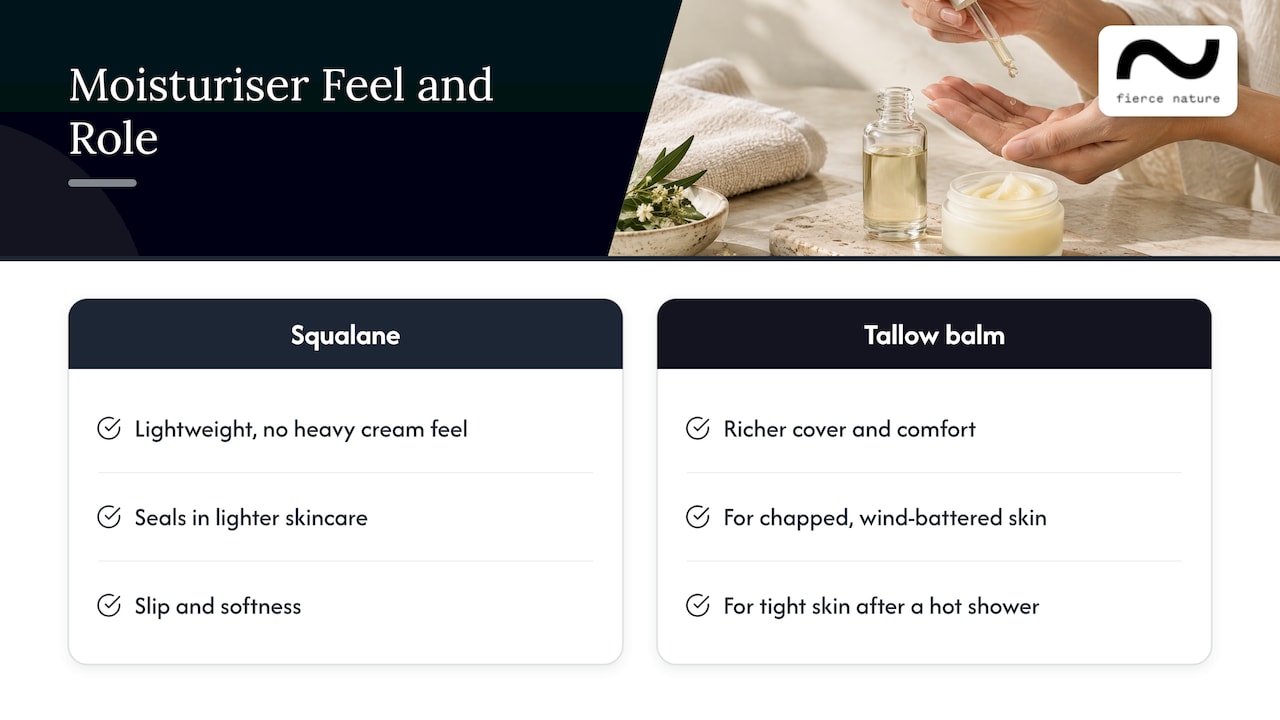
Cleveland Clinic describes squalane as lightweight and says it can be used to seal in lighter skincare products. It suits people who want moisture without any heavy cream feel. If you are layering a watery serum under make-up in the morning, that weightlessness is useful.
The flip side is simply that lightness and richness do different jobs. A light oil gives slip and softness. A balm gives cover and comfort. For skin that is chapped, wind-battered, or tight after a hot shower, comfort and cover are usually what you are after.
What the research actually says
We would rather you made a decision on solid ground, so here is an honest summary of where the evidence stands.
Tallow. The 2024 scoping review mentioned above screened 147 papers and included 19. The evidence it found came from comparative studies, basic-science work and animal studies, and the authors noted that more research is needed on tallow as a cosmetic in humans. A Cleveland Clinic dermatologist likewise says it may soften dry skin, and that formulations vary. We take two things from this. First, tallow’s long track record as a skin emollient and its fatty acid make-up make it a natural fit for dry skin. Second, you should be sceptical of anyone promising miracle results.
That scepticism is well founded. A 2025 analysis of social media posts about beef tallow, by Almatroud and colleagues, found frequent claims about acne, eczema and psoriasis that usually came without cited evidence, and that most promotional posts showed financial bias. We make no medical claims for our balms. We make skincare: a simple, nourishing, handmade product for everyday dryness and comfort.
Squalane. The same 2025 Journal of Integrative Dermatology review reports research on topical squalene and squalane reducing water loss and irritation, while noting that the evidence does not establish treatment outcomes for every skin type or condition.
The honest bottom line. Neither ingredient has been established as a treatment for skin disease, and neither should be treated as one. Both are moisturising ingredients. For conditions such as eczema or psoriasis, the British Dermatological Nursing Group’s guidance describes emollients as an adjunct to other treatments, not a substitute for them, so speak to your GP or pharmacist about the whole picture. For everyday dryness, rough patches and keeping skin comfortable, an emollient you enjoy using and will actually use consistently is the right one.
Which suits which skin?
Dry, rough or weathered skin
This is where tallow shines. Elbows, shins, heels, hands, lips and windswept cheeks tend to need a richer cover than a light oil can give. The British Dermatological Nursing Group notes that emollients can relieve the symptoms of dryness and improve comfort, and that greasier ones tend to be more effective at holding moisture in. A tallow balm fits that description neatly. Our Nourish Balm (Unscented) is a good place to start for face and body.
Skin that feels sensitive
Many people come to us after years of rashes and reactions to mainstream products, which is exactly how our founder’s own story began. Long ingredient lists with fragrance, dyes and preservatives are a common culprit. Cleveland Clinic notes that reactions to squalane products are more likely to come from added fragrance, preservatives, dyes or other oils than from squalane itself, and the same principle applies to every moisturiser: the whole formula matters, not just the headline ingredient. That is why we keep our recipes short and transparent, and offer unscented options. You can read more in our guide to tallow for sensitive skin.
Oily or acne-prone skin
Skin that is oily or prone to breakouts generally prefers a lighter touch. The British Dermatological Nursing Group says lighter, non-comedogenic or oil-free products are generally better for acne-prone skin, and the American Academy of Dermatology notes that a heavy occlusive product can aggravate acne or folliculitis in people already prone to it. If that sounds like you, use tallow on the body rather than the face to begin with, apply a very thin layer, and read our piece on what the evidence shows on tallow and acne before deciding. Stop using any product that brings on spots, itching or a rash.
Babies and little ones
If you are thinking about baby skin, our article on tallow skincare for babies goes through it in detail. For any concern about a baby’s skin, your health visitor or GP is the person to ask.
Can you use tallow and squalane together?
Yes, they are not rivals in a routine, as the formats are so different. If you enjoy a light squalane-type oil in the morning, a tallow balm works well as the richer layer on top, or as your evening step. Think of it as light first, rich after: the lighter product goes on first, then a balm to seal everything in.
That said, you do not need a long routine. Many of our customers simplify down to one balm for face, hands and body. One well-made product, used every day, will do more for your skin than five products used occasionally.
How to get the best from a tallow balm
The routine is simple, and the timing is the part that makes the biggest difference.
Moisturise after bathing. The British Dermatological Nursing Group recommends applying emollient within a few minutes of bathing, to trap moisture while skin is still slightly damp. Pat dry, then apply.
Start small. Scoop a pea-sized amount for the face, a little more for arms and legs. Warm it between your palms until it melts.
Press, don’t rub. Press the balm into your skin and let it settle. Dry areas such as elbows, knees, heels and hands can take a second layer.
Be patient with the face. Introduce a face balm at night first, a few evenings a week, and build up as your skin tells you it is happy.
Patch test first. Put a small amount on the inner forearm and wait 24 hours before widening use. New products can trigger an allergic reaction in anyone, whatever they contain. Our guide to tallow allergy explains what to look out for.
Listen to your skin. If you notice irritation, spots or folliculitis (small, inflamed bumps around hair follicles), stop using the product, as the American Academy of Dermatology advises, and see your GP or pharmacist if it does not settle.
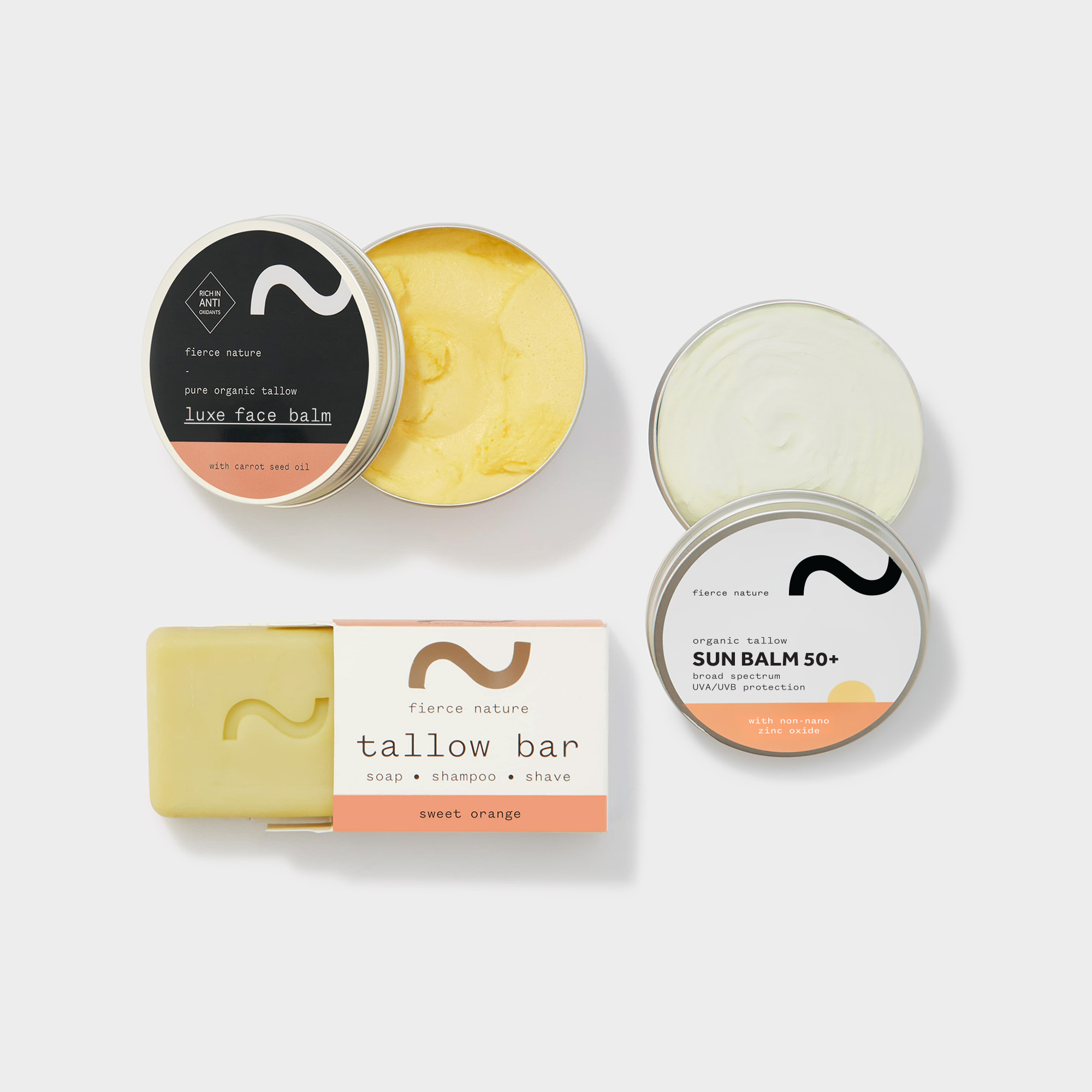
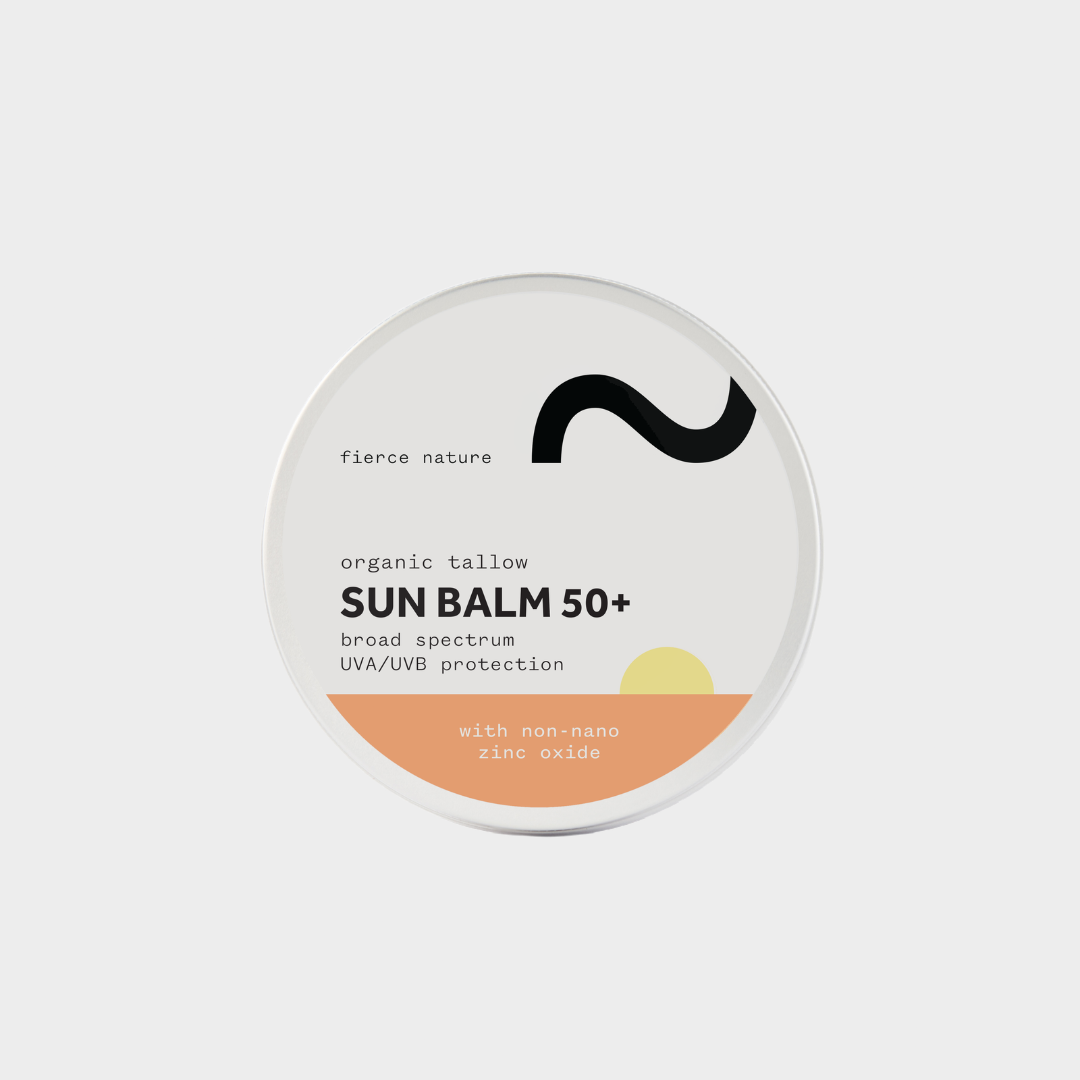
One more point on sun: tallow is not a sunscreen. Cleveland Clinic states that tallow has no established sun protection, so use a dedicated SPF product in daylight. Our range includes a sun protection balm, and you can find it on our website.
A note on cleansing: tallow soap
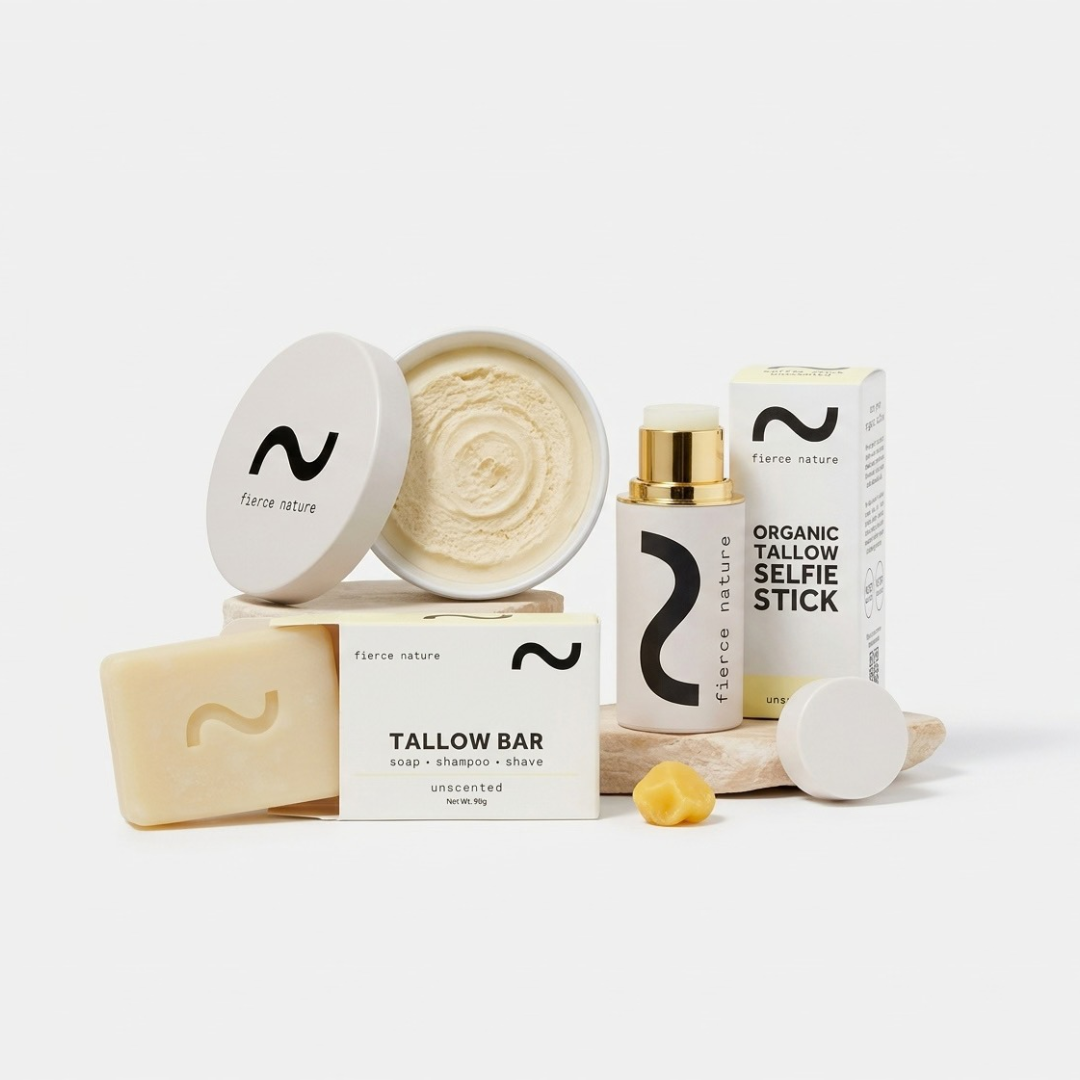
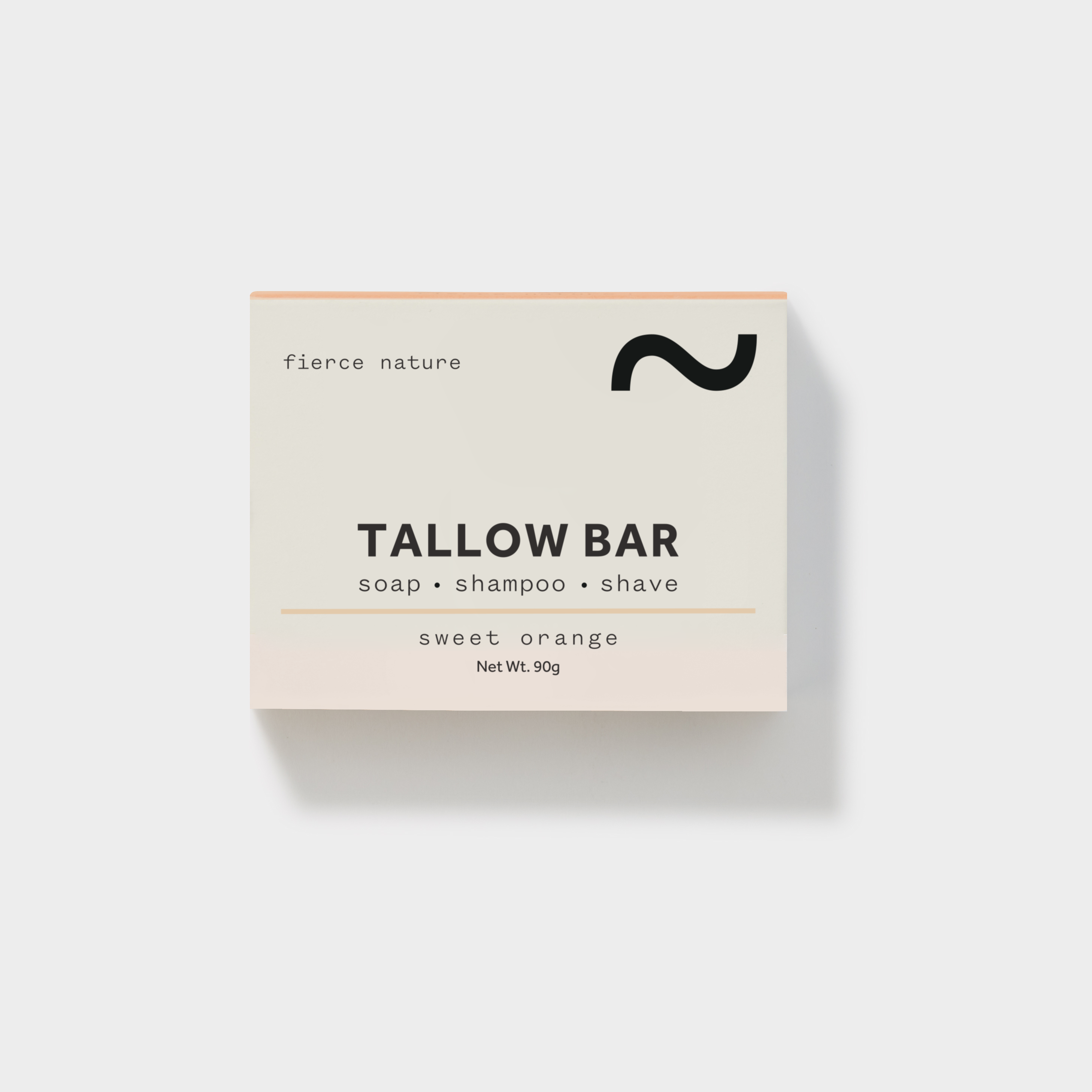
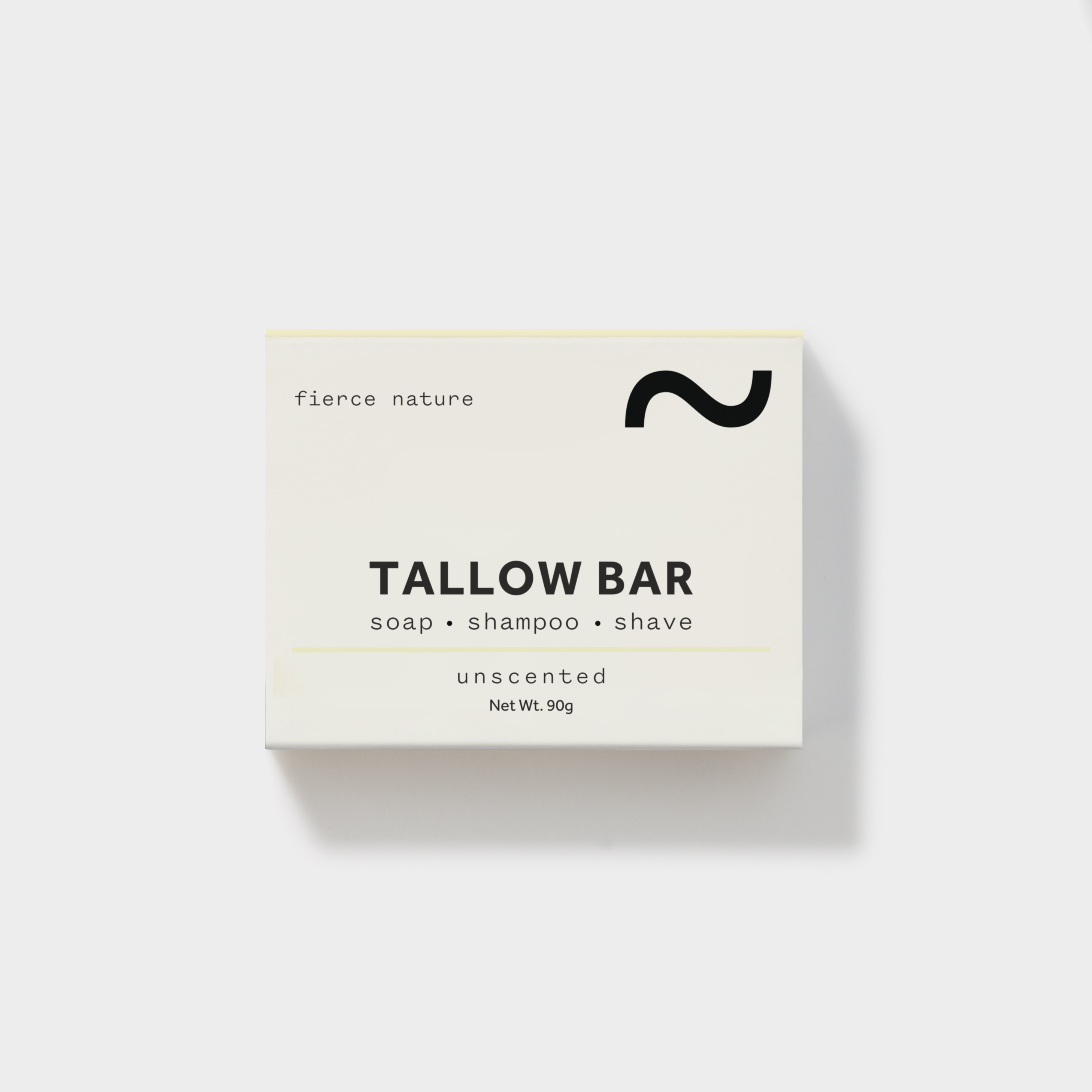
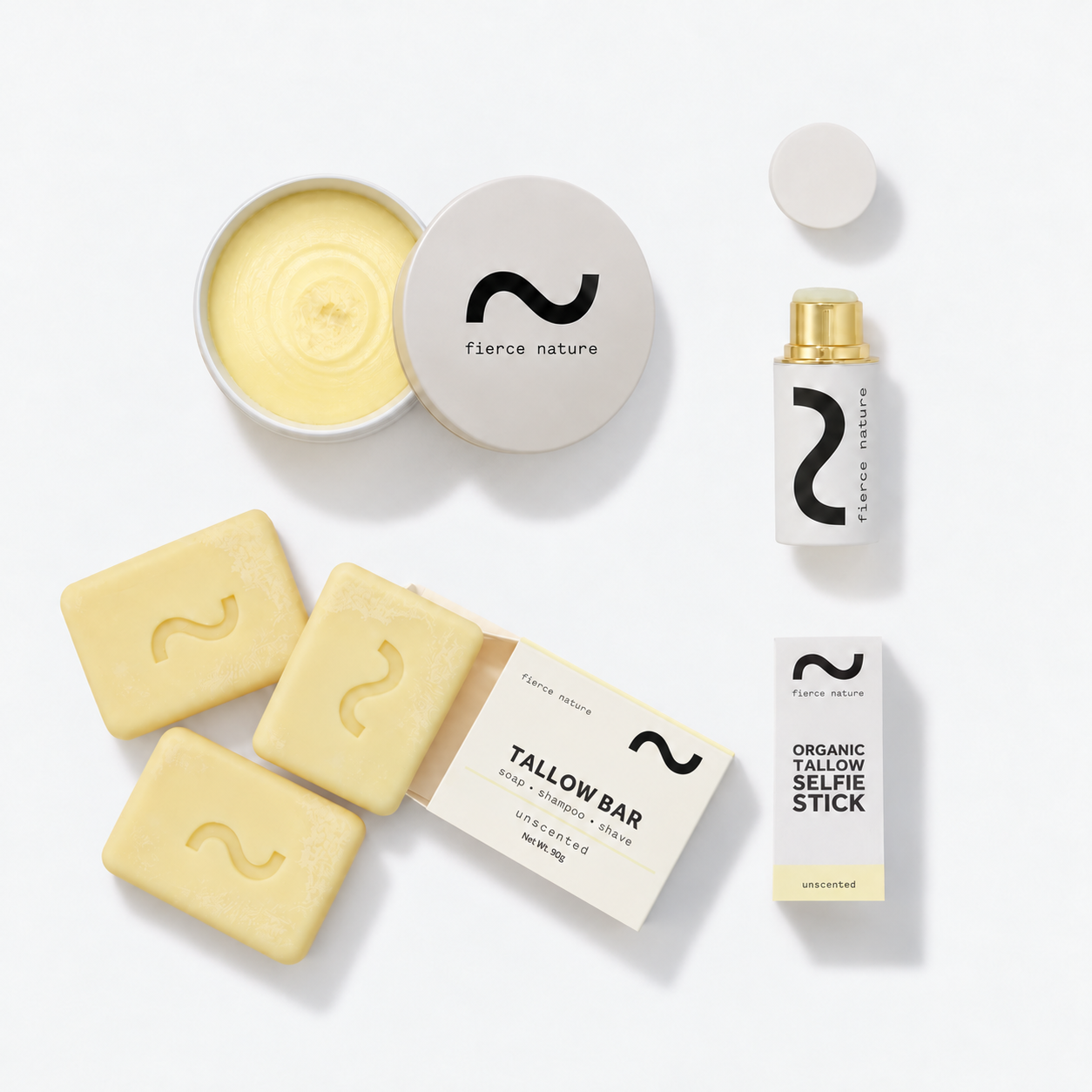
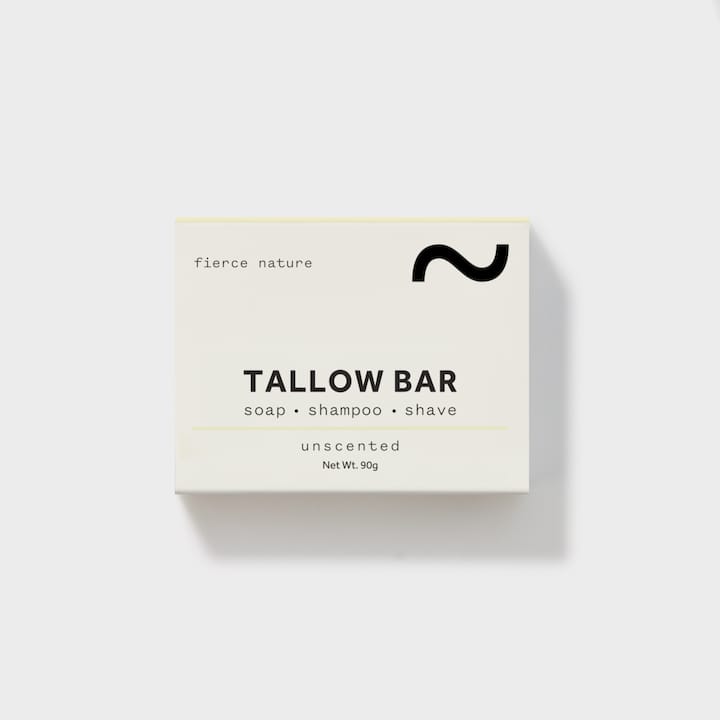
Balms are only half of a gentle routine. Harsh cleansers strip the skin you are trying to nourish. Our tallow soaps bring the same traditional ingredient to the shower, and our Multi-Use Tallow Bar (Unscented) is made for people who want fragrance kept out entirely. Our article on beef tallow soap explains how it fits into a routine.
Common questions about the ingredients themselves
Is tallow “just fat”?
It is fat, yes, and that is rather the point. Skin is built from lipids, and a balm made of a fat with a familiar fatty acid profile is a natural partner for dry skin. Quality matters, though. We use pure organic tallow from grass-fed animals as the foundation of our products, and we craft everything by hand in the UK.
Is squalane a plant oil?
Not quite. It is a processed, hydrogenated ingredient that may come from plant sources such as olives or from other sources. It is closer to a refined cosmetic ingredient than a pressed oil you would find in the kitchen.
Why do some dermatologists urge caution on tallow?
Mostly because social media enthusiasm has outpaced the clinical research, and because a heavy occlusive can sit badly on skin that is prone to breakouts. That is a reason to use it thoughtfully: thin layers, patch testing and a sensible place on the body to start. It is not a reason to miss out on a traditional ingredient that many people with dry, rough skin find deeply comforting.
Our view on tallow and squalane
We did not start Fierce Nature to make the lightest possible product. We started it because our founder grew up in South Africa battling rashes and reactions to mainstream cosmetics, and later came to understand, through her work on gut health, how much the toxic load on our bodies matters from birth.
Squalane is a perfectly good light emollient. But when someone comes to us with skin that is dry, tight and tired of reacting, we do not think the answer is a longer list of clever ingredients. We think it is a short list of honest ones. Tallow has been used for centuries in soap making and as a skin emollient, and we believe its richness, its fatty acids and its natural vitamins make it a deeply nourishing foundation for a balm.
That is why every Fierce Nature product is handmade in the UK, with pure organic tallow at its heart and naturally sourced ingredients around it. We would rather you could read every line of the label and understand it. Work with your skin, not against it.
For dry, rough or weathered skin, a tallow balm is the better choice, because richer emollients are generally more effective at limiting water loss. Squalane is lighter and suits those who want a barely-there feel. Many people use a light product first and a tallow balm on top.
Is squalane just olive oil?
No. Squalane is a hydrogenated, stabilised molecule that can be made from plant-derived squalene, including from olives, or from other sources. Olive oil is a different ingredient with a different make-up.
Can I use tallow on my face?
Many people do, particularly at night. Begin with a thin layer a few evenings a week, patch test first, and stop if you notice spots, itching or irritation. If your skin is very oily or acne-prone, try it on the body first.
Does tallow protect against the sun?
No. Tallow has no established sun protection, so wear a dedicated SPF in daylight. Our range includes a sun protection balm for that purpose.
Is tallow suitable for a daily routine?
Yes, for most people it is easy to use daily. Apply a small amount after bathing while skin is still slightly damp, and build up gradually. If you have a skin condition such as eczema, talk to your GP or pharmacist about how to fit an emollient into your treatment.