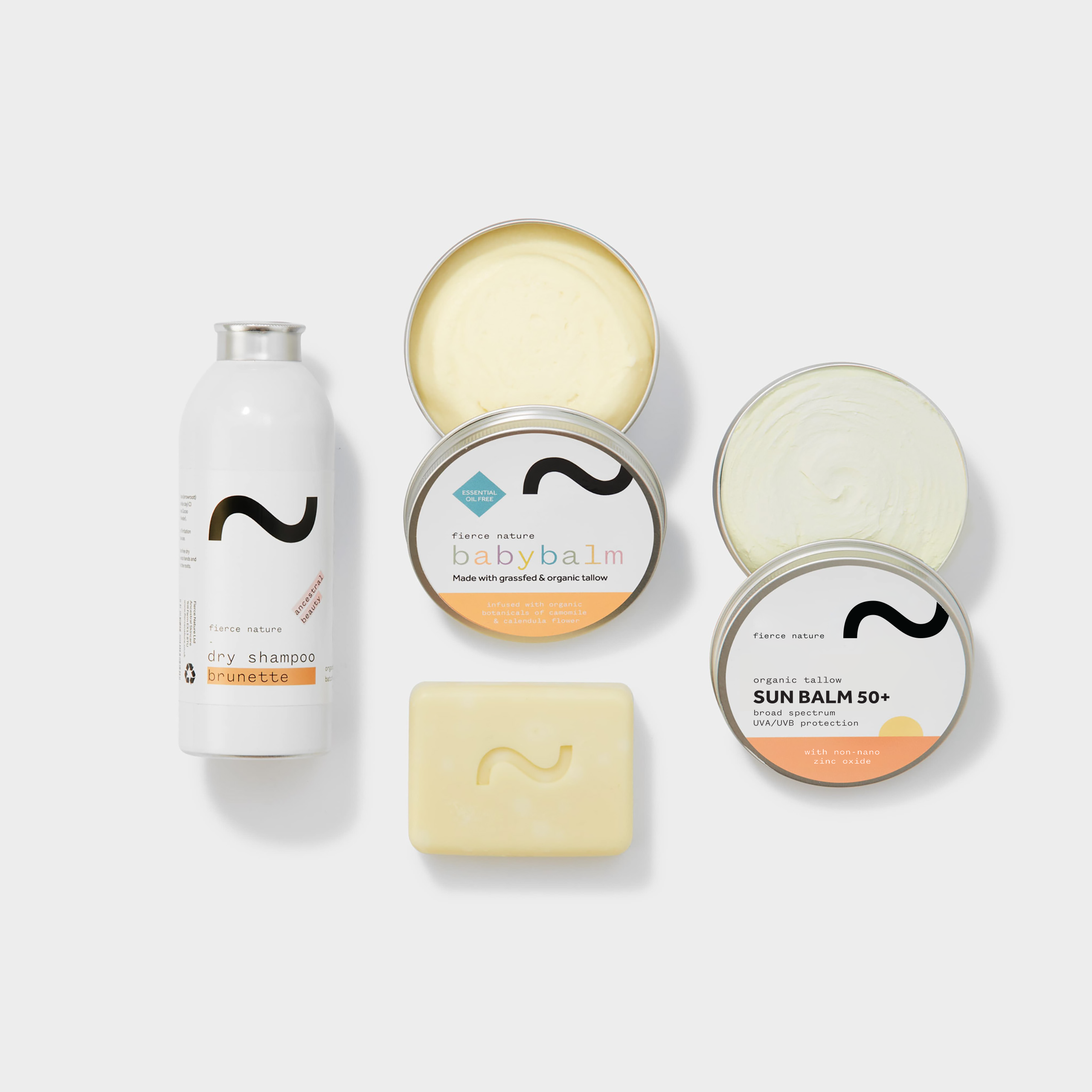
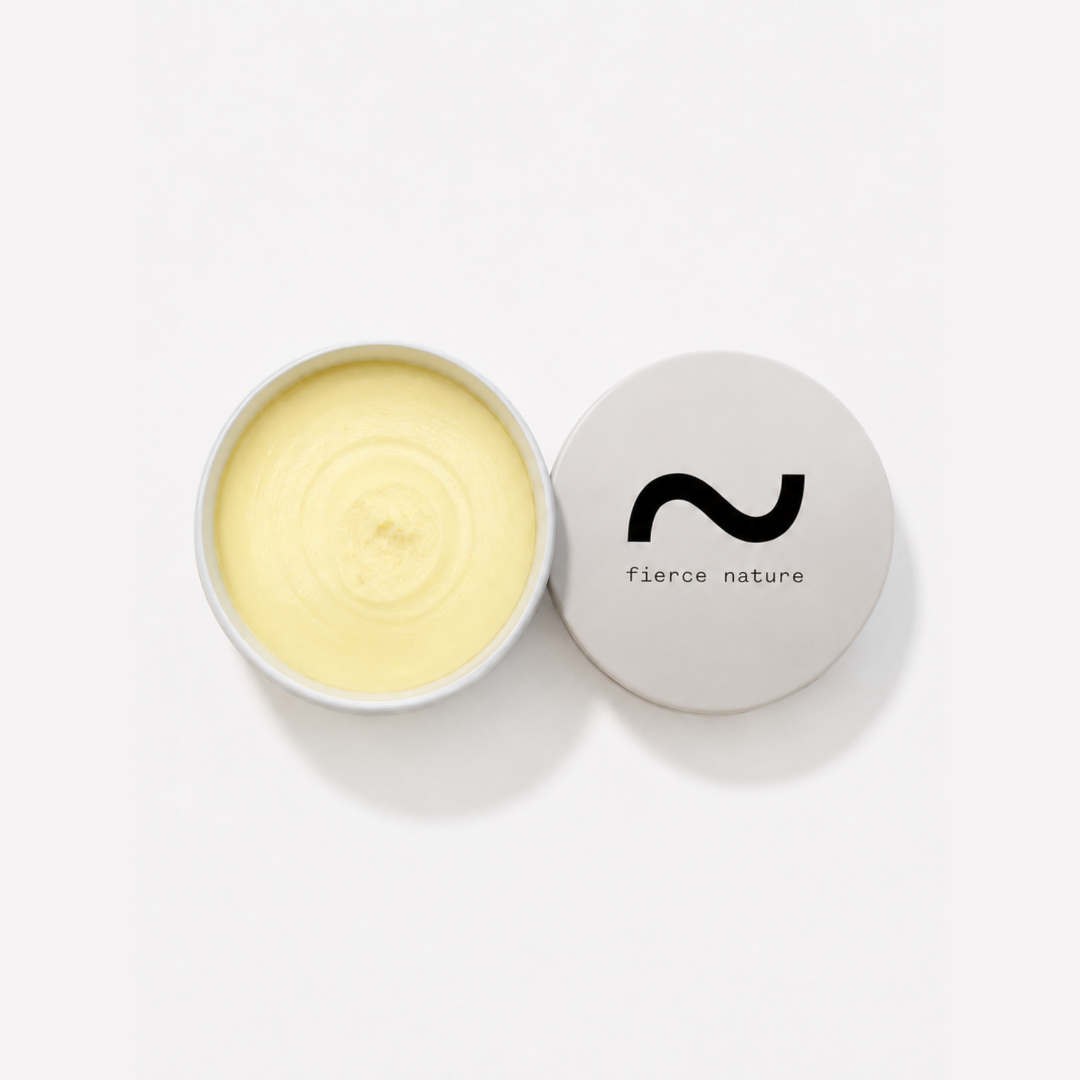
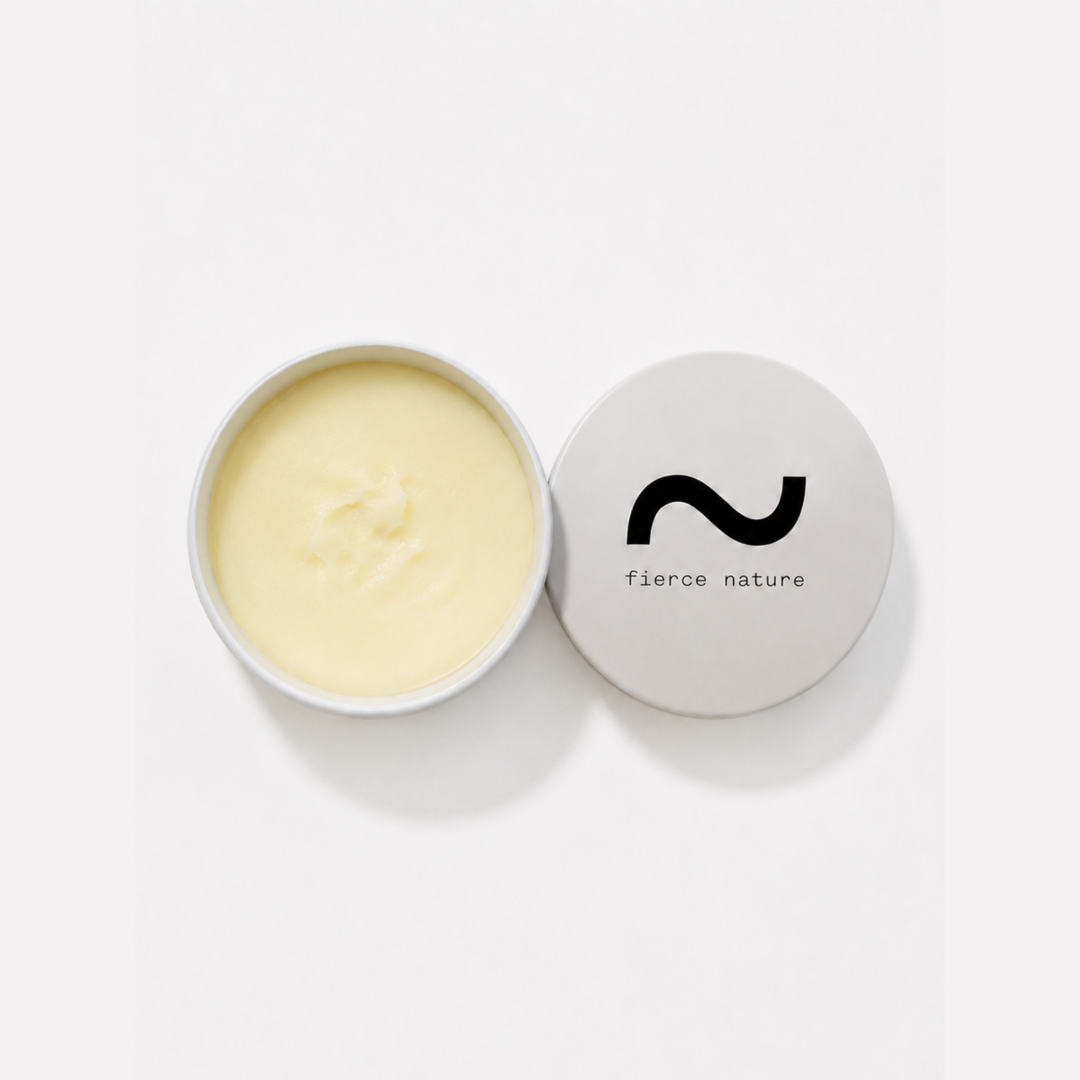
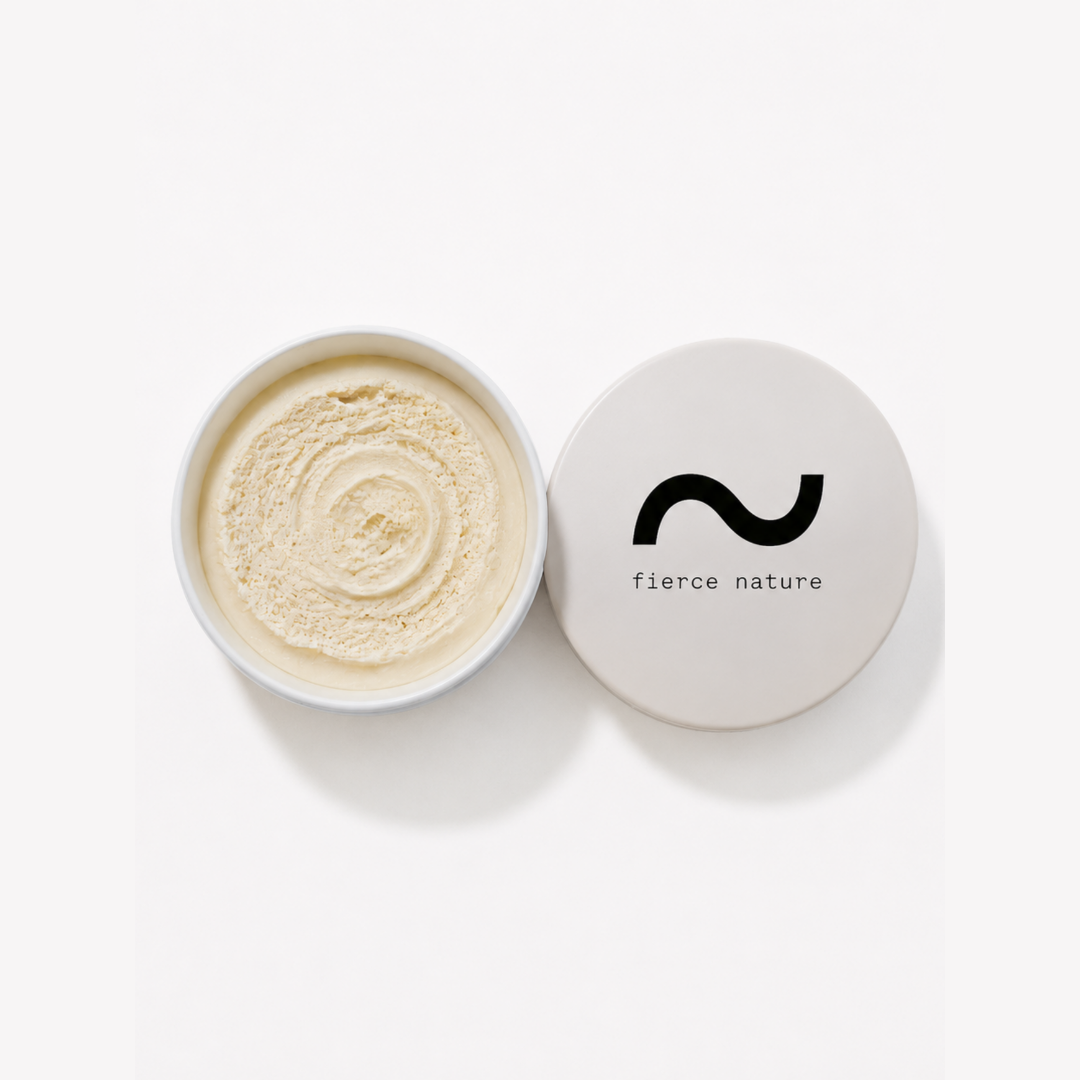
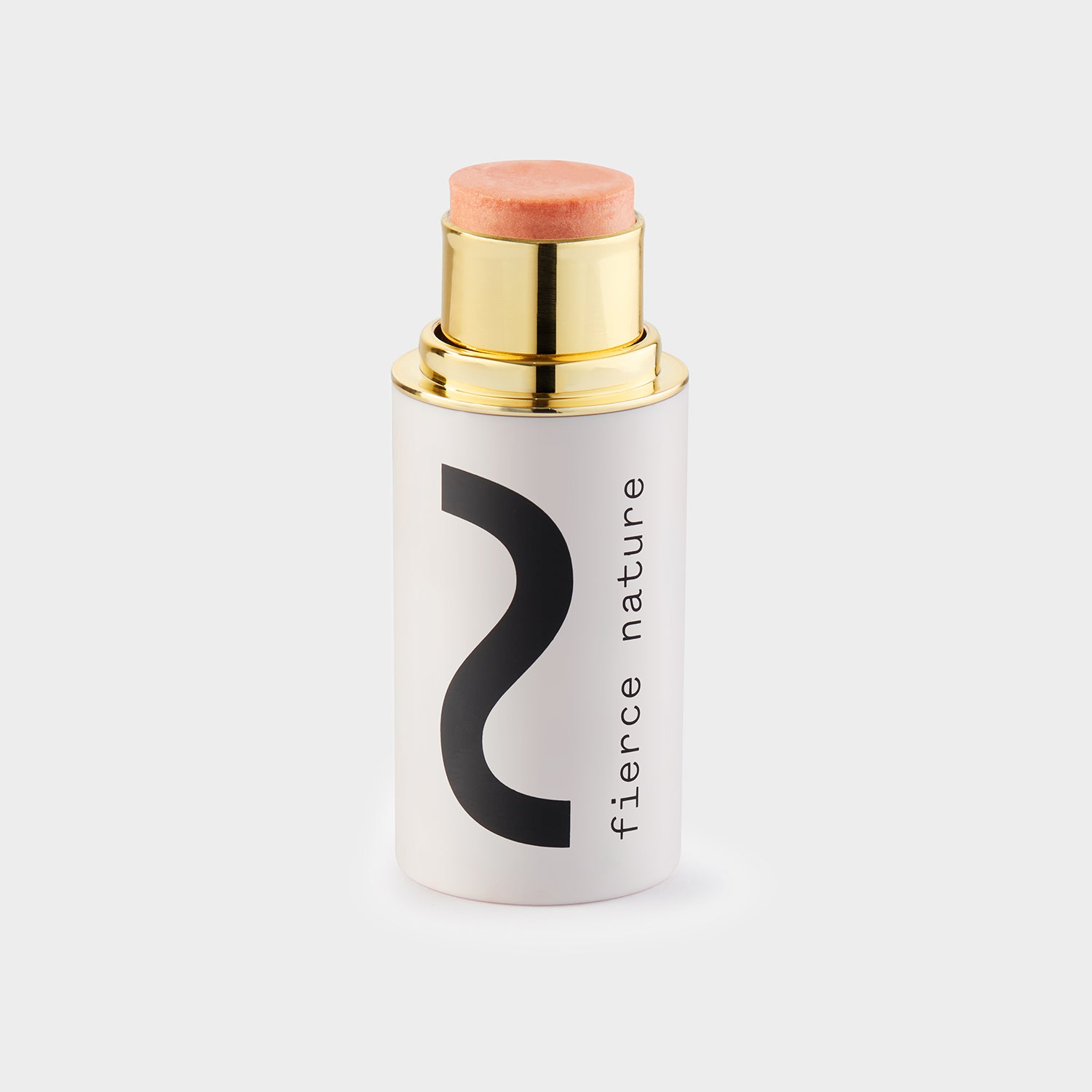
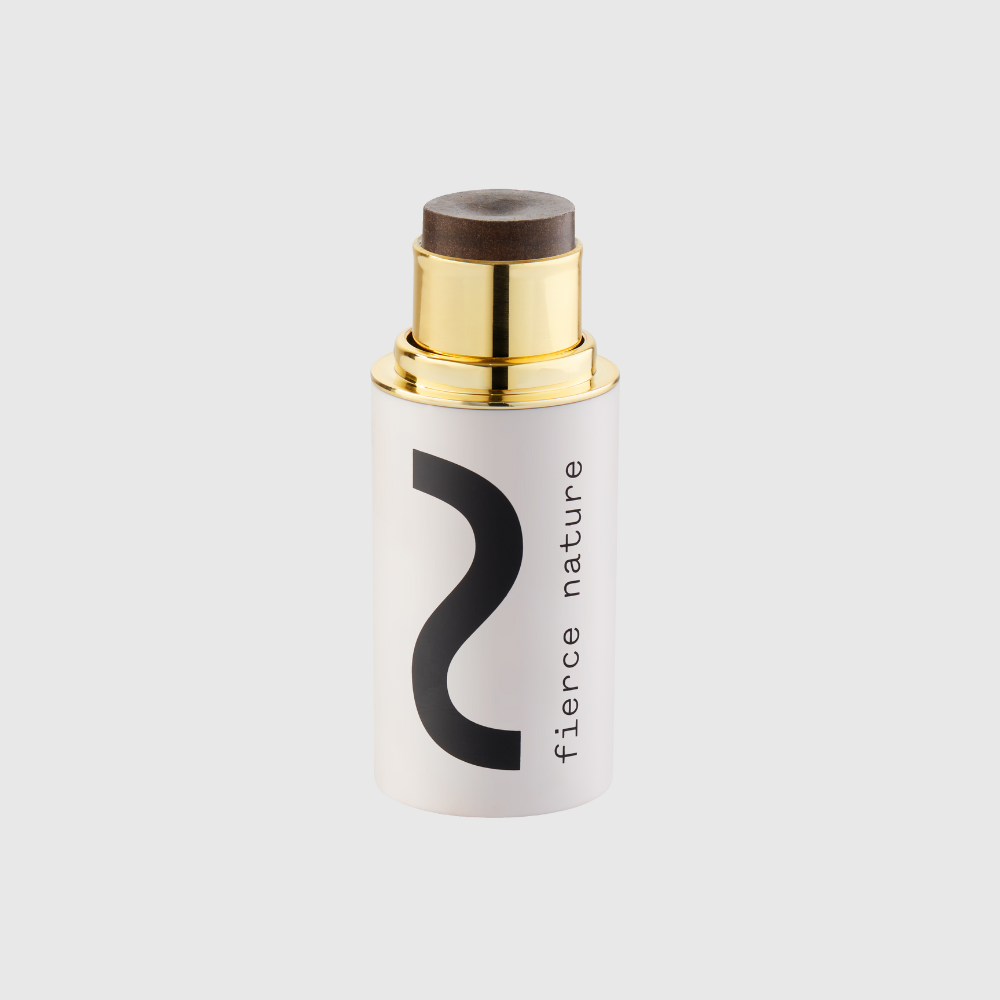
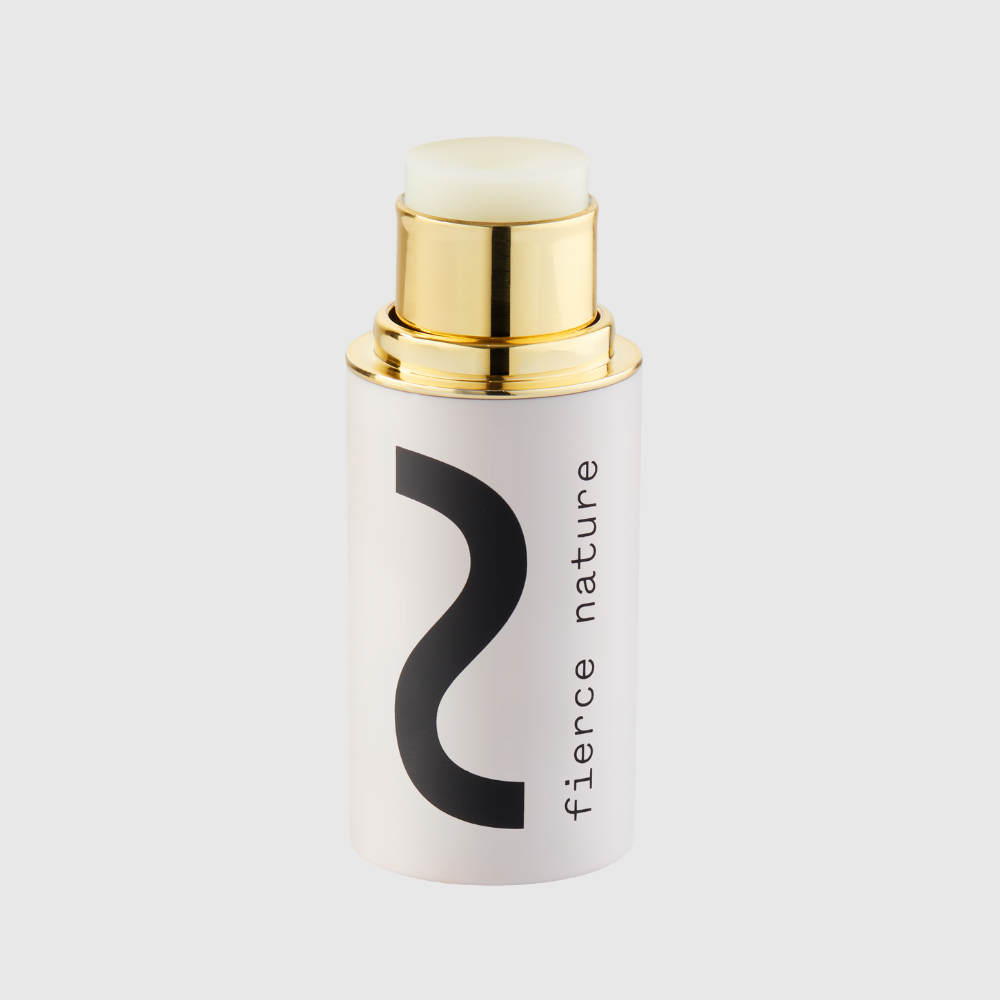
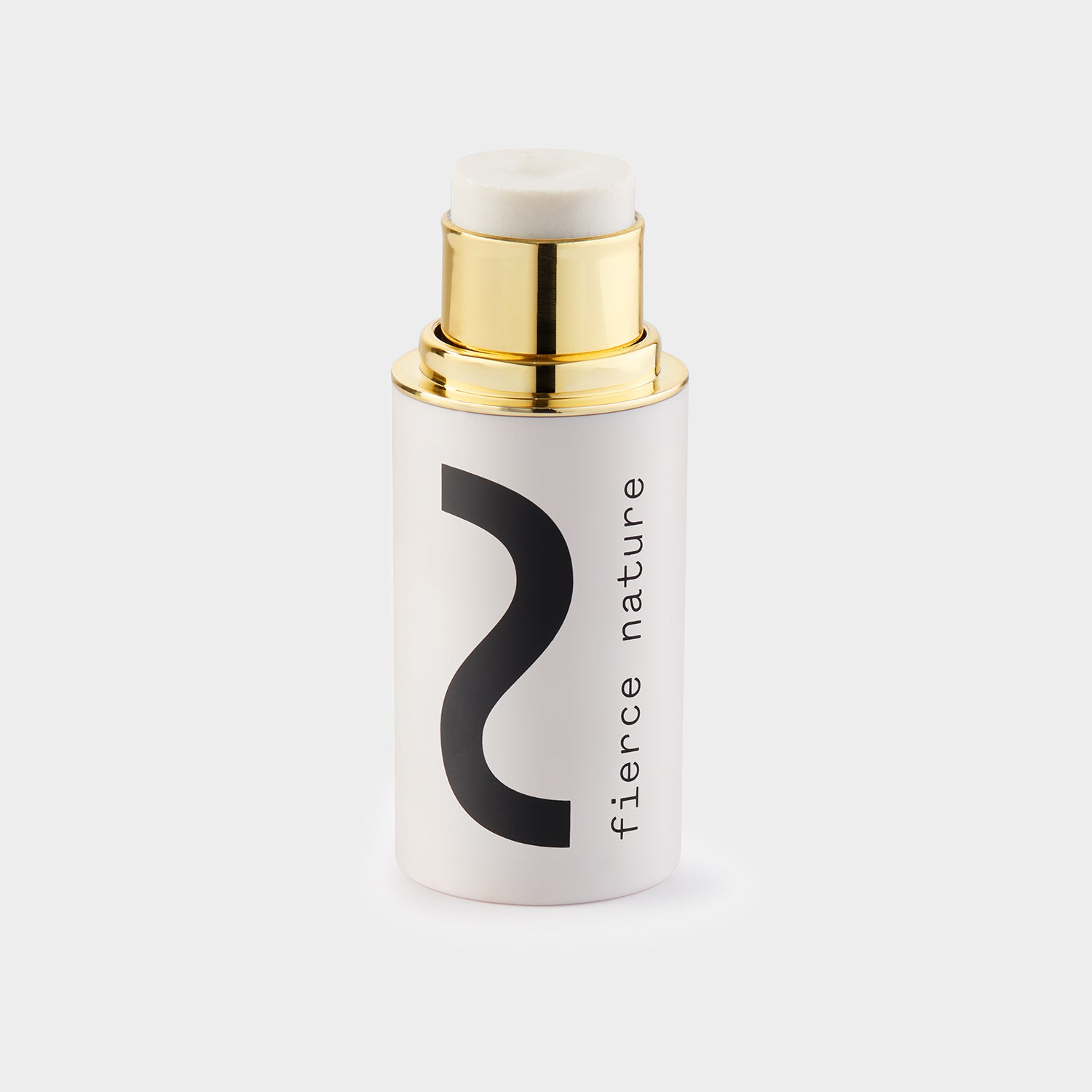
A stretch marks balm can soothe, hydrate and make new marks appear less noticeable, but it is not a guaranteed prevention or cure. The honest, evidence-aware move is to use a moisturising balm daily, choose one with pregnancy-safe labelling, and keep your expectations realistic. Our own picks for this job are three different balms, each suited to a slightly different skin need.
TL;DR:
Moisturizing balms provide comfort and hydration but have no conclusive evidence to prevent or fade stretch marks in pregnancy.
For best results, apply a small amount of balm to slightly damp skin daily for at least eight to twelve weeks, especially on fresh, red marks.
Ingredients like retinoids and certain active compounds are contraindicated during pregnancy and breastfeeding, requiring careful label checks and professional consultation.
Balms with rich, occlusive textures suit dry or sensitive skin, while lighter creams may appeal for daily, discreet use without sacrificing routine consistency.
Professional treatments such as laser therapy or microdermabrasion may improve the appearance of existing marks but do not guarantee complete removal.
Fierce Nature
Nourish Skin With Nature
Explore Fierce Nature’s handmade, non-toxic tallow based skincare, crafted in the UK with naturally sourced ingredients.
Our recommended stretch mark balms and who each suits
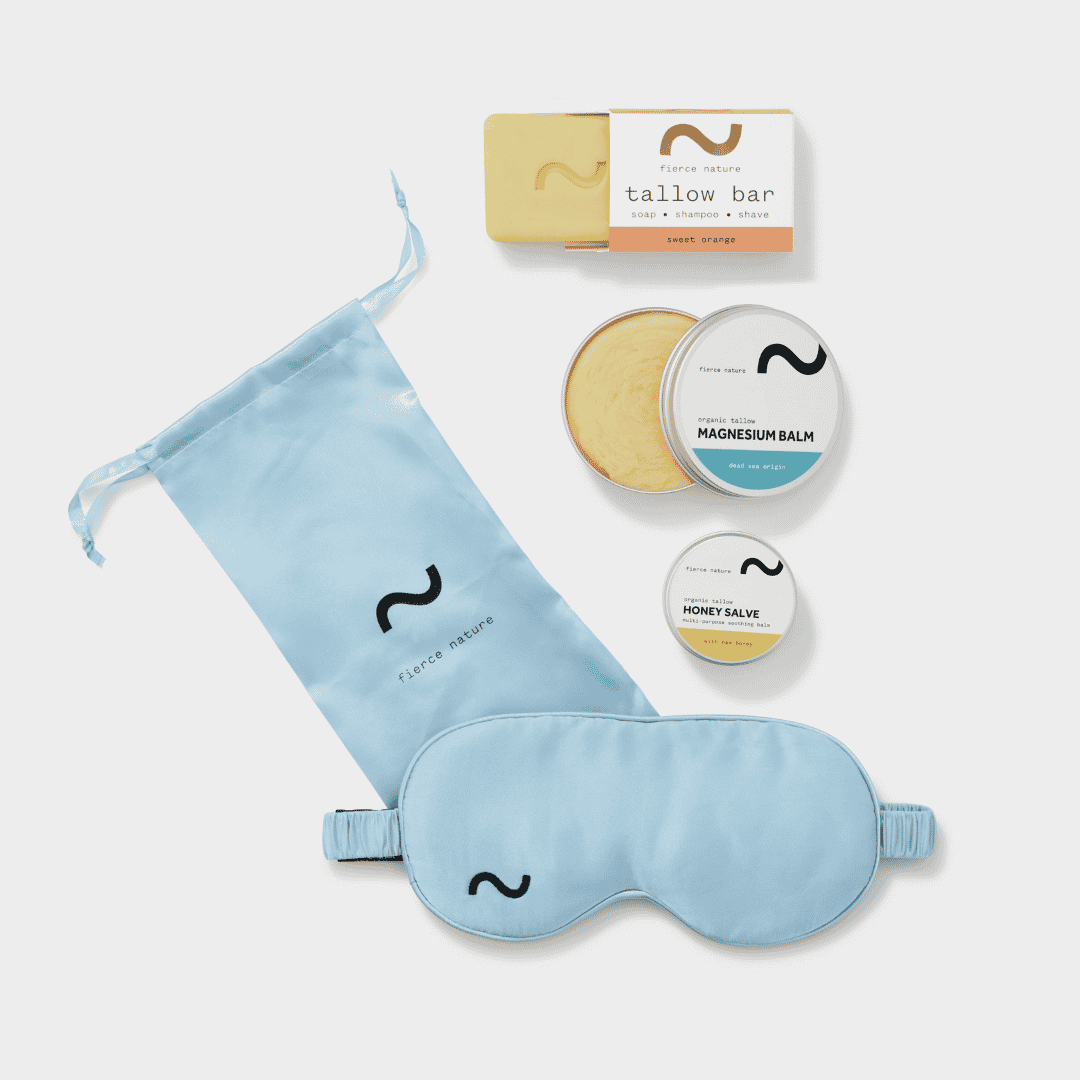
Choosing between balms usually comes down to what your skin is asking for right now: everyday comfort, extra richness, or something that works a bit harder on tension and cramping alongside moisturisation. We built our range with those three needs in mind, rather than trying to make one formula do everything.
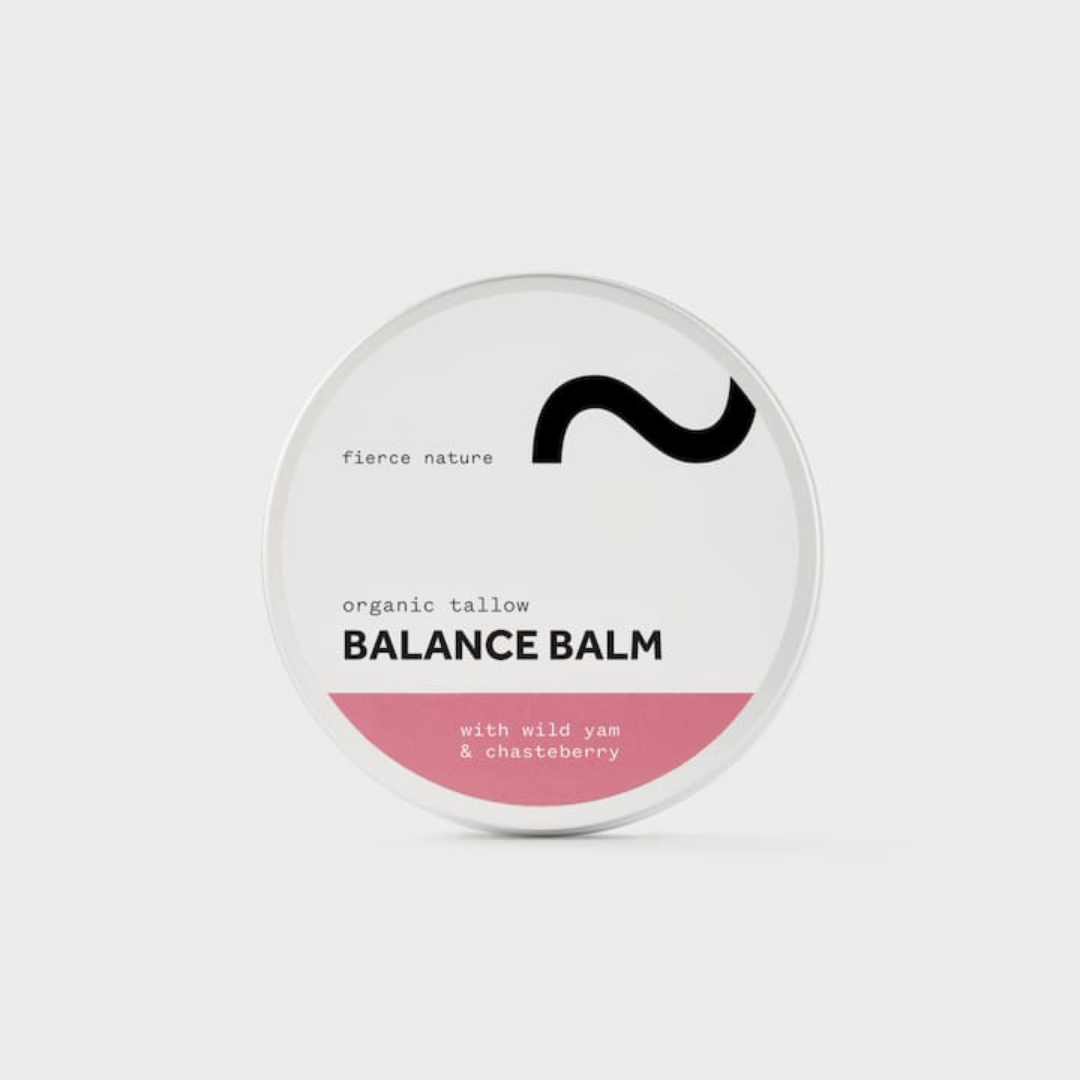
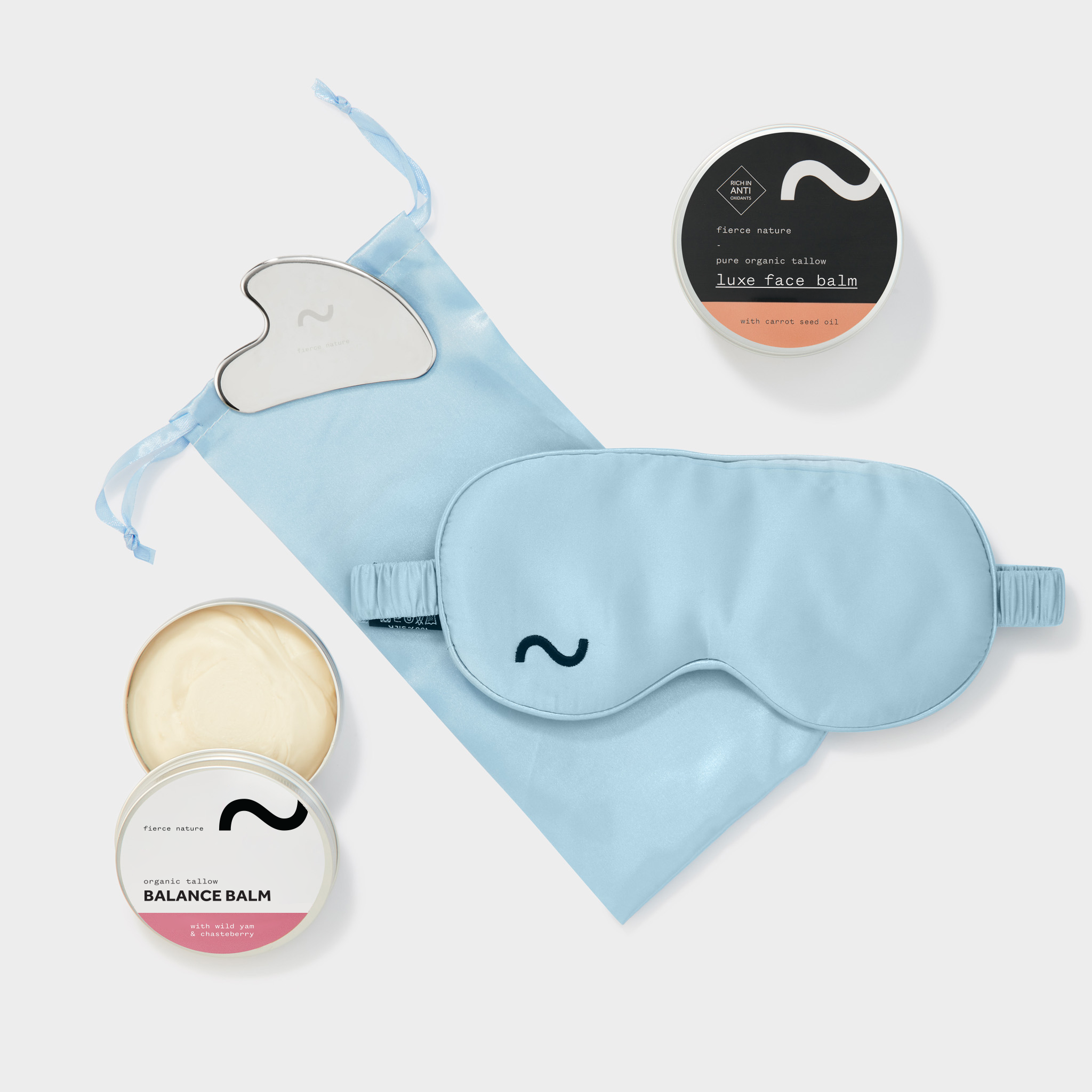
One balm is recommended for daily, all-round care during changing skin seasons, whether that’s pregnancy, postpartum recovery, or simply a stretch of drier months. It’s formulated to absorb well without leaving a heavy film, which matters when you’re applying it morning and night across a growing belly, hips or thighs. Think of it as the balm you reach for without thinking twice.
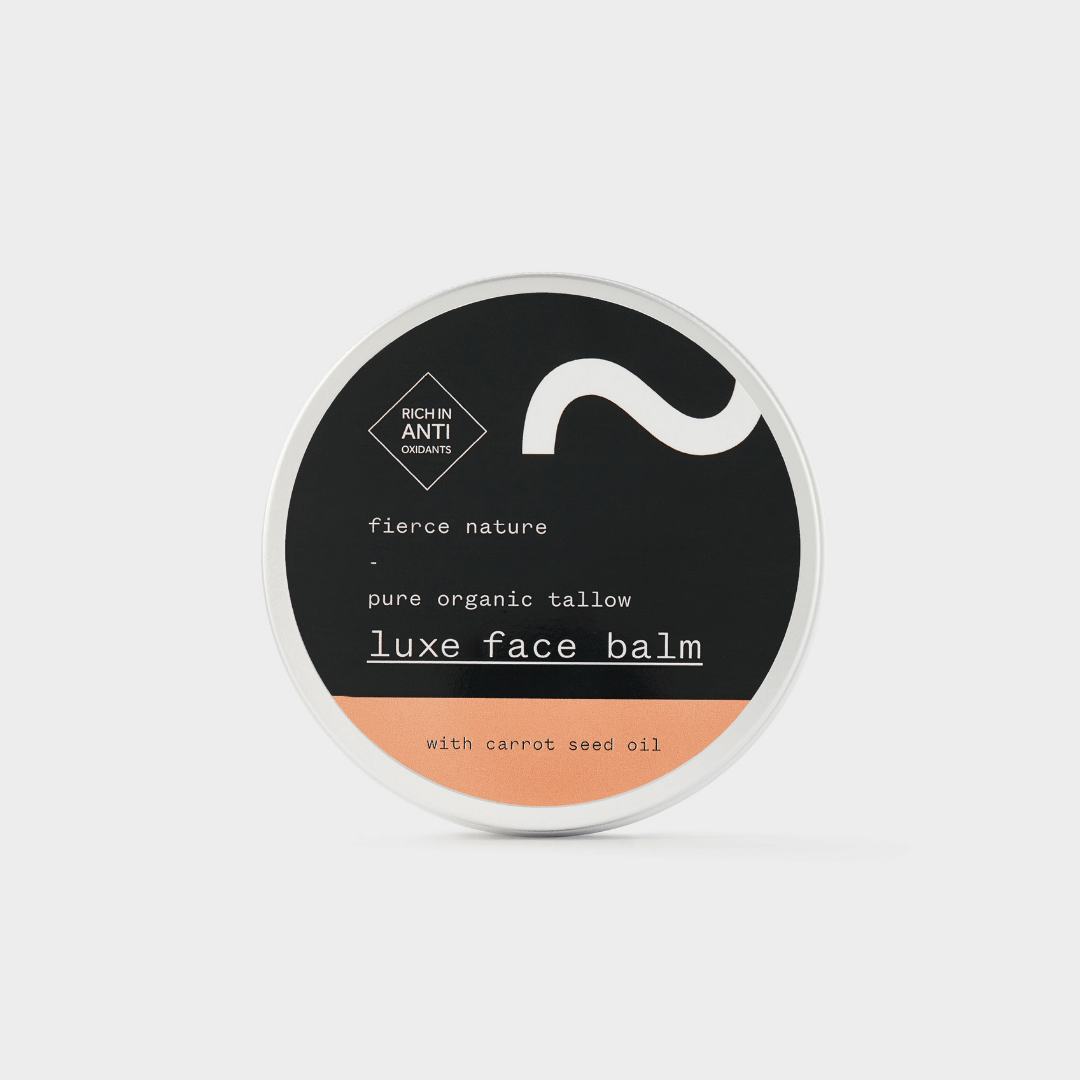
Another balm suits skin that wants a little more pampering, particularly if lighter lotions leave you feeling tight or under moisturised by evening. Its richer texture makes it a comforting choice for sensitive or reactive skin that reacts badly to synthetic fragrances or thin, watery creams. If your skin has ever flared up after trying a “miracle” stretch mark cream, this is worth a look.
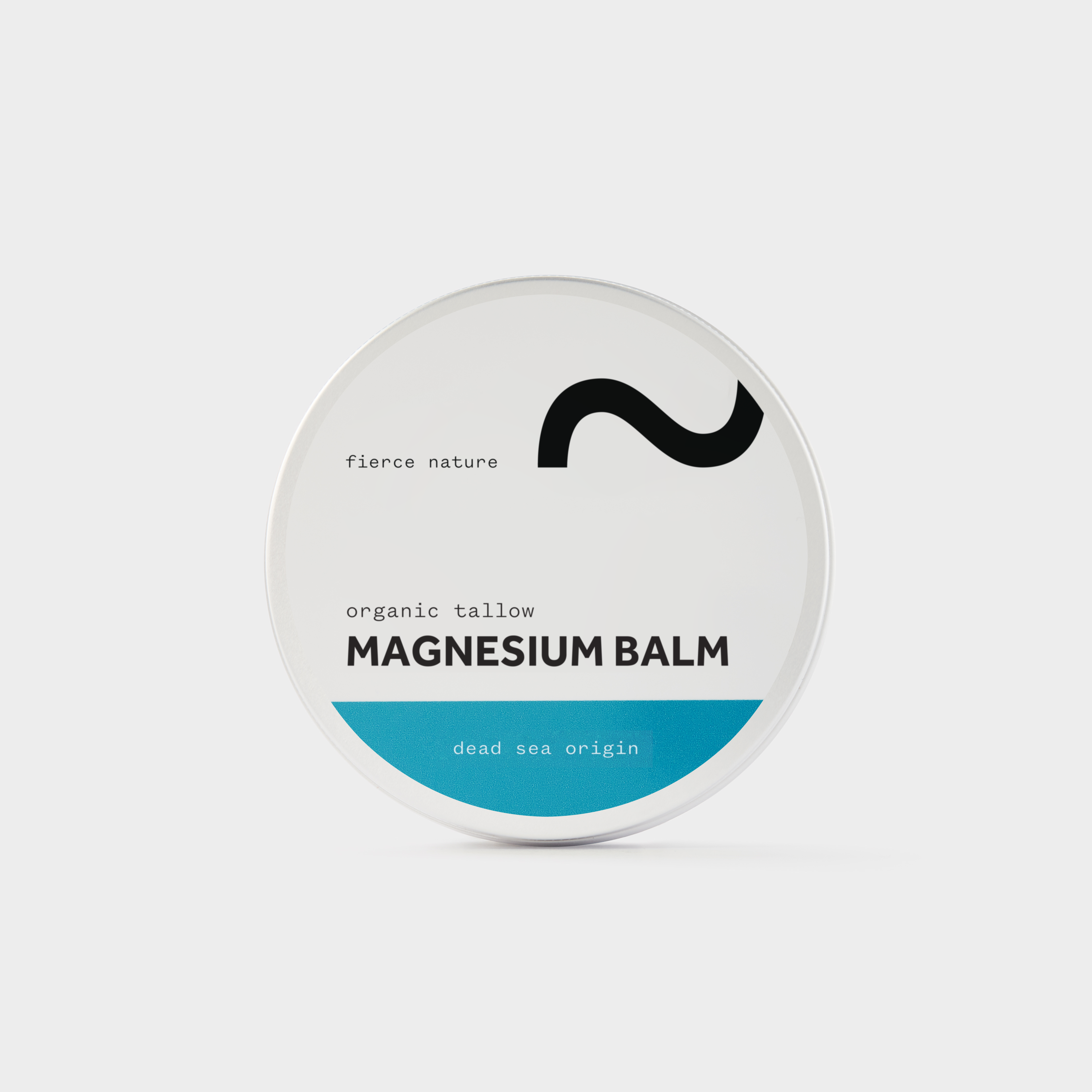
A third balm is for those who want moisturisation paired with topical magnesium, often used for restless legs, muscle cramps or general tension, common companions to late pregnancy and postpartum fatigue. It won’t outperform the others on pure hydration, but it earns its place for readers managing both skin comfort and muscular discomfort at once.
Beyond our own range, here’s how we’d think about matching any balm to your needs:
Comfort seekers: look for occlusive, butter-based formulas that create a barrier and reduce that tight, itchy feeling as skin stretches.
Sensitive skin: favour short ingredient lists, fragrance-free or naturally scented options, and always patch test first.
Extra minerals: consider a magnesium-enriched balm if cramping or restlessness is part of the picture, not just the marks themselves.
Budget-conscious buyers: a smaller sample size lets you trial texture and scent before committing to a full-size jar.
What the research actually says about stretch mark balms and creams
The evidence is more modest than most marketing suggests, and it’s worth knowing that before you spend a penny. A Cochrane review of six trials involving roughly 800 pregnant women found no high-quality evidence that topical preparations prevent stretch marks in pregnancy. The trials were small, used different products, and measured outcomes inconsistently, which makes strong claims about “prevention” hard to justify from the data available.
The honest reading of the research is this: moisturising a bump or thigh feels good and can ease the tight, itchy sensation that comes with rapidly stretching skin. What it hasn’t been shown to do, reliably, is stop marks forming in the first place.
The NHS guidance is similarly grounded. Stretch marks are common during pregnancy, affecting a large majority of pregnant women. They are harmless and often fade to paler, softer scars over time but may not disappear completely. The NHS also notes that laser or light treatment and microdermabrasion may improve appearance for some people, but these are not routinely available on the NHS and outcomes vary considerably from person to person.
The American Academy of Dermatology takes a slightly more optimistic angle for early marks specifically. Their guidance points to hyaluronic acid and prescription tretinoin as showing some benefit when applied to fresh, still-reddish stretch marks, before they’ve matured into paler, established lines. Tretinoin, though, is a retinoid, and retinoids are firmly off the table during pregnancy and breastfeeding. That caveat matters more than almost anything else in this article, so we’ll return to it.
Then there’s the marketing layer, which is where a lot of consumer confusion starts. UK advertising rules require brands to hold robust, product-specific clinical evidence before making efficacy claims, and to separate what a formula does from what massage alone might achieve. In practice, that means a jar promising to “banish stretch marks in weeks” is making a claim that regulators would expect to see backed by trial data specific to that exact product, not just to one ingredient it contains. Trials of popular home remedies, including almond oil, cocoa butter, olive oil and vitamin E, have generally failed to show they prevent or fade stretch marks either, despite their long-standing reputation as folk remedies.
None of this means balms are pointless. It means their real, defensible job is comfort and moisturisation, not miracle prevention.
How to choose a stretch marks balm: ingredients, labels and safety checks
Knowing what to look for on a label turns a confusing shopping trip into a quick, confident decision. Here’s the order we’d work through it in:
Favour occlusives and humectants for comfort. Butters, oils and emollients create a barrier that locks in moisture, while humectants like hyaluronic acid draw water into the skin. Together, they’re your best bet for easing the tight, itchy sensation of stretching skin, even without proven prevention benefits.
Treat vitamin E, cocoa butter and almond oil as comfort ingredients, not cures. They feel lovely and have decades of anecdotal use behind them, but the trial evidence doesn’t support claims that they stop marks forming.
Check for retinoids and prescription actives before buying, especially in pregnancy. Tretinoin and other retinoids may help early marks outside of pregnancy, but they are contraindicated for anyone pregnant or breastfeeding. If a product doesn’t clearly state its full ingredient list, that’s a red flag in itself.
Read the full ingredient list, not just the front-of-pack claims. Look for fragrance and allergen warnings if you have reactive skin, and check whether a smaller sample size is available before you buy full price.
Patch test on a small area first, particularly if you’ve had skin reactions to mainstream cosmetics before, and give it 24 to 48 hours before applying more widely.
Pro Tip:If you’re unsure whether an ingredient is pregnancy-safe, don’t rely on the product’s own marketing copy. A quick check with your midwife or GP takes minutes and settles the question properly.
Our tallow-based approach to skin comfort leans deliberately into the first category: rich, bioavailable emollients that support the skin barrier, rather than actives that need a pregnancy safety conversation.
How to apply a stretch mark balm for the best results
Getting the routine right matters almost as much as the balm itself, because consistency is what gives any formula a fair chance to work. Here’s the sequence dermatology guidance and NHS advice both point towards:
Cleanse the area and apply to skin that’s still slightly damp, since damp skin absorbs balm more readily than dry skin.
Use a small amount, roughly a coin-sized dollop per area, rather than piling it on.
Massage in gentle, circular motions for around 60 seconds per area. This is where our body balm massage technique guide is worth a read if you’ve never done it properly.
Apply daily, ideally after a shower and again before bed, so it becomes part of a rhythm rather than an occasional afterthought.
Start as early as you comfortably can, whether that’s early pregnancy or the moment you notice new marks forming, because actives and massage both seem to have more influence on fresh, reddish marks than on ones that have already matured and faded. Give any routine at least eight to twelve weeks before judging whether it’s making a visible difference. Skin changes slowly, and a fortnight simply isn’t long enough to see anything meaningful.
To keep it consistent, tie application to something you already do daily, like your evening skincare or bedtime routine, and try a sample size first if you’re switching products. Stop immediately if you notice redness, itching or irritation that wasn’t there before.
When to consider clinical treatments and what to expect
Balms have a ceiling, and it’s worth knowing where that ceiling sits before you feel disappointed by a formula that was never going to remove established scarring on its own. Professional options exist for people who want to go further, though none of them offer guaranteed results.
Laser or light therapy can improve the appearance of stretch marks for some people, but results vary widely and it’s a private-pay service in the UK, not something offered on the NHS.
Microdermabrasion works by gently resurfacing the skin and may soften the look of marks, though again, outcomes aren’t consistent from person to person.
Chemical peels can help some established marks but typically need multiple sessions and carry a risk of irritation, particularly on sensitive skin.
Prescription tretinoin, used post-pregnancy and post-breastfeeding only, has some evidence behind it for early marks specifically, but it’s not an option while pregnant or nursing.
If you’re considering any clinic-based treatment, ask direct questions before booking: what evidence supports this specific device or peel, what improvement is realistic rather than best-case, how many sessions will you likely need, and what are the known side effects. A reputable clinic should answer all four without hesitation.
Why trust our recommendations on stretch mark care
Fierce Nature was built on a fairly personal frustration: a childhood spent battling unexplained skin rashes and reactions to mainstream cosmetics, and years of professional work since then understanding how much of that comes down to toxic load and harsh, hidden chemicals in seductive packaging. That history shapes how we talk about stretch marks too. We’d rather tell you plainly that no balm has strong evidence behind preventing them than sell you a promise we can’t back up.
Our approach is to be honest about what naturally sourced skincare can realistically offer: comfort, nourishment and a formula with a transparent ingredient list, not miracle prevention.
Every product in our Functional Balm Collection is handmade in the UK, built on an organic tallow foundation chosen for its bioavailability and long history as a skin emollient. We’ll update this article with proprietary trial data and third-party certifications as they become available.
Balm, cream or oil: does the packaging actually matter?
The format you choose affects how consistently you’ll actually use it, which matters more than any single ingredient. Balms tend to be thicker and more occlusive than creams, meaning they sit on the skin longer and create a stronger barrier against moisture loss. That makes them a solid choice for very dry or tight-feeling skin, particularly over a stretching bump or thighs where comfort is the priority.
Creams are typically lighter and absorb faster, which some people prefer for daytime use under clothing when a heavier balm might feel too rich. Oils sit somewhere in between: fast to apply, easy to massage in, but often less occlusive than a proper balm, so the moisturising effect may not last as long between applications.
None of these formats has been shown to outperform the others on actually preventing or fading stretch marks. The real difference is user experience. A balm you enjoy applying and massaging in daily will get used consistently. A cream that feels greasy under clothes or an oil that stains your sheets won’t, no matter how good its ingredient list looks on paper. Choose the format that fits your routine and skin feel, then commit to using it properly, since consistency does more heavy lifting here than formulation choice ever will.
Stretch marks, self-care, and letting go of perfection
Stretch marks are a normal, common part of how skin responds to growth, whether that’s pregnancy, puberty or simply a body changing shape over time. Around eight in ten pregnant women get them, and that’s not a flaw to fix, it’s just biology doing what it does.
We recommend moisturising balms because they genuinely make stretching, tight skin feel more comfortable, not because we believe they’ll erase every mark. Choosing a pregnancy-safe, evidence-aware formula is about caring for your skin as it changes, not chasing a version of your body that never had marks at all. Use these products for comfort, ritual and self-care. That’s a good enough reason on its own.
— Fierce Nature
Shop the balms we recommend for stretch mark comfort
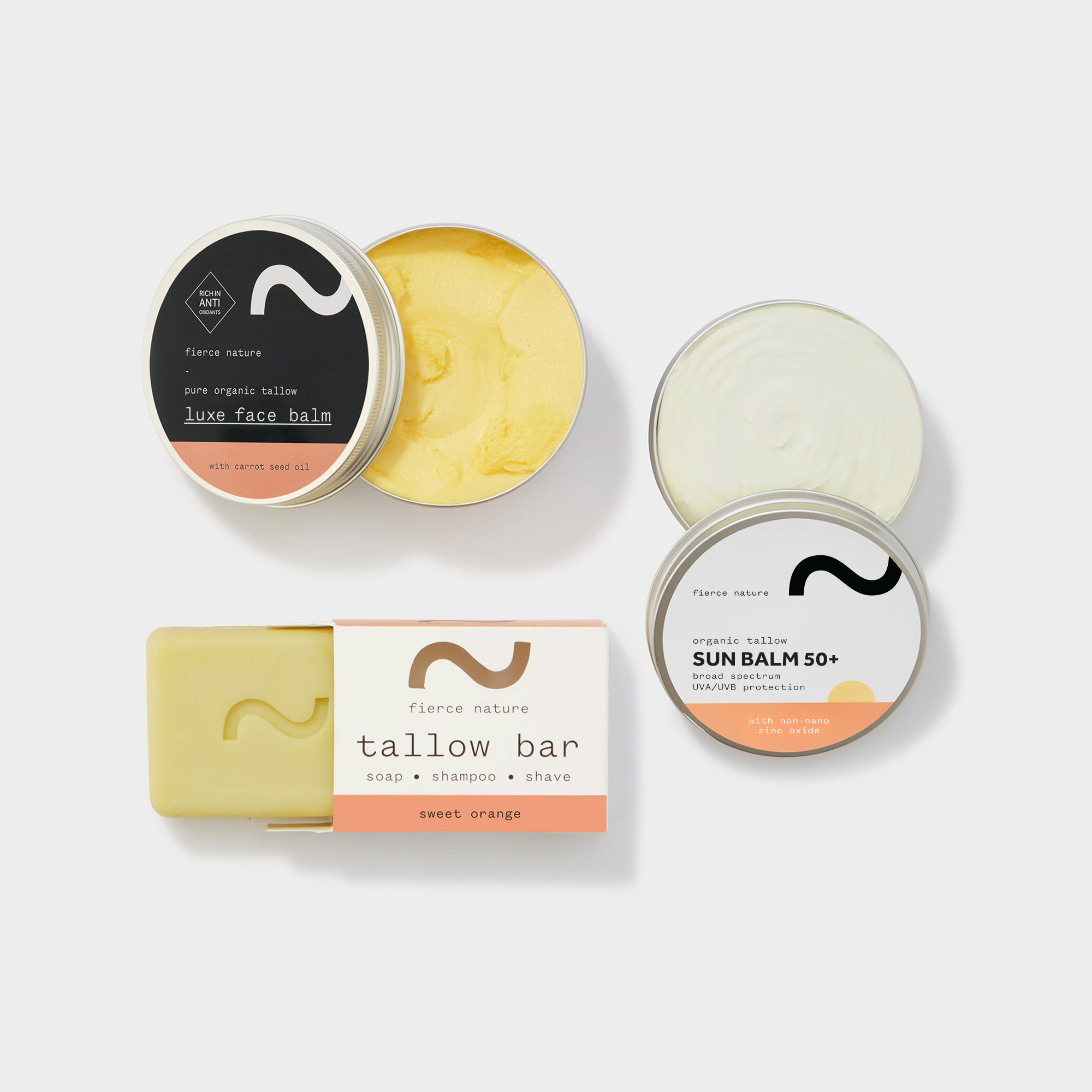
If daily comfort during changing skin is what you need, the Balance Balm is the sensible everyday pick, light enough for twice-daily use across a bump, hips or thighs without feeling heavy under clothing. For richer, more pampering care, particularly if your skin is sensitive or reactive to synthetic fragrance, the Luxe Balm offers a more indulgent texture that suits an evening ritual. And if you’re managing muscle tension or restlessness alongside skin changes, the Magnesium Balm pairs moisturisation with topical magnesium in one step.
All three are handmade in the UK on an organic tallow base, with full ingredient transparency so you can check what’s inside before you buy, an important step if you’re pregnant or breastfeeding and screening out retinoids and other prescription actives. If you’d rather browse the full range and compare textures side by side, our Face and Body Balms collection covers the complete line-up. Pick the one that matches your skin’s mood this week, add it to your routine, and give it the eight to twelve weeks that any fair trial needs.
Sources used in this article
NHS — , stretch marks guidance on prevalence, fading and treatment options including laser and microdermabrasion.
Cochrane — , systematic review of six trials on topical preparations for preventing stretch marks in pregnancy.
ASA/CAP — , UK advertising guidance on evidence standards for cosmetic efficacy claims.
This article is general information, not a substitute for advice from a qualified doctor. Consult a qualified healthcare professional about your own circumstances before acting on anything here.
FAQ
Do stretch mark creams and balms actually work?
They work well for comfort and moisturisation, easing the tight, itchy feeling of stretching skin, but a Cochrane review of six trials found no high-quality evidence that topical preparations prevent stretch marks in pregnancy. Think of them as skin comfort tools rather than prevention treatments.
What did Kim Kardashian use for her stretch marks?
Celebrity skincare routines are rarely backed by published clinical evidence specific to the products used, so we can’t verify or recommend based on individual celebrity claims. The safer approach is choosing a balm with a transparent ingredient list and pregnancy-safe labelling, then applying it consistently.
How can I reduce the appearance of stretch marks naturally?
Daily massage with a moisturising balm on clean, slightly damp skin, done consistently for eight to twelve weeks, is the most evidence-aware natural approach available. Starting early on fresh marks, rather than waiting until they’ve matured, gives you the best realistic chance of a visible change in comfort and appearance.
Are retinoid creams safe for stretch marks during pregnancy?
No. Retinoids, including prescription tretinoin, have shown some benefit for early stretch marks in dermatology research, but they are contraindicated during pregnancy and breastfeeding. Always check the full ingredient list and speak to your midwife or GP if you’re unsure about any active ingredient.
Stop using the suspected deodorant straight away and rinse the area gently with lukewarm water or a soap substitute. Pat the skin dry, then apply a bland emollient regularly to support the barrier. If the skin is visibly inflamed, a pharmacist can often advise on short-term hydrocortisone 1%. See a GP if the rash spreads, weeps, or shows no improvement within a few days.
TL;DR:
Nearly all deodorant rashes result from irritation or allergy, with fragrance, aluminium salts, preservatives, and friction as common triggers.
Short-term use of hydrocortisone and continuous emollient application help calm and repair the skin before trying a new deodorant.
It is essential to introduce new products gradually, patch-test on healed skin, and avoid switching immediately to natural deodorants without ingredient checks.
Recovery may take weeks of gentle, consistent care, and full barrier restoration is more important than quick product swaps.
Seek medical advice if the rash spreads, worsens, or shows signs of infection, or if multiple reactions occur despite avoiding triggers.
Fierce Nature
Nourish Sensitive Skin Naturally
Fierce Nature makes handmade UK skincare with pure organic tallow and naturally sourced ingredients for face and body care.
Most deodorant rashes come down to one of two mechanisms: irritation or allergy, and telling them apart matters because the fix differs. Irritant contact dermatitis is the more common culprit in the underarm, where sweat, friction, and harsh ingredients weaken the skin barrier over repeated use. Allergic contact dermatitis, by contrast, involves immune sensitisation to a specific ingredient and tends to appear after your skin has already been exposed to that substance before, sometimes for months or years without issue.
Fragrance is the single most frequent trigger in cosmetic contact dermatitis. Beyond fragrance, several other ingredients and habits routinely cause flare-ups:
Aluminium salts in antiperspirants, which can irritate already-compromised skin.
Propylene glycol and preservatives, common in both mainstream and “natural” formulations.
Lanolin, a frequent hidden allergen in balms and creams.
Friction and shaving, which strip the barrier and let irritants penetrate more easily.
Trapped sweat, particularly under synthetic fabrics.
Timing offers a clue too. Irritant reactions often appear within hours of application and improve quickly once you stop. Allergic reactions can take a day or two to develop and tend to linger. Not every armpit rash is deodorant-related, either. Yeast infections, bacterial folliculitis, eczema, psoriasis, and simple razor burn can all mimic the same redness and itch. See a GP promptly if you notice spreading redness, pus, fever, or no improvement after several days of gentle care.
How to soothe the rash safely at home
Once you’ve identified deodorant as the likely trigger, a calm and consistent routine does most of the work. Follow this sequence for the first few days:
Cleanse gently. Use lukewarm water and a soap substitute or unscented cleanser. Hot water and vigorous scrubbing will only aggravate broken skin.
Pat dry, never rub. Rubbing reopens micro-tears in already sensitive skin.
Apply emollient generously and often. Smooth it on while the skin is still slightly damp, rather than rubbing it in, and reapply through the day. Regular emollient use genuinely reduces how often you’ll need a steroid cream.
Add hydrocortisone 1% if there’s visible inflammation. Used sparingly and for a short course, it can calm redness quickly, but check with a pharmacist first, particularly for underarm skin, which is thinner and more absorbent than most.
Cool the area if it’s hot or stinging. A clean, cool compress for a few minutes brings quick relief without adding another product to an already irritated patch.
Avoid shaving until the rash has settled. A razor over inflamed skin is one of the fastest ways to turn a mild irritation into a much angrier one.
Choose breathable fabrics. Cotton over synthetics reduces trapped sweat, which is itself an irritant.
Pro Tip:If you’re using both an emollient and a hydrocortisone cream, apply the steroid first and wait around 20 to 30 minutes before layering the emollient on top, so each one absorbs properly rather than diluting the other.
Some kitchen-cupboard remedies do more harm than good here. Skip tea tree oil, baking soda, undiluted essential oils, and exfoliating acids entirely. Damaged skin is far more permeable than healthy skin, so these substances penetrate deeper and irritate more, not less, however “natural” they sound. A gentle soap substitute for sensitive underarms is a safer starting point than anything with active or fragranced ingredients.
When should you see a pharmacist or GP?
A pharmacist is usually your fastest route to relief. Under the NHS Pharmacy First scheme, many pharmacies can supply hydrocortisone 1% for a localised, inflamed rash without a GP appointment, guided by a Patient Group Direction. Typical advice is a thin layer once or twice daily for a short course, generally no more than fourteen days, and only while inflammation is visible.
Book a GP appointment instead of relying on the pharmacy counter when:
The rash covers a large area, or keeps spreading despite avoiding the trigger.
There’s swelling, pus, warmth, or other signs suggesting infection rather than simple irritation.
Hydrocortisone hasn’t helped after a short course, which may mean a stronger steroid or a different diagnosis is needed.
The reaction keeps recurring with different products, which points towards a genuine allergy rather than one-off irritation.
The affected person is a young child or pregnant, where steroid strength and duration need closer medical judgement.
For recurring reactions, a GP may refer you for patch testing. This involves having small amounts of suspect allergens taped to your back for around 48 hours, with the results read roughly 96 hours after application. It identifies true allergens rather than general irritants, so it’s most useful when the same pattern keeps returning despite you avoiding the obvious triggers.
How to prevent it happening again
Prevention starts with what you put on your skin next, not just what you stopped using. Reach for products labelled “fragrance-free” or “without perfume” rather than “unscented,” since unscented formulas can still contain masking fragrances added purely to hide the scent of other ingredients. Read the full ingredient list, not just the front-of-pack claims.
Introduce one new product at a time, so if a reaction happens, you know exactly what caused it.
Keep the packaging or photograph the ingredient list before you throw anything away. If you do end up needing patch testing, dermatologists often want to test the actual product.
Patch-test on healed skin before returning to regular use. A small amount on the inner forearm for 48 hours is a sensible check.
Rethink shaving habits. Shave in the evening rather than before applying anything, and always use a sharp, clean blade to cut down on friction.
Loosen up on tight synthetic clothing, especially during warmer months when sweat and friction compound each other.
Pro Tip:Resist the urge to jump straight to another “natural” deodorant the moment your skin calms down. Comparing full ingredient lists side by side, rather than trusting marketing language, is what actually prevents a repeat reaction. If your skin keeps flaring no matter what you switch to, formal patch testing with a written record of every product tried gives a dermatologist far more to work with. Our guide on testing skincare products for sensitive skin walks through exactly how to do this at home.
Why barrier repair matters as much as the remedy itself
Fierce Nature began with a very personal frustration. Growing up in South Africa surrounded by mainstream cosmetics, shaving gels, and lipsticks, our founder spent her teenage years battling skin rashes and reactions with no clear explanation, until a decade of studying gut health and toxic load revealed how much of what we’re told about beauty products simply doesn’t hold up.
Once a rash has calmed and the trigger has been removed, the skin still needs help rebuilding. Bland, bioavailable emollients support that barrier repair without reintroducing the fragrances or harsh actives that caused the problem in the first place. Tallow-based balms work well here because their fatty acid profile is close to what skin naturally produces, making them easy for recovering skin to absorb without extra irritation. For a deeper walk-through of the repair process itself, see our guide on restoring a healthy skin barrier.
Our take: treat the skin, not just the symptom
Most advice on deodorant rash stops at “switch products and hope for the best.” That’s backwards. The evidence points clearly to a sequence: remove the trigger, calm the inflammation with an appropriately short course of hydrocortisone where needed, then rebuild the barrier with consistent, bland emollient use. Skipping straight to a new “natural” deodorant without that middle step is exactly why so many people cycle through product after product, blaming each one in turn.
What’s underrated is patience. Stopping the offending product brings relief quickly, but full barrier recovery can take weeks, not days, and expecting an overnight fix leads people to test new products too soon. What we’d prioritise first isn’t a clever ingredient swap. It’s giving the skin time and consistent, gentle care before introducing anything new at all. That discipline matters more than any single product choice.
— Fierce Nature
Products to support recovery and prevention
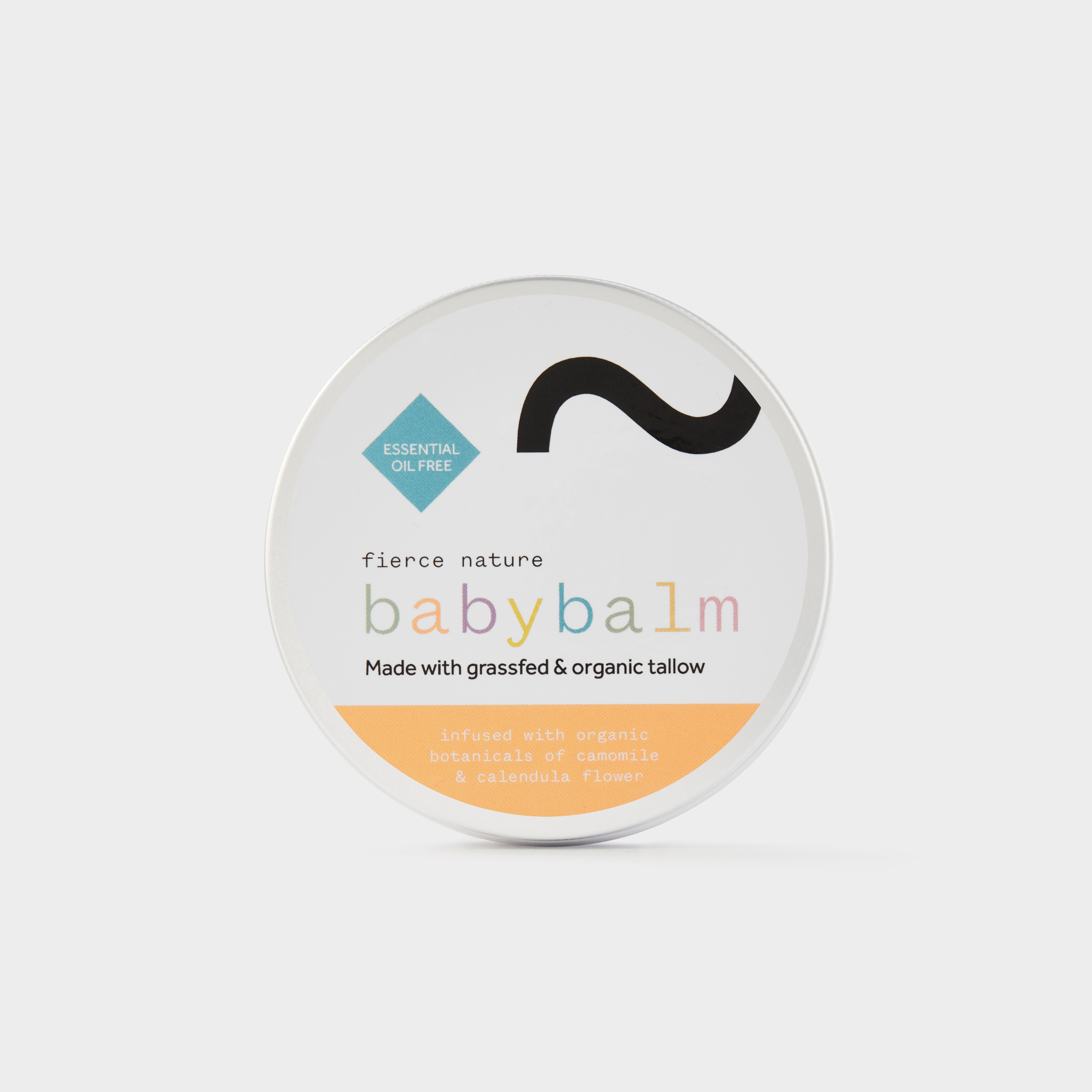
Once the acute rash has settled, choosing what goes back onto your skin matters just as much as what you took off. Fierce Nature’s Non-toxic Baby Skin Essentials were formulated for exactly the kind of delicate, reactive skin that’s recovering from irritation, making them a sensible starting point when you want simplicity over another long ingredient list. The Baby Balm works as a gentle everyday emollient once the acute inflammation has settled, smoothed on rather than rubbed in, following the same technique that supports barrier repair generally.
For sun-exposed areas once skin has fully healed, the New Sun Balm SPF 50+ PA++++ offers protection without the harsh chemical filters that can reignite sensitivity. As with any new product, avoid applying over open or weeping skin, and always patch-test on a small healed area first. Browse the full Face and Body Balms range or get in touch with customer service if you have questions about specific ingredients before you buy.
Where this advice comes from
This guide draws on NHS guidance on contact dermatitis and its treatment, Pharmacy First hydrocortisone supply rules, and dermatology patch-testing resources. Always follow direct NHS or GP advice over self-treatment if your rash is severe, spreading, or recurring.
This article is general information, not a substitute for advice from a qualified doctor. Consult a qualified healthcare professional about your own circumstances before acting on anything here.
FAQ
How do I get rid of a deodorant rash fast?
Stop using the product immediately and rinse the area with lukewarm water. Apply a bland emollient generously several times a day, and ask a pharmacist about a short course of hydrocortisone 1% if the skin is visibly inflamed.
How can I treat an allergic reaction to deodorant?
Remove the trigger product and treat the skin gently with emollients and, where needed, hydrocortisone 1% for a short period. If reactions keep recurring with different products, ask your GP about patch testing to identify the specific allergen.
How long does a deodorant rash take to go away?
Simple irritation often eases within a few days of stopping the product and starting gentle emollient care. Full barrier recovery, however, can take weeks rather than days, so give your skin time before introducing a new product.
What’s the fastest way to calm an underarm rash?
Cool compresses bring quick relief from heat and stinging, while consistent emollient use, applied while skin is still slightly damp, calms the barrier over the following days. A tallow-based balm such as Fierce Nature’s Baby Balm can support that recovery once the acute reaction has settled.
Can I switch straight to a natural deodorant after the rash heals?
Not straight away. Introduce any new product slowly and patch-test it on healed skin first, since jumping to another “natural” option without checking its full ingredient list is one of the most common reasons rashes come back.
Yes, dry shampoo works after a workout, and it can genuinely rescue sweaty, flat hair between washes. A non-aerosol mist or a tinted powder formula built for sweat performs best, absorbing oil at the roots without leaving a chalky cast. Treat it as a refresher, not a replacement for washing; give your scalp a proper wash after one or two dry-shampoo sessions to keep it happy.
TL;DR:
Dry shampoo works best on damp roots and should be applied after towel blotting and cool-down to prevent clumping and uneven absorption.
Non-aerosol mist formulations, especially tinted powders, handle sweat better and leave less visible residue on darker hair compared to aerosol powders.
Using dry shampoo after workout should be limited to one or two sessions before washing to prevent buildup that can cause scalp irritation or hair shedding.
For frequent workouts, pair dry shampoo with weekly clarifying masks to keep scalp buildup and irritation under control.
Gentle application and proper technique, including sectioning hair and avoiding vigorous rubbing, maximize freshening and minimize scalp irritation.
Fierce Nature
Explore Nature-Based Skin Care
Fierce Nature creates handmade, tallow-based skincare in the UK using premium, naturally sourced ingredients and organic tallow.
How to use dry shampoo after a workout, step by step
Sweaty hair needs a slightly different approach to your usual morning touch-up, because there’s more moisture and salt sitting on the scalp. Rushing straight in with product on soaking wet roots just gives you clumps rather than a refresh.
Here’s the routine we recommend for the changing room or straight after a home workout:
Cool down first. Let your body temperature drop for a few minutes so you stop actively sweating before you touch your hair.
Towel blot the roots. Press (don’t rub) a towel against your scalp to lift excess sweat, particularly at the nape and behind the ears where moisture collects most.
Section your hair. Part it into two or three sections so product reaches the scalp rather than coating the mid-lengths.
Apply sparingly. One or two pumps or sprays per section is usually enough, held a few centimetres from the scalp.
Let it sit for 15 to 30 seconds. This gives the formula time to absorb oil before you disturb it.
Massage or brush through. Work it in with your fingertips, then finish with a brush to distribute evenly and avoid visible powder.
Finish with cool air. A minute of cool air from a hairdryer, or simply air, speeds up drying and stops product from turning gritty.
If your roots are still properly wet rather than damp, skip the product and blot again first. Applying dry shampoo to soaked hair almost never absorbs well; it just sits on top.
Pro Tip:Apply product to the nape and behind the ears before the crown. Those areas sweat first and dry last, so they need the extra head start.
Which dry shampoo format actually works on sweaty hair?
Not every format handles sweat the same way, and this is where a lot of people get frustrated with products that worked fine on “normal” greasy roots but fail after a proper session.
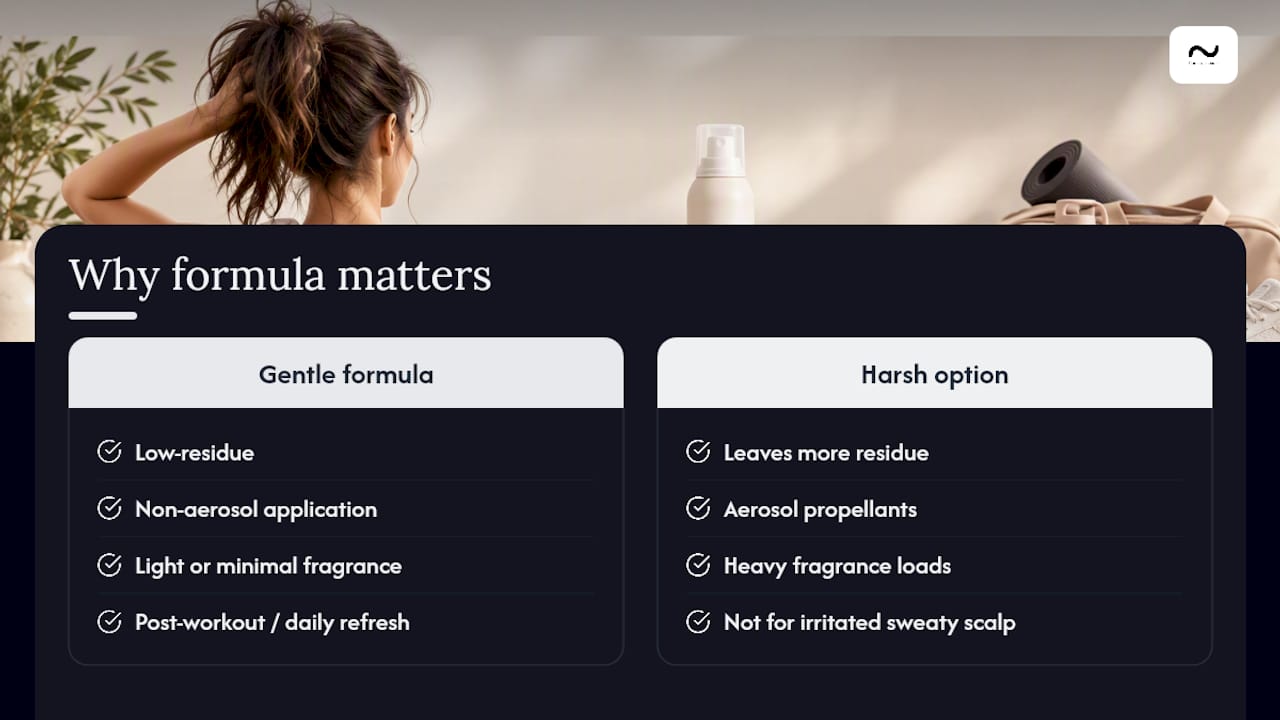
Non-aerosol mists tend to perform best on damp, sweaty scalps. Dual-phase formulas that combine a light liquid carrier with an oil-absorbing powder are designed specifically to work on hair that isn’t bone dry, which is exactly the state your roots are in post workout. They distribute more evenly than a straight powder spray and are far less likely to leave the white cast that plagues traditional aerosols.
Aerosol powder sprays, by contrast, can struggle in humid or heavily sweaty conditions. The propellant and powder combination was built for dry oil, not moisture, so on wet roots it often turns gritty or sits as a visible white residue, particularly noticeable on darker hair.
Tinted and powder formulas solve the residue problem for brunettes specifically. A tinted dry shampoo matched to your hair colour blends in rather than sitting on top as pale dust, which matters far more after a sweaty session than on a normal “skip wash day” morning.
Non-aerosol mists: best for damp, sweaty roots and lower residue risk
Aerosol powders: prone to grittiness and white cast in humid, high-sweat conditions
Tinted powders: reduce visible residue on darker hair tones
Low-residue, non-toxic formulas tend to be gentler for sensitive or reactive scalps
If your scalp reacts easily, the ingredient list matters as much as the format. Fragrance-heavy aerosols and harsh absorbents can aggravate a scalp that’s already slightly irritated from sweat and friction.
How often can you safely use dry shampoo after workouts?
Dry shampoo is a bridge to your next wash, not a substitute for it. Dermatology guidance is consistent on this point: dry shampoo soaks up surface oil, but it doesn’t remove dead skin cells, sweat residue, or the microorganisms that build up on an active scalp. Most dermatologists suggest washing after one or two dry-shampoo uses rather than stringing several days together.
Train four or five times a week and reach for dry shampoo after every single session, and you’re asking a lot of your scalp. Clinical commentary on frequent use points to a real risk: repeated buildup without washing can contribute to follicular occlusion, itching, and in some cases a temporary increase in shedding for people who are already prone to scalp sensitivity.
Watch for these warning signs that it’s time to wash, not spray again:
Persistent itching or tightness at the scalp
Flaking that looks greasy rather than dry
A tender or tingling feeling when you touch your roots
If you notice ongoing flaking alongside redness, that can point towards seborrhoeic dermatitis. NHS guidance for that condition recommends medicated anti-yeast shampoos used once or twice weekly alongside regular washing, rather than masking symptoms with dry shampoo. Anyone with thinning hair or a diagnosed scalp condition should wash more frequently and speak to a clinician if irritation persists, rather than leaning on dry shampoo as a workaround. A clarifying or detox wash every week or two also helps reset the scalp between routine washes.
Quick hairstyles that make the most of refreshed hair
Once your roots are refreshed, the right style hides any remaining dampness and gets the most out of the texture dry shampoo leaves behind.
Low bun or ponytail: the slight grip dry shampoo adds to roots actually helps a low style hold its shape better than freshly washed, slippery hair.
Half-up knot: keeps damp hair off your neck while the crown finishes drying, ideal straight after a hot session.
Rope braid or headband trick: both conceal any unevenness at the parting while product finishes settling in.
Finger tousle, not a full brush: a light tousle through the ends adds volume without disturbing the product you’ve just worked into the roots.
Avoid brushing hard through freshly sprayed roots. A gentle finger comb keeps the oil-absorbing layer intact where you need it most.
Fierce Nature’s perspective: why formula matters more than the label
The founder of the brand grew up battling unexplained skin rashes and reactions from mainstream cosmetics, which is what set the company on the path towards non-toxic, naturally sourced formulations. That background shapes how we think about anything applied close to the scalp, including a quick post-workout fix.
A sweaty, slightly irritated scalp is not the moment for harsh aerosol propellants or heavy fragrance loads. Low-residue formulas matter more after exercise than on an ordinary greasy day, because the scalp barrier is already working harder from heat, friction, and salt. That’s the thinking behind keeping the dry shampoo range non-aerosol and gently formulated rather than chasing instant, powder-heavy results.
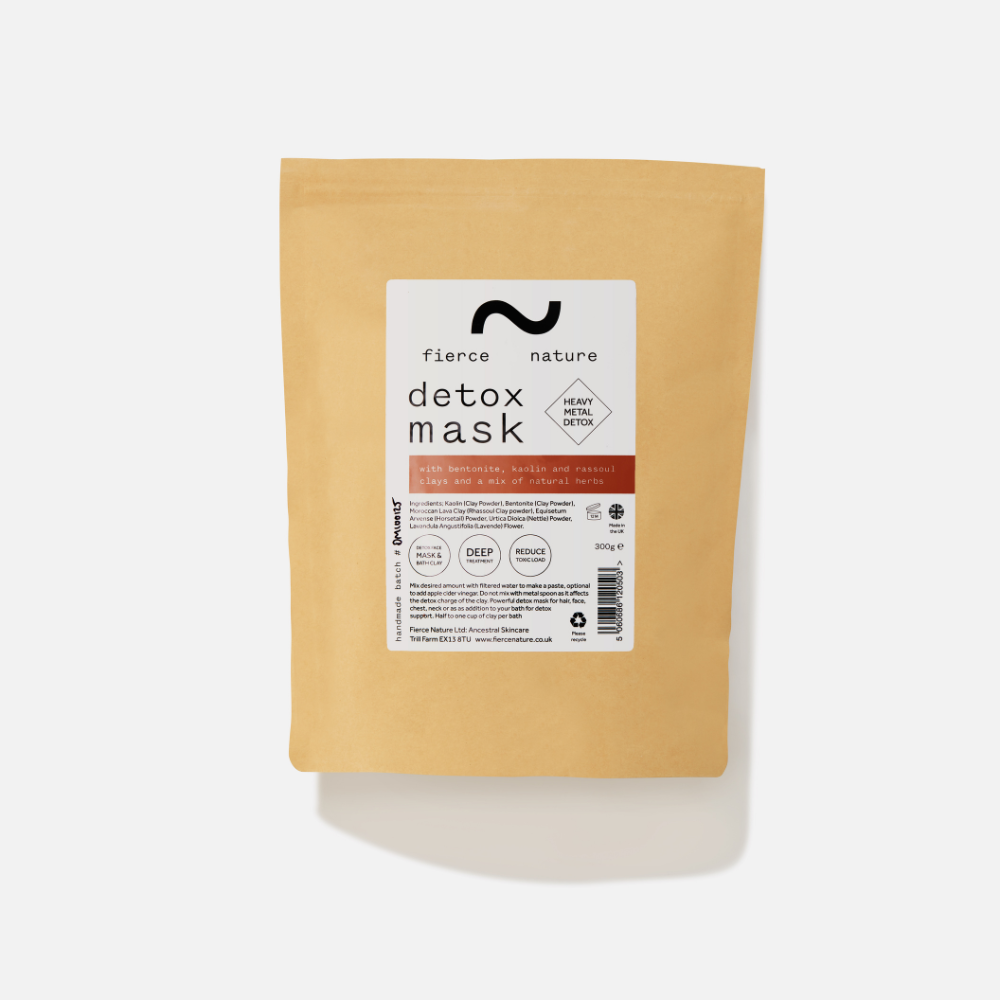
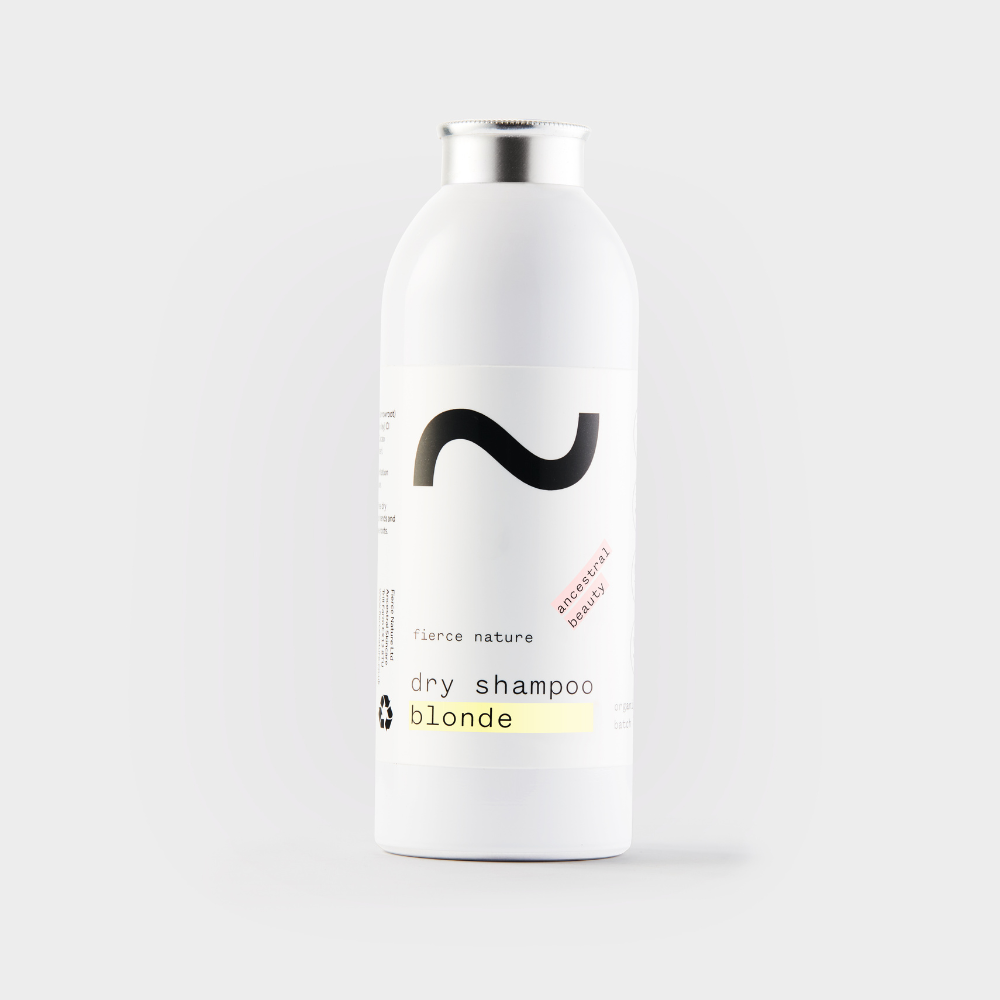
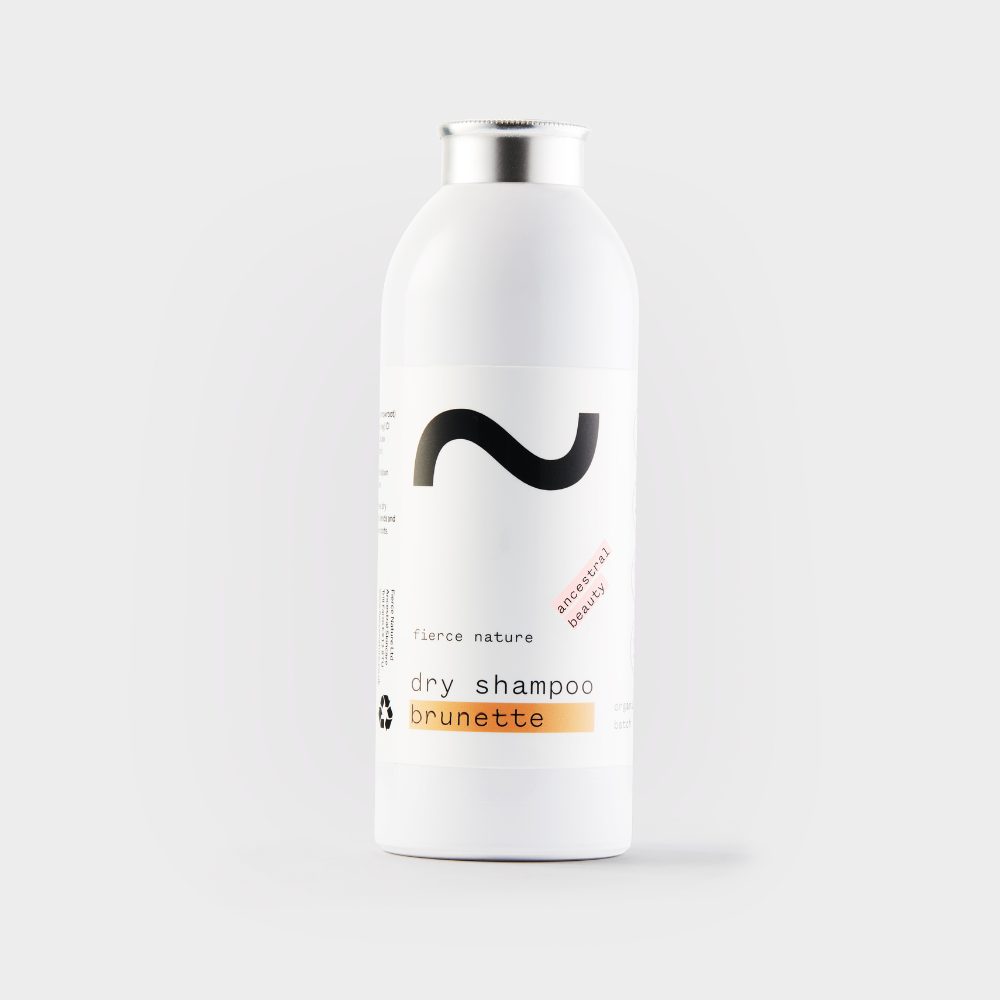
Within our own range, the Dry Shampoo (Brunette) and Dry Shampoo (Blonde) formulas handle the daily post-workout refresh, while the Detox Mask is built for the deeper, less frequent clean your scalp still needs.
— Fierce Nature
Fitting Fierce Nature’s dry shampoos into your gym-bag routine
There are plenty of aerosol powders on the shelf, but most weren’t built for a scalp that’s just finished a hard session. Fierce Nature’s Dry Shampoo (Brunette) and Dry Shampoo (Blonde) are formulated to work with your natural tone rather than dust it grey, using the sectioning and short sit time covered earlier in this guide. Keep one in your gym bag and apply it to damp, blotted roots straight after cooling down, rather than immediately after exercising.
For the days your scalp needs more than a refresh, the Detox Mask for Hair and Skin clears the buildup that dry shampoo alone can’t touch, ideal once a week if you train often. Pair it with the wider Hair Care range for a routine that supports your scalp between full washes rather than just masking the sweat.
Ready to build your kit? Browse the Dry Shampoo (Brunette) and Dry Shampoo (Blonde) pages now and add the Detox Mask to your next order for a proper reset.
FAQ
Is dry shampoo good after the gym?
Yes, dry shampoo is a genuinely good option straight after the gym, provided you use a low-residue, non-aerosol format on properly blotted roots. It absorbs sweat and oil quickly, but it should sit alongside regular washing rather than replace it entirely.
What should you not do straight after a workout?
Avoid piling product straight onto soaking wet hair, since it won’t absorb properly and tends to clump. Skip vigorous towel rubbing at the scalp too; a gentle blot works far better and avoids irritating skin that’s already warm and sensitive from exercise.
How do you clean sweaty hair without washing it?
Blot the scalp with a towel, section the hair, and apply a non-aerosol dry shampoo mist or tinted powder to the roots, letting it sit for 15 to 30 seconds before massaging or brushing through. Finish with cool air to help the product set without going gritty.
How can you freshen up after the gym without showering?
A quick roots refresh with dry shampoo, combined with a cooling face mist or wipe and a fast style like a low bun, covers most of what a shower would do for your appearance. Dermatology guidance still recommends washing after one or two of these quick refreshes to keep the scalp genuinely clean.
Yes, mineral sunscreen can be water resistant. Formulas are tested to hold their SPF for either 40 or 80 minutes in water or sweat, and a suitable mineral sun balm option is designed for active days like this. Whichever product you choose, reapply every 2 hours, straight after that 40 or 80 minute water window, and immediately after towelling.
TL;DR:
Water-resistant mineral sunscreens are tested for 40 or 80 minutes of SPF retention during water or sweat exposure, but require reapplication afterward.
Formulation ingredients such as film-forming polymers and skin oils are crucial in keeping mineral filters like zinc oxide attached during water activities.
Balms and sticks generally offer better adhesion on high-point areas like the nose and shoulders, while lotions spread faster but may need more effort to blend.
Mineral sunscreens are suitable for sensitive or reactive skin because they sit on the surface rather than being absorbed, reducing irritation risk.
Reapplication is essential every two hours, immediately after water exposure, and after towel drying, regardless of the water-resistance rating.
Fierce Nature
Nourish Skin With A Natural Balm
Fierce Nature makes handmade UK skincare with organic tallow and naturally sourced ingredients for face and body care.
No sunscreen is waterproof. That phrase gets repeated across the industry for good reason: it stops people relying on a single application to see them through an entire day of swimming, paddle boarding, or a sweaty hike. What “water resistant” actually describes is a laboratory test, not a permanent shield.
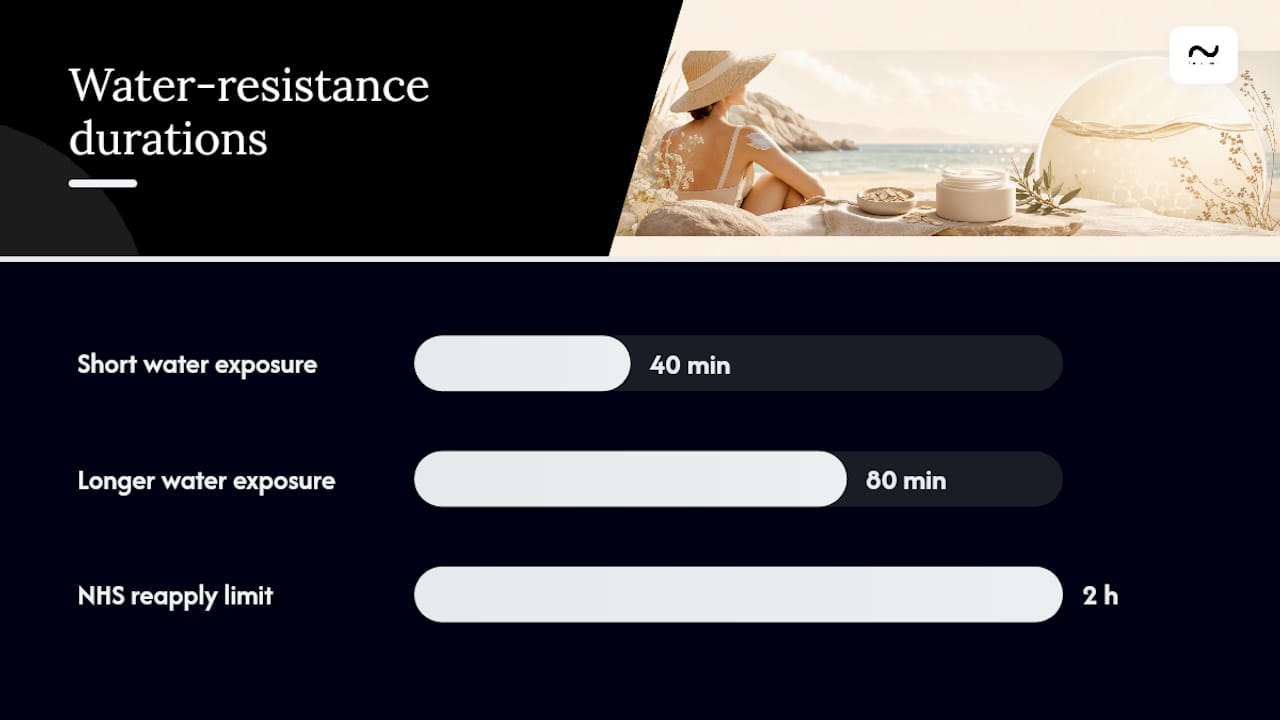
Sunscreens are tested to maintain their SPF while swimming or sweating for either 40 or 80 minutes. Those two numbers are the only standard ratings you will see, and the difference matters when you are planning your day.
40 minutes suits shorter dips, paddling with the kids, or a quick swim between sunbathing.
80 minutes suits longer swims, watersports sessions, or anyone who sweats heavily during exercise.
Neither rating means you can skip reapplying. NHS guidance is clear that you should reapply at least every 2 hours, and straight away after your 40 or 80 minutes is up, or after towelling off.
Towelling removes protective layers regardless of what the bottle says, so pat skin dry where possible and reapply rather than rubbing vigorously.
Water-resistance ratings apply for a fixed window only. Once that 40 or 80 minutes has passed, or you have towelled dry, your protection needs topping up. There is no version of mineral SPF, or any SPF, that lasts indefinitely in water.
Treat the rating as a countdown timer that starts the moment you get wet, not a badge that lasts the whole afternoon.
How do mineral filters work, and why does formulation matter?
Zinc oxide and titanium dioxide are the two active ingredients behind every mineral sunscreen. Unlike chemical filters, which absorb UV rays and convert them to heat, mineral actives sit on the surface of the skin and physically deflect and scatter light. That sitting-on-top action is precisely why formulation is so important for water resistance.
A mineral filter alone will not survive a swim. What keeps zinc oxide clinging to your shoulders through 80 minutes of breaststroke is everything else in the formula: film-forming polymers, plant waxes, clays, and skin-loving oils like squalane that help the actives bond to skin rather than sliding off with sweat or pool water. Many premium formulas now combine these film-forming ingredients with barrier-supporting oils specifically to balance adhesion with comfort.
This is also why format changes everything:
Balms and sticks tend to grip better on high-point areas such as the nose, ears, cheekbones, and shoulders, the spots that take the brunt of both sun and friction from goggles or straps.
Lotions spread faster over larger areas like the back and legs but can need a firmer hand to work in evenly.
Fluids and sprays are quick but often need more reapplications to match the same coverage.
The trade-off with any mineral formula is texture. Because the filters sit on top of skin rather than absorbing in, mineral sunscreen can take a little more work to blend, and some people notice a lingering white cast, particularly on deeper skin tones. That extra thirty seconds of rubbing in is the price of a filter that does not need to be absorbed to work.
Pro Tip:For swimming, watersports, or anything involving a towel, reach for a balm or stick over the nose, ears, and shoulders even if you are using a lotion everywhere else. Those areas dry fastest and lose protection first.
Is mineral sunscreen right for your skin?
Sensitive and reactive skin tends to get on far better with mineral formulas than with chemical ones, and there is a straightforward reason for it. Because zinc oxide and titanium dioxide sit on the skin’s surface rather than being absorbed, they are far less likely to trigger the stinging, redness, or breakouts that some chemical filters cause. Dermatological brands routinely position mineral formulas as the better-tolerated choice for allergy-prone or intolerant skin, which is why so many parents default to mineral SPF for young children too.
That does not mean mineral sunscreen suits everyone without a second thought. A few things worth knowing before you commit to a product:
White cast is the most common complaint, and it is usually worse with higher concentrations of zinc oxide. Tinted or sheer formulations are specifically designed to counter this, blending into most skin tones rather than sitting as a chalky layer.
Comedogenicity (a formula’s tendency to clog pores) depends far more on the carrier oils and waxes than on the mineral actives themselves. Non-comedogenic bases reduce the risk of congestion, but if you are acne-prone, check the full ingredient list, not just the “mineral” label.
Patch testing matters even with a “gentle” formula. Apply a small amount to your inner arm 24 hours before you plan to wear it on your face, especially if you are trying a new brand or your skin reacts easily to fragrance or essential oils.
If you have a genuine mineral allergy (rare, but it exists) or find every mineral product leaves an unworkable residue, a well-formulated chemical or hybrid sunscreen may suit you better for water activities, particularly for daily reapplication over makeup.
Our own breakdown of mineral vs chemical sunscreen goes deeper into which filter type suits which skin concern, if you are still weighing up the two.
How should you apply and reapply sunscreen for water activities?
Getting the timing right matters more for water days than for an ordinary day at your desk. Follow this rough order and you will not be caught out by a lapsed rating halfway through your swim.
Apply generously, roughly a teaspoon per limb and two for your torso, at least 15 minutes before you get in the water if your label recommends letting it set.
Rub it in fully, paying particular attention to ears, the back of the neck, the part in your hair, and the tops of feet, all areas people routinely miss.
Get in the water knowing your protection window has now started, whether that is 40 or 80 minutes depending on the product.
Reapply immediately once that window closes, or the moment you towel dry, whichever comes first.
Reapply again at the 2 hour mark regardless of whether you have been in the water, since UV exposure on dry skin still degrades sunscreen over time.
Top up over makeup using a stick or balm format pressed rather than rubbed on, which avoids disturbing your base. Our guide on reapplying sunscreen over makeup walks through the technique in more detail.
Pro Tip:Keep a stick or balm in your beach bag specifically for reapplication. Lotions are brilliant for the first, generous application, but a solid format is far easier to reapply one-handed while sandy, wet, and trying to keep an eye on the kids.
What should you check before buying a water-resistant mineral sunscreen?
A quick checklist saves you from buying on packaging alone. Before adding a product to your basket, run through the following:
Water-resistance rating. Match 40 minutes to short swims and 80 minutes to serious watersports or long, sweaty days outdoors.
Active filter and concentration. Zinc oxide is generally considered gentler for reactive skin than titanium dioxide, though both are physical filters.
Format for your activity. Balms and sticks for high-point areas and easy reapplication, lotions for faster coverage over large areas.
Cosmetic finish. Tinted or sheer formulas cut white cast if you are wearing sunscreen daily or under makeup.
Clear label instructions. Reapplication timing should be printed clearly, not buried in small print, and packaging should travel well in a beach bag or swim kit.
What to check
Why it matters
What to look for
Water-resistance rating
Determines how long SPF holds during swimming or sweating
40 minutes for short dips, 80 minutes for extended watersports
Active filter
Affects gentleness on sensitive or reactive skin
Zinc oxide, titanium dioxide, or a blend of both
Format
Affects adhesion and ease of reapplication
Balm or stick for high-point areas, lotion for larger areas
Finish
Affects comfort and cosmetic wearability
Tinted or sheer formula to reduce white cast
Label clarity
Ensures correct reapplication behaviour
Clear timing for reapplying after water exposure and towelling
Cost is worth a mention here too. Water-resistant mineral formulas with film-forming ingredients and skin-supporting oils generally sit at a higher price point than basic lotions, largely because those adhesion ingredients and higher-grade actives cost more to source and formulate well. Paying a little more for a formula that genuinely survives 80 minutes in the sea, rather than washing off in ten, tends to work out cheaper over a season than constantly reapplying a product that never held up in the first place.
Fierce Nature perspective: a skincare-first approach to water-resistant SPF
Most water-resistant formulas chase adhesion and stop there. We think that is only half the job. Skin spends a whole summer being asked to cope with sun, salt water, chlorine, sand, and constant reapplication, and a sunscreen that ignores what all of that does to the skin barrier is solving one problem while quietly creating another.
Our approach starts from the same place as our entire range: nourish the skin while you protect it. Tallow-based formulations bring bioavailable nutrients that support the skin barrier, which matters more, not less, when that barrier is being reapplied five times a day at the beach. Barrier-supporting ingredients will not stop water washing sunscreen off eventually, nothing does, but they can make regular reapplication feel restorative rather than drying. For more on the thinking behind our formulas, our piece on why you need a natural sun balm covers the detail.
— Fierce Nature
Which Fierce Nature balm suits your water day?
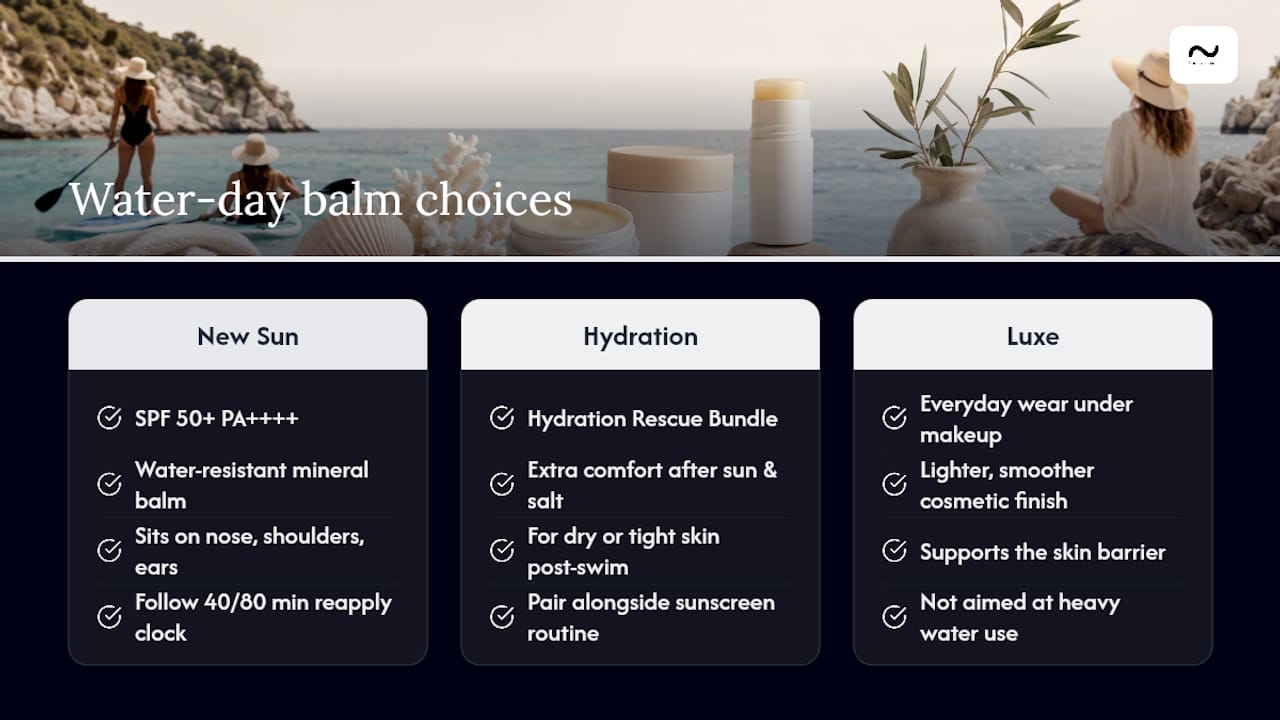
For active, water-heavy days, our New Sun Balm SPF 50+ PA++++ is the option to reach for first. It is formulated as a skin-nourishing, water-resistant mineral balm, built to sit on high-point areas like the nose, shoulders, and ears without slipping off at the first splash. Check the New Sun Balm SPF 50+ PA++++ product page for the full reapplication instructions before you head out, and follow them closely, since even the best-formulated balm still runs on the 40/80 minute clock.
If your skin needs extra comfort after a day of sun and salt water, the Hydration Rescue Bundle is worth pairing alongside your sunscreen routine, particularly for skin that runs dry or tight after swimming. For everyday wear under makeup, or for days when you want a lighter finish without heading into the water, our Luxe Balm gives a smoother, more cosmetic feel while still supporting the skin barrier. Between the three, most water-day wardrobes are covered, but do browse our full organic body balms collection if you want to build out the rest of your routine.
Sources and further reading
Guidance on water-resistance timing and reapplication in this article draws on NHS advice on sunscreen and sun safety. For product comparisons and cosmetic finish trade-offs, Byrdie’s roundup of mineral sunscreens, Allure’s guide to formulas that avoid white cast, and InStyle’s product coverage all offer useful further reading. These are included as background reading, not endorsements of any specific product.
FAQ
Can mineral sunscreen be water resistant?
Yes. Mineral sunscreens are tested to the same 40 or 80 minute water-resistance ratings as chemical formulas, thanks to film-forming ingredients that help zinc oxide and titanium dioxide adhere to skin. Reapply immediately once the water-resistance period ends or after towelling.
Which mineral sunscreen is water resistant?
Look for a product that states its rating clearly on the label, either 40 or 80 minutes, alongside its SPF. Our New Sun Balm SPF 50+ PA++++ is formulated as a water-resistant mineral option for active, outdoor use.
Are there downsides to mineral sunscreen?
The main downsides are white cast, particularly with higher zinc oxide concentrations, and a slightly heavier feel that takes more effort to rub in evenly. Tinted or balm-based formulas largely solve the cast issue while keeping the physical filter’s benefits for sensitive skin.
Which sunscreens are water resistant?
Any sunscreen, mineral or chemical, can carry a water-resistance rating of 40 or 80 minutes, but the rating always describes a tested time limit, not a permanent property. Whichever you choose, NHS guidance recommends reapplying at least every 2 hours and immediately after water exposure or towelling.
A stretch marks balm can soothe, hydrate and make new marks appear less noticeable, but it is not a guaranteed prevention or cure. The honest, evidence-aware move is to use a moisturising balm daily, choose one with pregnancy-safe labelling, and keep your expectations realistic. Our own picks for this job are three different balms, each suited to a slightly different skin need.
TL;DR:
Moisturizing balms provide comfort and hydration but have no conclusive evidence to prevent or fade stretch marks in pregnancy.
For best results, apply a small amount of balm to slightly damp skin daily for at least eight to twelve weeks, especially on fresh, red marks.
Ingredients like retinoids and certain active compounds are contraindicated during pregnancy and breastfeeding, requiring careful label checks and professional consultation.
Balms with rich, occlusive textures suit dry or sensitive skin, while lighter creams may appeal for daily, discreet use without sacrificing routine consistency.
Professional treatments such as laser therapy or microdermabrasion may improve the appearance of existing marks but do not guarantee complete removal.
Fierce Nature
Nourish Skin With Nature
Explore Fierce Nature’s handmade, non-toxic tallow based skincare, crafted in the UK with naturally sourced ingredients.
Our recommended stretch mark balms and who each suits
Choosing between balms usually comes down to what your skin is asking for right now: everyday comfort, extra richness, or something that works a bit harder on tension and cramping alongside moisturisation. We built our range with those three needs in mind, rather than trying to make one formula do everything.
One balm is recommended for daily, all-round care during changing skin seasons, whether that’s pregnancy, postpartum recovery, or simply a stretch of drier months. It’s formulated to absorb well without leaving a heavy film, which matters when you’re applying it morning and night across a growing belly, hips or thighs. Think of it as the balm you reach for without thinking twice.
Another balm suits skin that wants a little more pampering, particularly if lighter lotions leave you feeling tight or under moisturised by evening. Its richer texture makes it a comforting choice for sensitive or reactive skin that reacts badly to synthetic fragrances or thin, watery creams. If your skin has ever flared up after trying a “miracle” stretch mark cream, this is worth a look.
A third balm is for those who want moisturisation paired with topical magnesium, often used for restless legs, muscle cramps or general tension, common companions to late pregnancy and postpartum fatigue. It won’t outperform the others on pure hydration, but it earns its place for readers managing both skin comfort and muscular discomfort at once.
Beyond our own range, here’s how we’d think about matching any balm to your needs:
Comfort seekers: look for occlusive, butter-based formulas that create a barrier and reduce that tight, itchy feeling as skin stretches.
Sensitive skin: favour short ingredient lists, fragrance-free or naturally scented options, and always patch test first.
Extra minerals: consider a magnesium-enriched balm if cramping or restlessness is part of the picture, not just the marks themselves.
Budget-conscious buyers: a smaller sample size lets you trial texture and scent before committing to a full-size jar.
What the research actually says about stretch mark balms and creams
The evidence is more modest than most marketing suggests, and it’s worth knowing that before you spend a penny. A Cochrane review of six trials involving roughly 800 pregnant women found no high-quality evidence that topical preparations prevent stretch marks in pregnancy. The trials were small, used different products, and measured outcomes inconsistently, which makes strong claims about “prevention” hard to justify from the data available.
The honest reading of the research is this: moisturising a bump or thigh feels good and can ease the tight, itchy sensation that comes with rapidly stretching skin. What it hasn’t been shown to do, reliably, is stop marks forming in the first place.
The NHS guidance is similarly grounded. Stretch marks are common during pregnancy, affecting a large majority of pregnant women. They are harmless and often fade to paler, softer scars over time but may not disappear completely. The NHS also notes that laser or light treatment and microdermabrasion may improve appearance for some people, but these are not routinely available on the NHS and outcomes vary considerably from person to person.
The American Academy of Dermatology takes a slightly more optimistic angle for early marks specifically. Their guidance points to hyaluronic acid and prescription tretinoin as showing some benefit when applied to fresh, still-reddish stretch marks, before they’ve matured into paler, established lines. Tretinoin, though, is a retinoid, and retinoids are firmly off the table during pregnancy and breastfeeding. That caveat matters more than almost anything else in this article, so we’ll return to it.
Then there’s the marketing layer, which is where a lot of consumer confusion starts. UK advertising rules require brands to hold robust, product-specific clinical evidence before making efficacy claims, and to separate what a formula does from what massage alone might achieve. In practice, that means a jar promising to “banish stretch marks in weeks” is making a claim that regulators would expect to see backed by trial data specific to that exact product, not just to one ingredient it contains. Trials of popular home remedies, including almond oil, cocoa butter, olive oil and vitamin E, have generally failed to show they prevent or fade stretch marks either, despite their long-standing reputation as folk remedies.
None of this means balms are pointless. It means their real, defensible job is comfort and moisturisation, not miracle prevention.
How to choose a stretch marks balm: ingredients, labels and safety checks
Knowing what to look for on a label turns a confusing shopping trip into a quick, confident decision. Here’s the order we’d work through it in:
Favour occlusives and humectants for comfort. Butters, oils and emollients create a barrier that locks in moisture, while humectants like hyaluronic acid draw water into the skin. Together, they’re your best bet for easing the tight, itchy sensation of stretching skin, even without proven prevention benefits.
Treat vitamin E, cocoa butter and almond oil as comfort ingredients, not cures. They feel lovely and have decades of anecdotal use behind them, but the trial evidence doesn’t support claims that they stop marks forming.
Check for retinoids and prescription actives before buying, especially in pregnancy. Tretinoin and other retinoids may help early marks outside of pregnancy, but they are contraindicated for anyone pregnant or breastfeeding. If a product doesn’t clearly state its full ingredient list, that’s a red flag in itself.
Read the full ingredient list, not just the front-of-pack claims. Look for fragrance and allergen warnings if you have reactive skin, and check whether a smaller sample size is available before you buy full price.
Patch test on a small area first, particularly if you’ve had skin reactions to mainstream cosmetics before, and give it 24 to 48 hours before applying more widely.
Pro Tip:If you’re unsure whether an ingredient is pregnancy-safe, don’t rely on the product’s own marketing copy. A quick check with your midwife or GP takes minutes and settles the question properly.
Our tallow-based approach to skin comfort leans deliberately into the first category: rich, bioavailable emollients that support the skin barrier, rather than actives that need a pregnancy safety conversation.
How to apply a stretch mark balm for the best results
Getting the routine right matters almost as much as the balm itself, because consistency is what gives any formula a fair chance to work. Here’s the sequence dermatology guidance and NHS advice both point towards:
Cleanse the area and apply to skin that’s still slightly damp, since damp skin absorbs balm more readily than dry skin.
Use a small amount, roughly a coin-sized dollop per area, rather than piling it on.
Massage in gentle, circular motions for around 60 seconds per area. This is where our body balm massage technique guide is worth a read if you’ve never done it properly.
Apply daily, ideally after a shower and again before bed, so it becomes part of a rhythm rather than an occasional afterthought.
Start as early as you comfortably can, whether that’s early pregnancy or the moment you notice new marks forming, because actives and massage both seem to have more influence on fresh, reddish marks than on ones that have already matured and faded. Give any routine at least eight to twelve weeks before judging whether it’s making a visible difference. Skin changes slowly, and a fortnight simply isn’t long enough to see anything meaningful.
To keep it consistent, tie application to something you already do daily, like your evening skincare or bedtime routine, and try a sample size first if you’re switching products. Stop immediately if you notice redness, itching or irritation that wasn’t there before.
When to consider clinical treatments and what to expect
Balms have a ceiling, and it’s worth knowing where that ceiling sits before you feel disappointed by a formula that was never going to remove established scarring on its own. Professional options exist for people who want to go further, though none of them offer guaranteed results.
Laser or light therapy can improve the appearance of stretch marks for some people, but results vary widely and it’s a private-pay service in the UK, not something offered on the NHS.
Microdermabrasion works by gently resurfacing the skin and may soften the look of marks, though again, outcomes aren’t consistent from person to person.
Chemical peels can help some established marks but typically need multiple sessions and carry a risk of irritation, particularly on sensitive skin.
Prescription tretinoin, used post-pregnancy and post-breastfeeding only, has some evidence behind it for early marks specifically, but it’s not an option while pregnant or nursing.
If you’re considering any clinic-based treatment, ask direct questions before booking: what evidence supports this specific device or peel, what improvement is realistic rather than best-case, how many sessions will you likely need, and what are the known side effects. A reputable clinic should answer all four without hesitation.
Why trust our recommendations on stretch mark care
Fierce Nature was built on a fairly personal frustration: a childhood spent battling unexplained skin rashes and reactions to mainstream cosmetics, and years of professional work since then understanding how much of that comes down to toxic load and harsh, hidden chemicals in seductive packaging. That history shapes how we talk about stretch marks too. We’d rather tell you plainly that no balm has strong evidence behind preventing them than sell you a promise we can’t back up.
Our approach is to be honest about what naturally sourced skincare can realistically offer: comfort, nourishment and a formula with a transparent ingredient list, not miracle prevention.
Every product in our Functional Balm Collection is handmade in the UK, built on an organic tallow foundation chosen for its bioavailability and long history as a skin emollient. We’ll update this article with proprietary trial data and third-party certifications as they become available.
Balm, cream or oil: does the packaging actually matter?
The format you choose affects how consistently you’ll actually use it, which matters more than any single ingredient. Balms tend to be thicker and more occlusive than creams, meaning they sit on the skin longer and create a stronger barrier against moisture loss. That makes them a solid choice for very dry or tight-feeling skin, particularly over a stretching bump or thighs where comfort is the priority.
Creams are typically lighter and absorb faster, which some people prefer for daytime use under clothing when a heavier balm might feel too rich. Oils sit somewhere in between: fast to apply, easy to massage in, but often less occlusive than a proper balm, so the moisturising effect may not last as long between applications.
None of these formats has been shown to outperform the others on actually preventing or fading stretch marks. The real difference is user experience. A balm you enjoy applying and massaging in daily will get used consistently. A cream that feels greasy under clothes or an oil that stains your sheets won’t, no matter how good its ingredient list looks on paper. Choose the format that fits your routine and skin feel, then commit to using it properly, since consistency does more heavy lifting here than formulation choice ever will.
Stretch marks, self-care, and letting go of perfection
Stretch marks are a normal, common part of how skin responds to growth, whether that’s pregnancy, puberty or simply a body changing shape over time. Around eight in ten pregnant women get them, and that’s not a flaw to fix, it’s just biology doing what it does.
We recommend moisturising balms because they genuinely make stretching, tight skin feel more comfortable, not because we believe they’ll erase every mark. Choosing a pregnancy-safe, evidence-aware formula is about caring for your skin as it changes, not chasing a version of your body that never had marks at all. Use these products for comfort, ritual and self-care. That’s a good enough reason on its own.
— Fierce Nature
Shop the balms we recommend for stretch mark comfort
If daily comfort during changing skin is what you need, the Balance Balm is the sensible everyday pick, light enough for twice-daily use across a bump, hips or thighs without feeling heavy under clothing. For richer, more pampering care, particularly if your skin is sensitive or reactive to synthetic fragrance, the Luxe Balm offers a more indulgent texture that suits an evening ritual. And if you’re managing muscle tension or restlessness alongside skin changes, the Magnesium Balm pairs moisturisation with topical magnesium in one step.
All three are handmade in the UK on an organic tallow base, with full ingredient transparency so you can check what’s inside before you buy, an important step if you’re pregnant or breastfeeding and screening out retinoids and other prescription actives. If you’d rather browse the full range and compare textures side by side, our Face and Body Balms collection covers the complete line-up. Pick the one that matches your skin’s mood this week, add it to your routine, and give it the eight to twelve weeks that any fair trial needs.
Sources used in this article
NHS — , stretch marks guidance on prevalence, fading and treatment options including laser and microdermabrasion.
Cochrane — , systematic review of six trials on topical preparations for preventing stretch marks in pregnancy.
ASA/CAP — , UK advertising guidance on evidence standards for cosmetic efficacy claims.
This article is general information, not a substitute for advice from a qualified doctor. Consult a qualified healthcare professional about your own circumstances before acting on anything here.
FAQ
Do stretch mark creams and balms actually work?
They work well for comfort and moisturisation, easing the tight, itchy feeling of stretching skin, but a Cochrane review of six trials found no high-quality evidence that topical preparations prevent stretch marks in pregnancy. Think of them as skin comfort tools rather than prevention treatments.
What did Kim Kardashian use for her stretch marks?
Celebrity skincare routines are rarely backed by published clinical evidence specific to the products used, so we can’t verify or recommend based on individual celebrity claims. The safer approach is choosing a balm with a transparent ingredient list and pregnancy-safe labelling, then applying it consistently.
How can I reduce the appearance of stretch marks naturally?
Daily massage with a moisturising balm on clean, slightly damp skin, done consistently for eight to twelve weeks, is the most evidence-aware natural approach available. Starting early on fresh marks, rather than waiting until they’ve matured, gives you the best realistic chance of a visible change in comfort and appearance.
Are retinoid creams safe for stretch marks during pregnancy?
No. Retinoids, including prescription tretinoin, have shown some benefit for early stretch marks in dermatology research, but they are contraindicated during pregnancy and breastfeeding. Always check the full ingredient list and speak to your midwife or GP if you’re unsure about any active ingredient.
Stop using the suspected deodorant straight away and rinse the area gently with lukewarm water or a soap substitute. Pat the skin dry, then apply a bland emollient regularly to support the barrier. If the skin is visibly inflamed, a pharmacist can often advise on short-term hydrocortisone 1%. See a GP if the rash spreads, weeps, or shows no improvement within a few days.
TL;DR:
Nearly all deodorant rashes result from irritation or allergy, with fragrance, aluminium salts, preservatives, and friction as common triggers.
Short-term use of hydrocortisone and continuous emollient application help calm and repair the skin before trying a new deodorant.
It is essential to introduce new products gradually, patch-test on healed skin, and avoid switching immediately to natural deodorants without ingredient checks.
Recovery may take weeks of gentle, consistent care, and full barrier restoration is more important than quick product swaps.
Seek medical advice if the rash spreads, worsens, or shows signs of infection, or if multiple reactions occur despite avoiding triggers.
Fierce Nature
Nourish Sensitive Skin Naturally
Fierce Nature makes handmade UK skincare with pure organic tallow and naturally sourced ingredients for face and body care.
Most deodorant rashes come down to one of two mechanisms: irritation or allergy, and telling them apart matters because the fix differs. Irritant contact dermatitis is the more common culprit in the underarm, where sweat, friction, and harsh ingredients weaken the skin barrier over repeated use. Allergic contact dermatitis, by contrast, involves immune sensitisation to a specific ingredient and tends to appear after your skin has already been exposed to that substance before, sometimes for months or years without issue.
Fragrance is the single most frequent trigger in cosmetic contact dermatitis. Beyond fragrance, several other ingredients and habits routinely cause flare-ups:
Aluminium salts in antiperspirants, which can irritate already-compromised skin.
Propylene glycol and preservatives, common in both mainstream and “natural” formulations.
Lanolin, a frequent hidden allergen in balms and creams.
Friction and shaving, which strip the barrier and let irritants penetrate more easily.
Trapped sweat, particularly under synthetic fabrics.
Timing offers a clue too. Irritant reactions often appear within hours of application and improve quickly once you stop. Allergic reactions can take a day or two to develop and tend to linger. Not every armpit rash is deodorant-related, either. Yeast infections, bacterial folliculitis, eczema, psoriasis, and simple razor burn can all mimic the same redness and itch. See a GP promptly if you notice spreading redness, pus, fever, or no improvement after several days of gentle care.
How to soothe the rash safely at home
Once you’ve identified deodorant as the likely trigger, a calm and consistent routine does most of the work. Follow this sequence for the first few days:
Cleanse gently. Use lukewarm water and a soap substitute or unscented cleanser. Hot water and vigorous scrubbing will only aggravate broken skin.
Pat dry, never rub. Rubbing reopens micro-tears in already sensitive skin.
Apply emollient generously and often. Smooth it on while the skin is still slightly damp, rather than rubbing it in, and reapply through the day. Regular emollient use genuinely reduces how often you’ll need a steroid cream.
Add hydrocortisone 1% if there’s visible inflammation. Used sparingly and for a short course, it can calm redness quickly, but check with a pharmacist first, particularly for underarm skin, which is thinner and more absorbent than most.
Cool the area if it’s hot or stinging. A clean, cool compress for a few minutes brings quick relief without adding another product to an already irritated patch.
Avoid shaving until the rash has settled. A razor over inflamed skin is one of the fastest ways to turn a mild irritation into a much angrier one.
Choose breathable fabrics. Cotton over synthetics reduces trapped sweat, which is itself an irritant.
Pro Tip:If you’re using both an emollient and a hydrocortisone cream, apply the steroid first and wait around 20 to 30 minutes before layering the emollient on top, so each one absorbs properly rather than diluting the other.
Some kitchen-cupboard remedies do more harm than good here. Skip tea tree oil, baking soda, undiluted essential oils, and exfoliating acids entirely. Damaged skin is far more permeable than healthy skin, so these substances penetrate deeper and irritate more, not less, however “natural” they sound. A gentle soap substitute for sensitive underarms is a safer starting point than anything with active or fragranced ingredients.
When should you see a pharmacist or GP?
A pharmacist is usually your fastest route to relief. Under the NHS Pharmacy First scheme, many pharmacies can supply hydrocortisone 1% for a localised, inflamed rash without a GP appointment, guided by a Patient Group Direction. Typical advice is a thin layer once or twice daily for a short course, generally no more than fourteen days, and only while inflammation is visible.
Book a GP appointment instead of relying on the pharmacy counter when:
The rash covers a large area, or keeps spreading despite avoiding the trigger.
There’s swelling, pus, warmth, or other signs suggesting infection rather than simple irritation.
Hydrocortisone hasn’t helped after a short course, which may mean a stronger steroid or a different diagnosis is needed.
The reaction keeps recurring with different products, which points towards a genuine allergy rather than one-off irritation.
The affected person is a young child or pregnant, where steroid strength and duration need closer medical judgement.
For recurring reactions, a GP may refer you for patch testing. This involves having small amounts of suspect allergens taped to your back for around 48 hours, with the results read roughly 96 hours after application. It identifies true allergens rather than general irritants, so it’s most useful when the same pattern keeps returning despite you avoiding the obvious triggers.
How to prevent it happening again
Prevention starts with what you put on your skin next, not just what you stopped using. Reach for products labelled “fragrance-free” or “without perfume” rather than “unscented,” since unscented formulas can still contain masking fragrances added purely to hide the scent of other ingredients. Read the full ingredient list, not just the front-of-pack claims.
Introduce one new product at a time, so if a reaction happens, you know exactly what caused it.
Keep the packaging or photograph the ingredient list before you throw anything away. If you do end up needing patch testing, dermatologists often want to test the actual product.
Patch-test on healed skin before returning to regular use. A small amount on the inner forearm for 48 hours is a sensible check.
Rethink shaving habits. Shave in the evening rather than before applying anything, and always use a sharp, clean blade to cut down on friction.
Loosen up on tight synthetic clothing, especially during warmer months when sweat and friction compound each other.
Pro Tip:Resist the urge to jump straight to another “natural” deodorant the moment your skin calms down. Comparing full ingredient lists side by side, rather than trusting marketing language, is what actually prevents a repeat reaction. If your skin keeps flaring no matter what you switch to, formal patch testing with a written record of every product tried gives a dermatologist far more to work with. Our guide on testing skincare products for sensitive skin walks through exactly how to do this at home.
Why barrier repair matters as much as the remedy itself
Fierce Nature began with a very personal frustration. Growing up in South Africa surrounded by mainstream cosmetics, shaving gels, and lipsticks, our founder spent her teenage years battling skin rashes and reactions with no clear explanation, until a decade of studying gut health and toxic load revealed how much of what we’re told about beauty products simply doesn’t hold up.
Once a rash has calmed and the trigger has been removed, the skin still needs help rebuilding. Bland, bioavailable emollients support that barrier repair without reintroducing the fragrances or harsh actives that caused the problem in the first place. Tallow-based balms work well here because their fatty acid profile is close to what skin naturally produces, making them easy for recovering skin to absorb without extra irritation. For a deeper walk-through of the repair process itself, see our guide on restoring a healthy skin barrier.
Our take: treat the skin, not just the symptom
Most advice on deodorant rash stops at “switch products and hope for the best.” That’s backwards. The evidence points clearly to a sequence: remove the trigger, calm the inflammation with an appropriately short course of hydrocortisone where needed, then rebuild the barrier with consistent, bland emollient use. Skipping straight to a new “natural” deodorant without that middle step is exactly why so many people cycle through product after product, blaming each one in turn.
What’s underrated is patience. Stopping the offending product brings relief quickly, but full barrier recovery can take weeks, not days, and expecting an overnight fix leads people to test new products too soon. What we’d prioritise first isn’t a clever ingredient swap. It’s giving the skin time and consistent, gentle care before introducing anything new at all. That discipline matters more than any single product choice.
— Fierce Nature
Products to support recovery and prevention
Once the acute rash has settled, choosing what goes back onto your skin matters just as much as what you took off. Fierce Nature’s Non-toxic Baby Skin Essentials were formulated for exactly the kind of delicate, reactive skin that’s recovering from irritation, making them a sensible starting point when you want simplicity over another long ingredient list. The Baby Balm works as a gentle everyday emollient once the acute inflammation has settled, smoothed on rather than rubbed in, following the same technique that supports barrier repair generally.
For sun-exposed areas once skin has fully healed, the New Sun Balm SPF 50+ PA++++ offers protection without the harsh chemical filters that can reignite sensitivity. As with any new product, avoid applying over open or weeping skin, and always patch-test on a small healed area first. Browse the full Face and Body Balms range or get in touch with customer service if you have questions about specific ingredients before you buy.
Where this advice comes from
This guide draws on NHS guidance on contact dermatitis and its treatment, Pharmacy First hydrocortisone supply rules, and dermatology patch-testing resources. Always follow direct NHS or GP advice over self-treatment if your rash is severe, spreading, or recurring.
This article is general information, not a substitute for advice from a qualified doctor. Consult a qualified healthcare professional about your own circumstances before acting on anything here.
FAQ
How do I get rid of a deodorant rash fast?
Stop using the product immediately and rinse the area with lukewarm water. Apply a bland emollient generously several times a day, and ask a pharmacist about a short course of hydrocortisone 1% if the skin is visibly inflamed.
How can I treat an allergic reaction to deodorant?
Remove the trigger product and treat the skin gently with emollients and, where needed, hydrocortisone 1% for a short period. If reactions keep recurring with different products, ask your GP about patch testing to identify the specific allergen.
How long does a deodorant rash take to go away?
Simple irritation often eases within a few days of stopping the product and starting gentle emollient care. Full barrier recovery, however, can take weeks rather than days, so give your skin time before introducing a new product.
What’s the fastest way to calm an underarm rash?
Cool compresses bring quick relief from heat and stinging, while consistent emollient use, applied while skin is still slightly damp, calms the barrier over the following days. A tallow-based balm such as Fierce Nature’s Baby Balm can support that recovery once the acute reaction has settled.
Can I switch straight to a natural deodorant after the rash heals?
Not straight away. Introduce any new product slowly and patch-test it on healed skin first, since jumping to another “natural” option without checking its full ingredient list is one of the most common reasons rashes come back.
Yes, dry shampoo works after a workout, and it can genuinely rescue sweaty, flat hair between washes. A non-aerosol mist or a tinted powder formula built for sweat performs best, absorbing oil at the roots without leaving a chalky cast. Treat it as a refresher, not a replacement for washing; give your scalp a proper wash after one or two dry-shampoo sessions to keep it happy.
TL;DR:
Dry shampoo works best on damp roots and should be applied after towel blotting and cool-down to prevent clumping and uneven absorption.
Non-aerosol mist formulations, especially tinted powders, handle sweat better and leave less visible residue on darker hair compared to aerosol powders.
Using dry shampoo after workout should be limited to one or two sessions before washing to prevent buildup that can cause scalp irritation or hair shedding.
For frequent workouts, pair dry shampoo with weekly clarifying masks to keep scalp buildup and irritation under control.
Gentle application and proper technique, including sectioning hair and avoiding vigorous rubbing, maximize freshening and minimize scalp irritation.
Fierce Nature
Explore Nature-Based Skin Care
Fierce Nature creates handmade, tallow-based skincare in the UK using premium, naturally sourced ingredients and organic tallow.
How to use dry shampoo after a workout, step by step
Sweaty hair needs a slightly different approach to your usual morning touch-up, because there’s more moisture and salt sitting on the scalp. Rushing straight in with product on soaking wet roots just gives you clumps rather than a refresh.
Here’s the routine we recommend for the changing room or straight after a home workout:
Cool down first. Let your body temperature drop for a few minutes so you stop actively sweating before you touch your hair.
Towel blot the roots. Press (don’t rub) a towel against your scalp to lift excess sweat, particularly at the nape and behind the ears where moisture collects most.
Section your hair. Part it into two or three sections so product reaches the scalp rather than coating the mid-lengths.
Apply sparingly. One or two pumps or sprays per section is usually enough, held a few centimetres from the scalp.
Let it sit for 15 to 30 seconds. This gives the formula time to absorb oil before you disturb it.
Massage or brush through. Work it in with your fingertips, then finish with a brush to distribute evenly and avoid visible powder.
Finish with cool air. A minute of cool air from a hairdryer, or simply air, speeds up drying and stops product from turning gritty.
If your roots are still properly wet rather than damp, skip the product and blot again first. Applying dry shampoo to soaked hair almost never absorbs well; it just sits on top.
Pro Tip:Apply product to the nape and behind the ears before the crown. Those areas sweat first and dry last, so they need the extra head start.
Which dry shampoo format actually works on sweaty hair?
Not every format handles sweat the same way, and this is where a lot of people get frustrated with products that worked fine on “normal” greasy roots but fail after a proper session.
Non-aerosol mists tend to perform best on damp, sweaty scalps. Dual-phase formulas that combine a light liquid carrier with an oil-absorbing powder are designed specifically to work on hair that isn’t bone dry, which is exactly the state your roots are in post workout. They distribute more evenly than a straight powder spray and are far less likely to leave the white cast that plagues traditional aerosols.
Aerosol powder sprays, by contrast, can struggle in humid or heavily sweaty conditions. The propellant and powder combination was built for dry oil, not moisture, so on wet roots it often turns gritty or sits as a visible white residue, particularly noticeable on darker hair.
Tinted and powder formulas solve the residue problem for brunettes specifically. A tinted dry shampoo matched to your hair colour blends in rather than sitting on top as pale dust, which matters far more after a sweaty session than on a normal “skip wash day” morning.
Non-aerosol mists: best for damp, sweaty roots and lower residue risk
Aerosol powders: prone to grittiness and white cast in humid, high-sweat conditions
Tinted powders: reduce visible residue on darker hair tones
Low-residue, non-toxic formulas tend to be gentler for sensitive or reactive scalps
If your scalp reacts easily, the ingredient list matters as much as the format. Fragrance-heavy aerosols and harsh absorbents can aggravate a scalp that’s already slightly irritated from sweat and friction.
How often can you safely use dry shampoo after workouts?
Dry shampoo is a bridge to your next wash, not a substitute for it. Dermatology guidance is consistent on this point: dry shampoo soaks up surface oil, but it doesn’t remove dead skin cells, sweat residue, or the microorganisms that build up on an active scalp. Most dermatologists suggest washing after one or two dry-shampoo uses rather than stringing several days together.
Train four or five times a week and reach for dry shampoo after every single session, and you’re asking a lot of your scalp. Clinical commentary on frequent use points to a real risk: repeated buildup without washing can contribute to follicular occlusion, itching, and in some cases a temporary increase in shedding for people who are already prone to scalp sensitivity.
Watch for these warning signs that it’s time to wash, not spray again:
Persistent itching or tightness at the scalp
Flaking that looks greasy rather than dry
A tender or tingling feeling when you touch your roots
If you notice ongoing flaking alongside redness, that can point towards seborrhoeic dermatitis. NHS guidance for that condition recommends medicated anti-yeast shampoos used once or twice weekly alongside regular washing, rather than masking symptoms with dry shampoo. Anyone with thinning hair or a diagnosed scalp condition should wash more frequently and speak to a clinician if irritation persists, rather than leaning on dry shampoo as a workaround. A clarifying or detox wash every week or two also helps reset the scalp between routine washes.
Quick hairstyles that make the most of refreshed hair
Once your roots are refreshed, the right style hides any remaining dampness and gets the most out of the texture dry shampoo leaves behind.
Low bun or ponytail: the slight grip dry shampoo adds to roots actually helps a low style hold its shape better than freshly washed, slippery hair.
Half-up knot: keeps damp hair off your neck while the crown finishes drying, ideal straight after a hot session.
Rope braid or headband trick: both conceal any unevenness at the parting while product finishes settling in.
Finger tousle, not a full brush: a light tousle through the ends adds volume without disturbing the product you’ve just worked into the roots.
Avoid brushing hard through freshly sprayed roots. A gentle finger comb keeps the oil-absorbing layer intact where you need it most.
Fierce Nature’s perspective: why formula matters more than the label
The founder of the brand grew up battling unexplained skin rashes and reactions from mainstream cosmetics, which is what set the company on the path towards non-toxic, naturally sourced formulations. That background shapes how we think about anything applied close to the scalp, including a quick post-workout fix.
A sweaty, slightly irritated scalp is not the moment for harsh aerosol propellants or heavy fragrance loads. Low-residue formulas matter more after exercise than on an ordinary greasy day, because the scalp barrier is already working harder from heat, friction, and salt. That’s the thinking behind keeping the dry shampoo range non-aerosol and gently formulated rather than chasing instant, powder-heavy results.
Within our own range, the Dry Shampoo (Brunette) and Dry Shampoo (Blonde) formulas handle the daily post-workout refresh, while the Detox Mask is built for the deeper, less frequent clean your scalp still needs.
— Fierce Nature
Fitting Fierce Nature’s dry shampoos into your gym-bag routine
There are plenty of aerosol powders on the shelf, but most weren’t built for a scalp that’s just finished a hard session. Fierce Nature’s Dry Shampoo (Brunette) and Dry Shampoo (Blonde) are formulated to work with your natural tone rather than dust it grey, using the sectioning and short sit time covered earlier in this guide. Keep one in your gym bag and apply it to damp, blotted roots straight after cooling down, rather than immediately after exercising.
For the days your scalp needs more than a refresh, the Detox Mask for Hair and Skin clears the buildup that dry shampoo alone can’t touch, ideal once a week if you train often. Pair it with the wider Hair Care range for a routine that supports your scalp between full washes rather than just masking the sweat.
Ready to build your kit? Browse the Dry Shampoo (Brunette) and Dry Shampoo (Blonde) pages now and add the Detox Mask to your next order for a proper reset.
FAQ
Is dry shampoo good after the gym?
Yes, dry shampoo is a genuinely good option straight after the gym, provided you use a low-residue, non-aerosol format on properly blotted roots. It absorbs sweat and oil quickly, but it should sit alongside regular washing rather than replace it entirely.
What should you not do straight after a workout?
Avoid piling product straight onto soaking wet hair, since it won’t absorb properly and tends to clump. Skip vigorous towel rubbing at the scalp too; a gentle blot works far better and avoids irritating skin that’s already warm and sensitive from exercise.
How do you clean sweaty hair without washing it?
Blot the scalp with a towel, section the hair, and apply a non-aerosol dry shampoo mist or tinted powder to the roots, letting it sit for 15 to 30 seconds before massaging or brushing through. Finish with cool air to help the product set without going gritty.
How can you freshen up after the gym without showering?
A quick roots refresh with dry shampoo, combined with a cooling face mist or wipe and a fast style like a low bun, covers most of what a shower would do for your appearance. Dermatology guidance still recommends washing after one or two of these quick refreshes to keep the scalp genuinely clean.
Melden Sie sich für den besten Newsletter an, von dem Sie nicht wussten, dass Sie ihn brauchen. Sie erhalten 3 E-Mails pro Woche mit neuen Blog-Beiträgen, Produkteinführungen, Gewinnspielen und Motivation, die Ihnen helfen, weiter zu wachsen.