Cart
0
80% Also Added this

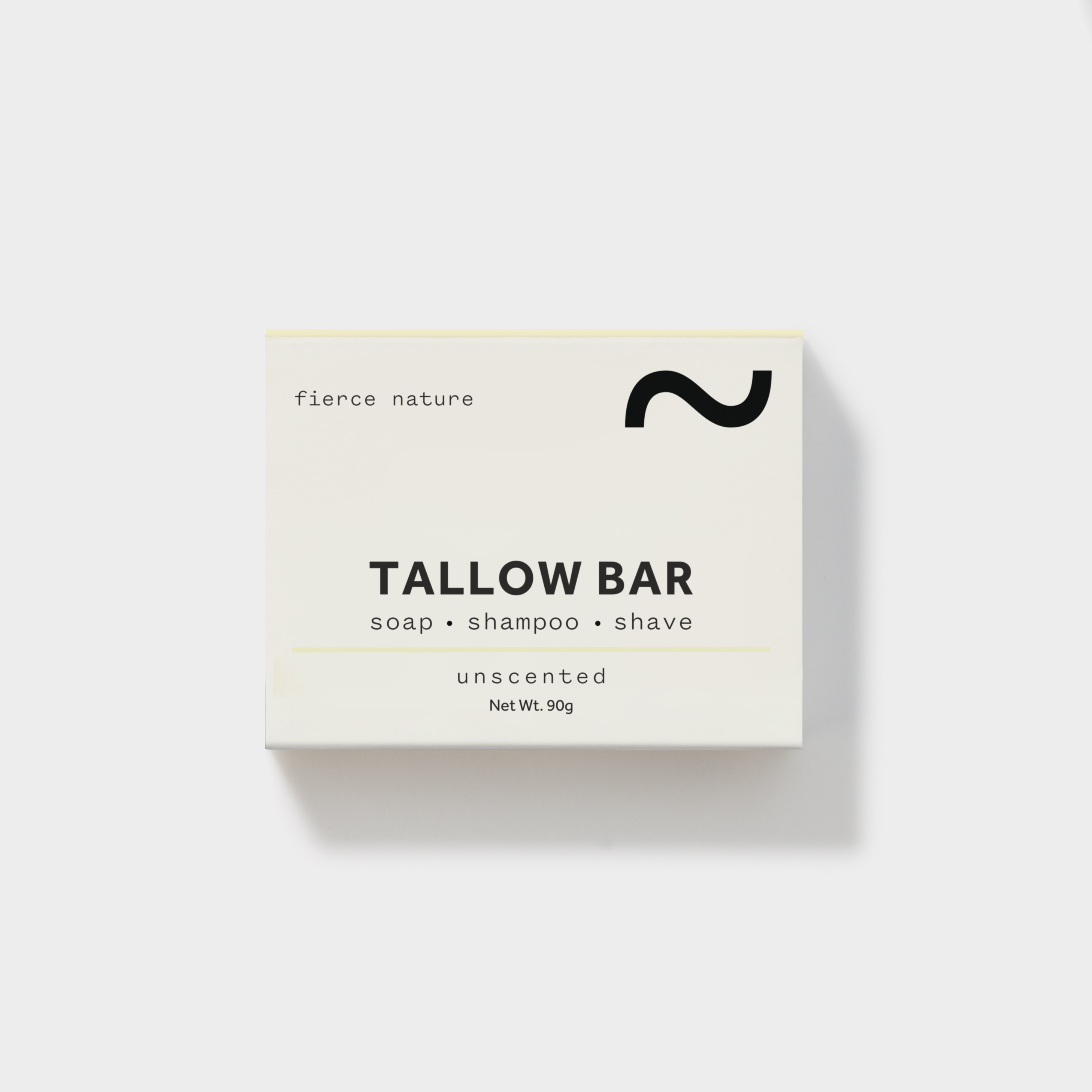
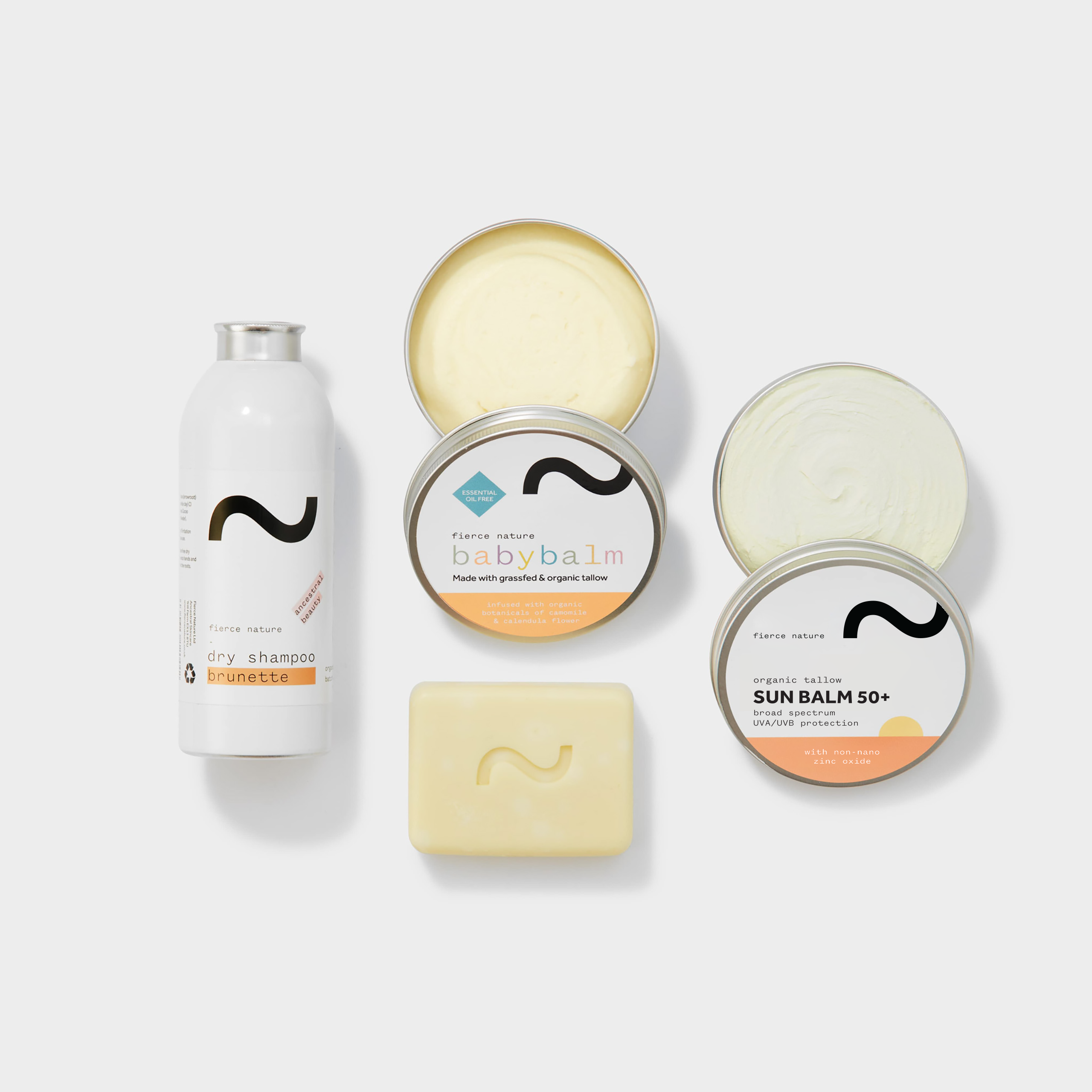




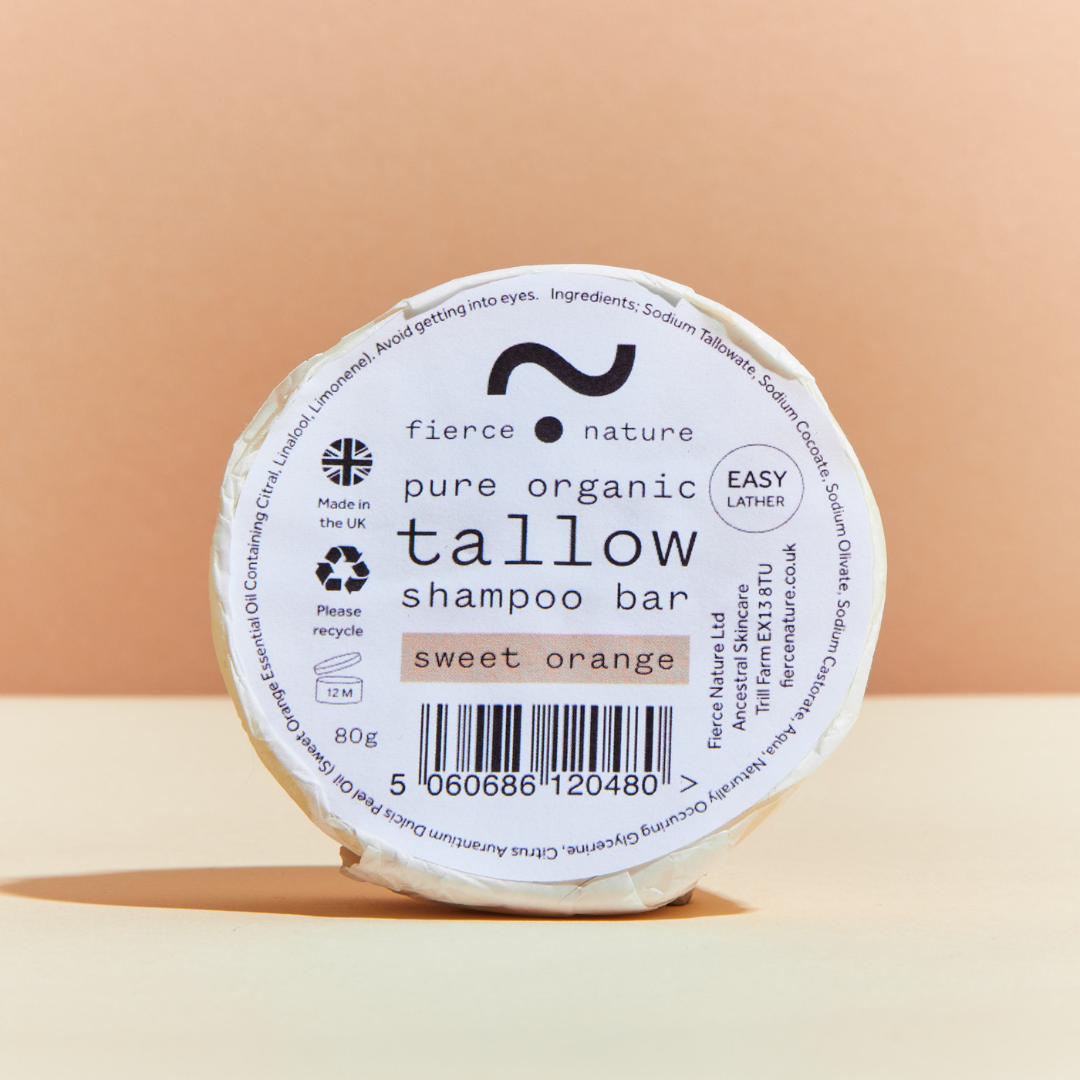
Choosing the right shampoo can feel surprisingly complicated. With countless bottles promising stronger hair, a healthier scalp and salon-worthy shine, it's easy to wonder which ingredients genuinely benefit your hair and which are simply part of clever marketing.
As more people become conscious of the products they use every day, interest in non-toxic shampoo has grown. Consumers are increasingly looking for gentle cleansing formulas, straightforward ingredient lists and haircare products that fit their personal preferences.
But what does non-toxic shampoo actually mean? Are sulphates harmful? Should you avoid parabens? And can traditional ingredients such as tallow offer a different approach to washing your hair?
The answers are more nuanced than many beauty trends suggest.
At Fierce Nature, we believe haircare should be thoughtful, uncomplicated and rooted in an understanding of what hair and scalp actually need. Our approach to tallow-based haircare draws inspiration from traditional ingredients while recognising the importance of gentle cleansing and individual hair types.
In this comprehensive guide, we'll explore what non-toxic shampoo means, which ingredients deserve attention, how natural shampoos compare with conventional formulas and what to consider when choosing a shampoo for your hair.
What is non-toxic shampoo? Non-toxic shampoo is a marketing term generally used for products positioned as gentle or free from certain ingredients. It is not a standardised scientific or regulatory category.
Is conventional shampoo toxic? No. Conventional shampoos sold legally in the UK must meet applicable cosmetic safety requirements. Their suitability depends on formulation, exposure and individual sensitivity.
Are sulphates bad for your hair? Not necessarily. Some sulphate-based cleansers can be strong for dry or sensitive scalps, but they are not inherently unsafe when appropriately formulated.
Are natural shampoos better? Natural ingredients can be useful, but natural does not automatically mean safer, gentler or more effective.
What ingredients should you look for? Mild cleansing agents, suitable conditioning ingredients and formulas appropriate for your scalp and hair type.
Can tallow be used in shampoo? Yes. Tallow-derived ingredients can be used in traditional hair-cleansing products, although their performance depends on the complete formulation.
Will non-toxic shampoo lather? It can. Foam depends on the cleansing agents used and is not a reliable measure of shampoo safety or effectiveness.
How do you switch shampoos? Introduce a new formula according to your hair's needs, observe how your scalp responds and adjust your washing routine if necessary.
Where can you explore natural-inspired haircare? Discover the approach to traditional ingredients at Fierce Nature.
What Is Non-Toxic Shampoo?
Why Are People Switching to Non-Toxic Shampoo?
Understanding Common Shampoo Ingredients
Are Sulphates, Parabens and Fragrances Harmful?
What Makes a Shampoo Gentle and Effective?
Non-Toxic Shampoo vs Conventional Shampoo
Natural Shampoo vs Organic Shampoo
Tallow Shampoo: What Is It and How Does It Work?
Potential Benefits and Limitations of Tallow Shampoo
Choosing Non-Toxic Shampoo for Different Hair Types
How to Transition to a New Shampoo
How to Wash Your Hair Without Excessive Dryness
Common Shampoo Mistakes to Avoid
How to Build a Simple Natural-Inspired Haircare Routine
Frequently Asked Questions
Final Thoughts
The term non-toxic shampoo is commonly used to describe hair-cleansing products that avoid particular ingredients or prioritise formulations marketed as gentle, natural or minimalist.
However, the phrase itself does not have one universally accepted scientific definition.
A product labelled non-toxic is not automatically safer than one without that label.
In toxicology, whether a substance causes harm depends on several factors, including its concentration, how it is used and the level of exposure.
An ingredient may be irritating at one concentration but safe and well tolerated at another.
Similarly, a naturally derived ingredient may cause an allergic reaction in some individuals.
This means that evaluating shampoo safety requires more than checking whether an ingredient sounds natural or synthetic.
A clear ingredient list allows consumers to identify ingredients they prefer to use or avoid.
For example, someone with a known fragrance allergy may benefit from choosing a fragrance-free shampoo.
Someone with a very oily scalp may prefer a stronger cleansing formula, while a person with dry, colour-treated hair may choose a milder option.
The goal is not necessarily to eliminate as many ingredients as possible.
It is to find a shampoo that cleans effectively, is appropriately formulated and suits your hair and scalp.
Interest in non-toxic shampoo reflects broader changes in consumer attitudes towards skincare and haircare.
Many people want to understand what they are applying to their bodies and make more informed purchasing decisions.
Ingredient information is easier to access than ever.
Consumers can compare formulas, learn about cleansing agents and identify potential allergens.
This can be useful, provided ingredient information is interpreted accurately.
Some people experience itching, dryness or irritation after using particular shampoos.
Switching to a different formula may help when the original product contains an ingredient that is poorly tolerated.
However, persistent scalp symptoms may require professional assessment.
Minimalist haircare focuses on using products that serve a clear purpose.
Instead of following numerous trends, people may prefer a gentle shampoo, suitable conditioner and occasional targeted treatment.
Ingredients such as tallow, plant oils and botanical extracts have histories of use in personal care.
For some consumers, traditional ingredients are part of the appeal of natural-inspired haircare.
Their historical use, however, does not automatically establish superior safety or performance.
Some consumers look for concentrated formulas, solid shampoo bars or reduced packaging.
Environmental impact depends on the entire product lifecycle, including ingredient sourcing, manufacturing, packaging, transport and disposal.
A natural label alone does not guarantee a smaller environmental footprint.
To choose the right shampoo, it helps to understand what different ingredients actually do.
A shampoo is more than a mixture of cleansing ingredients.
Its formula may also contain conditioning agents, stabilisers, preservatives, fragrance and ingredients that influence texture.
Surfactants help remove sebum, sweat, dirt and product residue from the hair and scalp.
They work by helping oily substances mix with water so they can be rinsed away.
Different surfactants have different cleansing strengths.
Some are particularly effective at removing heavy buildup, while others are formulated for gentler cleansing.
Conditioning ingredients can help reduce friction, improve manageability and make hair feel smoother.
These may include certain oils, fatty alcohols, polymers and other conditioning compounds.
Humectants help attract and retain water.
Glycerin is one example commonly used in personal care products.
Its effect in a shampoo depends on the complete formula and the fact that shampoo is rinsed away.
Water-containing shampoos generally require suitable preservation to help prevent microbial contamination.
Preservatives are an important part of cosmetic product safety.
A product advertised as preservative-free is not automatically safer, particularly if its formulation is vulnerable to contamination.
Fragrance ingredients are added to provide a pleasant scent.
Some people enjoy fragranced shampoos, while others may experience sensitivity or allergic reactions.
For individuals with fragrance allergies, fragrance-free products may be preferable.
One of the most common reasons people search for non-toxic shampoo is concern about particular ingredients.
Understanding these ingredients can help separate genuine considerations from misleading claims.
Sulphates are a category of compounds that includes several commonly used cleansing agents.
Sodium lauryl sulphate (SLS) and sodium laureth sulphate (SLES) are two familiar examples.
They are effective at removing oils and impurities.
However, some sulphate-containing shampoos may feel too cleansing for people with very dry hair or sensitive scalps.
This does not mean that every sulphate-containing shampoo is unsafe.
The complete formulation, concentration and frequency of use matter.
Parabens are preservatives used in some cosmetic formulations.
They help prevent microbial growth and extend product stability.
Certain parabens are permitted in UK cosmetic products within applicable regulatory limits.
The presence of a permitted paraben does not automatically mean a shampoo is harmful.
Likewise, a paraben-free formula is not necessarily better preserved or safer.
Fragrance ingredients may be natural or synthetic.
Either type can cause reactions in susceptible individuals.
For people with sensitive scalps, fragrance-free shampoo may be worth considering.
Silicones are commonly used in haircare to improve smoothness, reduce friction and support manageability.
Some people prefer silicone-free products, while others find silicone-containing formulas particularly helpful for frizz or damaged hair.
Silicones are not inherently toxic simply because they are synthetic.
| Ingredient or Claim | What It Means | What to Consider |
|---|---|---|
| Sulphate-free | Excludes specified sulphate surfactants | May suit some dry or sensitive hair types |
| Paraben-free | Does not contain parabens | Other preservatives may still be necessary |
| Silicone-free | Excludes silicone ingredients | Not automatically gentler or more effective |
| Fragrance-free | Formulated without added fragrance | Often useful for fragrance-sensitive users |
| Natural | Indicates a sourcing or formulation approach | Does not guarantee safety |
| Organic | May refer to certified ingredient sourcing | Certification and standards vary |
| Non-toxic | Broad marketing description | Does not establish superior safety |
The best shampoo should clean the scalp without repeatedly causing irritation or leaving the hair excessively dry.
An effective shampoo removes unwanted buildup while leaving the scalp comfortable.
A very oily scalp may require more cleansing than a dry scalp.
Hair and scalp are generally better suited to appropriately formulated products that avoid excessive alkalinity.
Strongly alkaline cleansing products can increase hair-fibre swelling and may contribute to roughness or friction.
Conditioning ingredients can help reduce tangling and improve the feel of the hair after washing.
For sensitive scalps, a fragrance-free formula may reduce exposure to potential fragrance allergens.
A shampoo suitable for fine, oily hair may not be ideal for thick, curly or chemically treated hair.
This is why choosing a shampoo should involve considering your hair's needs rather than relying on a single marketing claim.
The distinction between non-toxic and conventional shampoo is often less clear than advertising suggests.
Both may contain gentle or strong cleansing ingredients.
Both may use natural or synthetic conditioning agents.
| Feature | Shampoo Marketed as Non-Toxic | Conventional Shampoo |
|---|---|---|
| Ingredient approach | Often emphasises selected exclusions | Wide variety of formulations |
| Cleansing agents | May use alternative surfactants | May use sulphate or non-sulphate surfactants |
| Fragrance | May be scented or fragrance-free | May be scented or fragrance-free |
| Preservatives | Depends on formula | Depends on formula |
| Safety | Depends on formulation and use | Depends on formulation and use |
| Hair suitability | Depends on hair and scalp needs | Depends on hair and scalp needs |
| Environmental impact | Depends on lifecycle | Depends on lifecycle |
Neither category is automatically superior.
A mild conventional shampoo may be better suited to sensitive hair than a strongly fragranced natural shampoo.
The most useful approach is to assess the actual formula and how your hair responds.
The terms natural and organic are sometimes used interchangeably, but they describe different ideas.
Natural shampoo generally refers to products containing ingredients derived from natural sources.
However, the meaning of natural can vary between brands.
A natural shampoo may still contain processed ingredients, preservatives or fragrances.
Organic shampoo may contain ingredients produced according to recognised organic agricultural standards.
The percentage of organic ingredients and certification requirements can differ.
A product containing one organic ingredient is not necessarily a fully certified organic shampoo.
Not necessarily.
Organic sourcing may be important to consumers, but it does not automatically establish that a shampoo is gentler, safer or more effective.
Product performance still depends on the formulation.
Tallow has been used in traditional soapmaking for generations.
Today, it is also associated with the renewed interest in heritage-inspired skincare and haircare.
Tallow is rendered animal fat, commonly obtained from beef.
It contains fatty acids such as palmitic, stearic and oleic acids.
These fatty acids can contribute to the characteristics of soap and other personal care formulations.
Tallow can be incorporated into hair-cleansing products in different ways.
In traditional soap-based shampoo bars, tallow may undergo saponification, creating soap molecules from its fatty acids.
In other formulations, fat-derived ingredients may serve different functions.
The final properties depend on how the tallow is processed and combined with other ingredients.
No.
Tallow balm is generally a leave-on moisturising product.
A tallow-based shampoo is designed to cleanse and be rinsed away.
If the shampoo uses saponified tallow, the original fat has undergone a chemical transformation.
It is therefore misleading to assume that the shampoo deposits the same fats onto hair as a tallow balm.
Tallow contains some fatty acids also found in biological lipids, but its composition is not identical to human sebum.
There is insufficient clinical evidence to conclude that tallow-based shampoo uniquely mimics the scalp's natural oils or delivers superior hydration.
Tallow-based shampoo may appeal to people interested in traditional ingredients.
However, its performance should be evaluated realistically.
Traditional formulation approach
Tallow has a long history in soapmaking and can contribute to firm cleansing bars.
Solid shampoo formats
Some tallow-based shampoos are produced as bars, which may appeal to consumers who prefer solid products.
Distinctive cleansing experience
Depending on the formula, a tallow-based shampoo may produce a creamy lather and a different washing experience from liquid shampoo.
Ingredient preferences
Some consumers prefer products containing animal-derived fats rather than exclusively plant-derived ingredients.
Alkaline pH
Traditional soap-based shampoo bars can have a relatively high pH.
This may increase hair-fibre friction and make certain hair types feel rough or tangled.
Hard-water interaction
Traditional soaps can react with minerals in hard water, potentially leaving residue on hair.
Hair-type compatibility
Fine, curly, colour-treated or damaged hair may respond differently to soap-based cleansers.
Limited comparative research
There is insufficient high-quality clinical evidence that tallow shampoo is better than well-formulated conventional shampoo for scalp health, hair growth or hair strength.
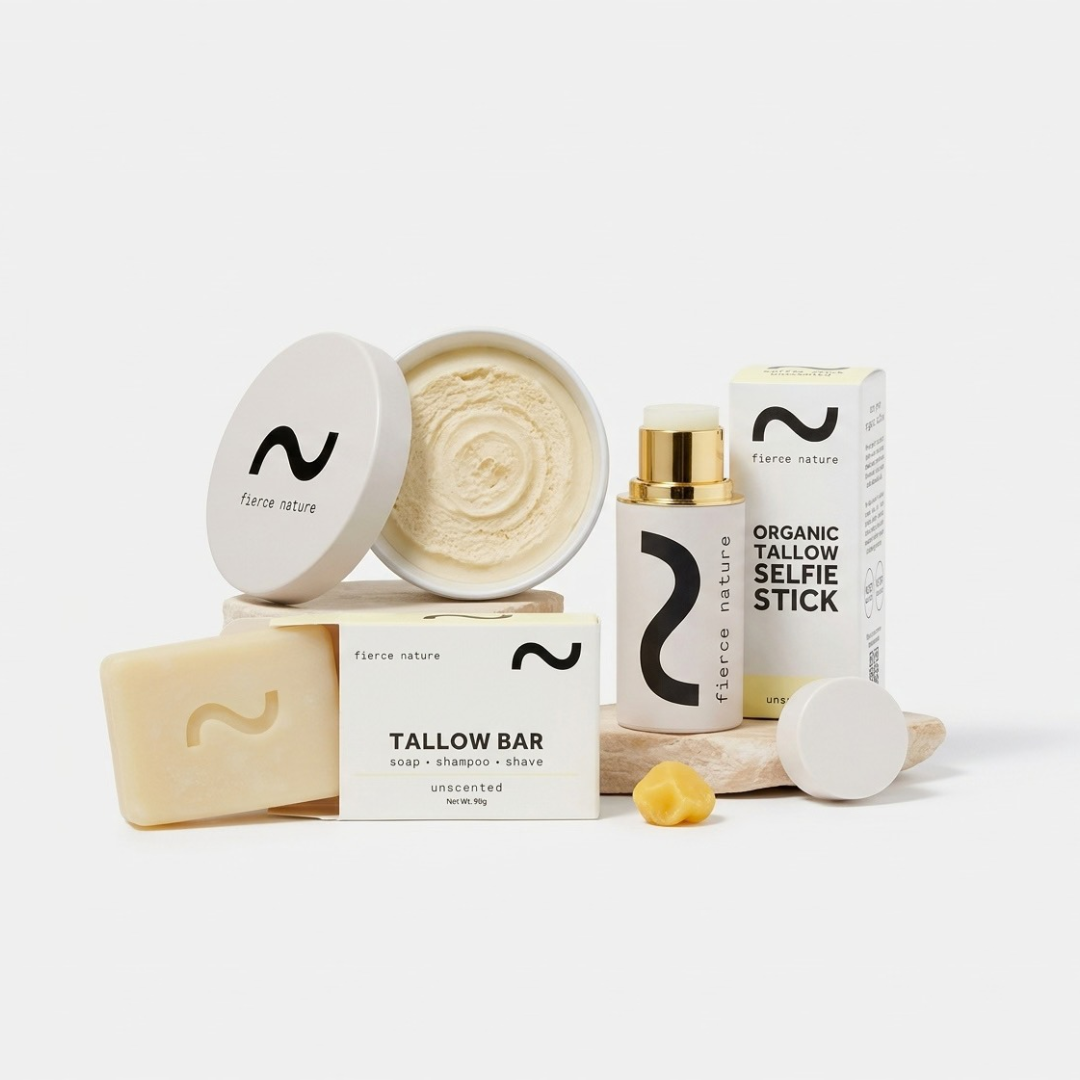
Fierce Nature's traditional-inspired approach to haircare centres on ingredients such as tallow.
For customers interested in this type of shampoo, the important considerations are the finished product's ingredient list, cleansing system, pH and intended use.
Explore Fierce Nature for information about the brand's haircare range and product-specific directions.
Your hair type should influence your choice of shampoo.
Dry hair may benefit from a mild cleanser and a suitable conditioner.
Look for a formula that does not leave the hair excessively rough or tangled.
Oily scalps often require effective removal of sebum.
A shampoo that is too mild may leave unwanted buildup.
Choose a cleansing strength appropriate for your scalp.
Curly hair can be more prone to dryness and tangling.
Gentle cleansing and conditioning can help maintain manageability.
Strongly alkaline soap-based shampoos may not suit every curl type.
Fine hair may become weighed down by heavy conditioning products.
Lightweight formulas that cleanse effectively without excessive residue may be preferable.
Colour-treated hair may be more vulnerable to roughness and fading.
A suitable colour-care shampoo and conditioner can help manage the hair's condition.
Traditional alkaline soap bars may be less appropriate for some colour-treated hair.
If your scalp is easily irritated, consider fragrance-free formulas and avoid known allergens.
Persistent itching, scaling or redness should be assessed by a healthcare professional.
Switching shampoo does not require your hair to undergo a medically recognised detoxification process.
However, a new formula may feel different from your previous product.
Consider whether your hair is dry, oily, fine, curly, coloured or prone to buildup.
Also think about your scalp's sensitivity.
Check the ingredients and product directions.
If you have known allergies, avoid relevant ingredients.
Use the new shampoo according to its instructions.
There is no universal need to introduce shampoo only once per week.
Pay attention to:
Scalp comfort
Hair softness
Tangling
Residue
Oiliness
Irritation
You may need to change your washing frequency or conditioner.
If the shampoo repeatedly causes irritation or excessive dryness, discontinue use.
A prolonged period of itching, hair breakage or scalp discomfort should not automatically be considered a normal transition.
Seek professional advice when appropriate.
Even a suitable shampoo may cause problems if used incorrectly.
Use comfortably warm water.
Avoid excessively hot water if your scalp is dry or sensitive.
Focus on the scalp, where sebum and buildup accumulate.
The shampoo that rinses through the lengths is often sufficient for everyday cleansing.
Use your fingertips rather than scratching with your nails.
Ensure the shampoo is fully removed.
Residual cleanser may leave hair feeling coated or uncomfortable.
Concentrate conditioner on the lengths and ends, particularly if your hair is dry or prone to tangling.
Avoid aggressive towel rubbing.
Gently squeeze excess water from the hair and minimise unnecessary heat exposure.
Foam is not a reliable indicator of cleansing quality.
Better approach: Assess how effectively the product removes buildup without causing discomfort.
Sulphate-containing surfactants are not inherently unsafe.
Better approach: Choose a formula suited to your hair and scalp rather than avoiding ingredients based solely on broad claims.
Essential oils and botanical ingredients can cause allergic reactions.
Better approach: Check ingredient lists and avoid known triggers.
Strongly alkaline products may not suit damaged or colour-treated hair.
Better approach: Consider the cleansing system and product recommendations.
Hair-washing needs vary.
Better approach: Adjust frequency according to scalp oiliness, activity levels, hair type and product buildup.
Some hair types need additional conditioning after cleansing.
Better approach: Use a suitable conditioner to help manage dryness, friction and tangling.
A good haircare routine does not need to involve numerous products.
Start with a cleanser that matches your scalp's needs.
A mild formula may be preferable for dryness, while an oilier scalp may need more effective cleansing.
Use a suitable conditioner, especially on dry or damaged lengths.
Excessive heat styling can contribute to hair damage.
Use moderate temperatures and suitable heat protection when styling.
Gentle detangling and careful towel drying can help reduce breakage.
Persistent flaking, redness, itching or hair loss may require medical assessment.
Whether a shampoo is marketed as natural, organic, non-toxic or conventional, the most important consideration is how well it performs for your individual needs.
Non-toxic shampoo is a broad marketing term commonly used for products that avoid certain ingredients or emphasise gentle formulations. It is not a universally standardised scientific category.
Not automatically. Haircare performance depends on the formula, hair type and scalp needs.
Sulphate-free shampoos are not inherently safer, although some people with dry hair or sensitive scalps may prefer their cleansing characteristics.
Certain parabens are permitted in UK cosmetics within regulatory limits. Their presence does not automatically make a shampoo harmful.
Some natural shampoos may be suitable, but botanical extracts and essential oils can also cause irritation. Fragrance-free formulas may be a better starting point for sensitive users.
Yes. Many shampoos marketed as non-toxic produce foam. Lather depends on the cleansing ingredients.
Tallow can be used in traditional cleansing formulations, but there is limited comparative evidence that tallow shampoo is superior for hair health.
Its effects depend on the complete formula. Traditional soap-based shampoos may be too alkaline for some dry or damaged hair types.
There is no general evidence that switching to a shampoo marketed as non-toxic prevents hair loss. Hair loss has many possible causes and may require medical assessment.
No. Hair does not undergo a medically established detoxification process when you switch shampoos.
There is no universal adjustment period. Some differences may be noticeable immediately, while changes in routine can take several washes to evaluate.
Suitability depends on the product's formulation, safety assessment and intended age group. Use products specifically appropriate for children when needed.
No. Organic refers to sourcing or certification standards, while non-toxic is a broad marketing description.
Yes. Natural ingredients, including essential oils and botanical extracts, can trigger irritation or allergic reactions.
Review the ingredient list, cleansing system, fragrance content and suitability for your hair type. Choose a reputable product that complies with UK cosmetic requirements and performs comfortably for your scalp.
The search for non-toxic shampoo is often motivated by a desire to make more thoughtful choices about everyday haircare.
However, healthy hair does not require avoiding every synthetic ingredient or assuming that conventional shampoos are harmful.
The most important factors are gentle yet effective cleansing, compatibility with your scalp and hair type, and a well-formulated product.
Natural ingredients, including traditional fats such as tallow, can be part of haircare formulations. Their value depends on how they are used and whether the finished product performs well.
At Fierce Nature, we appreciate traditional ingredients and uncomplicated personal care routines.
Whether you're interested in exploring tallow-based haircare or simply learning how to choose a gentler shampoo, understanding ingredients is the best place to begin.
Explore Fierce Nature and discover our approach to natural-inspired skincare and haircare.
Disclaimer: This article provides general haircare information and is not intended to diagnose or treat scalp conditions or hair loss. Individual reactions to cosmetic products vary. Seek advice from a qualified healthcare professional for persistent scalp irritation, unexplained hair loss or other concerning symptoms.


I saw one of these in Juan de Nova Island and I bought one. —
I saw one of these in Juan de Nova Island and I bought one.
My co-worker Erick has one of these. He says it looks fluffy. —
My co-worker Erick has one of these. He says it looks fluffy.
I tried to shred it but got watermelon all over it. —
I tried to shred it but got watermelon all over it.