Natural ingredients
•
Kind to skin
•
A healthier planet
Hemos enviado un correo electrónico con un enlace para actualizar su contraseña.
Restablecer su contraseña
Le enviaremos un correo electrónico para restablecer su contraseña.
Balm Before Sunscreen: The Right Order for Your Skin
Ralph Barrozo
0 comentarios
Balm goes on first and sunscreen goes on last. Your balm sits closest to the skin, where it nourishes and softens, and your sunscreen sits on top as an even, undisturbed layer, which is where it does its protective work. Put them the other way round and the balm can dilute and smear the sunscreen film you have just applied.
That is the short answer. The rest of this guide covers what makes it work: how long to wait between layers, how much sunscreen you really need, what to do when your balm already has SPF in it, and how to top up through the day without wrecking your skin or your routine. We wrote it for anyone in the UK who uses face and body balms and wants to wear sun protection properly.
Fierce Nature
Nourish Skin Before Sun Protection
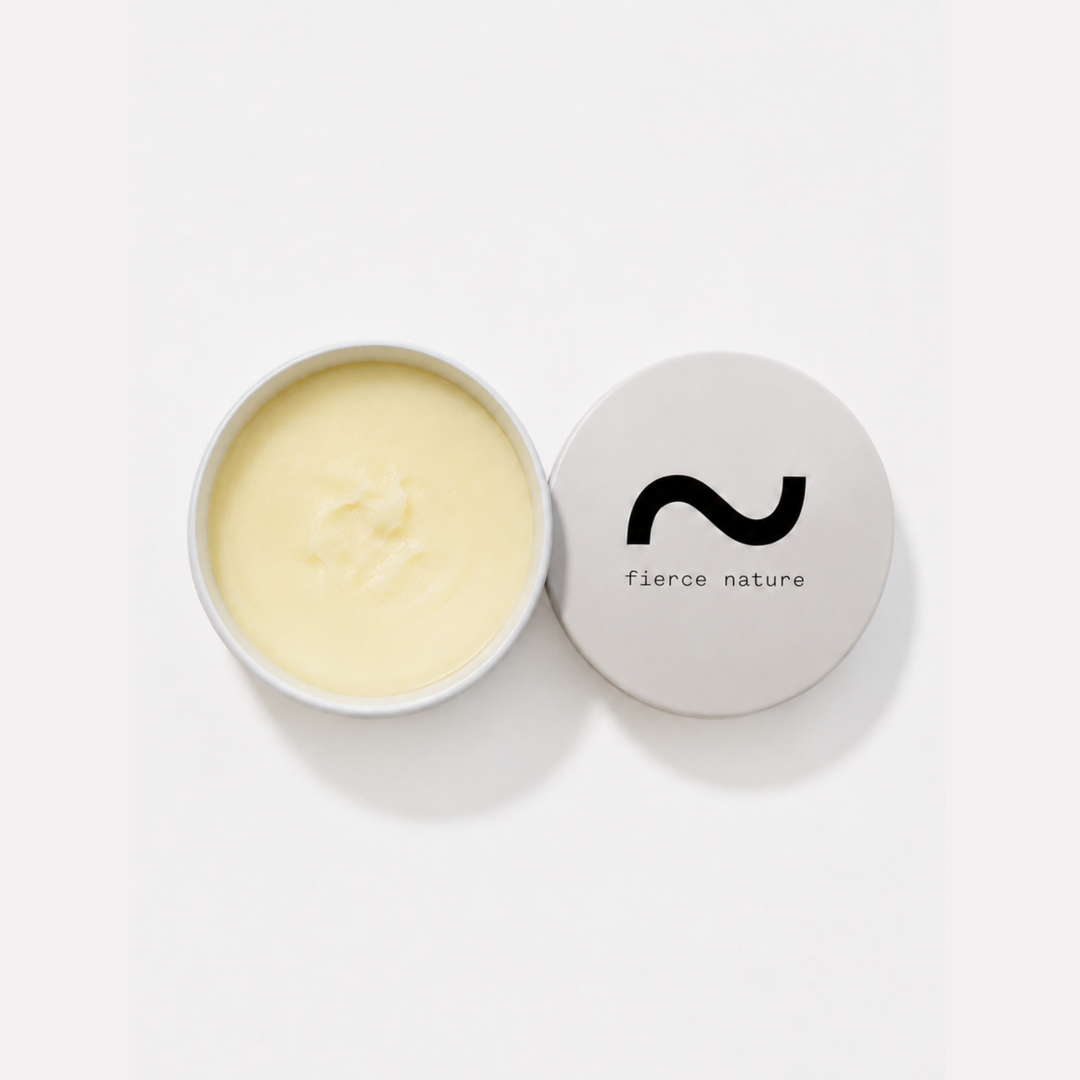
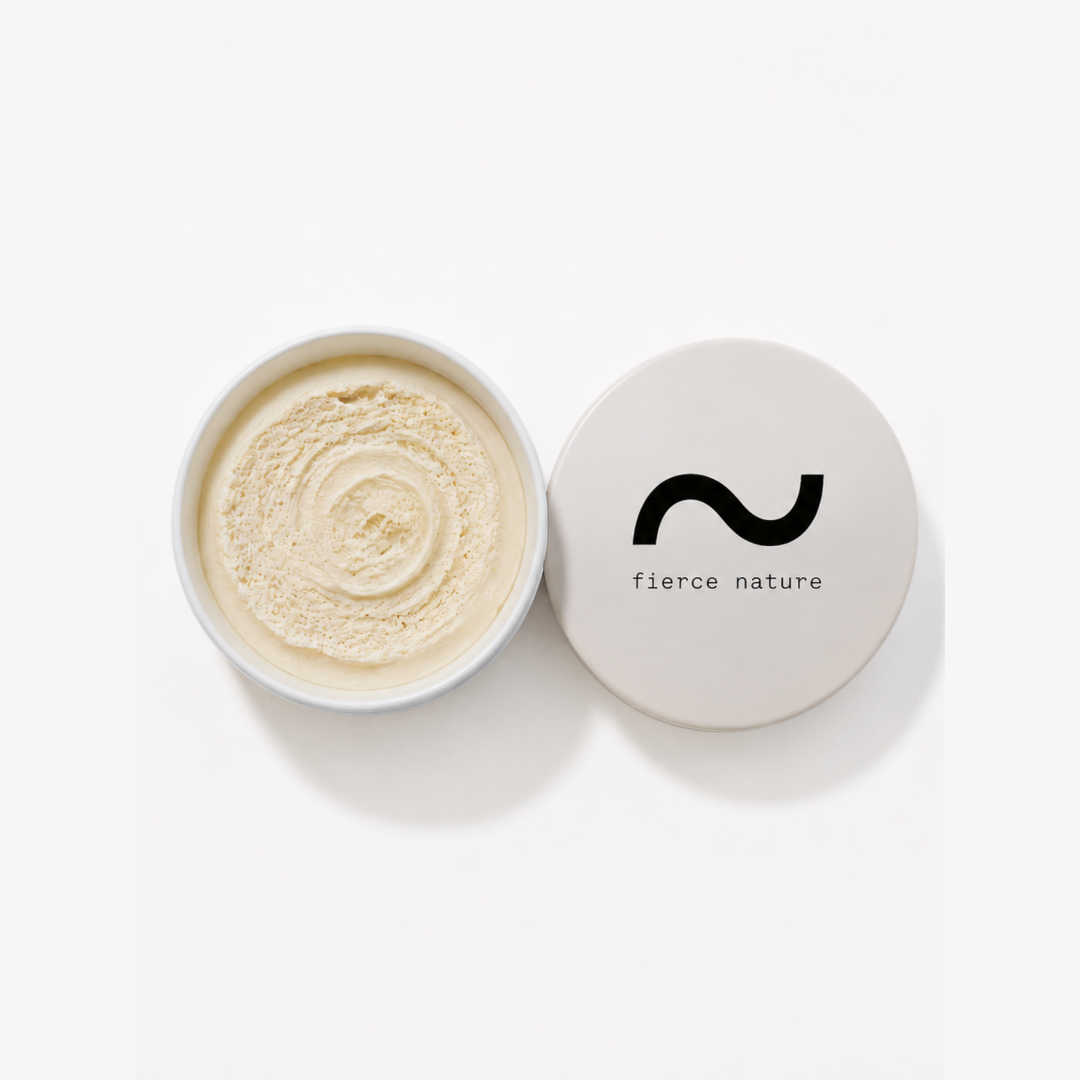
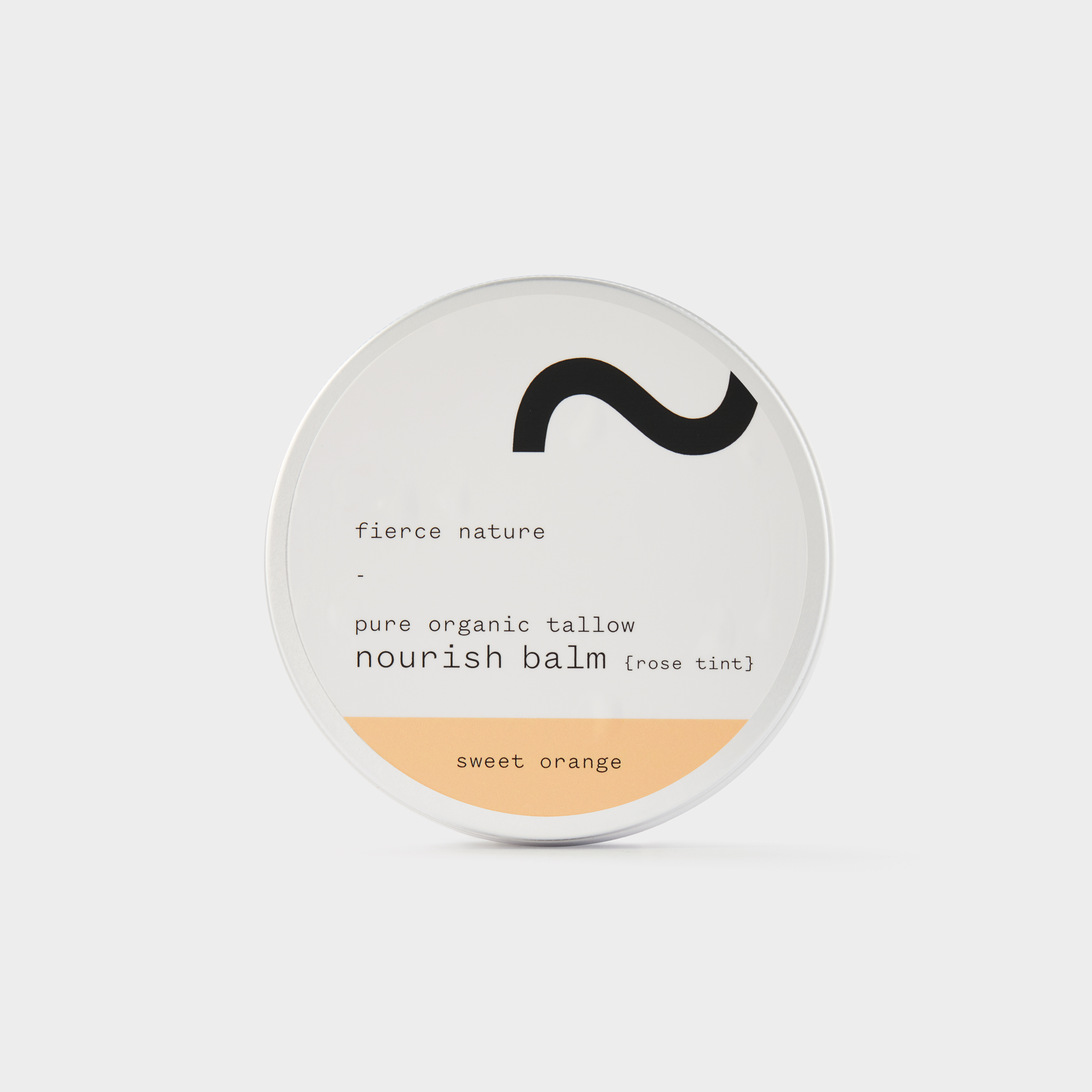
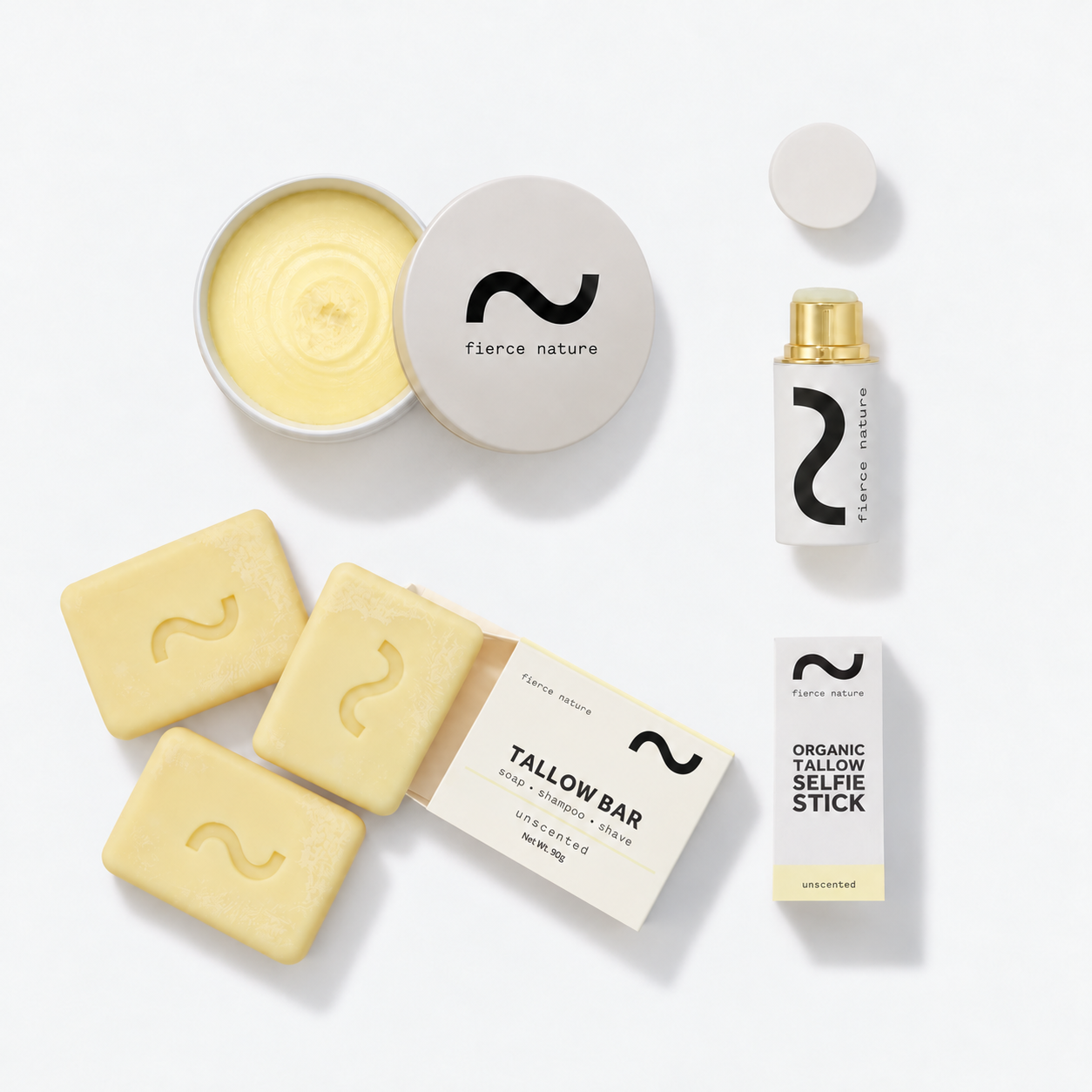
Explore Fierce Nature’s handmade, tallow-based balms, crafted in the UK with naturally sourced ingredients for face and body care.
Think of your skin as a surface you are building up in layers. Sunscreen only protects you if it forms an even, unbroken film. The SPF number on the bottle is measured with a specific, generous thickness of product spread across the skin. Anything you rub in afterwards can move that film around, thin it out or lift it off in patches.
That is why UK clinical guidance on emollients (the medical word for moisturising balms and creams) is so consistent. The National Eczema Society’s sun factsheet advises applying your emollient about half an hour before sunscreen, so the sunscreen stays undiluted and keeps its protective properties. The Ichthyosis Support Group, with advice written by Great Ormond Street Hospital doctors, says the same thing in practice: regular emollient first, then sunscreen 30 to 40 minutes later, as the last thing you do before leaving the house.
There is a second reason, which is texture. The general rule in skincare is thinnest to thickest. A rich balm is a heavier product, and sunscreen is meant to sit on the surface. Mineral sunscreens in particular, the kind made with zinc oxide or titanium dioxide, work by staying on top of the skin, so they belong right at the end.
Here is where most people go wrong. They smooth on a balm, then reach for sunscreen straight away while the balm is still sitting on the surface. The two mix, and the sunscreen goes on patchy.
A better rhythm:
Balm, then wait. UK eczema and dermatology charities suggest roughly 30 minutes for a balm to settle before sunscreen goes on. The Ichthyosis Support Group gives 30 to 40 minutes for people using thick emollients.
Sunscreen, then wait again. The British Association of Dermatologists recommends applying sunscreen generously 15 to 30 minutes before going out, spreading it evenly and letting it dry.
Top up once outside. The NHS recommends two applications when you expect to be out long enough to risk burning: once 30 minutes before you go out and once just before you step out.
In a busy morning, that sounds like a lot. In practice it fits neatly into a routine: balm goes on after your wash, then you get dressed, make a tea, pack your bag, and the sunscreen goes on last, just before the door.
A greasy balm and the sun
The National Eczema Society also notes that a greasy or oily emollient applied very heavily can cause a “frying” effect in strong sun. The practical lesson is to use a thin, well-massaged layer of balm on skin that will be exposed, rather than a thick coat, and to leave time for it to absorb before you go out. A small amount of balm, worked in until your skin feels nourished rather than slick, is all you need underneath sunscreen.
A simple daytime routine, step by step
Here is the order we would follow on a day when you will be outdoors.
Cleanse. Wash your face and body gently and pat dry. Skin that is slightly damp takes a balm more easily.
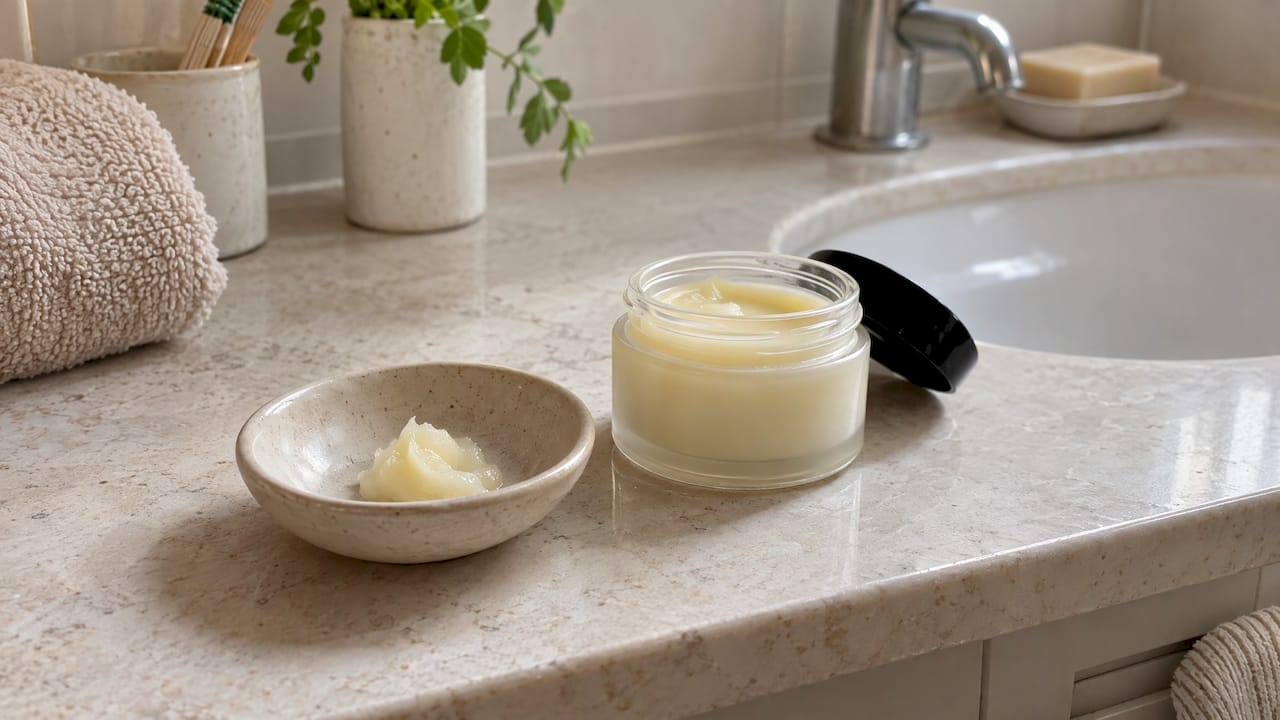
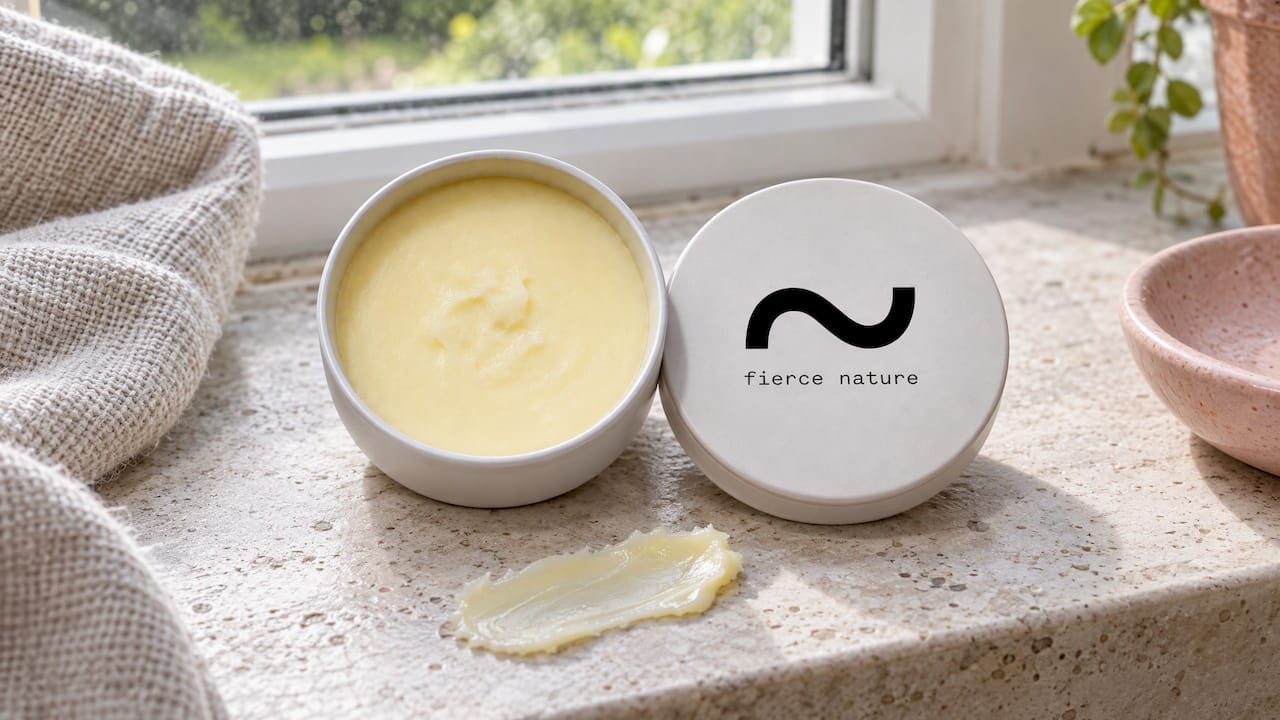
Apply your balm. Warm a small amount between your fingertips until it melts, then press and massage it in. Work it into the face, neck and any exposed areas. Our guide to applying full-body balm for maximum absorption explains the methods in detail.
Give it time. Around half an hour is ideal. Get dressed, have breakfast, then come back to your skin.
Apply sunscreen generously. Cover every exposed area, including ears, the back of the neck and the backs of hands. These are the spots most often missed.
Let it dry. Spread it evenly and allow the layer to settle before you add anything else.
Where things tend to go wrong: rushing step 3, skimping on step 4, and forgetting step 7. If you only improve one thing, make it the amount of sunscreen.
How much sunscreen is enough
Most people apply far too little, which means the protection they get is far lower than the number on the bottle suggests. The NHS says adults should use around 6 to 8 teaspoons to cover the whole body, and that applying sunscreen too thinly reduces protection. NICE puts the figure at about 35 ml for an average adult to achieve the labelled SPF.
For your face and neck, the guidance from an NHS dermatology service is about two finger-lengths of sunscreen. Squeeze a line of sunscreen along your index and middle fingers and spread it over the face and neck.
A 2026 review in the British Journal of Dermatology makes the same point from the research side. Standard SPF testing uses 2 mg of product per square centimetre of skin, while real-world application is commonly less than half of that. People also often miss areas such as the ears, neck and the backs of hands. In other words, how you apply sunscreen matters as much as which one you buy.
Choosing the right protection level
The NHS recommends a sunscreen of at least SPF 30 with at least 4-star UVA protection. SPF tells you about protection from UVB, the rays that cause sunburn. The star rating, or the UVA logo in a circle, tells you about UVA, which penetrates more deeply and contributes to skin ageing and skin cancer risk. Cancer Research UK gives the same advice and adds that sunscreen sits alongside shade and clothing, not instead of them.
NICE is clear on this too: sunscreen is supplementary, and does not replace suitable clothing and shade.
When to think about sun protection in the UK
It is easy to assume sun protection is a summer holiday matter. The NHS advises considering skin protection when the UV index is 3 or higher, and says the UK sun is at its strongest between 11am and 3pm from March to October. Cancer Research UK says UV can be strong enough to cause damage from mid-March to mid-October. A sunny day in April deserves the same care as one in July.
What if your balm already contains SPF?
This is the question behind many searches for “balm before sunscreen”. If your balm or moisturiser has SPF in it, do you still need a separate sunscreen?
The UK guidance is careful here. Cancer Research UK advises using sunscreen even if your moisturiser or makeup contains SPF, because those products rarely go on in a thick enough layer and are not usually reapplied. The British Association of Dermatologists adds that SPF moisturisers can offer much less protection in practice because people apply them thinly, and that they are not necessarily water- or rub-resistant.
An SPF product does have a place. The BAD fact sheet says an SPF moisturiser can help for brief exposure, such as walking to the car, while sunscreen is better when you will be out for longer or exposed deliberately.
So the sensible approach looks like this:
Situation
What to do
Short trips outdoors, an ordinary day in town
A balm with SPF can cover brief exposure
A day outdoors, walking, gardening, sport, a beach or park
Balm first, then a generous layer of SPF 30+ sunscreen with 4-star UVA
Swimming, sweating or towel drying
Reapply sunscreen straight after
Bright, high-UV conditions
Add shade and clothing, and avoid the midday peak
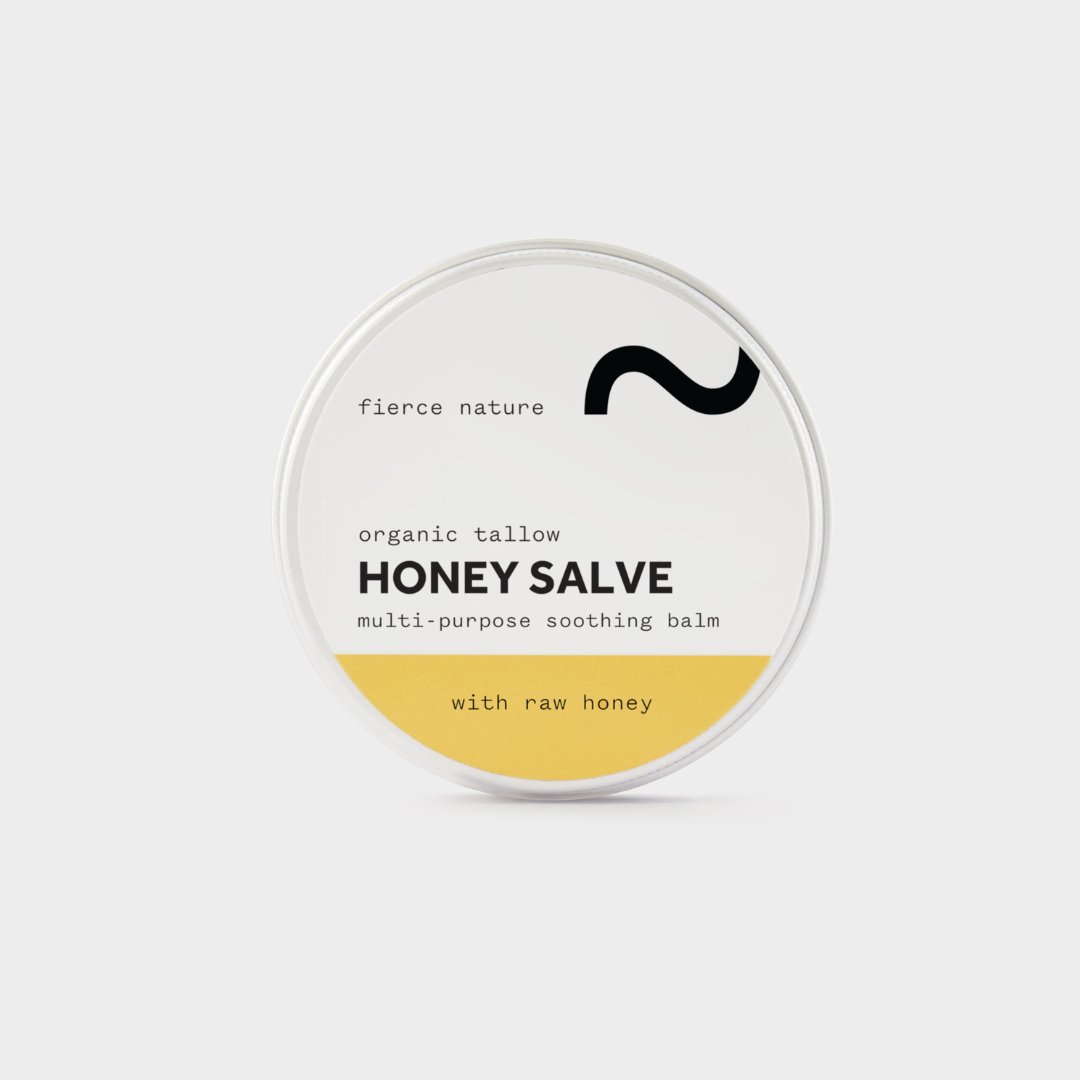
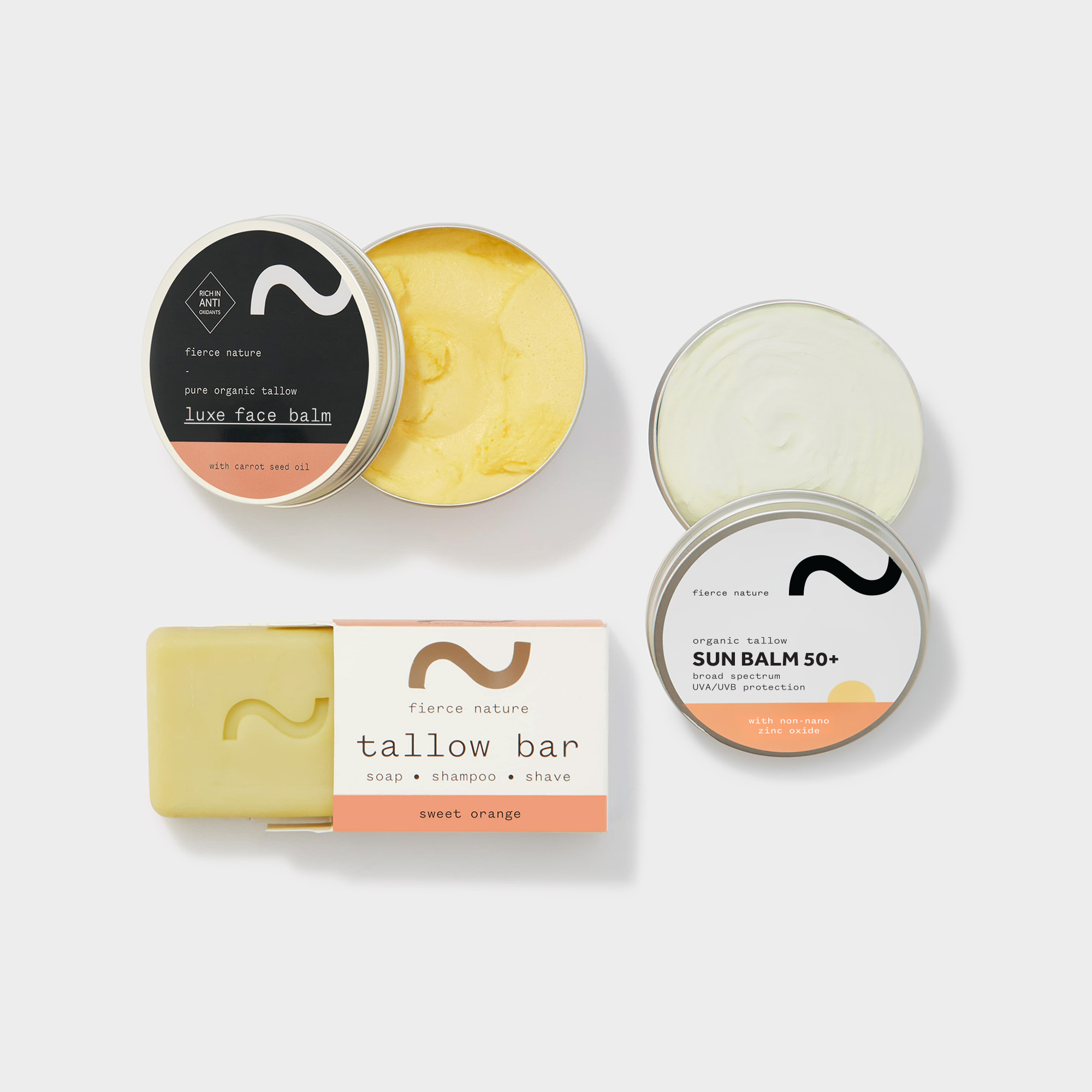
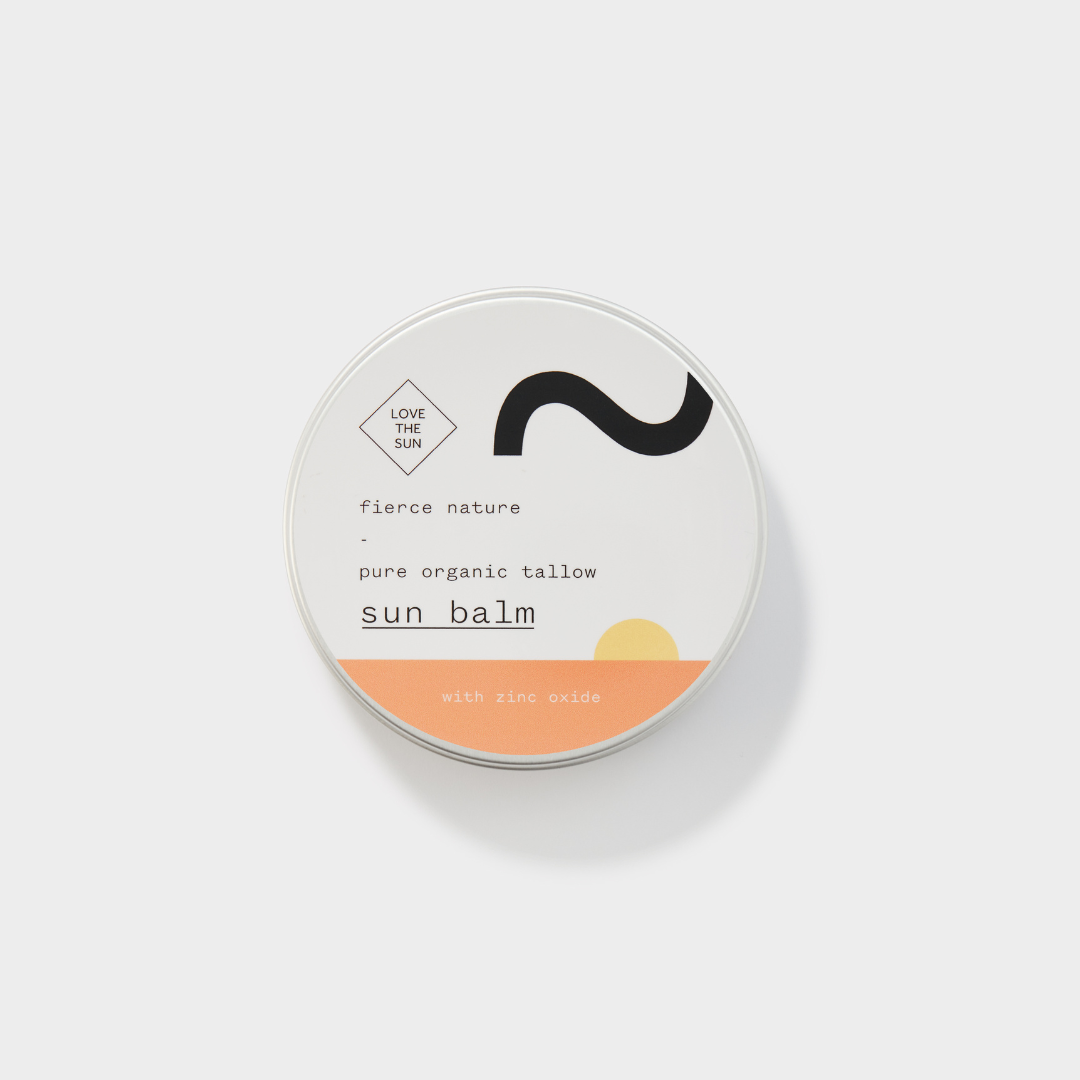
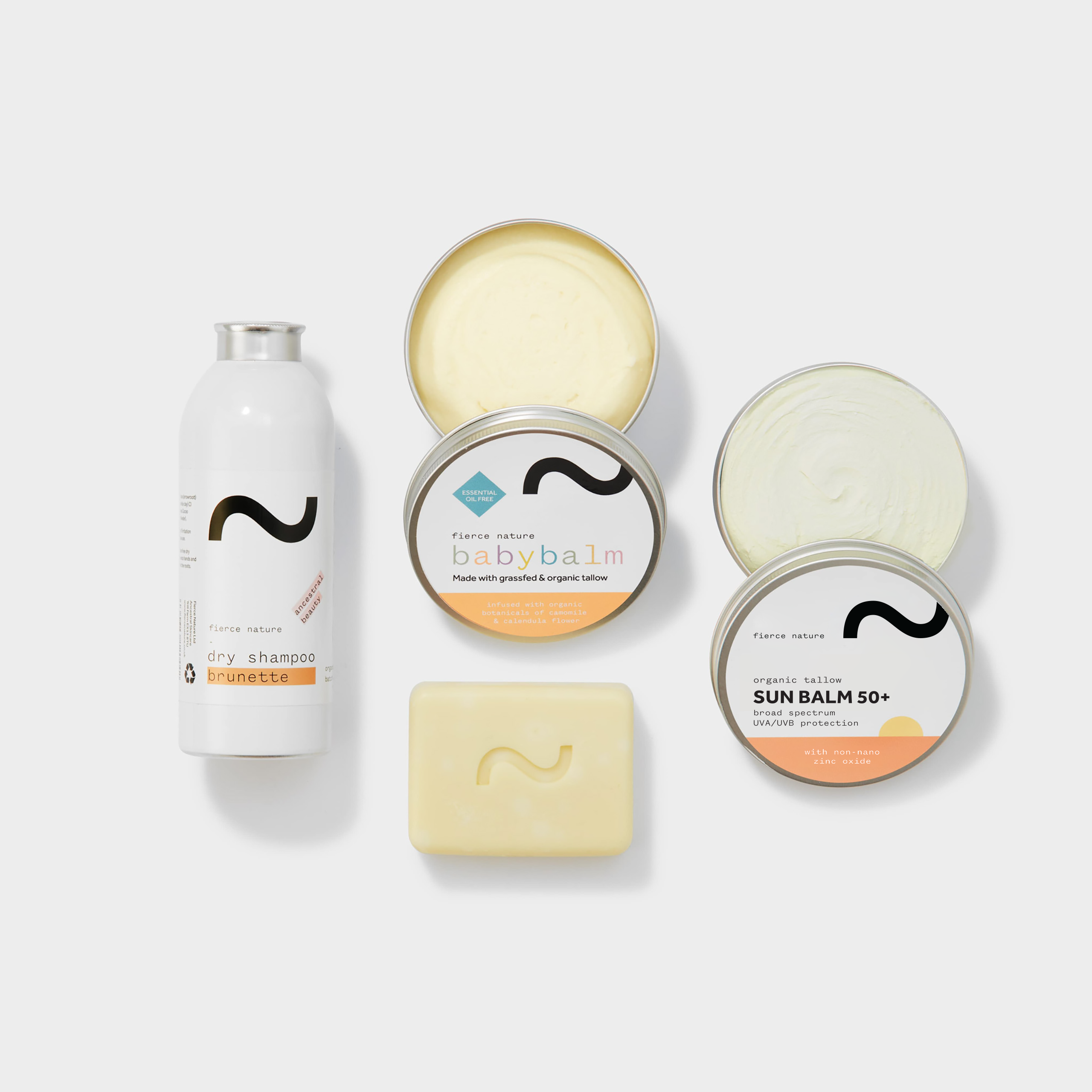
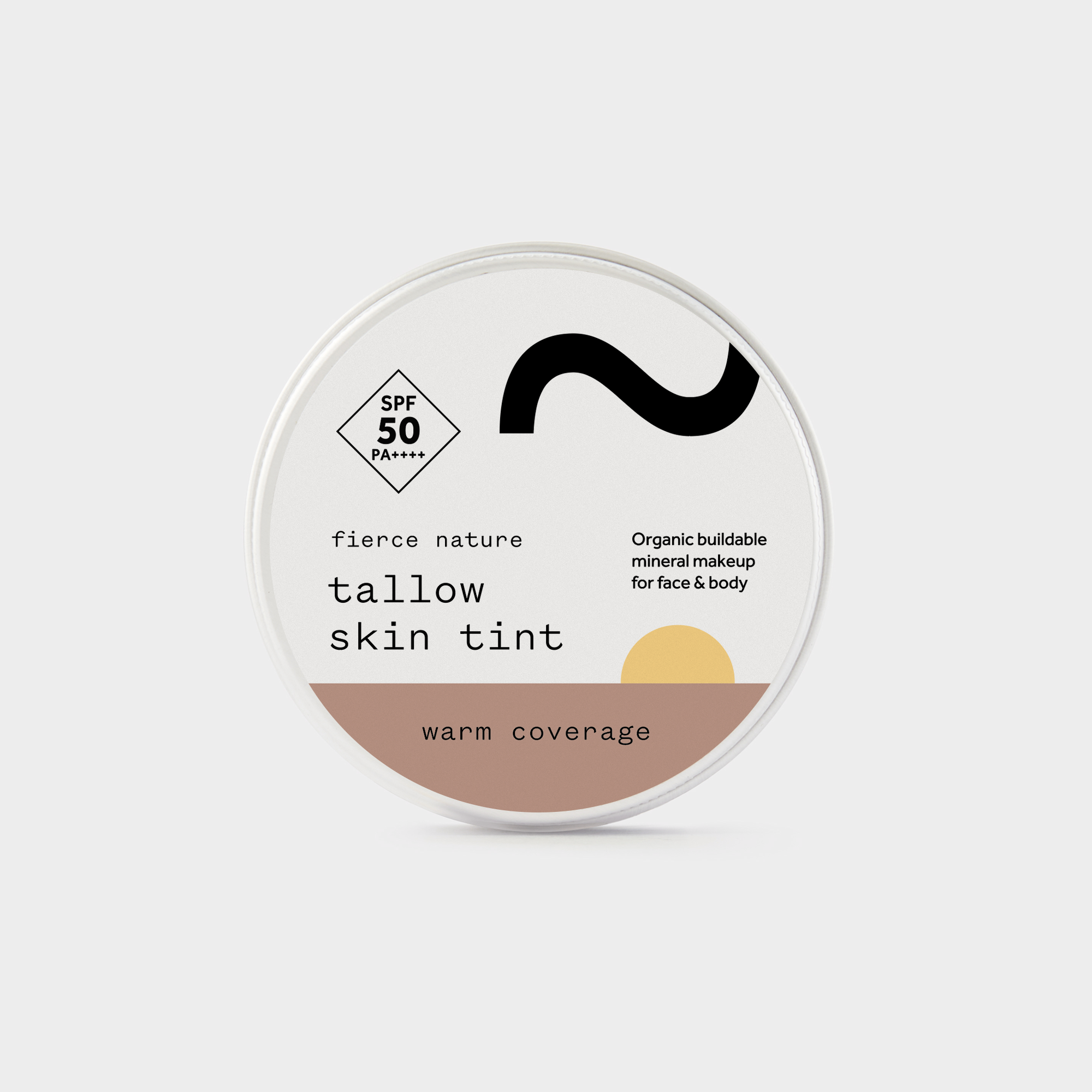
Our Sun Balm SPF 50+ PA++++ is our non-toxic sun protection balm, made with tallow as its base, for people who prefer a balm texture for their sun care. Apply it generously and evenly, as you would any sun protection, and keep it as the final layer over your nourishing balm.
Reapplying over balm and makeup
Reapplication is where balm users often stumble. Your skin has been moisturised, your sunscreen is on, and two hours later you have rubbed your face, sweated, eaten lunch and touched your cheeks a dozen times. The protection has worn thinner than you think.
The guidance is straightforward:
The BAD advises a second application about 15 to 30 minutes after stepping outside, then reapplying every 2 hours, and after swimming, towel drying or sport.
The Ichthyosis Support Group recommends reapplying every 2 to 3 hours, and if you apply more emollient during the day, reapplying sunscreen on top afterwards.
That last point is the most useful for balm fans. If your skin feels dry by midday and you reach for your balm, the sunscreen needs to go on again afterwards, not before. Think of the balm as a repair step and the sunscreen as the finish.
If you wear makeup, you do not need to wipe your face clean each time. Our guide to reapplying sunscreen over makeup with tallow balm walks through how to do it so your skin stays comfortable and your base stays put.
Lips: do balms count as sunscreen?
Lips are easy to forget and burn easily. A plain lip balm for comfort is not the same as sun protection. The NHS advice for sore or dry lips is to use a lip balm with an SPF of 15 or more and reapply it every 2 hours when you are outdoors. Lip balms also tend not to last long on the skin, so topping them up through the day is part of the routine.
On your face, apply lip balm as the final step after sunscreen, and again whenever your lips feel dry.
Face versus body: does the order change?
The order stays the same everywhere: balm, then sunscreen. What changes is the amount and the time you have.
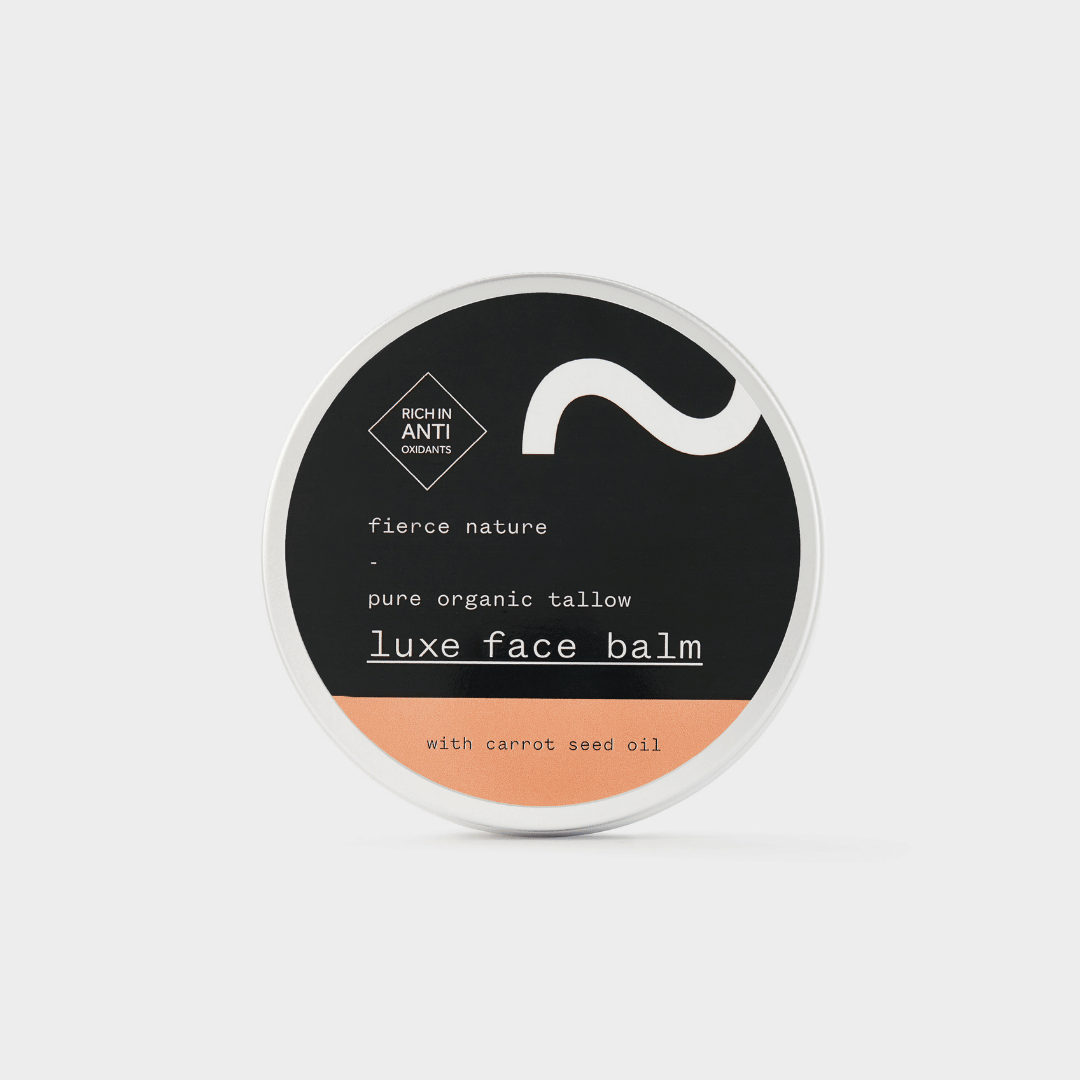
Face and neck. This is where you apply the finest layers, and where makeup and skin tints often come in. Keep your balm light, wait, then apply sunscreen, then colour if you wear it. If you like using one balm in place of several products, our article on why face balms replace multiple products explains how a simple routine makes layering easier.
Body. On the body you need far more sunscreen, so planning matters. If you are heading out for a day by the sea, moisturise after your shower, dress, then apply sunscreen to the exposed areas. Do the backs of the knees, tops of the feet and shoulders, which are easy to skip. Cover up with clothing and seek shade at midday, as sunscreen alone is not enough.
Children and babies. For little ones, sun protection is a matter for shade, clothing and an appropriate sunscreen. Their skin is delicate, so keep routines simple and speak to your health visitor or GP if you have concerns about your child’s skin or a skin condition.
Sensitive, dry or eczema-prone skin
If you live with dry or reactive skin, balms are probably a daily habit, and getting the order right matters even more. The National Eczema Society’s guidance, which we have drawn on throughout, is aimed at exactly this situation: emollient first, sunscreen after a gap, and sunscreen reapplied after fresh emollient. If you have a diagnosed condition such as eczema or ichthyosis, follow the advice from your GP, dermatologist or specialist nurse on which products suit you, and patch test any new product on a small area first.
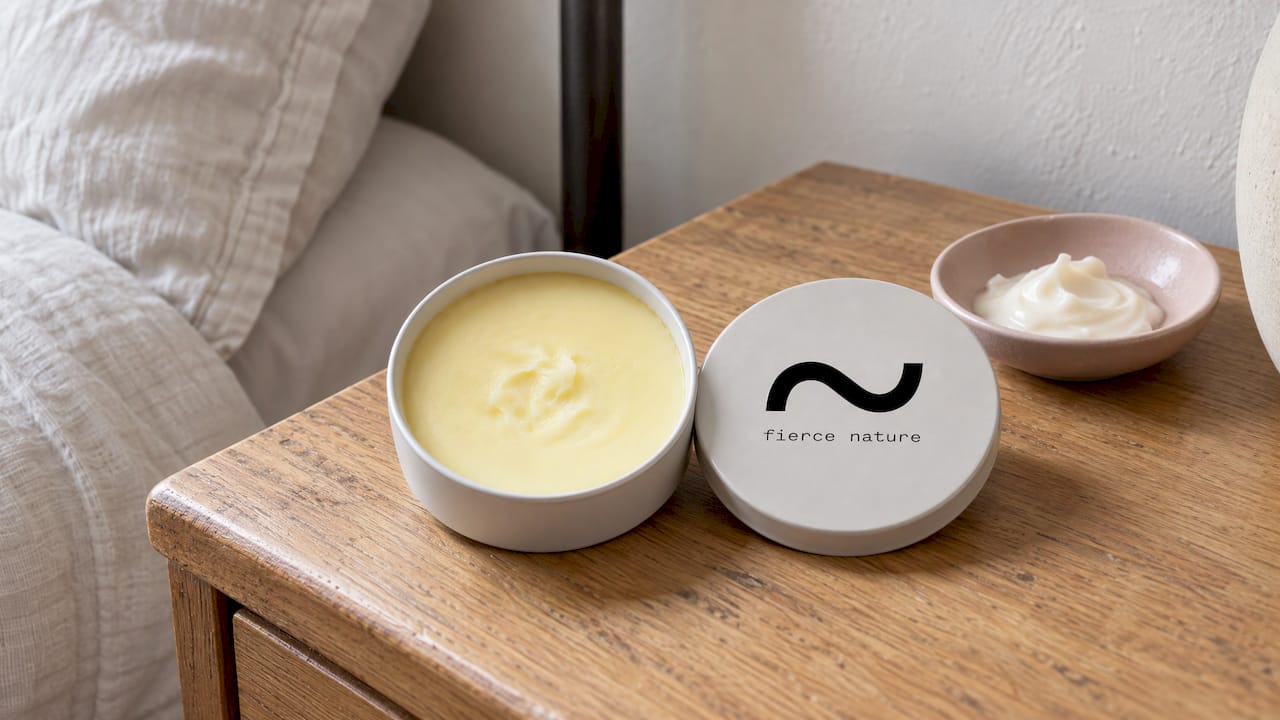
Choosing a balm to wear under sunscreen
The point of a balm under sunscreen is that it should leave skin comfortable and nourished without needing a lot of other products. A few things to look for:
A short, clear ingredient list, so you know exactly what goes on your skin each morning.
A rich but absorbable texture, one that melts on contact and sinks in rather than sitting as a slick on the surface.
A formula you enjoy using, because a routine you like is a routine you keep.
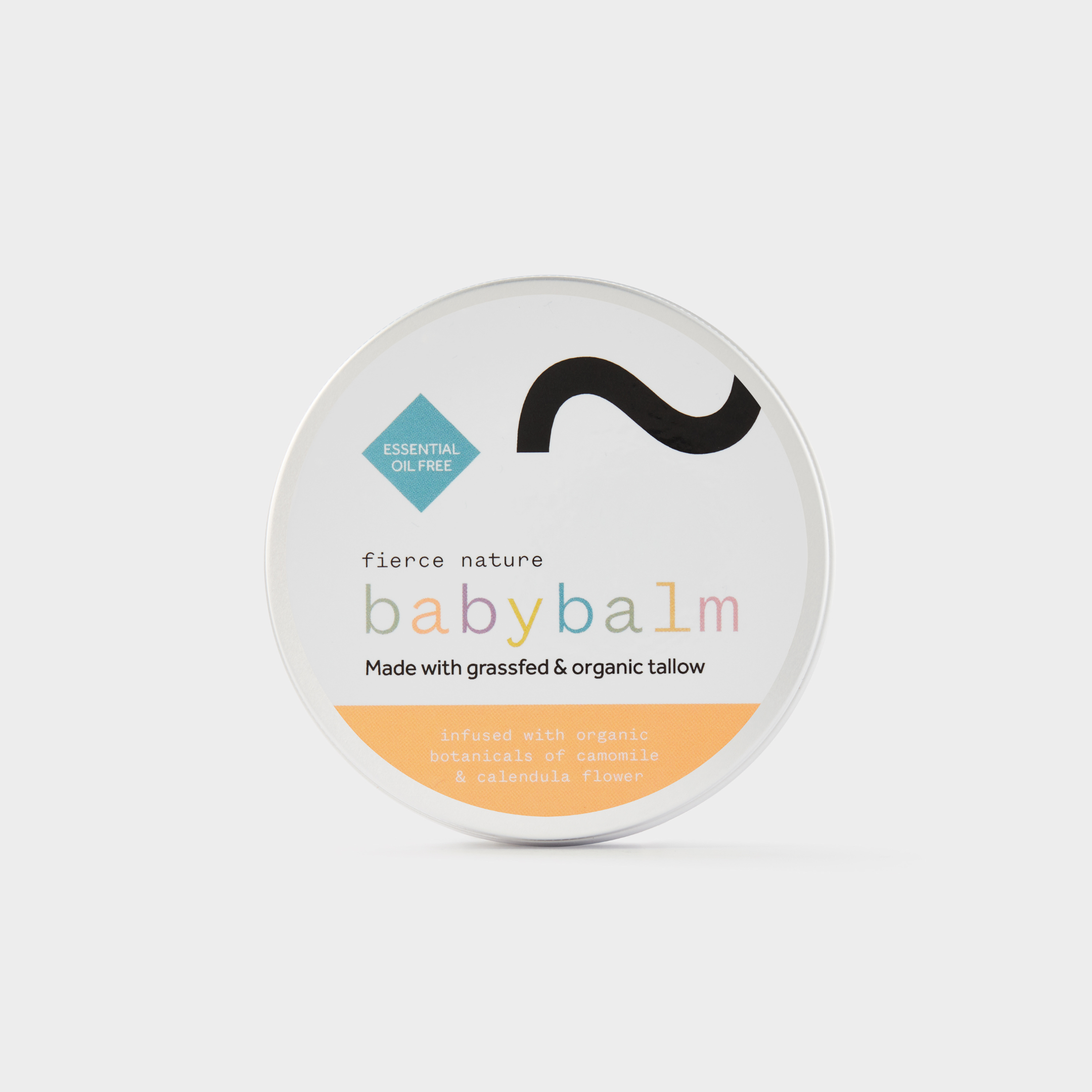
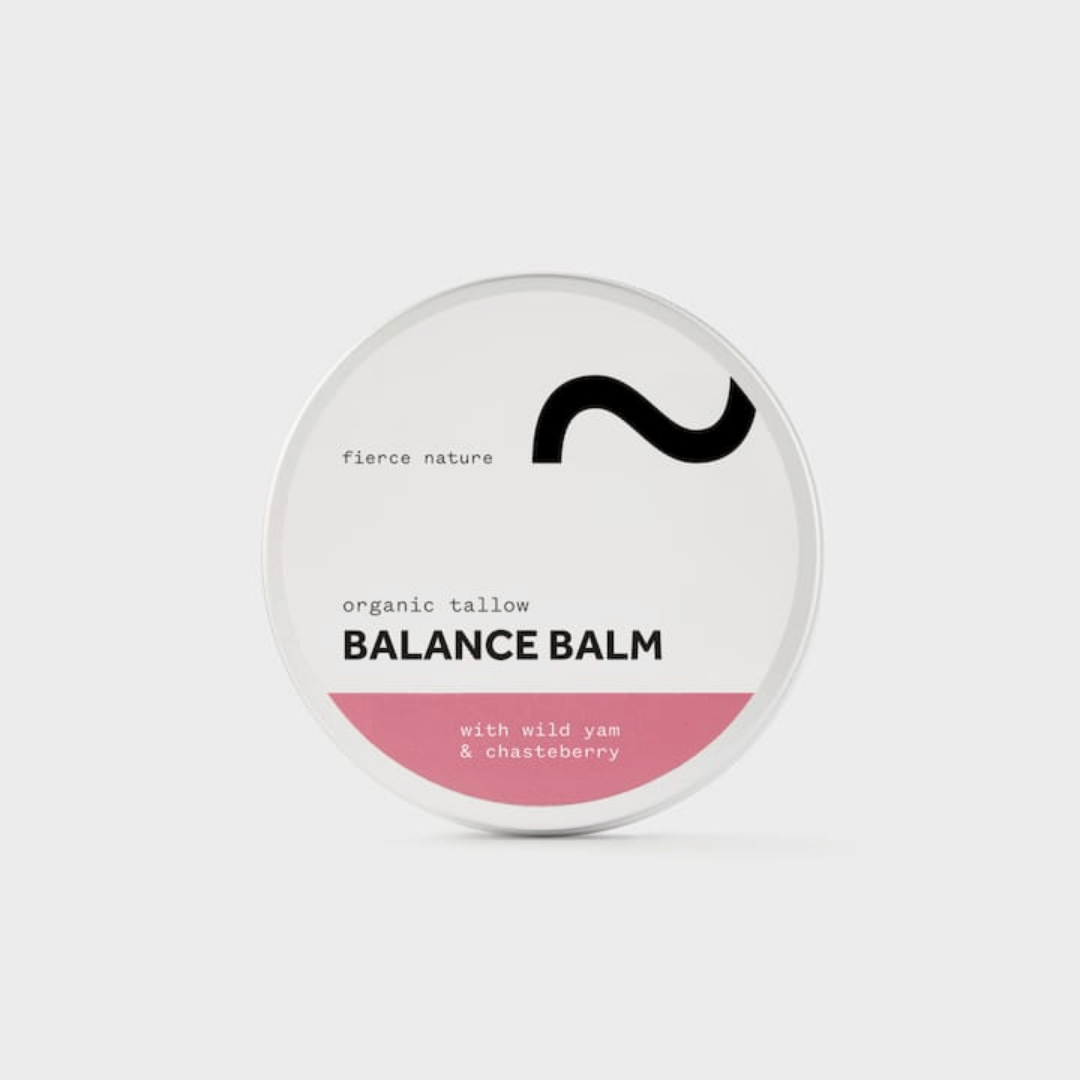
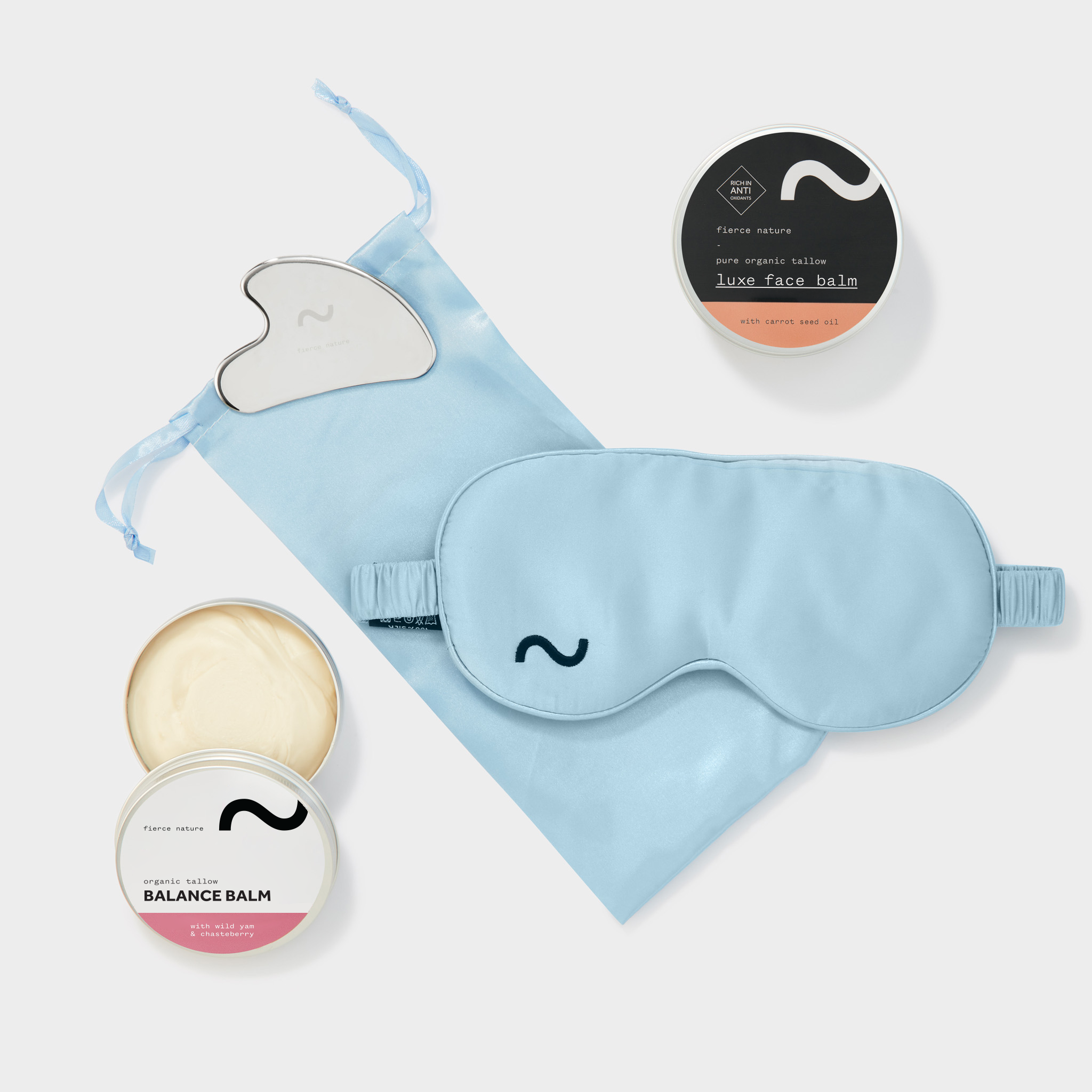
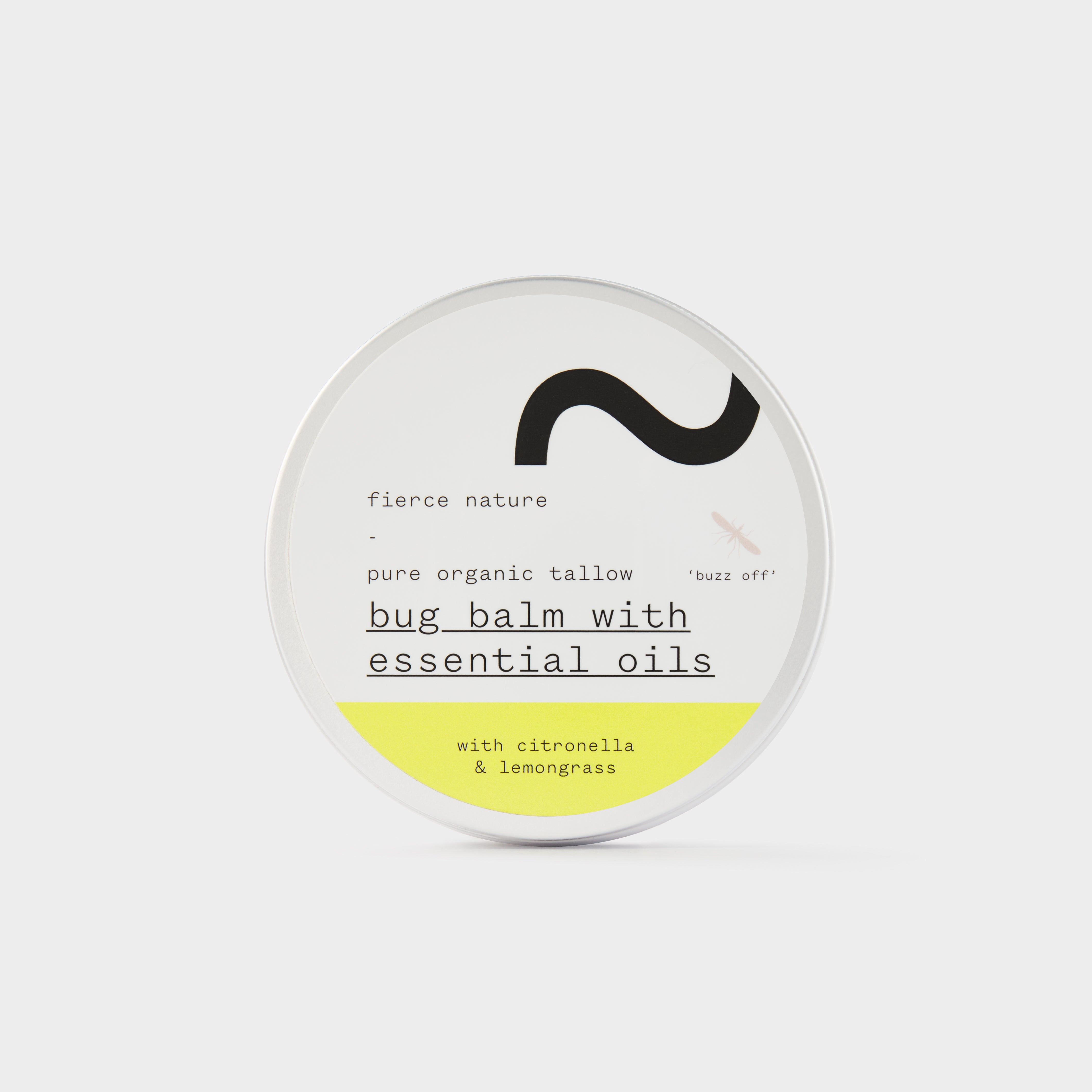
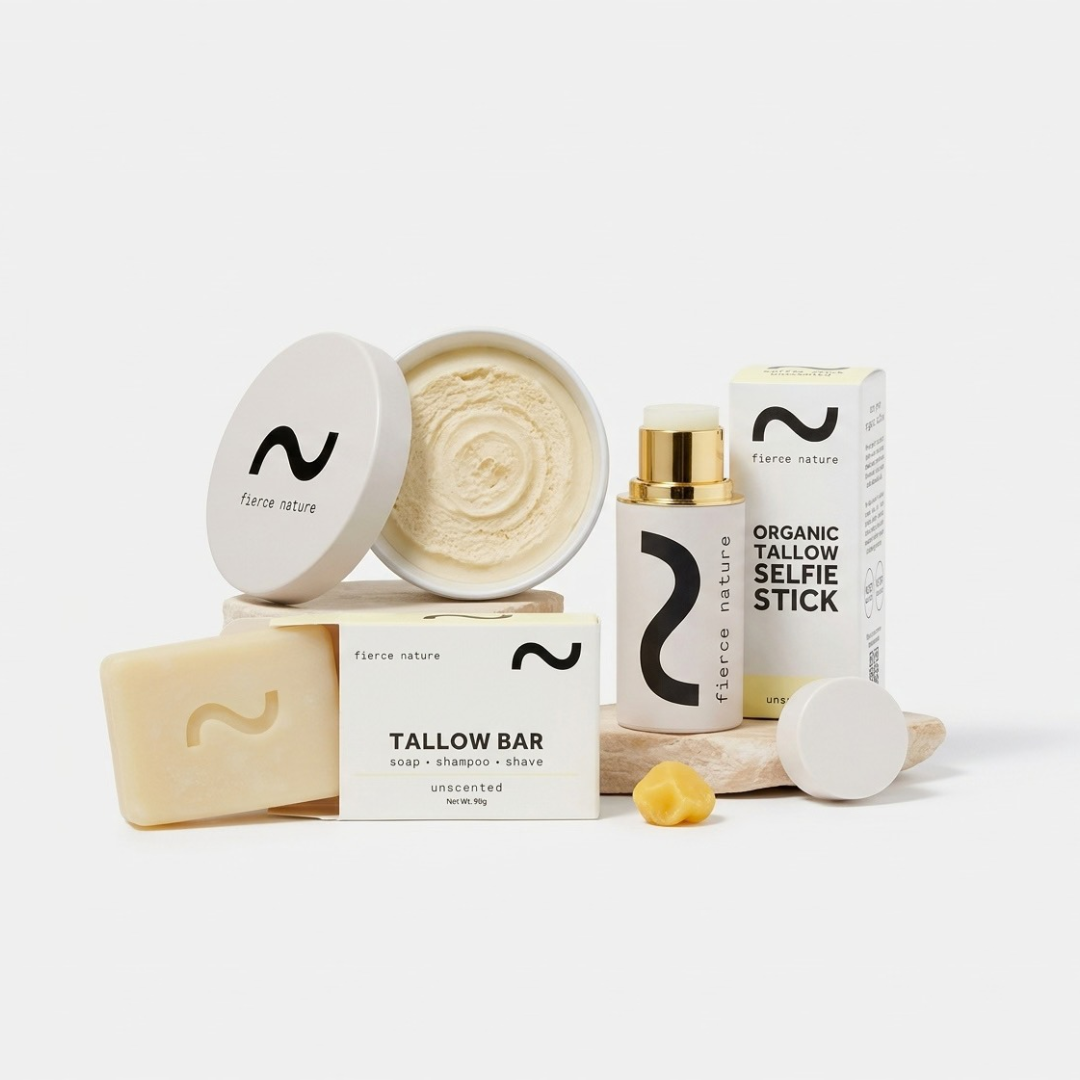
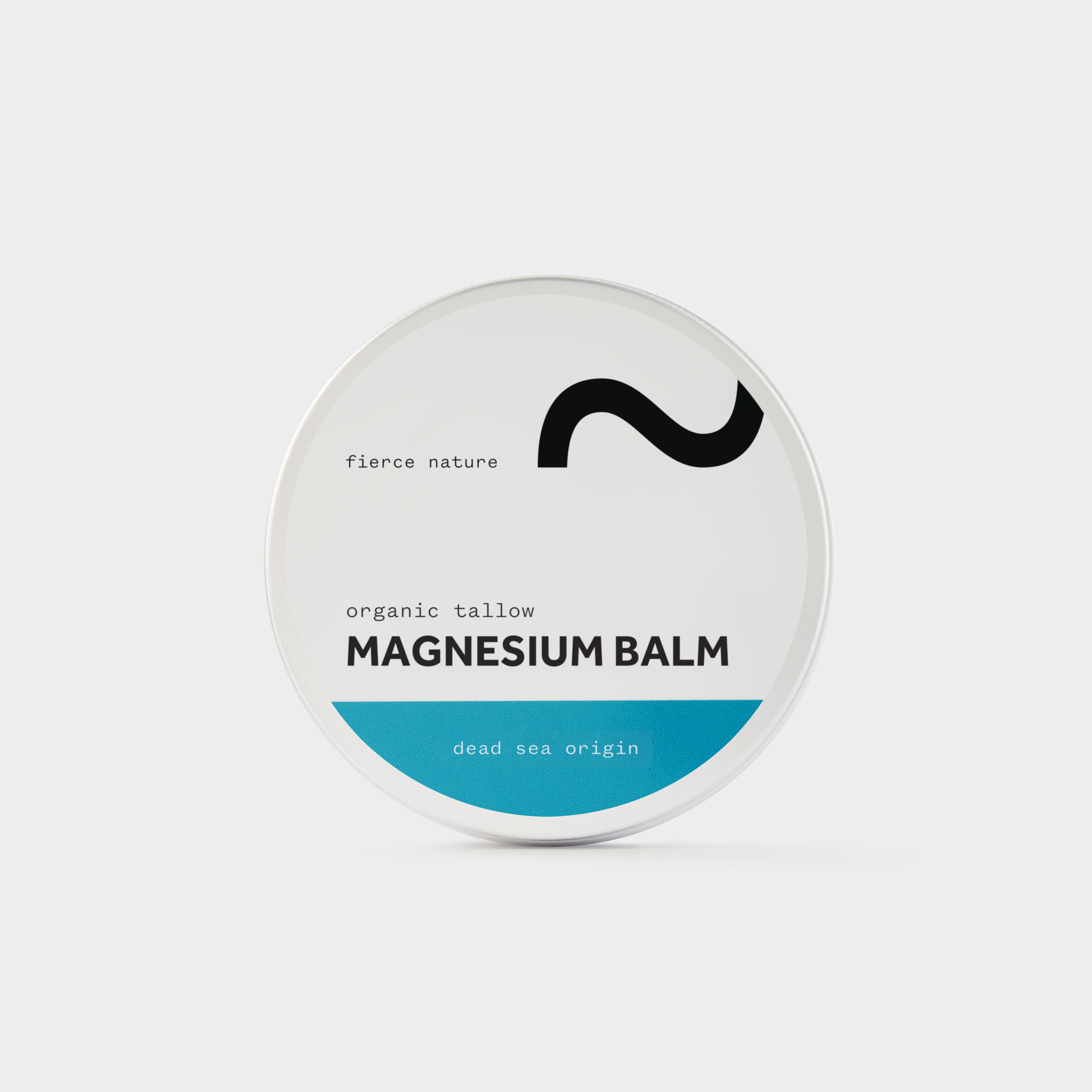
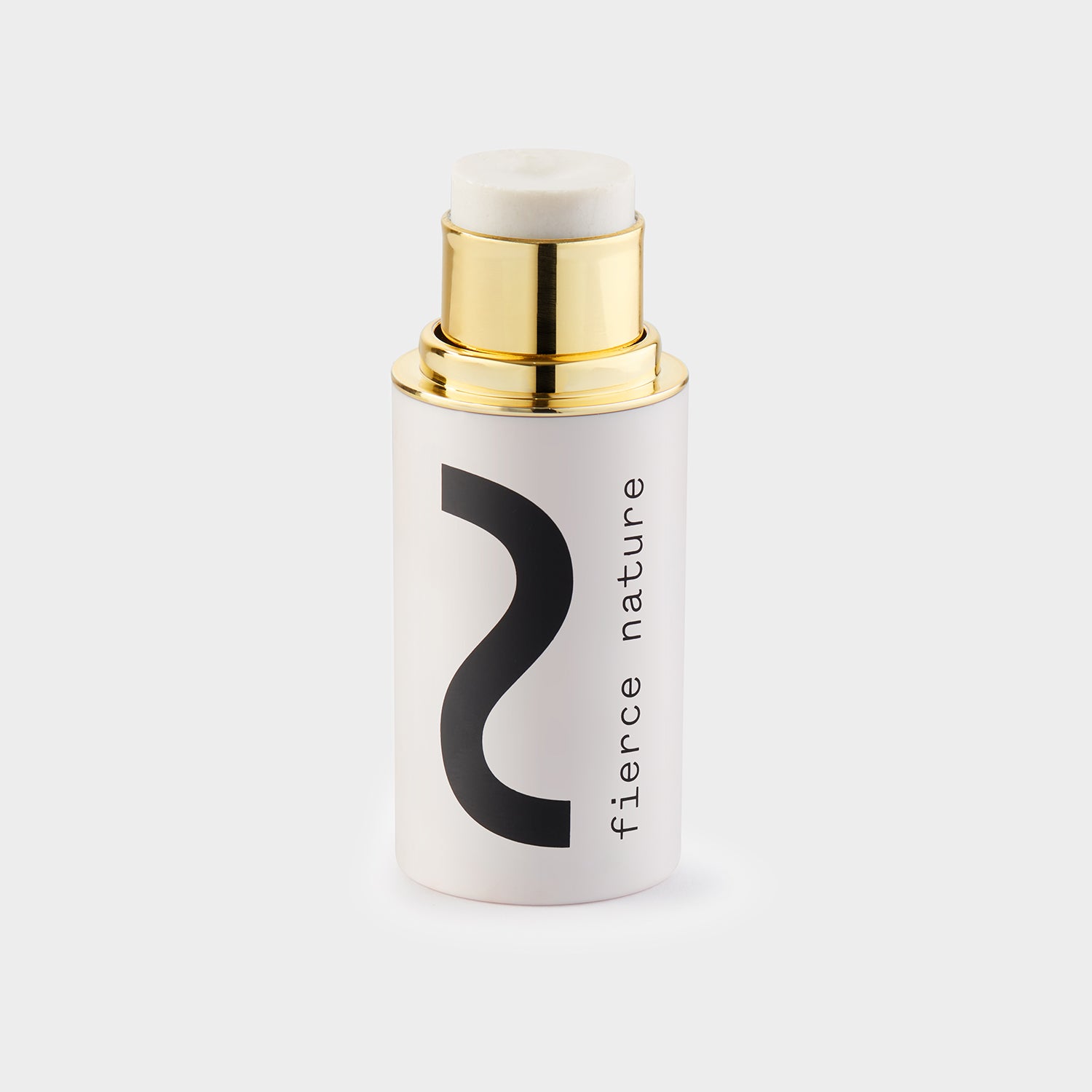
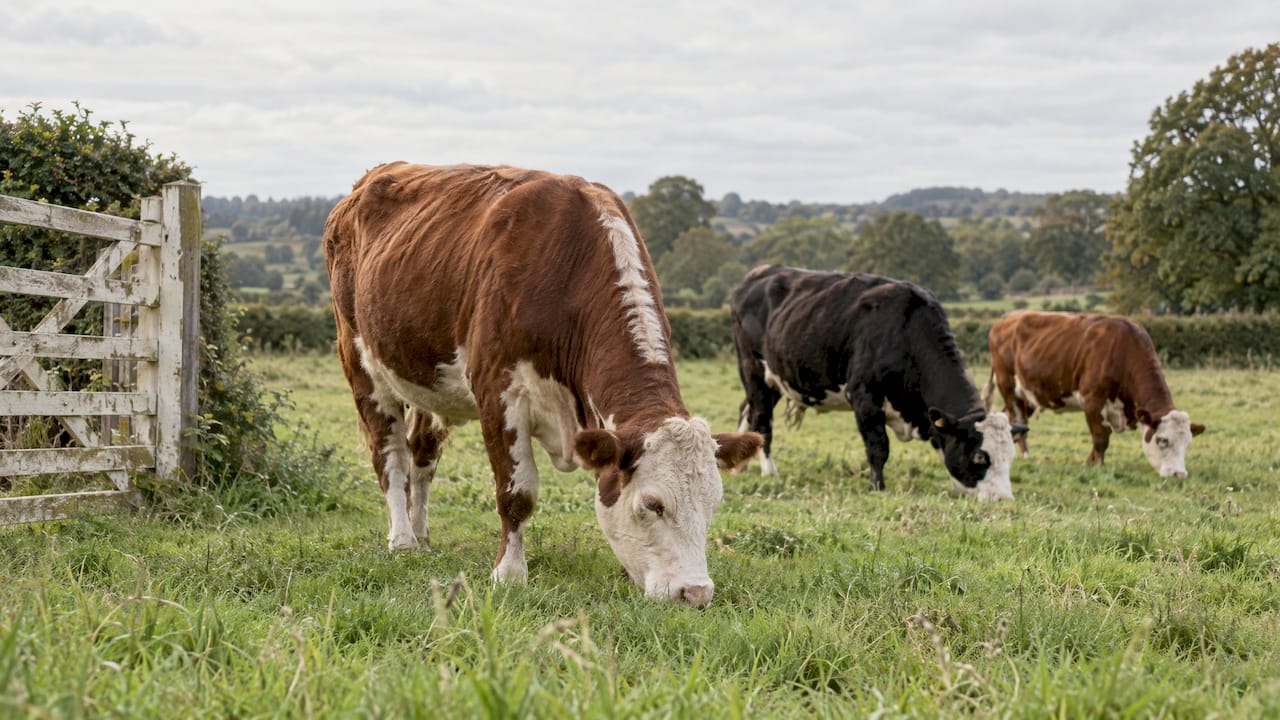
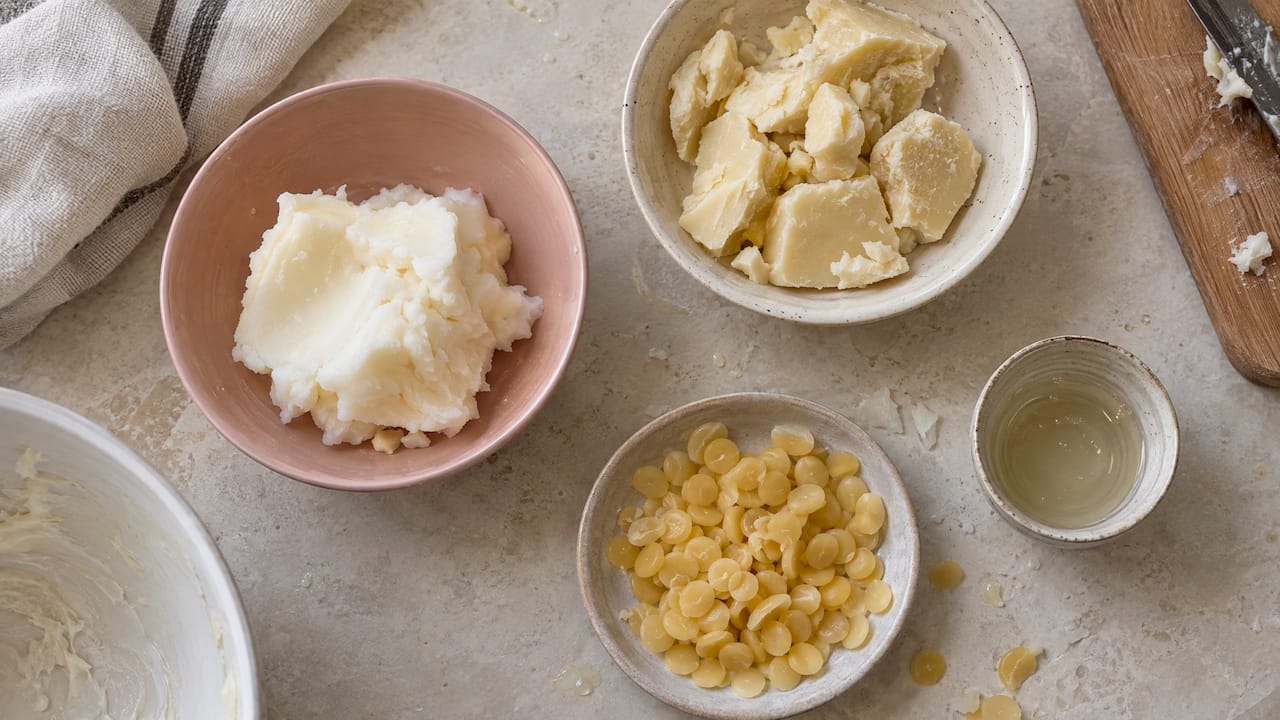
Our balms are handmade in the UK with organic, grass-fed tallow as the foundation, alongside naturally sourced ingredients. Tallow has been used for centuries as a skin emollient, and we choose it because it is designed to deliver bioavailable vitamins to the skin. We keep ingredient lists transparent so you can see what you are using.
From our shelves to your routine
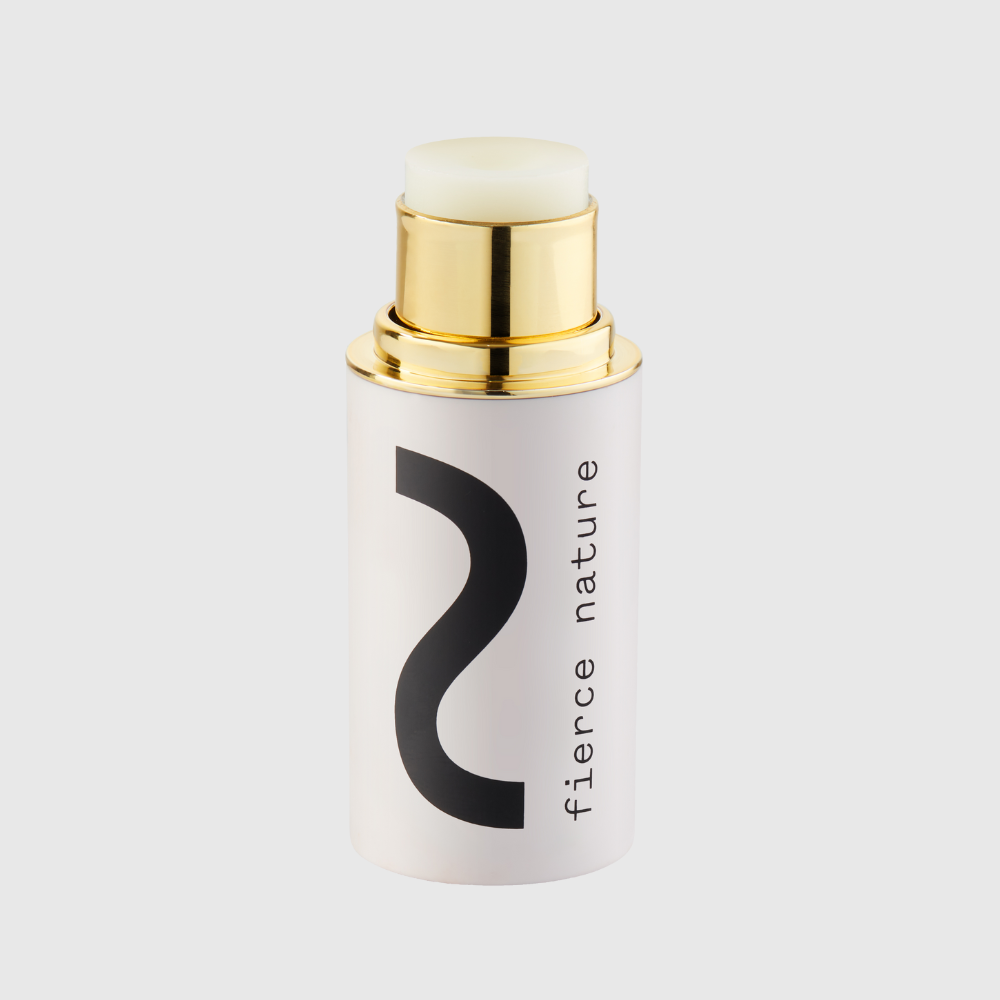
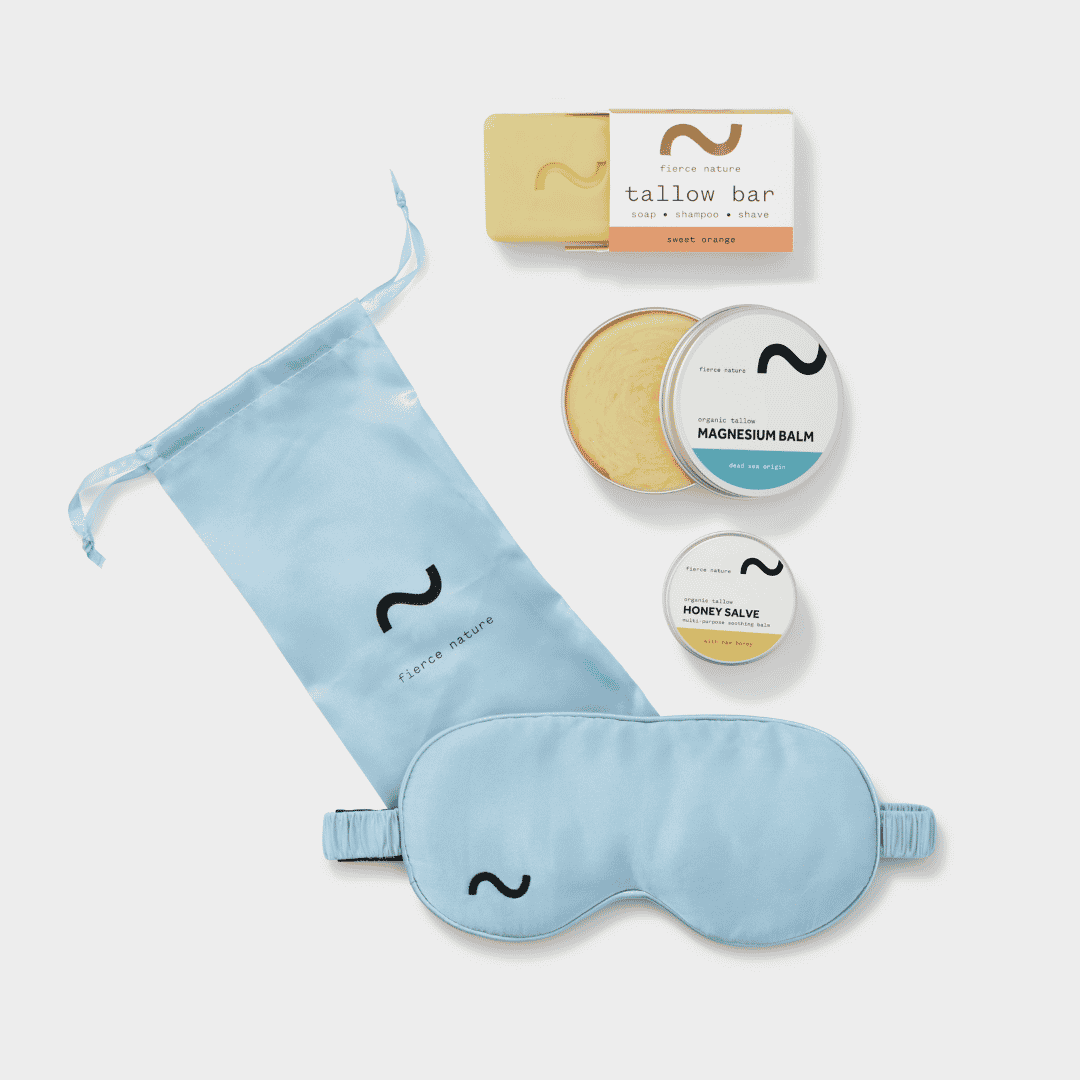
If you are building a morning routine around the order above, here is where to start:
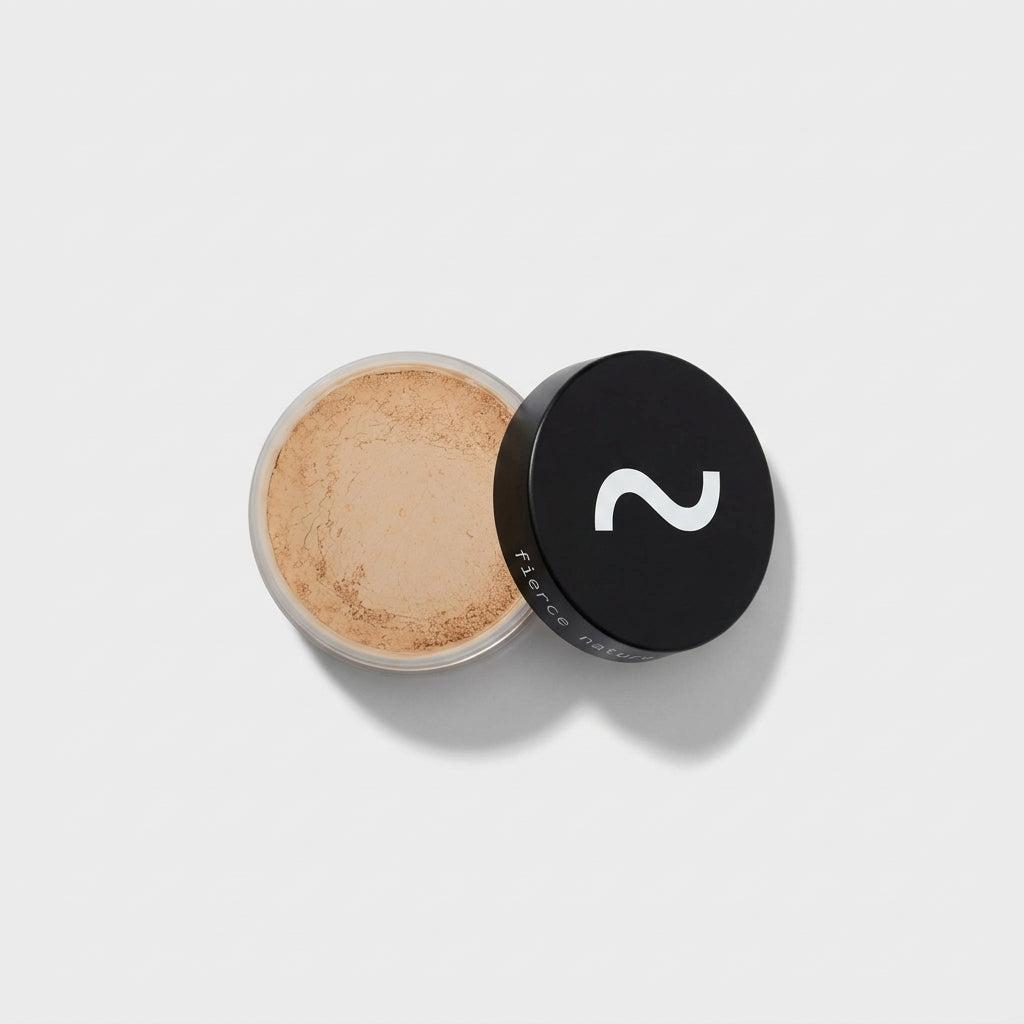
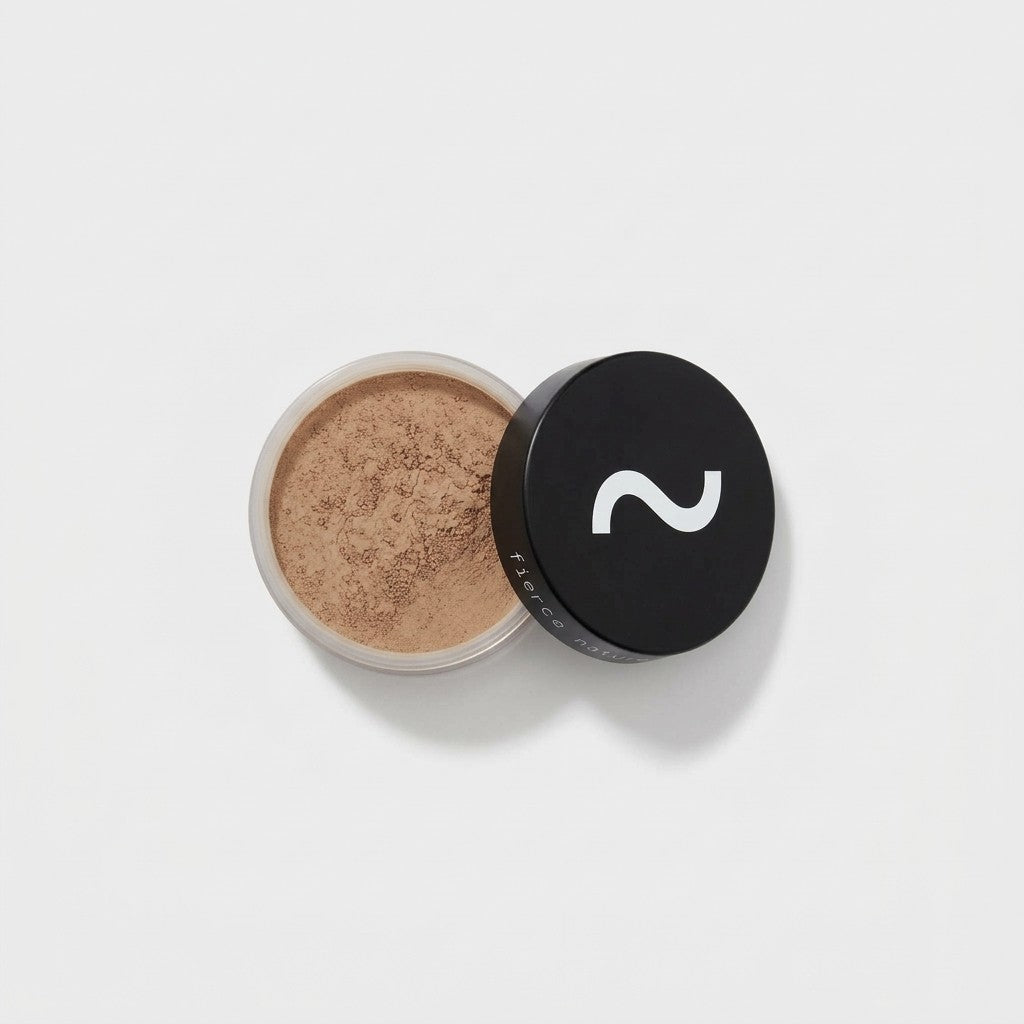
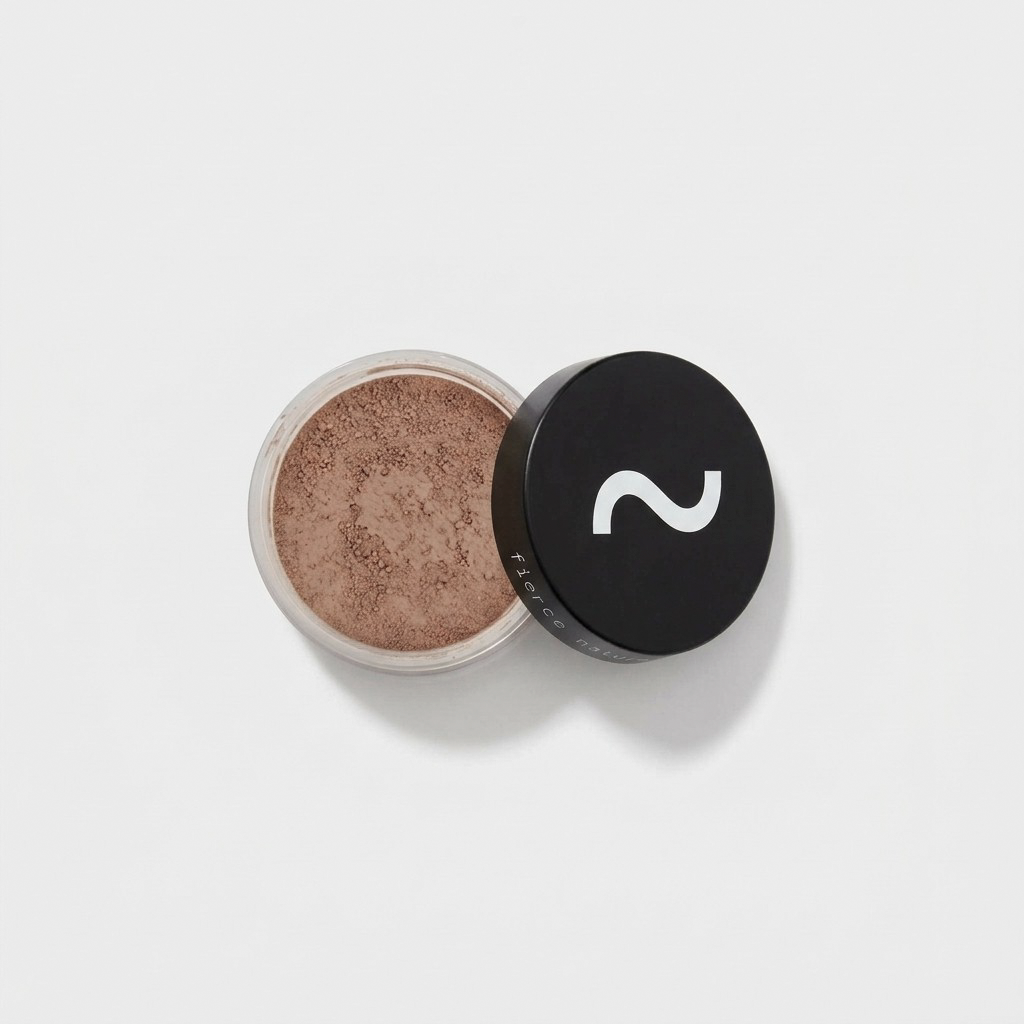
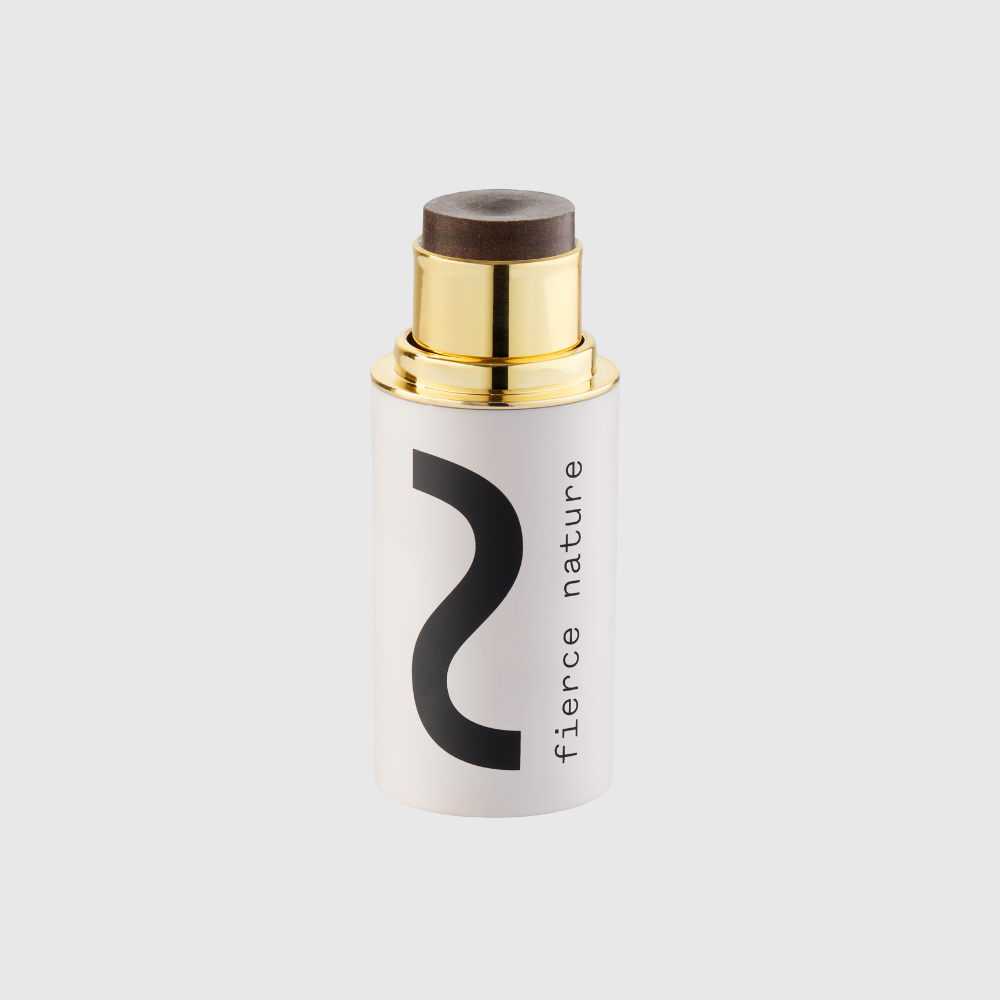
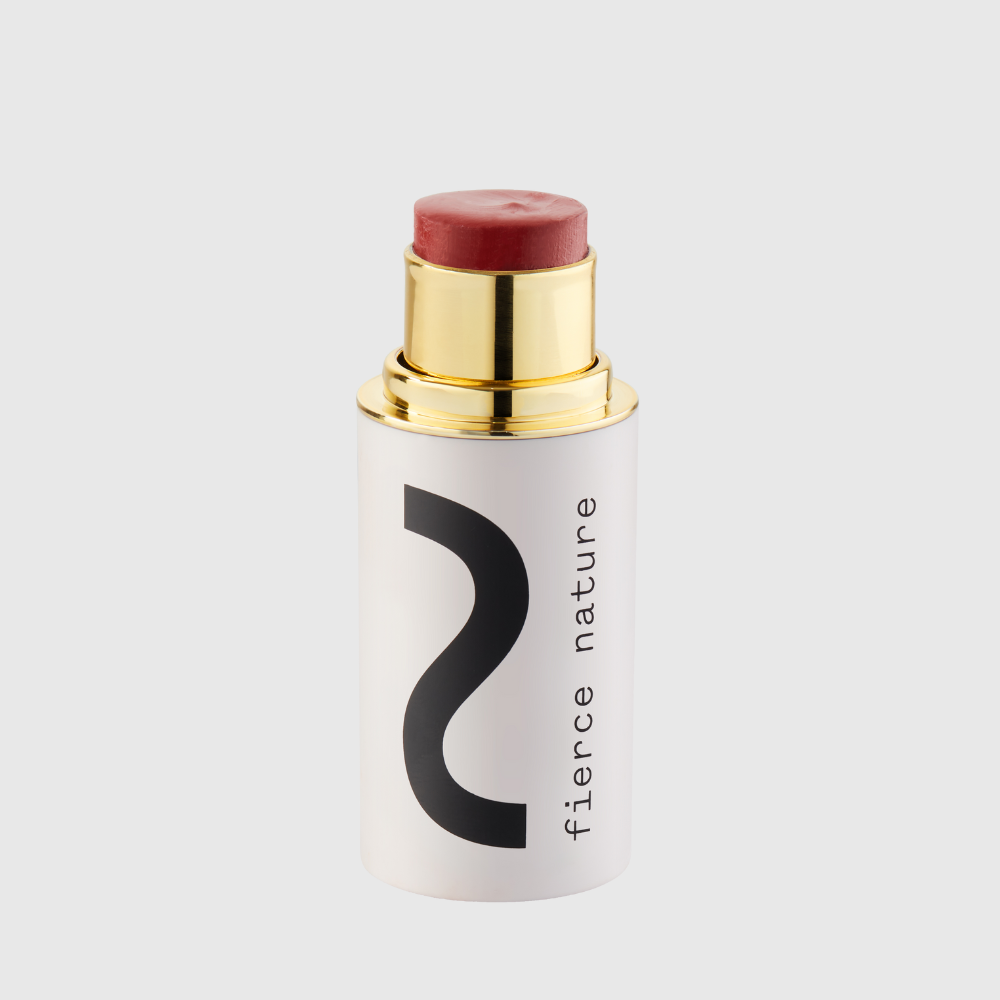
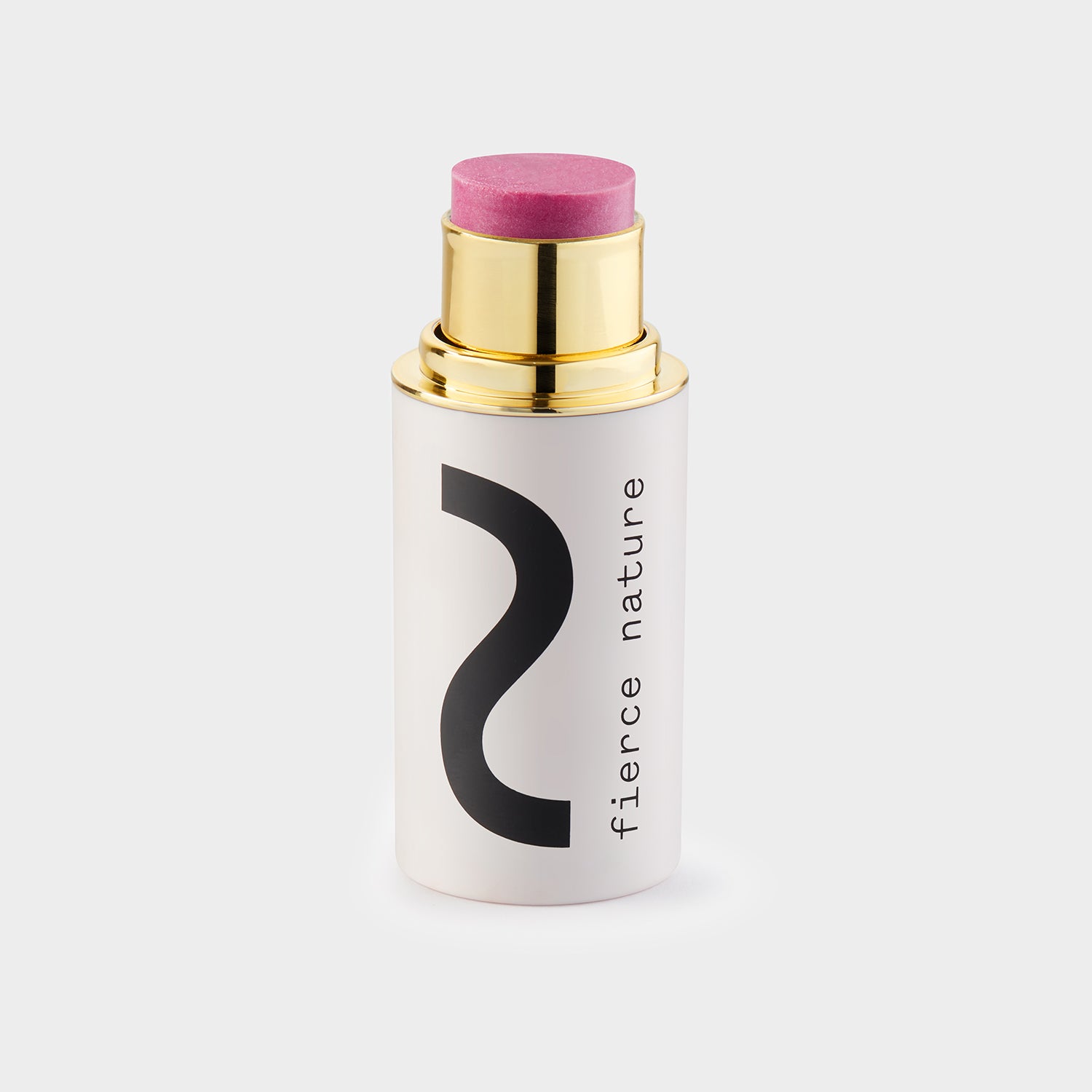
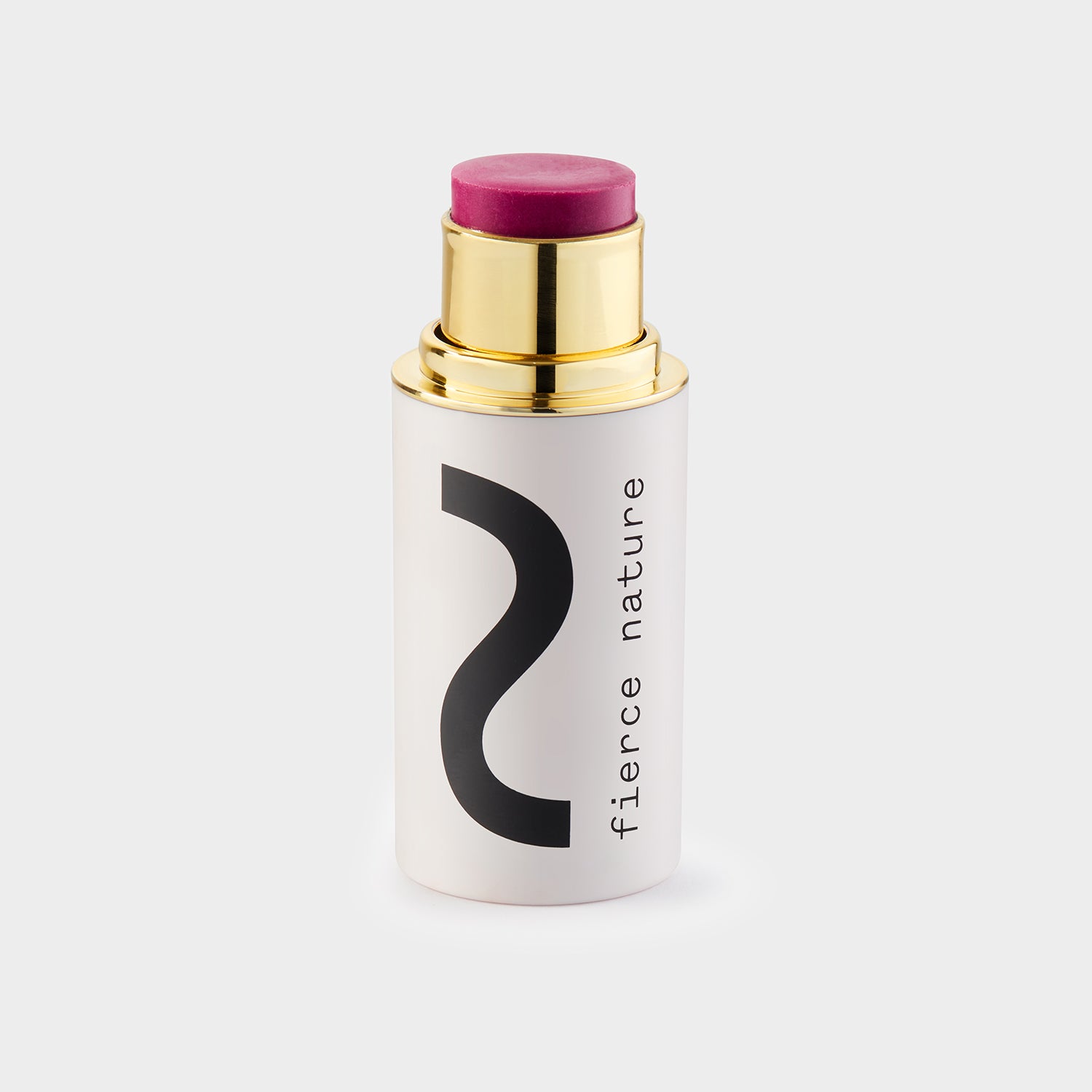
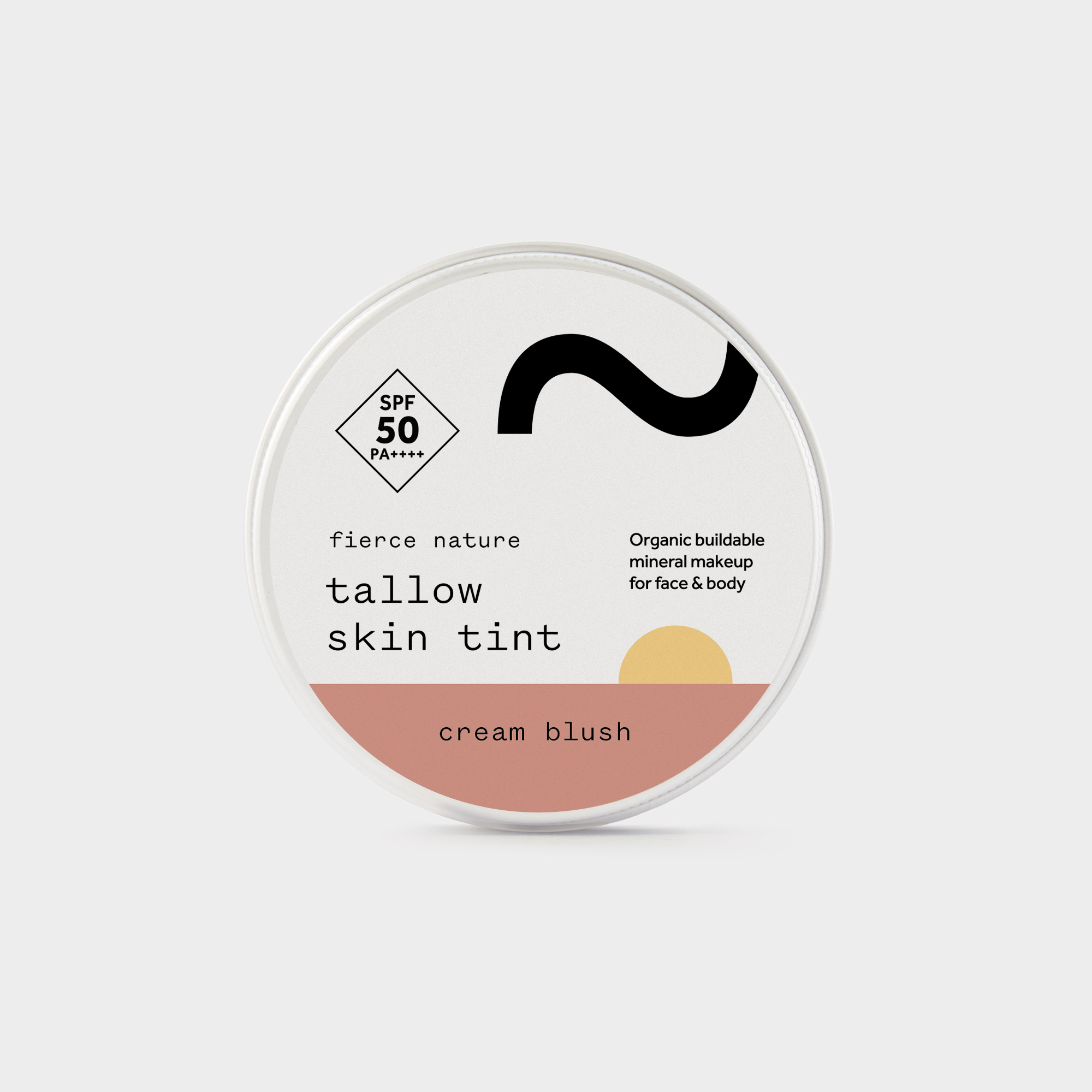
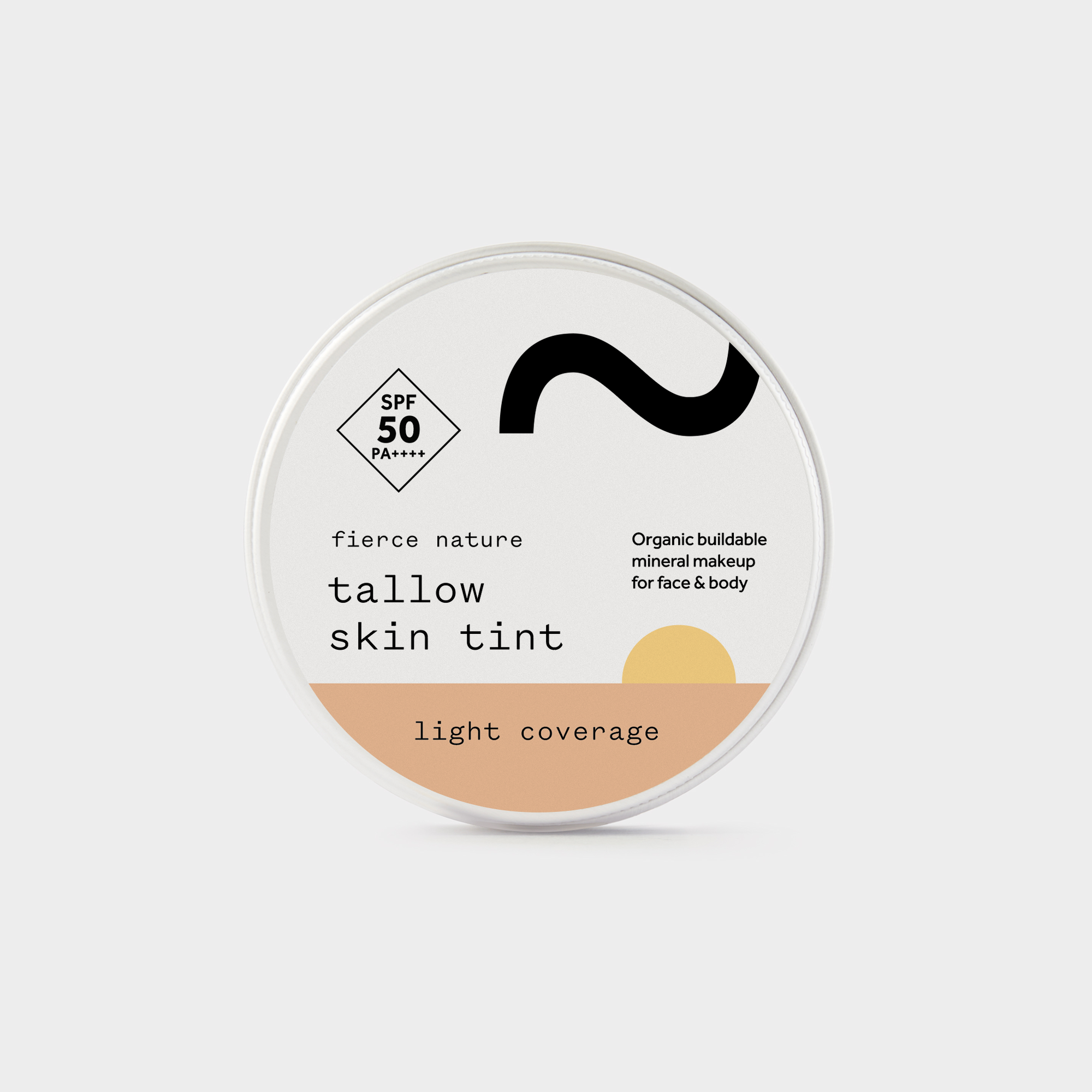
If you like a little colour, our skin tints are there for the finishing touch.
Our view: skincare that works with your skin
We started Fierce Nature because of a lifelong frustration with mainstream products. Growing up, I battled skin rashes and reactions I could never explain, and later, through my work on gut health and toxic load, I came to see how much we ask our skin to absorb. We believe the promises of glossy packaging are not the whole story.
That is why we make our balms by hand in the UK, with organic tallow as the foundation and naturally sourced ingredients around it. Tallow has been used for centuries as a skin emollient, and we think of it as skin food: smooth, rich and nourishing.
When it comes to sun, our view is simple. Nourish first, protect last. Let your balm settle, then apply your sun protection generously and evenly, and top it up through the day. Our sun balm is designed to be that final layer, so your routine stays short and your skin stays looked after.
Work with your skin, not against it.
Fierce Nature
FAQ
Do you put balm on before or after sunscreen?
Balm goes on before sunscreen. Leave around 30 minutes for the balm to settle, then apply sunscreen as the last layer before you go out. If you apply more balm during the day, reapply sunscreen on top afterwards.
What happens if you put balm over sunscreen?
It can dilute the sunscreen and break up the even film that gives you the protection on the label. That is why clinical teams advise sunscreen as the final step. If your skin feels dry later in the day, apply balm and then add sunscreen again over it.
Is a balm with SPF enough on its own?
For a short walk to the car or a quick errand, it can help. For longer time outdoors, UK guidance from Cancer Research UK and the British Association of Dermatologists favours a generous layer of sunscreen of SPF 30 or higher with 4-star UVA protection, because SPF moisturisers are usually applied thinly and not reapplied.
How long should I wait between balm and sunscreen?
About 30 minutes is the usual advice from UK eczema and ichthyosis charities. Then give your sunscreen 15 to 30 minutes to dry before heading out, as the British Association of Dermatologists suggests.
Does lip balm protect from the sun?
Only if it contains SPF. The NHS recommends a lip balm with SPF 15 or higher, reapplied every 2 hours when you are outdoors.