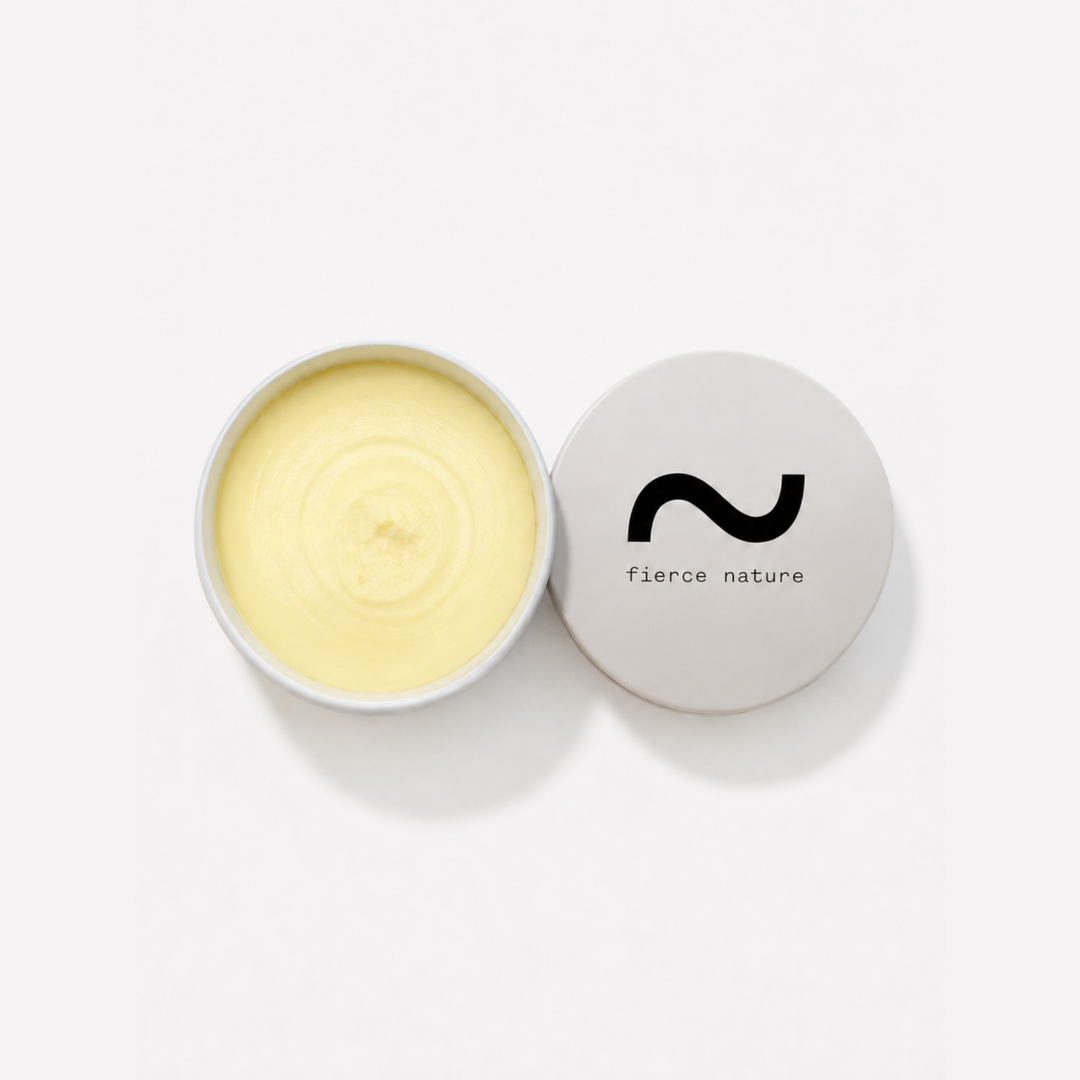
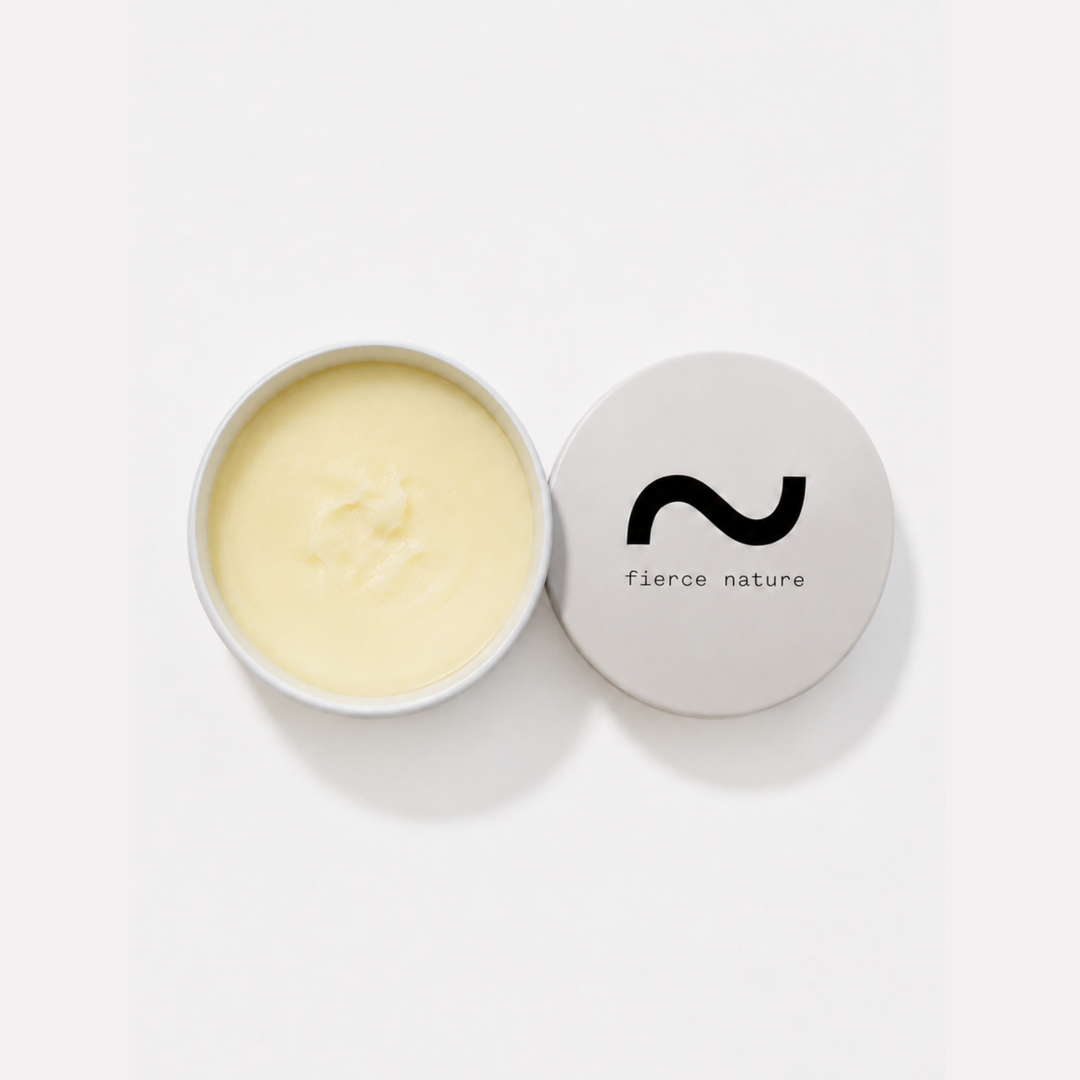
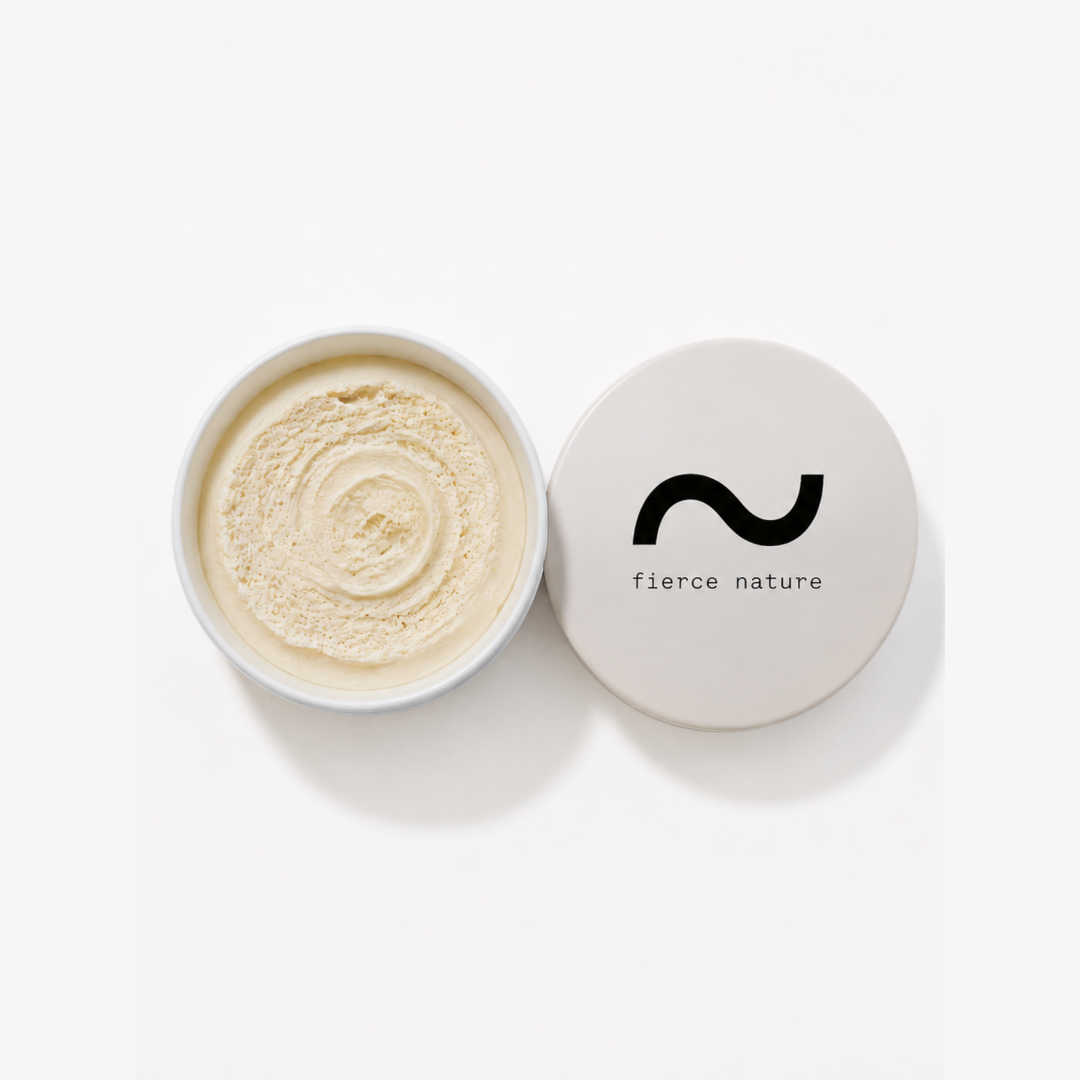
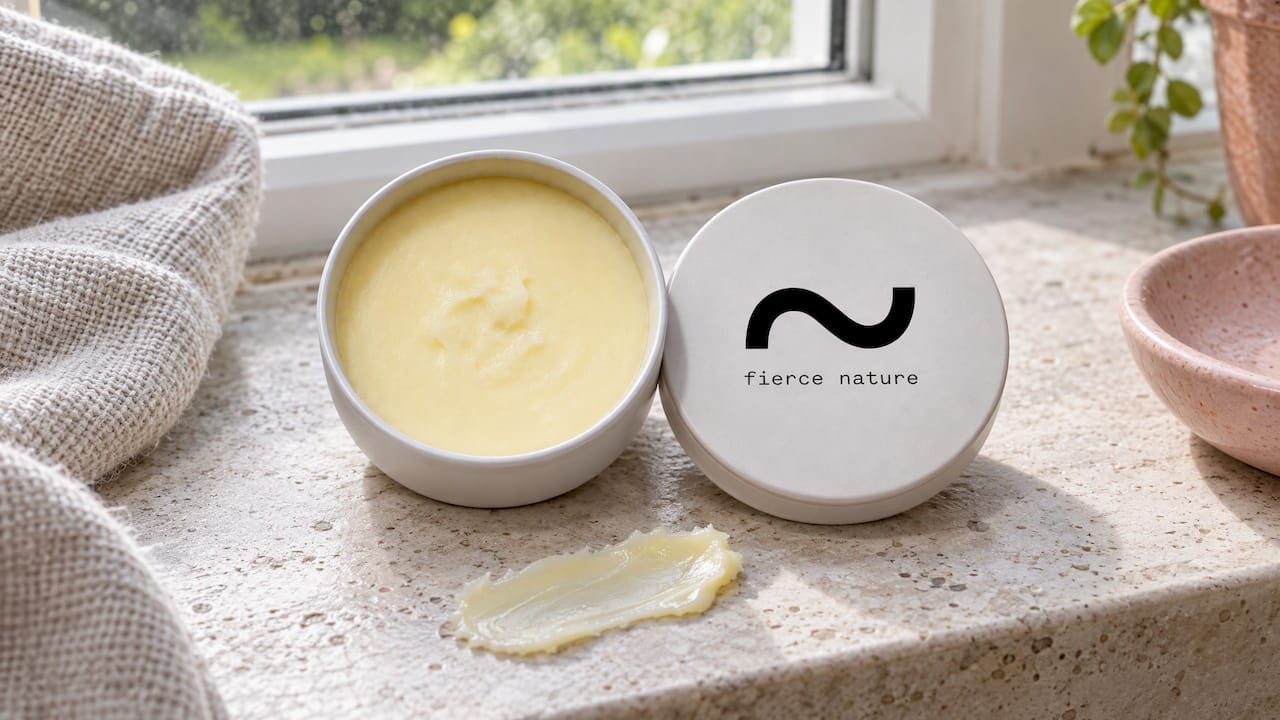
Natural ingredients
•
Kind to skin
•
A healthier planet
Hemos enviado un correo electrónico con un enlace para actualizar su contraseña.
Restablecer su contraseña
Le enviaremos un correo electrónico para restablecer su contraseña.
Baby Skincare Without Essential Oils: A UK Parent's Guide
Ralph Barrozo
0 comentarios
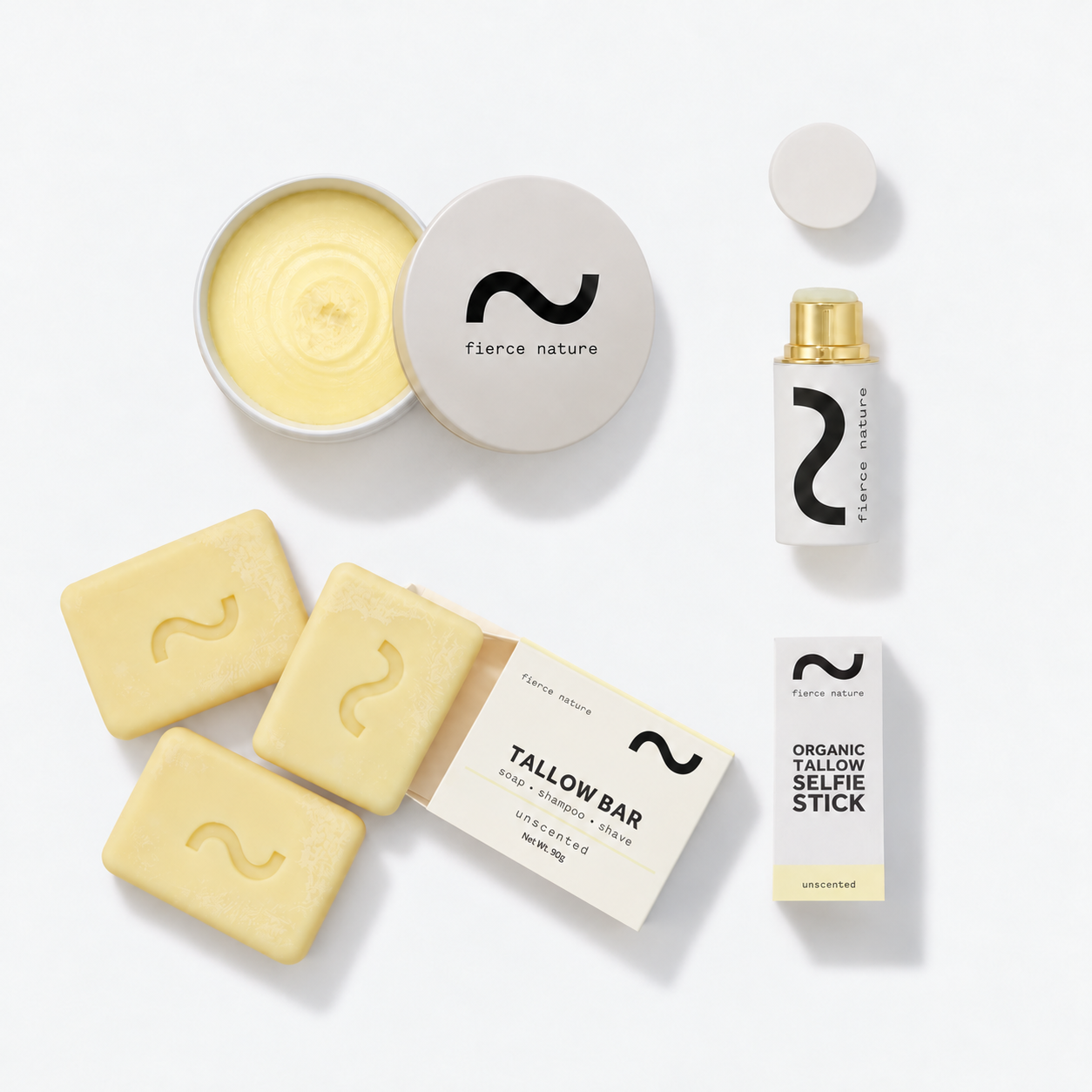
The simplest way to keep your baby’s skin routine gentle is to choose a balm with a short ingredient list, no added fragrance and no essential oils, then use it sparingly on clean skin. A newborn’s skin is thinner and more easily irritated than yours, and the scents that make an adult product feel luxurious are the first thing a baby’s skin and nose do not need. At Fierce Nature we make our balms by hand in the UK with organic tallow as the foundation, and our unscented Nourish Balm is designed for exactly this kind of simple, quiet routine.
This guide explains why essential oils are best left out of a baby’s routine, how to read a label, what to look for in a balm, how to apply it, and when to call a professional instead.
Fierce Nature
Keep Baby’s Balm Routine Simple
Explore Fierce Nature’s handmade UK balms, made with organic tallow as their foundation, for a simpler approach to baby skincare.
Babies are far more sensitive to essential oils than adults, so a baby routine is best kept free of them, including the “gentle” ones such as lavender.
Look for “fragrance-free” or “unscented” and a short ingredient list you can read in full. Check the whole list, not just the front of the tub.
Fewer products is better: one cleanser or plain water, and one simple balm for dry patches, applied after bathing.
A worrying rash, a temperature, or skin that looks like eczema needs your GP, health visitor or 111, not another product.
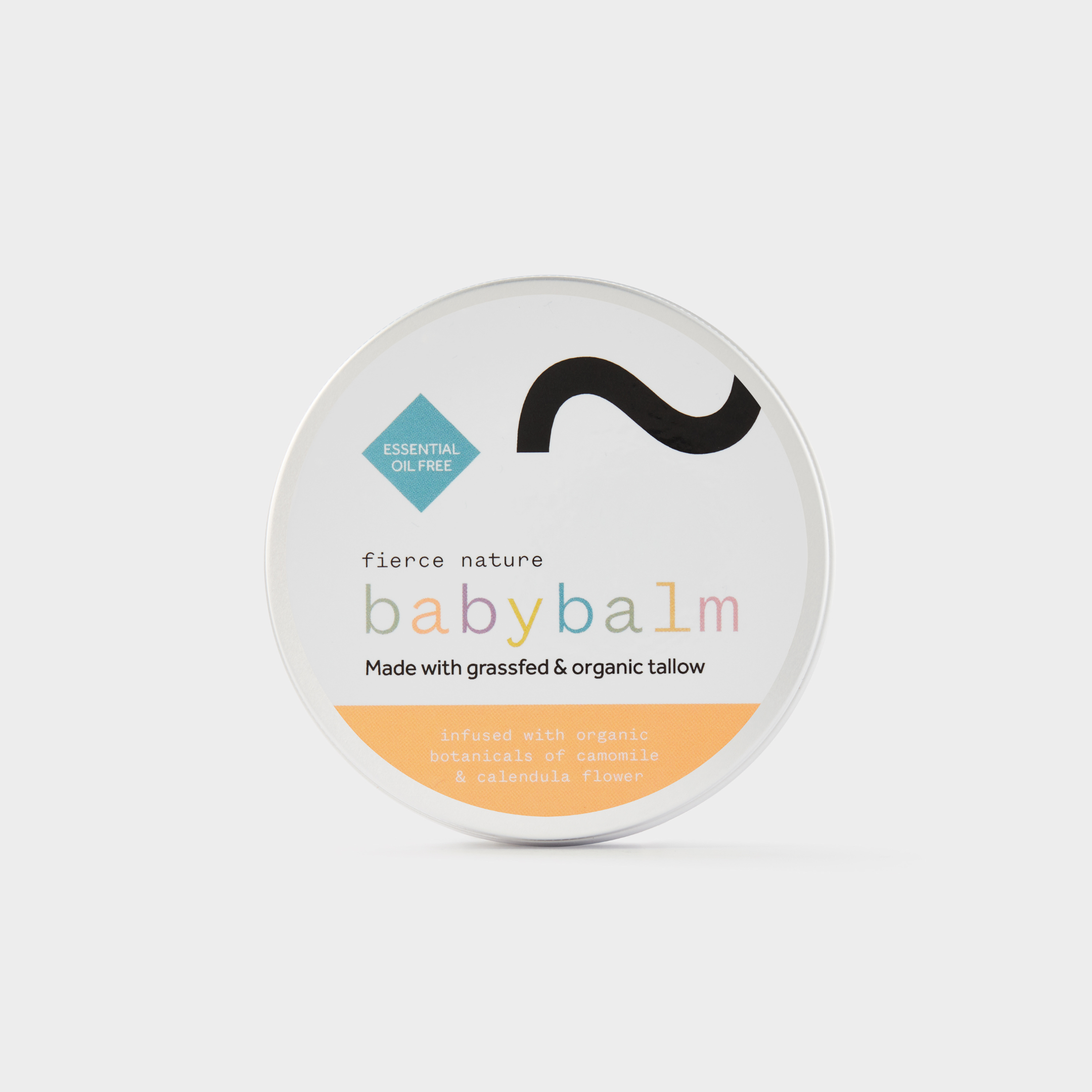
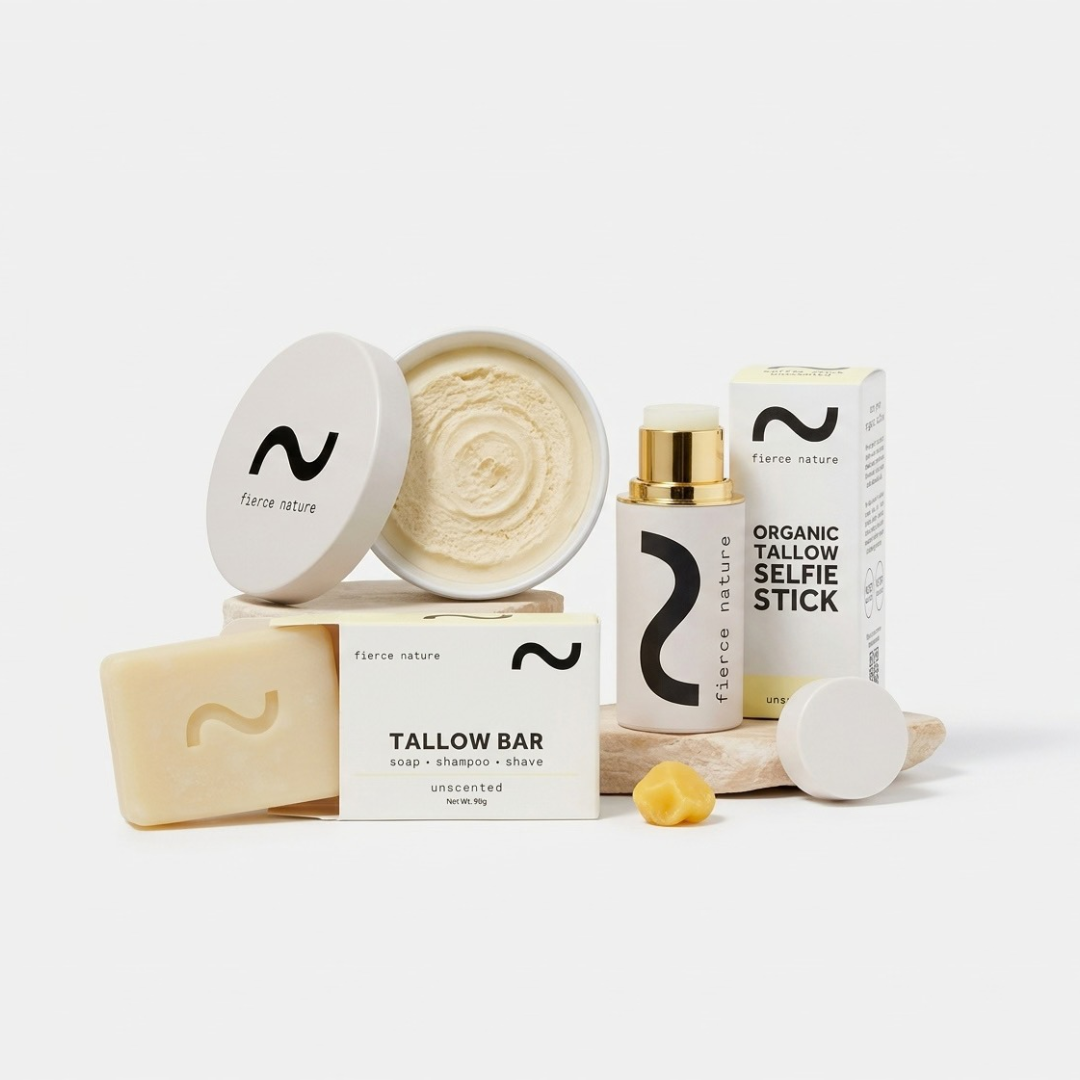
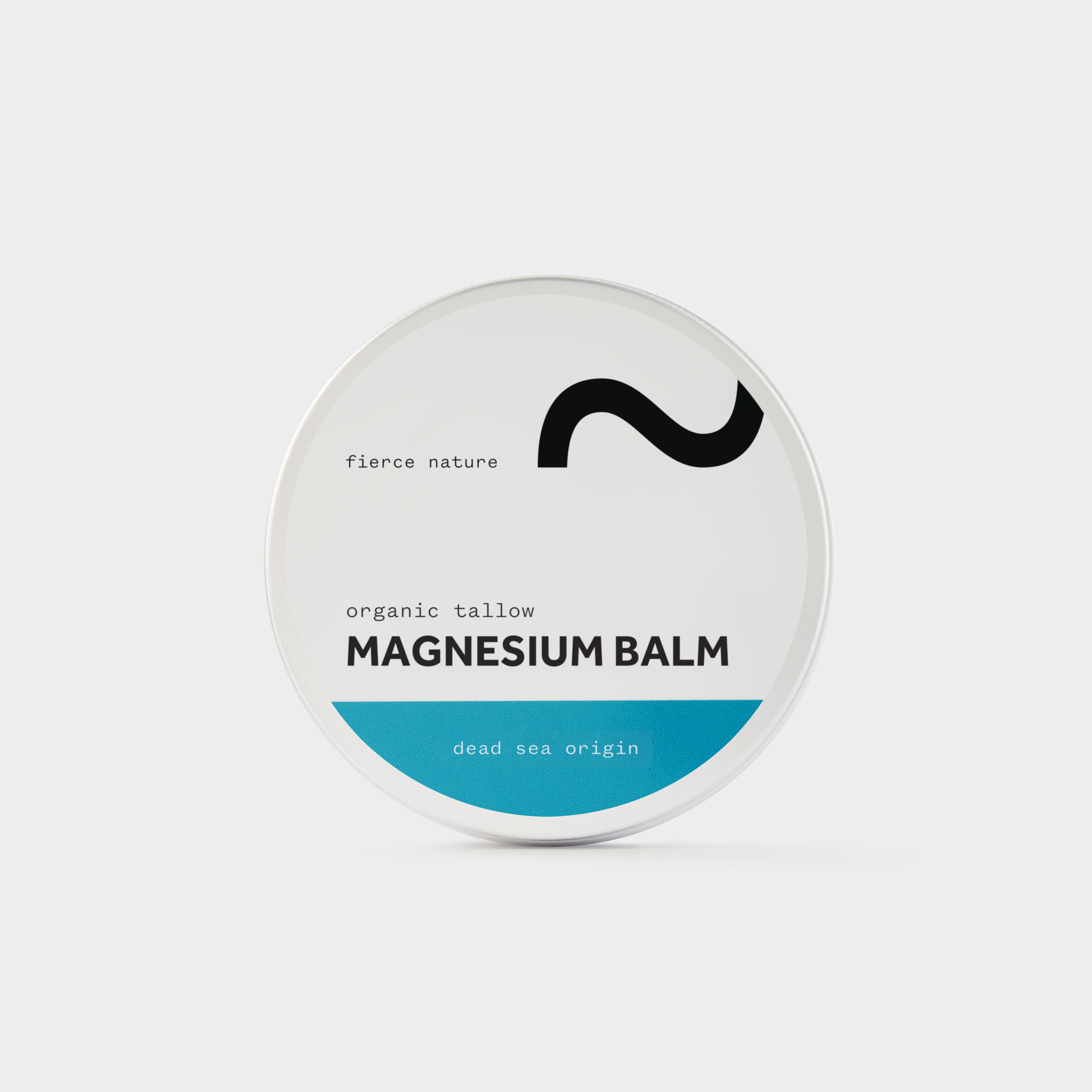
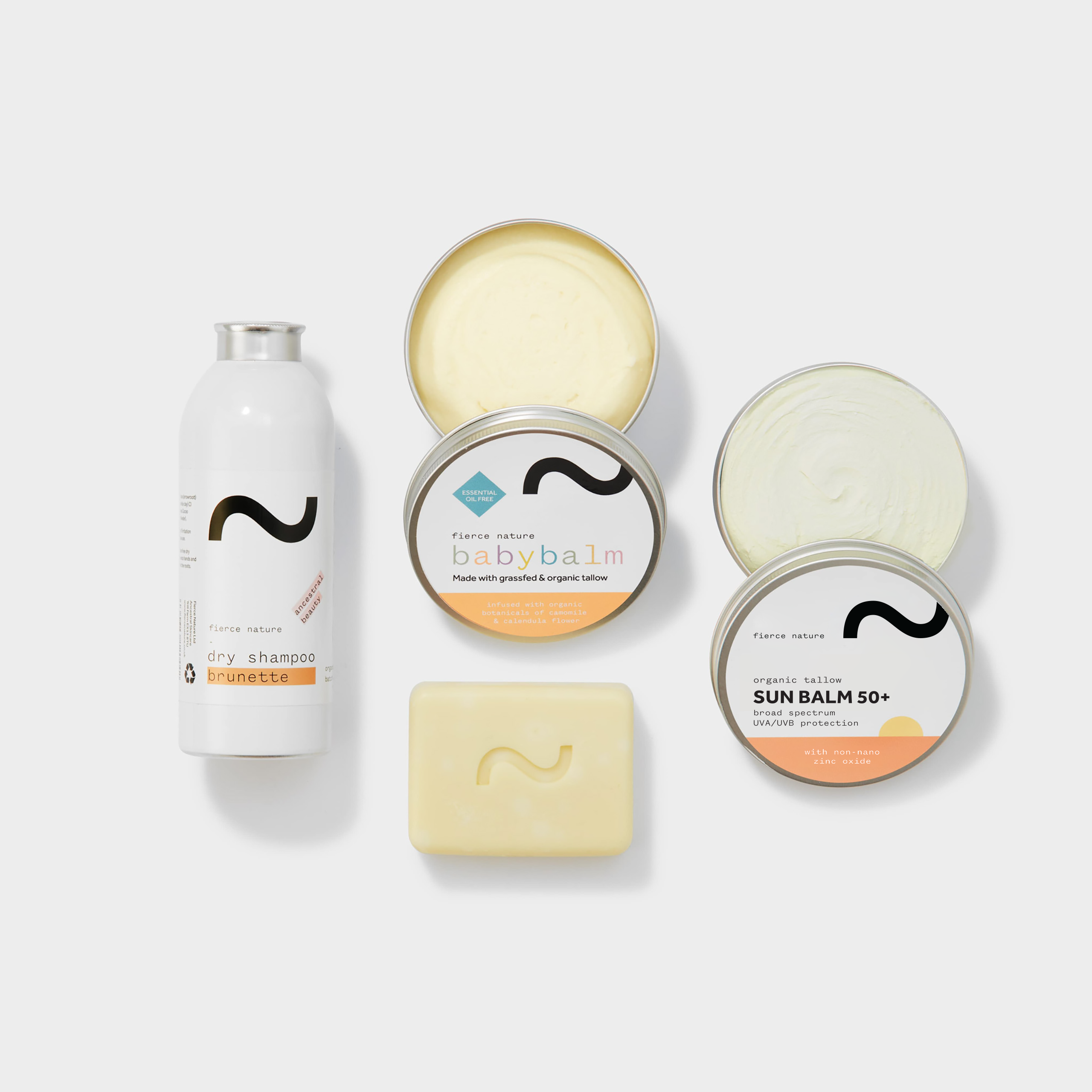
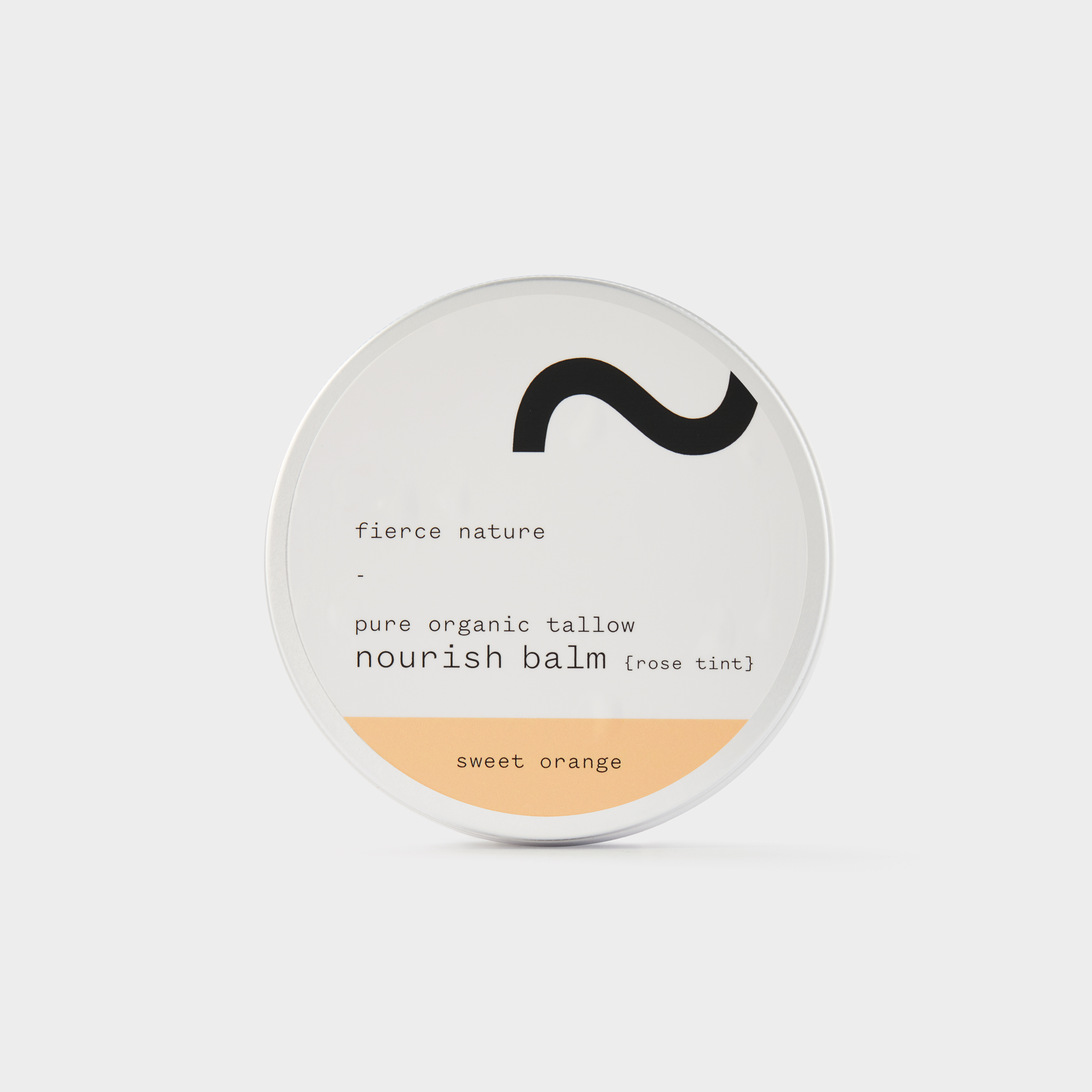
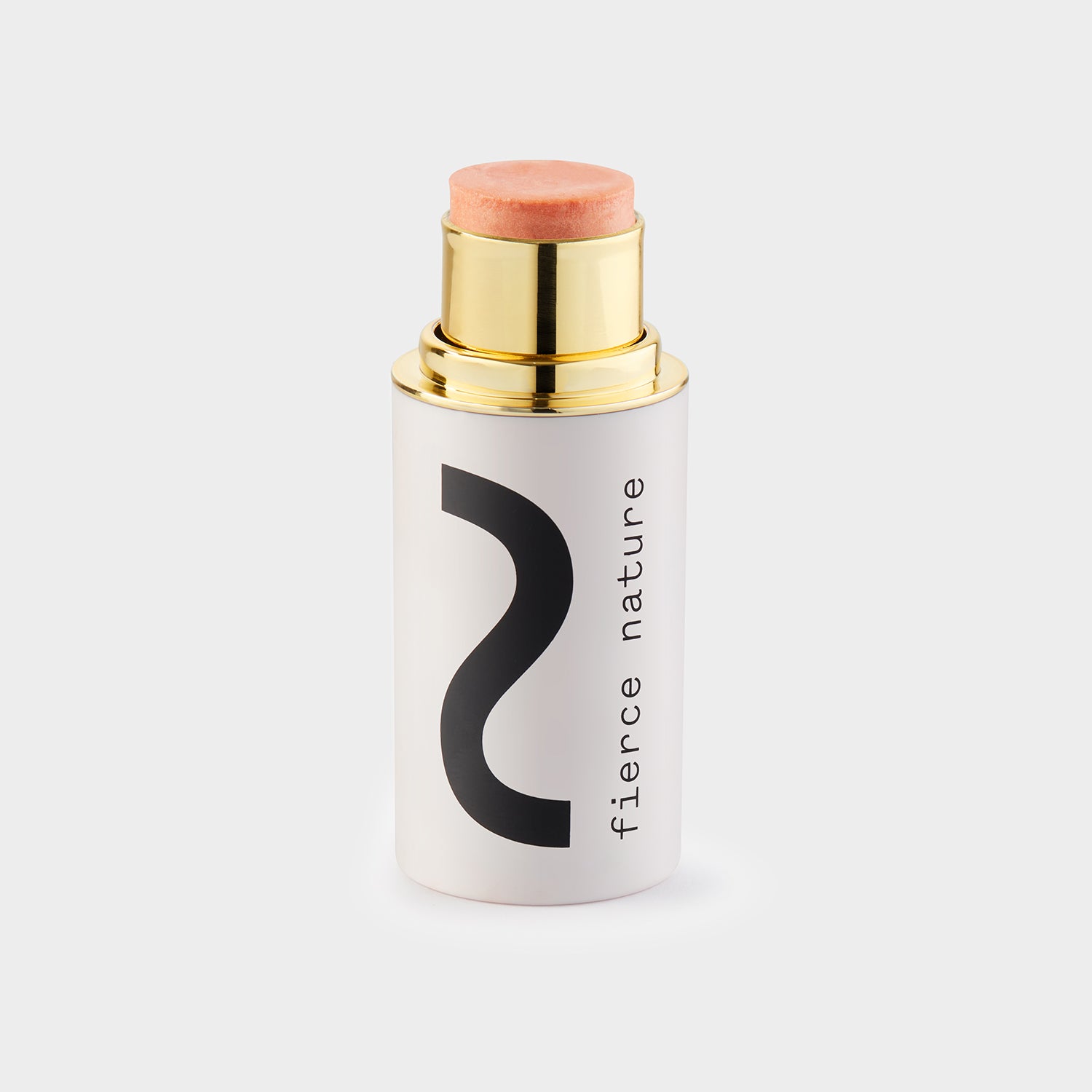
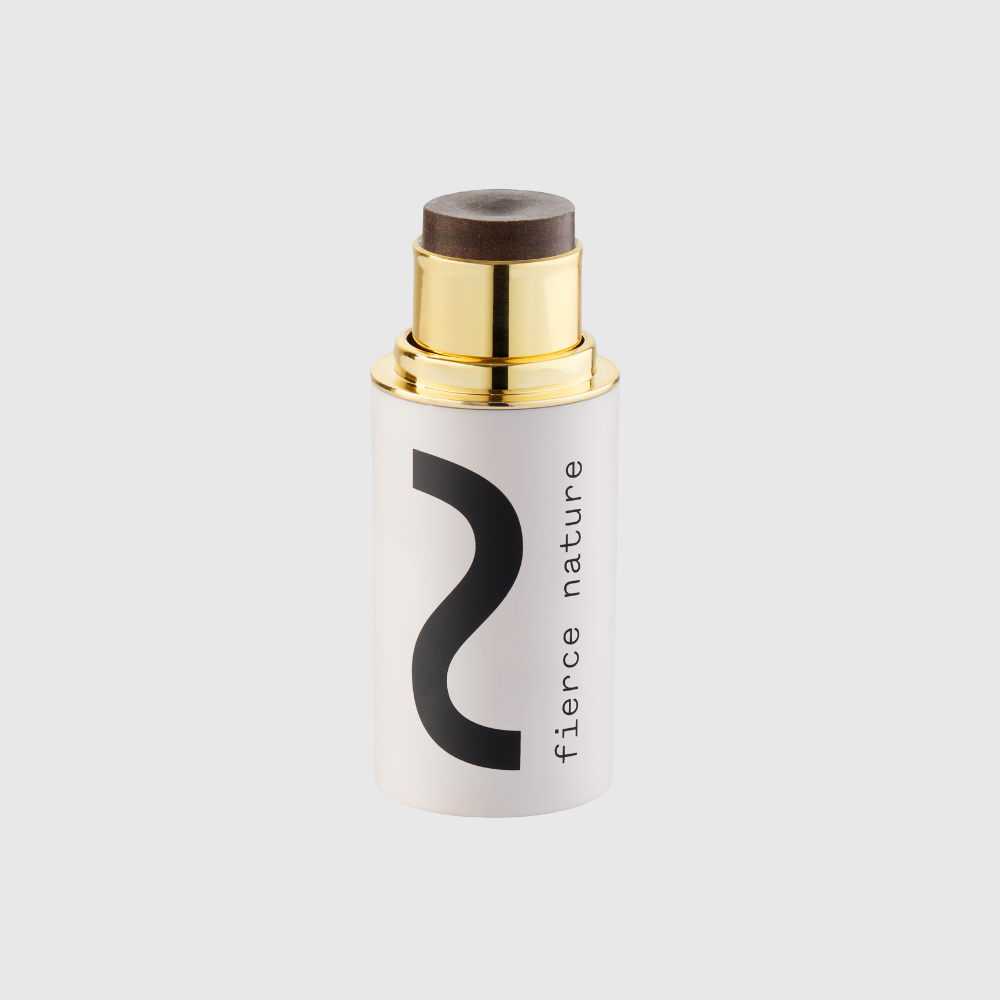
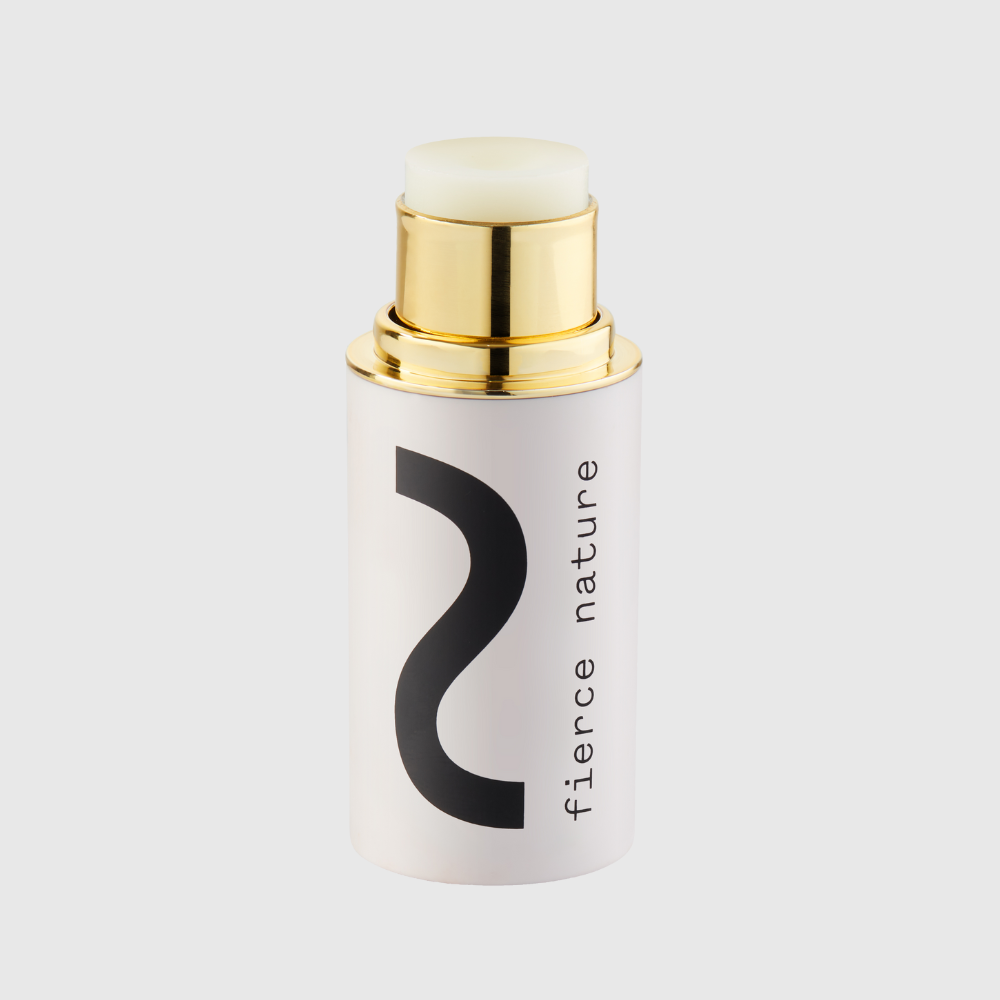
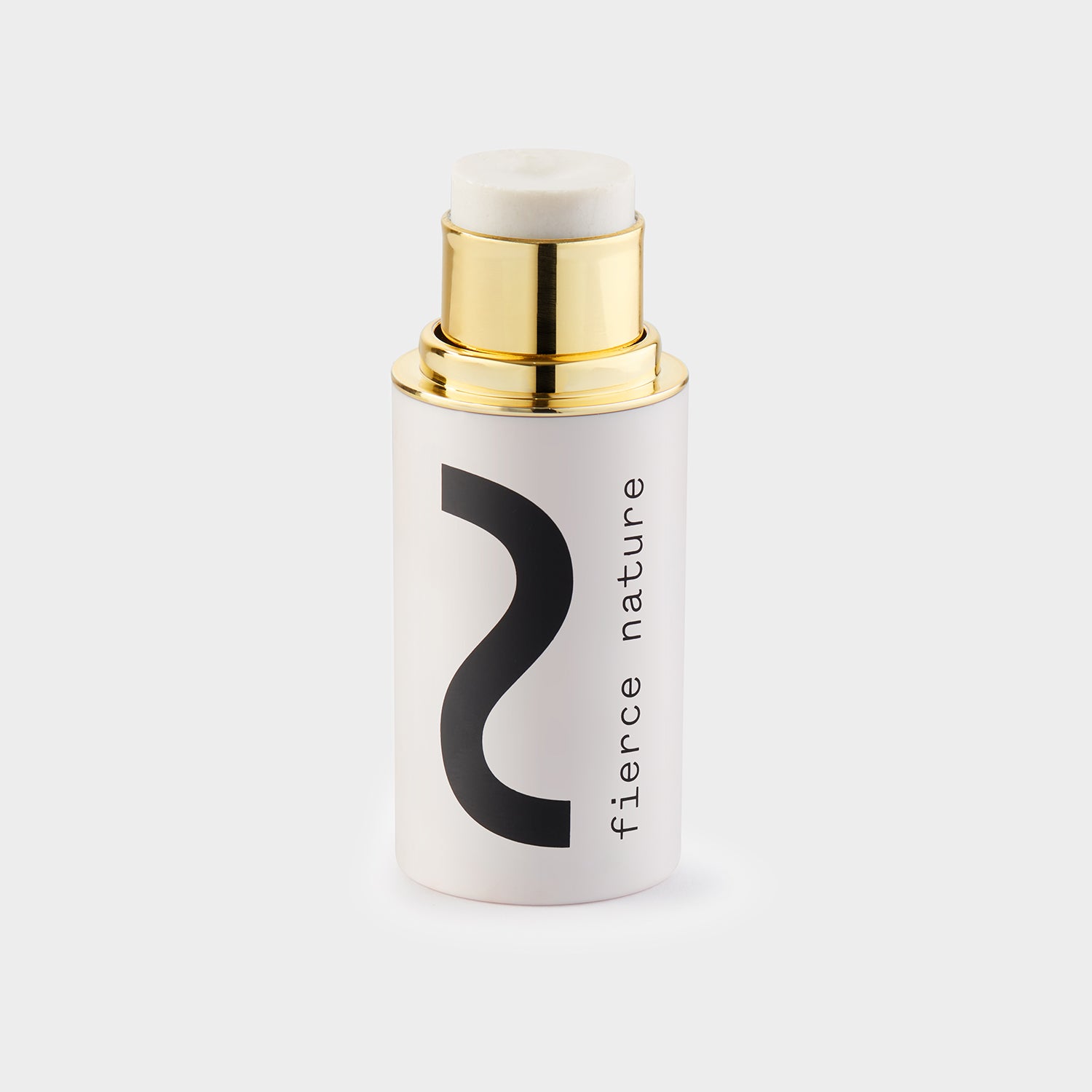
Our unscented Nourish Balm and Baby Balm are handmade in the UK with organic tallow as the base.
Why essential oils don’t belong in a baby’s routine
Essential oils are highly concentrated plant extracts. A few drops carry a lot of active compounds, which is why they smell so strong and why adults are told to dilute them. Babies are not small adults here. The German Federal Institute for Risk Assessment states that infants and young children are much more sensitive to essential oils than adults. It also says that even a few drops, or vapours reaching an infant’s mouth or nose, can cause laryngeal spasms and breathing problems, and that camphor, eucalyptus and peppermint (menthol) oils are particularly problematic for children under three.
The skin itself is part of the story. A dermatology review of newborn skincare points out that babies have a high surface area compared with their weight, an immature outer skin layer and a skin barrier that is still developing. That makes them more vulnerable to what is applied to the skin, and some substances that are harmless for adults can cause problems in infants.
UK professional guidance points the same way. The International Association of Infant Massage says there is no evidence that essential oils are appropriate for newborns and advises avoiding them in baby massage oils. Its guidance adds a point many parents never consider: a newborn recognises you by your natural smell, which matters for bonding and feeding, so adding scent to the skin you cuddle can get in the way of that.
The “whole baby range” effect
The same guidance warns that parents can unknowingly stack scented products: a wash, a lotion, a massage oil, a hair product, a bath additive and perhaps a diffuser in the room. Each might contain a small amount of essential oil, but together they can be overwhelming for a small body. This is the strongest practical argument for a minimal routine. It is not about any one product being dangerous, it is about the total load.
What about “gentle” oils like lavender?
Lavender and chamomile are often marketed as the calm, natural choice for babies. A consensus algorithm on newborn and infant skincare published in a US dermatology journal in 2021 lists essential oils and botanicals such as lavender among the potential irritants that cleansers for babies should be free of, alongside fragrance, alcohol and harsh detergents such as sodium lauryl sulfate. So “natural” and “botanical” on the front of a pack are not the reassurance they sound like. The same consensus says infant skincare should be safe, effective and free of fragrance and sensitising agents.
The UK’s British Society for Paediatric Dermatology says something similar in its leaflet for parents: the wrong products, or too many of them, can damage the skin barrier, cause irritation and, in some cases, a lasting contact allergy. Most children, it says, need only very simple skincare and good sun protection.
What “without essential oils” really means on a label
A product can be free of essential oils and still be scented. A product can also be called “natural” and contain a dozen plant extracts. Reading the label properly takes about a minute and is worth doing for every baby product.
Terms worth knowing
Unscented: no noticeable smell. Be aware that some unscented products contain a masking fragrance to cover the smell of other ingredients, so the ingredient list matters more than the word on the front.
Fragrance-free: no fragrance ingredient has been added. This is the claim to look for.
Parfum or fragrance: on a UK ingredient list this can hide a blend of many scent compounds. For a baby, skip it.
Essential oil names: look for the Latin names, such as Lavandula angustifolia (lavender), Citrus aurantium (orange), Mentha piperita (peppermint), Eucalyptus globulus, Melaleuca alternifolia (tea tree) and Chamaemelum nobile (chamomile). They are often listed in this form rather than as “oil”.
Botanical extracts: the dermatology consensus above counts botanicals among possible irritants for newborn skin, so a long list of them is not a bonus.
A quick label check
Turn the pack over and read the full ingredient list, not just the claims.
Look for fragrance, parfum, any Latin plant name followed by “oil” or “extract”, and menthol, camphor or eucalyptus.
Check how many ingredients there are. A short list you can understand is easier to judge and easier to trace if your baby reacts.
Check for alcohol and harsh detergents in cleansers, which the consensus guidance names as irritants.
Make sure the product says who makes it and where, so you can ask questions.
If a brand cannot give you the full list, it is not the brand for your baby’s skin. We publish full ingredient transparency on our own products because we think every parent should be able to do this check in under a minute.
Choosing a balm for baby’s skin
A balm sits on the skin as a protective layer and helps keep moisture in. For dry patches, cheeks that are chapped by winter air, or skin that needs a little extra care after a bath, a simple balm is often all that is needed. NICE’s guidance on emollients (the medical word for moisturisers) describes them as products that hydrate and soften the skin and act as a barrier to water and external irritants. It also says they should be applied frequently and straight after washing or bathing, and that the choice depends on the child’s skin, the person applying it and the area of the body.
What to look for
A short list. Every extra ingredient is one more thing your baby’s skin might not like. A balm made from a few recognisable ingredients is easier to trust.
No fragrance and no essential oils. Not even a light, “baby-friendly” scent.
A base your skin recognises. Tallow is rendered from animal fat and has been used for centuries as a skin emollient and in soap making. Our balms use organic, grass-fed tallow as the foundation, because we believe its richness makes it a deeply nourishing skin food, with bioavailable vitamins designed to feed the skin.
A texture you can warm and spread thinly. A balm that melts on contact with your fingers lets you apply a very thin layer, which is all a baby needs.
Traceable origins. Handmade in small batches in the UK means you know where it came from and who to ask.
What to leave out
Anything with added scent, including “natural” fragrance blends.
Mineral-oil-based baby oils with added scent. The infant massage guidance notes that mineral oil leaves a baby greasy and that most mineral-based baby oils carry added fragrance, which can irritate and is a potential allergen risk.
Aqueous cream as a leave-on moisturiser. The NICE summary says it may increase the risk of skin reactions, particularly in eczema.
Multi-purpose “baby range” sets where every product is scented to match.
A note on oils
Some parents use plain oils for massage. The same infant massage guidance points out that a scented oil can mask the smell of oil that has gone rancid, which is one more reason to keep baby products unscented, so you can smell when something is off. NCT’s guidance advises avoiding olive oil on baby skin and not using peanut oil because of the allergy risk. If you would rather use a balm than an oil for dry skin, we have written about why we favour tallow over vegetable oils in our guide to newborn dry skin.
How to use a baby balm, step by step
A good routine takes two minutes. The steps below follow the NICE emollient guidance on applying after washing, and the “less is more” approach of the British Society for Paediatric Dermatology.
Wash gently. Use plain water or a mild, fragrance-free cleanser. If you prefer a bar, our tallow soaps are one of the options we make.
Pat dry. Use a soft towel and pat, don’t rub. Leave the skin very slightly damp if you like.
Apply straight away. NICE advises applying emollients immediately after washing or bathing, when the skin is most receptive.
Warm a small amount. Take a pea-sized amount for a small area and warm it between your fingers until it softens.
Spread thinly. Smooth it over dry areas such as cheeks, elbows, knees and the backs of the hands. You should see a light sheen, not a thick layer.
Keep it consistent. Reapply to dry areas as often as needed through the day, which is how NICE describes using emollients.
Try one new product at a time. If you introduce two things in the same week and the skin reacts, you won’t know which was responsible. Wait several days between new products.
Wash your hands first, and keep tubs closed. It keeps the balm clean and the skin protected.
A simple patch test
Before using any new balm all over, put a small amount on a patch of skin, such as the inner thigh, and watch it for a day or so. Johns Hopkins Medicine recommends a 24 hour patch test before using essential oil products on children, and the habit is just as useful for any new leave-on product on a baby. If you see redness, bumps or your baby seems bothered, stop using it and ask your health visitor or pharmacist.
Sun, face and nappy area
Face: a very thin layer on dry cheeks and around the chin, where dribble and milk can irritate.
Sun: the British Society for Paediatric Dermatology highlights good sun protection as one of the two basics of children’s skincare, so cover up, use shade and ask your health visitor or pharmacist about suitable sun protection for your baby’s age.
Keeping the routine small
A baby does not need a ten-step routine. It needs a calm one. A realistic daily rhythm might look like this:
Bath time (a few times a week): plain water or a mild, fragrance-free wash, a gentle pat dry.
After the bath: a thin layer of unscented balm on dry areas.
Daytime: a small amount on cheeks if cold weather or dribble has left them dry.
Room and laundry: keep the baby’s space free of diffusers, scented candles and heavily perfumed washing products, since the infant massage guidance specifically notes the baby’s own sense of smell as part of how they bond with you.
If you are breastfeeding, the same logic applies to what you put on your own skin, since your baby will be skin to skin with you for hours. Our guide to breastfeeding-safe skincare explains a simple three-step approach.
When to see your GP, health visitor or 111
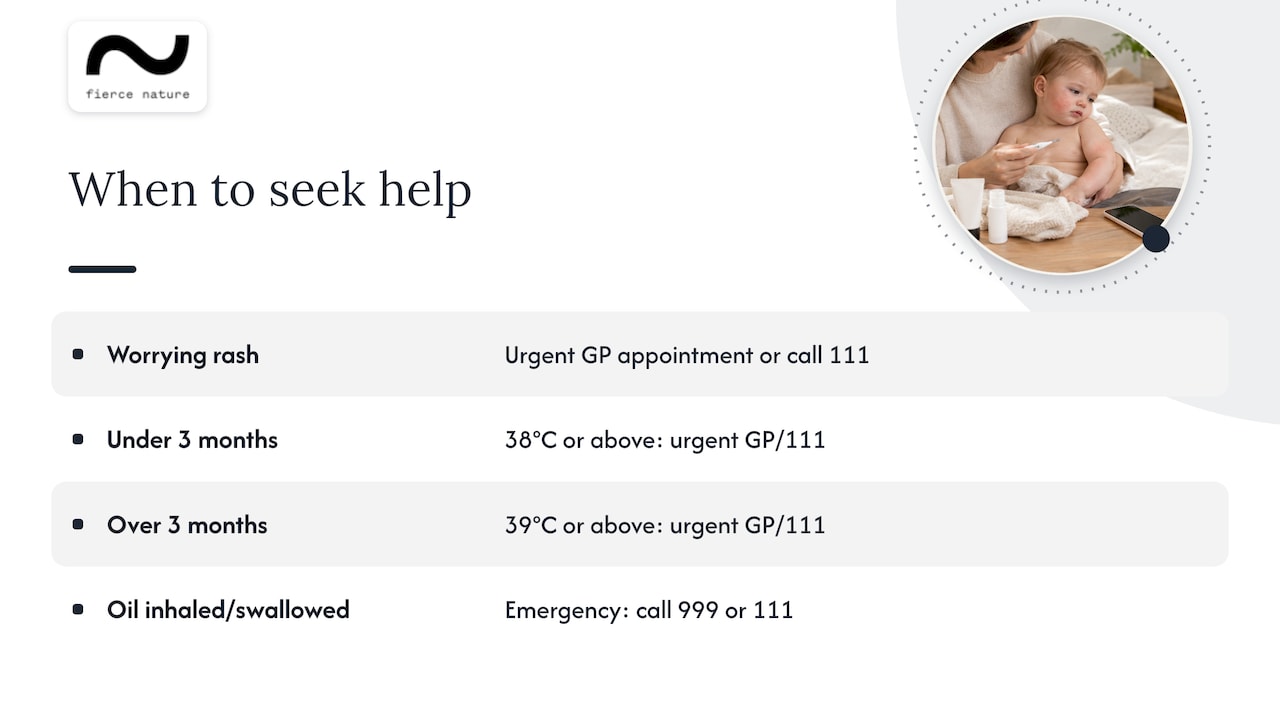
A balm is for dry, healthy-looking skin. Some signs mean you should speak to a professional rather than try another product. According to NCT, citing NHS guidance, get an urgent GP appointment or call 111 if your baby has a worrying rash, feels hotter than usual, is sweaty or shivering, or has a temperature of 38°C or above when under three months, or 39°C or above when over three months.
Speak to your GP too if your child appears to have eczema. The British Society for Paediatric Dermatology advises that persistent dry skin should be treated with a fragrance-free emollient recommended by a pharmacist or healthcare professional. Your GP or health visitor can tell you how severe the skin is and what treatment makes sense. If you would like to read more about gentle everyday care for eczema-prone skin, our guides to natural eczema care for kids and eczema balm ingredients are written for parents.
If you ever suspect your baby has breathed in or swallowed essential oil, treat it as an emergency and call 999 or 111 straight away.
Our view: fewer ingredients, more care
We started Fierce Nature because we believe the promises made by mainstream beauty products are not the whole story. Growing up in South Africa, our founder battled skin rashes and reactions to everyday cosmetics, and years of work in gut health later taught her how much the toxic load we carry from birth matters.
That is why a baby’s routine should be the simplest of all. A newborn’s skin and sense of smell are still learning about the world. We think they deserve products with a short, honest ingredient list, no hidden fragrance and no essential oils.
Our balms are handmade in the UK with organic tallow as the foundation. Tallow has been used for centuries as a skin emollient, and we believe its bioavailability makes it a deep, nourishing skin food that works with your baby’s skin, not against it. Our unscented Nourish Balm is made for the days when you want one trusted product and nothing else.
The best baby routine is one you can explain in a sentence: clean skin, a thin layer of balm, and lots of cuddles.
Not in diffusers or on their skin. The German Federal Institute for Risk Assessment says infants are much more sensitive than adults, and that vapours entering an infant’s nose or mouth can cause serious breathing problems. Children’s Hospital of Philadelphia guidance suggests limiting aromatherapy to children over three. For a baby, the simplest answer is to keep the home free of diffused oils.
Is unscented the same as essential-oil-free?
No. Unscented means you can’t smell much, but some unscented products contain a masking fragrance. Read the full ingredient list and look for fragrance, parfum and Latin plant oil names. A product that is genuinely fragrance-free and lists no essential oils is the one to choose.
What oil is best for baby massage?
NCT says coconut oil is safe for most babies, that olive oil should be avoided, and that peanut oil should not be used because of the allergy risk. The infant massage guidance recommends adding no scent to a massage oil. If you prefer something that stays on the skin without running, a warmed unscented balm is a simple alternative.
Does my baby need a lot of products?
No. The British Society for Paediatric Dermatology says most children need only very simple skincare and good sun protection, and that too many products can irritate the skin or damage its barrier. A gentle wash or plain water and one unscented balm for dry patches is plenty.
When should I worry about my baby’s rash?
Get an urgent GP appointment or call 111 if the rash looks worrying, your baby feels hotter than usual, is sweaty or shivering, or has a temperature of 38°C or above under three months, or 39°C or above over three months. If you think your baby has eczema, speak to your GP or health visitor.