Natural ingredients
•
Kind to skin
•
A healthier planet
Ti abbiamo inviato un'email con un link per aggiornare la tua password.
reimposta la tua password
Ti invieremo un'e-mail per reimpostare la tua password.
Does Tallow Smell? What to Expect from a Tallow Balm
Ralph Barrozo
0 Commenti
A well-made tallow balm should not smell like beef, a roast dinner or a kitchen. Most people describe the scent as faint, mildly fatty and waxy, and on skin it tends to settle into the background quite quickly. Smell is personal, though, and it does depend on how the tallow was prepared, how fresh it is and whether anything has been added to it. Here is what we want you to know before you try one.
Fierce Nature
fiercenature.co.uk
Explore Tallow-Based Skincare
Fierce Nature makes handmade UK skincare with pure organic tallow as its foundation, using naturally sourced ingredients.
Yes, tallow has a smell, because it is an animal fat. Whether you notice it is another matter. Properly prepared tallow that has been gently melted, cleaned and blended into a balm usually smells very mild. Some people notice nothing at all. Others pick up a gentle, creamy, slightly waxy note when they first open the pot, a little like unscented candle wax or clarified butter.
What you should not expect from a good balm is a cooking smell. If a balm smells like gravy, stock or frying, something has gone wrong in the preparation, or the fat is past its best.
We get this question often and it is a fair one. If you are about to put something on your face that comes from beef fat, you want to know whether you will be carrying the scent around all day. In our experience the answer is reassuring for most people, and where it is not, there are simple ways to choose better.
What well-made tallow actually smells like
People use different words for the same thing, which is part of why the answer seems so inconsistent online. The descriptions you will see most often are:
Faintly fatty. A soft, rounded smell, the way a clean block of butter smells.
Waxy. Similar to an unscented candle or a plain cream.
Almost nothing. Once tallow is blended into a balm with other plant-based ingredients, the finished product can smell close to neutral.
Slightly beefy. Some people detect a very light savoury note, especially in the pot, and especially if the tallow was not refined as thoroughly.
It helps to separate three moments. There is the smell in the pot, the smell as you scoop it out and warm it between your fingers, and the smell once it is on your skin. The warming step releases the most aroma, because the balm softens and its natural scent lifts. That is why a balm can seem more noticeable in your hands than it does a few minutes later on your cheek.
Because tallow is so close to the natural oils in skin, the scent also tends to blend with your own rather than sit on top of it. That is one reason many people stop noticing it altogether after a few uses.
Smell is subjective
Two people can open the same pot and describe it differently. Journalists who have tried tallow skincare for a week have reported everything from barely noticeable to a faint fatty note that they found less pleasant the longer they used it. That range is normal. Your sense of smell, your sensitivity to fat-based products and even what you ate or how warm the room is can change what you pick up.
If you know you are very sensitive to smells, the sensible approach is to start with a small amount, try it on a calm day and give it a few uses before deciding.
Why one tallow balm smells different from another
Not all tallow is the same, and the differences are mostly decided before the fat ever reaches a pot. These are the factors that matter.
How the tallow is rendered
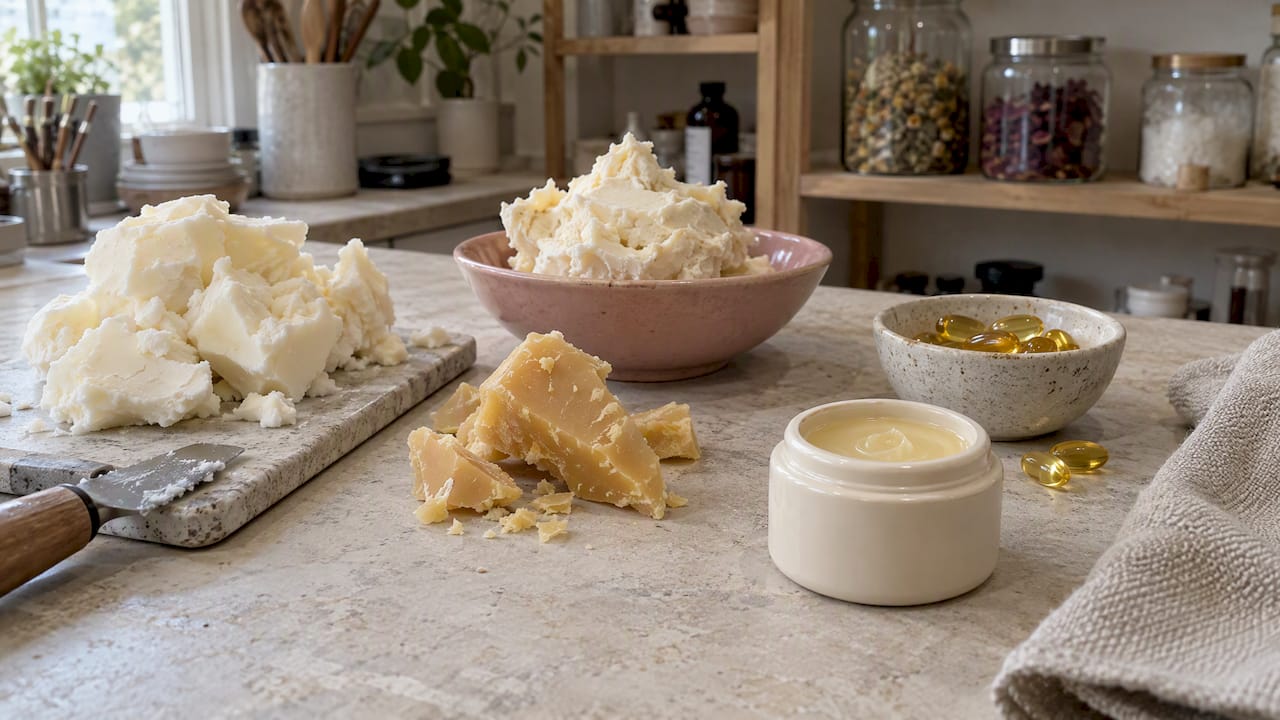
Rendering is the process of melting raw beef fat so the pure fat separates from everything else. Two broad approaches exist. In wet rendering, water is used in the process, which tends to draw out impurities and often gives a milder result. In dry rendering, the fat is heated without added water, which can leave a slightly more savoury aroma behind. Neither is wrong, but the method has a real effect on how beefy the end result smells.
How patient and careful the maker is matters just as much. Fat that is overheated, rushed or left on the heat too long can pick up a toasted, roasty smell. Fat that is melted gently and strained well stays cleaner.
How well it is cleaned
Raw fat contains tiny bits of tissue and other material. Those brownish particles are the part that gives poorly prepared tallow a strong, meaty smell. Careful straining and repeated cleaning remove them, and the result is a paler, cleaner and much quieter fat. This is why homemade tallow, which is often rendered once and jarred quickly, can smell stronger than a balm from a maker who cleans their tallow thoroughly.
The animal and what it ate
The quality of the fat starts with the animal. We use grass-fed tallow as the base of our products, and we choose it because we believe the quality of the starting material shapes the quality of the finished balm. Diet and breed can influence how a fat smells, but good rendering and cleaning matter more than any single sourcing label, so treat the sourcing as one part of the picture.
What else is in the balm
Tallow is usually blended with other ingredients, and these change the overall scent. Plant oils and butters have their own light aromas. Added essential oils or fragrance will often take over completely. Which brings us to a point worth thinking about.
Masking versus managing
Many brands cover tallow’s natural scent with strong fragrance. It works, in the sense that you smell the fragrance rather than the fat. But added fragrance can be a problem for people with sensitive or reactive skin, because scent ingredients are among the more common triggers for irritation. If you are choosing tallow precisely because you want a simpler, gentler routine, a heavily perfumed balm cuts against that.
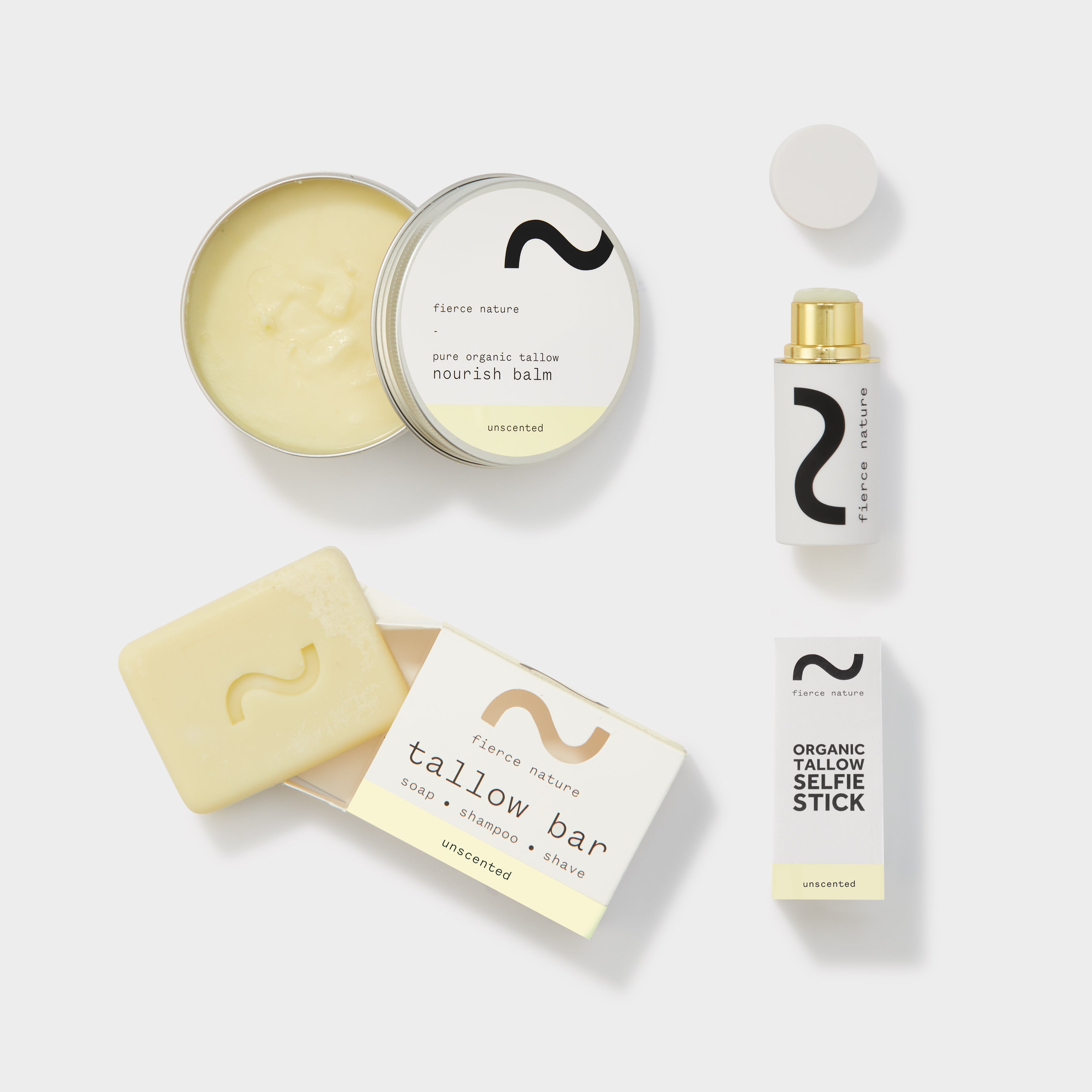
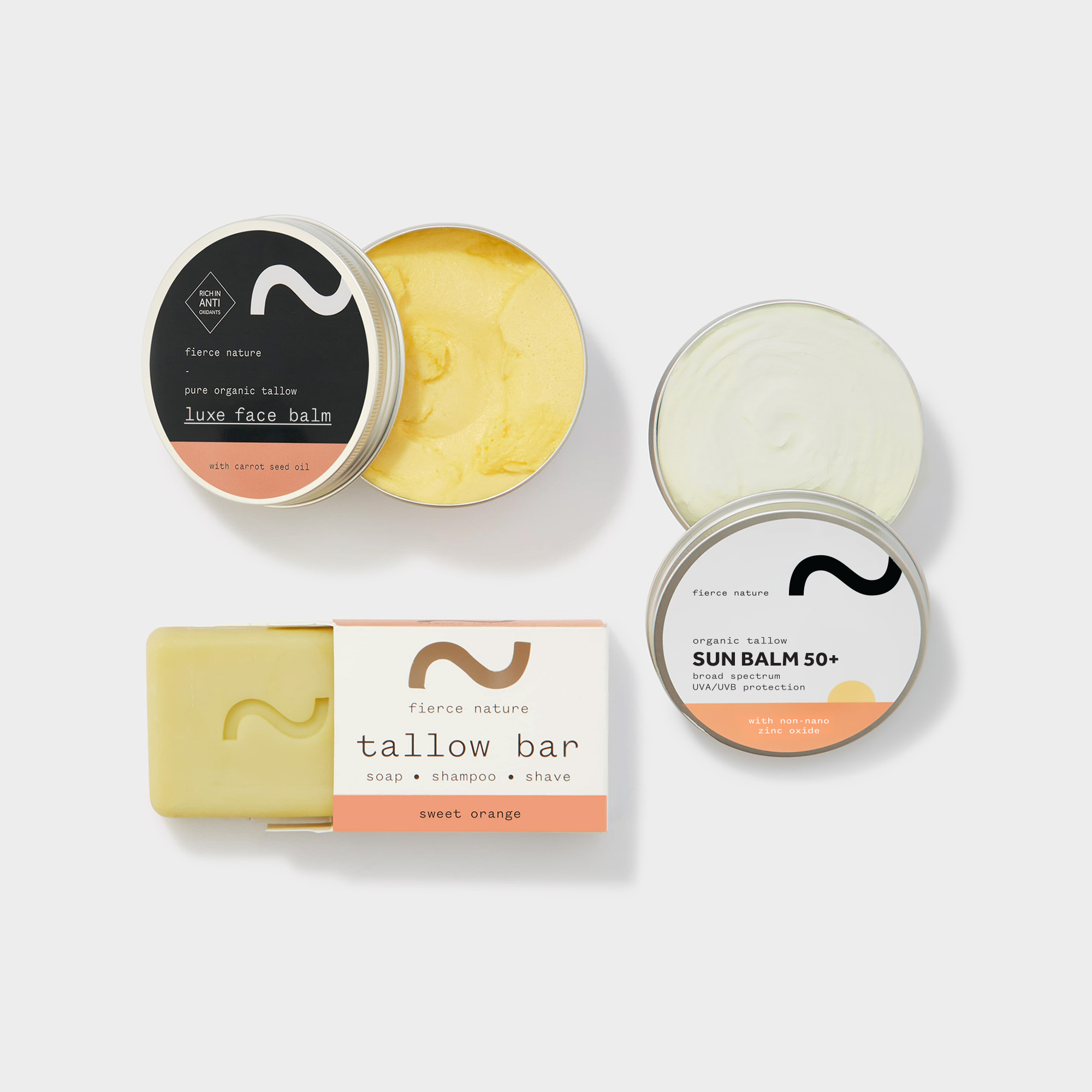
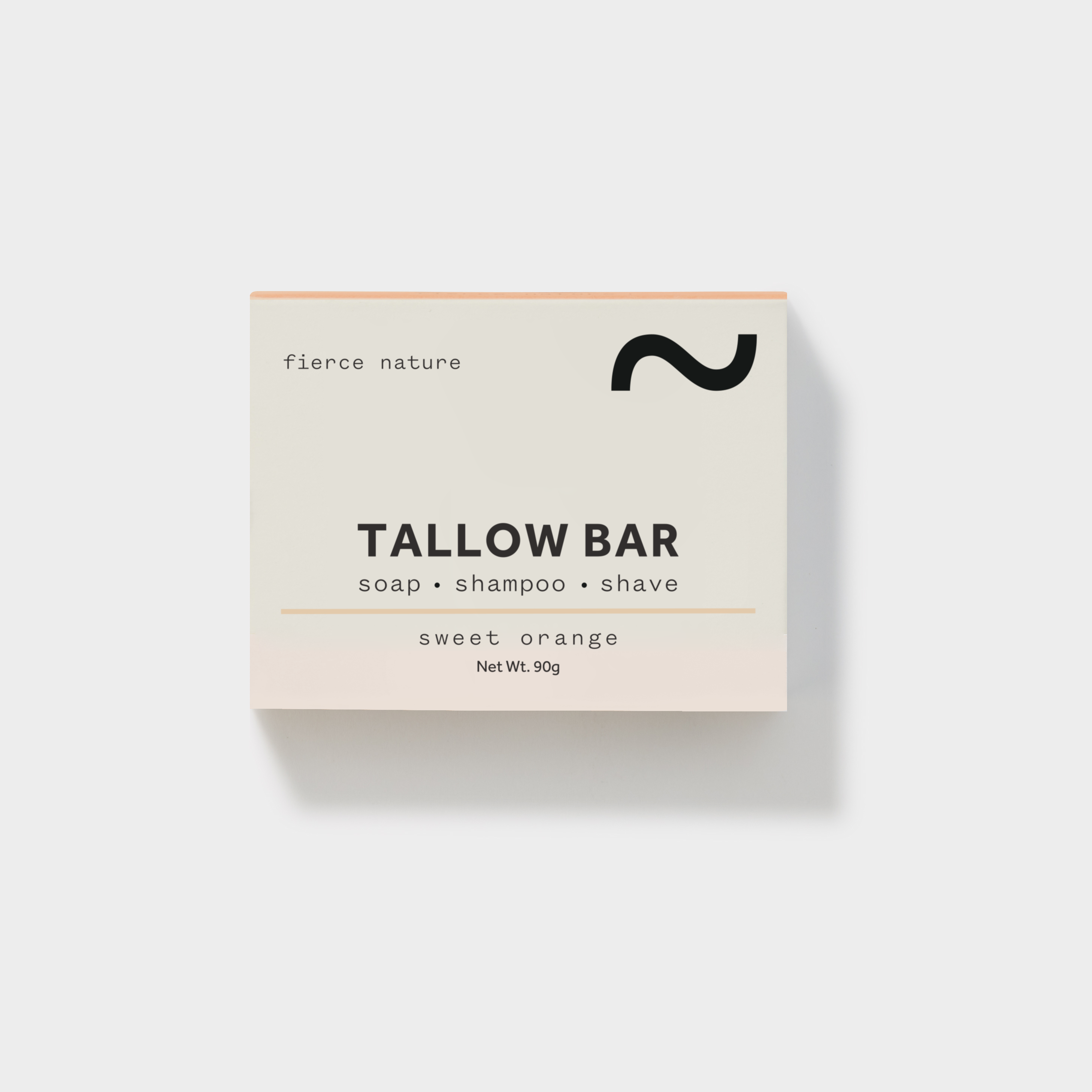
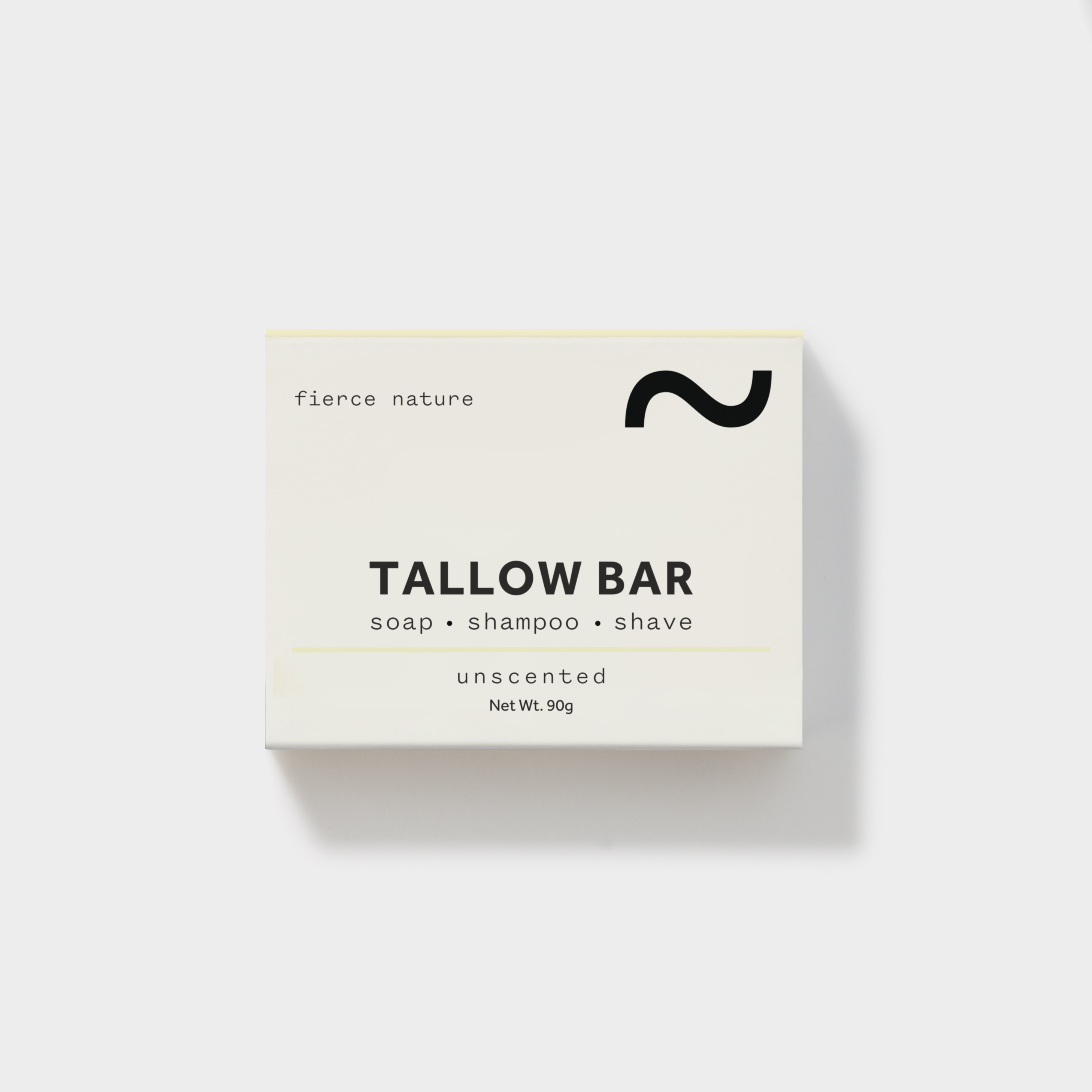
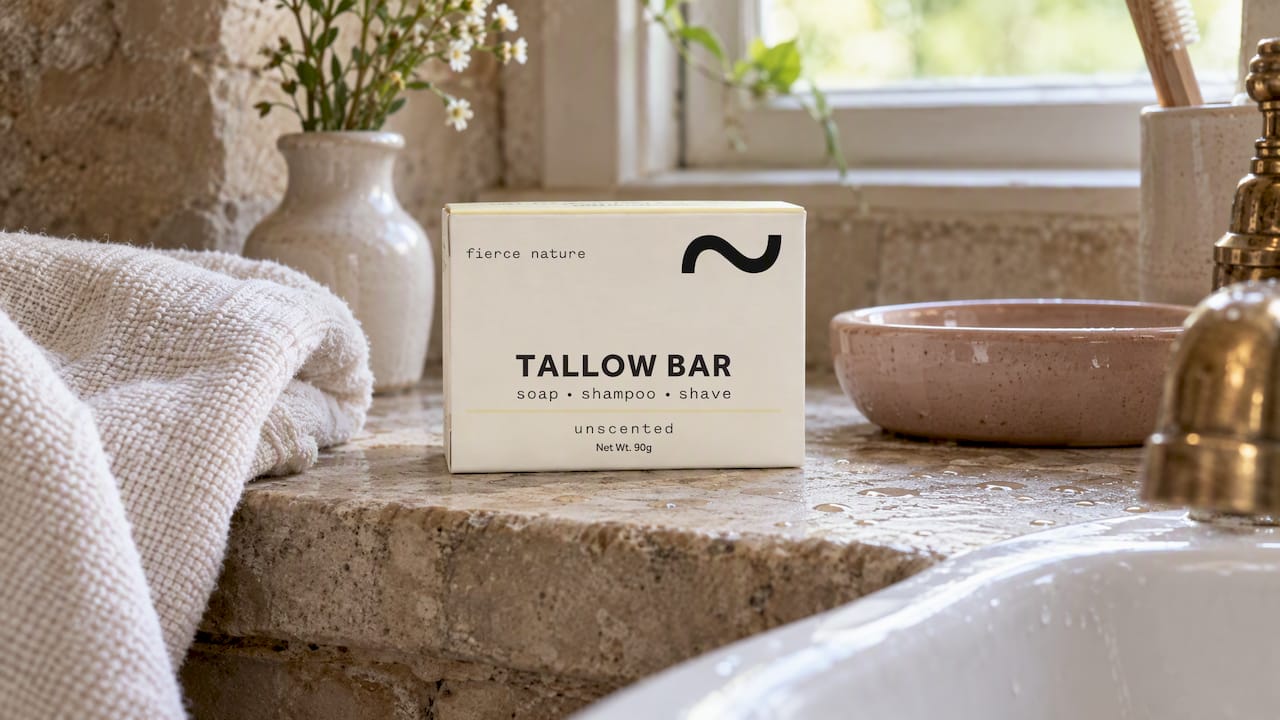
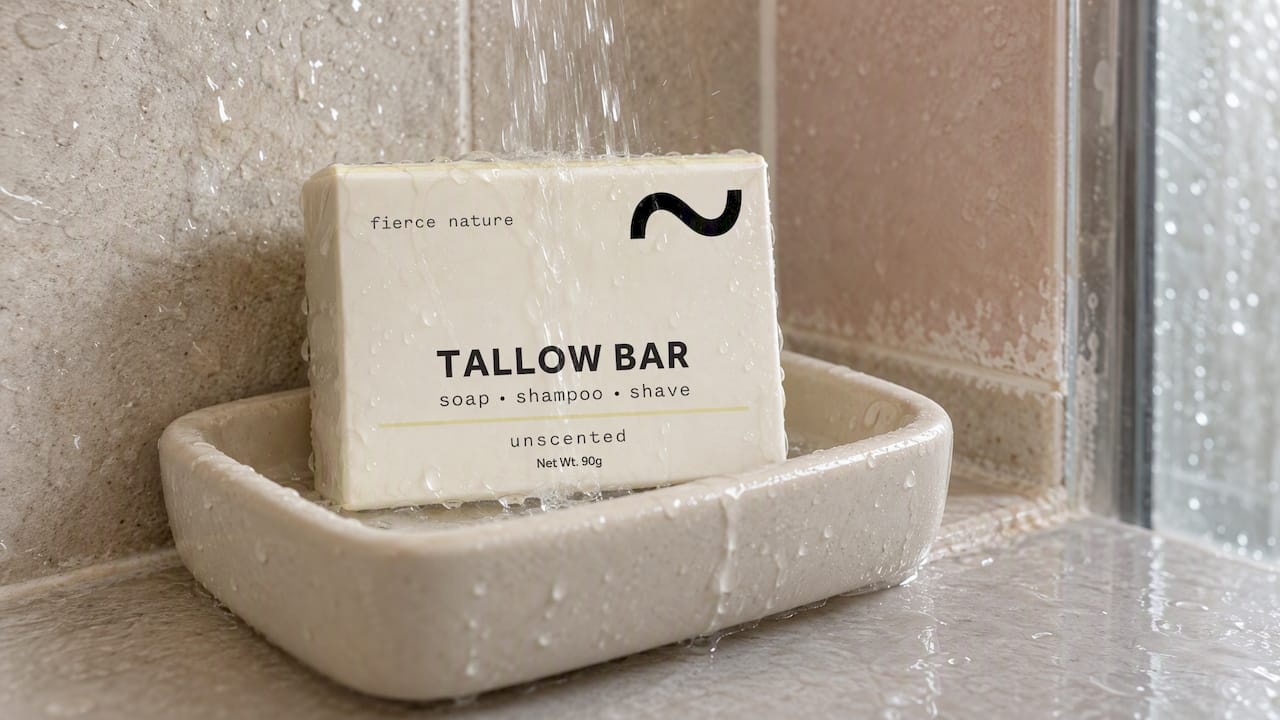
This is why we make both scented and unscented options and why we say plainly which is which. You can read more about this choice in our guide to scented or unscented tallow soap, and the same thinking applies to balms.
Does the smell fade once it is on your skin?
For most people, yes. The scent you notice in the pot is strongest when the balm is warmed and spread. Once it is on the skin and absorbed, any faint note tends to soften within a few minutes and often disappears into your natural skin scent. Fragranced balms are different: their perfume can linger for hours because that is what it is designed to do.
A few practical things influence how long you notice it:
How much you use. A thick layer smells more than a thin one. With a rich balm, a small amount warmed between your fingertips goes a long way.
Where you use it. On your face, you are close to your nose, so you notice more. On elbows, heels or legs, you will barely detect it.
Warmth. Heat lifts aroma. After a hot shower, or in a warm room, a balm may smell stronger for a short while.
Your routine. If you layer it over a scented serum, shampoo or perfume, you will smell those first.
A simple test is to put a small amount on the back of your hand, rub it in, then wait five minutes and smell your skin. If you cannot detect it, you are unlikely to notice it during the day.
When tallow smells wrong: spotting rancid fat
Everything above describes tallow in good condition. Fat does go off, though, and this is the one situation where a smell is a warning rather than a preference.
Rancidity happens when fats react with oxygen, and it is sped up by light, heat and moisture. The result is an unpleasant odour and a drop in quality. Highly saturated fats such as tallow are more resistant to oxidation than many oils, which is part of why tallow has been valued as a stable fat for a long time. But resistant is not the same as immune.
Here is how to tell the difference between a normal faint scent and a spoiled one:
What you notice
What it probably means
Mild, creamy, waxy or slightly fatty
Normal for tallow
Light savoury note that fades on skin
Normal, depends on rendering
Sharp, sour or bitter smell
Likely rancid
Smell like old crayons, paint or stale nuts
Likely rancid
Strong, heavy, stale or musty smell
Likely rancid or contaminated
Visible mould, dark spots or a changed texture
Stop using it
A useful rule: normal tallow smells fatty but clean. Rancid tallow smells wrong in a way you recognise instantly, the same way you can tell milk has turned. If you open a pot and your first reaction is to pull away, trust it.
And if a balm seems to have changed from how it smelled when you first opened it, treat that as information. A sudden shift is a better signal than the starting scent.
Why moisture matters
It is not only oxygen. Even small amounts of water can encourage a different kind of spoilage and allow bacteria to grow. This is why a tallow balm should stay dry. Never dip wet fingers into the pot, and do not leave the lid off in a steamy bathroom.
How to store tallow balm so it stays fresh
Most smell problems with balm are storage problems, and they are easy to avoid. Follow these steps:
Keep the lid tightly closed. Less air means less oxidation.
Store it somewhere cool and dark. A drawer or cupboard is better than a sunny windowsill or a radiator shelf.
Use clean, dry hands or a clean spatula. This keeps water and bacteria out.
Avoid the bathroom shelf next to the shower if you can. Steam and temperature swings are not kind to any balm.
Do not leave it in a hot car or bag during summer, as heat accelerates the changes that cause rancidity.
Use it in good time. Handmade products are best enjoyed within a sensible period, so buy what you will use rather than stockpiling.
We go into more detail in our guide on how to store handmade tallow balm properly. Commercial products in general are tested to hold up for their intended shelf life when stored as directed, which is another reason to follow the storage instructions on whatever you buy.
Scented or unscented: which should you choose?
There is no single right answer, only the one that suits your skin and your nose.
Choose unscented if:
Your skin is sensitive, reactive or easily irritated.
You want the simplest ingredient list possible.
You are buying for a baby or for someone who dislikes fragrance.
You want to judge the true smell of the tallow for yourself.
Choose scented if:
You enjoy a gentle aroma as part of your self-care ritual.
You are using the product on body areas where scent is part of the pleasure.
You have tried unscented and found you prefer a little something extra.
If you have very sensitive skin, our article on tallow for sensitive skin explains how to introduce a new product gently. Patch test any new skincare on a small area first, and speak to your GP or a dermatologist if you have eczema, a skin condition or a history of reactions and are unsure whether a new product suits you.
A few ways to judge a balm before you buy
You cannot sniff a website, so look for other clues:
A clear ingredient list. You should be able to see exactly what is in it, including whether any fragrance or essential oil is added.
Clear labelling of scented and unscented. A maker confident in their tallow will say so.
Information on how it is made. Handmade in small batches, with a described process, is a good sign.
Storage guidance. A maker who tells you how to keep the product fresh cares about what happens after it ships.
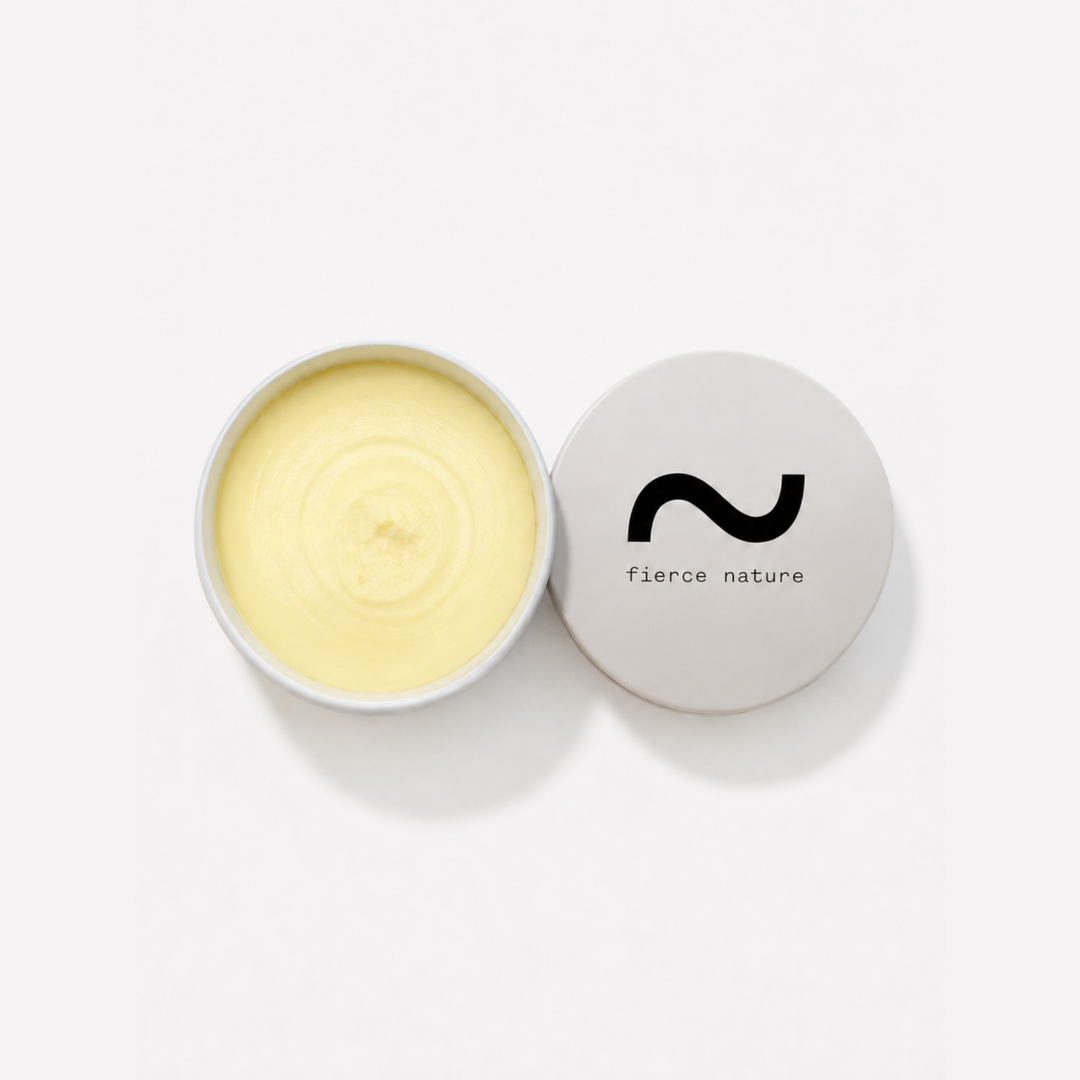
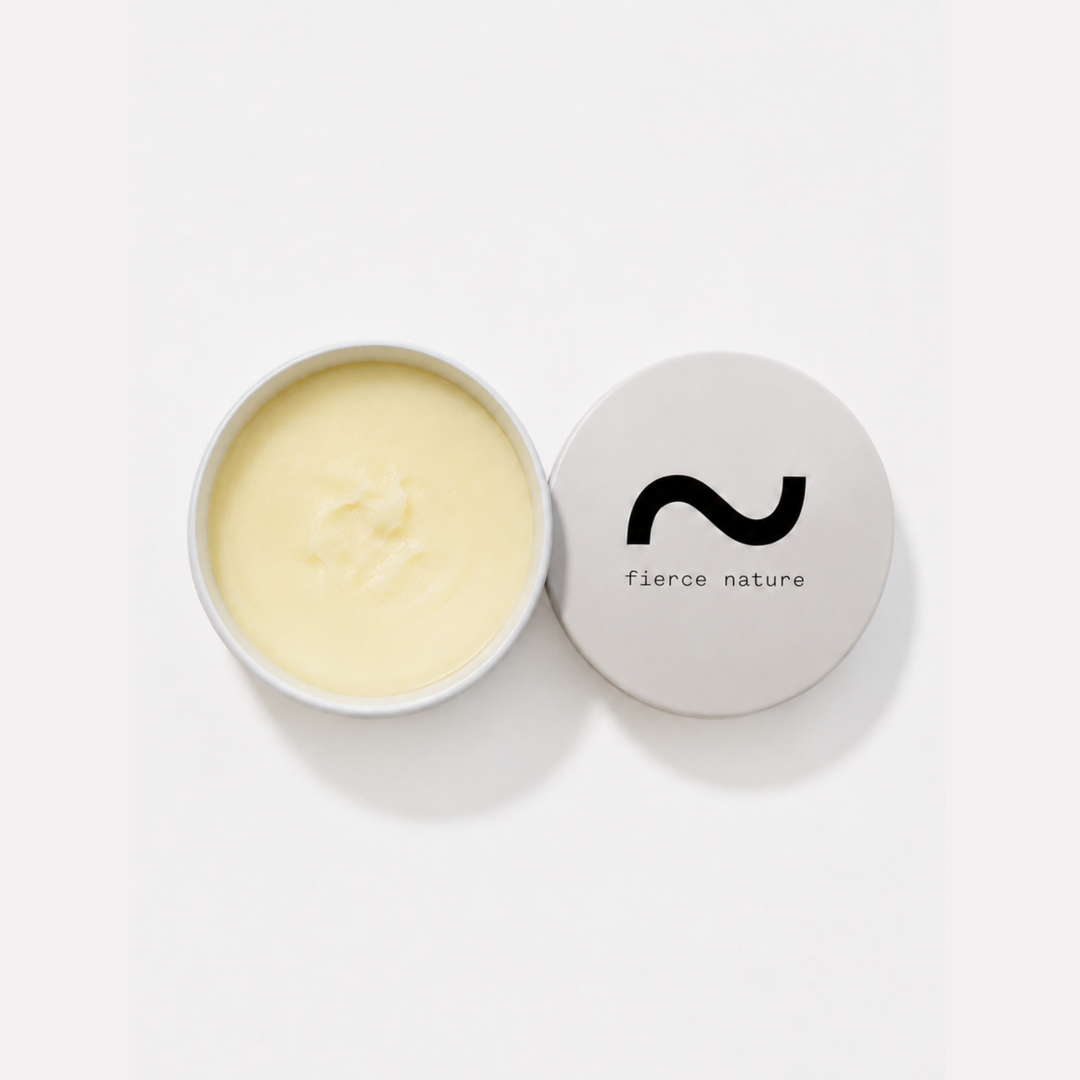
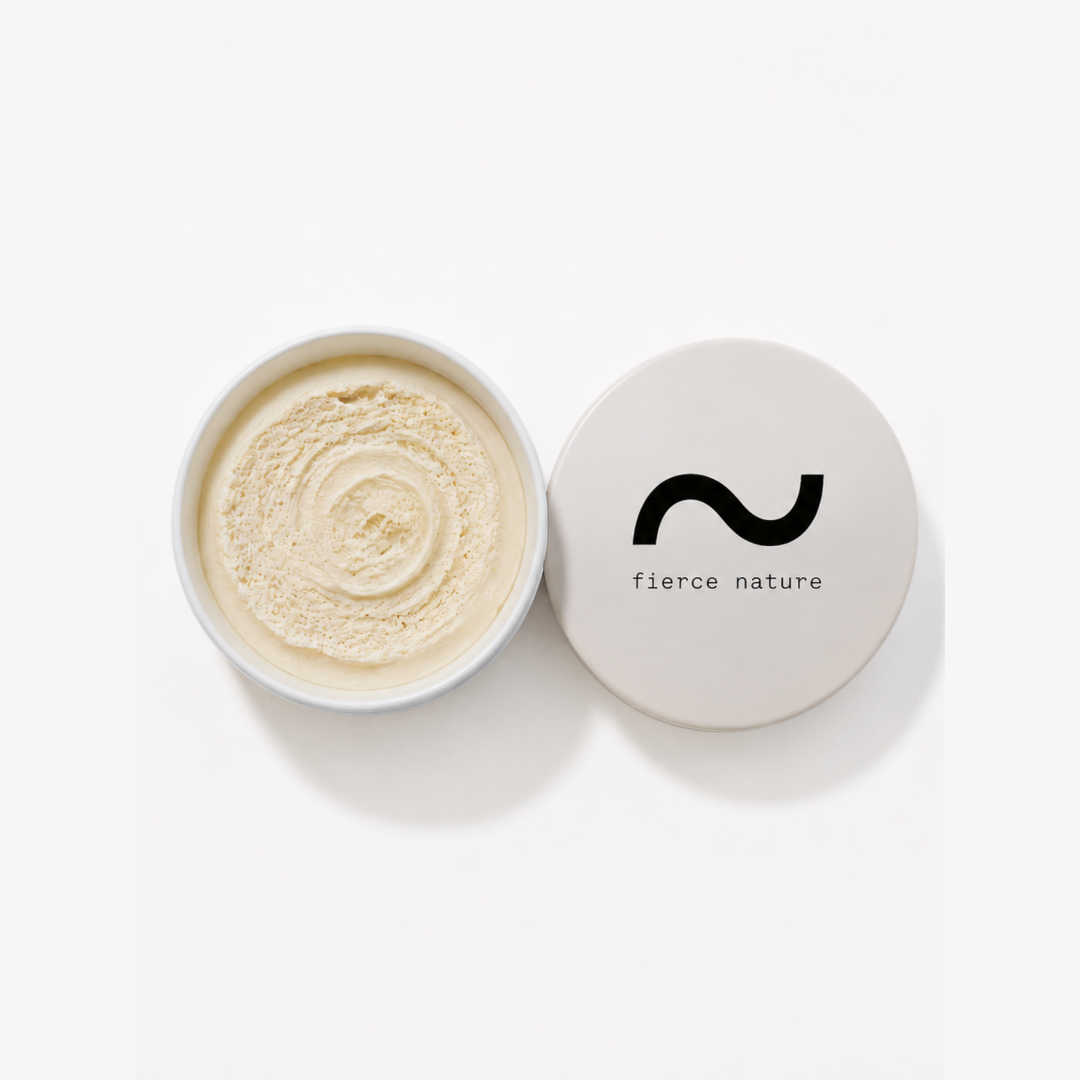
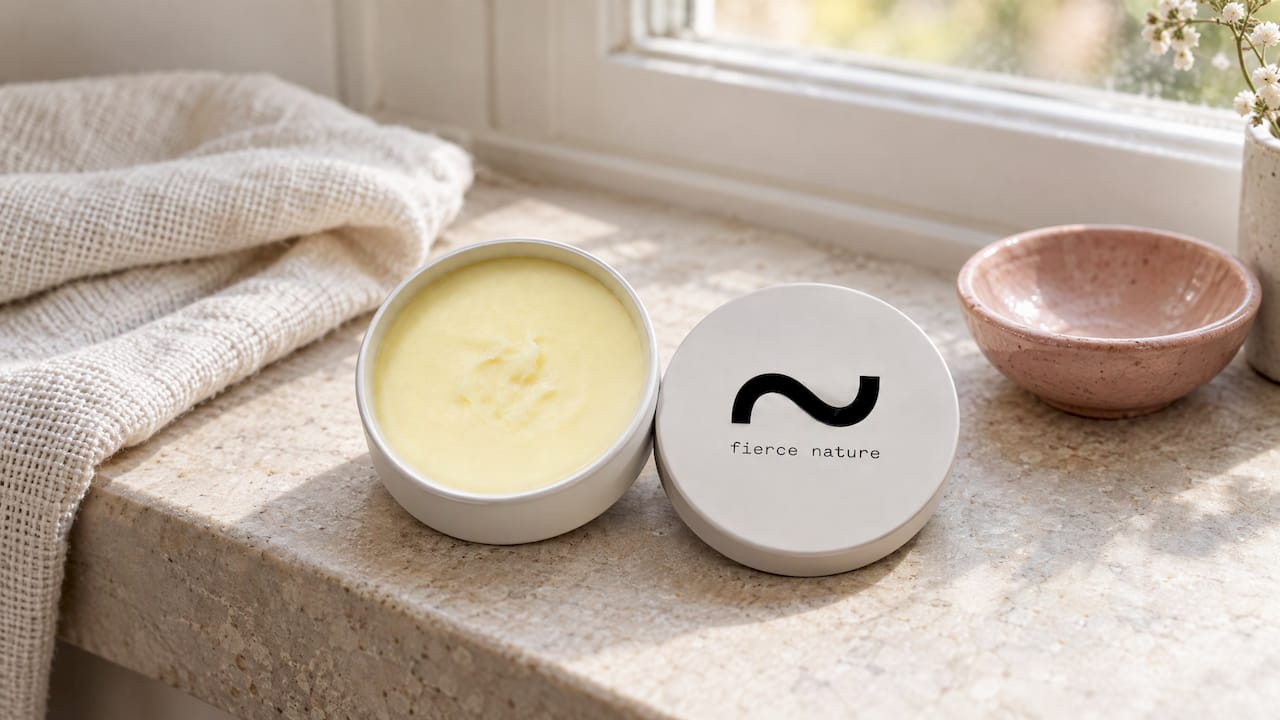
Colour and texture. A good balm is typically creamy and pale to off-white, smooth and even. Dark flecks or an uneven, gritty look deserve a second look.
Honest descriptions. Be wary of a claim that a product smells of absolutely nothing to everyone. A balanced description is more trustworthy.
Our view on tallow and scent
When I started making tallow skincare, the first question friends asked was never about benefits. It was, “Does it smell?” I understood completely. I grew up using mainstream cosmetics, and I spent my teenage years with rashes and reactions I could not explain. When I began to understand how much the products we use every day add to our toxic load, I wanted to make something I would trust on my own skin and on my family’s.
We believe the smell question is really a quality question. Tallow is a natural animal fat, so it will always have its own gentle character, and we do not think that character needs to be hidden behind perfume. What matters is that the tallow starts as premium, grass-fed fat, that it is handled with care, and that the balm is made by hand in the UK in a way that keeps it clean and fresh.
That is also why we offer unscented balms. For many of our customers, the point of switching is to move away from heavy fragrance and long ingredient lists. An unscented balm lets you work with your skin, not against it, and lets you decide for yourself how the tallow smells on you.
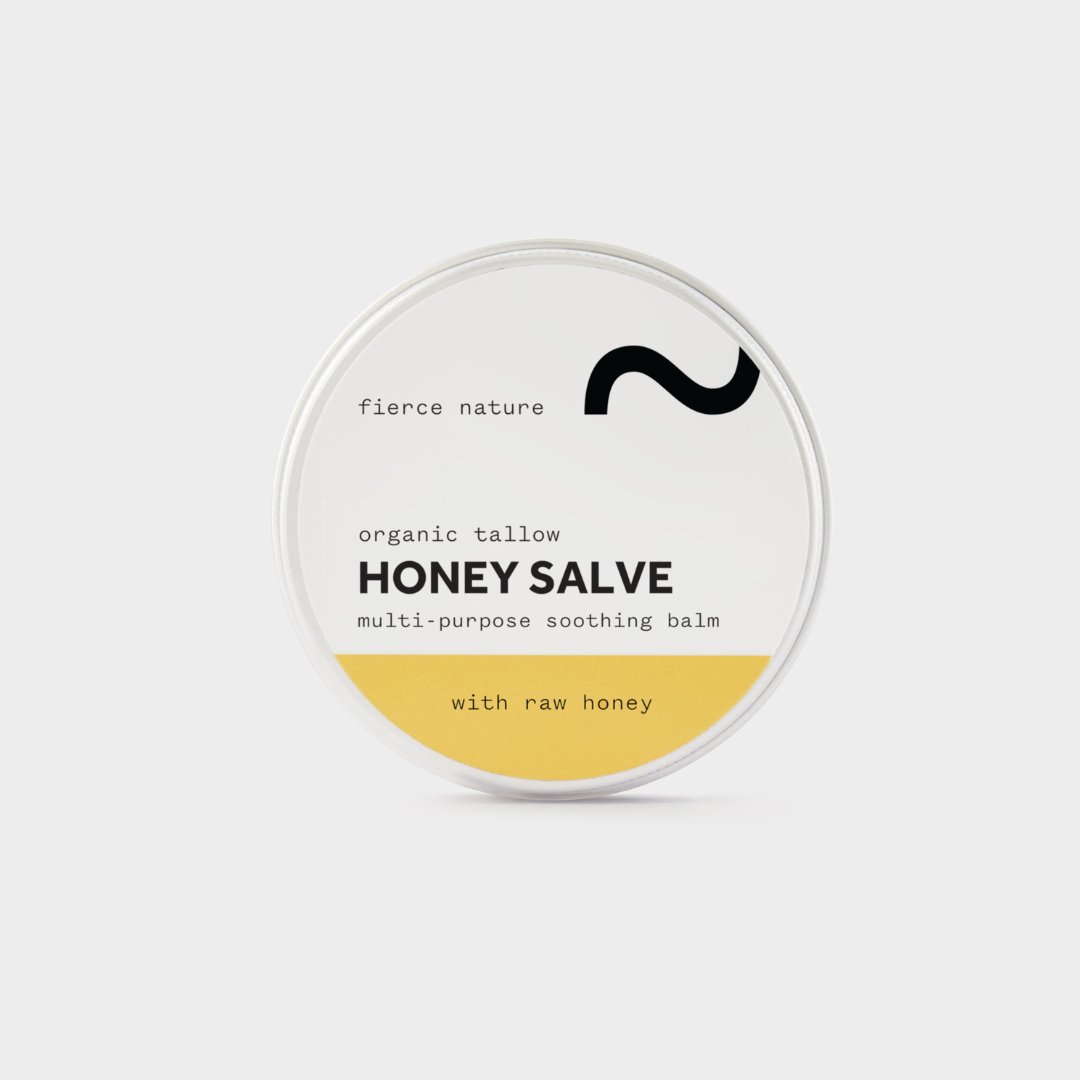
For those who love a little aroma in their routine, we also make scented options, so you can choose what feels right. Tallow has been used for centuries as a skin emollient, and we think its bioavailability, meaning it is so close to what our skin naturally recognises, is a big part of why it feels so nourishing. A faint, natural scent is, to us, simply part of using something real.
Fierce Nature
Ready to try tallow for yourself?
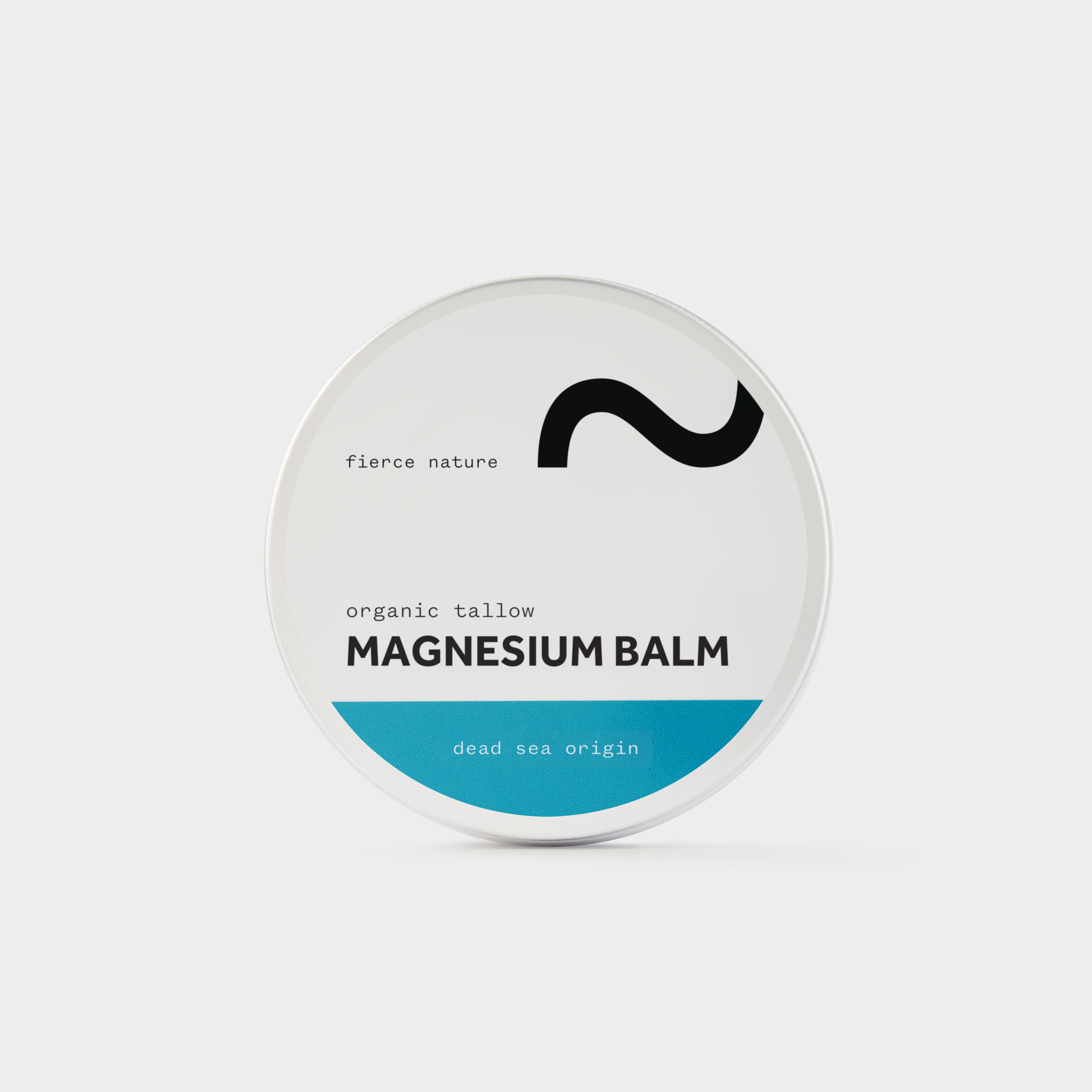
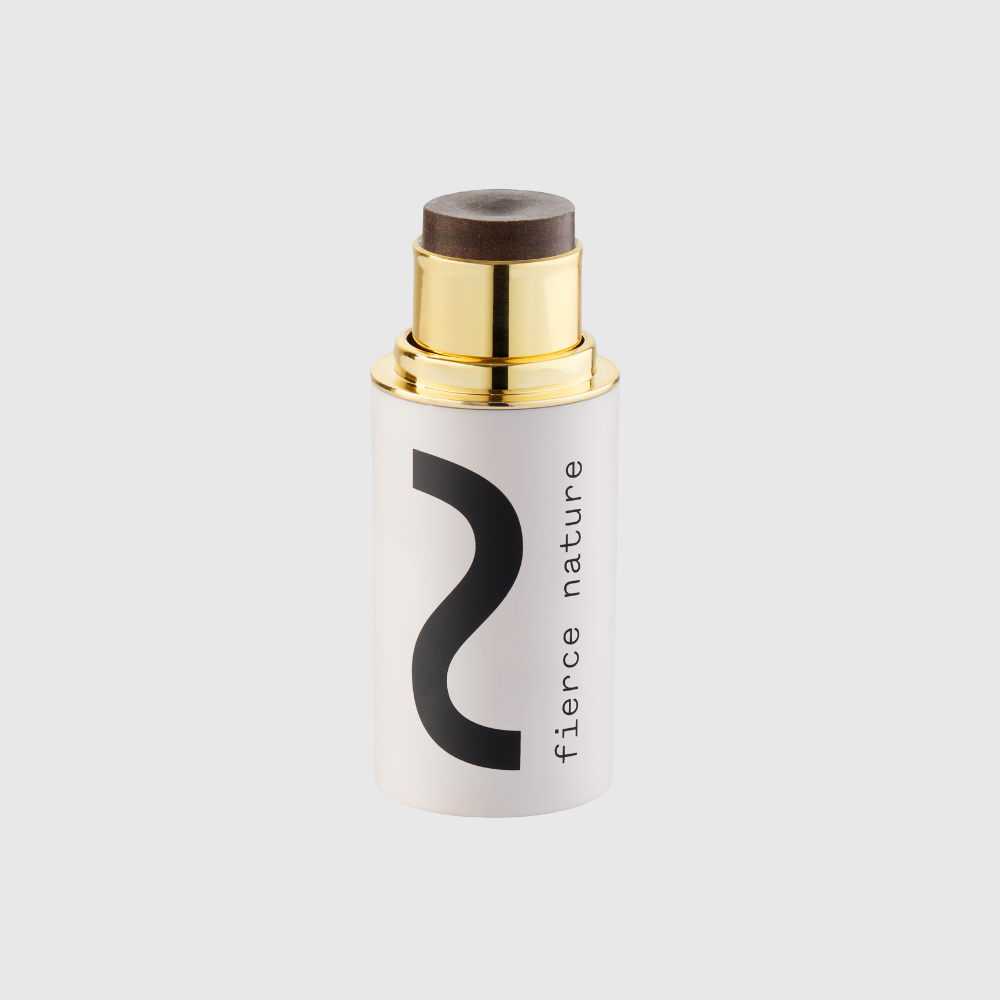
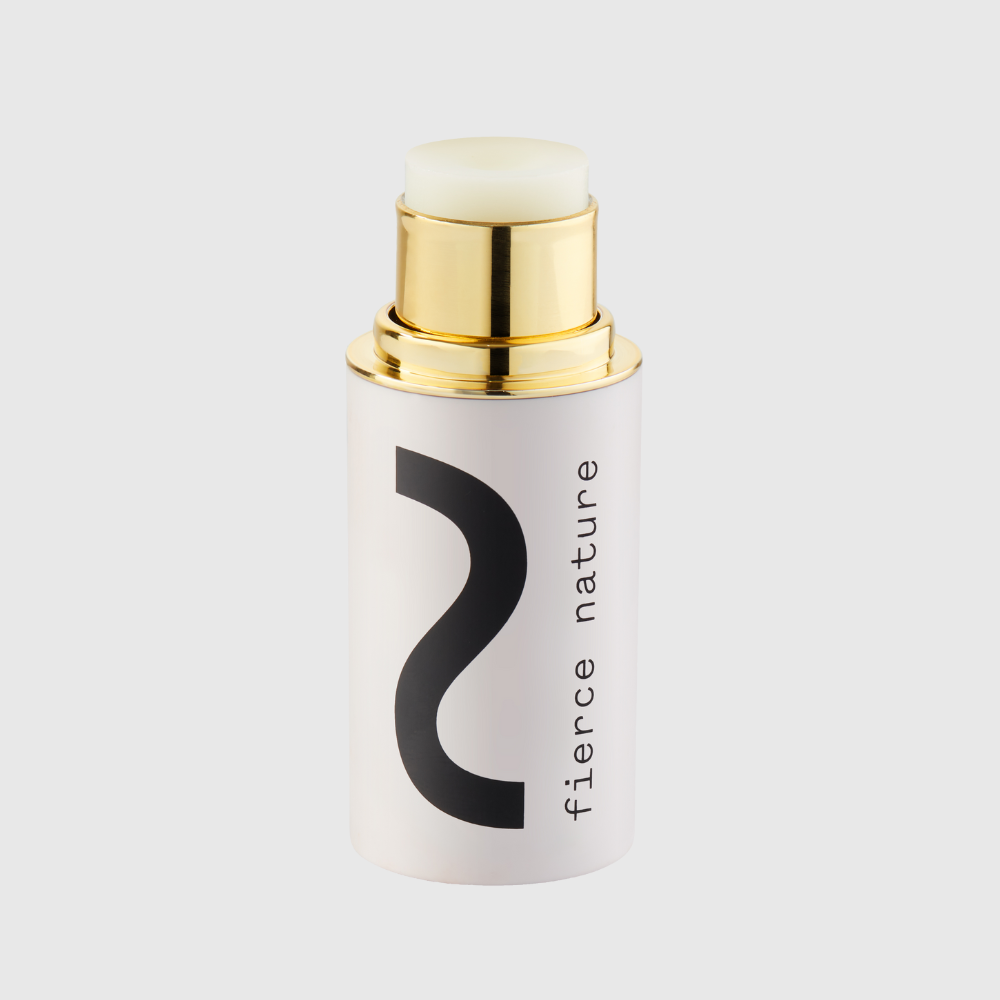
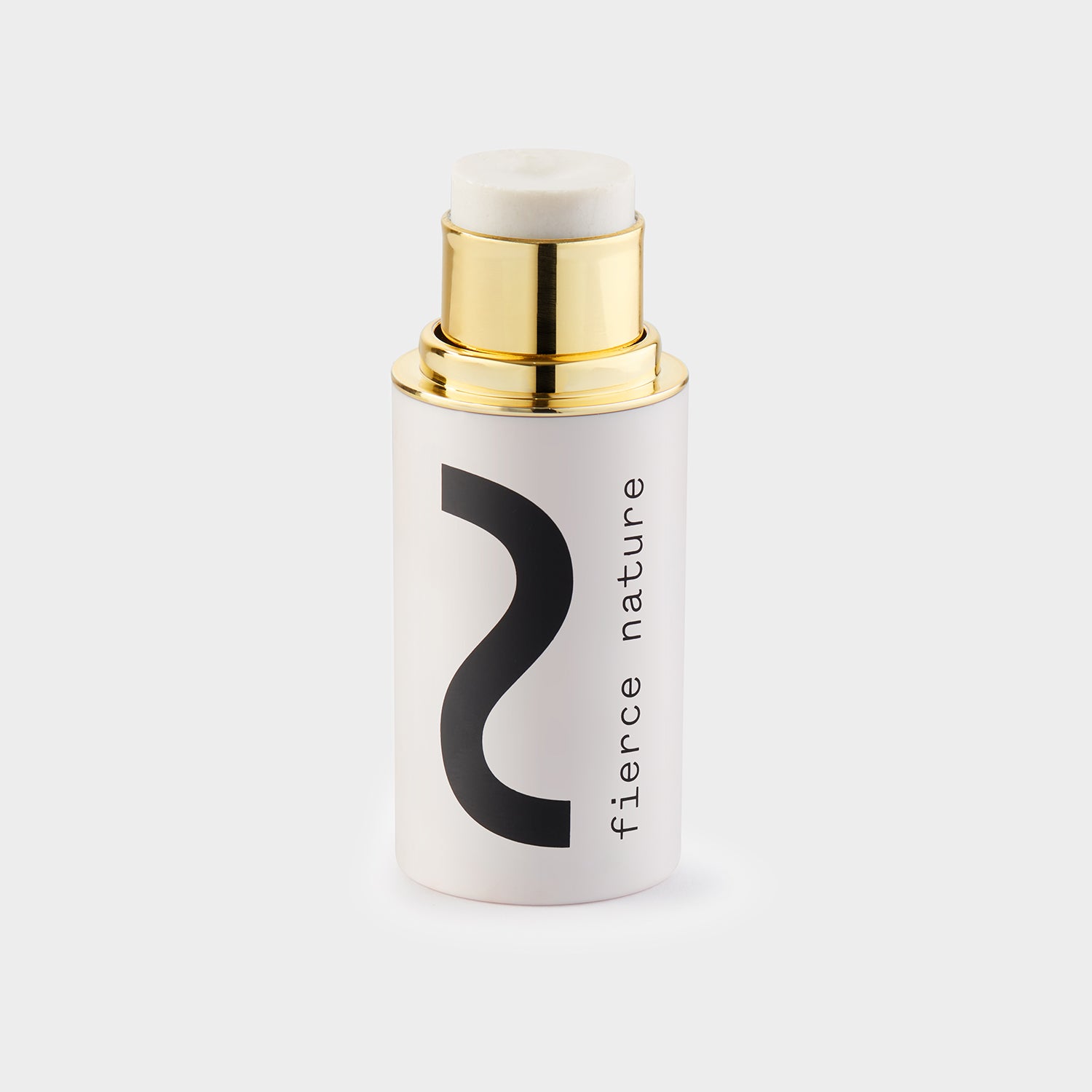
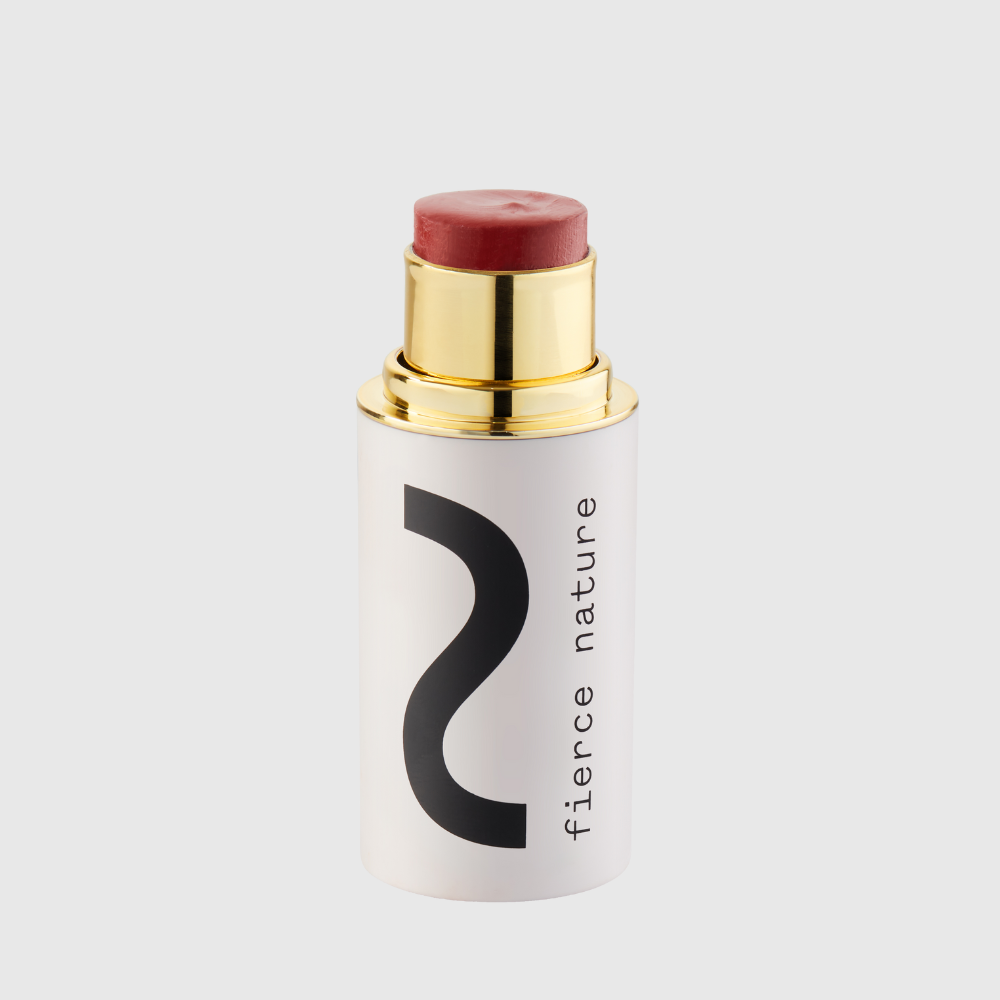
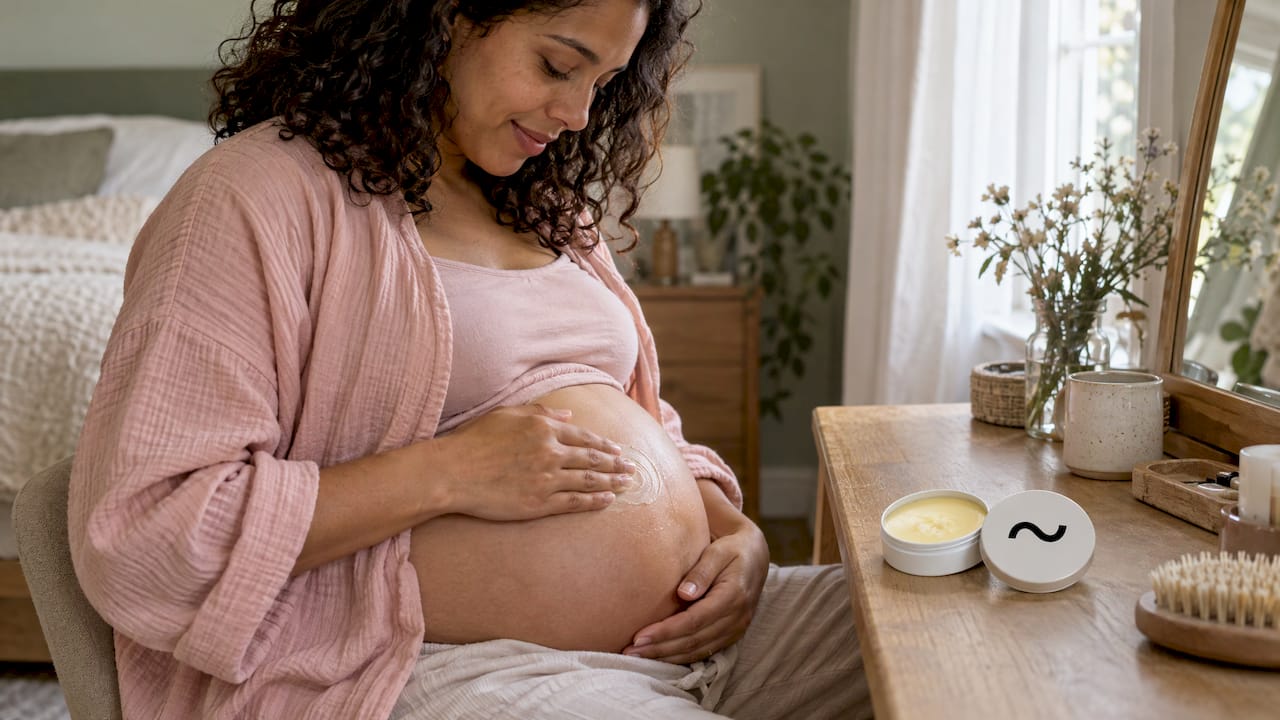
If you would like to find out how a handmade tallow balm smells and feels on your own skin, start with our Face and Body Balms. Each one is handmade in the UK with organic tallow as the foundation, and you can choose unscented or scented depending on your preference. If you are new to tallow and would like more background first, read our tallow balm benefits, uses and safety guide for UK skin.
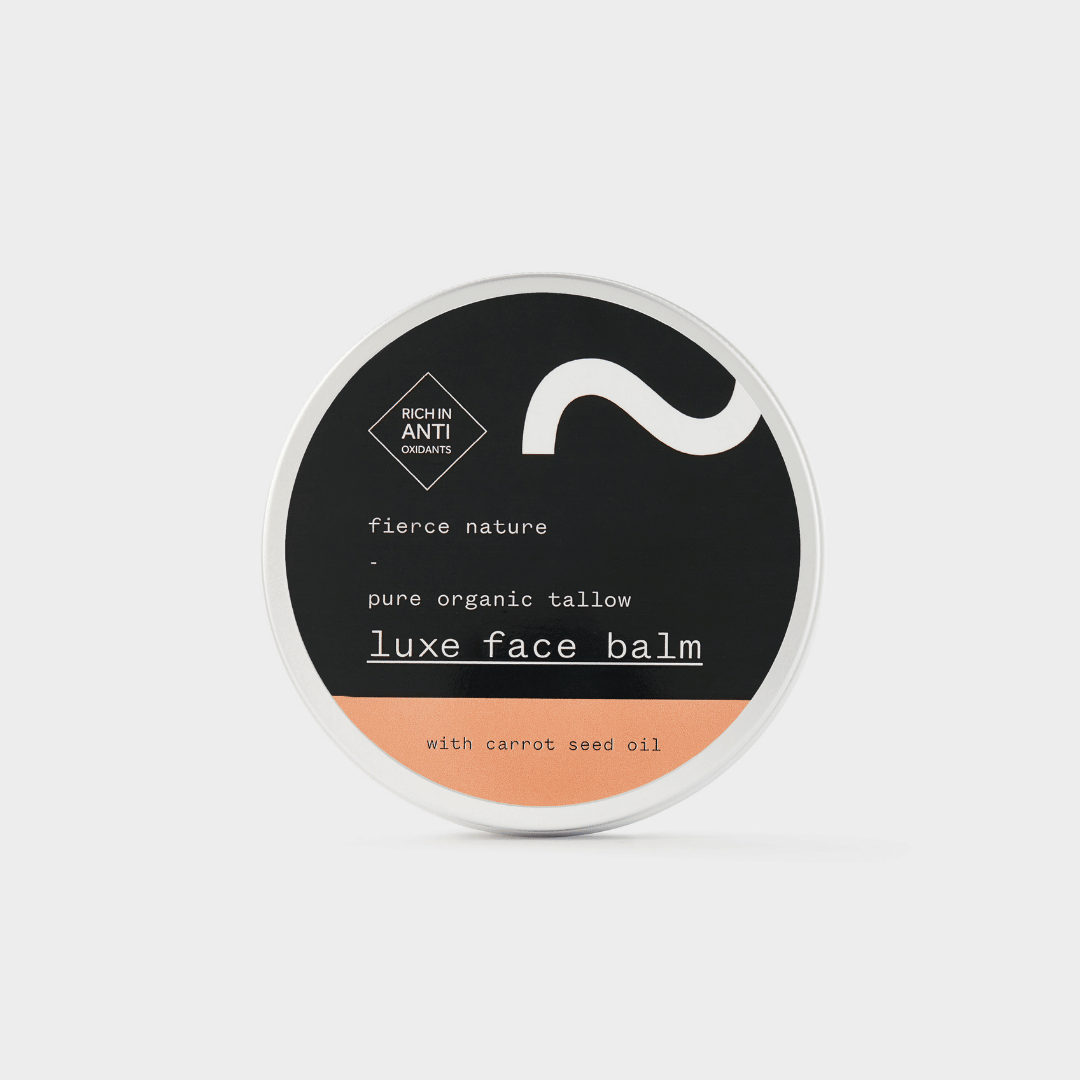
For your face in particular, our guide to tallow face balm walks through how to apply it so a little goes a long way.
A simple way to try tallow if you are worried about the smell
If the scent is the only thing holding you back, this low-pressure approach works well:
Start unscented. That removes fragrance from the equation.
Test on your hands or body first. You are further from your nose and can get used to it.
Use a pea-sized amount. Warm it between your fingertips until it melts, then press it into the skin.
Wait five minutes, then smell your skin. This is the real test of what you will carry through the day.
Try it on your face in the evening. If you do notice a faint note, it matters less at bedtime.
Give it a week. Skin and nose both take a little time to adjust.
If after that you still find the scent is not for you, that is fine. Skincare is personal, and the best routine is the one you enjoy using.
FAQ
Does beef tallow smell bad?
Not when it is well made and fresh. Good tallow balm has a faint, mild, slightly fatty or waxy scent that many people find neutral. A strongly meaty, sour or stale smell usually points to poor rendering or rancid fat, and that balm should not be used.
Will I smell like beef if I use tallow balm?
It is very unlikely with a well-made balm. Any faint note is usually most noticeable in the pot or while the balm is warming in your hands, and it tends to fade on skin within minutes. Using a small amount and choosing an unscented balm both keep the scent to a minimum.
How do I know if my tallow balm has gone rancid?
Trust your nose. Rancid fat smells sharp, sour, stale or like old paint or crayons, and it is very different from the gentle fatty note of fresh tallow. A changed texture, dark spots or mould are further warning signs. If you see or smell any of these, stop using it and keep future pots sealed, dry, cool and out of the light.
Why does my tallow balm smell different from the last one?
Handmade products can vary slightly from batch to batch, because rendering, cleaning and the natural character of the fat all play a part. A small difference is normal. A big change in the same pot over time is different, and may mean it has been exposed to heat, light, air or water.
Is unscented tallow balm better for sensitive skin?
Many people with reactive skin prefer unscented products because they avoid added fragrance, which can be a trigger for irritation. Whatever you choose, patch test first, and see your GP or a dermatologist if you have a skin condition or are unsure.