Cart
0
You may also like





Eczema can feel like an endless cycle of irritation, dryness, and flare-ups. Many of us are told that steroid creams are the only way to manage it, yet they often come with side effects and don’t always provide lasting relief. Over time, that can leave us searching for a gentler, more sustainable path. This is where tallow balm steps in a natural way of supporting our skin barrier with deep nourishment that feels aligned with the body’s own design.
We believe in creating tallow skincare that works in harmony with skin rather than against it. Unlike synthetic creams, grass-fed tallow offers a recipe of nutrients, fatty acids, and skin-identical compounds that help to strengthen and restore balance. For those of us navigating skincare for eczema, this difference can be profound.
In this blog, we’ll explore the differences between steroid creams and tallow balm, explain why tallow skincare is growing in recognition, and share how using tallow for skin can bring genuine natural relief for eczema without the harsh drawbacks of synthetic treatments.
Eczema isn’t just a surface issue. When the skin barrier is weakened, it loses its ability to lock in moisture and defend against irritants. That’s why flare-ups often come with itching, redness, and sensitivity.
Steroid creams are typically prescribed to reduce inflammation, but they don’t address the underlying problem: a compromised barrier. Over time, they can even thin the skin, making it more fragile. Many people using them notice that flare-ups return once the cream is stopped. This “rebound effect” keeps you stuck in a cycle, rather than moving towards real repair.
Natural relief for eczema means supporting the skin’s structure in a way that lasts. That’s where tallow skincare comes in. Instead of suppressing symptoms, tallow balm nourishes and strengthens the barrier so the skin can heal from within.
The skin barrier is our body’s frontline of defence. It keeps hydration in and shields us from bacteria, allergens, and pollutants. When the barrier is damaged, everything feels more sensitive. Eczema is a clear signal that the barrier needs support.
Steroid creams calm inflammation but don’t rebuild the barrier. By contrast, tallow for skin is packed with the very components our skin naturally relies on. These include cholesterol, ceramides, and fatty acids all vital for barrier repair. Using tallow balm is like giving your skin the raw materials it needs to rebuild itself.
It’s important to be honest about steroid creams. They can bring quick relief during intense flare-ups, but prolonged use often comes with risks:
Thinning of the skin
Increased sensitivity
Dependency and rebound flare-ups
Suppression of the skin’s natural healing processes
This doesn’t mean they don’t have a place, but it does highlight why so many people are searching for natural relief for eczema instead.
Grass-fed tallow balm offers something completely different. Instead of overriding the skin’s natural function, it works in harmony with it. Here’s why:
Skin-identical recipe – The composition of tallow for skin is remarkably close to human sebum, meaning it absorbs easily and feels familiar to the skin.
Rich in barrier-building nutrients – Cholesterol and ceramides are essential for a strong barrier, and they are found naturally in tallow balm.
Deep, lasting moisture – Unlike water-based creams that evaporate quickly, tallow balm stays with the skin, sealing in hydration.
Gentle for sensitive skin – Free from harsh synthetics, tallow skincare is well-suited to those dealing with irritation or long-term dryness.
This is why so many are now turning to tallow skincare as an effective option for eczema relief.
Let’s break down the main contrasts:
Approach: Steroid creams suppress inflammation. Tallow balm supports the skin barrier.
Impact: Steroid creams often provide temporary results. Tallow balm encourages lasting balance.
Side Effects: Steroid creams carry risks with long-term use. Tallow skincare offers natural, ongoing support.
Suitability: Steroids aren’t always recommended for daily use. Tallow balm can be part of a daily routine without concern.
The choice between the two often comes down to whether you want quick, temporary results or a nurturing, barrier-focused approach.
Not all tallow is equal. Grass-fed tallow balm comes from animals raised on natural pasture, meaning the fat is richer in nutrients and free from the toxins associated with industrial farming. For tallow skincare, this standard is essential it ensures the purity and quality of the balm you use on your skin.
When we talk about tallow face cream or tallow balm, sourcing is everything. True nourishment comes from honouring both the land and the body.
If you’re dealing with eczema, building a gentle, consistent routine is key. Here’s how tallow skincare can fit in:
Cleanse with a mild, non-stripping option to avoid further barrier damage. Our Unscented Soap is designed exactly for this: no fragrance, no harshness, just a pure cleanse that supports sensitive skin.
Apply Unscented Nourish Balm to damp skin to lock in hydration.
Use tallow face cream for targeted areas like the cheeks or forehead.
Reapply as needed on patches prone to dryness or flare-ups.
Consistency helps the barrier rebuild, and because tallow balm mirrors the skin’s own recipe, it can be used daily without worry.
Every journey with eczema is personal. What works for one person may not work for another, but the principle remains the same: skin thrives when we respect its natural design. Steroid creams may provide a quick solution, but tallow skincare gives the skin the resources it needs to repair itself.
By choosing Unscented Nourish Balm and other tallow for skin options, you are choosing to restore rather than suppress, to nourish rather than fight against your skin. That’s the essence of natural relief for eczema.
We are seeing a shift. More people are stepping away from harsh prescriptions and searching for ancestral, bioavailable solutions that align with nature. Tallow skincare is part of this movement simple, effective, and deeply connected to how our skin is built.
As awareness grows, tallow balm is no longer seen as an old-fashioned remedy but as a modern, sustainable option for those seeking true eczema relief.
Tallow balm restores what the skin is missing.
Unscented Soap supports barrier-friendly cleansing.
Tallow skincare works in harmony with the body.
Grass-fed tallow ensures purity and quality.
Unscented Nourish Balm is becoming a trusted choice for those seeking natural relief for eczema.
Healing begins when we return to the recipes nature gave us. With tallow balm, unscented skincare, and grass-fed purity, we can move towards balance, comfort, and resilience free from the cycle of dependency that often comes with steroids.

TL;DR:
- A high-quality face balm can replace many skincare products by providing moisturization, cleansing, priming, and repair in one formula. Its oil and wax base ensure longer-lasting active ingredients, deep hydration, and strengthened skin barriers. Using fewer products aligns with slow beauty principles and supports healthier, more resilient skin over time.
A good face balm is not just a moisturiser. It is a concentrated, oil and wax-based formulation that works as a moisturiser, primer, cleanser, face mask, and protective barrier all at once, replacing several separate products with a single, nourishing step.
Unlike water-based creams or gels, face balms contain no added water. That means active ingredients stay on the skin longer, penetrating more deeply and holding moisture in rather than evaporating. The result is sustained hydration and a strengthened skin barrier, not just a temporary softening effect.
Here is what a quality face balm can replace in your routine:
The multi-use skincare case for face balms is straightforward. Fewer products mean fewer ingredients competing on your skin, less risk of irritation, and a routine you can actually keep up with.
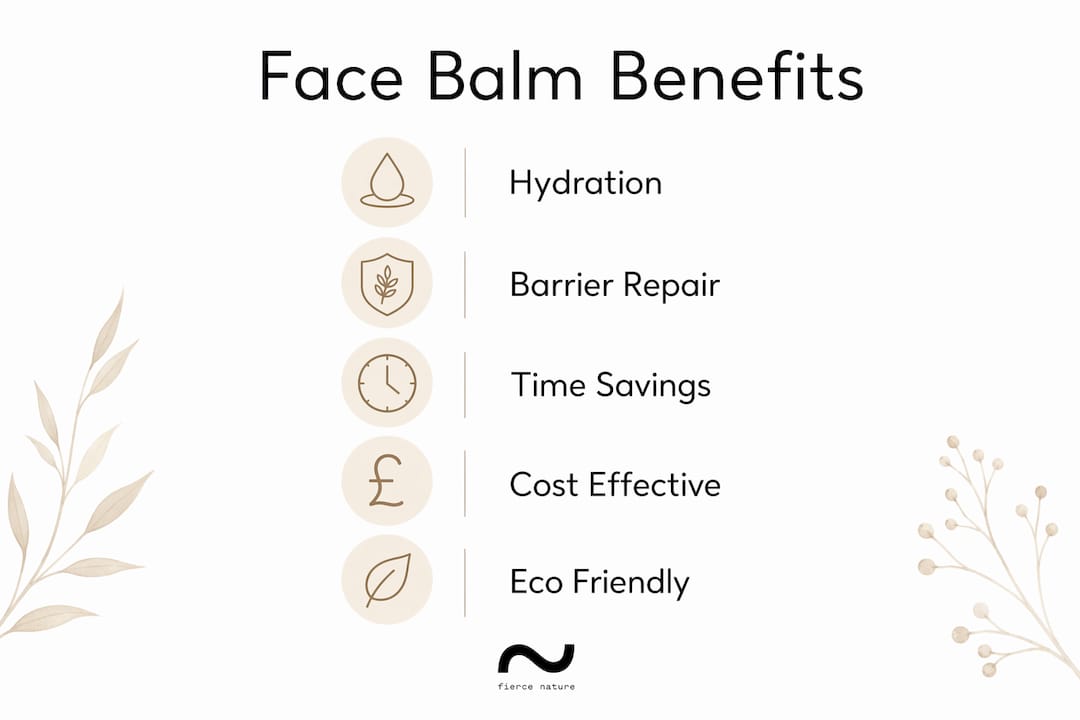
Face balms are especially beneficial for dry, sensitive, or ageing skin. Their oil and wax base creates a protective layer that slows moisture loss, which is particularly valuable overnight when the skin naturally repairs itself. Consumers who switch to face balms regularly report improved skin resilience and a simpler, more consistent routine.
Replacing five or six products with one well-formulated balm reduces your monthly spend considerably. A single quality balm tends to last longer than a lightweight cream too, because you use far less per application.
Using one product instead of many cuts packaging waste and reduces the number of deliveries needed to maintain your routine. Choosing products that align with a sustainable lifestyle extends that mindset beyond skincare.
A pared-back routine is one you will actually follow. When your entire evening skincare takes thirty seconds, consistency becomes effortless rather than aspirational.
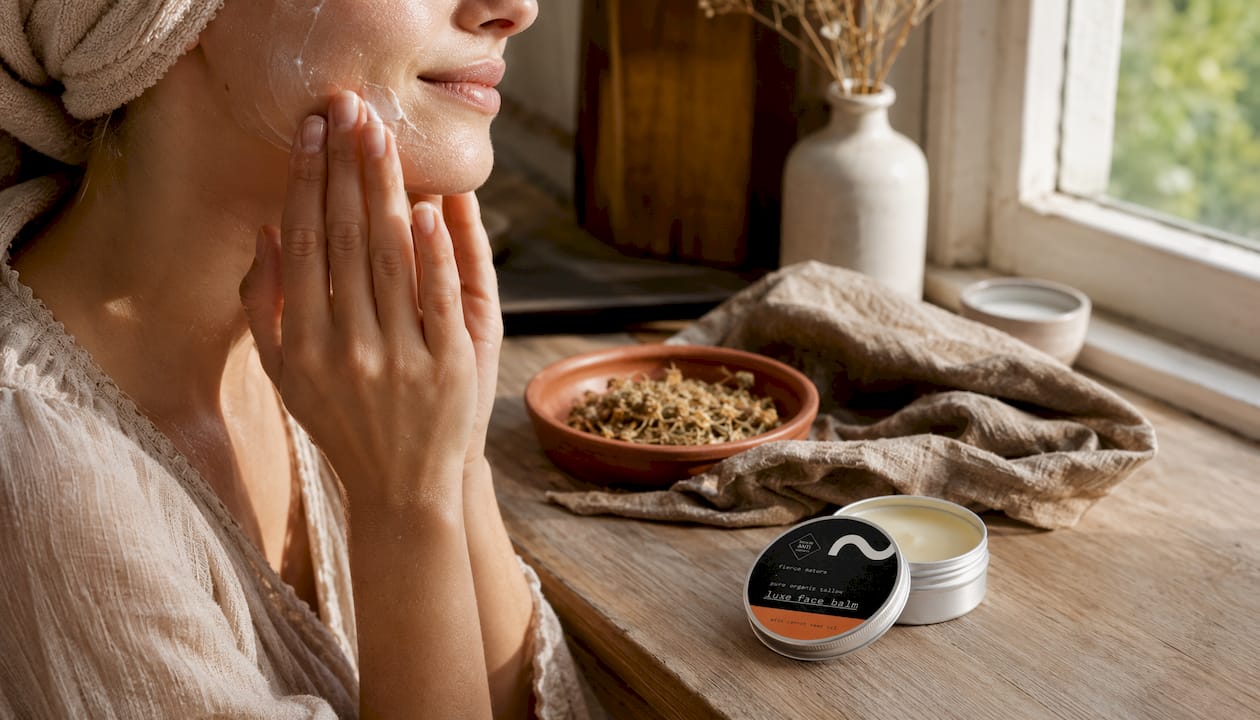
Pro Tip: Apply your face balm to slightly damp skin after cleansing. The balm seals in that residual moisture, giving you noticeably deeper hydration with no extra steps.
Slow beauty is a growing philosophy, particularly among those who have grown tired of ten-step routines and shelves crowded with half-used bottles. It prioritises long-term skin barrier health over quick fixes, choosing fewer, higher-quality products that work with your skin rather than overwhelming it.
Face balms are a natural fit for this approach. Their rich, natural formulations nourish the skin without the synthetic fillers, preservatives, and fragrances that accumulate when you layer multiple products. Reducing that chemical load is not just about simplicity. It genuinely supports skin health over time, particularly for those with sensitivity or reactive skin.
The organic skincare ingredients in quality balms, such as plant-based oils, beeswax, and organic tallow, are bioavailable. Your skin recognises and absorbs them readily, rather than sitting on the surface or causing congestion.
Pro Tip: When choosing a slow beauty balm, look for organic certification and a short ingredient list. If you cannot pronounce most of what is listed, that product is working against the philosophy.
A face balm works best when you treat it as a skin food rather than a finishing step. Here is how to get the most from it:
Dry and sensitive skin types benefit most from daily use. If your skin leans oily, focus balm application on drier zones such as the cheeks, brow bone, and lip area, and use it primarily at night.
Pro Tip: In winter, swap your usual moisturiser entirely for a face balm in the evening. The richer texture compensates for the moisture your skin loses in cold, dry air.
Fierce Nature was built on a simple conviction: that the promises made by mainstream beauty products are largely hollow, and that real skin nourishment comes from the land, not a laboratory. Every product is handmade in the UK using naturally sourced ingredients, with organic tallow as the foundation.
Tallow has been used for centuries as a skin emollient. Its bioavailability means it penetrates deeply rather than sitting on the surface, delivering genuine nourishment where the skin needs it most. The Luxe Balm brings this together in a premium, multi-use formulation that replaces your moisturiser, primer, and overnight mask in one jar. For daily protection, the Sun Balm SPF 50+ adds a natural shield without synthetic chemicals. For sensitive or dry skin anywhere on the body, the Nourish Balm offers the same deep, clean nourishment unscented.
No toxic load. No unnecessary complexity. Just skin that is genuinely fed.
A face balm replaces multiple skincare products because its oil and wax base delivers sustained hydration, barrier repair, and nourishment in a single, versatile step.
| Point | Details |
|---|---|
| Multi-use by design | One balm covers moisturising, cleansing, priming, masking, and spot nourishment. |
| Deeper hydration | Oil and wax formulas contain no water, so active ingredients stay on skin longer. |
| Slow beauty alignment | Fewer products reduce chemical load and support long-term skin barrier health. |
| Environmental benefit | One product means less packaging waste and fewer deliveries over time. |
| Fierce Nature approach | Handmade UK tallow balms offer bioavailable, non-toxic nourishment across multiple uses. |
A face balm is an oil and wax-based moisturiser with no added water, making it richer and longer-lasting than a cream. It penetrates more deeply and holds moisture in the skin more effectively.
Face balms work best for dry, sensitive, and ageing skin. Those with oily skin can still benefit by applying balm to drier zones or using it only at night.
For many people, yes. A quality face balm covers moisturising, cleansing, priming, and overnight repair, reducing the need for multiple separate products.
Organic tallow is highly bioavailable, meaning the skin absorbs it readily rather than sitting on the surface. It has been used as a skin emollient for centuries and supports deep nourishment and barrier repair.
Fewer products mean fewer potential irritants and a lower chemical load on the skin. This supports the skin’s natural barrier function and reduces the risk of sensitivity reactions over time.

Your daily moisturiser, lipstick, and shampoo may contain chemicals linked to hormone disruption, allergic reactions, and long-term health concerns. Here is the checklist we at Fierce Nature believe every UK consumer deserves to have before they shop.
Chemicals to check for and avoid:
On the packaging, check for:
Pro Tip: Ingredients are listed in descending order of concentration. If a concerning chemical appears in the first five ingredients, it makes up a meaningful portion of the formula. Scan the top of the list first, not just the bottom.
Learning to read cosmetic ingredient labels confidently is one of the most protective habits you can build.
Parabens, phthalates, and synthetic fragrances are linked to hormone disruption, carcinogenicity, and allergic reactions. These are not theoretical risks sitting in obscure research papers. Regulatory bodies across the UK and EU have acted on this evidence by restricting or banning many of these substances.

The mechanisms vary by chemical. Parabens mimic oestrogen in the body, potentially interfering with reproductive health. Formaldehyde releasers work by slowly breaking down and releasing formaldehyde gas onto the skin, which is a recognised carcinogen. BHA and BHT can accumulate in body tissue over time, and their hormone-disrupting properties have prompted restrictions in several product categories.
Microplastics present a different kind of concern. They have been found in human biological samples, raising questions about systemic toxicity that scientists are still working to fully understand. Their persistence in the environment compounds the problem beyond individual health.
A summary of key chemical effects:
Since 2026, sixteen new carcinogenic, mutagenic, or reproductive toxins have been banned in UK cosmetics, strengthening the legal framework around consumer protection. The full list of newly banned toxic chemicals is worth bookmarking.
The British Skin Foundation consistently highlights that skin conditions including contact dermatitis are frequently triggered by cosmetic ingredients, particularly preservatives and fragrances. Skin is not a barrier that stops everything. Many of these molecules are small enough to penetrate and enter the bloodstream.
Not all cosmetics carry equal risk. Certain product categories are more likely to contain problematic chemicals, either because of their formulation requirements or because they attract less regulatory scrutiny in some supply chains.
Skin-whitening creams and black spot treatments are regularly flagged in UK safety reports for containing banned substances, including mercury compounds and hydroquinone. These products are sometimes sold through informal channels or online marketplaces where compliance checks are weaker.
Product types to approach with particular care:
Pro Tip: Products sold via third-party online marketplaces may not meet UK cosmetic safety standards. Always buy from a brand’s own website or a verified UK retailer, and check that the Responsible Person’s address is clearly listed.
UK cosmetic products must display a named Responsible Person with a physical UK or EU address. This is a legal requirement, not a courtesy. Its absence is one of the clearest signals that a product has not been properly assessed for safety before reaching the market.
Since leaving the EU, the UK operates its own cosmetic regulations under the UK Cosmetics Regulation, which broadly mirrors the EU framework but is administered separately. Packaging must include a full ingredient list in English, use directions, any relevant warnings, a batch number, and country of origin. Products with a shelf life under 30 months must carry a best-before date.
Consumer protection checklist:
Understanding why UK skincare regulations differ from EU rules post-Brexit helps you spot products that may comply with one framework but not the other.
Pro Tip: The OPSS publishes product safety alerts and recalls. Searching a product name or brand there before purchasing takes under a minute and can save you from a harmful experience.
A single word on a label, “Parfum” or “Fragrance,” can conceal a blend of up to 300 individual chemicals. Many of these are allergens; others are endocrine disruptors or respiratory irritants. The term is a legal catch-all that gives manufacturers wide latitude to protect trade secrets, but it leaves consumers with very little information.
Common reactions to fragrance chemicals include allergic contact dermatitis, asthma flare-ups, and headaches. People with eczema or rosacea are particularly vulnerable, as fragrance is one of the most common triggers for flare-ups identified by dermatologists.
Fragrance-related ingredients to watch for:
Choosing fragrance-free products, or those scented only with clearly named essential oils at low concentrations, is the most reliable way to reduce fragrance-related risk. A product labelled “unscented” may still contain masking fragrances, so “fragrance-free” is the term to look for. For a reassuring example of transparent ingredient use, the Wren Go-To Balm is worth exploring for its clear approach to ingredient safety.
Patch testing is the simplest protective step you can take when trying any new product. Apply a small amount to the inside of your wrist or behind your ear, leave it for 24–48 hours, and watch for redness, itching, or swelling before using it more widely. It takes almost no time and can prevent days of discomfort.
Beyond patch testing, building a habit of reading labels carefully pays off quickly. Prioritise brands that list every ingredient clearly, name their Responsible Person, and avoid vague terms like “natural complex” or “botanical blend” without specifics. Transparency is one of the most honest signals a brand can give you.
Daily habits and safer ingredient alternatives:
At Fierce Nature, we build every product around pure organic tallow and clearly named natural ingredients, with no hidden fragrance blends and no synthetic preservatives. Tallow’s bioavailability means it works with your skin, not against it, delivering nourishment that genuinely penetrates rather than sitting on the surface.
Pro Tip: Simplifying your routine to five or fewer products dramatically reduces your daily toxic load. Start by swapping the product you use most frequently, as that is where cumulative exposure is highest.
If you are ready to make a change, our non-toxic skincare range is a good place to start, including the Multi-Use Tallow Bar for those who want a genuinely clean, nourishing daily staple.
If you believe a cosmetic product has caused you harm or is non-compliant, you have clear routes to report it. The Office for Product Safety and Standards (OPSS) is the primary UK authority for cosmetic product safety. You can report unsafe products directly through the GOV.UK website, and the OPSS publishes recall notices and safety alerts that are publicly searchable.
The British Skin Foundation offers consumer resources on skin conditions triggered by cosmetic ingredients, including guidance on identifying allergens and when to seek dermatological advice. Their website is a reliable starting point if you are experiencing a reaction and want to understand its likely cause.
For ingredient research, CosmEthics and INCI Beauty are free tools that allow you to search any ingredient by its INCI name and see its safety rating, regulatory status, and known concerns. Neither replaces professional medical advice, but both give you a fast, informed starting point.
Trading Standards, accessible through your local council, handles complaints about mislabelled or fraudulently marketed cosmetics sold in the UK. If a product makes medical claims it cannot substantiate, or if labelling is in a language other than English with no translation, Trading Standards is the right body to contact.
Avoiding toxic cosmetics in the UK comes down to reading labels carefully, knowing which chemicals to refuse, and buying from brands that are transparent about every ingredient they use.
| Point | Details |
|---|---|
| Check for a Responsible Person | UK law requires a named individual with a physical address on every cosmetic product. |
| Avoid the top ten toxins | Parabens, phthalates, formaldehyde releasers, BHA/BHT, synthetic fragrances, and microplastics carry the highest documented risks. |
| High-risk product categories | Skin-whitening creams, hair relaxers, and nail varnishes are most frequently flagged in UK safety reports. |
| Several new bans since 2026 | Sixteen carcinogenic, mutagenic, or reproductive toxins were added to the UK banned list in 2026. |
| Patch test every new product | Apply to the wrist or behind the ear for 24–48 hours before full use to catch reactions early. |
The most important ones to avoid are parabens, phthalates, formaldehyde releasers, BHA, BHT, synthetic fragrances (listed as “Parfum”), microplastics, hydroquinone, mercury compounds, and coal tar dyes. These are linked to hormone disruption, carcinogenicity, and allergic reactions.
Check that the label carries a named Responsible Person with a physical UK or EU address, a full ingredient list in English, a batch number, and any required warnings. Products missing these details may not have passed the mandatory safety assessment.
Products labelled “fragrance-free” are generally safer for sensitive skin than those labelled “unscented,” which can still contain masking fragrances. Look for “fragrance-free” specifically, and cross-check the ingredient list for individual fragrance chemicals such as linalool or limonene.
Sixteen new carcinogenic, mutagenic, or reproductive toxins were banned in UK cosmetics in 2026, strengthening existing protections. The UK now administers its own cosmetics regulation separately from the EU, though the frameworks remain broadly aligned.
Report unsafe cosmetics to the Office for Product Safety and Standards (OPSS) via GOV.UK, or contact your local Trading Standards office for issues related to mislabelling or fraudulent marketing claims.

TL;DR:
- Ethically sourced tallow is made from grass-fed, grass-finished cattle raised without hormones or antibiotics, ensuring a pure and nutrient-rich fat for skincare. It contains higher levels of beneficial fatty acids like stearic acid and CLA, which support skin barrier repair and reduce inflammation. The source and production process are crucial, with suet-rendered fat from quality farms delivering the best results and supporting sustainable, low-waste practices.
Ethically sourced tallow is animal fat rendered from cattle raised under strict welfare standards, including grass-fed, grass-finished diets free from synthetic hormones and routine antibiotics. This is the standard the natural skincare world calls “ethical sourcing,” and it matters far more than most labels let on. The difference between ethically sourced fat and conventional tallow is not cosmetic. It changes the fatty acid profile, the purity, and ultimately what your skin receives. At Fierce Nature, this distinction sits at the heart of every product we make.
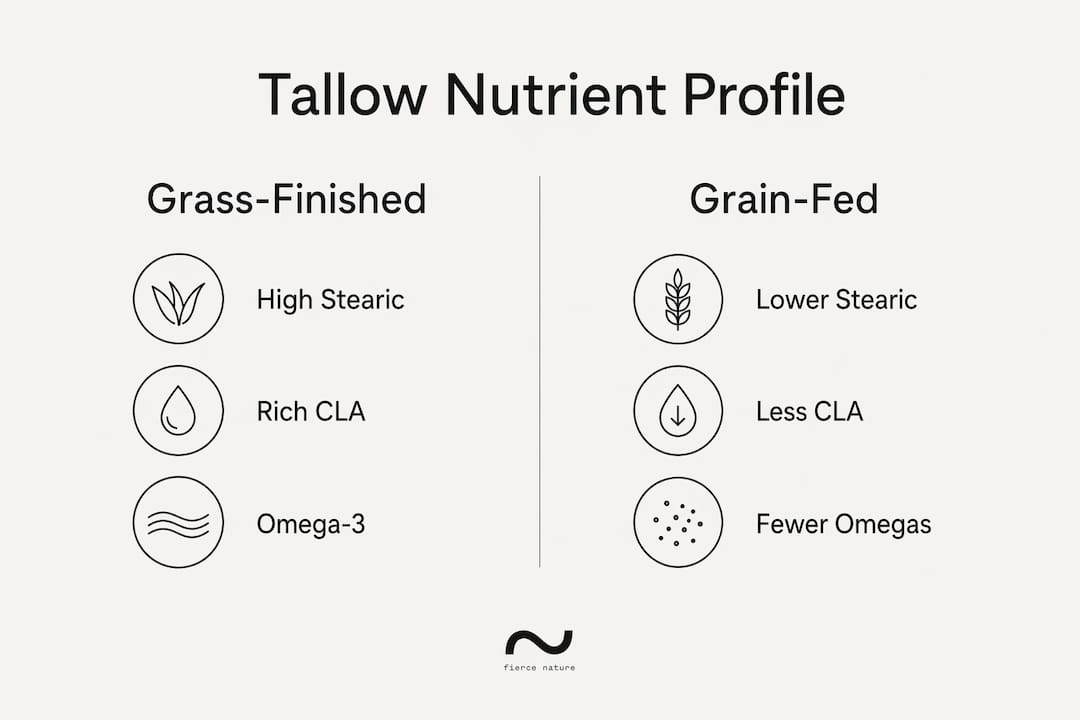
Ethically sourced tallow is defined by three non-negotiable criteria: the cattle must be grass-fed and grass-finished, raised without synthetic hormones, and kept free from routine antibiotic use. “Grass-fed” alone is not enough. Grass-finished means the animal ate only pasture its entire life, not just during early growth before being moved to grain in a feedlot. That distinction changes everything about the fat’s composition.
Grass-finished tallow contains up to 36% more stearic acid than grain-fed tallow. Stearic acid is one of the key fatty acids that supports the skin barrier and gives tallow its firm, nourishing texture. More stearic acid means deeper nourishment and a more stable product on your skin.
The absence of synthetic hormones and antibiotics matters equally. Conventional grain-fed tallow can carry hormone residues and has a lower omega-3 content, both of which affect how the fat interacts with sensitive skin. Ethically sourced fat starts clean, and that purity carries through to the finished skincare product.
The production process is as important as the sourcing criteria. Tallow is made by slowly rendering, or melting, beef fat at a low temperature to separate the pure fat from any connective tissue or moisture. The quality of the starting material determines the quality of the final product.
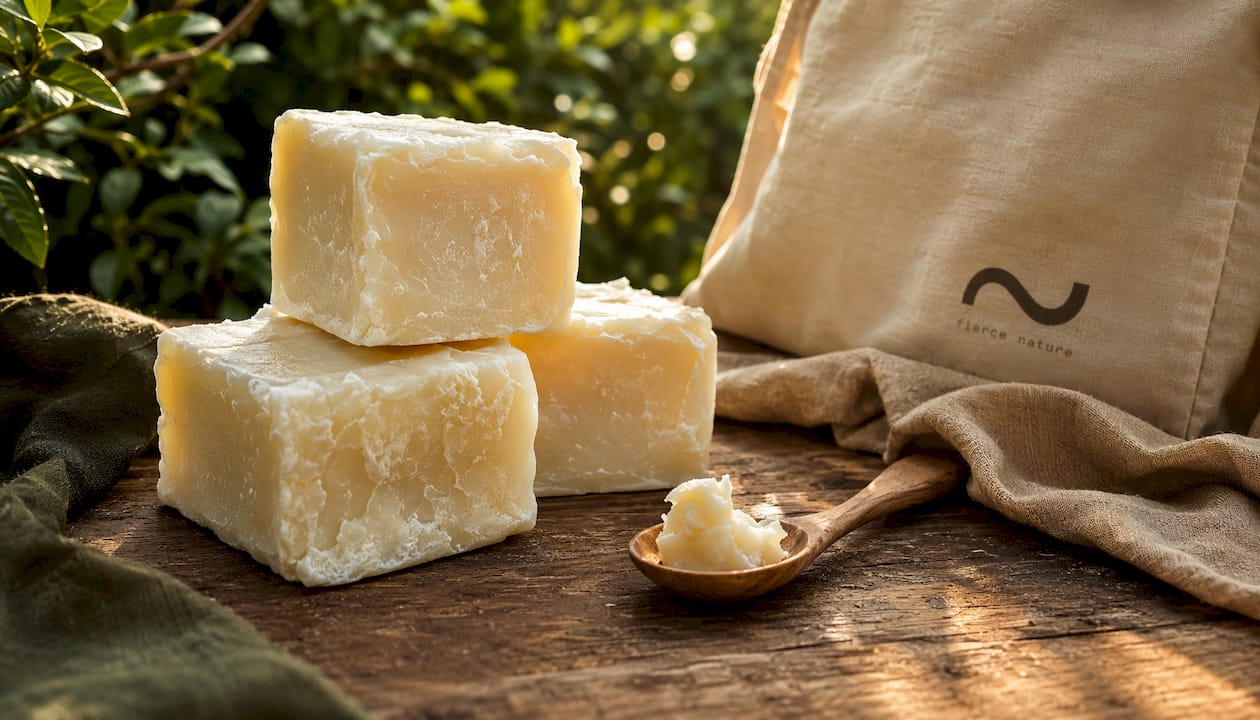
The best tallow comes from suet, the hard fat found around the kidneys and loins. Suet-rendered tallow produces a harder, more stable, and more neutral-smelling product than fat trimmed from other parts of the animal. This matters enormously in skincare, where scent and stability affect both the user experience and shelf life.
Fat trimmings from other cuts contain more connective tissue and moisture. They yield a softer, less stable tallow with a stronger animal scent. For skincare formulations, suet is not a preference. It is a quality requirement.
Tallow rendering involves slowly melting and filtering the fat twice to remove impurities while preserving its natural character. No additives are used. The result is a clean, shelf-stable fat that retains its full nutrient profile. This traditional technique is what makes tallow suitable for direct skin application.
Key production standards for genuinely ethical tallow include:
Pro Tip: Ask any tallow skincare brand whether their fat comes from suet specifically or from general trimmings. If they cannot answer, the product almost certainly uses lower-grade fat.
The source of tallow determines its fatty acid composition, and that composition determines how your skin responds. Tallow from grass-fed, grass-finished cattle has a fatty acid profile closely resembling human skin lipids, primarily stearic acid, oleic acid, and palmitic acid. This similarity is why tallow integrates into the skin barrier rather than sitting on top of it like a film.
Oleic acid supports moisture retention and softens the skin. Palmitic acid reinforces the skin barrier. Stearic acid repairs and firms. Together, these three fatty acids work with your skin’s own lipid structure, not against it. That is what makes tallow a genuine skin food rather than a surface moisturiser.
Grass-fed, grass-finished tallow contains higher levels of conjugated linoleic acid (CLA) and omega-3 fatty acids, both of which have well-documented anti-inflammatory properties. For people with sensitive, reactive, or redness-prone skin, this is the difference between a formula that calms and one that does nothing. CLA supports the skin’s natural repair process and helps reduce the visible signs of inflammation.
You can also read more about tallow’s biocompatibility with human skin cells to understand the biological rationale in greater depth.
| Nutrient or property | Grass-fed, grass-finished tallow | Grain-fed, conventional tallow |
|---|---|---|
| Stearic acid content | High (up to 36% more) | Lower |
| CLA and omega-3 levels | Elevated | Minimal |
| Hormone residues | None | Possible |
| Skin barrier integration | Strong | Weaker |
| Scent (suet-rendered) | Neutral | Stronger animal scent |
| Anti-inflammatory potential | High | Low |
The gap between these two profiles is not marginal. It is the difference between a product that actively nourishes your skin and one that simply coats it. For those with grass-fed tallow in skincare as a priority, the sourcing question is non-negotiable.
Choosing ethically sourced tallow is not only a skincare decision. It is a values decision. Pasture-raising cattle without synthetic hormones or routine antibiotics supports animal welfare and reduces the environmental burden associated with intensive farming. Animals raised on open pasture live in conditions aligned with their natural behaviour, which is a meaningful distinction from feedlot production.
The nose-to-tail philosophy sits at the core of ethical tallow sourcing. Tallow is a by-product of the meat industry. Using it in skincare reduces waste by ensuring that every part of the animal contributes value. This is the opposite of the extractive, single-use thinking that drives so much of conventional cosmetics production.
The environmental benefits of tallow-based skincare extend further. Pasture-raised farming supports soil health through natural grazing cycles. It avoids the synthetic fertilisers and pesticides associated with monoculture feed crops. And it produces a skincare ingredient that is fully biodegradable, unlike the petrochemical derivatives found in most conventional moisturisers.
Key ethical sourcing principles to look for in a brand:
Pro Tip: A brand that genuinely sources ethically will be able to tell you the country of origin, the farming standard, and whether the fat is suet-derived. Vague answers like “high-quality beef fat” are a red flag.
Consumers who care about clean beauty are increasingly aware that ingredient ethics and environmental impact are connected. Choosing a tallow product from a brand with full sourcing transparency is one of the most direct ways to align your skincare with your values. You can also explore how natural ingredients like whipped body butters compare when reading ingredient labels for sourcing claims.
Reading a label correctly is a skill. Most tallow products do not volunteer the information you need, so you have to know what to ask and what to look for.
Brands that cannot specify their tallow’s origin or the animal raising practices used almost certainly do not meet ethical standards. Genuine ethical sourcing is something producers are proud to communicate. Silence or vagueness is a reliable signal of a lower standard.
Use this checklist when evaluating any tallow skincare product:
The term “ethically sourced” is not regulated in the UK cosmetics industry, which means any brand can use it without meeting a defined standard. Your best protection is asking direct questions and choosing brands that answer them clearly. Fierce Nature publishes its sourcing standards openly because we believe you deserve to know exactly what you are putting on your skin.
Ethically sourced tallow is defined by grass-fed, grass-finished cattle, suet-derived rendering, and the complete absence of synthetic hormones and antibiotics, producing a skin-compatible fat that conventional tallow cannot match.
| Point | Details |
|---|---|
| Grass-finished is the key standard | Grass-fed alone is insufficient; grass-finished means pasture diet for the animal’s entire life. |
| Suet produces superior tallow | Suet-rendered tallow is harder, more stable, and more neutral-smelling than general fat trimmings. |
| Fatty acid profile drives skin results | Higher stearic acid and CLA in ethical tallow support barrier repair and reduce inflammation. |
| Nose-to-tail sourcing reduces waste | Using tallow as a by-product of meat farming aligns with sustainable, low-waste production values. |
| Label transparency is your best tool | Brands that cannot name their fat’s origin or farming standard rarely meet genuine ethical criteria. |
When we first started formulating with tallow at Fierce Nature, the sourcing question felt straightforward. It was not. We quickly discovered that “grass-fed” on a supplier’s invoice meant very little without knowing whether the cattle were grain-finished before slaughter. We reformulated. We asked harder questions. We found farms that could answer them.
What surprised us most was how much the quality of the fat changed the finished product. Suet-rendered, grass-finished tallow has a noticeably different texture and scent profile compared to general beef fat. It melts more cleanly into the skin. It does not leave a heavy residue. The difference is immediate and tactile, not just theoretical.
The consumer education gap in this space is significant. Most people shopping for natural skincare do not know that “tallow” on a label could mean anything from premium suet from a pasture-raised animal to rendered trimmings from a feedlot. That gap is not accidental. It benefits brands that want to use the word “natural” without meeting the standard.
We believe the future of ethical beauty depends on producers being willing to name their sources, explain their methods, and hold themselves to standards that go beyond what regulation currently requires. Transparency is not a marketing strategy for us. It is the baseline. If a skincare ingredient cannot be traced to a specific farming practice, it has no place in a product we would put on our own skin, or yours.
— Fierce Nature
At Fierce Nature, every product is built on pure, suet-rendered tallow from grass-fed, grass-finished cattle raised without synthetic hormones or routine antibiotics. We handcraft our products in the UK using ingredients we can trace and standards we can name. Our multi-use tallow bar is a direct expression of that commitment, delivering deep nourishment with nothing hidden in the formula. For the most sensitive skin of all, our non-toxic baby skin essentials apply the same sourcing rigour to products designed for newborns. When the ingredient is this pure, the skin simply responds.
Ethically sourced tallow is animal fat rendered from cattle that are grass-fed, grass-finished, and raised without synthetic hormones or routine antibiotics. These standards ensure a cleaner fat with a superior fatty acid profile for skincare use.
No. Tallow from grass-finished, suet-rendered cattle contains significantly more stearic acid and CLA than grain-fed alternatives. Grass-finished tallow can contain up to 36% more stearic acid, which directly affects skin nourishment and barrier support.
Suet is the hard fat surrounding the kidneys and loins. Suet-rendered tallow is harder, more stable, and more neutral-smelling than tallow made from general fat trimmings, making it the preferred source for skincare formulations.
Look for the terms “grass-finished,” “hormone-free,” “antibiotic-free,” and “suet-rendered” on the label. Brands that cannot specify their fat’s origin or farming standard almost certainly do not meet genuine ethical sourcing criteria.
Yes. The elevated CLA and omega-3 content in grass-fed, grass-finished tallow has well-documented anti-inflammatory properties, making it particularly well-suited to sensitive, reactive, or redness-prone skin.

TL;DR:
- Natural skin moisturizers fall into three categories: humectants, emollients, and occlusives, each serving a distinct role. Combining all three helps prevent water loss, replenish lipids, and deeply hydrate the skin. Properly layering these ingredients based on skin type enhances overall skin health and resilience.
Natural skin moisturisers fall into three functional categories: humectants, emollients, and occlusives. Each type plays a distinct role in keeping your skin hydrated, resilient, and radiant. Understanding these types of natural skin moisturisers helps you choose ingredients that genuinely work with your skin rather than simply sitting on its surface. The science is clear: effective moisturisers combine all three to prevent transepidermal water loss (TEWL), replenish lipids, and draw moisture deep into the skin. Whether you are building a DIY routine or selecting plant-based skin hydration products, knowing what each category does is the foundation of everything.
Humectants are water-attracting molecules that pull moisture into the outer layer of the skin, known as the stratum corneum. They work by binding to water molecules from both the environment and the deeper layers of your skin. The result is a plumping, softening effect that makes skin feel immediately more supple.
Popular natural humectants include:
Humectants work best when layered under an emollient or occlusive. Used alone in dry climates, they can actually draw moisture out of the skin rather than from the air. This is the most common mistake people make with hyaluronic acid serums.
Pro Tip: Apply your humectant to slightly damp skin, then immediately follow with an emollient or occlusive to seal the moisture in. This single step dramatically improves results.
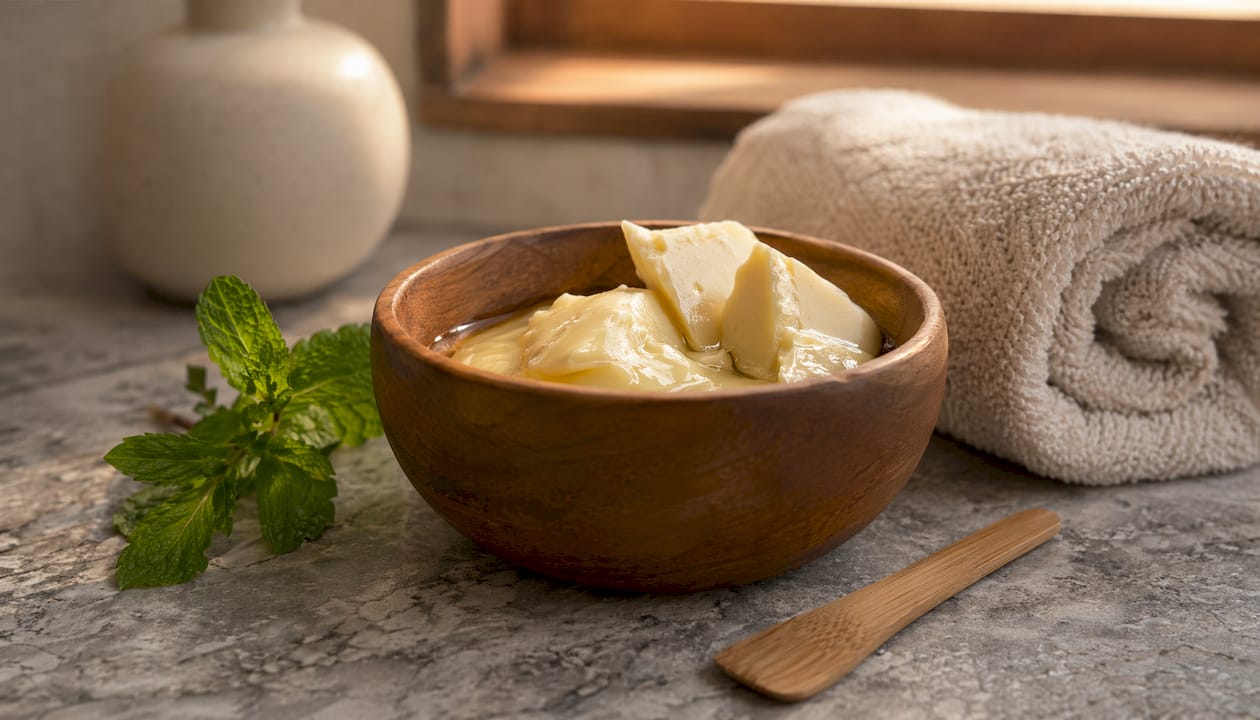
Emollients fill the microscopic gaps between skin cells, smoothing the surface and restoring flexibility to the skin barrier. They do not add water to the skin. Instead, they make the barrier more functional so that the skin retains the moisture it already holds.
Natural emollients worth knowing include:
One important distinction is stability. Saturated fats like tallow and shea butter provide longer-lasting, more stable moisturising barriers than many unsaturated plant oils, which are prone to oxidation. Oxidised oils can irritate the skin rather than nourish it. This is why shelf life matters when choosing natural emollients.
For oily or combination skin, lighter emollients like squalane or jojoba are the better choice. For dry or mature skin, richer options like argan oil, shea butter, or tallow deliver more substantial nourishment. Bio-ceramides are another category worth noting: they are lipid molecules that replenish the skin’s natural barrier structure, particularly useful for compromised or sensitive skin.
Pro Tip: If you are prone to breakouts, choose jojoba or squalane over coconut oil on your face. Coconut oil is highly comedogenic for many skin types, despite its natural credentials.
Occlusives form a physical barrier on the skin’s surface that slows water evaporation. They are the heaviest of the three moisturiser types and the most effective at reducing TEWL. Natural occlusives like beeswax and tallow can reduce transepidermal water loss by up to 99%, making them genuinely powerful barrier agents.
Common natural occlusives include:
Occlusives are especially beneficial in cold or windy weather, overnight treatments, and for very dry or cracked skin. They are not ideal as standalone daytime products for oily or acne-prone skin, as heavy occlusion can trap sebum and contribute to congestion. The solution is to use them sparingly, or to choose a lighter occlusive like a thin layer of beeswax-based balm rather than a thick ointment.
Pro Tip: Use an occlusive as the final step in your evening routine. Apply it over a humectant and emollient while your skin is still slightly warm from cleansing. The warmth helps the barrier layer absorb more effectively.
Layering humectants, emollients, and occlusives in the correct order is more effective than using any single oil or butter alone. The principle is straightforward: start with the most water-like products and finish with the most occlusive.
The recommended layering order is:
This sequence works because each layer supports the next. The humectant draws water in. The emollient holds the skin cells together. The occlusive prevents evaporation. Skipping any step reduces the overall benefit.
Adapting this routine to your skin type makes a real difference:
Formulation bioavailability and adherence impact success more than any single ingredient. A well-layered routine with simple, stable ingredients outperforms an expensive single product used incorrectly. Ingredient stability also matters here: plant oils high in polyunsaturated fats (like rosehip or flaxseed oil) oxidise quickly and should be stored in dark, cool conditions and used within three to six months of opening.
Pro Tip: If you want to simplify your routine, look for a product that already combines all three moisturiser types. A well-formulated tallow balm, for example, acts as emollient and occlusive in one step. Add a glycerin or aloe vera serum underneath and you have a complete routine in two products.
For a deeper look at sequencing your natural products correctly, the guide on skincare layering order covers every step in detail.
Beyond the well-known oils and butters, a range of botanical ingredients offer genuine moisturising benefits that rarely get the attention they deserve.
Kukui oil is pressed from the nuts of the kukui tree, native to Hawaii. It is exceptionally lightweight and absorbs rapidly, making it one of the better natural moisturiser options for oily or acne-prone skin. It is rich in linoleic and alpha-linolenic acids, which support barrier repair.
Illipe butter melts at skin temperature, giving it a uniquely comfortable feel. It is less widely available than shea butter but offers similar emollient and mild occlusive properties. It is a good shea butter alternative for those who find shea too heavy.
Chamomile-infused oils are a simple homemade option. Steep dried chamomile flowers in a carrier oil (such as jojoba or sunflower) for four to six weeks, then strain and use the infused oil as an emollient. Chamomile contains bisabolol, a compound known to calm irritation and support skin repair.
A few safety and sourcing considerations:
Understanding skin hydration at a deeper level helps you make better choices about which ingredients your skin genuinely needs versus which ones are simply trending.
Natural skin moisturisers work best when humectants, emollients, and occlusives are combined and layered in the correct order, with ingredient stability and skin type guiding every choice.
| Point | Details |
|---|---|
| Three functional types | Humectants attract water, emollients smooth the barrier, and occlusives seal moisture in. |
| Layering order matters | Apply humectant first, then emollient, then occlusive for the best hydration results. |
| Stability affects results | Saturated fats like tallow and shea butter resist oxidation better than most unsaturated plant oils. |
| Oily skin needs moisture too | Skipping moisturiser triggers excess sebum; use lightweight emollients like squalane or jojoba. |
| Patch test everything new | Always test homemade or unfamiliar ingredients on your inner arm before applying to your face. |
The most persistent myth in natural skincare is that a single oil can do everything. People reach for coconut oil, rosehip oil, or argan oil expecting complete hydration. What they get is partial results, because no single ingredient covers all three moisturising functions.
The second myth is that natural means safe for everyone. Essential oils, nut-derived butters, and even some plant waxes can trigger reactions in sensitive individuals. “Natural” describes origin, not suitability. Patch testing is not optional; it is the most important step in any new skincare routine.
Ingredient stability is the conversation the natural skincare world largely avoids. Unsaturated plant oils like rosehip, flaxseed, and evening primrose are genuinely beneficial, but they oxidise quickly. An oxidised oil applied to your skin is not nourishing; it is pro-inflammatory. This is why we at Fierce Nature build our formulations around tallow as the primary emollient and occlusive base. Tallow is a saturated fat. It is stable, deeply compatible with human skin, and has centuries of use behind it. We add antioxidants like Vitamin E to further protect the integrity of each product.
The final point worth making is about oily skin. Oily skin does not need less moisture; it needs the right kind. Skipping moisturiser causes sebum overproduction as a compensatory response. A lightweight emollient like squalane or jojoba, applied after a humectant, gives oily skin what it needs without congestion. The skin calms down. Breakouts reduce. This is one of the most consistent observations we have made working with people who previously avoided moisturiser altogether.
Choose your ingredients with intention. Let your skin’s actual needs guide you, not the ingredient of the moment.
— Fierce Nature
At Fierce Nature, every product is built around the three moisturiser types covered in this guide. The Selfie Stick Natural Unscented combines emollient and occlusive properties in a fragrance-free, skin-kind formula, making it ideal for sensitive or reactive skin. The Luxe Face Balm delivers rich nourishment for dry and mature skin, with tallow as its emollient and occlusive foundation. For a touch of colour alongside barrier support, the Nourish Balm with Rose Tint offers organic tallow-based care with a warm, natural finish. All products are handmade in the UK using premium, naturally sourced ingredients with no synthetic fillers.
The three types are humectants, emollients, and occlusives. Humectants attract water, emollients smooth and soften the skin barrier, and occlusives create a protective layer that prevents moisture from evaporating.
Yes. Oily skin still needs moisturisation. Skipping it can trigger excess sebum production. Choose lightweight, non-comedogenic emollients like squalane or jojoba oil, and use a minimal or no occlusive layer during the day.
Apply humectant first to damp skin, follow with an emollient, and finish with an occlusive. This sequence draws moisture in, smooths the barrier, and then seals everything in place.
Homemade moisturisers can be safe when made with stable, patch-tested ingredients. Store them in dark glass containers, use within three months, and avoid undiluted essential oils directly on the skin.
Oxidised plant oils are a common cause of irritation. Unsaturated oils like rosehip and flaxseed degrade quickly when exposed to light, heat, or air. Always store natural oils correctly and replace them regularly to avoid applying rancid product to your skin.
TL;DR:
- A high-quality face balm can replace many skincare products by providing moisturization, cleansing, priming, and repair in one formula. Its oil and wax base ensure longer-lasting active ingredients, deep hydration, and strengthened skin barriers. Using fewer products aligns with slow beauty principles and supports healthier, more resilient skin over time.
A good face balm is not just a moisturiser. It is a concentrated, oil and wax-based formulation that works as a moisturiser, primer, cleanser, face mask, and protective barrier all at once, replacing several separate products with a single, nourishing step.
Unlike water-based creams or gels, face balms contain no added water. That means active ingredients stay on the skin longer, penetrating more deeply and holding moisture in rather than evaporating. The result is sustained hydration and a strengthened skin barrier, not just a temporary softening effect.
Here is what a quality face balm can replace in your routine:
The multi-use skincare case for face balms is straightforward. Fewer products mean fewer ingredients competing on your skin, less risk of irritation, and a routine you can actually keep up with.
Face balms are especially beneficial for dry, sensitive, or ageing skin. Their oil and wax base creates a protective layer that slows moisture loss, which is particularly valuable overnight when the skin naturally repairs itself. Consumers who switch to face balms regularly report improved skin resilience and a simpler, more consistent routine.
Replacing five or six products with one well-formulated balm reduces your monthly spend considerably. A single quality balm tends to last longer than a lightweight cream too, because you use far less per application.
Using one product instead of many cuts packaging waste and reduces the number of deliveries needed to maintain your routine. Choosing products that align with a sustainable lifestyle extends that mindset beyond skincare.
A pared-back routine is one you will actually follow. When your entire evening skincare takes thirty seconds, consistency becomes effortless rather than aspirational.
Pro Tip: Apply your face balm to slightly damp skin after cleansing. The balm seals in that residual moisture, giving you noticeably deeper hydration with no extra steps.
Slow beauty is a growing philosophy, particularly among those who have grown tired of ten-step routines and shelves crowded with half-used bottles. It prioritises long-term skin barrier health over quick fixes, choosing fewer, higher-quality products that work with your skin rather than overwhelming it.
Face balms are a natural fit for this approach. Their rich, natural formulations nourish the skin without the synthetic fillers, preservatives, and fragrances that accumulate when you layer multiple products. Reducing that chemical load is not just about simplicity. It genuinely supports skin health over time, particularly for those with sensitivity or reactive skin.
The organic skincare ingredients in quality balms, such as plant-based oils, beeswax, and organic tallow, are bioavailable. Your skin recognises and absorbs them readily, rather than sitting on the surface or causing congestion.
Pro Tip: When choosing a slow beauty balm, look for organic certification and a short ingredient list. If you cannot pronounce most of what is listed, that product is working against the philosophy.
A face balm works best when you treat it as a skin food rather than a finishing step. Here is how to get the most from it:
Dry and sensitive skin types benefit most from daily use. If your skin leans oily, focus balm application on drier zones such as the cheeks, brow bone, and lip area, and use it primarily at night.
Pro Tip: In winter, swap your usual moisturiser entirely for a face balm in the evening. The richer texture compensates for the moisture your skin loses in cold, dry air.
Fierce Nature was built on a simple conviction: that the promises made by mainstream beauty products are largely hollow, and that real skin nourishment comes from the land, not a laboratory. Every product is handmade in the UK using naturally sourced ingredients, with organic tallow as the foundation.
Tallow has been used for centuries as a skin emollient. Its bioavailability means it penetrates deeply rather than sitting on the surface, delivering genuine nourishment where the skin needs it most. The Luxe Balm brings this together in a premium, multi-use formulation that replaces your moisturiser, primer, and overnight mask in one jar. For daily protection, the Sun Balm SPF 50+ adds a natural shield without synthetic chemicals. For sensitive or dry skin anywhere on the body, the Nourish Balm offers the same deep, clean nourishment unscented.
No toxic load. No unnecessary complexity. Just skin that is genuinely fed.
A face balm replaces multiple skincare products because its oil and wax base delivers sustained hydration, barrier repair, and nourishment in a single, versatile step.
| Point | Details |
|---|---|
| Multi-use by design | One balm covers moisturising, cleansing, priming, masking, and spot nourishment. |
| Deeper hydration | Oil and wax formulas contain no water, so active ingredients stay on skin longer. |
| Slow beauty alignment | Fewer products reduce chemical load and support long-term skin barrier health. |
| Environmental benefit | One product means less packaging waste and fewer deliveries over time. |
| Fierce Nature approach | Handmade UK tallow balms offer bioavailable, non-toxic nourishment across multiple uses. |
A face balm is an oil and wax-based moisturiser with no added water, making it richer and longer-lasting than a cream. It penetrates more deeply and holds moisture in the skin more effectively.
Face balms work best for dry, sensitive, and ageing skin. Those with oily skin can still benefit by applying balm to drier zones or using it only at night.
For many people, yes. A quality face balm covers moisturising, cleansing, priming, and overnight repair, reducing the need for multiple separate products.
Organic tallow is highly bioavailable, meaning the skin absorbs it readily rather than sitting on the surface. It has been used as a skin emollient for centuries and supports deep nourishment and barrier repair.
Fewer products mean fewer potential irritants and a lower chemical load on the skin. This supports the skin’s natural barrier function and reduces the risk of sensitivity reactions over time.
Your daily moisturiser, lipstick, and shampoo may contain chemicals linked to hormone disruption, allergic reactions, and long-term health concerns. Here is the checklist we at Fierce Nature believe every UK consumer deserves to have before they shop.
Chemicals to check for and avoid:
On the packaging, check for:
Pro Tip: Ingredients are listed in descending order of concentration. If a concerning chemical appears in the first five ingredients, it makes up a meaningful portion of the formula. Scan the top of the list first, not just the bottom.
Learning to read cosmetic ingredient labels confidently is one of the most protective habits you can build.
Parabens, phthalates, and synthetic fragrances are linked to hormone disruption, carcinogenicity, and allergic reactions. These are not theoretical risks sitting in obscure research papers. Regulatory bodies across the UK and EU have acted on this evidence by restricting or banning many of these substances.
The mechanisms vary by chemical. Parabens mimic oestrogen in the body, potentially interfering with reproductive health. Formaldehyde releasers work by slowly breaking down and releasing formaldehyde gas onto the skin, which is a recognised carcinogen. BHA and BHT can accumulate in body tissue over time, and their hormone-disrupting properties have prompted restrictions in several product categories.
Microplastics present a different kind of concern. They have been found in human biological samples, raising questions about systemic toxicity that scientists are still working to fully understand. Their persistence in the environment compounds the problem beyond individual health.
A summary of key chemical effects:
Since 2026, sixteen new carcinogenic, mutagenic, or reproductive toxins have been banned in UK cosmetics, strengthening the legal framework around consumer protection. The full list of newly banned toxic chemicals is worth bookmarking.
The British Skin Foundation consistently highlights that skin conditions including contact dermatitis are frequently triggered by cosmetic ingredients, particularly preservatives and fragrances. Skin is not a barrier that stops everything. Many of these molecules are small enough to penetrate and enter the bloodstream.
Not all cosmetics carry equal risk. Certain product categories are more likely to contain problematic chemicals, either because of their formulation requirements or because they attract less regulatory scrutiny in some supply chains.
Skin-whitening creams and black spot treatments are regularly flagged in UK safety reports for containing banned substances, including mercury compounds and hydroquinone. These products are sometimes sold through informal channels or online marketplaces where compliance checks are weaker.
Product types to approach with particular care:
Pro Tip: Products sold via third-party online marketplaces may not meet UK cosmetic safety standards. Always buy from a brand’s own website or a verified UK retailer, and check that the Responsible Person’s address is clearly listed.
UK cosmetic products must display a named Responsible Person with a physical UK or EU address. This is a legal requirement, not a courtesy. Its absence is one of the clearest signals that a product has not been properly assessed for safety before reaching the market.
Since leaving the EU, the UK operates its own cosmetic regulations under the UK Cosmetics Regulation, which broadly mirrors the EU framework but is administered separately. Packaging must include a full ingredient list in English, use directions, any relevant warnings, a batch number, and country of origin. Products with a shelf life under 30 months must carry a best-before date.
Consumer protection checklist:
Understanding why UK skincare regulations differ from EU rules post-Brexit helps you spot products that may comply with one framework but not the other.
Pro Tip: The OPSS publishes product safety alerts and recalls. Searching a product name or brand there before purchasing takes under a minute and can save you from a harmful experience.
A single word on a label, “Parfum” or “Fragrance,” can conceal a blend of up to 300 individual chemicals. Many of these are allergens; others are endocrine disruptors or respiratory irritants. The term is a legal catch-all that gives manufacturers wide latitude to protect trade secrets, but it leaves consumers with very little information.
Common reactions to fragrance chemicals include allergic contact dermatitis, asthma flare-ups, and headaches. People with eczema or rosacea are particularly vulnerable, as fragrance is one of the most common triggers for flare-ups identified by dermatologists.
Fragrance-related ingredients to watch for:
Choosing fragrance-free products, or those scented only with clearly named essential oils at low concentrations, is the most reliable way to reduce fragrance-related risk. A product labelled “unscented” may still contain masking fragrances, so “fragrance-free” is the term to look for. For a reassuring example of transparent ingredient use, the Wren Go-To Balm is worth exploring for its clear approach to ingredient safety.
Patch testing is the simplest protective step you can take when trying any new product. Apply a small amount to the inside of your wrist or behind your ear, leave it for 24–48 hours, and watch for redness, itching, or swelling before using it more widely. It takes almost no time and can prevent days of discomfort.
Beyond patch testing, building a habit of reading labels carefully pays off quickly. Prioritise brands that list every ingredient clearly, name their Responsible Person, and avoid vague terms like “natural complex” or “botanical blend” without specifics. Transparency is one of the most honest signals a brand can give you.
Daily habits and safer ingredient alternatives:
At Fierce Nature, we build every product around pure organic tallow and clearly named natural ingredients, with no hidden fragrance blends and no synthetic preservatives. Tallow’s bioavailability means it works with your skin, not against it, delivering nourishment that genuinely penetrates rather than sitting on the surface.
Pro Tip: Simplifying your routine to five or fewer products dramatically reduces your daily toxic load. Start by swapping the product you use most frequently, as that is where cumulative exposure is highest.
If you are ready to make a change, our non-toxic skincare range is a good place to start, including the Multi-Use Tallow Bar for those who want a genuinely clean, nourishing daily staple.
If you believe a cosmetic product has caused you harm or is non-compliant, you have clear routes to report it. The Office for Product Safety and Standards (OPSS) is the primary UK authority for cosmetic product safety. You can report unsafe products directly through the GOV.UK website, and the OPSS publishes recall notices and safety alerts that are publicly searchable.
The British Skin Foundation offers consumer resources on skin conditions triggered by cosmetic ingredients, including guidance on identifying allergens and when to seek dermatological advice. Their website is a reliable starting point if you are experiencing a reaction and want to understand its likely cause.
For ingredient research, CosmEthics and INCI Beauty are free tools that allow you to search any ingredient by its INCI name and see its safety rating, regulatory status, and known concerns. Neither replaces professional medical advice, but both give you a fast, informed starting point.
Trading Standards, accessible through your local council, handles complaints about mislabelled or fraudulently marketed cosmetics sold in the UK. If a product makes medical claims it cannot substantiate, or if labelling is in a language other than English with no translation, Trading Standards is the right body to contact.
Avoiding toxic cosmetics in the UK comes down to reading labels carefully, knowing which chemicals to refuse, and buying from brands that are transparent about every ingredient they use.
| Point | Details |
|---|---|
| Check for a Responsible Person | UK law requires a named individual with a physical address on every cosmetic product. |
| Avoid the top ten toxins | Parabens, phthalates, formaldehyde releasers, BHA/BHT, synthetic fragrances, and microplastics carry the highest documented risks. |
| High-risk product categories | Skin-whitening creams, hair relaxers, and nail varnishes are most frequently flagged in UK safety reports. |
| Several new bans since 2026 | Sixteen carcinogenic, mutagenic, or reproductive toxins were added to the UK banned list in 2026. |
| Patch test every new product | Apply to the wrist or behind the ear for 24–48 hours before full use to catch reactions early. |
The most important ones to avoid are parabens, phthalates, formaldehyde releasers, BHA, BHT, synthetic fragrances (listed as “Parfum”), microplastics, hydroquinone, mercury compounds, and coal tar dyes. These are linked to hormone disruption, carcinogenicity, and allergic reactions.
Check that the label carries a named Responsible Person with a physical UK or EU address, a full ingredient list in English, a batch number, and any required warnings. Products missing these details may not have passed the mandatory safety assessment.
Products labelled “fragrance-free” are generally safer for sensitive skin than those labelled “unscented,” which can still contain masking fragrances. Look for “fragrance-free” specifically, and cross-check the ingredient list for individual fragrance chemicals such as linalool or limonene.
Sixteen new carcinogenic, mutagenic, or reproductive toxins were banned in UK cosmetics in 2026, strengthening existing protections. The UK now administers its own cosmetics regulation separately from the EU, though the frameworks remain broadly aligned.
Report unsafe cosmetics to the Office for Product Safety and Standards (OPSS) via GOV.UK, or contact your local Trading Standards office for issues related to mislabelling or fraudulent marketing claims.
TL;DR:
- Ethically sourced tallow is made from grass-fed, grass-finished cattle raised without hormones or antibiotics, ensuring a pure and nutrient-rich fat for skincare. It contains higher levels of beneficial fatty acids like stearic acid and CLA, which support skin barrier repair and reduce inflammation. The source and production process are crucial, with suet-rendered fat from quality farms delivering the best results and supporting sustainable, low-waste practices.
Ethically sourced tallow is animal fat rendered from cattle raised under strict welfare standards, including grass-fed, grass-finished diets free from synthetic hormones and routine antibiotics. This is the standard the natural skincare world calls “ethical sourcing,” and it matters far more than most labels let on. The difference between ethically sourced fat and conventional tallow is not cosmetic. It changes the fatty acid profile, the purity, and ultimately what your skin receives. At Fierce Nature, this distinction sits at the heart of every product we make.
Ethically sourced tallow is defined by three non-negotiable criteria: the cattle must be grass-fed and grass-finished, raised without synthetic hormones, and kept free from routine antibiotic use. “Grass-fed” alone is not enough. Grass-finished means the animal ate only pasture its entire life, not just during early growth before being moved to grain in a feedlot. That distinction changes everything about the fat’s composition.
Grass-finished tallow contains up to 36% more stearic acid than grain-fed tallow. Stearic acid is one of the key fatty acids that supports the skin barrier and gives tallow its firm, nourishing texture. More stearic acid means deeper nourishment and a more stable product on your skin.
The absence of synthetic hormones and antibiotics matters equally. Conventional grain-fed tallow can carry hormone residues and has a lower omega-3 content, both of which affect how the fat interacts with sensitive skin. Ethically sourced fat starts clean, and that purity carries through to the finished skincare product.
The production process is as important as the sourcing criteria. Tallow is made by slowly rendering, or melting, beef fat at a low temperature to separate the pure fat from any connective tissue or moisture. The quality of the starting material determines the quality of the final product.
The best tallow comes from suet, the hard fat found around the kidneys and loins. Suet-rendered tallow produces a harder, more stable, and more neutral-smelling product than fat trimmed from other parts of the animal. This matters enormously in skincare, where scent and stability affect both the user experience and shelf life.
Fat trimmings from other cuts contain more connective tissue and moisture. They yield a softer, less stable tallow with a stronger animal scent. For skincare formulations, suet is not a preference. It is a quality requirement.
Tallow rendering involves slowly melting and filtering the fat twice to remove impurities while preserving its natural character. No additives are used. The result is a clean, shelf-stable fat that retains its full nutrient profile. This traditional technique is what makes tallow suitable for direct skin application.
Key production standards for genuinely ethical tallow include:
Pro Tip: Ask any tallow skincare brand whether their fat comes from suet specifically or from general trimmings. If they cannot answer, the product almost certainly uses lower-grade fat.
The source of tallow determines its fatty acid composition, and that composition determines how your skin responds. Tallow from grass-fed, grass-finished cattle has a fatty acid profile closely resembling human skin lipids, primarily stearic acid, oleic acid, and palmitic acid. This similarity is why tallow integrates into the skin barrier rather than sitting on top of it like a film.
Oleic acid supports moisture retention and softens the skin. Palmitic acid reinforces the skin barrier. Stearic acid repairs and firms. Together, these three fatty acids work with your skin’s own lipid structure, not against it. That is what makes tallow a genuine skin food rather than a surface moisturiser.
Grass-fed, grass-finished tallow contains higher levels of conjugated linoleic acid (CLA) and omega-3 fatty acids, both of which have well-documented anti-inflammatory properties. For people with sensitive, reactive, or redness-prone skin, this is the difference between a formula that calms and one that does nothing. CLA supports the skin’s natural repair process and helps reduce the visible signs of inflammation.
You can also read more about tallow’s biocompatibility with human skin cells to understand the biological rationale in greater depth.
| Nutrient or property | Grass-fed, grass-finished tallow | Grain-fed, conventional tallow |
|---|---|---|
| Stearic acid content | High (up to 36% more) | Lower |
| CLA and omega-3 levels | Elevated | Minimal |
| Hormone residues | None | Possible |
| Skin barrier integration | Strong | Weaker |
| Scent (suet-rendered) | Neutral | Stronger animal scent |
| Anti-inflammatory potential | High | Low |
The gap between these two profiles is not marginal. It is the difference between a product that actively nourishes your skin and one that simply coats it. For those with grass-fed tallow in skincare as a priority, the sourcing question is non-negotiable.
Choosing ethically sourced tallow is not only a skincare decision. It is a values decision. Pasture-raising cattle without synthetic hormones or routine antibiotics supports animal welfare and reduces the environmental burden associated with intensive farming. Animals raised on open pasture live in conditions aligned with their natural behaviour, which is a meaningful distinction from feedlot production.
The nose-to-tail philosophy sits at the core of ethical tallow sourcing. Tallow is a by-product of the meat industry. Using it in skincare reduces waste by ensuring that every part of the animal contributes value. This is the opposite of the extractive, single-use thinking that drives so much of conventional cosmetics production.
The environmental benefits of tallow-based skincare extend further. Pasture-raised farming supports soil health through natural grazing cycles. It avoids the synthetic fertilisers and pesticides associated with monoculture feed crops. And it produces a skincare ingredient that is fully biodegradable, unlike the petrochemical derivatives found in most conventional moisturisers.
Key ethical sourcing principles to look for in a brand:
Pro Tip: A brand that genuinely sources ethically will be able to tell you the country of origin, the farming standard, and whether the fat is suet-derived. Vague answers like “high-quality beef fat” are a red flag.
Consumers who care about clean beauty are increasingly aware that ingredient ethics and environmental impact are connected. Choosing a tallow product from a brand with full sourcing transparency is one of the most direct ways to align your skincare with your values. You can also explore how natural ingredients like whipped body butters compare when reading ingredient labels for sourcing claims.
Reading a label correctly is a skill. Most tallow products do not volunteer the information you need, so you have to know what to ask and what to look for.
Brands that cannot specify their tallow’s origin or the animal raising practices used almost certainly do not meet ethical standards. Genuine ethical sourcing is something producers are proud to communicate. Silence or vagueness is a reliable signal of a lower standard.
Use this checklist when evaluating any tallow skincare product:
The term “ethically sourced” is not regulated in the UK cosmetics industry, which means any brand can use it without meeting a defined standard. Your best protection is asking direct questions and choosing brands that answer them clearly. Fierce Nature publishes its sourcing standards openly because we believe you deserve to know exactly what you are putting on your skin.
Ethically sourced tallow is defined by grass-fed, grass-finished cattle, suet-derived rendering, and the complete absence of synthetic hormones and antibiotics, producing a skin-compatible fat that conventional tallow cannot match.
| Point | Details |
|---|---|
| Grass-finished is the key standard | Grass-fed alone is insufficient; grass-finished means pasture diet for the animal’s entire life. |
| Suet produces superior tallow | Suet-rendered tallow is harder, more stable, and more neutral-smelling than general fat trimmings. |
| Fatty acid profile drives skin results | Higher stearic acid and CLA in ethical tallow support barrier repair and reduce inflammation. |
| Nose-to-tail sourcing reduces waste | Using tallow as a by-product of meat farming aligns with sustainable, low-waste production values. |
| Label transparency is your best tool | Brands that cannot name their fat’s origin or farming standard rarely meet genuine ethical criteria. |
When we first started formulating with tallow at Fierce Nature, the sourcing question felt straightforward. It was not. We quickly discovered that “grass-fed” on a supplier’s invoice meant very little without knowing whether the cattle were grain-finished before slaughter. We reformulated. We asked harder questions. We found farms that could answer them.
What surprised us most was how much the quality of the fat changed the finished product. Suet-rendered, grass-finished tallow has a noticeably different texture and scent profile compared to general beef fat. It melts more cleanly into the skin. It does not leave a heavy residue. The difference is immediate and tactile, not just theoretical.
The consumer education gap in this space is significant. Most people shopping for natural skincare do not know that “tallow” on a label could mean anything from premium suet from a pasture-raised animal to rendered trimmings from a feedlot. That gap is not accidental. It benefits brands that want to use the word “natural” without meeting the standard.
We believe the future of ethical beauty depends on producers being willing to name their sources, explain their methods, and hold themselves to standards that go beyond what regulation currently requires. Transparency is not a marketing strategy for us. It is the baseline. If a skincare ingredient cannot be traced to a specific farming practice, it has no place in a product we would put on our own skin, or yours.
— Fierce Nature
At Fierce Nature, every product is built on pure, suet-rendered tallow from grass-fed, grass-finished cattle raised without synthetic hormones or routine antibiotics. We handcraft our products in the UK using ingredients we can trace and standards we can name. Our multi-use tallow bar is a direct expression of that commitment, delivering deep nourishment with nothing hidden in the formula. For the most sensitive skin of all, our non-toxic baby skin essentials apply the same sourcing rigour to products designed for newborns. When the ingredient is this pure, the skin simply responds.
Ethically sourced tallow is animal fat rendered from cattle that are grass-fed, grass-finished, and raised without synthetic hormones or routine antibiotics. These standards ensure a cleaner fat with a superior fatty acid profile for skincare use.
No. Tallow from grass-finished, suet-rendered cattle contains significantly more stearic acid and CLA than grain-fed alternatives. Grass-finished tallow can contain up to 36% more stearic acid, which directly affects skin nourishment and barrier support.
Suet is the hard fat surrounding the kidneys and loins. Suet-rendered tallow is harder, more stable, and more neutral-smelling than tallow made from general fat trimmings, making it the preferred source for skincare formulations.
Look for the terms “grass-finished,” “hormone-free,” “antibiotic-free,” and “suet-rendered” on the label. Brands that cannot specify their fat’s origin or farming standard almost certainly do not meet genuine ethical sourcing criteria.
Yes. The elevated CLA and omega-3 content in grass-fed, grass-finished tallow has well-documented anti-inflammatory properties, making it particularly well-suited to sensitive, reactive, or redness-prone skin.