Cart
0
You may also like



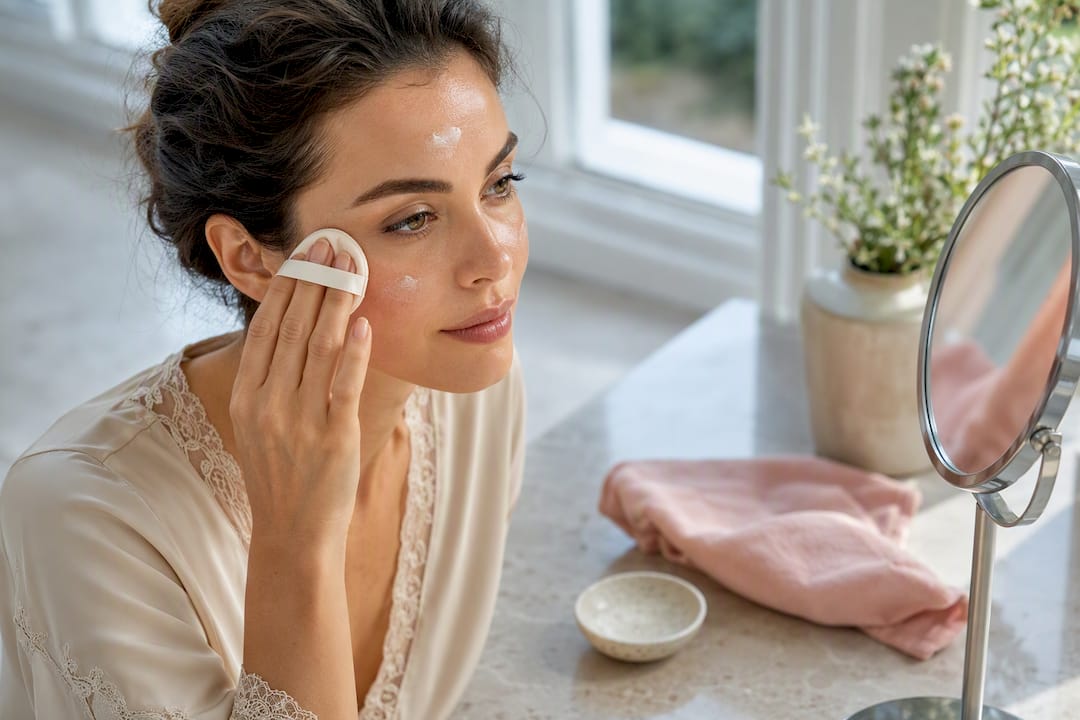
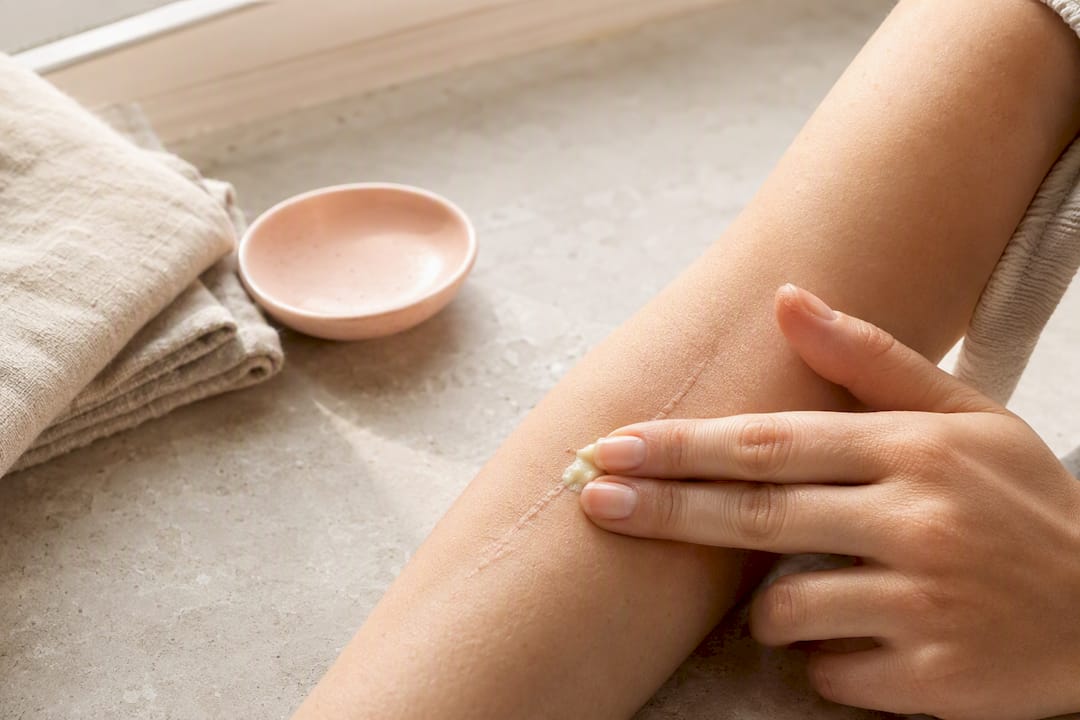
Yes, you can reapply sunscreen over makeup, and you don’t need to remove a single layer to do it properly. The most reliable touch-up methods are patting on a lotion with a clean sponge or cushion puff, dusting a mineral powder SPF, or using a setting mist correctly, ideally every two hours or straight after sweating or swimming. Start the day with a generous layer of sunscreen under your base, and every touch-up afterwards becomes genuinely supplemental rather than a rescue mission.
TL;DR:
- Reapplying sunscreen over makeup requires patting with a clean sponge or cushion, dusting powder SPF, or using a setting mist every two hours or after sweating or swimming.
- Proper layering includes applying sunscreen after moisturizer and before makeup, especially for physical versus chemical filters, to ensure adequate protection.
- Carrying a mini lotion SPF, a few sponges, a powder SPF compact, and blotting papers allows effective on-the-go touch-ups without removing makeup.
- Balm-based SPF formulas behave differently and work best when used as a full-face base or concentrated on high-exposure areas, with powders pairing better than sprays for top-ups.
- An adequate morning layer and consistent midday reapplications are crucial to maintaining SPF effectiveness, especially during high sun exposure or after activities that reduce protection.
The method you choose matters less than doing it correctly, and each technique has its own quirks worth knowing before you’re stood in a car park at lunchtime trying to fix your face in thirty seconds.
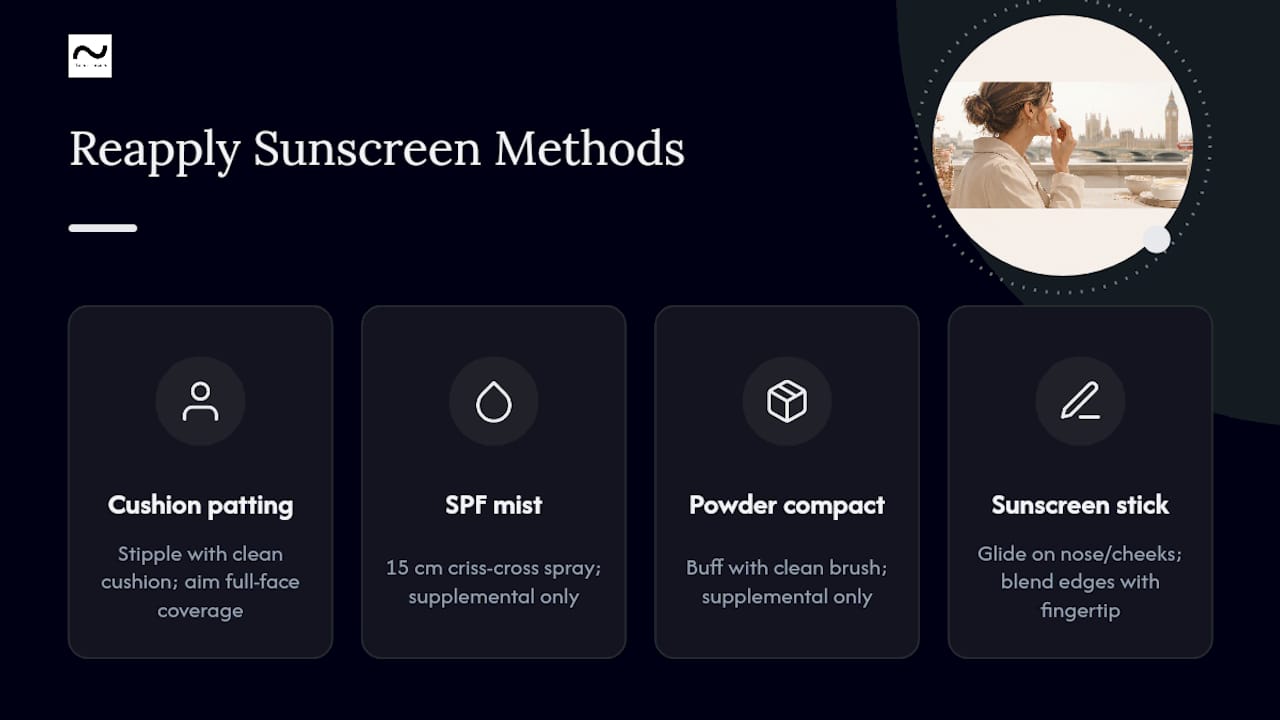
1. Sponge or cushion patting. Dispense a small amount of lotion sunscreen onto the back of your hand rather than straight onto your face. Load a clean cushion puff or thin sponge, then stipple, don’t drag, across your cheeks, forehead, nose, and chin. Cushion puffs and thin sponges actually work better here than big fluffy beauty sponges, because they pick up less product and waste less sunscreen, giving you a more controlled, even stamp with every pass. Aim to cover the whole face, not just the shiny bits.
2. SPF setting mists. Shake the can properly, hold it around 15 centimetres from your face, and mist in a criss-cross pattern across the whole face, closing your eyes and holding your breath for the pass. The catch: lab analysis has repeatedly found that sprays deliver a genuinely variable volume of product to skin, so what feels like enough may not be. Treat a mist as a top-up between more thorough reapplications, not your main defence.
3. Powder sunscreens and compacts. Swirl a clean brush into the compact, tap off the excess, and buff in small circles across the face, paying attention to the nose and cheekbones, which catch the most sun. Never double-dip a brush that’s touched your skin back into a shared compact, for hygiene’s sake. Deeper skin tones should look for translucent powder formulas, since many powder SPFs are cast in a limited, pale shade range.
4. Sunscreen sticks. These are brilliant for targeted spots, the nose, cheekbones, ears, and hairline, where sun exposure is heaviest and makeup thinnest. Glide the stick directly on, then blend the edges with a soft fingertip pat so it doesn’t sit as a visible stripe. Sticks are especially handy when you’re outdoors and don’t want to unpack a full kit.
Pro Tip: Powders and mists are supplemental by design. Independent research on sunscreen application has found that both formats are unlikely to deliver the labelled SPF on their own, so lean on a lotion pat-on or stick when your sun exposure is genuinely high, and save the powder for quick maintenance in between.
Everything hinges on what you put on first. A generous base layer applied before makeup means your midday touch-ups only need to top up protection, not build it from scratch, and that base layer under makeup does most of the actual work.
Most people apply far too little sunscreen in the morning to reach anything close to the SPF printed on the bottle. The NHS recommends SPF30 or higher for facial protection and advises against relying on a low-SPF moisturiser as your only defence, so check the label on your daily moisturiser before assuming it’s covering you.
A few practical rules for layering:
Statistic to remember: sunscreen doesn’t fail instantly, it degrades. Wear, sweat, and rubbing against clothing or hands all reduce protection through the day, which is exactly why reapplication isn’t a nice extra step, it’s the mechanism that keeps your SPF number meaningful past hour one.
You don’t need a make-up bag full of kit, just the right four things, kept together in one small pouch so you’re never caught out.
The sequence that actually works: blot first to lift oil and sweat, then pat or spritz your sunscreen, then set with a light dusting of powder if your skin runs oily. That order stops the sunscreen sliding around on a slick surface and stops the powder from clumping into wet product.
Reapply regularly throughout the day when you’re out in strong sun, and immediately after swimming, a heavy workout, or towelling your face dry, regardless of how much time has passed since your last application.
Pro Tip: Replace disposable sponges daily and give reusable puffs a proper wash every few days. A sponge that’s been sitting in a warm bag since Tuesday is not something you want anywhere near your face.
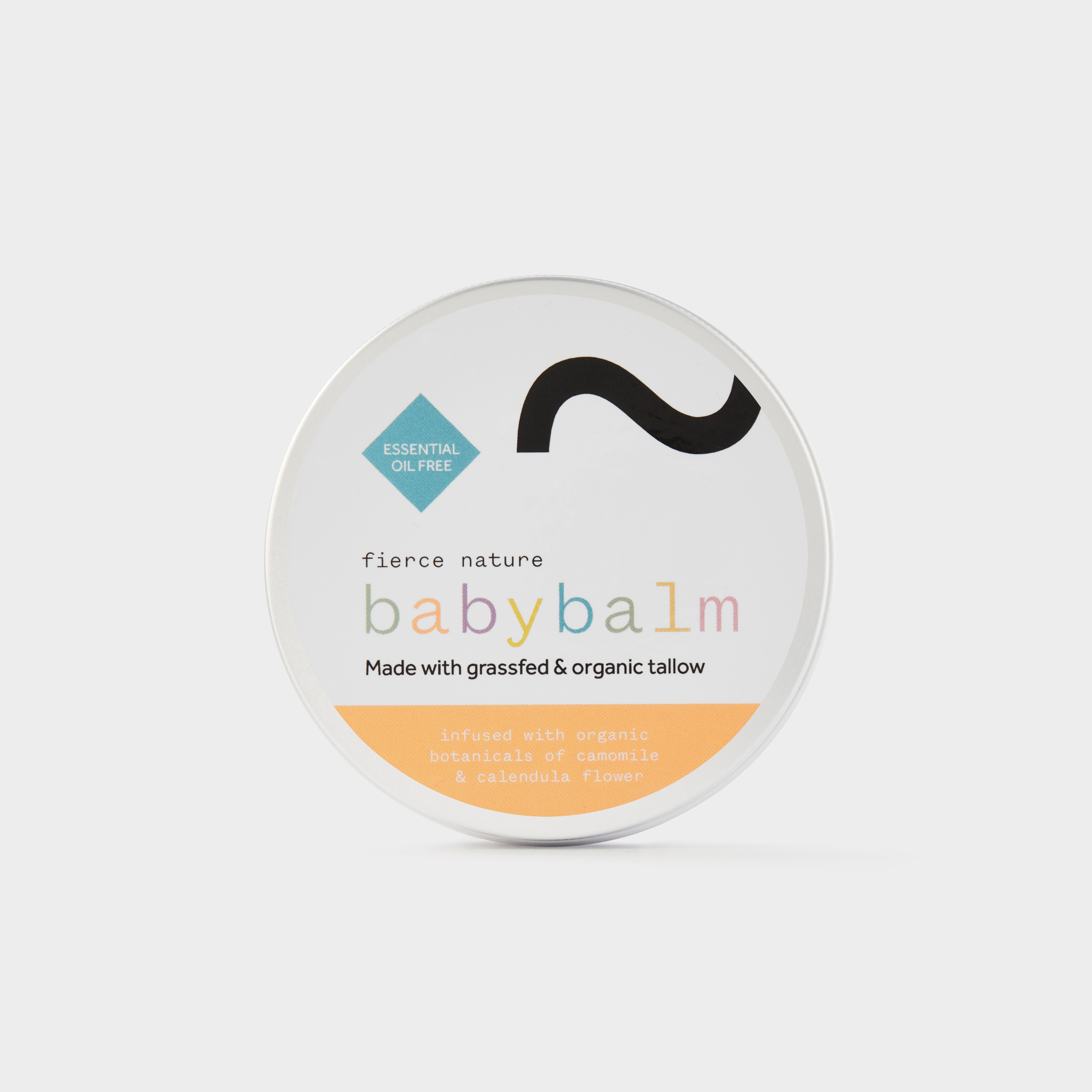
Tallow-based sunscreen behaves differently to a typical silicone-heavy lotion. It sits on skin as a rich, occlusive layer that feels more like a nourishing balm than a film, which changes how you should think about layering makeup on top.
A few practical notes from how we’ve formulated ours:
We built Fierce Nature because mainstream skincare too often forces a trade-off between what’s genuinely good for your skin and what feels nice to wear, and we don’t think that trade-off should exist. Good sun protection and gentle, non-toxic ingredients aren’t opposites.
On a high-exposure day, a strong morning base and a sensible midday touch-up matter more than keeping your foundation looking untouched. Skin repairs; sunburn and long-term damage don’t reverse so easily.
A dependable morning base makes every touch-up afterwards genuinely easy, and that’s exactly where our New Sun Balm SPF 50+ PA++++ comes in. It’s built on organic tallow, giving you a rich, nourishing base layer that sits comfortably under makeup rather than fighting it. Once that’s settled, our Skin Tint in Warm Coverage adds lightweight, natural-looking coverage without piling on heavy silicones or synthetic filters.
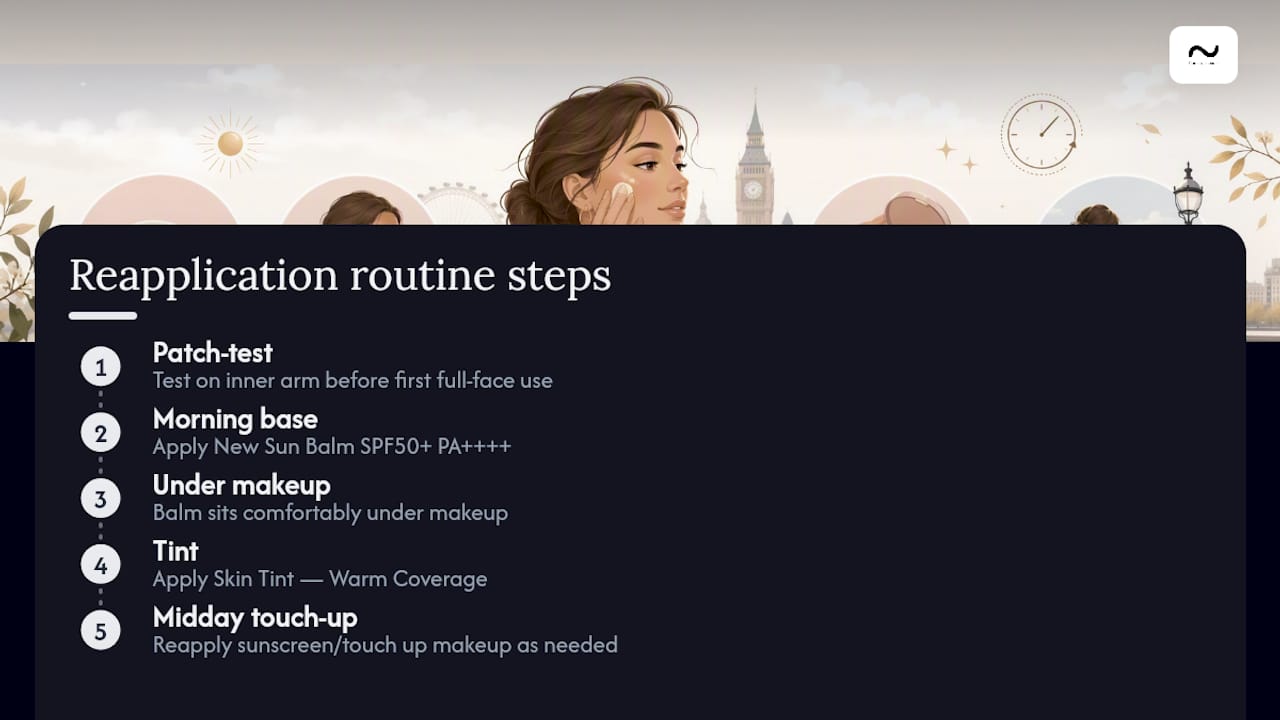
As with any new skincare pairing, patch-test both products on your inner arm before your first full-face use, particularly if you have reactive or sensitive skin. If you’re curious about current offers, our Sun Balm summer promotion is worth a look, and our full range of skin tints is there if warm coverage isn’t quite your shade. Start with the balm tomorrow morning and see how your midday touch-up routine changes.
Yes. Pat a lotion sunscreen on with a clean sponge, use a mineral powder SPF, or mist with an SPF setting spray, all of which sit over foundation without requiring you to remove it first.
K-beauty routines favour thin cushion puffs or small sponges for stippling sunscreen over makeup, since they pick up less product and give a more even, controlled stamp than a large fluffy sponge.
You don’t need a strict 15-minute wait once your base layer is already on and set; the main rule is applying enough product and letting a fresh pat-on settle for a minute before touching your face again.
No. Dermatology guidance suggests a gentle wipe with a blotting paper or tissue to remove excess oil or sweat is usually enough, there’s no need to wash off your makeup and start over.