Cart
0
You may also like



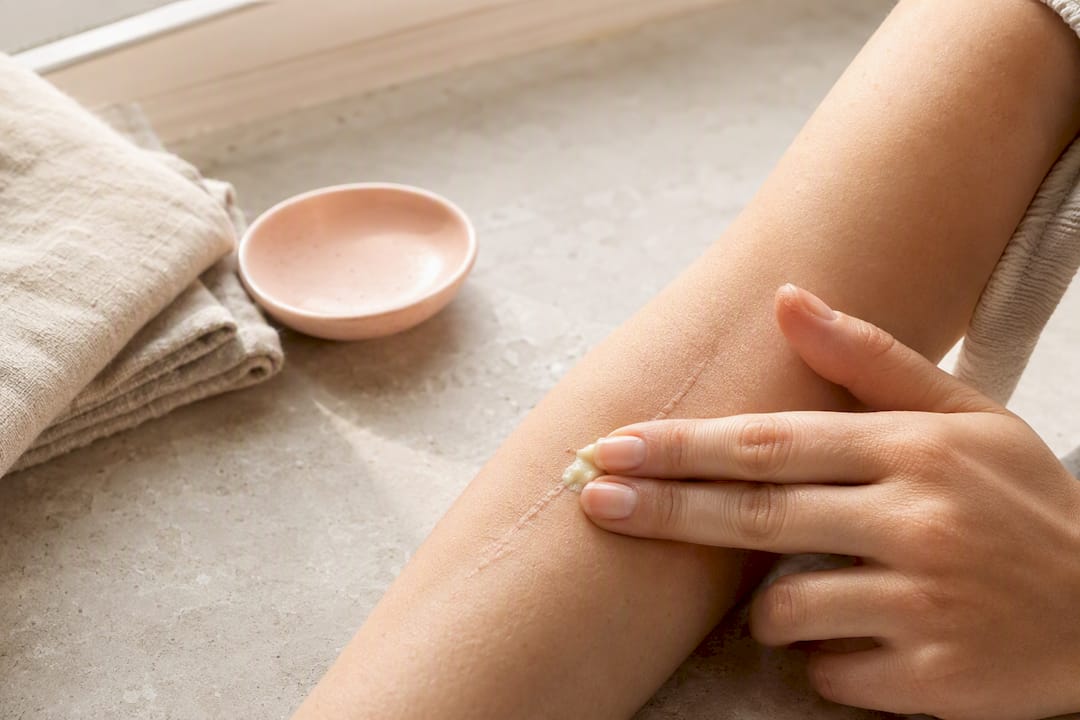
Tallow is a rich, biocompatible emollient that can soften healed scars and stretch marks by improving hydration and pliability, but it is not a clinically proven scar treatment. No high-quality human trials show it remodels scar tissue. Use it only on fully healed skin, patch test first, and expect gradual softening over weeks to months rather than dramatic change.
TL;DR:
- Tallow can improve scar pliability by slowing moisture loss but does not actively remodel or heal tissue deeper in the dermis.
- Human trial evidence supporting tallow as an effective scar treatment is limited and inconsistent, with most benefits linked to hydration rather than regeneration.
- Suitable for fully healed, dry, or stretch mark scars, but should be avoided on open wounds, infected skin, or active keloids without medical advice.
- Patch testing is recommended, especially for sensitive or reactive skin, and proper application involves gentle massage after cleansing.
- Choosing high-quality tallow involves sourcing grass-fed, properly rendered, and minimally processed products to ensure safety and efficacy.
Tallow’s usefulness comes down to fat chemistry, not folklore. Rendered from beef or mutton fat, it contains a blend of fatty acids that closely resembles the lipid mix found naturally in human skin. That similarity is why it feels so absorbent rather than sitting greasy on the surface.
The main fatty acids in tallow are:
Tallow also carries fat-soluble vitamins A, D, E, and K, the same vitamin family your skin relies on for normal cell turnover and conditioning.
Here’s the mechanism that actually matters for scars: transepidermal water loss, or TEWL. Scar tissue, particularly older or thickened scars, tends to lose moisture faster than surrounding skin because its lipid barrier is less organised. A fat-dense balm like tallow forms a light occlusive layer on the surface, slowing that water loss and giving the tissue more sustained hydration. Well-hydrated skin is measurably more pliable, which is why scars often look softer and less taut once dryness is addressed.
This is the point where expectations need calibrating. Reducing TEWL and improving suppleness is a moisturising effect, not a structural one. Scar remodelling, the biological process where collagen fibres reorganise and blood supply normalises, happens deeper in the dermis and is not something any topical fat can drive on its own. Tallow can make a scar look and feel better conditioned. It is not rebuilding the tissue underneath. If you want to understand more about how tallow behaves as a skin barrier repair moisturiser, that distinction between hydration and regeneration is worth reading in full.
The honest picture is more measured than social media suggests, and it is worth sitting with the actual evidence before reaching for a jar.
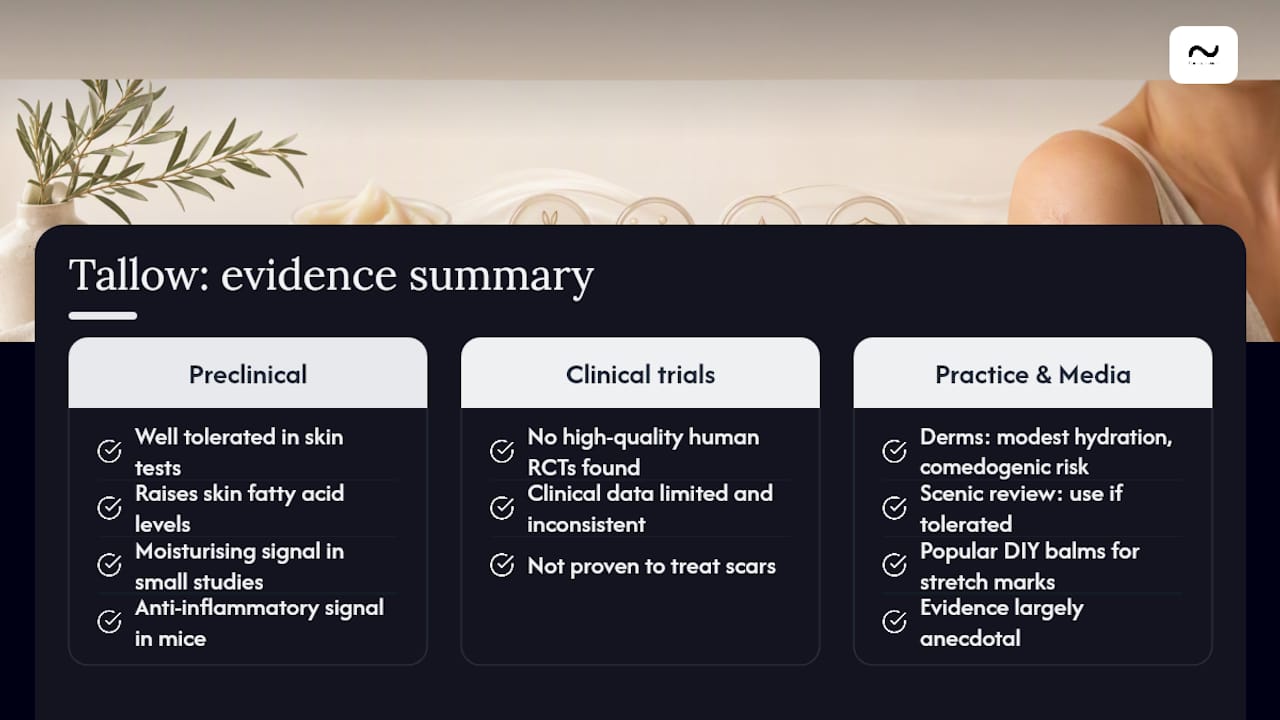
A A scoping review examining tallow’s biocompatibility with skin concluded that tallow is generally well tolerated, raises the skin’s fatty acid concentration, and shows moisturising and mild anti-inflammatory signals in small human samples and animal models. Some of that data is genuinely interesting: mouse studies recorded reduced IgE and mast cell activity, hallmarks of calmer inflammatory response, and tallow-based soaps outperformed regular soap against certain infections in specific comparative studies. That is a real, if narrow, signal.
The gap is human trial evidence. The same review was clear that clinical data in people specifically for scar treatment remains limited and inconsistent, which is a very different statement from “proven to work.”
A separate practitioner review from Scenic Dermatology searched the literature through August 2026 and found no high-quality human clinical trials showing plain beef tallow treats acne, eczema, psoriasis, rosacea, wrinkles, or an impaired skin barrier. Its conclusion was measured rather than dismissive: tallow can be a reasonable moisturiser for people who tolerate it, but it is not a substitute for treatments with actual clinical backing.
Mainstream coverage reflects the same split. Dermatologists interviewed for a piece in NBC Select acknowledged tallow’s hydrating lipids and vitamin content can support a modest regenerative feel, while flagging comedogenic risk for some skin types. Meanwhile, BabyCenter has documented the surge in pregnant people using homemade beef tallow balms for stretch marks, noting that dermatologists field questions about the trend constantly, even though the supporting evidence is largely anecdotal rather than clinical.
Put plainly: there is a plausible cosmetic benefit through moisturisation, but nothing that replaces medically indicated scar therapy when that is what a scar actually needs.
Not every scar, and not every skin type, is a good candidate.
Good candidates:
Best avoided or discussed with a clinician first:
Patch testing takes two minutes and saves a great deal of regret. Apply a small amount to the inner forearm, leave it uncovered, and check at 48 to 72 hours. Stop immediately and wash off if you notice increasing redness, swelling, pus, or a rash that spreads beyond the test site.
Pro Tip: Do the patch test on the same skin you plan to treat, not just the forearm, if the scar sits somewhere with different oil production, like the back or chest. Skin behaves differently depending on where it lives.
Worth noting too: tallow is animal-derived, which matters to some readers on ethical or environmental grounds, and it is not considered reef-safe by some environmental standards. If you’re choosing between tallow and a plant-based alternative for those reasons, that is a legitimate factor to weigh alongside the skin benefits. For more on how tallow performs on reactive or easily irritated skin, tallow for sensitive skin covers the specifics in more depth.
Timing matters as much as technique. Only apply tallow to skin that has fully closed and healed, and if you’re working with a post-surgical scar, get clearance from whoever treated you before starting anything topical.
Frequency: once nightly is a sensible starting point for most people; twice daily suits very dry skin or stretch marks in the third trimester of pregnancy, when skin is stretching fastest.
Application steps:
That massage step is doing more work than people assume. Manual pressure on scar tissue is a recognised way to encourage pliability, and pairing it with a lubricating balm reduces drag on the skin, which is part of why the ritual itself, not just the ingredient, seems to help with perceived improvement over time.
Layering with other products: keep tallow separate from active ingredients like retinoids or chemical peels, ideally using them at different times of day, since combining rich fats with exfoliating actives can increase irritation on already-sensitive scar tissue. If the scar is on sun-exposed skin, use a proper sunscreen over the top during the day, since new and healing skin pigments more easily.
Realistic timeline: the moisturising effect is immediate. Softer texture is often noticeable within two to three weeks. Any visible change in the scar’s appearance tends to build gradually over one to three months of consistent use, not overnight.
Pro Tip: Keep the balm jar away from direct heat and out of the bathroom’s steam, and use a small spatula rather than fingers to scoop it out. This keeps bacteria out of the jar and extends how long the balm stays fresh.
True allergic reactions to tallow itself are uncommon, but they do happen, and sensitivity to added fragrance or botanical extracts in a formulated balm is far more common than a reaction to the tallow base. Signs to watch for include localised itching, hives, or a rash that appears within hours of application and spreads rather than fades.
Interaction risk is more often about ingredient combinations than tallow alone. Layering a heavy, occlusive balm directly under or over active treatments, retinoids, benzoyl peroxide, chemical exfoliants, or prescription scar gels, can trap those ingredients against the skin longer than intended, increasing irritation. The simplest fix is separation: use actives at one part of the day and tallow at another, rather than mixing them in the same application.
If you’re already using a silicone scar sheet or a prescribed treatment for a keloid or hypertrophic scar, tallow can usually sit alongside that routine rather than replace it, but check with whoever prescribed the treatment first. Some topical medications need clear skin contact to work properly, and a fat-rich balm applied beforehand can interfere with absorption.
Anyone managing broader skin conditions alongside scarring might also find it useful to look at how diet and supplementation support skin recovery from the inside; a resource like skin, hair, and nail supplements covers that angle if topical care is only part of your routine.
Not all tallow is equal, and the sourcing matters more than most product labels let on.
Look for grass-fed, pasture-raised tallow where possible. The fatty acid profile of tallow reflects the diet of the animal it came from, and grass-fed sources tend to carry a cleaner nutrient profile with less variability batch to batch. Check that the product lists tallow as a primary, named ingredient rather than burying it under a generic “animal fat” label.
Rendering quality counts too. Properly rendered tallow should smell neutral or faintly savoury, not rancid or sharp. A rancid smell is the clearest sign a batch has oxidised and lost quality, and applying oxidised fat to healing skin defeats the purpose of using it at all.
Favour short ingredient lists. A balm built mainly around tallow, with a small number of recognisable plant oils or butters added for texture or scent, is easier to patch test and easier to trust than one padded with synthetic preservatives or a long list of fragrance compounds. Handmade, small-batch production, the kind typical of UK artisan skincare makers, tends to mean fresher stock and less time sitting in a warehouse before it reaches your bathroom shelf. For a deeper look at what makes tallow worth choosing over synthetic moisturisers in the first place, tallow as a skin superfood breaks down the full nutrient case.
We think the tallow conversation online has swung too far in one direction. Somewhere between “ancient beauty secret” and “just cook your face with butter,” the actual, useful truth got lost: tallow is a genuinely good emollient, and being a good emollient is not a small thing when a scar feels tight, dry, and uncomfortable.
What frustrates us is watching that honest benefit get dressed up as something clinical. Nobody needs tallow to be a miracle to justify using it. It needs to be well sourced, honestly labelled, and used on the right skin at the right time. That is a far more defensible standard than most of the claims circulating about “bio-identical” fats rebuilding your skin barrier overnight, claims that dermatology reviews have repeatedly found no clinical basis for.
We formulate every Fierce Nature balm on that simpler standard. Organic tallow as the base, minimal added ingredients, nothing designed to obscure what is actually inside the jar. If tallow works for your scar, it will be because your skin got the hydration it was missing, consistently, over time, not because of anything sold to you as extraordinary.
— Fierce Nature
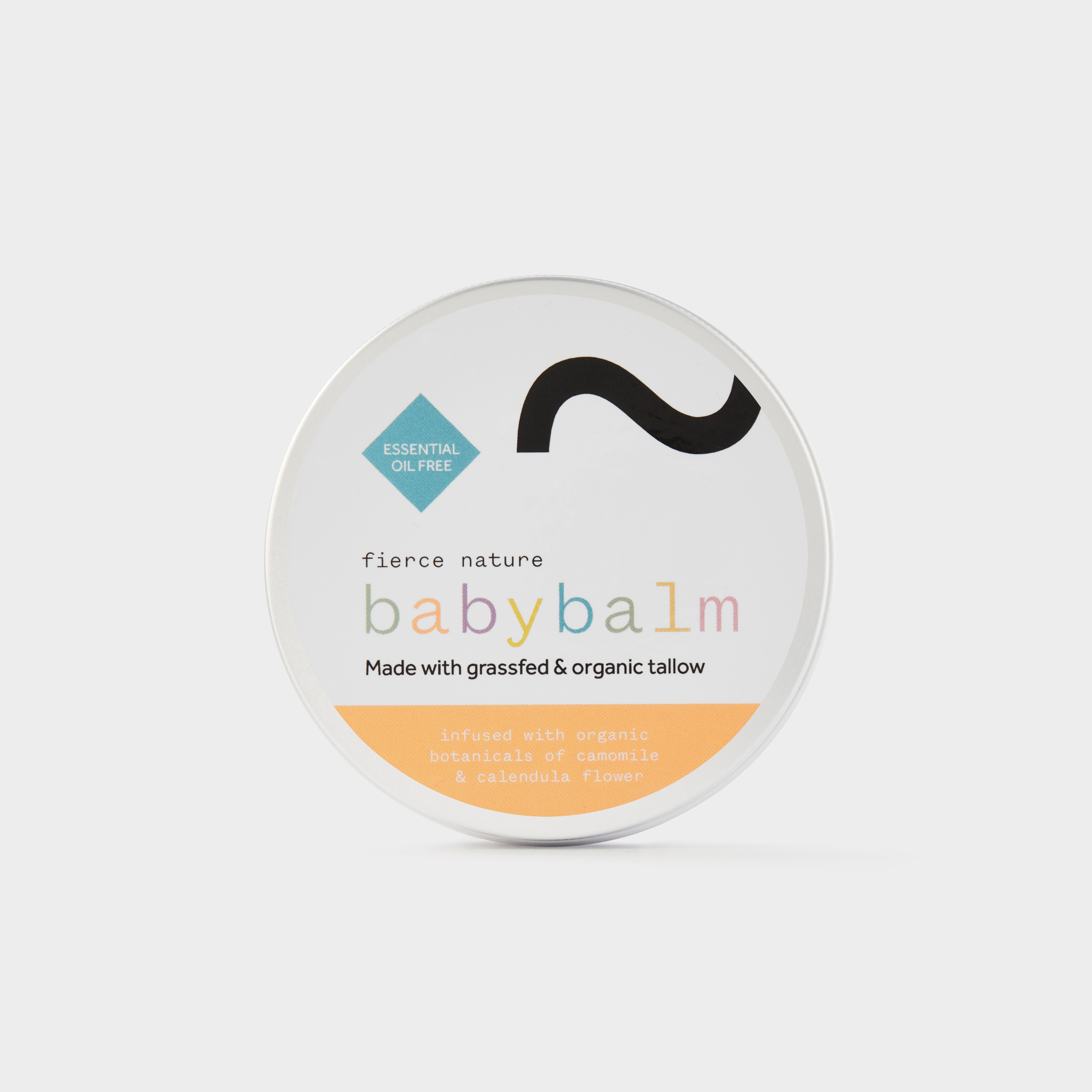
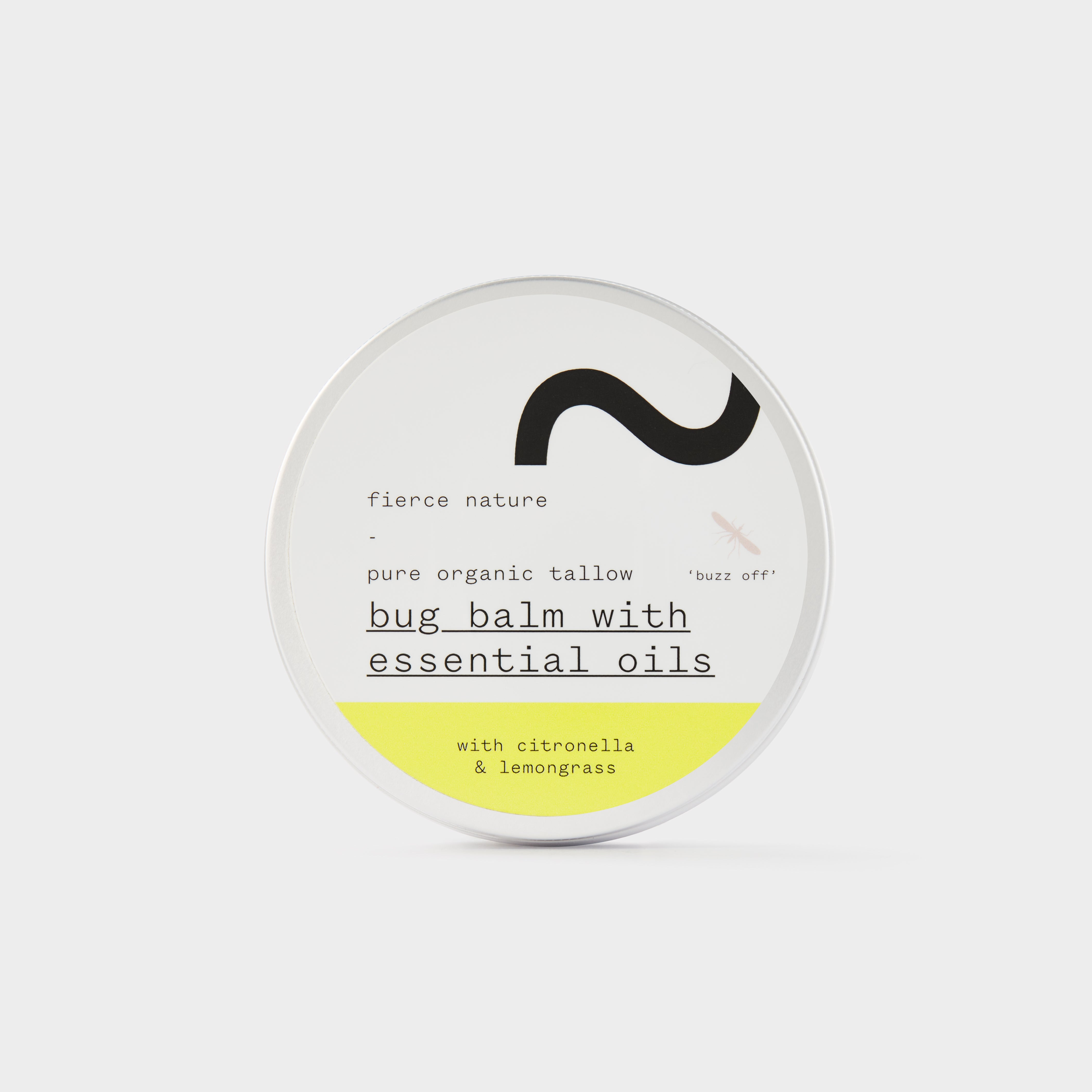
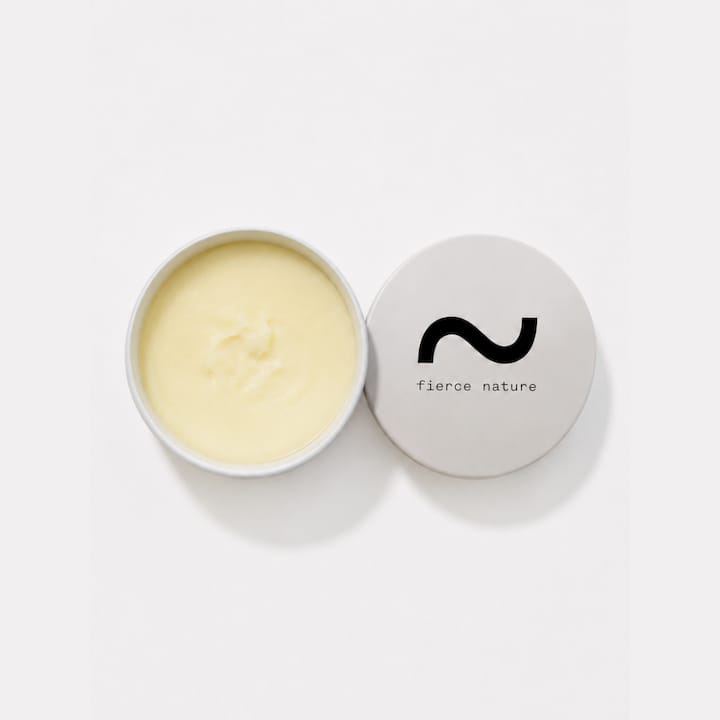
If you’d rather start with a ready-made balm than render your own, three options in the Fierce Nature range cover most needs. The Nourish Balm (Unscented) is the safest starting point for sensitive or reactive skin, and the one we’d suggest for a first patch test on a scar or stretch mark, since it carries no added fragrance to complicate the results. For facial scarring, the Luxe Balm is formulated richer and lighter for the finer skin on the face, where delicate healed marks need conditioning without heaviness. If fragrance isn’t a concern for your skin, the Nourish Balm (Sweet Orange) gives the same body-balm base a warm citrus note for anyone who wants their nightly routine to feel like a small ritual rather than a chore.
Whichever you choose, patch test on the inner forearm for 48 to 72 hours before applying near a scar, and follow the massage and frequency guidance covered above. Start with a small area tonight using a balm from a trusted source.
Tallow can help moisturise healed scars and reduce dryness, which softens their appearance, but it has no proven ability to remodel scar tissue itself. It works best as a conditioning balm, not a treatment.
No. Beef tallow does not heal scars in a clinical sense; healing happens through the body’s own tissue repair. Tallow can support that process externally by keeping the skin hydrated and more pliable while it heals.
Most dermatologists aren’t against tallow outright; their caution comes from the lack of high-quality human trials proving it treats specific skin conditions, plus its comedogenic potential for oily or acne-prone skin. Reviews like the one from Scenic Dermatology found tallow reasonable as a moisturiser but not proven as a therapeutic treatment.
No topical cream, tallow-based or otherwise, has strong clinical evidence for fully removing scars; silicone gels have the most consistent supporting research for flattening and softening raised scars over time. Emollients like tallow work best as supportive hydration alongside, not instead of, treatments a dermatologist recommends for your specific scar type.


