Cart
0
You may also like
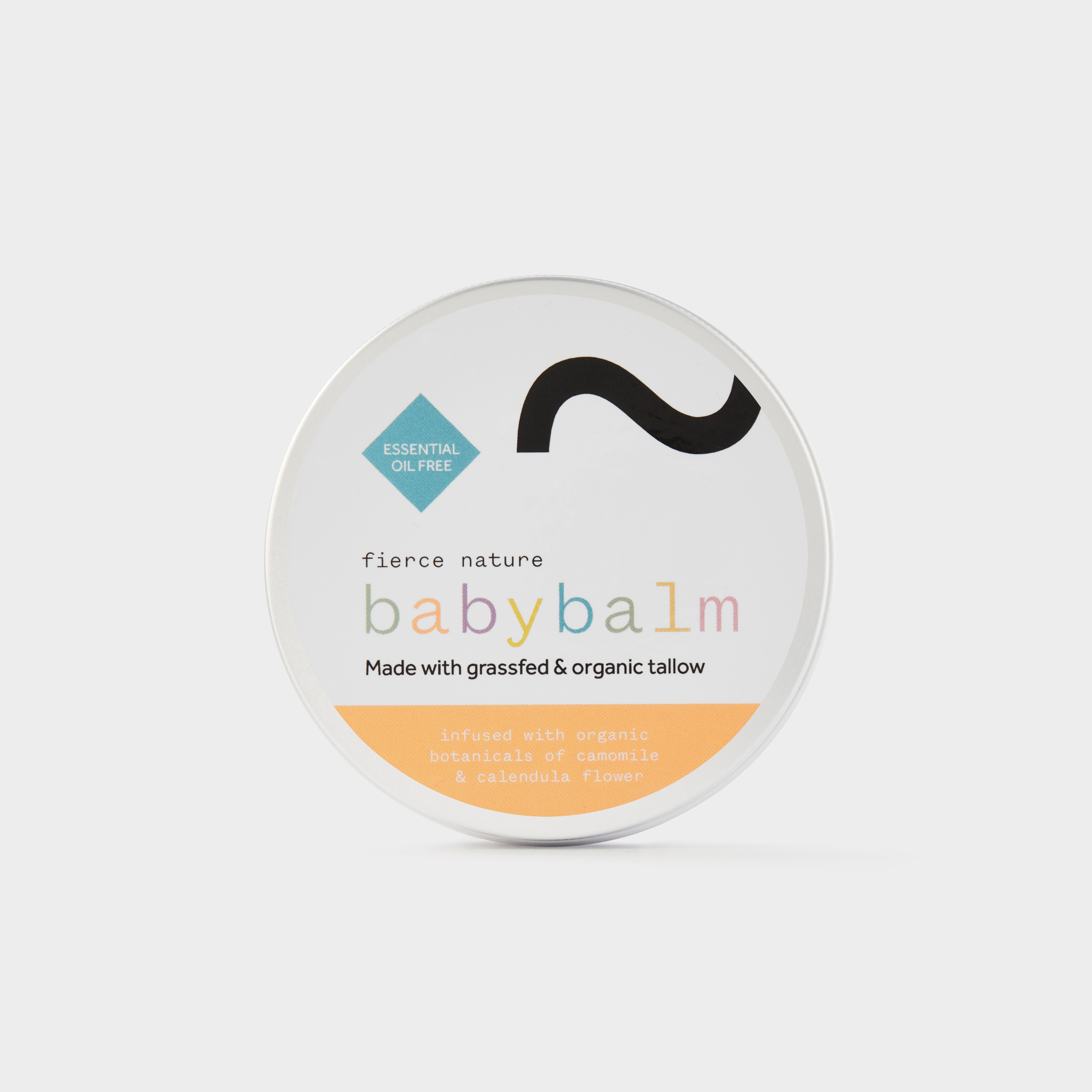
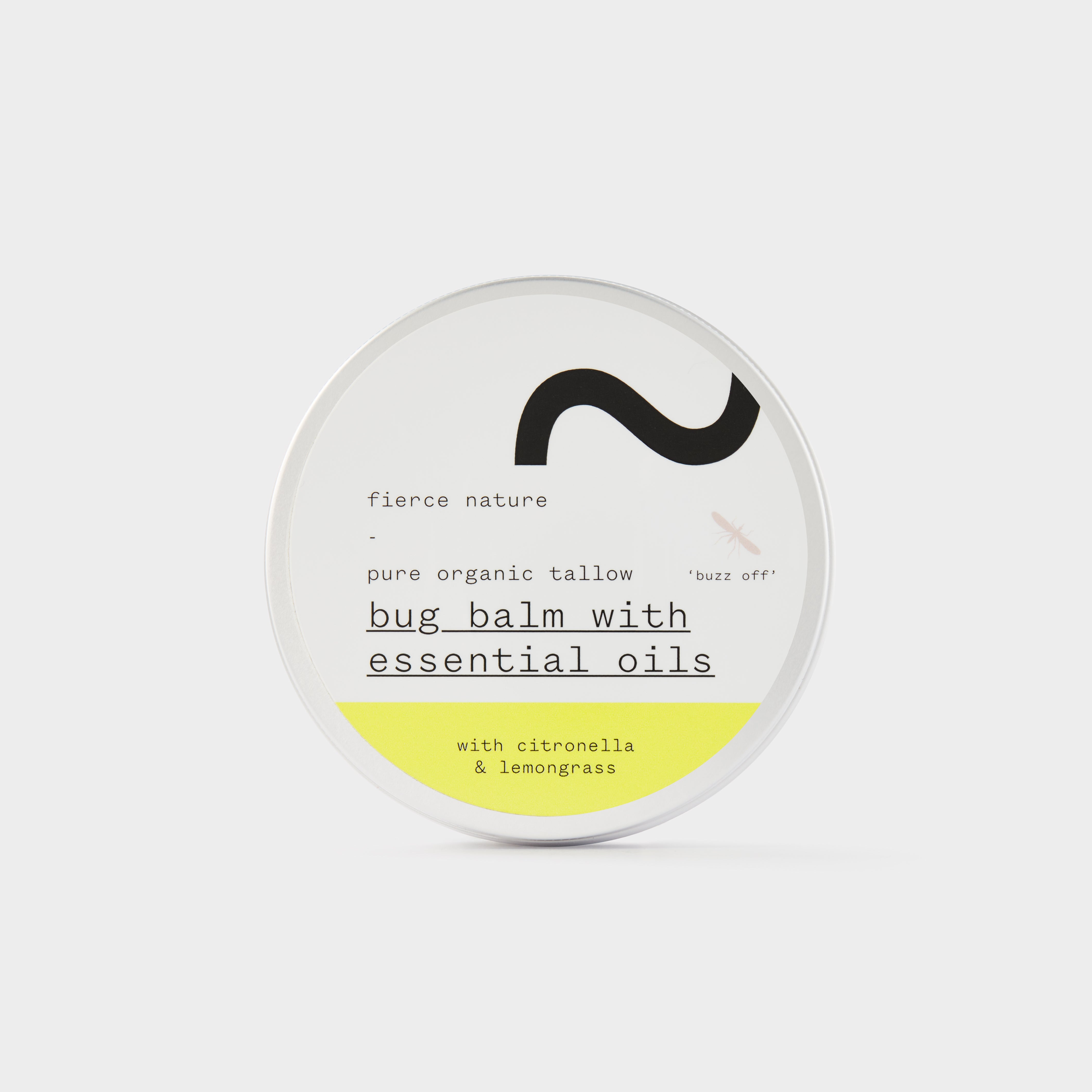
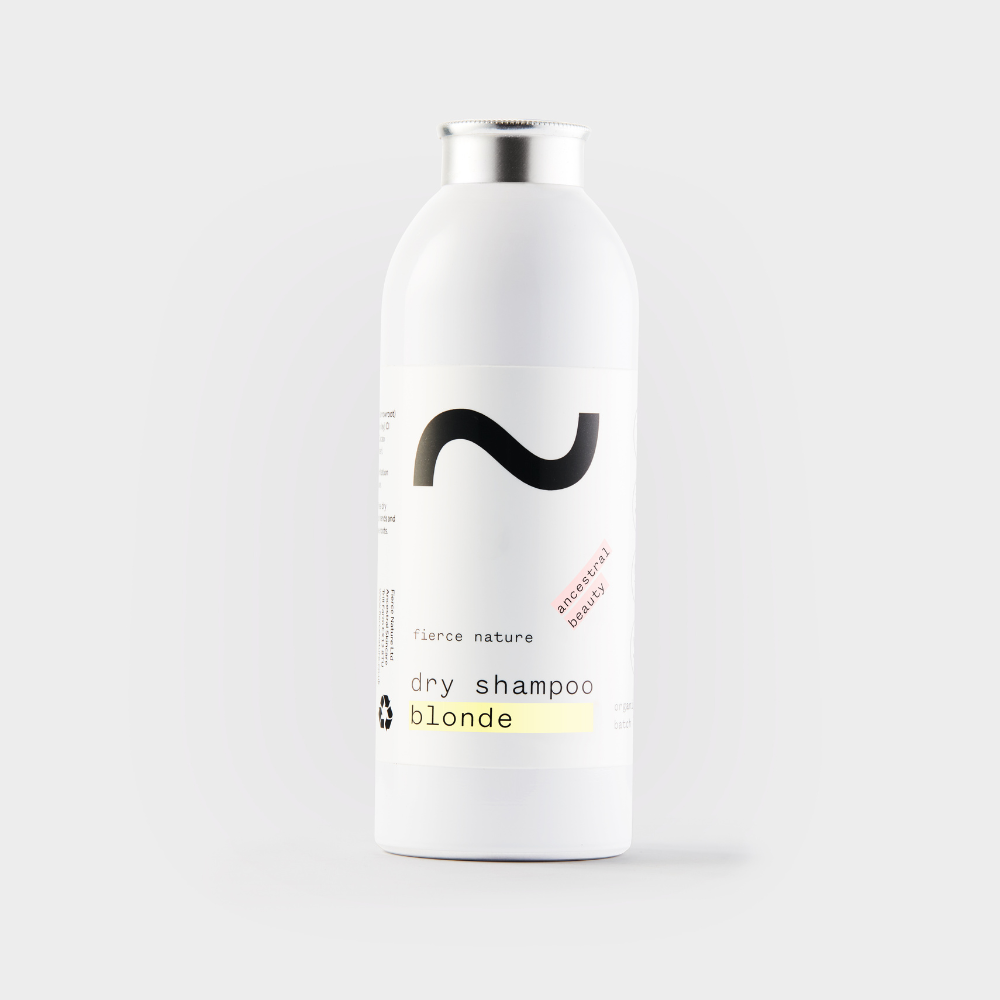




Plastic free skincare means a product made without synthetic polymers, microbeads or intentionally added microplastics, checked at the ingredient level rather than the packaging. If a label lists entries ending in “polymer” or “siloxane”, it isn’t plastic free, however recyclable the bottle looks. The fastest way to check is to scan the INCI list before you buy. The rest of this guide shows you exactly what to look for.
TL;DR:
- Avoid products containing ingredients ending in “polymer,” “copolymer,” “siloxane,” or with prefixes like PEG or PPG, as they are synthetic microplastic derivatives.
- Synthetic polymers persist environmentally and can cause skin irritation, making natural alternatives like tallow, cellulose, and starch microparticles better choices.
- The EU plans to restrict microplastic ingredients in rinse-off cosmetics by 2027, but many leave-on products may still contain plastic‑derived ingredients.
- “Natural” labels are unreliable without checking the ingredient list, as many products mix natural extracts with synthetic polymers or film-formers.
- Always verify transparency by reviewing full ingredient lists, asking brands for detailed INCI data, and patch testing new products before regular use.
Plastic free skincare, in the sense that matters for your skin and the environment, is about what’s inside the formula, not what it’s sold in. A jar made from recycled glass can still contain synthetic polymers. A plastic tube can (in theory) hold a completely polymer‑free balm. The two issues get muddled constantly, and it’s worth untangling them properly.
Here, “plastic free” means the formula contains no synthetic polymeric ingredients, no microbeads, and no intentionally added microplastics of any kind, whether they’re there to thicken a cream, bind a foundation, or scrub away dead skin cells. That’s an ingredient‑level definition, and it’s the one that has real consequences for your skin and for what washes down the drain.
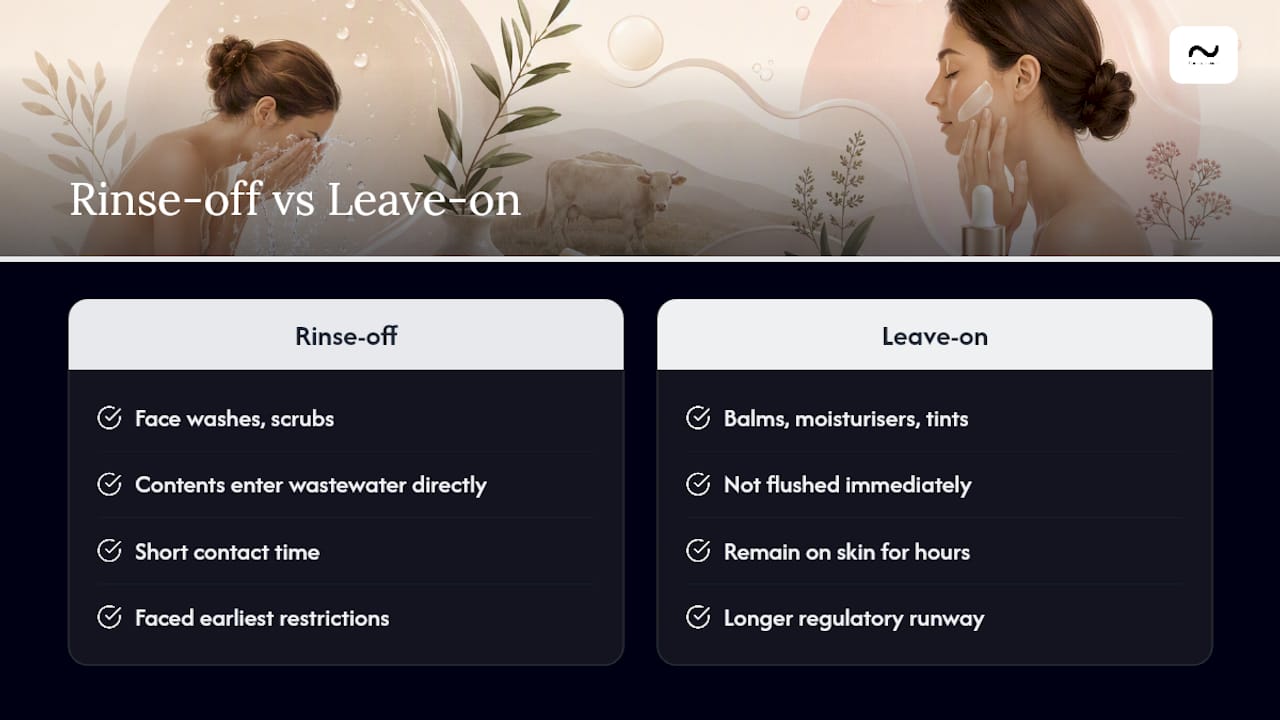
Regulators treat this differently depending on whether a product rinses off or stays on. Rinse‑off products, such as face washes and scrubs, send their contents straight into wastewater, which is why they’ve faced the earliest restrictions. Leave‑on products, including balms, moisturisers, and skin tints, get a longer regulatory runway, even though the ingredients sit on your skin for hours. That gap between rinse‑off and leave‑on rules is exactly why label literacy matters more than trusting a category to be automatically safe.
Synthetic polymers don’t disappear once they’re washed off or worn away. They persist in soil and waterways for years, and reviews of cosmetic formulations describe them turning up in marine environments long after the product itself is gone. Some formulations use polymers in small percentages by weight, which can add up significantly across an industry using them in everything from mascara to moisturiser.
The skin health side is less discussed but just as relevant. Complex synthetic polymers can sit awkwardly on sensitive or reactive skin, and formulators increasingly favour simpler, whole‑ingredient formulas because they tend to be better tolerated. That’s a meaningful shift for anyone who has spent years blaming their own skin for reactions that were arguably down to the formula.
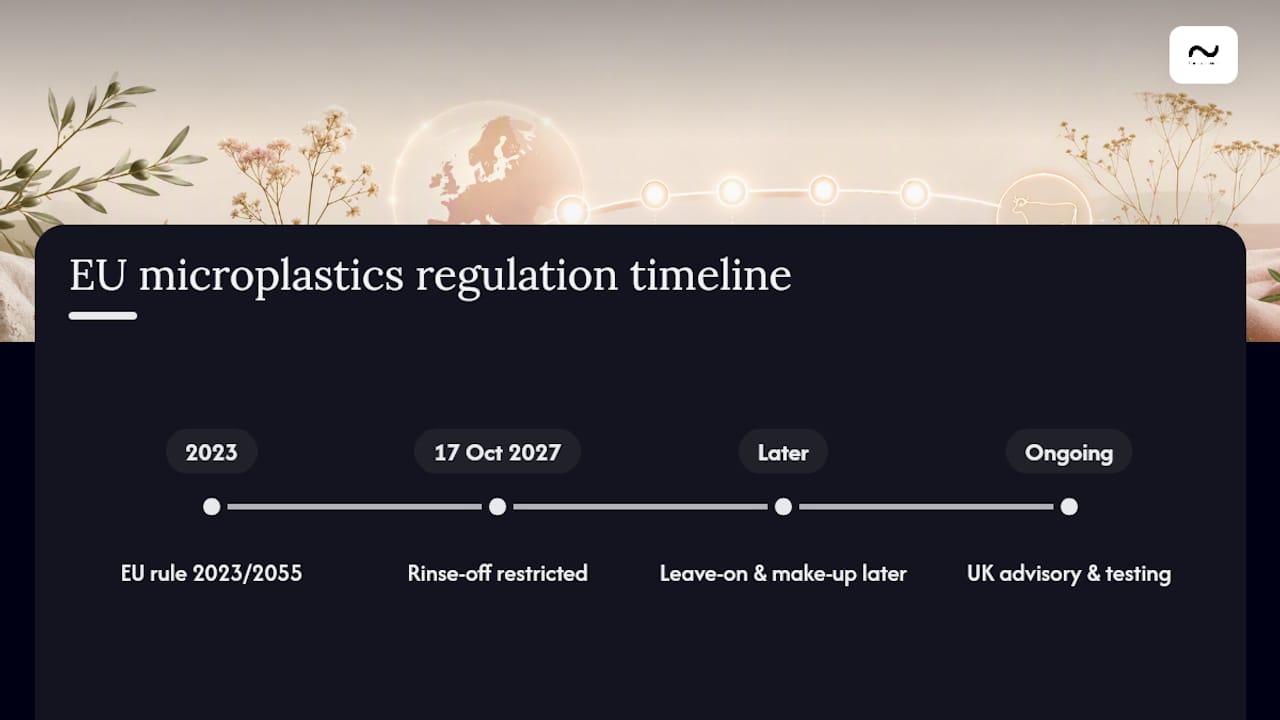
Regulatory shift: Commission Regulation (EU) 2023/2055 restricts the intentional addition of synthetic polymer microbeads, with phased deadlines. Many rinse‑off categories face a cut‑off of 17 October 2027, with leave‑on and make‑up categories following later.
That timeline tells you something useful: even regulators accept this problem can’t be fixed overnight, which is exactly why checking your own labels now is worth the five minutes it takes.
INCI names look intimidating, but plastic‑derived ingredients follow recognisable patterns once you know what you’re scanning for. You don’t need a chemistry degree, just a habit of pausing before you buy.
Watch for these signals on any ingredient list:
By contrast, entries like tallow, cellulose, starch, and xanthan gum are naturally derived and not part of this problem. The tricky bit is vague trade names. A brand might list a proprietary blend under a name that gives you no clue what’s inside, and trade secrecy sometimes hides small amounts of polymeric additives behind exactly that kind of label.
Pro Tip: If a label uses a trade name you can’t decode, email the brand and ask for the full INCI or a technical data sheet. A brand confident in its formula will hand it over without hesitation.
Reputable third‑party ingredient databases can help you cross‑check unfamiliar names too, but a direct answer from the brand is still the most reliable route.
Every function a synthetic polymer performs, thickening, film‑forming, exfoliating, has a natural counterpart. The formulation world has simply been slower to adopt them at scale, partly because plastics are cheap and partly because habits in an industry take time to shift.
Tallow does more heavy lifting than people expect. As a bioavailable lipid, it absorbs into skin’s own structure rather than sitting on top like a film, giving it a texturising and emollient role that many synthetic polymers were originally designed to mimic. Traditional use and modern research both point to improved hydration and barrier support from natural lipids like this, which is a large part of why tallow is often described as nature’s skin superfood.
Other natural substitutes worth knowing:
None of these are drop‑in replacements in every formula. A rheology modifier that works beautifully in a lightweight serum might behave differently in a dense balm, which is exactly why formulation experience matters as much as the ingredient list itself.
Before anything goes in your basket, run through this in under a minute:
A brand that publishes lab testing results or a clear ingredient philosophy alongside its products is giving you something to verify. One that only offers glossy claims about “purity” without backing them up is asking you to trust marketing instead of a formula.
You don’t need a twelve‑step routine to go genuinely plastic free. You need the right handful of products, chosen with the checklist above.
Morning:
Evening:
Pro Tip: If you have very reactive or eczema‑prone skin, introduce one new product at a time and wait a week before adding the next. That way, if a reaction happens, you’ll know exactly what caused it.
If irritation persists despite a clean, simple routine, that’s a sign to speak with a dermatologist rather than keep swapping products on your own.
The clearest sign that this issue has moved from niche concern to mainstream policy is Commission Regulation (EU) 2023/2055, which restricts the intentional addition of synthetic polymer microparticles, commonly called microbeads, across a wide range of consumer products including cosmetics.
The regulation doesn’t ban everything overnight. It sets a phased timeline, with many rinse‑off product categories facing restrictions from 17 October 2027, while leave‑on and make‑up categories are given longer transition periods. That staggered approach reflects a practical reality: reformulating a leave‑on cream that relies on a polymer for texture is a slower job than swapping plastic beads out of a face scrub.
UK advisory work has tracked similar concerns for years. Reports from bodies examining the marine environment have flagged microbeads as commonly used across rinse‑off products, while noting that leave‑on products can still contain plastic‑derived ingredients that receive far less scrutiny. Analytical testing for these substances is genuinely complex, which is part of why enforcement lags behind the policy intent.
For UK shoppers, this regulatory direction matters even where local rules diverge slightly from the EU’s. Understanding why UK skincare regulations differ from EU frameworks helps explain why some products marketed as “compliant” only meet the bare minimum rather than a genuinely plastic‑free standard. The direction of travel, in both jurisdictions, is toward tighter restriction, not looser.
“Plastic free” has become one of the more abused phrases in the beauty aisle, and recognising the common tricks saves you from paying a premium for very little.
The most frequent sleight of hand is conflating packaging with formula. A brand proudly stating “plastic‑free packaging” is making a true claim, just not the one you assumed you were reading. It says nothing about whether the cream inside contains a polymer thickener or a siloxane for slip. These are genuinely separate issues, and a brand that wants you to blur them is banking on you not checking the INCI.
Another tactic is the selective claim: “no microbeads” prominently displayed, while a synthetic film‑former or polymer binder sits quietly further down the ingredient list. Technically true, meaningfully misleading. Vague trade names for proprietary blends serve a similar purpose, letting a brand avoid spelling out that an ingredient is, in fact, a polymer.
Watch too for the assumption that “natural” automatically means “plastic free.” Plenty of products blend natural extracts with synthetic polymers to hit a texture or shelf‑life target, and a botanical‑sounding name on the front of the bottle guarantees nothing about what’s mixed in behind it.
The shift towards natural skincare has been genuine and industry‑wide, but demand for the label has outpaced demand for the substance in plenty of cases. Reading the actual ingredient list remains the only real safeguard.
We built Fierce Nature because mainstream cosmetics gave us rashes and reactions for years without ever explaining why. A decade spent understanding toxic load and gut health taught us that most beauty promises are built on marketing, not formulation honesty.
Every product is handmade with organic tallow as the base rather than a synthetic filler. Tallow’s biocompatibility with human skin cells is precisely why we built around it instead of reaching for the polymer shortcuts the rest of the industry defaults to.
— Fierce Nature
If you want a starting point that already matches everything covered in this guide, the Biohacking bundle brings together our tallow‑based essentials in one plastic‑free, whole‑ingredient kit rather than leaving you to piece a routine together product by product. Every formula is handmade in the UK with a short, honest ingredient list you can check against the patterns covered above.
Before you commit, run the checklist yourself: look at the INCI, confirm there’s nothing hiding behind a vague trade name, and patch test as you would with any new product on sensitive skin. We’d rather you verify it than simply trust our word for it, and the same goes for the environmental case explored in our piece on the environmental benefits of tallow‑based products. If ingredient regulation is a subject you want to go deeper on, how and why certain fragrance ingredients get restricted is a useful companion read. When you’re ready, the bundle is one click away.
No. Plastic free skincare, as used here, refers to the formula itself containing no synthetic polymers or microplastics, which is entirely separate from whether the packaging is recyclable or compostable.
Watch for suffixes like “‑polymer,” “‑copolymer,” and “‑siloxane,” along with nylon, polyethylene, polypropylene, polymethyl methacrylate, and PEG or PPG prefixes.
Yes. Tallow is a naturally derived animal lipid with no synthetic polymer content, and it’s used in Fierce Nature formulas specifically for its bioavailability and emollient properties.
Commission Regulation (EU) 2023/2055 phases in restrictions from 17 October 2027 for many rinse‑off categories, with leave‑on and make‑up products following on a later timeline.
Yes. Some formulations combine natural extracts with synthetic polymers or film‑formers, so a natural‑sounding label doesn’t guarantee an ingredient list free of plastic‑derived additives.