Cart
0
You may also like



TL;DR:
- Effective skin nourishment combines dietary intake of proteins, fatty acids, vitamins, and polyphenols with topical ingredients like humectants, emollients, and active repair agents. Combining internal nutrition, surface care, and professional support creates a comprehensive, restorative approach rather than just surface-level improvements. Layering ingredients correctly and avoiding harmful combinations help maintain barrier health while supporting long-term skin resilience.
The most effective approach to skin nourishment combines three linked domains: dietary nutrition (protein, essential fatty acids, vitamins and polyphenols), topical ingredient classes (humectants, emollients, occlusives, ceramides and actives), and clinical or professional support where needed. The single most useful first step is to pair one barrier-supporting balm with a protein- and omega-3-rich meal each day. That inside-out, outside-in combination addresses both the structural building blocks your skin needs and the surface protection that keeps them in place.
The main types of skin nourishment approaches at a glance:
Each category works differently and at a different depth. Dietary nutrition builds the raw materials for collagen and barrier proteins over weeks to months. Topical ingredients work at the surface and upper layers, with some actives penetrating more deeply. Clinical options extend what diet and topical care alone cannot reach. Used together, they create a genuinely restorative approach rather than a surface-only fix.
The dietary approach that best supports skin health combines adequate protein, essential fatty acids, vitamins A, C, D and E, zinc and polyphenols. No single supplement replaces a varied, whole-food diet, and the evidence for food-first nutrition is consistently stronger than for isolated supplements in otherwise healthy adults.
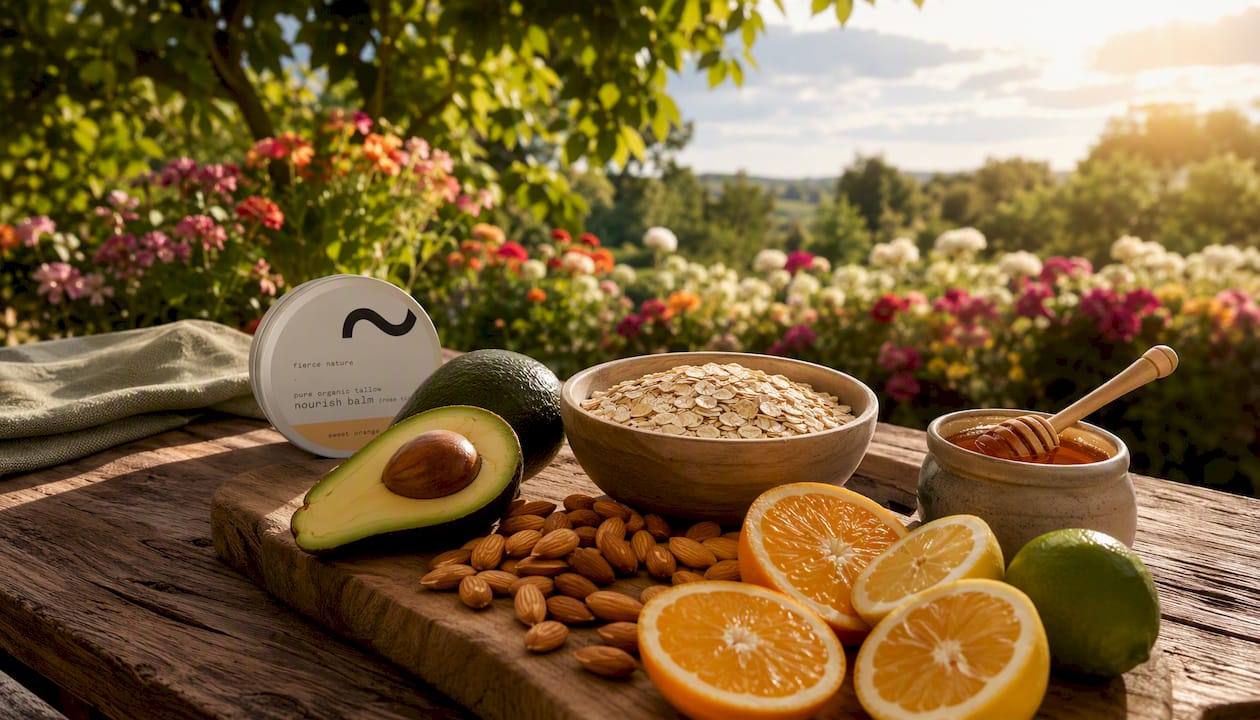
Protein is the structural foundation. Collagen, the most abundant protein in skin, requires a steady supply of amino acids, particularly glycine, proline and hydroxyproline. Without sufficient dietary protein, collagen synthesis slows and barrier proteins weaken. Oily fish, eggs, legumes, meat and dairy all provide complete or near-complete amino acid profiles.
Essential fatty acids (omega-3 and omega-6) are incorporated directly into cell membranes and influence the skin’s inflammatory response. Omega-3s from oily fish such as mackerel, sardines and salmon, or from flaxseed and walnuts, support barrier integrity and help moderate the inflammatory signals that drive redness and sensitivity. Omega-6 linoleic acid, found in sunflower seeds and hemp seeds, is a precursor to ceramides, the lipids that hold the barrier together.
Vitamins A, C, D and E each play distinct roles:
Zinc supports wound healing, regulates sebum production and has anti-inflammatory properties. Pumpkin seeds, shellfish, red meat and legumes are reliable sources.
Polyphenols from colourful fruit and vegetables, green tea, berries and dark chocolate provide antioxidant and anti-inflammatory activity that protects skin cells from UV-related and metabolic oxidative stress.
Dietary pattern matters as much as individual nutrients. A Mediterranean-style diet, rich in oily fish, olive oil, leafy greens, legumes and colourful produce, provides the full spectrum of skin-supportive nutrients in proportions that work together. Isolated supplements rarely replicate this synergy.
Gut health is part of this picture too. Research links the gut microbiome to skin inflammation and barrier function through systemic immune modulation. Fermented foods (live yoghurt, kefir, sauerkraut), prebiotic fibre (oats, leeks, garlic, bananas) and, where indicated, probiotic supplements can support the gut-skin axis. Effects vary between individuals and the evidence is still developing, so probiotics are best treated as a complement to a good diet rather than a replacement for one.
Timeline: dietary changes typically take 4–12 weeks to produce visible skin improvements. Collagen synthesis is a slow biological process, and barrier protein turnover follows a similar schedule. Patience is not optional here.
Cautions: if you are pregnant, breastfeeding, taking prescription medicines (particularly retinoids, blood thinners or immunosuppressants), or managing a diagnosed condition, consult a GP or registered dietitian before starting any supplement. High-dose vitamin A supplements are contraindicated in pregnancy. Allergy risk applies to any new food or supplement, so introduce changes one at a time.
Topical nourishment works through five broad ingredient classes, each acting at a different level of the skin. Humectants draw water in, emollients soften and smooth, occlusives seal and prevent loss, ceramides rebuild the barrier’s structural matrix, and actives such as retinoids and peptides stimulate repair and defence. SPF sits across all of them as the protector that preserves every gain.
| Ingredient class | Primary mechanism | Practical examples | Typical frequency |
|---|---|---|---|
| Humectants | Bind water into surface layers | Glycerin, hyaluronic acid, aloe vera, urea | Morning and evening, applied to damp skin |
| Emollients | Fill gaps between skin cells, soften texture | Shea butter, jojoba oil, squalane, tallow | Morning and/or evening, after humectants |
| Occlusives | Form a physical seal to reduce water loss | Petrolatum, beeswax, lanolin, tallow | Evening or as needed; small amounts over moisturiser |
| Ceramides | Restore the lipid matrix between skin cells | Ceramide NP, AP, EOP (in formulations) | Daily; especially useful for dry and sensitive skin |
| Antioxidants | Neutralise free radicals, reduce oxidative damage | Vitamin C (L-ascorbic acid), vitamin E, niacinamide, green tea extract | Morning (vitamin C); morning or evening (others) |
| Retinoids | Stimulate cell turnover and collagen synthesis | Retinol, retinaldehyde, adapalene (OTC); tretinoin (prescription) | Evening only; start 1–2 nights per week |
| Peptides | Signal skin to produce collagen and elastin | Matrixyl (palmitoyl pentapeptide-4), copper peptides | Morning or evening |
| SPF | Blocks UV radiation that degrades collagen and barrier lipids | Mineral (zinc oxide, titanium dioxide); chemical filters | Every morning, last step |
The order in which you apply these classes matters as much as the ingredients themselves. A useful rule: thinnest to thickest, water before oil.
Petrolatum reduces transepidermal water loss effectively in clinical settings, making it one of the most reliable occlusives available. Tallow and plant-based butters such as shea and mango butter occupy a similar functional position, with the added benefit of naturally occurring fatty acids and fat-soluble vitamins.
Safety notes: retinoids cause photosensitivity and should only be used in the evening. Start at the lowest available concentration and increase gradually. Strong acids (AHAs such as glycolic acid, BHAs such as salicylic acid) and retinoids should not be used on the same night, as the combination increases irritation risk significantly. Botanical and essential oil ingredients, while appealing, have variable clinical evidence and can irritate sensitive skin. Petrolatum, colloidal oatmeal, aloe vera gel and mineral sunscreens have the most consistent evidence base among natural-leaning options.
SPF as a nourishment preserver: UV radiation degrades collagen, damages barrier lipids and generates free radicals that undo the work of every other nourishing ingredient you apply. Daily SPF 30 or higher is not optional if you want your nourishment efforts to hold.
Hydration and nourishment are not the same thing, and confusing them leads to routines that underdeliver. Hydration increases the water content of the skin’s surface layers, giving an immediate plumping effect. Nourishment supplies lipids, vitamins and fatty acids that repair and strengthen the barrier itself, producing structural change over weeks to months.
Think of it this way: hydration fills the glass; nourishment repairs the glass so it holds water in the first place.
The timescale difference is practical. A humectant serum gives visible improvement within minutes of application. Dietary omega-3s and topical ceramides, by contrast, take weeks to alter barrier protein composition and reduce transepidermal water loss measurably. Both matter, but they work on different clocks.
Pro Tip: In very dry climates or centrally heated rooms, humectants applied without a sealing step can draw moisture from deeper skin layers rather than from the air, leaving skin feeling tighter than before. Always follow a humectant with an emollient or occlusive, especially in winter.
The Japanese double-moisture method demonstrates this principle clearly: apply a water-based essence or toner first, then seal with an emulsion or lightweight moisturiser. The result is improved barrier function and sustained hydration rather than a temporary surface effect.
A common mistake is applying a rich balm or oil directly to dry skin without a humectant underneath. The balm seals well, but there is less water to seal in. Damp skin first, then seal: that sequence consistently outperforms either step alone.
A short, consistent routine outperforms a complex one almost every time. The core template is simple: cleanse gently, hydrate, nourish and seal, protect with SPF. What varies is which ingredients you choose within each step, and how rich or light the nourishing layer needs to be.
Timeline callout: most people see initial improvements in skin texture and comfort within 4–6 weeks of a consistent routine. Deeper changes to barrier function, fine lines and pigmentation typically take 8–12 weeks. If you see no improvement after 12 weeks, review your routine or consult a dermatologist.
Dry skin needs the richest nourishing layer. After a humectant serum, use a cream or balm with a high lipid content: shea butter, tallow, or ceramide-rich formulations. Evening application of a heavier occlusive over a humectant is particularly effective. Avoid foaming cleansers, which strip the barrier further.
Oily or acne-prone skin still needs nourishment, but benefits from lighter emollients. Squalane, jojoba oil and niacinamide work well without clogging pores. Humectants are especially useful here because they hydrate without adding heavy lipids. Avoid over-cleansing, which triggers compensatory sebum production.
Sensitive or reactive skin calls for the shortest ingredient list possible. Fragrance, essential oils and high concentrations of actives are the most common triggers. Stick to well-evidenced, gentle ingredients: colloidal oatmeal, glycerin, ceramides and a mineral SPF. Introduce any new ingredient one at a time, with a 2-week gap between additions. Guidance on natural skincare for sensitive skin is worth reading before building your routine.
Mature or ageing skin benefits from retinoids (start low and slow), peptides, antioxidants and rich emollient-occlusive combinations. The barrier thins with age, so the sealing step becomes more important, not less. Vitamin C in the morning and a retinoid or peptide serum in the evening is a well-supported combination.
| Skin type | Key symptoms | Recommended ingredient classes | Routine style |
|---|---|---|---|
| Dry | Tightness, flaking, dullness | Ceramides, occlusives, fatty acid-rich emollients | Rich, layered; heavier evening balm |
| Oily / acne-prone | Shine, enlarged pores, breakouts | Humectants, niacinamide, lightweight squalane | Light, non-comedogenic; gel or fluid textures |
| Sensitive / reactive | Redness, stinging, frequent reactions | Colloidal oatmeal, glycerin, ceramides, mineral SPF | Minimal; fragrance-free; slow introduction of actives |
| Mature / ageing | Fine lines, loss of firmness, thinning | Retinoids, peptides, vitamin C, rich emollients | Layered; retinoid evening routine; rich morning moisturiser |
Start with two simple rules: patch test every new active before applying it to your face, and never combine strong acids with retinoids on the same night. Most adverse reactions in skincare are predictable and preventable.
Pro Tip: Alternate your actives across evenings rather than layering them all at once. Retinoid on Monday, Wednesday and Friday; acid exfoliant on Tuesday and Thursday. Your barrier gets the benefit of both without the cumulative irritation.
Stop using all new products and consult a GP or dermatologist if you experience: signs of infection (warmth, pus, spreading redness), severe swelling or blistering, systemic symptoms (fever, widespread rash, difficulty breathing), or persistent dermatitis that does not resolve within two weeks of stopping the suspected product. Severe or sudden reactions may indicate contact allergy, which requires patch testing by a clinician rather than at home.
Dietary and topical care cover most of what healthy skin needs. Clinical options become relevant when the barrier is significantly compromised, when a condition such as eczema or rosacea requires medical management, or when you want to support nourishment beyond what over-the-counter products can achieve.
The main clinical options that complement everyday nourishment include:
Prescription retinoids (tretinoin, adapalene at prescription strength) are the most evidence-backed topical actives for stimulating collagen synthesis and accelerating cell turnover. They require a prescription in the UK and should be introduced under clinical supervision, particularly for sensitive or darker skin tones where irritation and post-inflammatory hyperpigmentation are greater risks.
Topical vitamin preparations prescribed by a dermatologist, such as vitamin D analogues for psoriasis or topical vitamin B3 preparations, address specific conditions that impair barrier function and nourishment uptake.
Nutraceuticals with the strongest evidence base for skin include omega-3 fatty acid supplements (particularly EPA and DHA from fish oil), certain collagen peptide supplements, and vitamin D supplementation for those with confirmed deficiency. The evidence for collagen supplements is growing, with several peer-reviewed studies showing improvements in skin elasticity and hydration with consistent use over 8–12 weeks, though effect sizes vary.
In-clinic procedures that support barrier repair and nourishment include:
Finding a qualified clinician in the UK: for prescription topicals, your GP is the first point of contact and can refer to an NHS dermatologist if needed. For aesthetic procedures, look for practitioners registered with the Joint Council for Cosmetic Practitioners (JCCP) or the Cosmetic Practice Standards Authority (CPSA). Ask to see before-and-after governance, confirm informed consent procedures, and be realistic about timelines. Reputable clinicians will discuss contraindications and manage expectations clearly.
Tallow and similar lipid-rich emollients can be highly bioavailable and effective at barrier repair when sourced and processed correctly. The rationale is rooted in lipid chemistry: tallow’s fatty acid profile, which includes oleic acid, palmitic acid, stearic acid and conjugated linoleic acid, closely mirrors the composition of human sebum and the lipids found naturally in the skin barrier.
This compatibility matters because the skin barrier is itself a lipid structure. When you apply a fat whose composition resembles the skin’s own lipids, the barrier can incorporate those fatty acids more readily than it can process structurally dissimilar synthetic compounds. Topical lipids and ceramides help restore barrier function, and occlusives reduce transepidermal water loss, both mechanisms that tallow supports through its natural composition.
Historically, animal fats were a primary skin emollient across many cultures long before synthetic cosmetics existed. Contemporary analysis of tallow’s lipid profile supports the traditional use: the fat-soluble vitamins A, D, E and K present in pasture-fed tallow add antioxidant and cell-signalling activity on top of the basic emollient effect.
If you want to assess tallow’s effect on your own skin, a structured short trial gives you clear data:
If you see no improvement by week 8, the formulation or the concentration may not suit your skin type, and it is worth reviewing other emollient options or consulting a dermatologist. For a deeper look at the science behind tallow’s biocompatibility with skin cells, Fierce Nature’s ingredient research is a useful starting point.
Effective skin nourishment requires combining dietary nutrition, correctly layered topical ingredients, and consistent sun protection, with clinical support added where needed.
| Point | Details |
|---|---|
| Layer in the right order | Apply humectants to damp skin first, then seal with a lipid-rich emollient or occlusive to prevent moisture loss. |
| Diet builds the structure | Protein, omega-3s, vitamins A, C, D and E, and zinc supply the raw materials for collagen and barrier proteins over 4–12 weeks. |
| Hydration and nourishment differ | Hydration gives immediate plumping; nourishment repairs the barrier over weeks. Pair them in every routine. |
| Safety first with actives | Never combine strong acids and retinoids on the same night; patch test every new active for 48–72 hours before full use. |
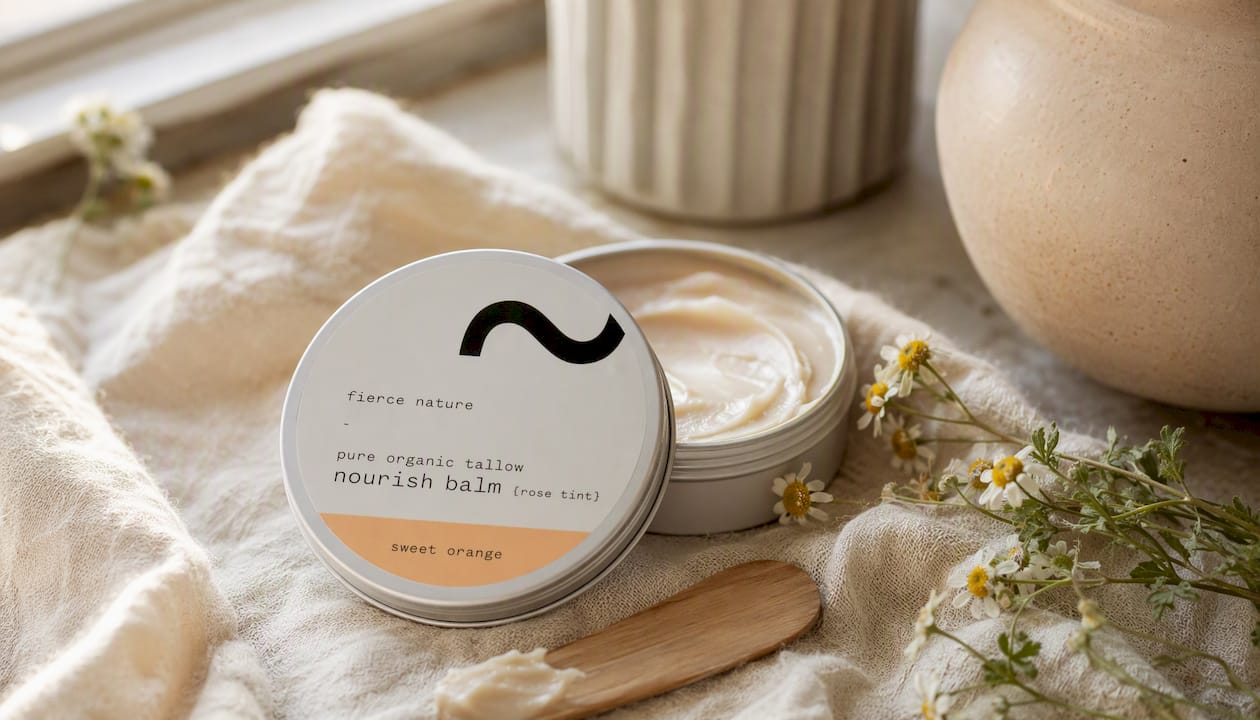
| Fierce Nature’s tallow balms | The Nourish Balm (Sweet Orange) provides a pasture-fed tallow sealing layer that maps directly to the occlusive-emollient step in a nourishing routine. |
The conventional skincare conversation tends to focus on actives: the newest peptide, the highest-percentage vitamin C, the most talked-about acid. We understand the appeal. But after years of working with tallow-based formulations and watching what actually happens to skin over time, we have come to a different view.
The most consistent improvements we see come not from chasing the strongest active, but from restoring what the barrier actually needs: compatible lipids, fat-soluble vitamins and the absence of unnecessary irritants. Tallow delivers all three in a single ingredient. That is not a marketing claim; it is a consequence of its lipid chemistry. The skin barrier is a fat structure, and feeding it fats that resemble its own composition is a logical, evidence-supported approach.
We are transparent about the limits of the evidence. Tallow has historical use and a sound mechanistic rationale, but large-scale randomised controlled trials are limited. Where customer experience informs our practice, we say so. Where peer-reviewed evidence exists for a mechanism (lipid compatibility, occlusive barrier repair, fatty acid incorporation), we cite it. For complex skin conditions, a dermatologist’s input is always the right call, and we would never suggest otherwise.
What we do believe, firmly, is that the inside-out, outside-in approach described throughout this guide is the most honest and effective framework for skin nourishment available. Eat well, layer thoughtfully, protect with SPF, and choose ingredients your skin can actually use.
Fierce Nature makes handmade, non-toxic skincare in the UK using organic tallow as the foundation. Every product is crafted without synthetic fragrances, harsh preservatives or unnecessary fillers, because the goal is to feed the skin, not to dress it up.
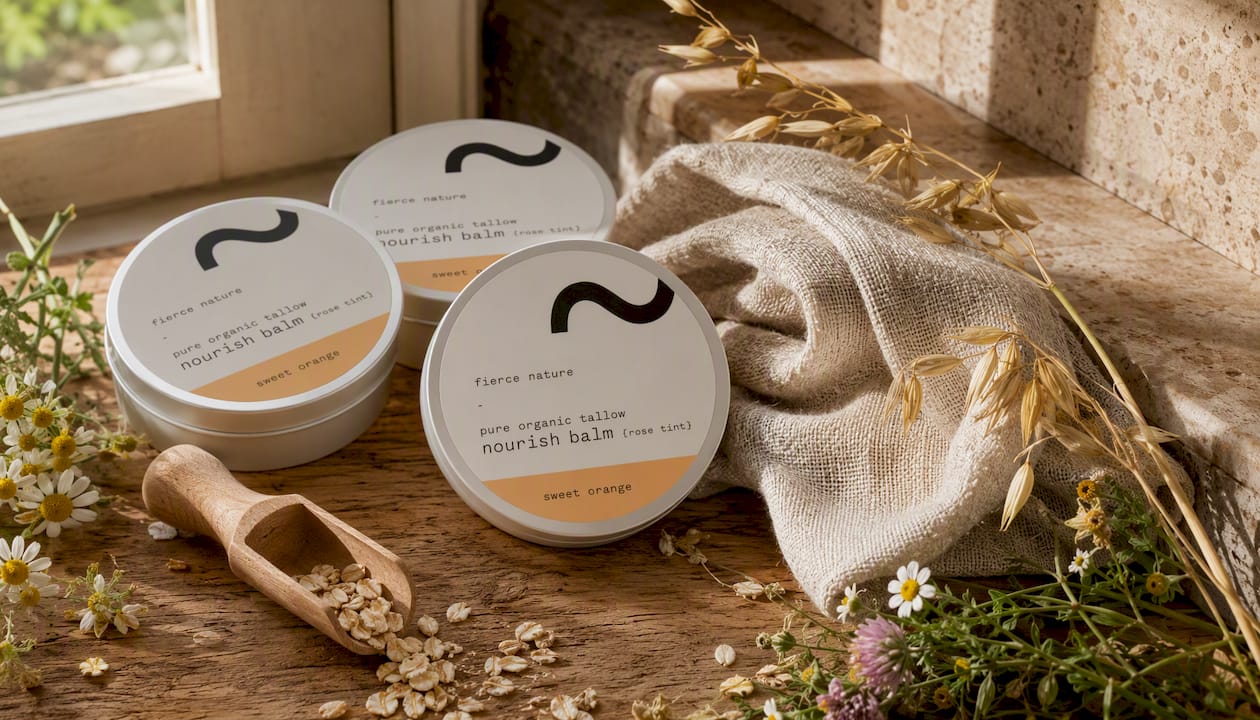
The Nourish Balm (Sweet Orange) is the core sealing and nourishing product: a pasture-fed tallow balm with a light sweet orange scent, designed to sit as the final lipid layer after your humectant. It suits dry patches, barrier repair after over-exfoliation, and anyone who wants a clean, short ingredient list.
For those who want a touch of natural colour alongside nourishment, the Nourish Balm with Rose Tint (Sweet Orange) adds a subtle rose shimmer to the same tallow base, making it a practical choice for lips, cheeks and décolletage as well as general barrier care.
If you are taking a whole-body approach to skin health, combining topical and internal support, the Biohacking bundle brings together Fierce Nature’s topical products with supplements designed to support skin from the inside. It maps directly to the inside-out, outside-in framework covered throughout this guide.
All three products are available through the Fierce Nature online shop. Browse the full range and read the ingredient notes on each product page to find the right fit for your routine.
The sources below are worth bookmarking if you want to go deeper on any of the topics covered in this guide. Check the publication date of each before applying clinical guidance, as recommendations in nutritional dermatology and topical ingredient science are updated regularly.
| Source | What you will find there | Why it is useful |
|---|---|---|
| PubMed (nutritional dermatology search) | Peer-reviewed studies on omega-3s, vitamins and collagen supplements for skin | Primary evidence base for dietary approaches; filter by review articles for summaries |
| PubMed (skin barrier and ceramides) | Clinical studies on ceramides, lipids and occlusives in barrier repair | Supports the topical ingredient class section; useful for understanding mechanism |
| PubMed (gut microbiome and skin) | Research on the gut-skin axis, probiotics and inflammatory skin conditions | Background for the dietary section on gut health and probiotics |
| NHS (vitamins and minerals guidance) | UK-specific guidance on safe supplement doses, contraindications and deficiency | Essential for UK readers before starting any supplement, particularly vitamin D |
| British Association of Dermatologists (bad.org.uk) | Clinical guidelines, patient information leaflets and referral pathways | Authoritative UK source for conditions requiring clinical management |
| Fierce Nature ingredient blog | Brand research on tallow biocompatibility, sourcing and lipid science | Useful for understanding the rationale behind tallow-based formulations |
When using any source for clinical decisions, check whether the guidance applies to your specific situation (age, health status, medications) and consult a qualified professional for personalised advice. This article provides general information, not medical advice.
The five core categories are cleansing, hydration, nourishment (barrier support), targeted treatment (actives such as retinoids and vitamin C), and sun protection. Most effective routines combine all five in a simple, consistent sequence.
Strong AHA or BHA acids and retinoids should not be applied on the same evening, as the combination significantly increases irritation and barrier disruption. Vitamin C at high concentrations and niacinamide can also cause temporary flushing in some people, though the risk is lower with modern, well-formulated products.
Initial improvements in texture and comfort typically appear within 4–6 weeks. Deeper changes to barrier function, fine lines and pigmentation generally take 8–12 weeks of consistent daily use.
Hydration increases the water content of the skin’s surface layers using humectants such as glycerin or hyaluronic acid, giving an immediate plumping effect. Nourishment supplies lipids, fatty acids and vitamins that repair and strengthen the barrier itself, producing structural change over weeks to months. Both are needed; neither replaces the other.
Definitions vary across sources, but a well-supported framework covers: cleansing, hydration, barrier nourishment (lipids and emollients), targeted actives (antioxidants, retinoids, peptides), sun protection, and lifestyle factors (sleep, diet, stress management). Together, these six areas address skin health from the surface down to the cellular level.