Cart
0
You may also like



TL;DR:
- Tallow balm is a natural moisturizer made from grass-fed beef fat, deeply nourishing and hydrating dry skin. It mimics skin lipids closely, absorbs well, and supports skin repair, especially on hands, feet, elbows, and lips. Use sparingly, patch test first, and choose high-quality, low-temperature rendered tallow for optimal benefits.
Tallow balm is defined as a skin moisturiser made from rendered beef fat, formulated to deeply nourish and hydrate dry or depleted skin. Unlike synthetic creams, it closely mimics the fatty acid profile of human skin lipids, which is why it absorbs so readily and feels so natural on the skin. At Fierce Nature, we have built our entire natural skincare range on this very foundation. Tallow has been used for centuries as a skin emollient, and its return to modern skincare routines is no accident. For anyone in the UK searching for a genuinely natural, deeply moisturising option, understanding what beef tallow balm is and how to use it well is the right place to start.
Rendered beef tallow is the primary ingredient in any quality tallow balm. It is the fat sourced from around the kidneys of cattle, known as suet, which is then slowly melted down and purified into a smooth, stable fat. The source and rendering method matter enormously. Grass-fed, low-temperature rendered tallow retains bioavailable vitamins A, D, E, and K, which are the very nutrients your skin uses to repair, regenerate, and protect itself. Commodity tallow rendered at high temperatures is nutritionally depleted by comparison, and offers far less skin benefit.
The difference between grass-fed and grain-fed tallow is not just marketing. Grass-fed suet produces a fat with a richer nutrient profile and a more favourable fatty acid composition. Grain-fed or commercially processed tallow tends to be higher in inflammatory omega-6 fatty acids and lower in the fat-soluble vitamins that make tallow so restorative for skin. When you are choosing a tallow-based product, the source of the fat is the single most important quality indicator.
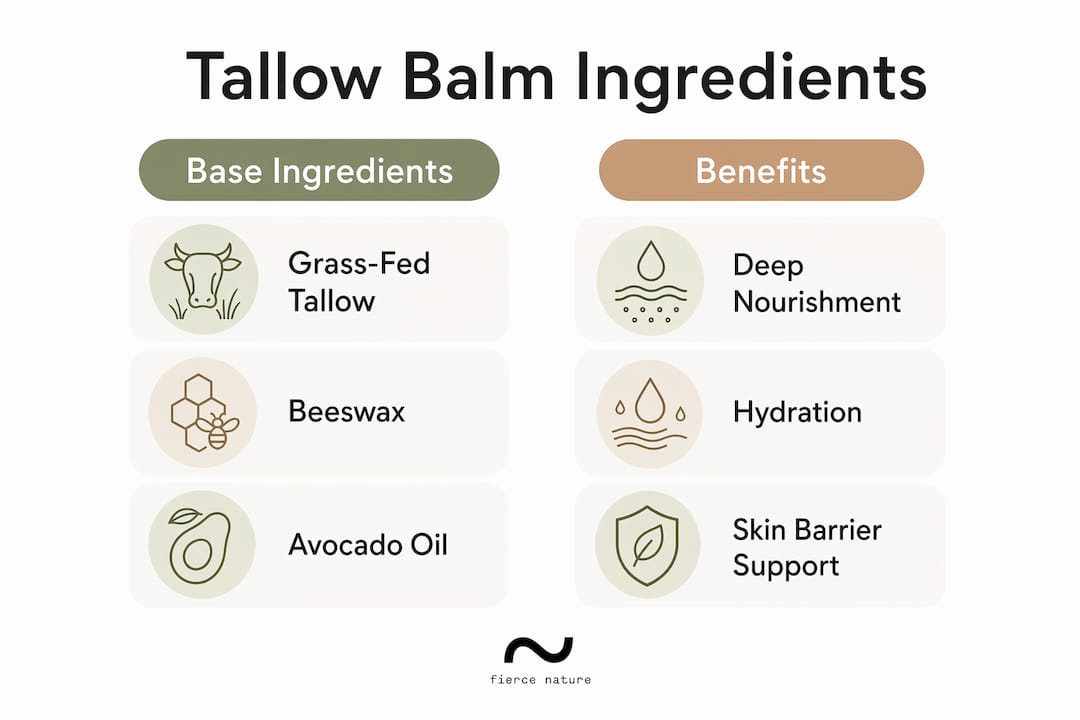
Most well-crafted tallow balm formulations go beyond tallow alone. Common additions include beeswax, avocado oil, and vitamin E, each chosen to enhance the skin barrier and add antioxidant protection. Beeswax creates a breathable, protective layer over the skin without sealing out air. Avocado oil contributes oleic acid and additional vitamins, making the balm even more compatible with dry or mature skin. Vitamin E acts as a natural preservative and a free-radical fighter, extending both shelf life and skin benefit.
| Ingredient | Role in the Formula | Key Benefit for Skin |
|---|---|---|
| Grass-fed beef tallow | Base emollient | Deep hydration, fatty acid replenishment |
| Beeswax | Texture and barrier agent | Breathable moisture seal |
| Avocado oil | Carrier oil | Oleic acid, added vitamins |
| Vitamin E | Antioxidant and preservative | Protects against oxidative stress |
These ingredients work together rather than in isolation. Tallow provides the deep nourishment, beeswax holds it in place, and avocado oil and vitamin E round out the protective and restorative qualities of the finished product.
Pro Tip: When reading a tallow balm ingredient list, look for “suet” or “beef tallow” as the first listed ingredient. If it appears third or fourth, the product is more filler than food for your skin.
Tallow balm supports skin hydration by replenishing the lipids your skin naturally produces but loses through age, weather, and exposure to harsh products. The UK climate, with its cold, damp winters and central heating indoors, is particularly hard on skin. A rich, occlusive moisturiser like a whipped tallow balm or a solid tallow bar works with your skin rather than sitting on top of it.
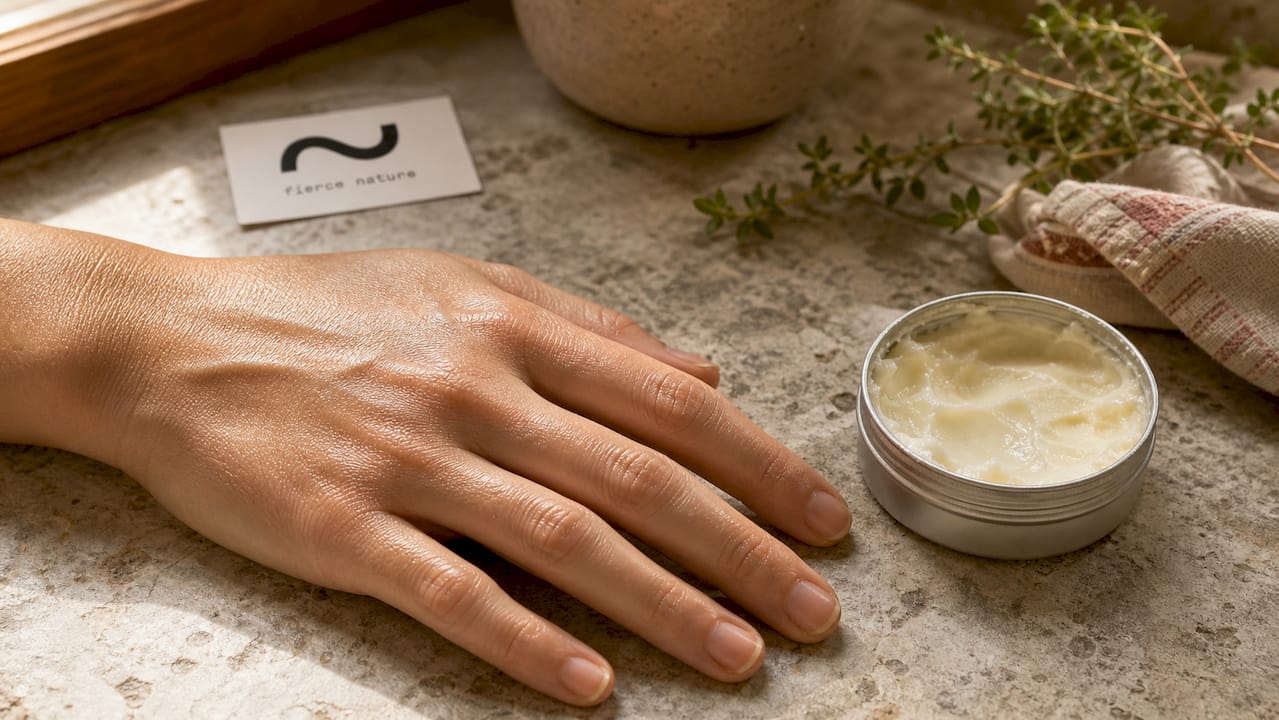
The most noticeable results come from areas of the body where skin is thickest and most prone to dryness:
Tallow balm is fragrance-free and chemical-free in its purest form, which makes it a genuinely gentle option for reactive skin. Many people who struggle with conventional moisturisers find that the synthetic preservatives, fragrances, and emulsifiers in those products are the actual cause of their irritation. A simple, clean tallow face cream or body balm removes those variables entirely. Experts stress that avoiding fragrance, preservatives, and essential oils is often more important than any single ingredient for managing sensitive or eczema-prone skin. Tallow balm, in its unscented form, ticks all of those boxes.
Tallow also has a natural affinity with human skin because its fatty acid profile, particularly its oleic, palmitic, and stearic acid content, closely mirrors the composition of our own sebum. This is why it absorbs without the greasy residue that heavier plant-based oils sometimes leave behind.
Pro Tip: For tallow balm on the face, warm a tiny amount between your fingertips first. It melts at body temperature and applies far more evenly when it is already soft.
Tallow balm is a heavy, occlusive moisturiser, and that is both its greatest strength and its main limitation. Expert consensus discourages use on acne-prone, oily, or sensitive skin because its occlusive nature can trap sebum and bacteria in pores, potentially triggering breakouts or flare-ups. This is not a reason to avoid it entirely. It is a reason to use it thoughtfully.
Dermatologists generally advise using tallow balm on body skin such as hands, elbows, and feet rather than the face if you have oily or acne-prone skin. Facial skin is more prone to breakouts, and tallow’s occlusive quality can exacerbate acne or rosacea. If you have dry or normal skin on your face, a small amount used sparingly is unlikely to cause problems. If you have combination or oily skin, keep it to the body.
Follow these steps when adding any tallow-based product to your routine for the first time:
The relationship between tallow balm and eczema is one of the most searched topics in this space, and it deserves an honest answer. There is limited clinical evidence supporting tallow balm for eczema over ceramide-based moisturisers, which have a much stronger body of clinical research behind them. Tallow may provide comfort and hydration for dry, eczema-prone skin, particularly in its unscented, additive-free form. However, it is not a treatment for eczema, and it should not replace medically recommended products without guidance from a dermatologist or GP.
“Many people with eczema-prone skin find relief from simple, fragrance-free emollients. Tallow balm can fit that description when it is pure and well-sourced, but the absence of clinical trials means we cannot make strong therapeutic claims for it.” This is the honest position, and we think you deserve to hear it.
Dr Victor Ross of Scripps Health notes that tallow balm’s heavy texture offers short-term relief for dry skin but lacks formal regulatory oversight and safety testing. That concern is particularly relevant for small-batch and DIY products, which are not subject to the same quality controls as regulated cosmetics.
Tallow balm occupies a specific niche in the moisturiser market. It is richer and more nutrient-dense than most plant-based options, but it behaves differently from ceramide creams, petroleum jellies, and lightweight facial oils. Understanding where it sits helps you decide whether it belongs in your routine.
| Moisturiser Type | Occlusive Strength | Nutrient Profile | Best For |
|---|---|---|---|
| Tallow balm | High | Rich in vitamins A, D, E, K | Very dry body skin, hands, heels |
| Ceramide cream | Moderate | Skin-identical lipids | Eczema, barrier repair, face |
| Petroleum jelly | Very high | None | Sealing in moisture, cracked skin |
| Plant-based oils | Low to moderate | Varies by oil | Normal to dry skin, face |
Ceramide creams such as CeraVe and Aveeno Skin Relief are the dermatologist-recommended standard for barrier repair, particularly for eczema-prone skin. They have strong clinical backing and are formulated to work with the skin’s natural structure. Tallow balm offers a more traditional, food-based alternative with a comparable fatty acid profile, but without the clinical trial data to match.
Petroleum jelly, such as Vaseline, is the most occlusive option available and is excellent at sealing in moisture. It contains no nutrients, however, and simply acts as a physical barrier. Tallow balm does both: it seals and nourishes simultaneously.
The tallow balm category has expanded considerably. You will now find:
When choosing between DIY recipes and commercial products, quality control is the deciding factor. Many small-batch and DIY tallow products lack formal safety and microbial testing, which raises genuine concerns about consistency and shelf stability. A reputable UK-based maker who uses grass-fed tallow, low-heat rendering, and clean supporting ingredients is a far safer choice than an untested home recipe.
Tallow balm is a nutrient-rich, deeply moisturising emollient that works best on dry body skin when sourced from grass-fed cattle and used in small, targeted amounts.
| Point | Details |
|---|---|
| Source quality is everything | Choose grass-fed, low-heat rendered tallow to retain vitamins A, D, E, and K. |
| Less is genuinely more | A pea-sized amount melts on contact and covers a large area without greasiness. |
| Patch test without exception | Apply to a small area for 24–48 hours before full use, especially on sensitive skin. |
| Not suitable for all skin types | Avoid on acne-prone, oily, or rosacea-affected skin due to its occlusive nature. |
| Eczema claims need context | Tallow balm may soothe dry skin but lacks the clinical evidence of ceramide-based moisturisers. |
At Fierce Nature, we have spent years watching people either dismiss tallow entirely or expect it to solve every skin problem overnight. Both responses miss the point. Tallow balm is not a miracle product. It is a deeply nourishing, honest ingredient that does exactly what it promises when you use it correctly and choose it wisely.
The most common mistake we see is overuse. People assume that more product means more benefit. With tallow, the opposite is true. Applying only a small amount heats the balm to a workable consistency that melts on contact and penetrates without greasiness. A heavy application sits on the surface, feels uncomfortable, and is far more likely to cause congestion.
The second mistake is poor sourcing. Not all tallow is equal. Commodity tallow rendered at high temperatures is nutritionally depleted, and using it on your skin is not meaningfully different from using a cheap synthetic cream. The rendering process and the animal’s diet are what determine whether you are getting a genuinely restorative product or just a greasy filler.
For UK users specifically, we find that tallow balm performs beautifully through autumn and winter when central heating and cold air strip the skin relentlessly. Used on hands, feet, and elbows as part of a consistent evening routine, it transforms the condition of dry skin within two to three weeks. Explore the Fierce Nature skin blog for more guidance on building a natural routine that works for the UK climate.
We also want to be clear about the face. We use tallow in our own facial products, and we stand behind it. But we always recommend starting with a tiny amount, warming it between your fingers, and applying it to clean, dry skin. If you have oily or acne-prone skin, keep tallow on the body and explore lighter options for your face.
— Fierce Nature
Fierce Nature handcrafts every product in the UK using pure, organic, grass-fed tallow as the foundation. There are no synthetic fillers, no harsh preservatives, and no empty promises. The unscented tallow bar is the ideal starting point for anyone new to tallow-based skincare. It is fragrance-free, suitable for sensitive skin, and formulated for multi-use on face, body, and lips. For those who prefer a scent, the scented tallow bar offers the same nourishing base with carefully chosen natural botanicals. If you have a little one with delicate skin, the non-toxic baby skin essentials range brings the same clean, tallow-based care to the most sensitive skin of all.
Tallow balm is used as a deep moisturiser for very dry skin, particularly on hands, heels, elbows, and lips. It is also used as a tallow face cream by those with dry or normal skin types seeking a natural, fragrance-free option.
Tallow balm in its unscented, additive-free form is generally well-tolerated by sensitive skin. Dermatologists recommend patch testing for 24–48 hours before full application to rule out any reaction.
Tallow balm may provide comfort and hydration for dry, eczema-prone skin, but clinical evidence for eczema treatment is limited compared to ceramide-based moisturisers. It is not a substitute for medically recommended treatments.
A pea-sized amount is sufficient for a large area of skin. Tallow melts at body temperature and spreads further than expected, so starting small prevents overuse and reduces the risk of pore congestion.
Whipped tallow balm is aerated during production, giving it a lighter, creamier texture that is easier to spread. A solid tallow bar is denser and more concentrated, making it longer-lasting and particularly effective for very dry or cracked skin.