Cart
0
80% Also Added this





TL;DR:
Truly natural skincare involves products with ingredients derived mainly from nature, with transparent sourcing and minimal processing.
Regulations vary globally, and certifications like COSMOS or NATRUE offer third-party verification of natural-origin claims.
Consumers should read INCI lists, seek credible certifications, and understand that natural does not automatically mean safer or more effective.
Truly natural skincare is defined as products formulated predominantly from ingredients derived directly from nature, with minimal processing and transparent, verifiable sourcing. The term sounds straightforward, but the reality is layered with regulatory gaps, marketing liberties, and genuine scientific complexity. Understanding what sits behind the word “natural” on a label is one of the most useful things you can do for your skin and your health. At Fiercenature, we believe the land provides everything your skin needs. Getting there honestly requires knowing how to read between the lines.
Truly natural skincare, known in industry circles as “natural cosmetics,” refers to products where the majority of ingredients originate from plant, mineral, or animal sources and have undergone only limited processing to preserve their natural character. The challenge is that no single global authority has locked down a legally binding definition. That gap is precisely where confusion, and sometimes deception, takes root.
The industry standard most widely referenced is ISO 16128, which provides a method for calculating the natural-origin content of a cosmetic product by assigning a naturality index to each ingredient. A product scoring close to 100% on this index contains almost entirely nature-derived ingredients. A score of 40% might still be marketed as “natural.” ISO 16128 is a calculation tool, not a certification or a legal threshold. That distinction matters enormously when you are standing in a shop aisle trying to make an informed choice.
The definition of natural skincare also hinges on processing. An ingredient extracted directly from a plant with cold pressing, such as rosehip oil or jojoba oil, sits at one end of the spectrum. At the other end sit “nature-derived” substances that have been chemically transformed to the point where their original molecular structure barely resembles the source material. Both can technically claim natural origin. Knowing where an ingredient sits on that spectrum is central to understanding what you are actually putting on your skin.

One common misconception worth addressing immediately: natural does not automatically mean safer, milder, or more effective. Poison ivy is entirely natural. So is arsenic. The origin of an ingredient tells you about its source, not its safety profile. We will return to this point in detail, because it shapes every honest conversation about natural skincare.
The regulatory picture is fragmented, and that fragmentation directly affects what brands can claim on their packaging.
In the European Union, all cosmetics are governed by EU Regulation (EC) No 1223/2009, which sets strict safety, labelling, and notification requirements. What this regulation does not do is create a separate legal category for natural cosmetics. A product labelled “natural” in the EU must comply with the same rules as any other cosmetic. The word “natural” on the label is treated as a marketing claim, and EU safety rules apply equally to natural and synthetic products. The burden falls on the brand to substantiate any claim that could mislead consumers.
In the United States, the picture is similarly open. The US FDA has no formal definition of “natural” for cosmetics, meaning any brand can use the word without meeting a uniform standard. The USDA Organic certification applies only to products making “organic” claims, not “natural” ones. These are two distinct categories, and conflating them is one of the most common errors consumers make.
EU framework: “Natural” is a marketing claim under EC No 1223/2009. No exemption from safety assessment applies.
US framework: FDA does not regulate “natural” cosmetic claims. USDA Organic is a separate, opt-in certification for organic ingredients only.
ISO 16128: Provides a naturality index calculation for ingredient origin but does not validate or restrict marketing claims.
Consumer protection: Regulators in both regions can act against misleading claims under general consumer protection law, even without a specific “natural” definition.
“Regulators treat ‘natural’ as a claim that must not mislead consumers, placing the burden on substantiated communication, not ingredient origin alone.” This means a brand using “natural” loosely is not necessarily breaking a cosmetics law, but it may be breaching consumer protection legislation if the claim is demonstrably false or misleading.
The practical takeaway is this: the word “natural” on a label is a starting point for investigation, not a guarantee of anything. The absence of a universal legal definition is not an accident. It reflects the genuine complexity of defining what “natural” means across thousands of possible ingredients and formulations.
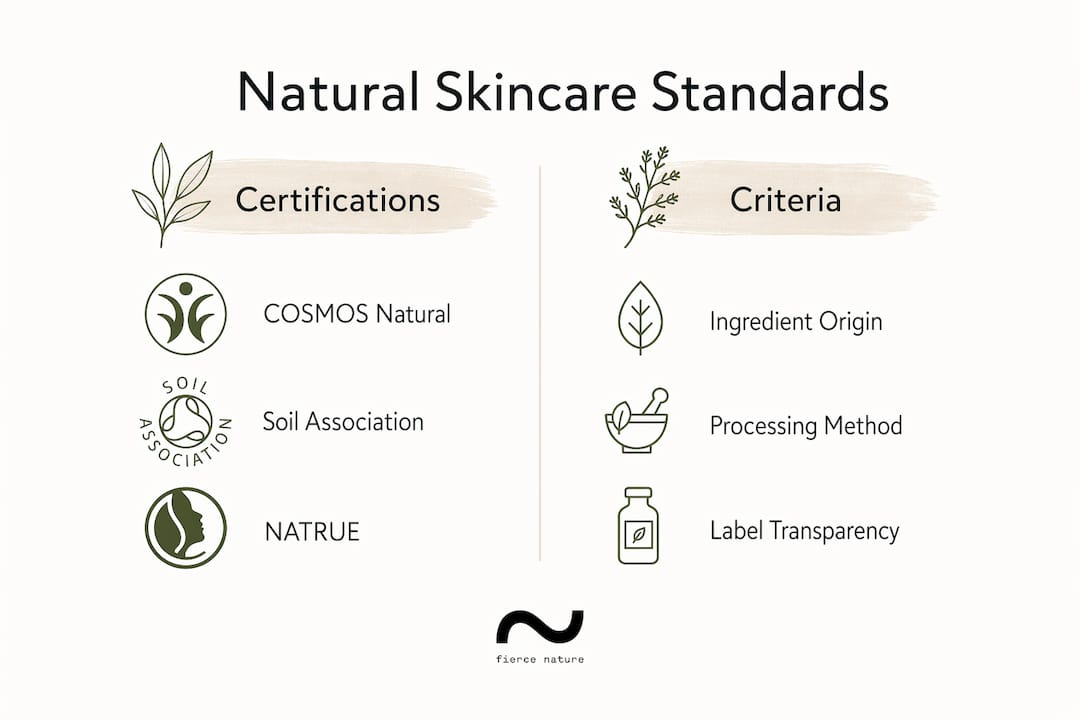
Because the term “natural” is otherwise loosely defined and inconsistently used by brands, certifications have become the most reliable practical signal of product authenticity. They do the verification work that regulation currently does not.
The four most recognised certification frameworks in the UK and Europe are:
COSMOS Natural and COSMOS Organic: Administered by a consortium including the Soil Association in the UK, COSMOS sets clear thresholds for natural-origin content, permitted processing methods, and banned synthetic ingredients. COSMOS Organic requires a minimum percentage of organic ingredients in addition to natural-origin criteria.
NATRUE: A Belgian-based standard that grades products across three tiers: Natural Cosmetic, Natural Cosmetic with Organic Portion, and Organic Cosmetic. NATRUE specifies permitted and prohibited processing methods in detail.
ECOCERT: A French certification body that audits both ingredient origin and manufacturing processes. ECOCERT’s standards align closely with COSMOS in many respects.
Soil Association Organic: The UK’s leading organic certification body, whose COSMOS-aligned standards cover both organic and natural claims.
Each of these frameworks requires documented ingredient origin and processing standards, giving consumers a level of assurance that a marketing claim alone cannot provide.
| Certification | Focus | Organic requirement | UK recognition |
|---|---|---|---|
| COSMOS Natural | Natural-origin content and processing | No | High |
| COSMOS Organic | Natural and organic content | Yes | High |
| NATRUE | Tiered natural and organic grading | Optional | Moderate |
| Soil Association Organic | Organic and natural standards | Yes | Very high |
It is worth understanding what certifications do not cover. A certified natural product is not automatically free from all potential irritants. Certification confirms ingredient origin and processing integrity, not individual skin compatibility. A COSMOS-certified product containing lavender essential oil is still a potential irritant for someone with a fragrance sensitivity.
Pro Tip: When checking a product for certification, look for the logo directly on the packaging and cross-reference it on the certifying body’s public database. Logos can be imitated; database entries cannot.
The distinction between natural and organic certifications is also worth holding clearly. Organic certification, whether from the Soil Association or COSMOS Organic, requires that a defined proportion of ingredients are grown without synthetic pesticides or fertilisers. A product can be certified natural without any of its ingredients being organically grown. Both standards have value, but they answer different questions.
The most persistent misconception in the natural skincare space is that natural origin equals safety. It does not. EU safety assessments focus on product safety regardless of ingredient origin, which means a botanical extract faces the same scrutiny as a synthetic compound. The safety profile of an ingredient depends on its chemical properties, concentration, and the individual using it, not on whether it came from a plant or a laboratory.
Several specific misconceptions deserve direct attention:
Botanical ingredients can cause allergic reactions. Common natural ingredients including tea tree oil, lavender, citrus extracts, and certain nut oils are among the most frequent causes of contact dermatitis in skincare users. Natural origin does not reduce allergenic potential.
“Free from” claims can mislead. A product labelled “free from parabens” or “free from sulphates” is not automatically natural or safer. It may simply have replaced those ingredients with other synthetic compounds.
Concentration matters as much as origin. A naturally derived acid at a high concentration can cause significant skin damage. The same acid at a low concentration in a well-formulated product may be entirely benign. Formulation is the determining factor.
Preservation is necessary, even in natural products. Natural formulations still require preservation to prevent microbial growth. Some natural preservatives, such as rosemary extract or certain essential oils, carry their own sensitisation risks.
Pro Tip: Before introducing any new skincare product, natural or otherwise, conduct a patch test on the inner arm for 24 to 48 hours. This is the single most reliable way to identify personal sensitivity before applying a product to your face.
Safe skincare depends on formulation and individual skin sensitivity rather than ingredient origin. This is not an argument against natural skincare. It is an argument for informed natural skincare. Knowing your own skin, reading the full INCI (International Nomenclature of Cosmetic Ingredients) list, and not assuming that a natural label removes all risk puts you in a far stronger position as a consumer.
The INCI list is the standardised ingredient list required on all cosmetics sold in the EU and UK. Ingredients are listed in descending order of concentration. If a “natural” product lists water and a synthetic emulsifier in the first three positions, the natural ingredients further down the list are present in very small amounts. The INCI list tells the real story.
Choosing genuinely natural skincare requires moving past the front of the packaging and asking specific, answerable questions. Here is a practical framework for doing exactly that.
Read the INCI list, not the marketing copy. The ingredient list is the only legally required disclosure of what is actually in a product. Look for recognisable plant-derived names such as Rosa canina (rosehip), Butyrospermum parkii (shea butter), or Bos taurus (tallow). Long strings of synthetic chemical names in the first five positions suggest a product that is natural in name only.
Look for a recognised certification logo. COSMOS, NATRUE, ECOCERT, and Soil Association logos on packaging indicate that a third party has verified the natural-origin claims. Cross-reference the certification on the certifying body’s website to confirm it is current.
Understand the processing spectrum. Natural ingredients exist on a spectrum from minimally processed raw materials through to fermented ingredients and nature-derived chemically transformed substances. A cold-pressed oil is closer to its natural source than a heavily processed “nature-derived” emulsifier. Certification schemes specify which processing levels they permit.
Ask about naturality calculations. Brands committed to transparency will reference ISO 16128 or a similar methodology to substantiate their natural-origin percentage. Products lacking transparent calculations risk being unverifiable marketing labels. If a brand cannot tell you how they calculated their natural-origin content, that is informative in itself.
Assess your own skin’s needs. A natural skincare routine built around ingredients your skin responds well to is worth far more than a product with an impressive certification but ingredients you react to. Keep a simple record of what works and what does not.
| What to check | Why it matters |
|---|---|
| INCI list ingredient order | Reveals true concentration of natural vs synthetic ingredients |
| Certification logo and validity | Confirms third-party verification of natural-origin claims |
| Processing level of key ingredients | Distinguishes minimally processed from nature-derived transformed substances |
| Naturality percentage methodology | Indicates whether the brand uses ISO 16128 or a comparable standard |
| Personal skin history | Identifies known triggers regardless of ingredient origin |
The expert skincare tutorials from Fiercenature walk through label reading and ingredient analysis in practical detail, which is a useful resource if you are new to decoding INCI lists.
Truly natural skincare is defined by transparent ingredient sourcing, verifiable naturality calculations, and third-party certification, not by marketing language alone.
| Point | Details |
|---|---|
| No universal legal definition | “Natural” is a marketing claim in both the EU and US; no legal threshold exists for cosmetics. |
| ISO 16128 measures, not certifies | The standard calculates natural-origin content but does not validate or restrict product claims. |
| Certifications provide real assurance | COSMOS, NATRUE, ECOCERT, and Soil Association logos confirm third-party verification of ingredient origin. |
| Natural does not equal safe | Botanical ingredients can cause irritation; safety depends on formulation and individual skin sensitivity. |
| Read the INCI list | Ingredient lists in descending order reveal the true composition behind any natural claim. |
By Ralph Barrozo
After years of working closely with skincare formulations and watching the natural beauty space grow, I have come to one firm conclusion: the word “natural” does more harm than good when it is used without substance behind it. Not because natural ingredients are ineffective. Quite the opposite. It is because the word has been stretched so far that it now covers everything from cold-pressed rosehip oil to heavily processed “nature-derived” emulsifiers that share almost nothing with their plant source.
What I find most telling is the gap between brands that can explain their naturality calculations and those that cannot. When I ask a brand how they arrived at their “95% natural” claim and they cannot reference a methodology, that tells me the number is decorative. ISO 16128 exists precisely to close that gap. Brands that use it and publish the results are showing their working. That transparency is worth more than any certification logo on its own.
The other thing I have observed is that consumers often feel safer with natural products in a way that leads them to skip patch testing. That is the one habit I would change if I could. Your skin does not know whether an ingredient came from a plant or a laboratory. It knows whether it tolerates that ingredient. Patch testing is not a sign of distrust in a product. It is the most respectful thing you can do for your own skin.
My honest advice: prioritise brands that can tell you exactly where their ingredients come from, how they were processed, and what standard they used to calculate their natural-origin content. That level of transparency is rare, and it is the clearest signal that a brand is working with your skin, not against it.
— Ralph Barrozo
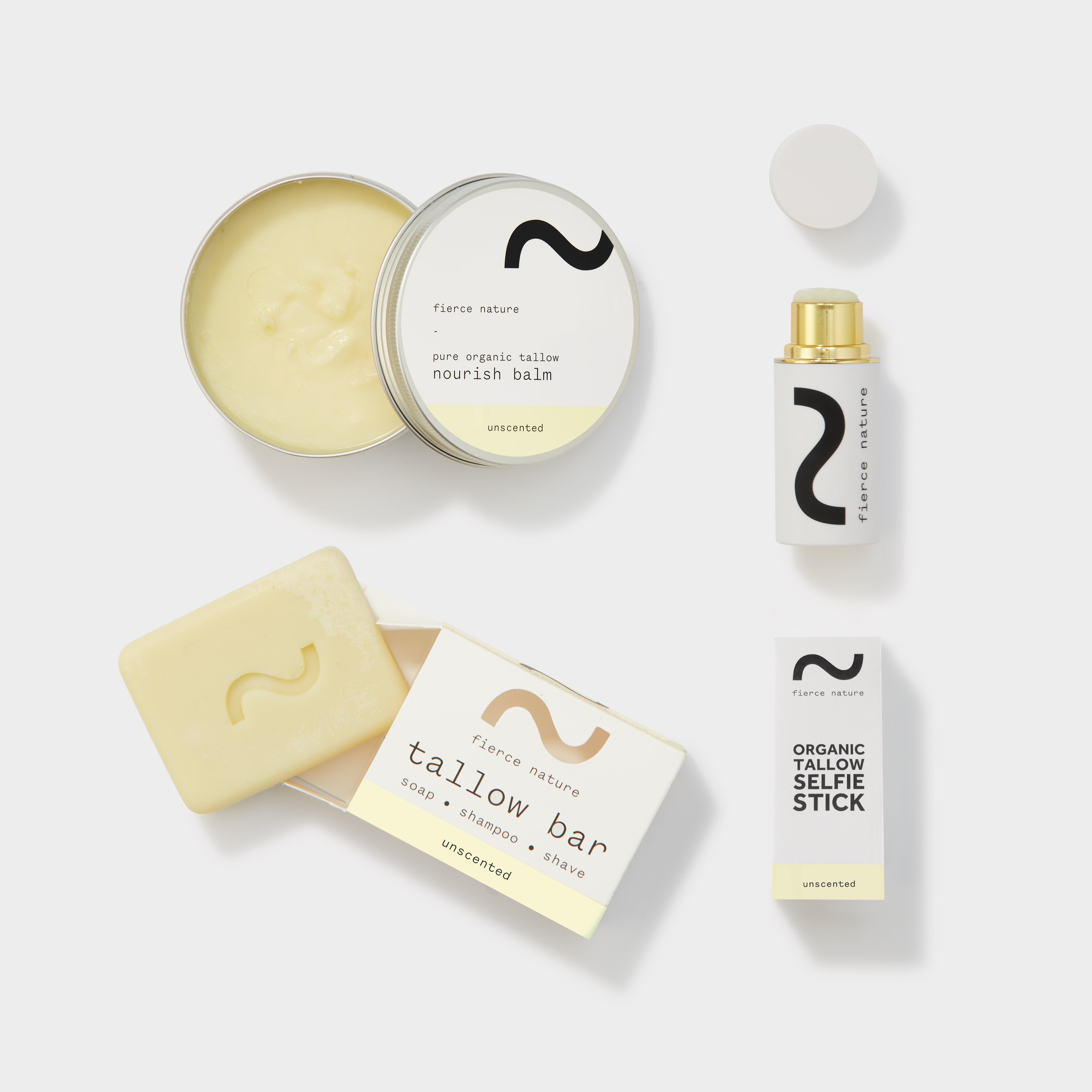
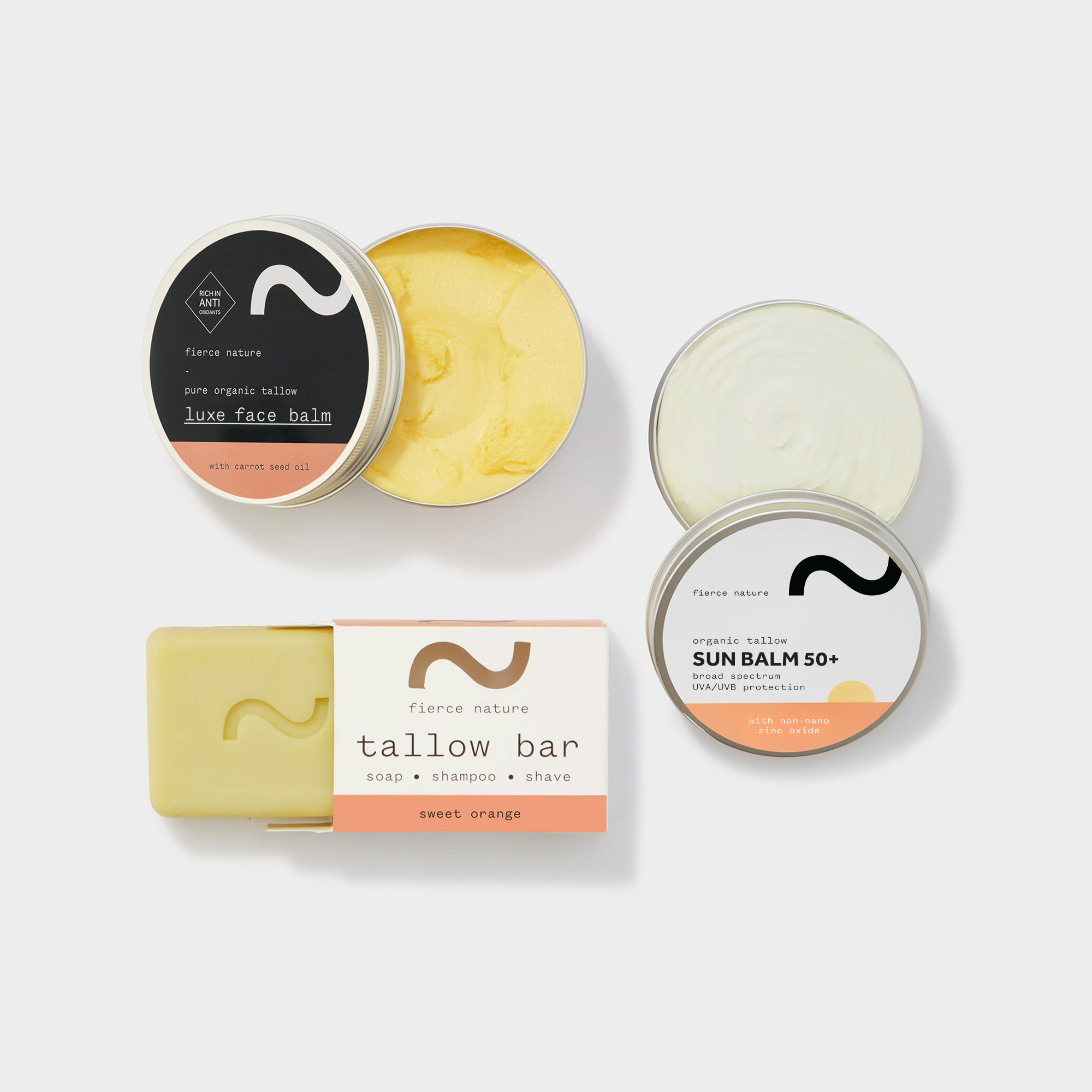
Fiercenature was built on the belief that the land provides everything your skin needs, and that honesty about what goes into a product is non-negotiable. Every Fiercenature product is handcrafted in the UK using premium, naturally sourced ingredients, with pure organic tallow as the foundation. Tallow’s bioavailability makes it a deeply nourishing skin food that has been used for centuries, long before synthetic emulsifiers existed.
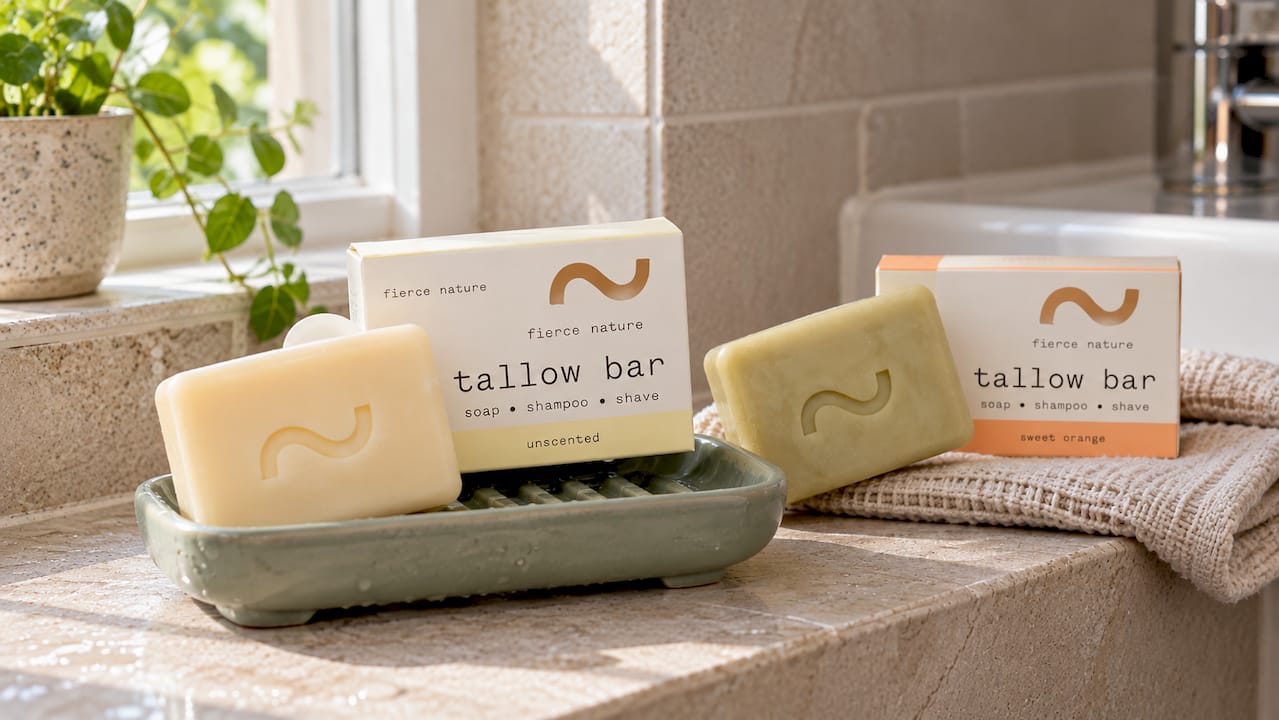
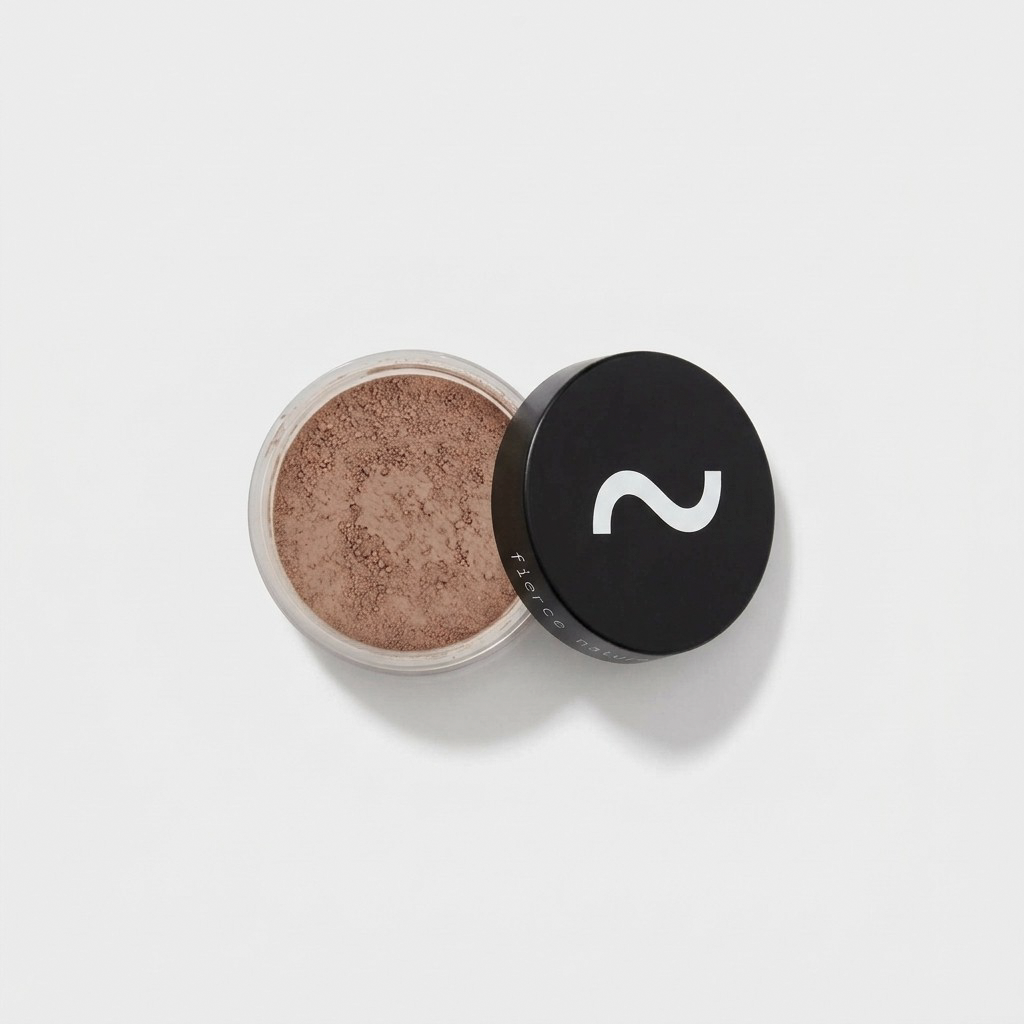
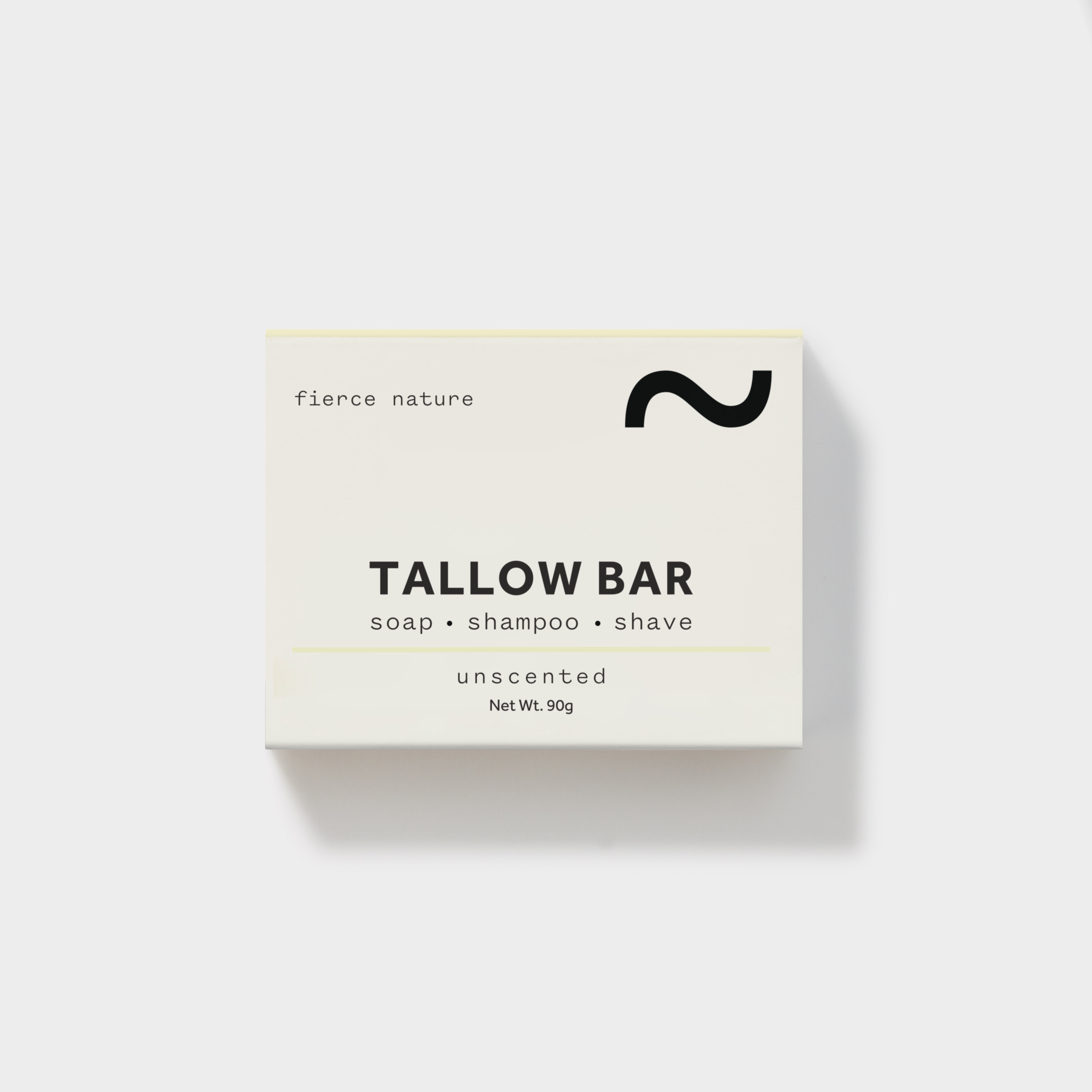
If you are ready to experience what transparent, ingredient-led skincare feels like, explore the natural skin tint range for radiant, natural coverage, or discover the unscented tallow bar for a minimally processed, deeply nourishing daily cleanse. Both are formulated with the same commitment to clarity and care that defines everything Fiercenature makes.
Natural skincare refers to products formulated predominantly from ingredients derived from plant, mineral, or animal sources with minimal processing. No single legal definition exists in the EU or US, so the term is best verified through certifications such as COSMOS or NATRUE and naturality calculations based on ISO 16128.
Organic and natural skincare are distinct categories. Organic certification, such as COSMOS Organic or Soil Association Organic, requires that a defined proportion of ingredients are grown without synthetic pesticides. A product can be certified natural without any organically grown ingredients.
Natural origin does not guarantee safety for sensitive skin. Botanical ingredients including lavender, citrus extracts, and tea tree oil are among the most common causes of contact dermatitis. Safety depends on formulation, concentration, and individual skin sensitivity, not ingredient origin alone.
Check the INCI ingredient list for recognisable plant-derived names in the top positions, look for a recognised certification logo such as COSMOS or NATRUE, and ask whether the brand references ISO 16128 or a comparable methodology for their natural-origin percentage. Transparent sourcing and third-party verification are the clearest indicators of a genuine product.
ISO 16128 is an international standard that provides a method for calculating the natural-origin content of cosmetic ingredients and finished products. It assigns a naturality index to each ingredient. It is a calculation tool, not a certification, and its presence indicates a brand is using a recognised methodology to substantiate their natural claims.