Cart
0
You may also like



TL;DR:
- Beef tallow contains trace amounts of vitamins A, D, E, and K, primarily supporting skin barrier function. Its primary benefit comes from fatty acids like oleic, palmitic, and stearic acids, which naturally moisturize and restore the skin’s protective layer. Tallow functions best as a nourishing, occlusive moisturizer, not as a source of therapeutic vitamin concentrations for skin conditions.
Beef tallow is defined as rendered animal fat containing trace fat-soluble vitamins A, D, E, and K, alongside a fatty acid profile that closely mirrors human sebum. The role of tallow vitamins in skin health is real but modest. These nutrients contribute to antioxidant protection and barrier support, yet their concentrations are too low to replicate the effects of dedicated vitamin serums or retinoid treatments. Tallow’s most significant skin benefit comes from its fatty acids, particularly oleic, palmitic, and stearic acid, which seal moisture and restore the skin’s natural barrier. Understanding this distinction helps you make informed choices rather than chasing claims that overstate what tallow vitamins can realistically deliver.
Beef tallow contains four fat-soluble vitamins: A, D, E, and K. These are present because fat-soluble nutrients concentrate in animal fat tissue, making tallow a natural carrier for them. Vitamin B12 also appears in trace amounts, though it plays no meaningful role in topical skin care. The critical word throughout is trace. These vitamins exist at levels far below what you would find in a dedicated vitamin serum or even a cold-pressed plant oil like rosehip or sea buckthorn.
Vitamin A in tallow is the most discussed nutrient in natural skincare circles. However, vitamin A levels in tallow are unlikely to reach the therapeutic thresholds found in retinol or retinoid products. The quantity varies depending on the animal’s diet. Grass-fed tallow consistently contains higher levels of fat-soluble vitamins than grain-fed tallow, because pasture-raised cattle consume beta-carotene-rich grasses that convert to vitamin A in their fat stores. This is why sourcing matters when choosing a tallow product.
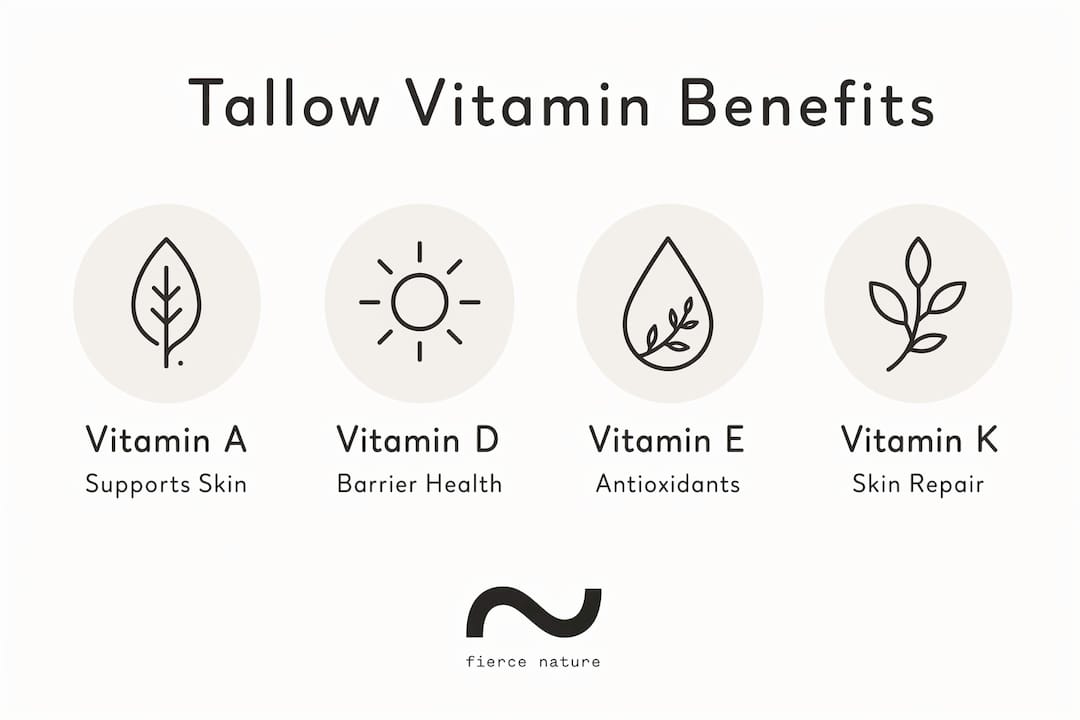
Vitamin E provides antioxidant activity that can help protect the skin from oxidative stress. Vitamin D supports barrier function and has anti-inflammatory properties. Vitamin K contributes to skin repair processes. Yet fat-soluble vitamins in tallow exist only in trace amounts and should not be expected to replicate retinoid or dedicated vitamin A derivative benefits. This means tallow functions as a gentle, supportive ingredient rather than a therapeutic vitamin treatment.
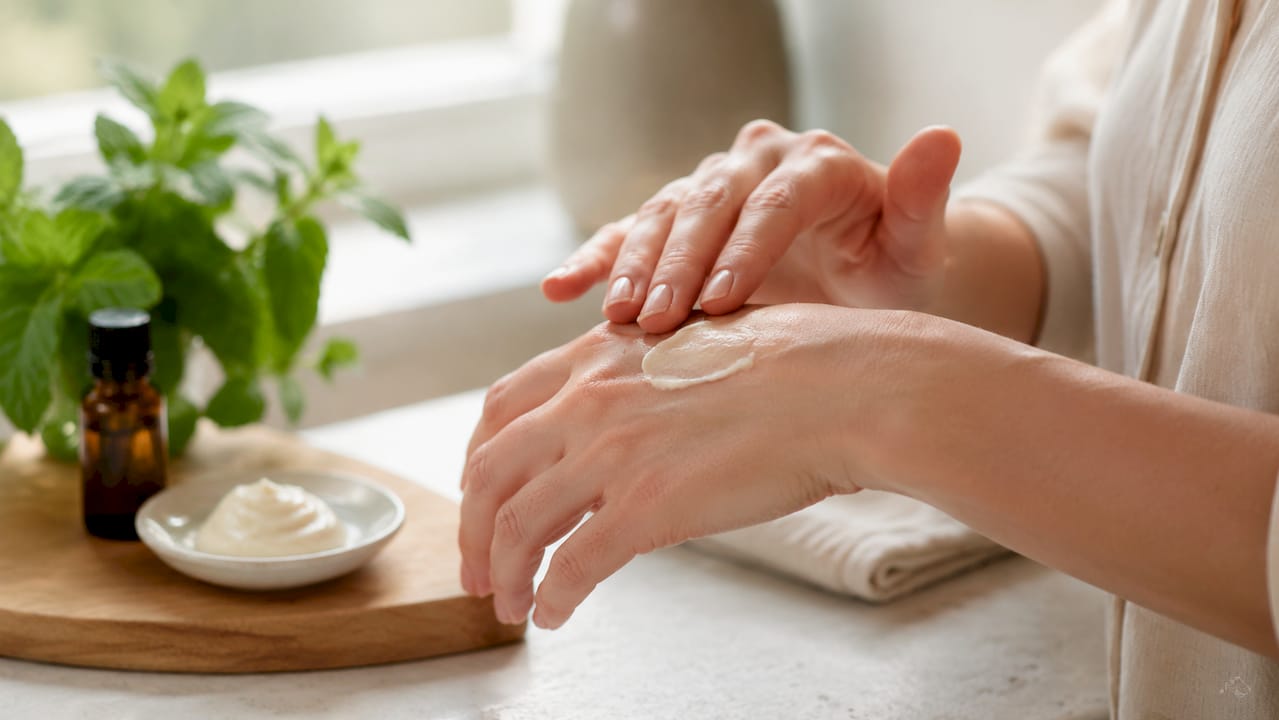
The table below illustrates the contrast between tallow’s vitamin content and what you would typically find in concentrated vitamin-based skincare products.
| Vitamin | Presence in tallow | Typical level in dedicated serum |
|---|---|---|
| Vitamin A | Trace, variable by source | High (retinol, retinaldehyde) |
| Vitamin D | Trace | Moderate to high (D3 serums) |
| Vitamin E | Low to moderate | High (tocopherol serums) |
| Vitamin K | Trace | Moderate (targeted eye creams) |
The takeaway here is clear. Tallow offers a gentle, naturally occurring vitamin presence rather than a concentrated dose. If you are seeking skin rejuvenation through vitamins specifically, tallow alone will not deliver that. What it does offer is a nourishing base in which those vitamins sit alongside a fatty acid profile that genuinely supports skin health.
The most well-supported benefit of beef tallow for skin comes not from its vitamins but from its fatty acids. Tallow’s fatty acid profile resembles human sebum, providing moisturisation and barrier support that is distinct from any vitamin-driven effect. This compatibility is what makes tallow feel so natural on the skin. It is not fighting your skin’s biology. It is working alongside it.
The three primary fatty acids in tallow are:
Oleic acid (monounsaturated): Penetrates deeply into the skin, softening and conditioning from within. It supplements the skin’s own lipid layer, which is why tallow absorbs without leaving a heavy, greasy residue.
Palmitic acid (saturated): Supports the skin barrier and contributes to the smooth, protective feel of tallow on the surface. It is one of the most abundant fatty acids in human skin.
Stearic acid (saturated): Repairs and strengthens the skin barrier, helping to reduce transepidermal water loss. It is particularly valuable for dry, rough, or compromised skin.
Together, these fatty acids make tallow an effective occlusive moisturiser. An occlusive agent works by forming a protective layer on the skin’s surface that slows the evaporation of water. This is the primary mechanism behind tallow’s reputation for soothing dry, rough skin. The fatty acids do the heavy lifting. The vitamins provide a supporting role.
Properly rendered tallow has a stable fatty acid profile that closely mimics human sebum, helping to cleanse and moisturise without stripping the skin barrier. This is a meaningful distinction from many synthetic moisturisers, which rely on petroleum-derived occlusives or silicones that sit on the skin without any biological compatibility. Tallow’s lipids are recognised by your skin in a way that synthetic alternatives are not.
Pro Tip: When evaluating any tallow product, look at the fatty acid source first and the vitamin claims second. A well-rendered, grass-fed tallow will deliver genuine moisture barrier support. Vitamin content is a bonus, not the headline benefit.
The role of fats in skincare is often underestimated in an era dominated by active ingredients and vitamin serums. Fatty acids form the structural foundation of a healthy skin barrier. Without adequate lipid support, even the most potent vitamin treatment will underperform on compromised skin. Tallow addresses this foundational need directly.
The scientific evidence on tallow vitamins and skin health is honest but limited. There is insufficient research to confirm benefits of beef tallow vitamins beyond basic moisturisation. This does not mean tallow is ineffective. It means the evidence base is narrow, and the specific contribution of its vitamins to treating skin conditions has not been clinically established.
Social media has amplified claims about tallow resolving acne, eczema, and psoriasis. A 2025 PubMed analysis found that claims about acne, eczema, and psoriasis were largely unsupported and called for more research. The same analysis noted that many of these claims were financially motivated, coming from sellers of tallow products rather than independent researchers. This does not mean tallow has no value. It means the specific therapeutic claims go well beyond what the evidence currently supports.
“The vitamins in tallow exist only in trace amounts and should not be expected to replicate retinoid or vitamin A derivative benefits.” — Cleveland Clinic Health Essentials
Dermatologists are cautious about tallow for good reason. Scripps Health notes that tallow functions primarily as an occlusive moisturiser, with suitability depending heavily on skin type. For acne-prone or oily skin, the occlusive nature of tallow can clog pores and worsen breakouts. The vitamins present in tallow do not mitigate this risk. Pore clogging is a function of the fatty acid profile and the occlusive mechanism, not the vitamin content.
Rosacea-prone and sensitive skin types also warrant caution. Tallow is a rich, dense ingredient. For skin that reacts to heavy formulations, even a naturally sourced product can trigger irritation. The absence of synthetic chemicals does not automatically mean a product is suitable for every skin type. Natural and gentle are not always synonymous.
Where tallow does show consistent, credible benefit is in moisturisation for dry, rough, or very dehydrated skin. The fatty acid mechanism is well understood. The occlusive effect is real and measurable. For this specific purpose, tallow is a genuinely useful ingredient, and its trace vitamins contribute a modest antioxidant and barrier-supporting effect on top of that foundation. You can explore more about how natural fats compare across different skin types on the Fiercenature skin blog.
Using tallow well means understanding both its strengths and its limits. The skin types most likely to benefit are those with very dry, rough, or dehydrated skin, particularly on the body. Think elbows, knees, heels, and hands. These areas tolerate rich, occlusive ingredients well and genuinely benefit from the barrier-sealing effect of tallow’s fatty acids.
Who should be cautious:
Acne-prone skin: Tallow is comedogenic for some skin types. The occlusive layer can trap sebum and bacteria, worsening breakouts.
Oily skin: The additional lipid layer is rarely needed and may feel heavy or congesting.
Rosacea-prone skin: Rich formulations can trigger flare-ups. Patch test carefully before committing.
Sensitive or reactive skin: Even natural ingredients can cause reactions. Introduce tallow slowly and watch for redness or irritation.
Practical do’s and don’ts:
Do choose grass-fed, properly rendered tallow for the most consistent fatty acid and vitamin profile.
Do select fragrance-free formulations, particularly if your skin is sensitive. Added fragrances are a common irritant.
Do patch test on a small area of skin for 24 to 48 hours before applying widely.
Do use tallow on damp skin to lock in moisture more effectively.
Don’t apply tallow to active breakouts or inflamed skin.
Don’t use tallow as a facial moisturiser if you have oily or combination skin without testing first.
Don’t expect tallow to replace targeted vitamin A treatments for concerns like fine lines or hyperpigmentation.
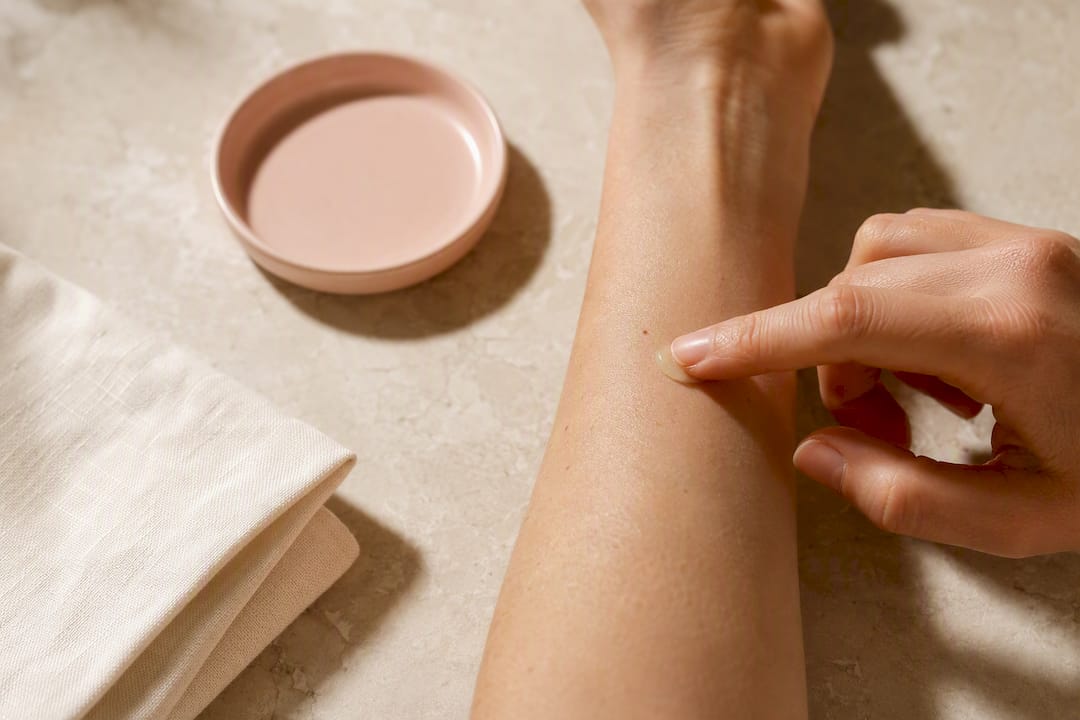
Pro Tip: If you are new to tallow skincare, start with a small amount on your forearm or the back of your hand. This tells you how your skin responds to the fatty acid profile before you commit to using it on your face or body more broadly.
For those comparing tallow with other natural oils, it is worth noting that plant oils like rosehip, sea buckthorn, and bakuchiol oil carry more concentrated and better-evidenced vitamin A activity for skin rejuvenation. Tallow offers something different: a sebum-compatible, deeply nourishing base that supports the skin barrier through its fatty acid structure. These are complementary rather than competing benefits. You can read more about building a balanced approach on the Fiercenature nutrition blog.
Consulting a dermatologist before introducing tallow into a routine for problematic skin is always a sound step. Many people use tallow successfully for years on dry body skin with no issues. Others find it unsuitable for their skin type. The honest answer is that skin type greatly influences whether tallow is beneficial or harmful, and a one-size-fits-all approach is inaccurate.
Tallow’s primary skin benefit comes from its fatty acids, not its vitamins. The vitamins present are real but trace, and they support rather than drive the moisturising and barrier-restoring effects tallow is known for.
| Point | Details |
|---|---|
| Vitamins are trace, not therapeutic | Vitamins A, D, E, and K in tallow are present in low amounts and cannot replicate dedicated vitamin serums. |
| Fatty acids are the core benefit | Oleic, palmitic, and stearic acids mimic human sebum and seal moisture more effectively than vitamins alone. |
| Grass-fed tallow is higher quality | Pasture-raised cattle produce tallow with a more consistent and richer vitamin and fatty acid profile. |
| Not suitable for all skin types | Acne-prone, oily, and rosacea-prone skin may react poorly to tallow’s occlusive, comedogenic properties. |
| Social media claims are overstated | A 2025 PubMed analysis found most tallow claims for eczema, acne, and psoriasis lack clinical evidence. |
I have spent years watching the natural skincare conversation swing between two extremes. On one side, synthetic-everything advocates dismiss tallow as primitive and unsanitary. On the other, tallow enthusiasts credit it with near-miraculous vitamin nourishment that rivals pharmaceutical-grade retinoids. Neither position is accurate, and both do a disservice to people genuinely trying to make better choices for their skin.
The truth I keep coming back to is this: tallow is a genuinely excellent moisturiser for the right skin type, and its trace vitamins are a real but modest bonus. The fatty acid story is the honest story. Oleic acid penetrates. Stearic acid repairs. Palmitic acid protects. These are not marketing claims. They are biochemistry. The vitamin content adds a layer of antioxidant and barrier support, but it does not transform tallow into a vitamin-rich skincare solution in the way that rosehip oil or a dedicated retinol serum would.
What I find most frustrating is the financial motivation behind many of the exaggerated claims. When someone selling tallow balm tells you it will clear your acne or reverse sun damage through its vitamin A content, they are overpromising. The 2025 PubMed cross-sectional analysis confirmed what many dermatologists already suspected: social media promotions often exaggerate tallow’s vitamin benefits, influenced by financial incentives rather than clinical proof.
My advice is to use tallow for what it genuinely does well. If you have dry, rough, or depleted skin that needs barrier restoration, a well-formulated tallow product is a beautiful, natural choice. Pair it with a dedicated vitamin C serum or a plant-based retinol alternative if you want active vitamin nourishment. Let each ingredient do what it does best. That is not a compromise. That is a thoughtful, skin-respecting approach that will serve you far better than chasing a single ingredient to do everything.
— Ralph Barrozo
At Fiercenature, we believe your skin deserves ingredients that work with its biology, not against it. Our tallow-based products are handcrafted in the UK using premium, naturally sourced ingredients, with pure organic tallow as the foundation. Every formulation is fragrance-free and free from synthetic additives, so the fatty acids and trace vitamins reach your skin without interference. If you are ready to experience what genuinely nourishing skincare feels like, our unscented tallow bar is the perfect starting point for dry or depleted skin. You can also explore our full natural skincare routine guide to see how tallow fits into a balanced, toxin-free approach to daily skin care.
Beef tallow contains trace amounts of fat-soluble vitamins A, D, E, and K. Their levels vary depending on whether the cattle were grass-fed or grain-fed, with grass-fed tallow generally containing higher concentrations.
No. Vitamin A levels in tallow are far too low to replicate the effects of retinol or retinoid treatments. Tallow provides modest antioxidant support, but dedicated vitamin A serums deliver therapeutic concentrations that tallow cannot match.
Yes, tallow is well suited to dry, rough, or dehydrated skin, particularly on the body. Its fatty acids seal moisture and restore the skin barrier effectively, making it a genuinely nourishing choice for areas like elbows, knees, and heels.
Tallow can clog pores on acne-prone or oily skin due to its occlusive, comedogenic properties. Dermatologists advise against using it on acne-prone facial skin, and patch testing is recommended before wider use.
Grass-fed tallow contains a more consistent and richer profile of fat-soluble vitamins and beneficial fatty acids. For skincare purposes, grass-fed and properly rendered tallow is the preferred choice for both quality and purity.