Cart
0
80% Also Added this







TL;DR:
- Ethically sourced tallow is made from grass-fed, grass-finished cattle raised without hormones or antibiotics, ensuring a pure and nutrient-rich fat for skincare. It contains higher levels of beneficial fatty acids like stearic acid and CLA, which support skin barrier repair and reduce inflammation. The source and production process are crucial, with suet-rendered fat from quality farms delivering the best results and supporting sustainable, low-waste practices.
Ethically sourced tallow is animal fat rendered from cattle raised under strict welfare standards, including grass-fed, grass-finished diets free from synthetic hormones and routine antibiotics. This is the standard the natural skincare world calls “ethical sourcing,” and it matters far more than most labels let on. The difference between ethically sourced fat and conventional tallow is not cosmetic. It changes the fatty acid profile, the purity, and ultimately what your skin receives. At Fierce Nature, this distinction sits at the heart of every product we make.
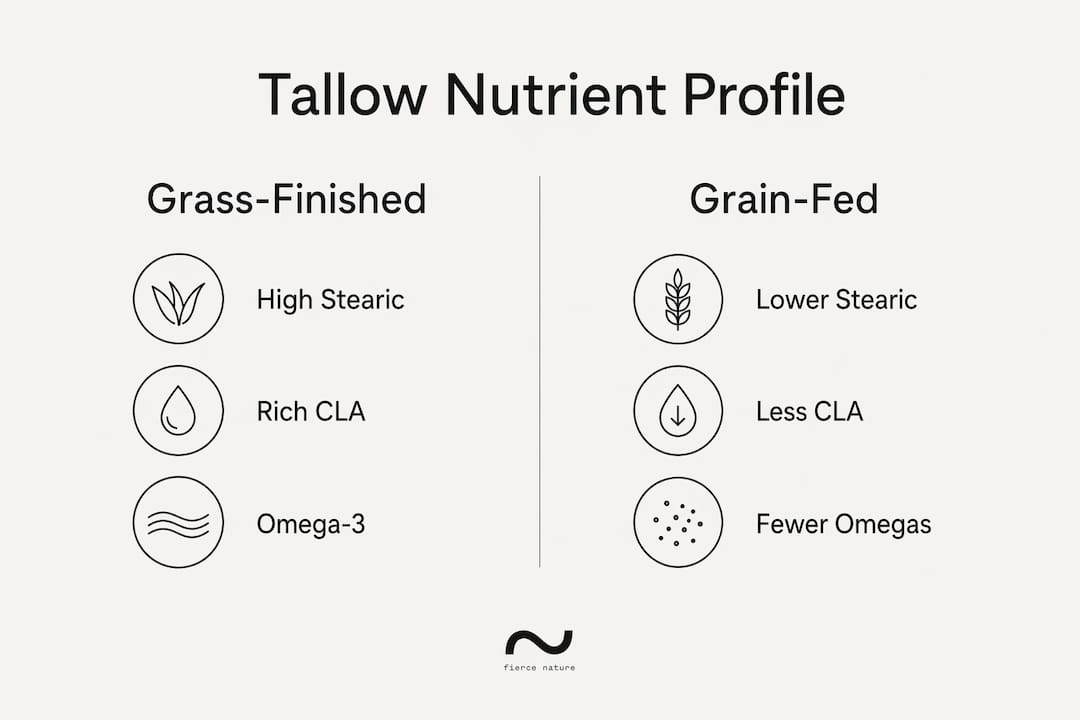
Ethically sourced tallow is defined by three non-negotiable criteria: the cattle must be grass-fed and grass-finished, raised without synthetic hormones, and kept free from routine antibiotic use. “Grass-fed” alone is not enough. Grass-finished means the animal ate only pasture its entire life, not just during early growth before being moved to grain in a feedlot. That distinction changes everything about the fat’s composition.
Grass-finished tallow contains up to 36% more stearic acid than grain-fed tallow. Stearic acid is one of the key fatty acids that supports the skin barrier and gives tallow its firm, nourishing texture. More stearic acid means deeper nourishment and a more stable product on your skin.
The absence of synthetic hormones and antibiotics matters equally. Conventional grain-fed tallow can carry hormone residues and has a lower omega-3 content, both of which affect how the fat interacts with sensitive skin. Ethically sourced fat starts clean, and that purity carries through to the finished skincare product.
The production process is as important as the sourcing criteria. Tallow is made by slowly rendering, or melting, beef fat at a low temperature to separate the pure fat from any connective tissue or moisture. The quality of the starting material determines the quality of the final product.
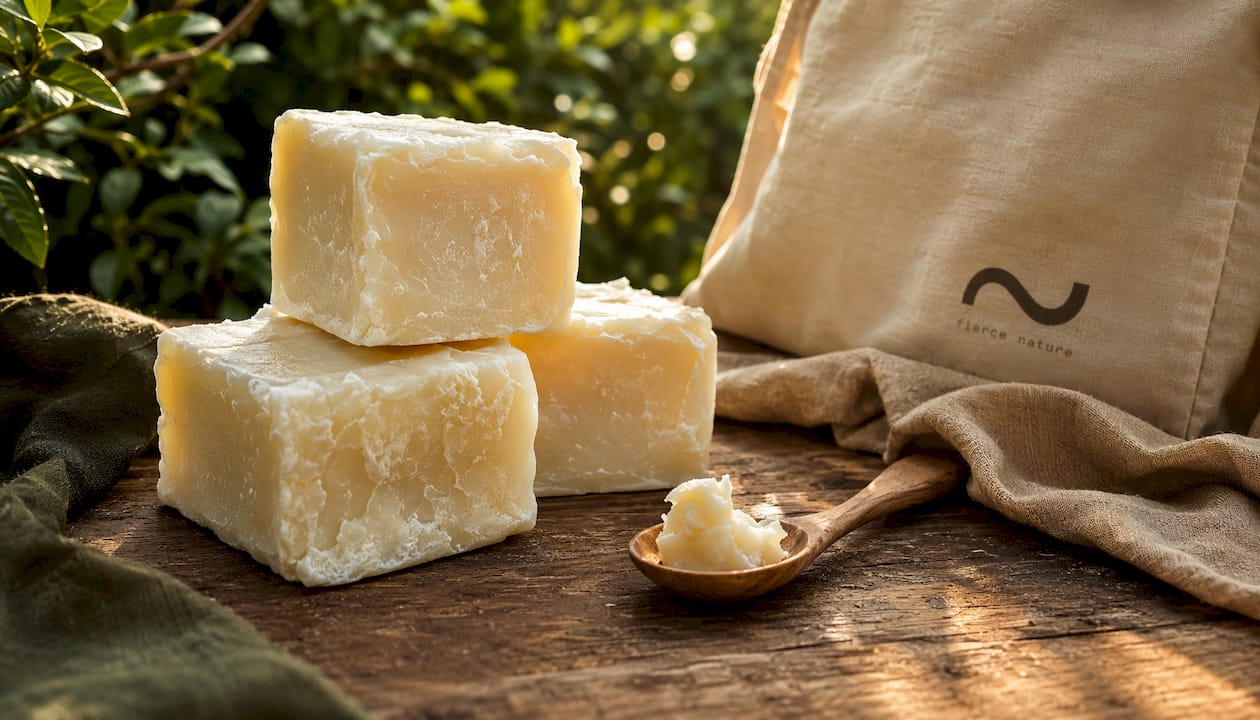
The best tallow comes from suet, the hard fat found around the kidneys and loins. Suet-rendered tallow produces a harder, more stable, and more neutral-smelling product than fat trimmed from other parts of the animal. This matters enormously in skincare, where scent and stability affect both the user experience and shelf life.
Fat trimmings from other cuts contain more connective tissue and moisture. They yield a softer, less stable tallow with a stronger animal scent. For skincare formulations, suet is not a preference. It is a quality requirement.
Tallow rendering involves slowly melting and filtering the fat twice to remove impurities while preserving its natural character. No additives are used. The result is a clean, shelf-stable fat that retains its full nutrient profile. This traditional technique is what makes tallow suitable for direct skin application.
Key production standards for genuinely ethical tallow include:
Grass-fed and grass-finished cattle with access to open pasture throughout their lives
No synthetic hormones administered at any stage of the animal’s life
No routine antibiotics, used only when medically necessary
Suet as the primary fat source, not general trimmings
Double-filtered rendering with no additives or preservatives
Traceable origin, meaning the producer can name the farm or region
Pro Tip: Ask any tallow skincare brand whether their fat comes from suet specifically or from general trimmings. If they cannot answer, the product almost certainly uses lower-grade fat.
The source of tallow determines its fatty acid composition, and that composition determines how your skin responds. Tallow from grass-fed, grass-finished cattle has a fatty acid profile closely resembling human skin lipids, primarily stearic acid, oleic acid, and palmitic acid. This similarity is why tallow integrates into the skin barrier rather than sitting on top of it like a film.
Oleic acid supports moisture retention and softens the skin. Palmitic acid reinforces the skin barrier. Stearic acid repairs and firms. Together, these three fatty acids work with your skin’s own lipid structure, not against it. That is what makes tallow a genuine skin food rather than a surface moisturiser.
Grass-fed, grass-finished tallow contains higher levels of conjugated linoleic acid (CLA) and omega-3 fatty acids, both of which have well-documented anti-inflammatory properties. For people with sensitive, reactive, or redness-prone skin, this is the difference between a formula that calms and one that does nothing. CLA supports the skin’s natural repair process and helps reduce the visible signs of inflammation.
You can also read more about tallow’s biocompatibility with human skin cells to understand the biological rationale in greater depth.
| Nutrient or property | Grass-fed, grass-finished tallow | Grain-fed, conventional tallow |
|---|---|---|
| Stearic acid content | High (up to 36% more) | Lower |
| CLA and omega-3 levels | Elevated | Minimal |
| Hormone residues | None | Possible |
| Skin barrier integration | Strong | Weaker |
| Scent (suet-rendered) | Neutral | Stronger animal scent |
| Anti-inflammatory potential | High | Low |
The gap between these two profiles is not marginal. It is the difference between a product that actively nourishes your skin and one that simply coats it. For those with grass-fed tallow in skincare as a priority, the sourcing question is non-negotiable.
Choosing ethically sourced tallow is not only a skincare decision. It is a values decision. Pasture-raising cattle without synthetic hormones or routine antibiotics supports animal welfare and reduces the environmental burden associated with intensive farming. Animals raised on open pasture live in conditions aligned with their natural behaviour, which is a meaningful distinction from feedlot production.
The nose-to-tail philosophy sits at the core of ethical tallow sourcing. Tallow is a by-product of the meat industry. Using it in skincare reduces waste by ensuring that every part of the animal contributes value. This is the opposite of the extractive, single-use thinking that drives so much of conventional cosmetics production.
The environmental benefits of tallow-based skincare extend further. Pasture-raised farming supports soil health through natural grazing cycles. It avoids the synthetic fertilisers and pesticides associated with monoculture feed crops. And it produces a skincare ingredient that is fully biodegradable, unlike the petrochemical derivatives found in most conventional moisturisers.
Key ethical sourcing principles to look for in a brand:
Transparent farm-to-product traceability
Commitment to pasture-raised, grass-finished cattle only
No synthetic inputs at any stage of production
Nose-to-tail sourcing philosophy
Clear communication about rendering methods and fat origin
Pro Tip: A brand that genuinely sources ethically will be able to tell you the country of origin, the farming standard, and whether the fat is suet-derived. Vague answers like “high-quality beef fat” are a red flag.
Consumers who care about clean beauty are increasingly aware that ingredient ethics and environmental impact are connected. Choosing a tallow product from a brand with full sourcing transparency is one of the most direct ways to align your skincare with your values. You can also explore how natural ingredients like whipped body butters compare when reading ingredient labels for sourcing claims.
Reading a label correctly is a skill. Most tallow products do not volunteer the information you need, so you have to know what to ask and what to look for.
Brands that cannot specify their tallow’s origin or the animal raising practices used almost certainly do not meet ethical standards. Genuine ethical sourcing is something producers are proud to communicate. Silence or vagueness is a reliable signal of a lower standard.
Use this checklist when evaluating any tallow skincare product:
Check for “grass-finished” specifically. “Grass-fed” without “grass-finished” means the animal may have been grain-finished before slaughter.
Look for “hormone-free” on the label. This should be stated explicitly, not implied.
Confirm “antibiotic-free” or “raised without routine antibiotics.” Routine antibiotic use is common in intensive farming and affects the fat’s purity.
Ask whether the tallow is suet-rendered. Suet produces a cleaner, more stable product. If the brand does not know, the answer is probably no.
Request sourcing transparency. A reputable brand will tell you the country of origin and ideally the farming standard or certification.
Avoid products that list only “beef tallow” with no further detail. This generic label tells you nothing about the animal’s diet, welfare, or the rendering process.
The term “ethically sourced” is not regulated in the UK cosmetics industry, which means any brand can use it without meeting a defined standard. Your best protection is asking direct questions and choosing brands that answer them clearly. Fierce Nature publishes its sourcing standards openly because we believe you deserve to know exactly what you are putting on your skin.
Ethically sourced tallow is defined by grass-fed, grass-finished cattle, suet-derived rendering, and the complete absence of synthetic hormones and antibiotics, producing a skin-compatible fat that conventional tallow cannot match.
| Point | Details |
|---|---|
| Grass-finished is the key standard | Grass-fed alone is insufficient; grass-finished means pasture diet for the animal’s entire life. |
| Suet produces superior tallow | Suet-rendered tallow is harder, more stable, and more neutral-smelling than general fat trimmings. |
| Fatty acid profile drives skin results | Higher stearic acid and CLA in ethical tallow support barrier repair and reduce inflammation. |
| Nose-to-tail sourcing reduces waste | Using tallow as a by-product of meat farming aligns with sustainable, low-waste production values. |
| Label transparency is your best tool | Brands that cannot name their fat’s origin or farming standard rarely meet genuine ethical criteria. |
When we first started formulating with tallow at Fierce Nature, the sourcing question felt straightforward. It was not. We quickly discovered that “grass-fed” on a supplier’s invoice meant very little without knowing whether the cattle were grain-finished before slaughter. We reformulated. We asked harder questions. We found farms that could answer them.
What surprised us most was how much the quality of the fat changed the finished product. Suet-rendered, grass-finished tallow has a noticeably different texture and scent profile compared to general beef fat. It melts more cleanly into the skin. It does not leave a heavy residue. The difference is immediate and tactile, not just theoretical.
The consumer education gap in this space is significant. Most people shopping for natural skincare do not know that “tallow” on a label could mean anything from premium suet from a pasture-raised animal to rendered trimmings from a feedlot. That gap is not accidental. It benefits brands that want to use the word “natural” without meeting the standard.
We believe the future of ethical beauty depends on producers being willing to name their sources, explain their methods, and hold themselves to standards that go beyond what regulation currently requires. Transparency is not a marketing strategy for us. It is the baseline. If a skincare ingredient cannot be traced to a specific farming practice, it has no place in a product we would put on our own skin, or yours.
— Fierce Nature
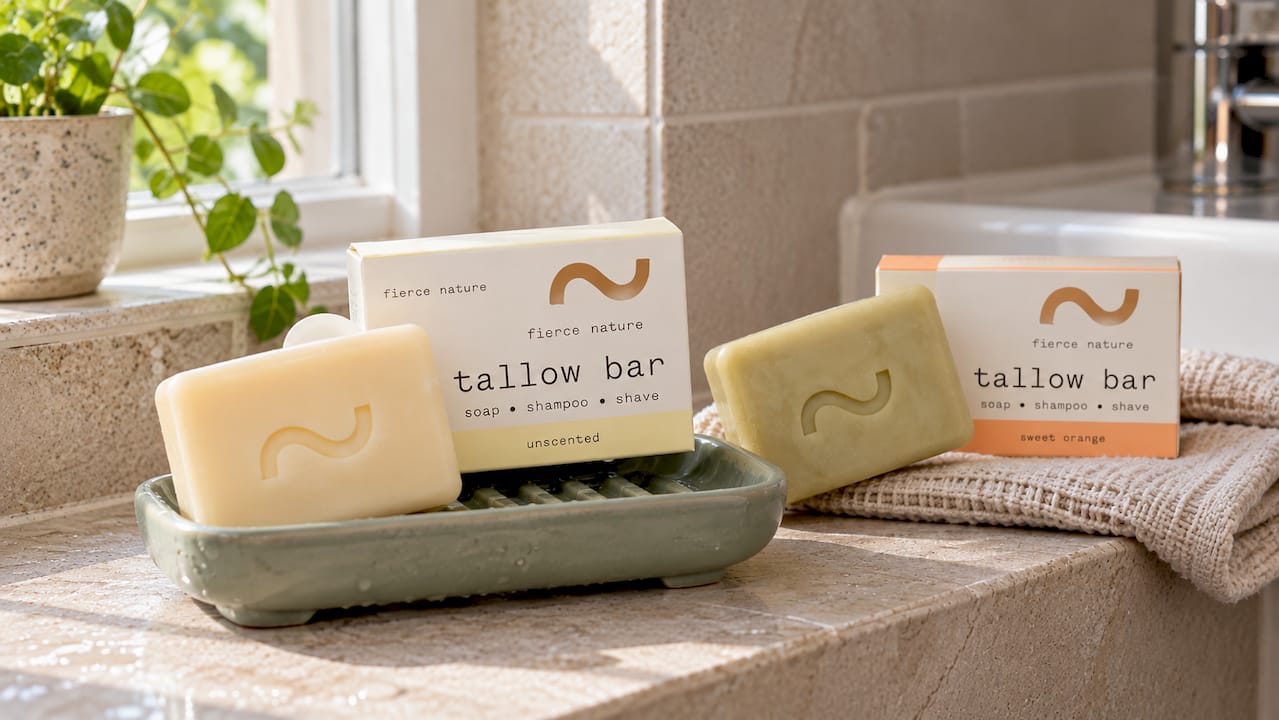
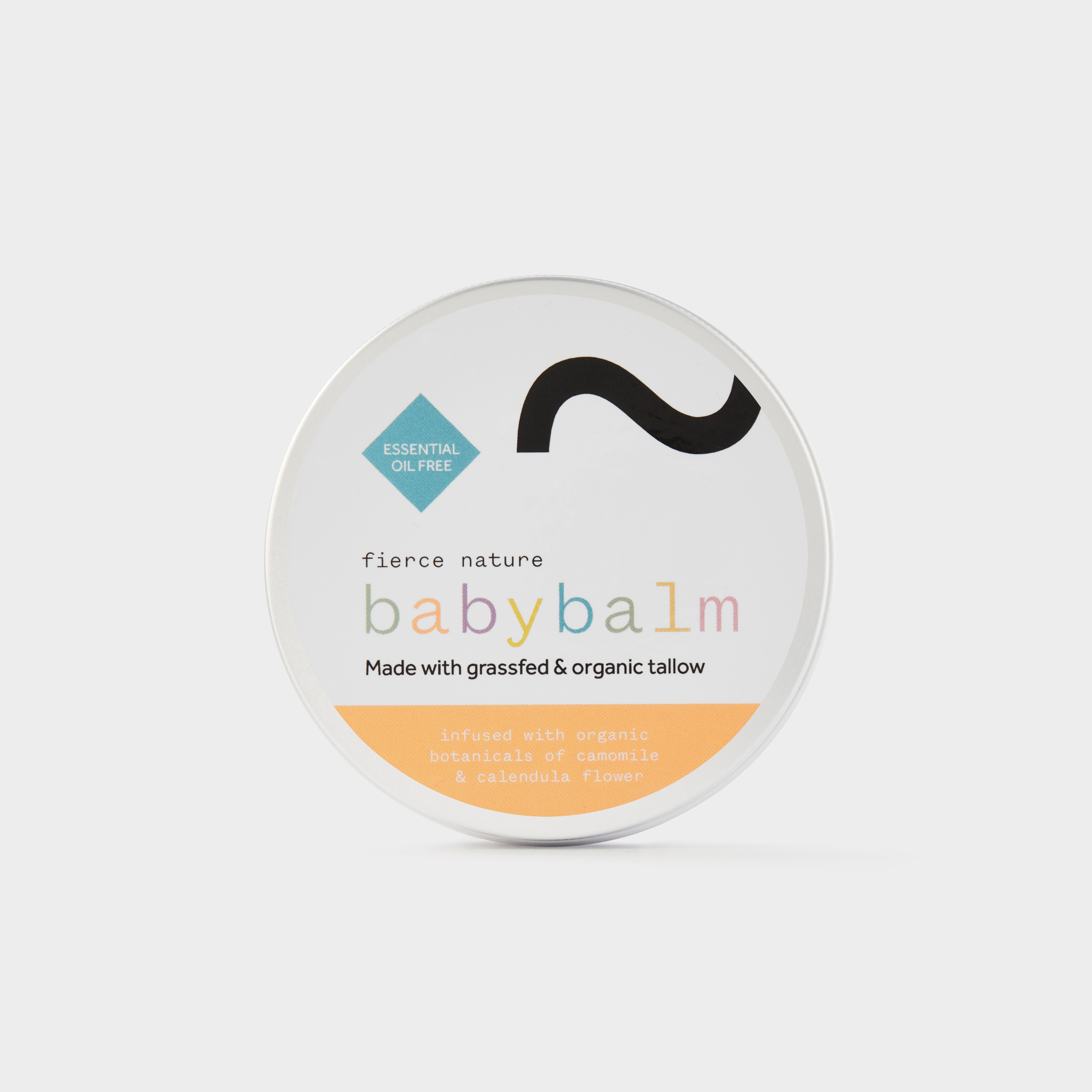
At Fierce Nature, every product is built on pure, suet-rendered tallow from grass-fed, grass-finished cattle raised without synthetic hormones or routine antibiotics. We handcraft our products in the UK using ingredients we can trace and standards we can name. Our multi-use tallow bar is a direct expression of that commitment, delivering deep nourishment with nothing hidden in the formula. For the most sensitive skin of all, our non-toxic baby skin essentials apply the same sourcing rigour to products designed for newborns. When the ingredient is this pure, the skin simply responds.
Ethically sourced tallow is animal fat rendered from cattle that are grass-fed, grass-finished, and raised without synthetic hormones or routine antibiotics. These standards ensure a cleaner fat with a superior fatty acid profile for skincare use.
No. Tallow from grass-finished, suet-rendered cattle contains significantly more stearic acid and CLA than grain-fed alternatives. Grass-finished tallow can contain up to 36% more stearic acid, which directly affects skin nourishment and barrier support.
Suet is the hard fat surrounding the kidneys and loins. Suet-rendered tallow is harder, more stable, and more neutral-smelling than tallow made from general fat trimmings, making it the preferred source for skincare formulations.
Look for the terms “grass-finished,” “hormone-free,” “antibiotic-free,” and “suet-rendered” on the label. Brands that cannot specify their fat’s origin or farming standard almost certainly do not meet genuine ethical sourcing criteria.
Yes. The elevated CLA and omega-3 content in grass-fed, grass-finished tallow has well-documented anti-inflammatory properties, making it particularly well-suited to sensitive, reactive, or redness-prone skin.