Cart
0
You may also like




Cruelty-free and vegan are not the same thing. Cruelty-free tells you a product was not tested on animals; vegan tells you it contains no animal-derived ingredients. A product can carry one label, both, or neither, so if animal welfare and plant-based ingredients both matter to you, check for both certifications separately.
TL;DR:
- A cruelty-free label means no animal testing occurred at any stage of production, including ingredients sourcing, but it does not guarantee the absence of animal-derived ingredients.
- Vegan skincare contains no animal ingredients but may still have been tested on animals, especially if sold in markets with mandatory testing regulations.
- Certifications like Leaping Bunny verify cruelty-free claims through independent audits, while The Vegan Society confirms both vegan ingredients and testing, providing a stronger overall assurance.
- Verifying claims requires checking certifier databases and reading full ingredient lists carefully to identify hidden animal-derived components like beeswax or sodium tallowate.
- Relying solely on front-of-pack marketing words like “vegan” or “cruelty-free” is insufficient; thorough independent verification of both testing and ingredients is essential for true ethical compliance.
The confusion is understandable. Both terms sound like variations on “kind to animals”, and beauty marketing rarely bothers to explain the distinction. But they answer two entirely different questions, and mixing them up leads to shoppers buying products that fail the very test they care most about.
Cruelty-free refers exclusively to testing practices. A genuinely cruelty-free product means no animal testing occurred at any stage of development, not just on the finished cream or balm. That scope matters more than most people realise. True verification has to reach into the supply chain, because a brand can avoid testing its own finished product while an ingredient supplier several steps back still tests on animals. This is why supplier-level programmes like Leaping Bunny exist: they specifically require that no new animal testing happens anywhere in the chain, covering the company, its laboratories, and its ingredient suppliers.
Vegan, meanwhile, has nothing to do with testing at all. It refers purely to what is in the jar or bottle. A vegan skincare product contains no animal-derived ingredients whatsoever, whether that is something obvious like collagen or something easy to miss on an ingredients list.
Here are the animal-derived ingredients that most commonly disqualify a product from being vegan:
The Latin and INCI naming conventions are precisely why ingredient lists deserve a proper read rather than a glance. “Cera alba” sounds scientific and neutral. It is beeswax. Stearic acid, similarly, can be derived from either plant oils or animal fat, and the label alone will not tell you which.
Neither term carries a single, globally enforced legal definition in cosmetics regulation. There is no government body that polices whether a brand can print “cruelty-free” on its packaging, which is exactly why third-party certification exists to fill that gap. Dermatology commentary on this issue has flagged the same problem with adjacent marketing words like “clean” and “natural”: they sound reassuring, they are unregulated, and they tell you almost nothing verifiable on their own.
Once you separate the two axes, testing and ingredients, four outcomes become possible. Each has different implications for what you are actually buying.
Understanding these four outcomes changes how you read a product page. A brand proudly stating “we never test on animals” is telling you something true and worth knowing, but it is only answering one of your two questions. The ingredients list still needs its own separate check.
Logos are only useful if you know what they are verifying. Here is what the three most recognised certifications actually cover, and where their scope differs.
Leaping Bunny focuses entirely on testing, not ingredients. Its standard requires that no new animal testing be used at any phase of product development, by the company itself, its laboratories, or its ingredient suppliers. That supplier-level requirement is what separates a genuinely audited cruelty-free claim from a company simply asserting it. Leaping Bunny maintains a public list of certified companies, so you can check a brand directly rather than trusting the packaging alone.
The Vegan Society and its Vegan Trademark cover the ingredient side, confirming that no animal-derived ingredients and no animal testing were involved in a registered product. The Vegan Trademark is among the more widely adopted combined standards in the industry, covering many products globally. Because it verifies both axes at once, a Vegan Trademark logo tends to answer more of a shopper’s questions in a single glance than either standard alone.
PETA’s Beauty Without Bunnies programme also certifies cruelty-free and vegan status, but it works differently from Leaping Bunny. PETA’s list relies more heavily on brand self-reporting and signed statements of assurance, whereas Leaping Bunny’s programme involves independent audits of the supply chain. Neither approach is fraudulent, but they represent different levels of verification rigour, and it is worth knowing which one you are relying on.
Quick reference for what each certifier actually checks:
Modern safety testing has moved on substantially from animal methods. In vitro testing and human clinical studies now give cruelty-free companies credible ways to prove product safety without an animal ever being involved, which is part of why the Leaping Bunny standard has become achievable at scale rather than a niche promise a handful of brands can afford.
Pro Tip: Bookmark the certifier’s own website rather than trusting a logo on packaging alone. Leaping Bunny and The Vegan Society both maintain searchable databases, and a five-second check can confirm whether a brand’s certification is current rather than expired or aspirational.
Verification does not need to be complicated, but it does need to happen in order. Skipping straight to the marketing copy on the front of the packaging is how most shoppers get misled.
Pro Tip: If a brand’s website goes quiet on testing policy, ask for the batch number or ingredient source documentation directly. Reputable suppliers keep this information on file, and a brand’s willingness (or reluctance) to share it tells you almost everything you need to know.
Some marketing language is designed to sound ethical without actually committing to anything verifiable. Learning to spot the pattern saves you from buying on vibes alone.
Small independent brands deserve a slightly different approach than large corporations here. If a tiny handmade skincare business has not paid for formal certification, that does not automatically mean its claims are false. Certification costs money and time that a small operation may not yet have. Rather than dismissing them outright, ask direct questions: what is your testing policy, do you use any animal-derived ingredients, and can you share your full supplier list? A transparent small brand will usually answer more openly than a large one hiding behind vague packaging language, and greenwashing tends to show up more often in big-budget marketing than in a kitchen-table skincare business. Our piece on spotting greenwashed beauty products covers several real examples worth knowing.
Fierce Nature was born from a personal frustration with mainstream cosmetics. Growing up in South Africa surrounded by conventional shaving gels, hair removal creams, and lipsticks, our founder battled unexplained skin rashes and reactions for years without understanding why. That question eventually led to a deeper understanding of gut health and the toxic load that harsh, chemical-laden products place on the body from birth onwards.
We came to realise that the promises made by mainstream beauty products are often built on harsh chemicals disguised in seductive packaging. Our answer was to go back to what nature already provides, using pure organic tallow as a foundation because of its deep bioavailability and centuries-long history as a skin emollient.
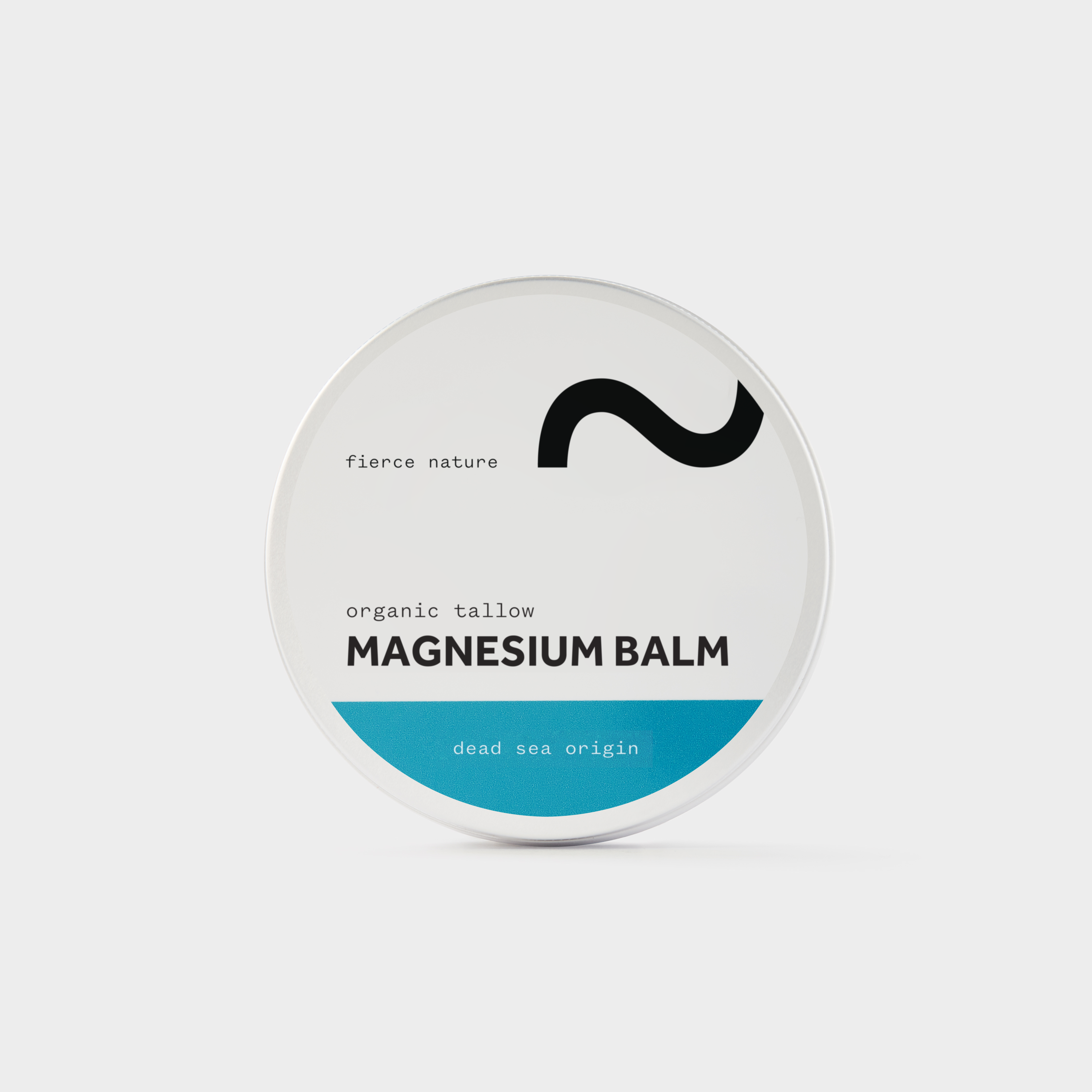
Every product is handmade using naturally sourced ingredients, with transparency about what goes into every balm and bar. We are upfront about one important fact: tallow is an animal-derived ingredient, rendered from cattle fat, and it is not vegan. We do not claim otherwise. What we do claim is complete honesty about sourcing, formulation, and process, which is precisely the standard we believe every shopper deserves regardless of which ethical label they are shopping under. For readers who want to go further into label literacy, our UK skincare label reading guide and our guide to choosing clean beauty brands go deeper into verification skills you can use with any brand, not just ours.
The conventional advice, glance at the front of the pack for a bunny logo or the word “vegan”, undersells how much verification actually takes. Real assurance means checking two entirely separate systems: a testing standard and an ingredients standard, and confirming both independently rather than assuming one implies the other.
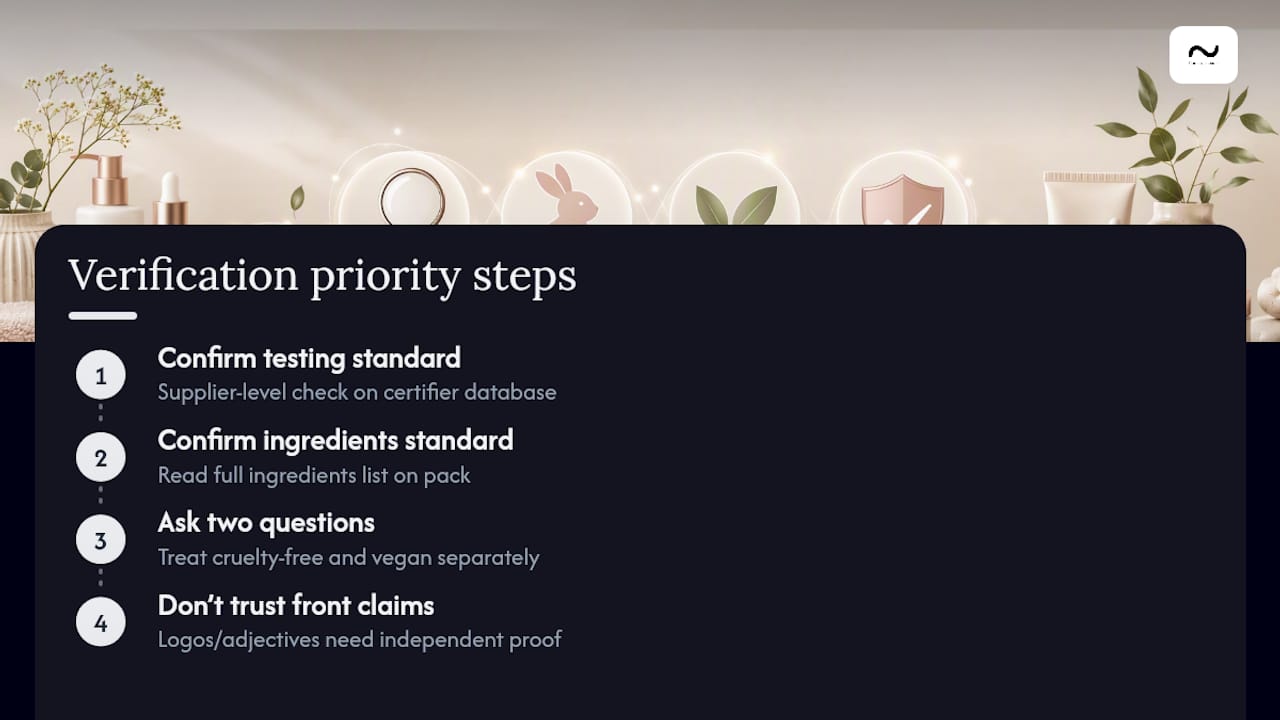
Where most guidance falls short is treating vegan and cruelty-free as interchangeable virtue signals rather than distinct, checkable facts. They are not competing labels; they are answers to two different questions, and a shopper who only asks one of them is only half informed.
If you take one thing from this, prioritise supplier-level verification over front-of-pack claims. A logo you can confirm on a certifier’s own database is worth more than any adjective printed in bold on the box. Start there, then read the ingredients list. Everything else is detail.
— Fierce Nature
Because tallow is an animal-derived ingredient, Fierce Nature products are cruelty-free but not marketed as vegan, and we tell you that plainly rather than letting packaging speak for us. Every ingredient we use is listed in full, sourced from UK suppliers we know personally, with nothing hidden behind vague “natural” language. If you are drawn to nourishing, bioavailable tallow-based skincare and want a brand that shows its full hand, our Multi-Use Tallow Bar (Unscented) and Multi-Use Tallow Bar (Scented) are good starting points. For richer routines, the Luxe Balm and Nourish Balm (Unscented) offer deeper nourishment, while the Nourish Balm with Rose Tint (Sweet Orange) suits anyone wanting a tinted finish. Families can explore our Non-toxic Baby Skin Essentials, and anyone building a fuller routine can browse the Selfie Stick Natural or the Biohacking bundle for a curated set. Browse our full range of organic body balms to see what fits your skin.
No single brand holds that title, since cruelty-free and vegan are separate standards and few brands are independently certified for both. The safest approach is checking Leaping Bunny and Vegan Trademark status brand by brand rather than trusting a single reputation.
CeraVe sells in mainland China, a market that has historically required animal testing for imported cosmetics, which is why the brand is not listed as certified cruelty-free by Leaping Bunny or PETA. Always check a certifier’s current database rather than relying on packaging claims alone.
Look specifically for brands carrying both the Leaping Bunny logo and The Vegan Society’s Vegan Trademark, since that combination confirms neither animal testing nor animal-derived ingredients were used. Checking both certifier databases directly is more reliable than any single “best of” list.
No, tallow is rendered animal fat from cattle or sheep, which makes it unambiguously non-vegan regardless of how it is labelled. Plant-based alternatives like shea butter and cocoa butter serve a similar emollient role for shoppers who need a vegan formula.
Cruelty-free addresses whether a product or its ingredients were tested on animals, while vegan addresses whether the formula contains any animal-derived ingredients at all. A product can meet one standard, both, or neither, so check them separately.