Cart
0
You may also like



TL;DR:
- Greenwashing in skincare involves false environmental claims and exaggerated marketing tactics. Consumers must scrutinize ingredient lists and verify third-party certifications to identify genuinely sustainable products. Regulatory changes in 2026 will ban unsubstantiated claims, but consumer awareness remains crucial.
Greenwashing in skincare is defined as the practice of making false or exaggerated environmental claims to sell products that are not genuinely sustainable. A 2025 review found that 9 out of 10 cosmetic products from major brands contained microplastics despite green marketing claims. That statistic tells you everything you need to know about the gap between what brands say and what they actually put in their formulas. For UK eco-conscious consumers, learning to spot greenwashing skincare brands is no longer optional. The EU Empowering Consumers Directive, enforced from 27 September 2026, bans unsubstantiated terms like “natural,” “clean,” and “eco-friendly” unless backed by independent certification. This guide gives you the tools to see through the noise and choose products that genuinely nourish your skin and respect the planet.
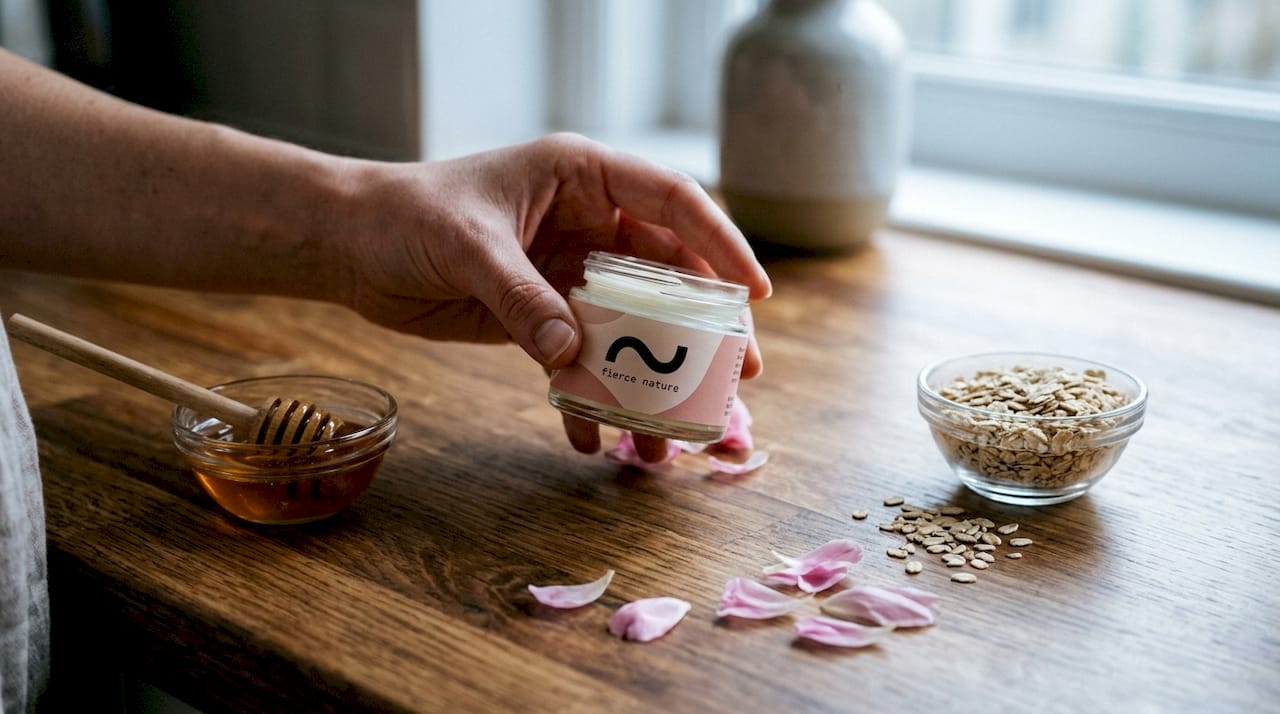
Greenwashing in beauty products relies on a predictable set of tricks. Recognising them is the first step toward making genuinely informed choices.
Pro Tip: When you see a sustainability claim on packaging, ask one question: “Where is the proof?” If there is no certification number or independent body named, treat the claim as unverified.
The ingredient list is the most honest part of any skincare product. Learning to read it gives you direct access to the truth about what you are actually applying to your skin.
Check ingredient order. By law, ingredients on an INCI (International Nomenclature of Cosmetic Ingredients) list appear in descending order of concentration. The INCI list reveals actual ingredient concentration, which is the key to spotting greenwashing. If your “rosehip face oil” lists rosehip near the bottom, it is present in a negligible amount.
Spot synthetic red flags. Synthetic ingredients such as silicones (ending in -cone or -siloxane), PEG compounds, and undisclosed “fragrance” or “parfum” frequently appear in products marketed as natural. Parfum is a catch-all term that can hide dozens of synthetic chemicals under a single word.
Understand what “free-from” actually means. Removing one ingredient class does not render a product truly clean. A paraben-free formula can still contain formaldehyde-releasing preservatives or synthetic dyes. Removing one controversial ingredient does not guarantee the rest of the formula is safe or sustainable.
Question low concentrations of marketed actives. If a brand’s entire marketing campaign centres on vitamin C or bakuchiol, check where those ingredients sit on the list. Anything below 1% concentration is present in a quantity too small to deliver the promised results.
Use reliable ingredient databases. Tools like the Environmental Working Group’s Skin Deep database and the CosDNA database allow you to look up individual ingredients and their safety ratings. These resources are free and take only minutes to use.
Cross-check fragrance disclosures. Some brands voluntarily disclose the sub-ingredients within their fragrance blend. If a brand refuses to do this, that absence of transparency is itself a signal worth noting.
Pro Tip: Download an ingredient-scanning app before your next shopping trip. Apps like INCI Beauty or Think Dirty let you photograph a product label and receive an instant breakdown of each ingredient’s safety profile.
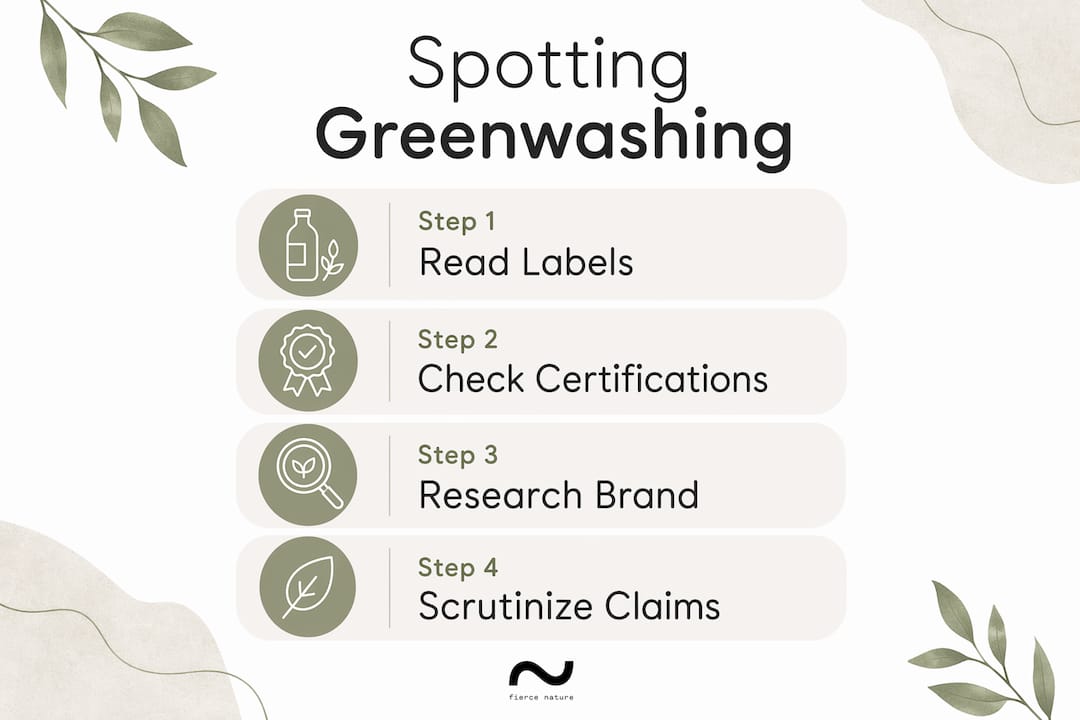
Certifications are the clearest proof that a brand’s environmental claims have been independently verified. Not all certifications carry equal weight, so knowing which ones matter is critical.
| Certification | What it verifies | How to check |
|---|---|---|
| COSMOS | Organic and natural cosmetic standards, including ingredient sourcing and manufacturing | Search the COSMOS database at cosmos-standard.org |
| ECOCERT | Organic ingredient content and environmentally responsible production | Verify via ecocert.com using the brand’s certificate number |
| NATRUE | Natural and organic cosmetics with strict synthetic ingredient limits | Check natrue.org for listed certified products |
| EU Ecolabel | Reduced environmental impact across the product’s full life cycle | Confirm via the EU Ecolabel product catalogue |
| Cradle to Cradle | Circular economy principles covering materials, manufacturing, and end of life | Search at c2ccertified.org |
Third-party certifications provide verifiable proof of environmental claims in a way that no brand-generated label can. Each certification body publishes a searchable database, so you can confirm a product’s status in under two minutes.
From september 2026, the EU Empowering Consumers Directive bans self-created labels like “clean,” “conscious,” and “pure” unless they are supported by a recognised independent certification. This regulation directly affects brands selling into EU markets and sets a benchmark that UK consumers can use to judge any brand’s honesty, regardless of where it is sold.
Ingredient transparency and supply chain disclosures also matter. Brands that provide transparent details on ingredient sourcing and manufacturing demonstrate authentic commitment over vague claims. If a brand cannot tell you where its shea butter comes from or how its packaging is produced, that gap in transparency is a warning sign.
Pro Tip: When you spot a certification logo on a product, photograph it and search the certifying body’s website for that specific brand or product. Counterfeit or expired certifications do exist, and a 30-second check protects you from being misled.
A product label tells you what is in the bottle. A brand’s wider behaviour tells you whether its values are real. These are the areas worth investigating before you commit to a purchase.
For a deeper look at how real brands have been caught out, the Fierce Nature guide on greenwashed beauty products walks through documented examples worth knowing.
The EU Empowering Consumers Directive is the most significant regulatory shift in green beauty marketing in a generation. From 27 September 2026, brands face a hard ban on unsubstantiated environmental and wellness terms in cosmetics marketing.
The banned terms include “natural,” “clean,” “pure,” “green,” “eco-friendly,” “conscious,” and “sustainable” when used without independent certification to back them up. Every environmental claim must be substantiated in the same medium where it appears. A social media post claiming a product is “eco-friendly” requires the same level of proof as a claim printed on the box.
The Directive also addresses umbrella brand names. Unsubstantiated terms used as umbrella brand names must be substantiated individually for every product sold under that name. A brand called “Pure Skin Co” cannot rely on its name alone to imply that all its products are pure. Each product must carry its own verified proof.
The implications for UK consumers are practical and immediate. Even though the UK is no longer part of the EU, many brands operating here also sell into EU markets and will align their marketing accordingly. You can use the Directive’s standards as a personal benchmark when evaluating any brand’s claims. If a brand uses terms that would be banned under the Directive without providing certification, that is a reliable indicator of greenwashing.
The “clean” label is unregulated and has long been used as a marketing spectrum rather than a defined standard. The 2026 Directive closes that loophole for EU markets. UK consumers benefit from knowing this standard exists, even where domestic enforcement differs.
Spotting greenwashing in skincare requires reading ingredient lists critically, verifying third-party certifications, and researching brand-level transparency rather than trusting label claims alone.
| Point | Details |
|---|---|
| Vague terms signal risk | Words like “clean,” “natural,” and “pure” carry no legal meaning without independent certification. |
| INCI list order reveals truth | Ingredients listed near the bottom are present in minimal amounts, regardless of how prominently they are marketed. |
| Certifications to trust | COSMOS, ECOCERT, NATRUE, EU Ecolabel, and Cradle to Cradle are independently verified and searchable. |
| Brand research matters | Check for sourcing detail, sustainability reports, and third-party audits beyond what the product label states. |
| 2026 regulations raise the bar | The EU Empowering Consumers Directive bans unsubstantiated green terms from september 2026, giving consumers a clear legal benchmark. |
The most uncomfortable truth about greenwashing is that it works precisely because it exploits your good intentions. Brands know you want to make better choices. They design packaging, language, and campaigns to meet you exactly where that desire lives, and then deliver something entirely different inside the bottle.
At Fierce Nature, we have watched this pattern repeat for years. The brands that shout loudest about being “clean” or “conscious” are often the ones with the most to hide. The brands doing the real work tend to be quieter about it, because the certifications, the ingredient lists, and the sourcing documentation speak for themselves.
We built Fierce Nature on the principle that your skin deserves nourishment from the land, not a laboratory. Every ingredient we use is chosen because it genuinely feeds your skin, not because it photographs well in a marketing campaign. Tallow, our foundation ingredient, has nourished skin for centuries. It does not need a buzzword. It needs a clear label, an honest list of what is in it, and skin that responds with radiance.
The regulation changes coming in 2026 are welcome. But regulation alone will not protect you. Greenwashing evolves faster than legislation. The most reliable protection is your own knowledge: read the list, check the certification, research the brand. And when a brand cannot answer your questions clearly, that silence is your answer.
We also encourage you to look at sustainability in skincare as a living practice rather than a label. Genuine sustainability shows up in every decision a brand makes, from ingredient sourcing to packaging to how it communicates with you. It is not a badge. It is a behaviour.
— Fierce Nature
At Fierce Nature, every product begins with a single question: would we put this on our own skin? Our formulas are handmade in the UK using premium, naturally sourced ingredients, with pure organic tallow as the foundation. Tallow’s bioavailability makes it a deeply nourishing skin food that works with your skin’s own biology. We list every ingredient clearly, source responsibly, and never hide behind vague marketing language. If you are ready to move away from products that promise everything and deliver nothing, our Non-toxic Baby Skin Essentials and full range of organic balms are a grounded, honest place to start. For parents seeking safe options, the postpartum skincare FAQs at Mum Bub Hub also offer helpful guidance on choosing genuinely safe products for sensitive skin.
Greenwashing in skincare means making false or exaggerated environmental claims to market products as natural, clean, or sustainable when they are not. A 2025 review confirmed that 9 out of 10 cosmetic products from major brands contained microplastics despite green marketing claims.
COSMOS, ECOCERT, NATRUE, EU Ecolabel, and Cradle to Cradle are the most reliable third-party certifications for skincare sustainability. Each has a publicly searchable database where you can verify a specific product or brand’s certified status.
Ingredients appear in descending order of concentration on an INCI list, so a hero ingredient listed near the bottom is present in a negligible amount. Look for silicones ending in -cone, PEG compounds, and undisclosed “parfum” as signs that a product marketed as natural contains significant synthetic content.
The Directive bans unsubstantiated environmental terms including “natural,” “clean,” “pure,” “green,” and “eco-friendly” in cosmetics marketing from 27 september 2026 unless backed by independent certification. Every claim must be substantiated in the same medium where it appears, including social media posts.
“Clean beauty” is not a regulated term in the UK or the EU. The “clean” label is unregulated and used as a broad marketing spectrum; real verification requires independent certification and full ingredient disclosure rather than a brand’s own definition of the word.