Cart
0
You may also like
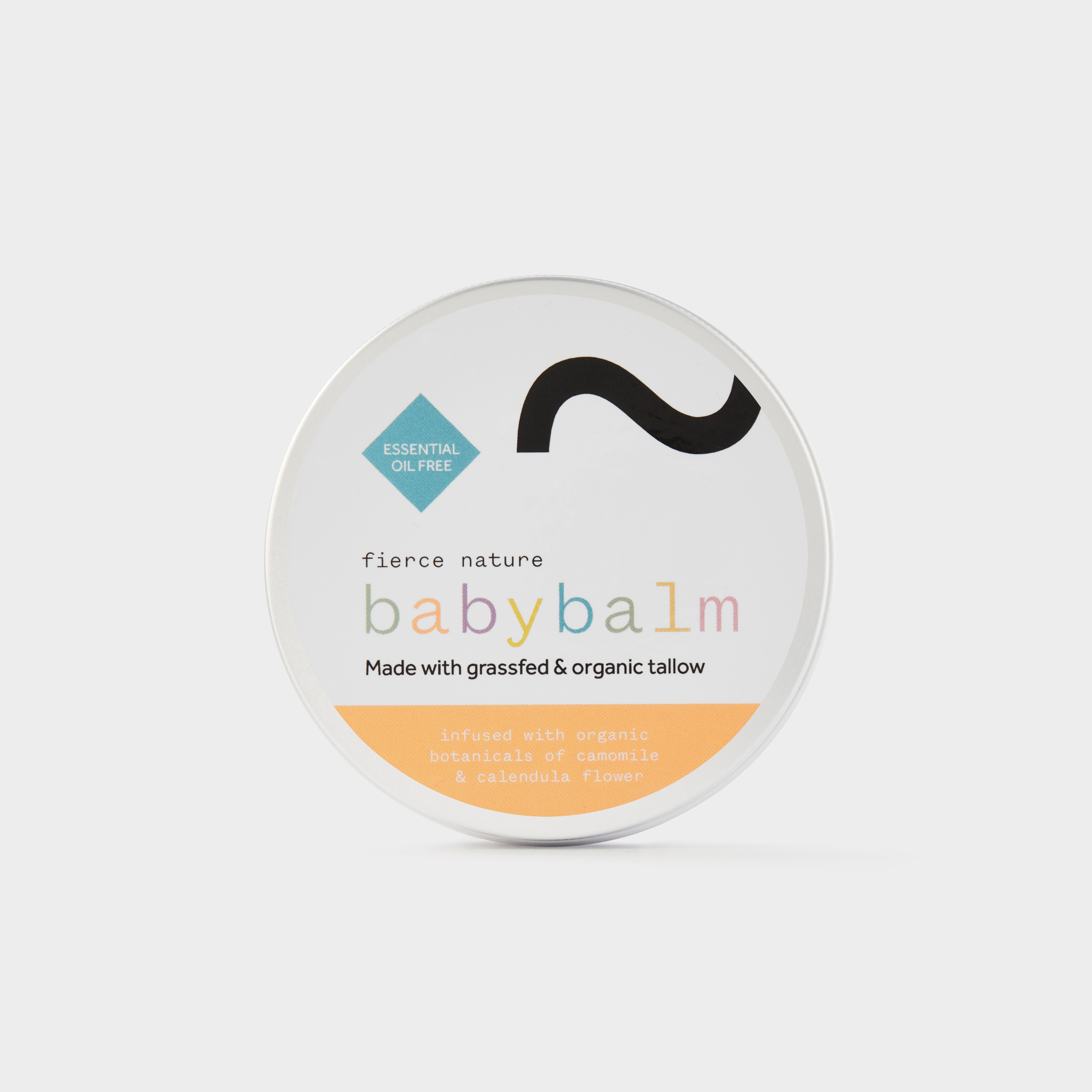
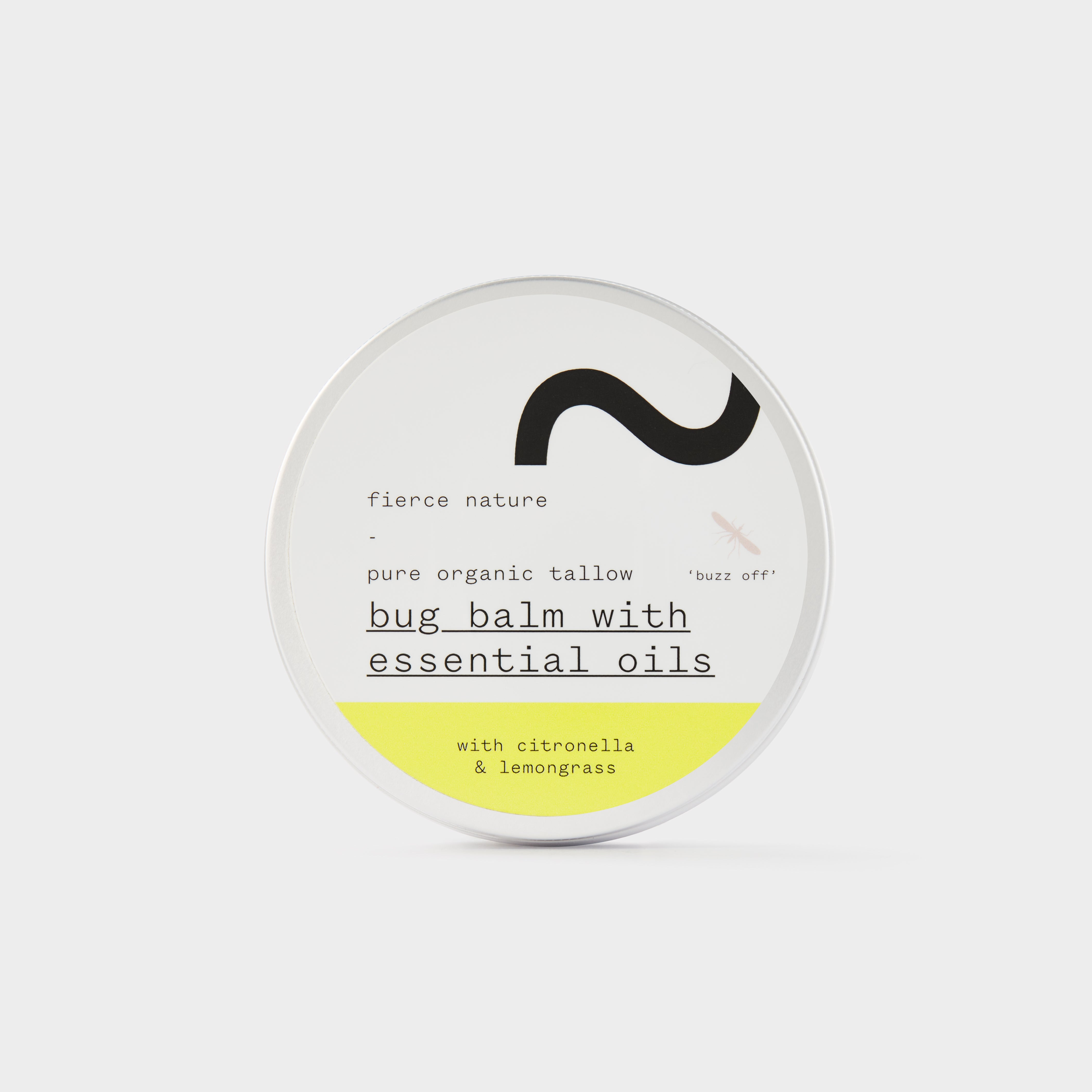
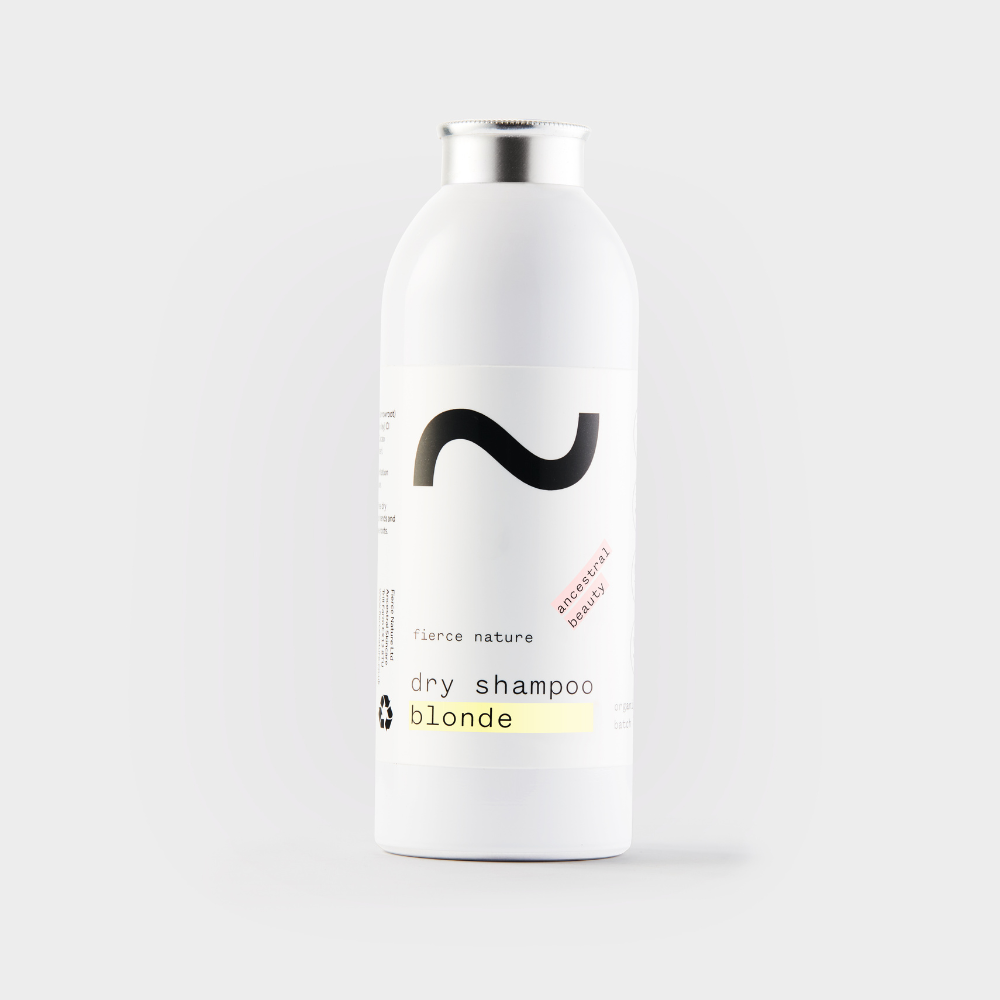
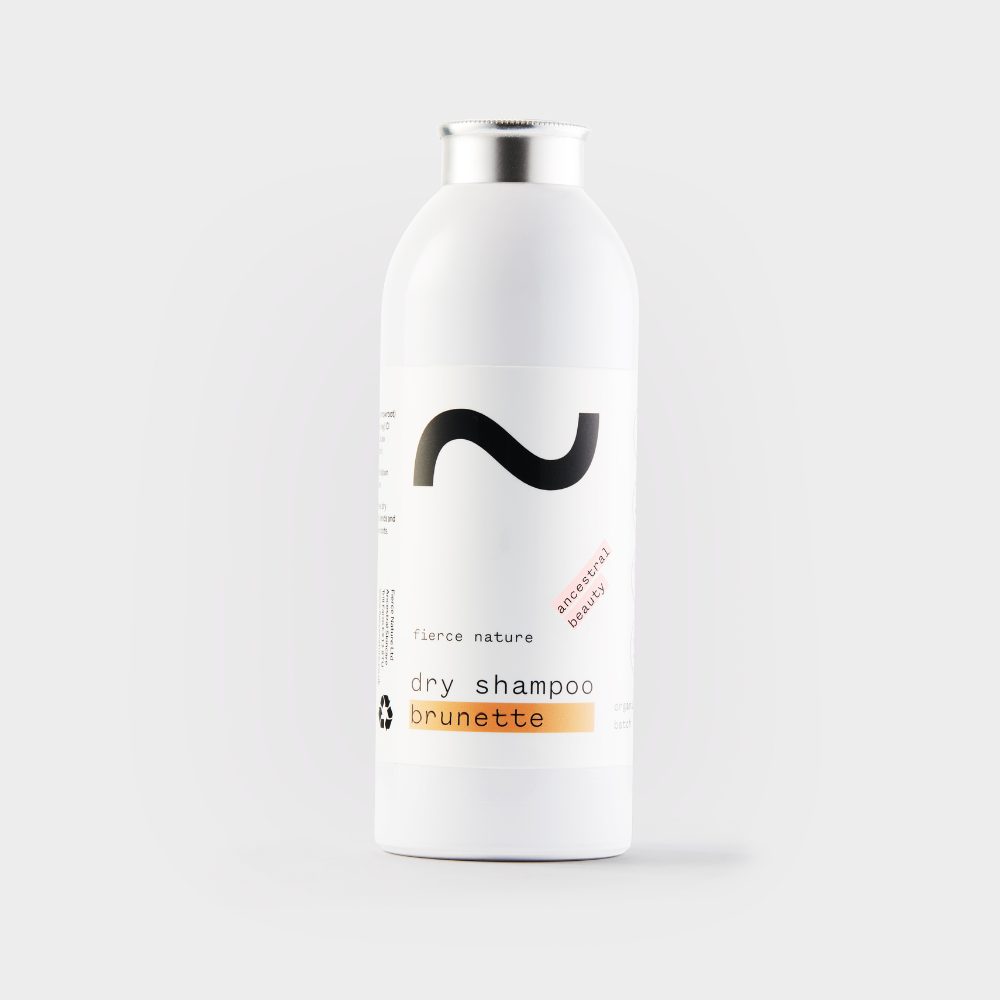



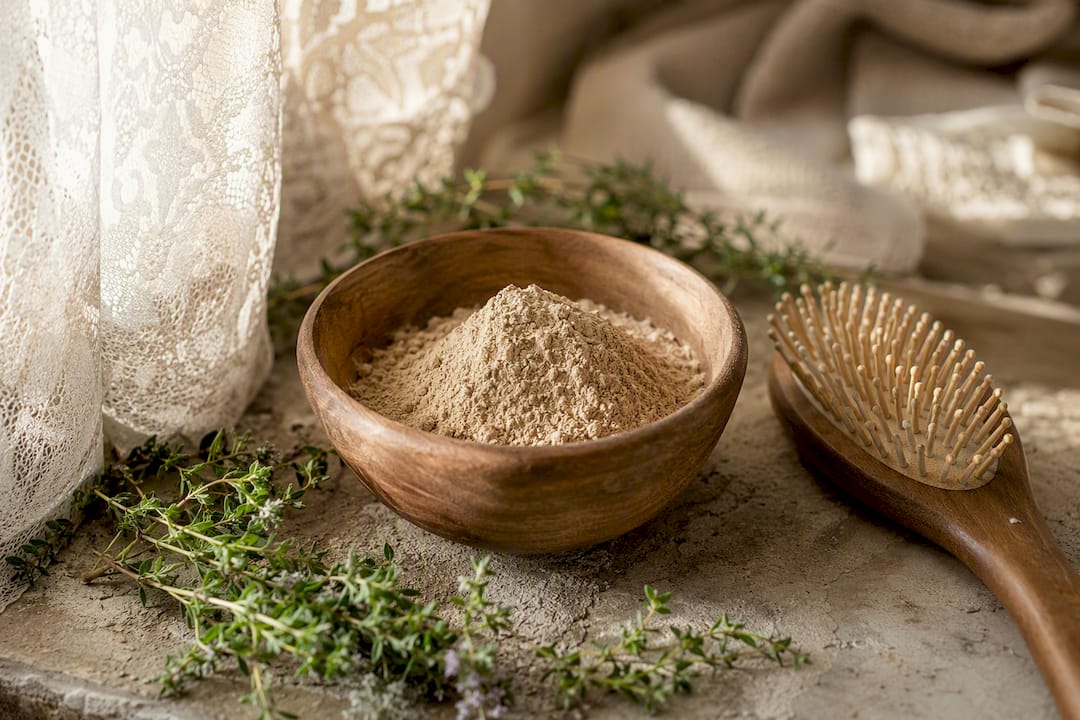
Powder dry shampoo is a loose or pressed formula, usually built from starches or clays, that you tap onto your roots to absorb oil and lift volume without a drop of water. It works best when you need precision rather than a fog of spray, which is why it suits sensitive scalps, colour-treated hair, and hand luggage. Fierce Nature has built its own version around this exact logic, and the Free From Skincare Awards have recognised natural, low-irritant haircare in the same category for their judgement on ingredients.
Three things make powder worth considering over an aerosol can:
Powder tends to win when your scalp reacts to fragrance or aerosol, when you’re travelling with limited luggage space, or when you want volume at the root rather than an all-over mist. Further down, we’ll walk through exactly how to apply it and where Fierce Nature’s own formula fits into that routine.
Powder dry shampoo refreshes hair by absorbing root oil with starch or clay particles, giving more precise, longer-lasting results than pressurised aerosol sprays.
| Point | Details |
|---|---|
| Buy for your hair colour | Choose tinted powder for dark hair and universal formulas for blonde or light brown hair. |
| Apply sparingly and wait | Tap a small amount at the root, wait around 15 seconds, then blend thoroughly before adding more. |
| Watch frequency and residue | Cap use at two to three applications between washes to avoid buildup and scalp irritation. |
| Verify sustainability claims | Check refill and compostable packaging claims directly rather than assuming all powders are equal. |
| Choose a talc-free formula | Fierce Nature’s Selfie Stick Natural offers a talc-free, non-aerosol option with a precision applicator. |
Powder dry shampoo doesn’t clean your hair. It disguises the problem by pulling sebum away from the scalp and swapping a greasy sheen for a matte, freshly washed look. The starch or clay particles in the powder are absorbent by nature. When they touch the oil at your roots, they soak it up the way a paper towel lifts a spill, binding the grease to the powder itself rather than leaving it sitting on the strand.
Most formulas lean on a small handful of base ingredients to do this work. Tapioca starch, corn starch, rice starch, and bentonite clay all show up repeatedly across the category, and each does roughly the same job with slightly different textures. Bentonite tends to feel a touch heavier and grips oil aggressively, which suits very greasy roots, while the starches feel lighter and blend more easily into fine hair. Talc-free formulations matter here because talc has raised long-running safety questions in cosmetic use, and increasingly, natural brands are formulating without it as standard practice rather than a premium add-on.
Beyond the base powder, ingredient lists often include a few extras worth reading closely:
Tint matters more than most first-time buyers expect. A universal white or pale powder can leave a visible cast on dark brown or black hair if it isn’t blended in properly, which is why several brands now offer tinted versions calibrated to darker shades. If your hair colour sits anywhere from medium brown to black, checking whether a formula is tinted or universal is the single most useful thing you can do before buying.
Concentration is where powder tends to outperform spray in practice. Brands often claim that a small bottle of powder can provide as many uses as multiple aerosol cans, reflecting the idea that applying a measured amount works more efficiently than spraying a broad mist.
Applying powder well is a different skill from shaking a spray can, and it rewards a bit of patience the first few times.
Applicator choice changes the outcome more than most people expect. A puff or pump applicator gives you tight control over placement, ideal if you’re targeting a small oily patch rather than your whole head. Loose powder with a brush suits broader coverage and blends well through longer hair, while fingertips work fine in a pinch, though they’re harder to control for precise dosing at the parting.
Texture and colour both affect how you apply. Fine, light hair needs a lighter hand since powder can look chalky if overapplied, while thick or coarse hair can usually take a slightly heavier dusting because it disperses across more strands. If you have dark hair, work a tinted powder in more thoroughly at the root before checking the mirror, since it often needs a moment longer to fully disappear than it does on lighter shades.
Most people find powder works well two to three times between washes, though this varies with how oily your scalp runs naturally. If you notice a dull, flat texture building up despite fresh application, that’s your cue to wash and start again rather than adding more powder on top.
Pro Tip: If you’re left with visible residue at the parting, don’t brush harder in the same spot. Switch to a clean, dry brush and work outward from the root in short strokes. Brushing repeatedly in one place just grinds the powder further into the strand instead of lifting it away.
Powder earns its keep on precision. You decide exactly how much lands where, which cuts down on the waste that comes with an aerosol mist drifting past the hair you actually wanted to treat. That precision also means a bottle lasts considerably longer than a can, and many people find the volumising effect at the root is stronger with powder than spray, since the particles physically lift strands away from the scalp as they absorb oil.
The drawbacks are worth knowing before you buy, not after:
A short safety checklist covers most of what matters: avoid applying powder to broken skin or an inflamed scalp, apply in a ventilated space rather than a closed bathroom, and patch-test any fragranced formula on your inner arm before your first full application. Powder dry shampoo benefits are real, but they depend on sensible frequency — using it as a genuine top-up between washes rather than a permanent substitute for washing your hair at all.
A simple rule that works for most hair types: cap powder use at two to three applications before a proper wash, and if you notice your scalp feeling tight, itchy, or unusually dry, that’s a signal to space out use rather than push through it.
Choosing well comes down to matching a formula to your hair, not picking whatever’s cheapest on the shelf. A few criteria consistently separate a good match from a frustrating one.
Reviewers who test dry shampoos repeatedly tend to judge them on the same handful of things: how invisible the finish looks, whether any white cast remains, how much volume it adds, and how the applicator performs in practice. Applicator design in particular tends to be the detail people either love or complain about most, since a poorly designed shaker top can dump far more product than you intended.
Price per use is worth calculating rather than guessing at. A £12 bottle of concentrated powder that lasts four months works out considerably cheaper per application than a £4 aerosol can you’re replacing every few weeks, even though the upfront price looks higher on the shelf. If you want a shortcut for shade matching, our guide to choosing dry shampoo across blondes and brunettes walks through this in more detail.
| Point | Details |
|---|---|
| Match tint to hair colour | Tinted powders reduce white cast on darker hair; universal powders suit blondes best. |
| Prioritise talc-free formulas | Talc-free, fragrance-free options reduce irritation risk for sensitive scalps. |
| Applicator affects control | Puffs and pumps give targeted precision; loose powder with a brush suits broader coverage. |
| Calculate cost per use | Concentrated powder often lasts longer than an equivalent spend on aerosol cans. |
Powder formats sidestep the aluminium canister and propellant gas that every aerosol spray depends on, which matters if you’re trying to cut down on single-use packaging. No pressurised gas also means no propellant emissions released each time you use it, a small but real difference when you’re refreshing your hair several times a week.
Several natural brands now pair powder formulas with refillable or compostable packaging, letting you top up an existing container rather than binning it and starting fresh each time. It’s worth keeping expectations realistic here: “refillable” and “compostable” mean different things depending on the brand, so checking exactly what the packaging claim covers is worth thirty seconds before you buy.
Third-party signals are the fastest way to verify a brand’s claims without taking their word for it:
One practical note: concentration reduces overall waste, but tinted powders containing mica or pigment may carry their own disposal considerations, so check the packaging guidance rather than assuming every powder is equally biodegradable.
Fierce Nature built its powder dry shampoo, the Selfie Stick Natural, around the exact checklist above: talc-free, non-aerosol, and formulated with ingredient transparency rather than a marketing gloss. It ticks the precision box too, with an applicator designed for targeted touch-ups at the root rather than an all-over dusting you have to work hard to blend.
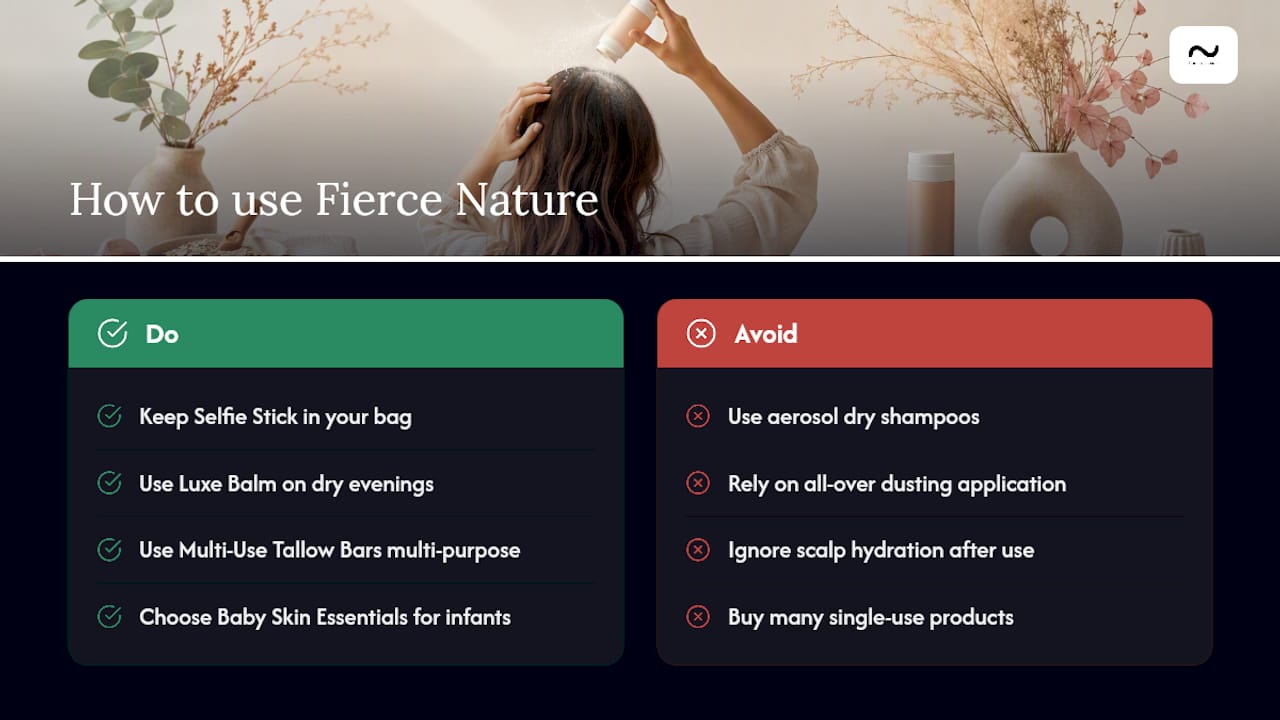
It sits within a wider range built on the same non-toxic principle. The Biohacking bundle groups several everyday essentials together for anyone wanting to overhaul their routine in one go. The Multi-Use Tallow Bar (Unscented) and Multi-Use Tallow Bar (Scented) work as a face, body, and hand solution in a single bar, cutting down on how many separate products you’re buying. The Luxe Balm is worth reaching for on days your scalp feels tight or dry after powder use, since a hydrated scalp responds better to any dry shampoo than a stressed one. For growing families, the Non-toxic Baby Skin Essentials range extends the same tallow-based philosophy to the youngest and most sensitive skin in the house. The Nourish Balm (Unscented) suits anyone wanting a fragrance-free daily moisturiser, and the Honey Salve is a good option for spot treatment on rougher patches of skin.
For a practical pairing, keep the Selfie Stick Natural in your bag for quick midweek touch-ups, and reach for the Luxe Balm on evenings when your scalp needs a bit more care after a few consecutive powder days. If you want to see the full formulation thinking behind the range, our science behind Fierce Nature’s dry shampoo article goes into more depth. Ready to try it for yourself? Head to the Selfie Stick Natural product page to check formulation details and order.
Fierce Nature grew out of frustration with mainstream cosmetics that hide harsh chemicals behind seductive packaging and big promises. That frustration extends directly to aerosol dry shampoo, which relies on propellant gas to force product out of a can, something that sits uneasily with a brand built on natural, non-toxic formulation from the ground up.
Powder solves a specific problem sprays create: you can’t easily control how much aerosol lands on your scalp, and you’re inhaling propellant whether you mean to or not. A tapped, measured amount of powder gives you the same freshness without either issue. It’s a smaller, more honest way of solving the same problem, applied with your hands rather than dispensed through pressurised chemistry.
For anyone who wants the fuller reasoning behind ditching aerosol altogether, our piece on natural dry shampoo as a cleaner alternative to chemical sprays covers the formulation side in more detail.
— Fierce Nature
Powder gives you more precise control over where product lands, reduces inhalation of propellant gas, and tends to be more concentrated per bottle than aerosol spray, though both formats disguise oil rather than clean the hair.
The right choice depends on your hair colour and scalp sensitivity, but a talc-free, non-aerosol formula with a precision applicator, such as Fierce Nature’s Selfie Stick Natural, covers most of the criteria worth prioritising.
The main drawbacks are visible white cast on dark hair if under-blended, buildup and dullness from overuse, and potential scalp irritation from fragrance or inhaled loose powder.
Most people find two to three applications between washes works well, though very oily scalps may need to wash sooner if the hair starts looking dull or feeling coated.