Cart
0
You may also like





Most people in the UK don’t need daily sunscreen between mid‑October and early March.
There are exceptions, though, and they matter:
If you fall into one of those groups, or you simply prefer to wear SPF year-round for peace of mind, prioritise broad-spectrum protection with strong UVA cover and a formula that won’t fight against your skin’s winter dryness.
Most UK residents can safely skip daily sunscreen between mid-October and early March, provided they prioritise UVA protection and barrier repair when their skin or circumstances call for it.
| Point | Details |
|---|---|
| Skip daily SPF for most | Typical UK residents don’t need routine sunscreen mid-October to early March due to low UVB levels. |
| Know your risk group | Fair skin, skin cancer history, photosensitising medication, or active retinoid use means year-round SPF is worth keeping. |
| Choose UVA-first formulas | Look for the UVA circle symbol or a high star rating rather than focusing on SPF number alone. |
| Treat snow as summer sun | Skiing and snow exposure need SPF50+ with reapplication every two to three hours. |
| Prioritise barrier repair | Occlusive tallow balms like Fierce Nature’s Luxe Balm often matter more than extra SPF for winter skin health. |
This article is general information, not a substitute for advice from a qualified doctor. Consult a qualified healthcare professional about your own circumstances before acting on anything here.
Sunlight carries two types of ultraviolet radiation that behave very differently, and understanding the split is the whole key to this decision.
UVB is the wavelength responsible for sunburn and most vitamin D production in your skin. It’s strongly affected by the angle of the sun, which is why UVB drops dramatically across the UK from October to March. UVA, by contrast, stays present at broadly similar strength all year, passes through cloud, and can even reach you through glass. It doesn’t burn you the way UVB does, but it’s the wavelength most closely tied to photoageing, the fine lines, pigmentation and loss of elasticity that build up slowly over decades.
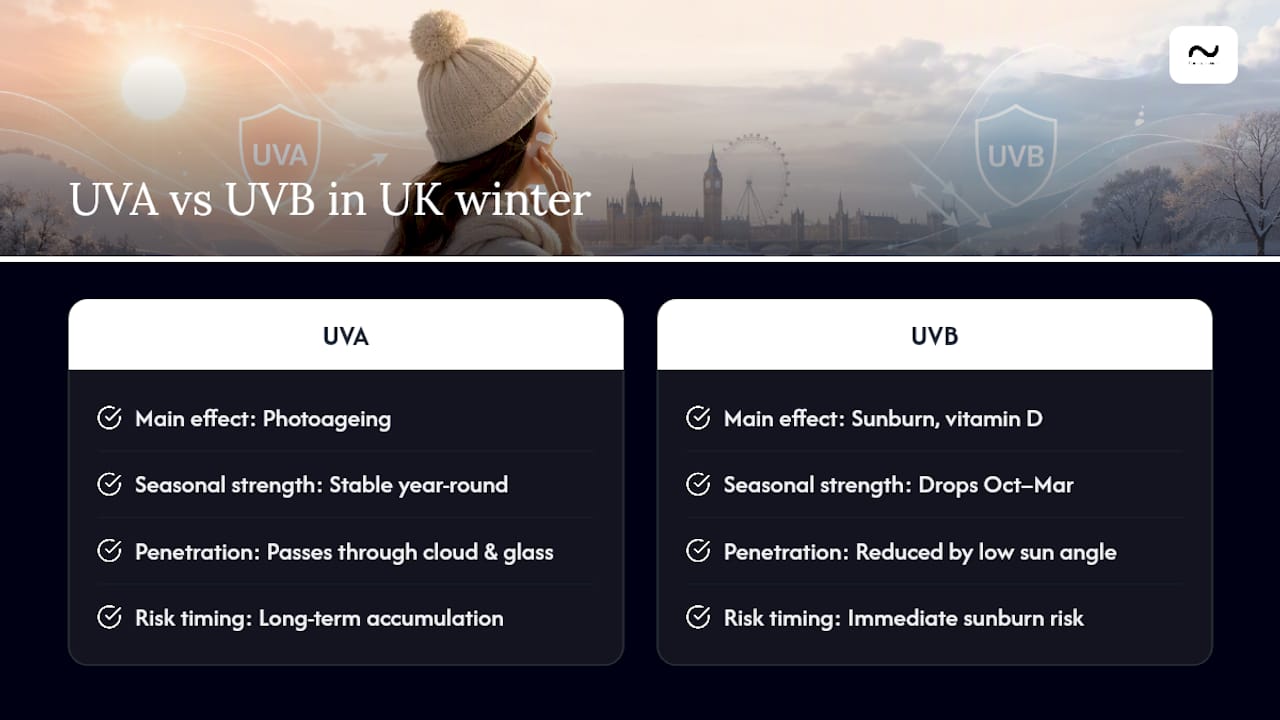
New Scientist’s coverage of UK photobiology data makes the point plainly: at British latitudes, UVB exposure between October and March is so low that skipping daily SPF during those months carries very little measurable risk for most people. That’s the basis for BAD’s “unnecessary for most” guidance.
There’s a trade-off worth knowing about, though.
UV index reality check: UK winter UV levels typically sit low enough that dermatological bodies don’t recommend routine protection for the general population, yet UVA exposure continues regardless of season.
Vitamin D synthesis depends on UVB, and the UK’s winter light simply can’t produce enough of it. This is why the NHS recommends a vitamin D supplement for most UK adults between October and early March, independent of anything to do with sunscreen. The two issues, UV protection and vitamin D, run on separate tracks and shouldn’t be conflated.
Skip the guesswork. If any of these apply to you, year-round broad-spectrum SPF isn’t optional; it’s part of managing your risk properly.
If you’re unsure which category you fall into, or you’re managing more than one of these factors at once, a quick conversation with your GP or a dermatologist is worth more than any amount of internet research.
Once you’ve decided SPF is right for you this winter, the selection criteria shift slightly from your summer routine. UVA protection becomes the priority, not the SPF number itself.
Pro Tip: If your cheeks and nose take a battering from wind rather than sun, a waxy balm or stick gives you mechanical wind protection on top of any UV filters, and it’s far less likely to sting on chapped skin than a fluid sunscreen.
For a fuller breakdown of what UVA and UVB indicators actually mean on UK packaging, our guide to natural sunscreens in the UK goes into more depth on choosing between mineral and chemical filters.
If you’ve decided SPF has a place in your winter routine, the application logic is simpler than most people expect.
Here’s what tends to get lost in the SPF debate: for the vast majority of UK residents, the skin issue that actually needs solving each winter isn’t UV exposure. It’s the barrier damage caused by cold air outside and dry, heated air indoors, working on your skin from both directions at once.
Clinical guidance on winter skin consistently points to the same fix: shorter, lukewarm showers, moisturising while skin is still damp, and reaching for occlusive balms rather than light lotions. This is where tallow earns its reputation. Its lipid profile sits close to the skin’s own sebum, which means it forms a lipid layer on the surface that slows transepidermal water loss more effectively than many conventional creams, provided it’s patch-tested first and used consistently.
In practice, that looks like:
For a deeper look at rebuilding a compromised barrier, our skin barrier repair moisturiser guide walks through the signs of barrier damage and how to reverse them.
Pro Tip: If your skin feels tight within an hour of moisturising, that’s usually a sign you need a heavier, more occlusive product, not more of the same lightweight one.
Strip away the headlines and the picture is more settled than the debate suggests.
The sensible middle ground: skip daily SPF between mid-October and early March if you’re not in a risk group, and revisit that decision the moment your circumstances change, whether that’s a new medication, a booked skiing trip, or simply a preference for protecting against long-term ageing.
Skin that’s already compromised by cold, wind, and dry indoor heat doesn’t need another layer fighting for space. It needs nourishment that actually sinks in. That’s the thinking behind why we built our balms around tallow rather than lighter, water-based formulas. If you’ve struggled with reactive or easily irritated skin, as many of us at Fierce Nature have, you’ll know that simple, recognisable ingredients tend to work better than long ingredient lists promising the world. Try a smaller size first and see how your skin responds, and have a look through our winter skincare guide for more on building a routine around the season rather than against it.
Once barrier repair takes priority over blanket SPF use, the right product depends on what your skin is actually dealing with this winter, not a one-size-fits-all routine.
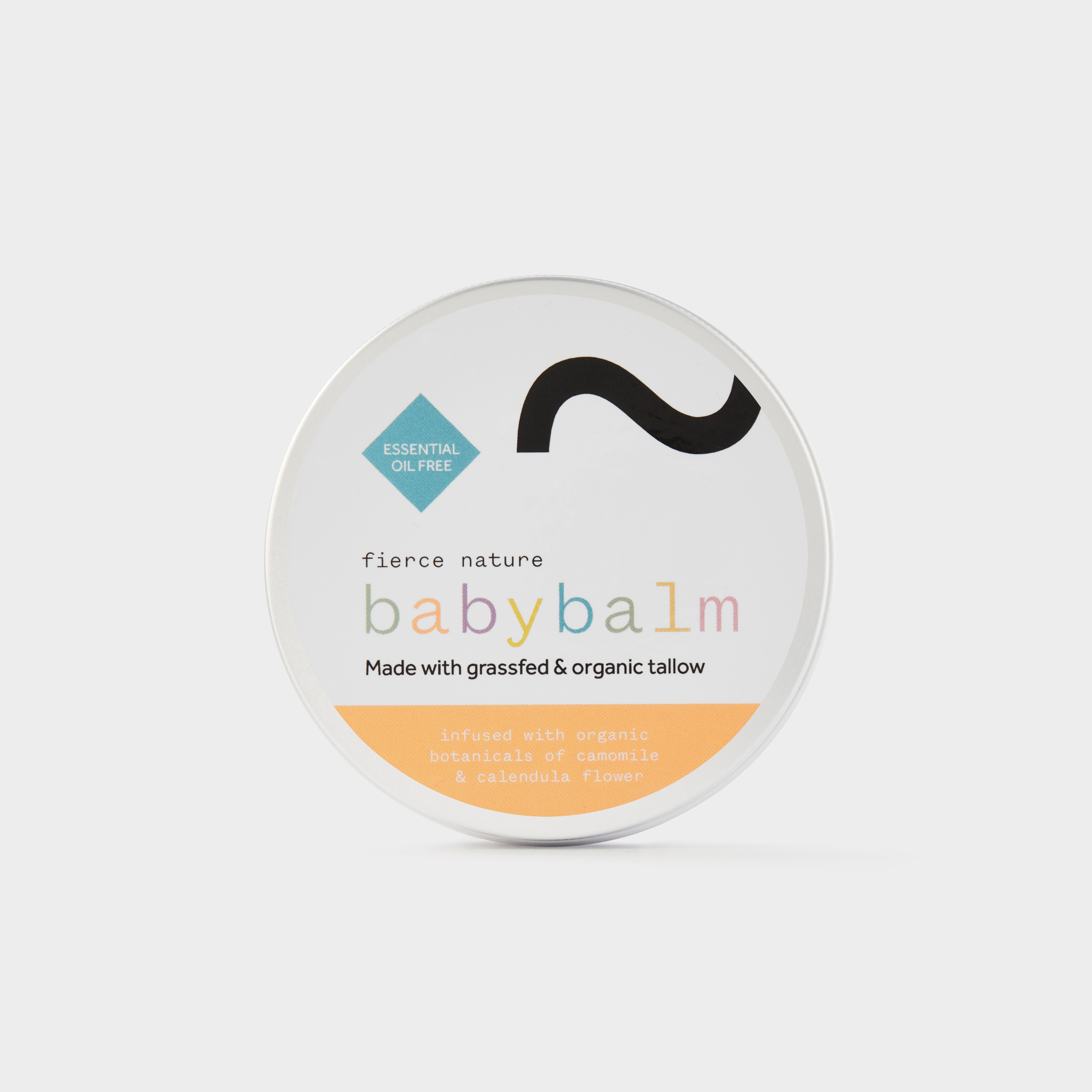
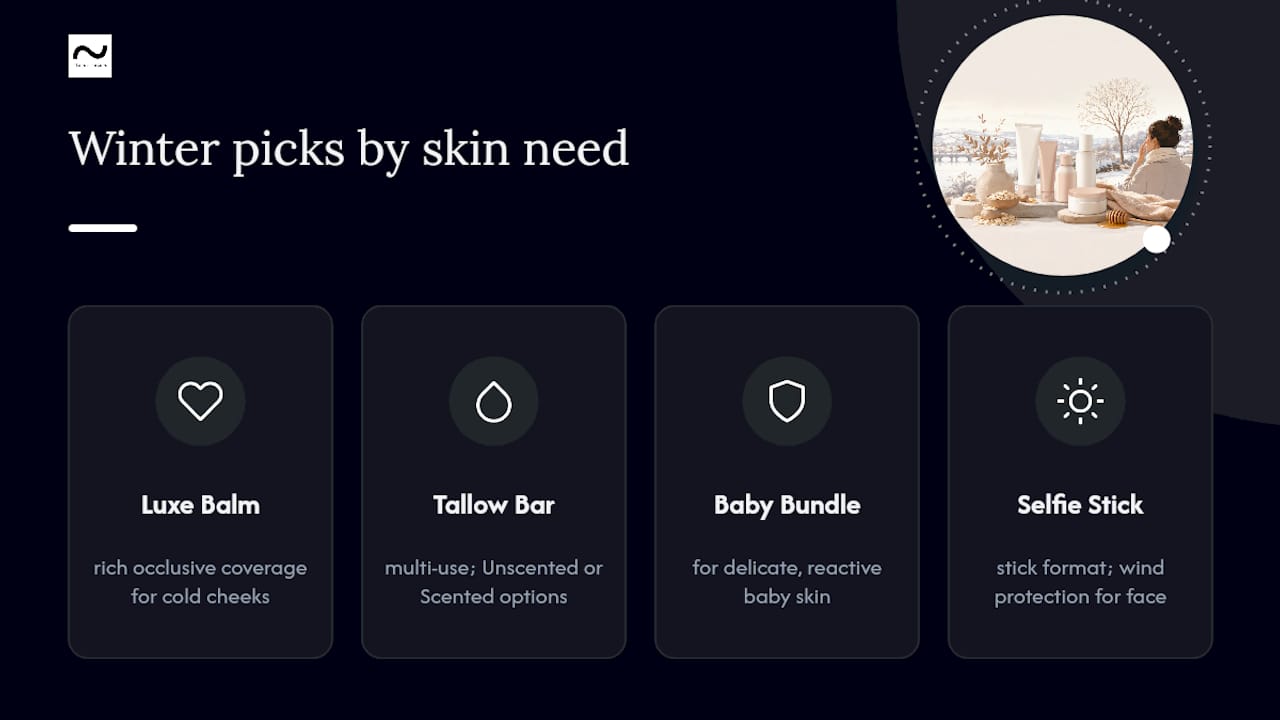
For dry, wind-battered cheeks and general daily nourishment, our Luxe Balm delivers the rich, occlusive coverage that thin creams can’t manage in cold weather. If you’re after something multi-purpose for hands, elbows, and anywhere skin cracks or tightens, the Multi-Use Tallow Bar comes in both Unscented and Scented versions, so sensitive skin and fragrance lovers are equally covered. Parents dealing with a baby’s delicate, easily-reactive skin through the coldest months should look at our Baby Balm or the full Non-Toxic Baby Skin Essentials bundle, built specifically for that finer, more reactive skin barrier. For windy commutes or school runs, our Selfie Stick Natural gives you mechanical wind protection on the go, exactly the kind of stick-format product dermatologists recommend for exposed cheeks and noses. If you want a hint of colour alongside the nourishment, the Nourish Balm with Rose Tint (Sweet Orange) does both jobs at once. And for anyone building a fuller winter self-care routine, our Biohacking bundle brings several of these essentials together.
Have a browse of the full Fierce Nature range and pick the piece that matches what your skin is telling you this winter.
Most people don’t need to, since UK winter UV levels are usually too low to cause meaningful UVB damage, but those in higher-risk groups or with specific exposures like skiing should continue daily protection.
A broad-spectrum formula with strong UVA protection in a richer, balm-like texture works best, since it addresses both year-round UVA exposure and winter dryness at once.
Look for products with a UVA circle symbol or high UVA star rating and a hydrating base containing ingredients like glycerin or squalane, which suit the UK’s damp, cold winter climate better than lightweight summer lotions.
No, SPF50+ isn’t excessive for winter; it’s specifically recommended for skiing, snow, or high-altitude exposure, while SPF30 is generally sufficient for everyday winter use if you’re not in one of those situations.