Cart
0
You may also like




TL;DR:
- A detox skincare routine is primarily about removing synthetic irritants that disrupt the skin’s barrier, not expelling internal toxins.
- A well-designed reset simplifies routines, eliminates harsh ingredients, and supports barrier repair with bioavailable, nourishing ingredients.
A detox skincare routine matters, but not for the reasons most brands claim. Your skin cannot expel internal toxins through its pores. That is a marketing story, not biology. What a well-designed reset genuinely does is remove the irritating synthetics that disrupt your moisture barrier, simplify an overloaded routine, and give your skin the nourishing, bioavailable ingredients it actually recognises. For UK consumers switching to natural, organic skincare, that distinction is everything.
A useful detox-style reset looks like this:
The term “skin detox” is a marketing phrase, not a biological process. Your liver and kidneys handle the body’s detoxification. The skin’s real jobs are acting as a physical barrier, supporting enzymatic antioxidant defence, and cycling through cell turnover. It does not meaningfully excrete internal toxins, and no topical product can “draw out” deep-seated ones.
What topical care can do is clear surface grime, excess sebum, and environmental pollutants from the skin’s surface, support the skin’s own antioxidant defences, and repair a compromised lipid barrier. That is genuinely useful. It just has nothing to do with purging internal waste.
Marketing terms like “purging” and “drawing out toxins” persist because they feel intuitive. The skin does respond visibly to new routines, sometimes with temporary breakouts as it adjusts. That is not toxins leaving your body; it is your skin’s barrier recalibrating to a change in product chemistry.
A back-to-basics reset matters because it reduces your skin’s cumulative irritant load, and that has measurable consequences. Less redness, fewer reactive breakouts, improved hydration, and a calmer texture are all realistic outcomes when you remove the ingredients that were working against your barrier in the first place.
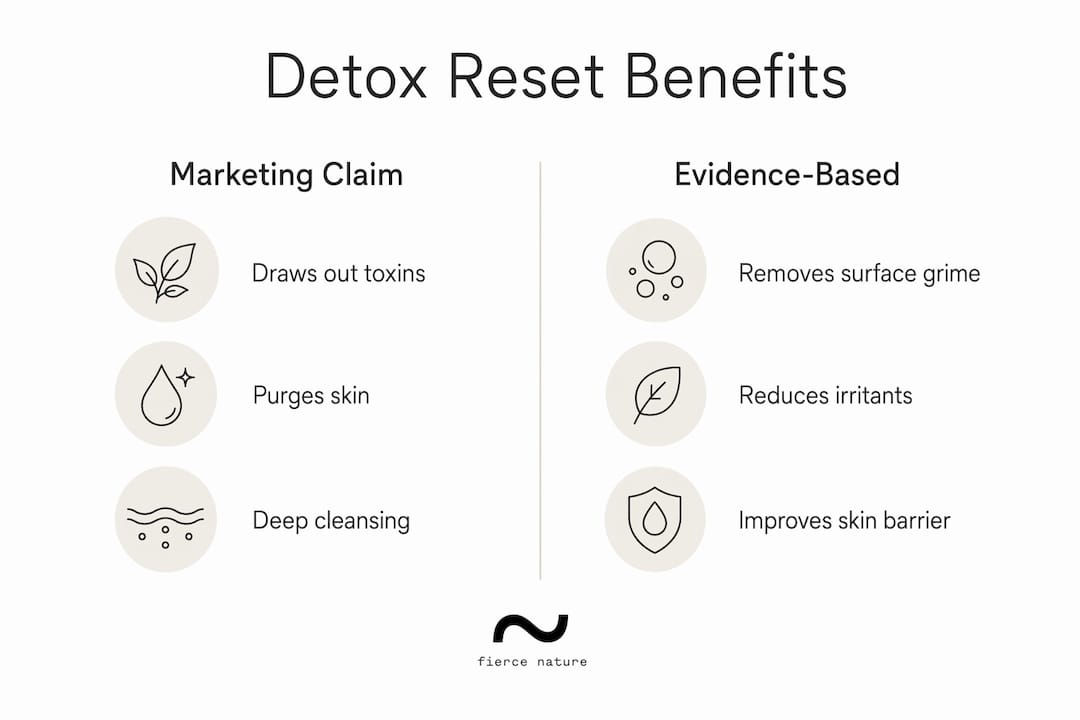
| Marketing claim | Evidence-based reality |
|---|---|
| “Draws out deep toxins” | Clears surface sebum, dead cells, and pollutants |
| “Purges impurities from pores” | Gentle exfoliation improves texture and congestion |
| “Detoxifies skin from within” | Barrier repair reduces transepidermal water loss |
| “Resets skin at a cellular level” | Consistent nourishing care supports natural cell turnover |

Clinicians report that patients with sensitive or reactive skin often improve significantly after removing irritating actives and simplifying their routines. The barrier gets a chance to recover when it is no longer under constant chemical stress.
Sunscreen and antioxidants are also central to any honest skin reset. UV radiation and oxidative stress are among the most damaging environmental stressors your skin faces daily. A non-toxic morning routine that includes both gives your skin real, evidence-based protection.
The goal is a simple, consistent routine your skin can rely on. Start with just two steps and hold that baseline for at least four weeks before adding anything else.
Morning routine
Evening routine
When you reintroduce actives, add one at a time, with at least two weeks between each addition. This is the only way to know which ingredient your skin tolerates.
Patch testing: Apply a small amount of any new product to the inside of your wrist or behind your ear. Wait 24 hours. If there is no redness, itching, or swelling, it is generally safe to use on your face.
If you have rosacea, eczema, or perioral dermatitis, keep the routine even simpler and seek clinical guidance before reintroducing any active ingredient.
Pro Tip: Avoid the temptation to exfoliate more during a reset. Over-exfoliation is one of the most common causes of barrier damage. Cleansing once daily in the evening is often enough for the first few weeks.
The importance of reducing toxic load in your routine starts at the ingredient label. In the UK, “clean” and “natural” are unregulated marketing terms, so reading the INCI list yourself is the only reliable approach.
| Avoid | Seek instead |
|---|---|
| Synthetic fragrance (parfum) | Fragrance-free or naturally scented with essential oils |
| Drying alcohols (alcohol denat.) | Fatty alcohols (cetyl, stearyl) |
| Harsh sulphates (SLS, SLES) | Gentle plant-derived cleansing agents |
| Synthetic dyes (CI numbers) | Uncoloured or naturally pigmented formulas |
| Occlusive petrochemicals (mineral oil) | Bioavailable animal or plant fats |
What to look for on a UK label:
| Skin concern | Ingredient to prioritise |
|---|---|
| Dry or dehydrated skin | Tallow, shea butter, glycerin |
| Sensitive or reactive skin | Fragrance-free, ceramide-rich formulas |
| Dull or congested skin | Gentle enzyme exfoliants, antioxidant serums |
| Barrier-damaged skin | Bioavailable fats, tocopherol, calendula |
Lifestyle changes support skin function, but they do not detoxify your skin. What they do is reduce systemic inflammation, which directly affects how your skin looks and behaves.
Practical internal measures that genuinely help:
Pro Tip: You do not need a complete dietary overhaul. Swap one high-glycaemic snack daily for a handful of mixed nuts or berries. Small, consistent changes compound over weeks.
Nutrition and sleep complement your topical routine rather than replacing it. For inflammatory skin conditions like acne or eczema, addressing diet alongside a simplified routine can meaningfully reduce flare frequency.
Realistic expectations matter here. Skin cell turnover takes several weeks, and barrier repair is a gradual process. Most people notice an initial improvement in comfort and redness within two to four weeks. More visible changes in texture and hydration typically follow over six to eight weeks of consistent care.
A basic non-toxic morning and evening routine in the UK does not need to be expensive. A realistic cost guide:
The most cost-effective approach is to prioritise a nourishing moisturiser and a reliable SPF. You do not need ten products to see results.
A reset is self-care, not a substitute for clinical treatment. See a GP or dermatologist promptly if you experience:
If a new product causes intense itching, burning, or hives, stop using it immediately. Wash the area with cool water and seek urgent care if symptoms spread or worsen. Signs that your routine needs a rethink rather than a reset are covered in our guide on when to change your skincare.
A detox skincare routine matters because it removes the synthetic irritants disrupting your barrier and replaces them with nourishing, bioavailable ingredients your skin can actually use.
| Point | Details |
|---|---|
| ‘Detox’ is a reset, not a purge | Skin cannot expel internal toxins; a reset removes surface irritants and repairs the barrier. |
| Simplify before you add | Strip back to cleanser, moisturiser, and SPF for at least four weeks before reintroducing actives. |
| Patch test every new product | Apply to the wrist or behind the ear and wait 24 hours before using on your face. |
| Expect gradual improvement | Initial comfort improves in two to four weeks; visible texture changes follow over six to eight weeks. |
| Fierce Nature’s approach | Tallow-based, handmade formulas support barrier repair with bioavailable fats and no synthetic irritants. |
The most honest thing we can say about a skin detox is this: the word is borrowed from wellness marketing, but the practice it describes is genuinely useful. Stripping back to ingredients your skin recognises, removing the synthetic load it has been quietly reacting to, and giving it consistent nourishment is not a trend. It is what skin has needed all along.
What we have seen, time and again, is that people who struggle with persistent sensitivity or reactive skin are often not dealing with a skin condition at all. They are dealing with a product condition. The moment they simplify, the skin begins to settle.
Tallow is central to our formulations because its fatty acid profile mirrors the skin’s own lipid structure. That bioavailability means it absorbs rather than sitting on the surface, feeding the barrier from the outside in. It is not a new idea; it is one of the oldest skin care ingredients in human history, and the science of barrier function explains exactly why it works.
A back-to-basics reset is not about deprivation. It is about choosing ingredients that work with your skin rather than against it.
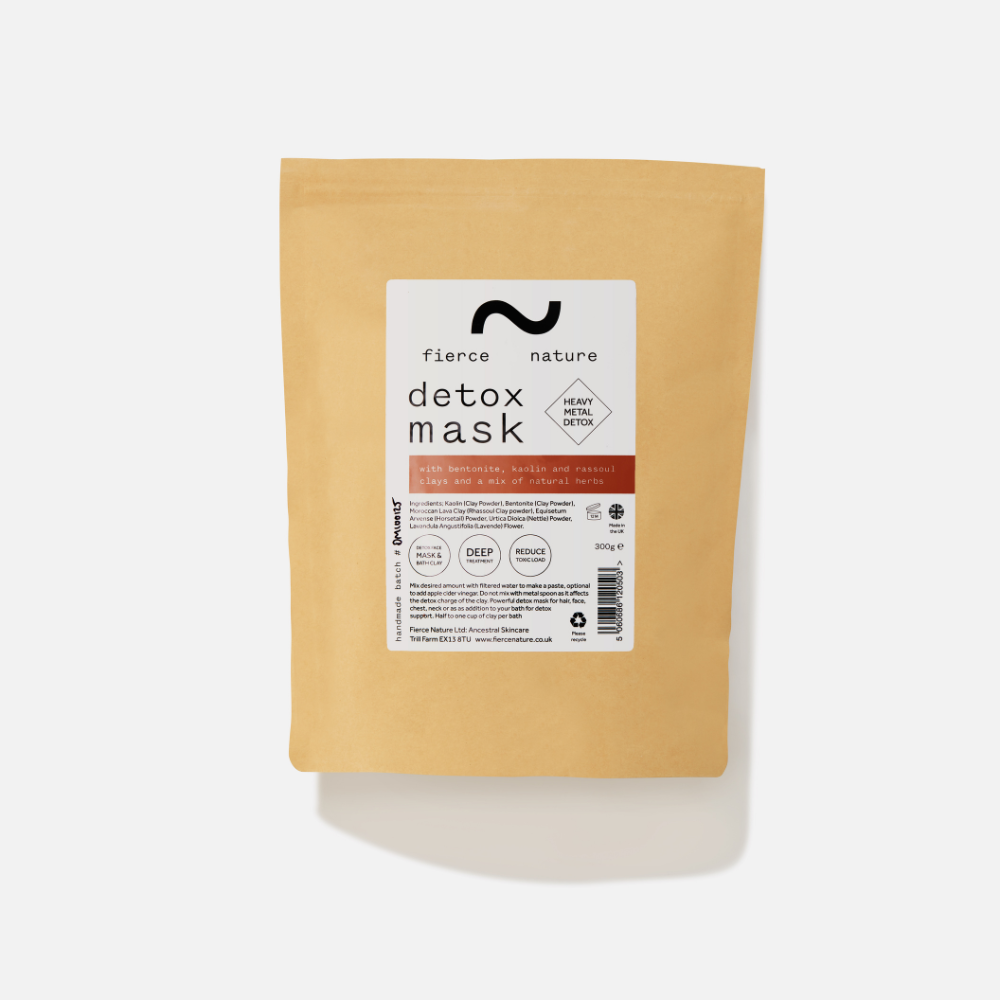
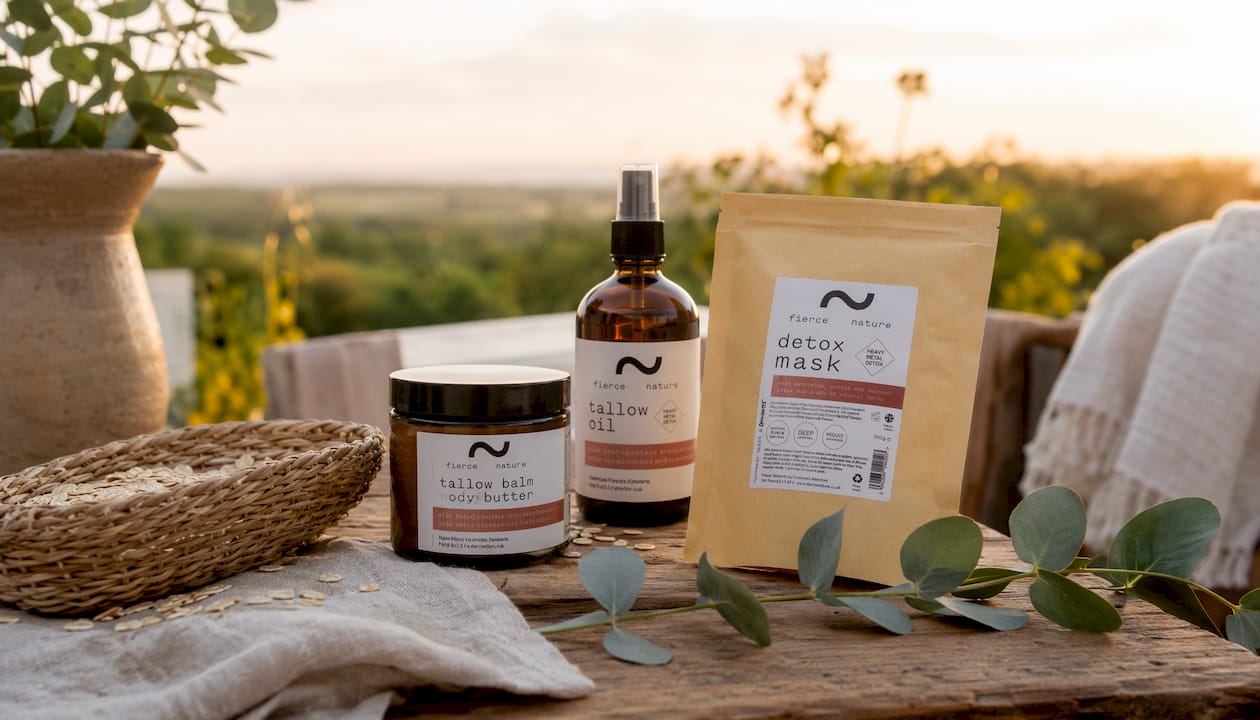
If you want a ready-made option to support your reset, the Fierce Nature Detox Mask for Hair and Skin is a natural, clay-based formula handmade in the UK. It draws surface impurities and excess sebum from the skin without stripping the barrier, making it a practical addition to a simplified routine rather than a replacement for one.
Use it once or twice a week, after cleansing and before moisturising. Apply a thin layer, leave for five to ten minutes, and rinse with cool water. Always patch test first, particularly if your skin is currently reactive or sensitised.
It suits most skin types and works equally well on the scalp for those managing product buildup. Visit the product page to read the full ingredient list and find out whether it fits your reset.
For personalised advice on any persistent skin condition, consult your GP or a registered dermatologist.
Not in the way marketing suggests. The liver and kidneys handle internal detoxification; the skin’s role is barrier protection and cell turnover, not toxin excretion.
Most people notice improved comfort within two to four weeks, with more visible changes in texture and hydration over six to eight weeks of consistent care.
Avoid synthetic fragrance (listed as “parfum”), drying alcohols, harsh sulphates like SLS, and synthetic dyes. Favour fragrance-free, bioavailable fats and gentle humectants.
Tallow’s fatty acid profile closely mirrors the skin’s own lipid structure, making it a highly bioavailable emollient that supports barrier repair without synthetic additives.
See your GP or a dermatologist if you experience severe inflammation, spreading rash, painful cysts, unexplained pigment changes, or any systemic symptoms alongside a skin reaction.