Cart
0
80% Also Added this





TL;DR:
- Cocoa butter’s melting point makes it ideal for solid balm textures that melt on skin contact. It reduces water loss by forming a lipid film but is best used cautiously on acne-prone skin due to its moderate comedogenic rating. Combining cocoa butter with tallow creates balanced balms that offer structure, glide, and skin compatibility.
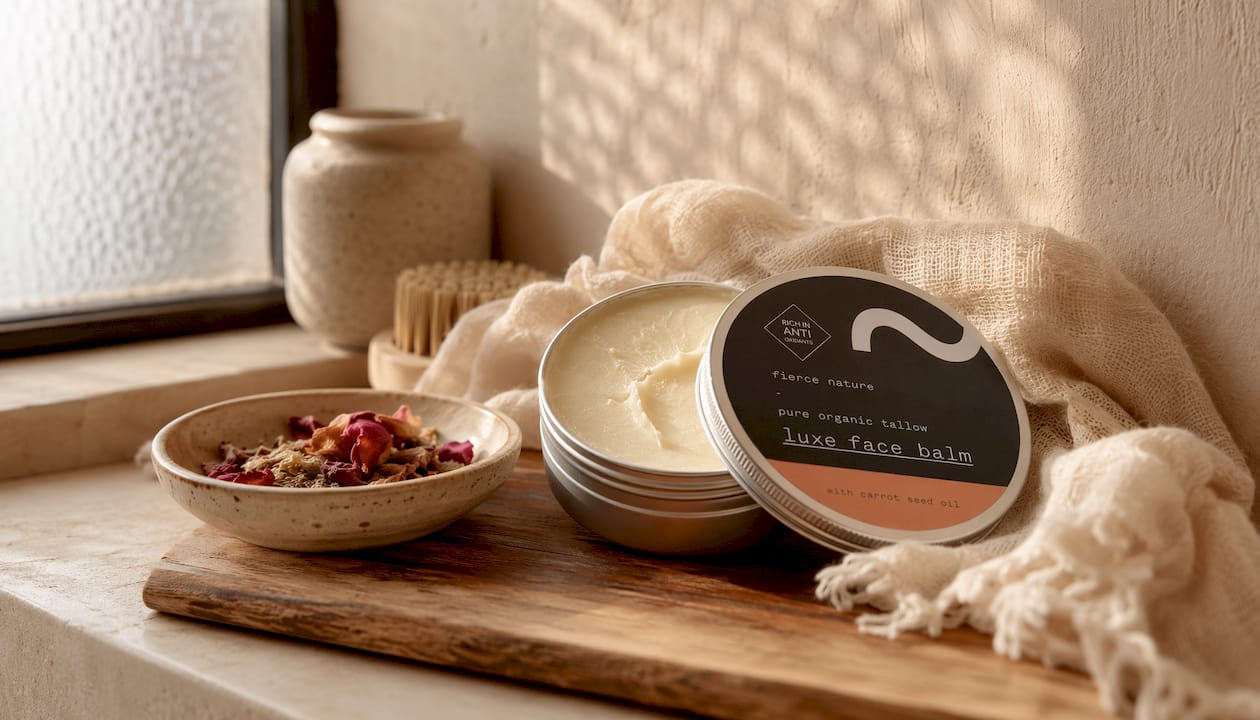
Cocoa butter defines balm texture more than almost any other ingredient. Its melting point sits between 30°C and 38°C, which means it holds firm in your bathroom cabinet yet dissolves the moment it meets skin warmth. In a tallow-based balm, that behaviour is deliberate: cocoa butter adds structure and a creamy, melt-on-contact feel, while tallow brings deep bioavailability and skin-compatible fatty acids, as showcased in Face balm tallow designed for the modern man. Together, they create something a single-ingredient balm rarely achieves.
Quick summary:
Cocoa butter (INCI: Theobroma Cacao Seed Butter) is a triglyceride-based hard vegetable fat. Its fatty-acid profile is dominated by stearic, palmitic, and oleic acids, and that combination builds a dense, cohesive crystalline matrix at room temperature. The result is a butter that feels almost waxy to the touch yet melts cleanly and quickly once it contacts skin at around 32°C–37°C.
Melting point: 30°C–38°C. Cocoa butter is solid at room temperature and melts at skin temperature, making it the primary structural ingredient in solid balm formats.
What many people do not realise is that cocoa butter is polymorphic: it can form several different crystal structures depending on how quickly it cools after melting. Rapid or uncontrolled cooling produces unstable crystals, which show up as a grainy texture or a white, powdery surface bloom. That bloom is purely a cosmetic issue, not a safety concern, but it signals poor formulation practice. Slow, controlled cooling directs the fat towards stable beta-crystals, giving a silky, even finish.
Firmer, cocoa-butter-rich balms are more occlusive than lighter alternatives. Occlusion means the balm lays a thin lipid film over the skin surface, slowing the rate at which moisture escapes. Cocoa butter’s roughly 33% stearic acid content is central to this: stearic acid reinforces the skin’s own lipid matrix and fills microscopic gaps between corneocytes, the outermost skin cells. The immediate effect is visible smoothing and a softened feel.
What this does not mean is a guaranteed long-term biological change. Most cosmetic-grade cocoa butter has been refined, and refining removes the majority of the cocoa-powder polyphenols responsible for antioxidant activity. The credible story here is structural and sensory, not antioxidant-driven anti-ageing. If you see a balm marketed heavily on cocoa’s antioxidant power, it is worth reading the ingredient list carefully; the myths about animal fats on skin article on the Fierce Nature blog unpacks similar misconceptions about plant butters versus tallow.
Pro Tip: After your first use of a cocoa-butter balm, expect immediate smoothness and a slight warmth as the butter melts. If you feel stickiness, the formulation likely contains raw or unblended cocoa butter rather than a properly worked balm.
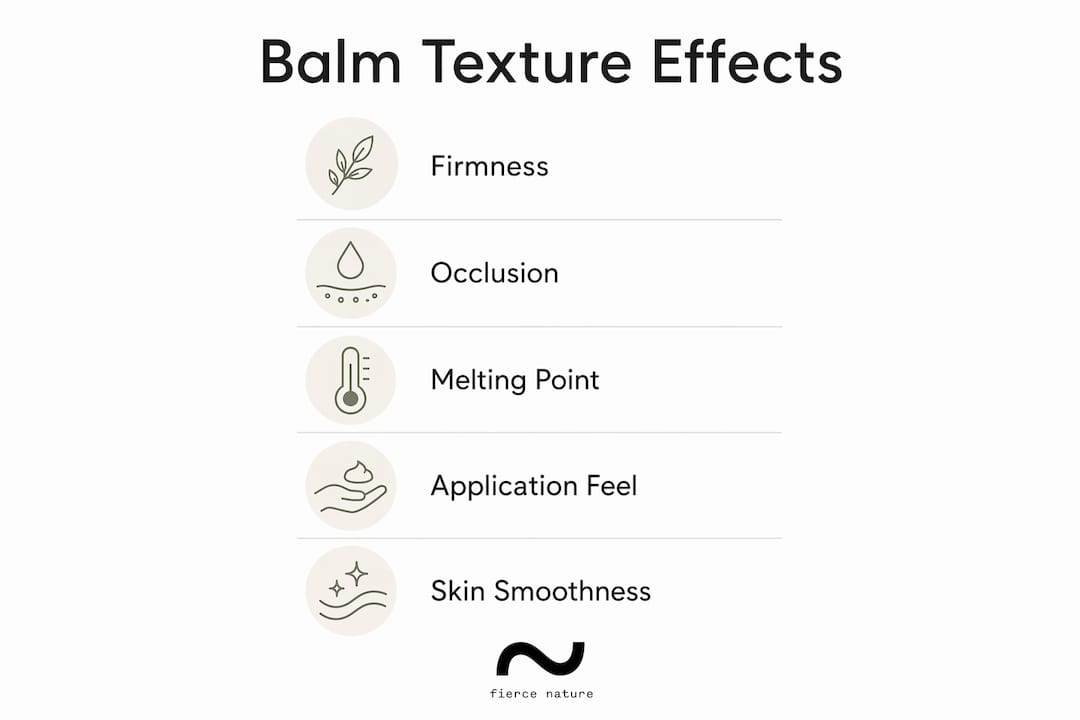
The design rule is simple: use cocoa butter to add structure; use tallow and liquid oils to add skin compatibility and glide. Getting the balance right is where craft matters.
Typical usage ranges by product type:
A practical example of how these ranges play out in three formats:
More cocoa butter means a firmer bar and stronger occlusion, but it also increases drag on application and raises the comedogenic risk on facial skin. More liquid oil improves spreadability and absorption but lowers heat stability, which matters in a British summer when a tin left in a car can soften considerably.
Pro Tip: To avoid tackiness in a cocoa-rich balm, melt ingredients gently at the lowest effective temperature, pour slowly, and cool at room temperature rather than in the fridge. Rapid chilling is the most common cause of grainy texture and surface bloom.
The right texture depends on where you are applying the balm, your skin type, and the season.
UK seasonal notes: in summer, a high-cocoa stick balm can soften in a warm pocket or handbag. Store balms below 25°C and away from direct sunlight. In winter, the barrier properties of a firmer balm become genuinely useful against cold, dry air, particularly on exposed hands and lips.
Three quick checks before purchasing:
Storage and use tips:
At Fierce Nature, cocoa butter is chosen deliberately, not as a filler or a marketing hook. We use it to add structure and a gentle sensory warmth to our tallow-first balms, keeping formulations minimal and grounded in ingredients that have nourished skin for centuries. Tallow’s bioavailability means it penetrates deeply rather than sitting on the surface; cocoa butter complements that by providing the firm, melt-on-contact texture that makes a balm feel purposeful and satisfying to use.
Every batch is handmade in the UK. We test for texture consistency, checking that there is no grainy bloom and that the balm spreads evenly without drag. Ingredient transparency matters to us: you can read every component on the label and look each one up. That is the standard we hold ourselves to, and it is why we keep formulations short. Learn more about tallow’s nourishing role in our balms and why we believe it is the most skin-compatible base available.
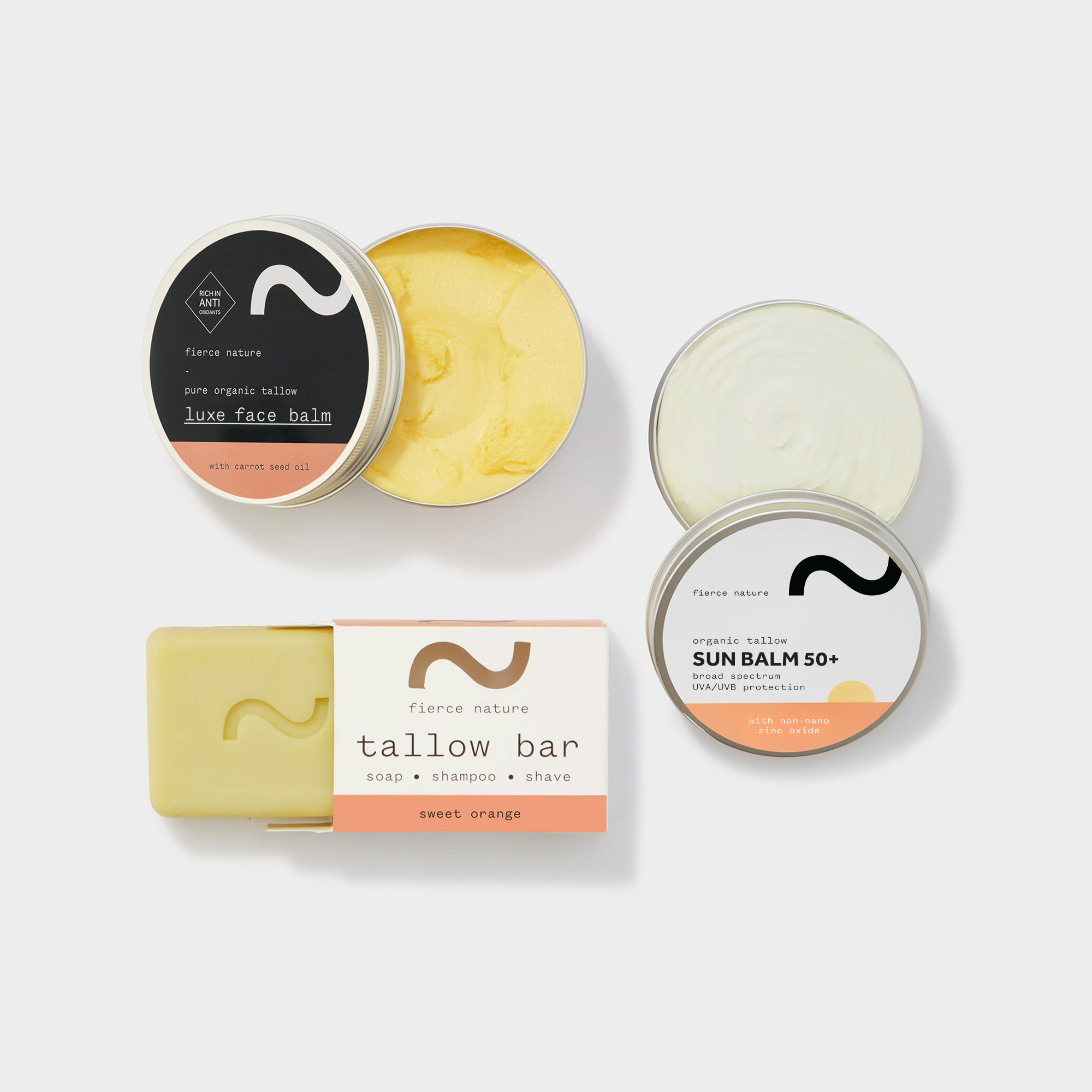
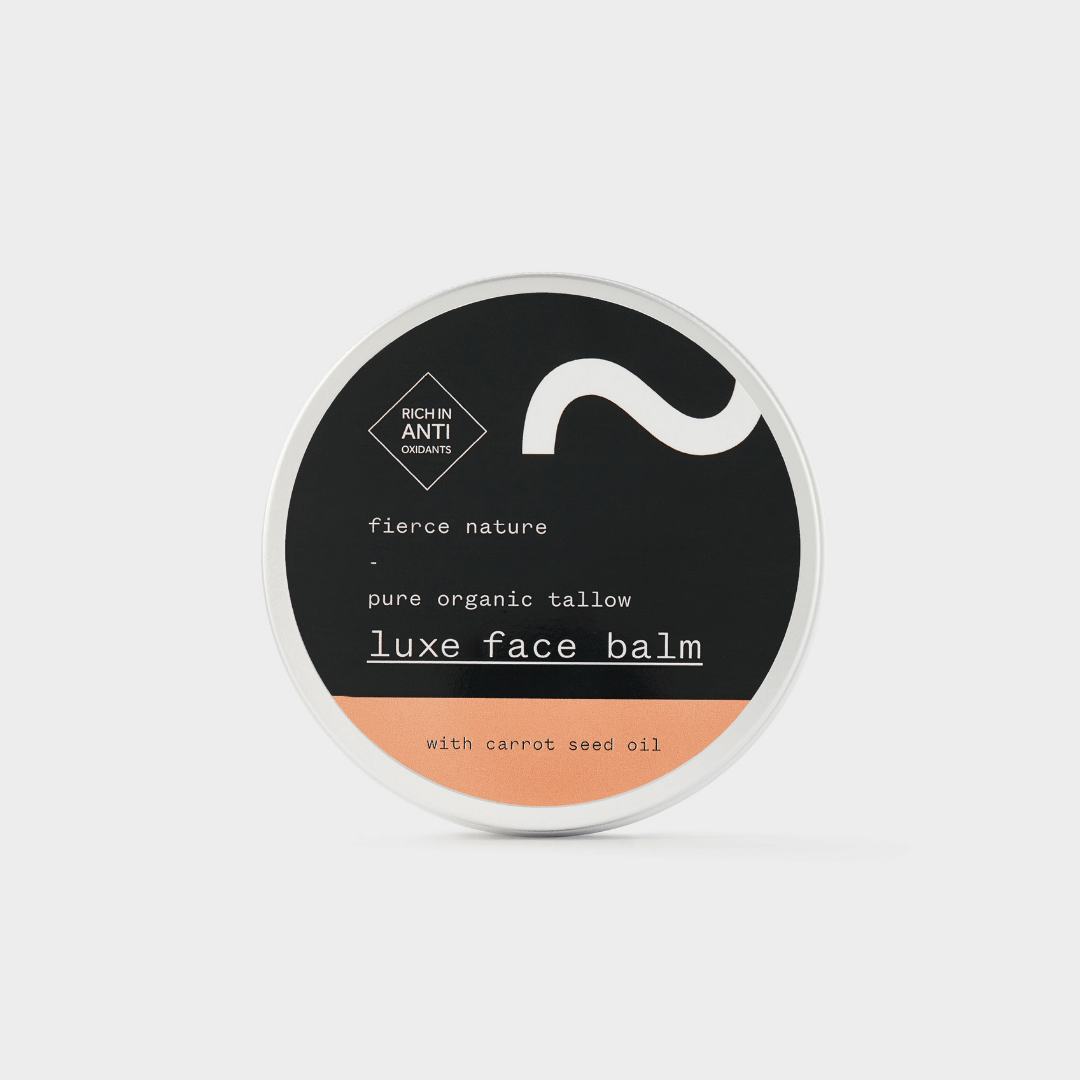
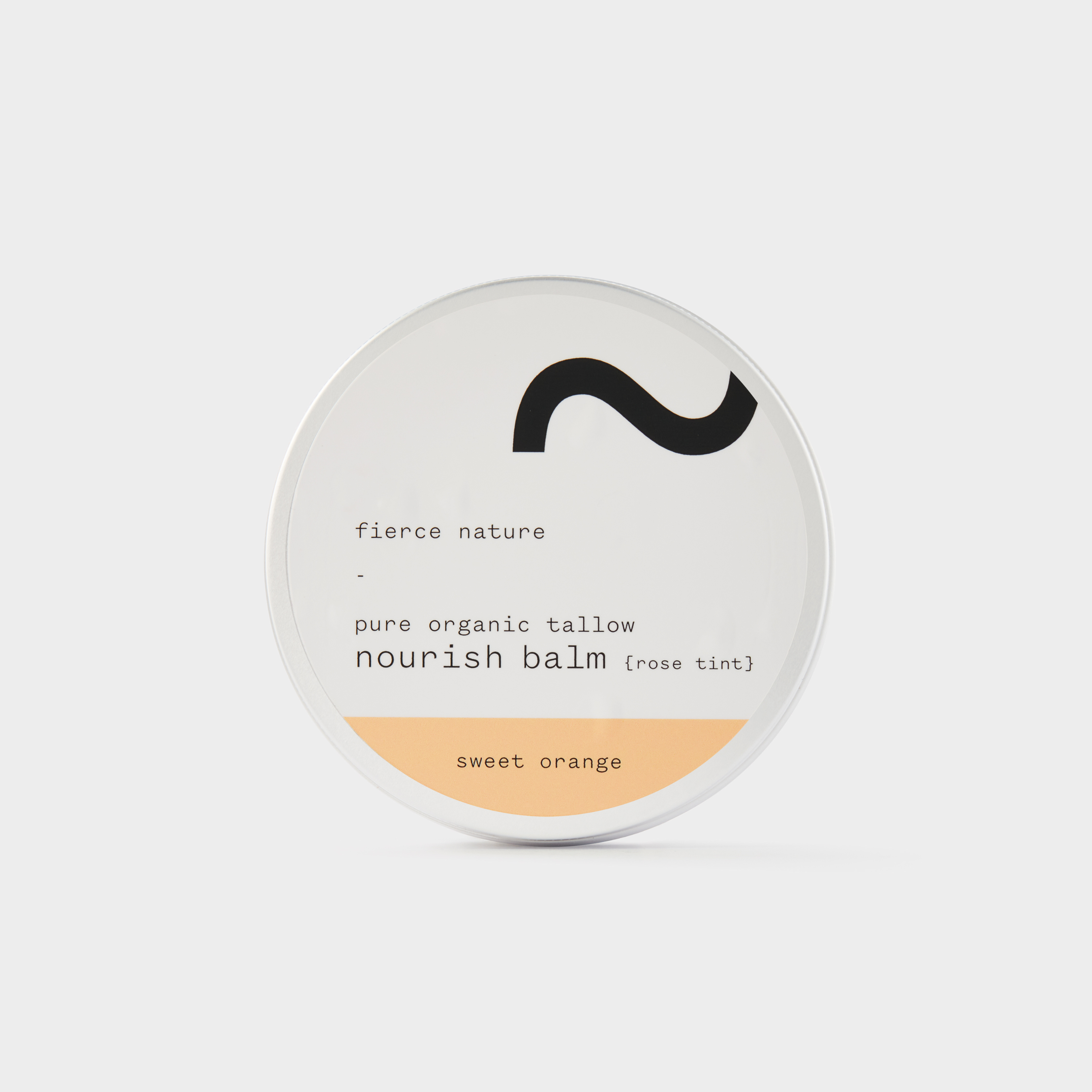
If you want a ready-made tallow-cocoa blend crafted to the principles above, Fierce Nature’s balm range offers three strong starting points. The Luxe Balm is a face-focused formulation balancing texture and glide. For body and very dry skin, the Nourish Balm (Unscented) delivers cocoa-tallow nourishment without added fragrance, making it ideal for sensitive skin. Those who enjoy a natural scent profile will find the Nourish Balm (Sweet Orange) a warming, restorative option. Browse the full organic body balms collection to compare formats and ingredient lists.
Cocoa butter’s melting point (30°C–38°C) is the single most important factor in how a balm feels and performs: it creates firmness at room temperature and a melt-on-contact experience at skin temperature.
| Point | Details |
|---|---|
| Melting point drives texture | Cocoa butter’s 30°C–38°C range makes it solid at room temperature and meltable on skin contact. |
| Occlusive and emollient roles | Its roughly 33% stearic acid content reduces TEWL and smooths the skin surface immediately. |
| Concentration shapes the balm | Usage ranges from 5–20% in lotions to up to 100% in pure balms; higher concentrations mean firmer, more occlusive products. |
| Facial use needs caution | A comedogenic rating of around 4 means cocoa butter is best kept to body, heel, and lip use rather than acne-prone facial skin. |
| Fierce Nature’s approach | Fierce Nature pairs cocoa butter with organic tallow in handmade UK balms, testing each batch for texture consistency and smooth, non-greasy glide. |
The most persistent misconception in natural skincare is that cocoa butter is an antioxidant powerhouse. It is not, at least not in its refined cosmetic form. Refining strips out the polyphenols that give raw cocoa its antioxidant reputation. What remains is a structurally excellent, deeply nourishing fat with genuine emollient and occlusive properties. That is a strong enough story on its own; it does not need embellishment.
What we find more interesting is how rarely formulators talk honestly about comedogenicity. Cocoa butter’s rating of around 4 is not a reason to avoid it entirely; it is a reason to use it thoughtfully. On heels and elbows, that occlusive strength is exactly what you want. On a breakout-prone cheek, it is the wrong tool. The best tallow-based balms, including our own, are designed with that distinction in mind: cocoa butter earns its place in the formula because of what it does structurally, not because it sounds luxurious on a label.
Cocoa butter provides firmness at room temperature and a melt-on-contact feel due to its melting point of 30°C–38°C. It also acts as an occlusive, forming a lipid film that reduces moisture loss from the skin.
Cocoa butter has a comedogenic rating of around 4, so it is best avoided on acne-prone facial skin. A tallow-led balm with low or no cocoa butter is a gentler choice for daily facial use.
Graininess and white bloom are caused by unstable crystal formation during cooling. Slow, controlled cooling at room temperature encourages stable beta-crystals and a smooth, silky finish.
Usage levels range from 5–20% in lotions to up to 100% in pure anhydrous balms. For a body balm in a tin, 10–50% is typical depending on the desired firmness and skin feel.
Unrefined cocoa butter retains a faint chocolate aroma and trace antioxidants; deodorised versions are scent-neutral and suit fragranced formulations. The textural and moisturising properties of both are essentially the same.


