Cart
0
You may also like



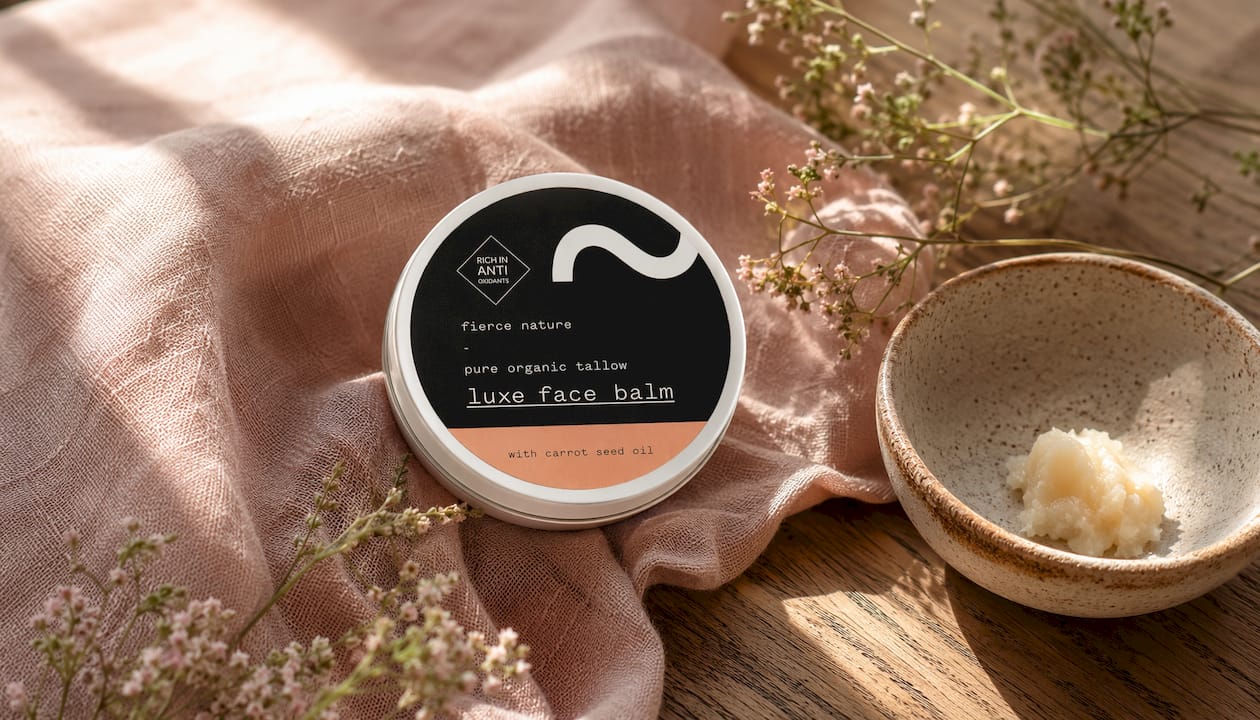
TL;DR:
- Oil-based balms provide deep moisturization by forming an occlusive barrier, filling microscopic skin gaps, and delivering bioavailable lipids. They reduce water loss, restore skin smoothness, and nourish at a structural level, especially when made from organic tallow that mimics human sebum. These balms are ideal for dry, sensitive, or compromised skin, with results appearing within days to weeks of consistent use.
Oil-based balms deeply moisturise because they form an occlusive, hydrophobic barrier over the stratum corneum that reduces transepidermal water loss (TEWL), while simultaneously supplying lipids that fill microscopic gaps between skin cells. Three mechanisms work together: occlusion (sealing water in), emollience (smoothing and softening intercellular spaces), and bioavailability (delivering lipids the skin can actually use). For best results, apply your balm at night or directly onto very dry patches where the barrier needs the most support.
The three mechanisms above do not work in isolation. Each one reinforces the others, and understanding how they interact helps you get the most from a deeply nourishing balm.
Occlusion and TEWL. Your skin constantly loses water through evaporation, a process called transepidermal water loss. When the barrier is compromised, that loss accelerates and skin feels tight, rough, and reactive. An oil-based balm lays a hydrophobic film over the stratum corneum that physically slows evaporation, giving your skin time to rehydrate from within. Clinical literature confirms that occlusives are a primary mechanism for managing dry skin.
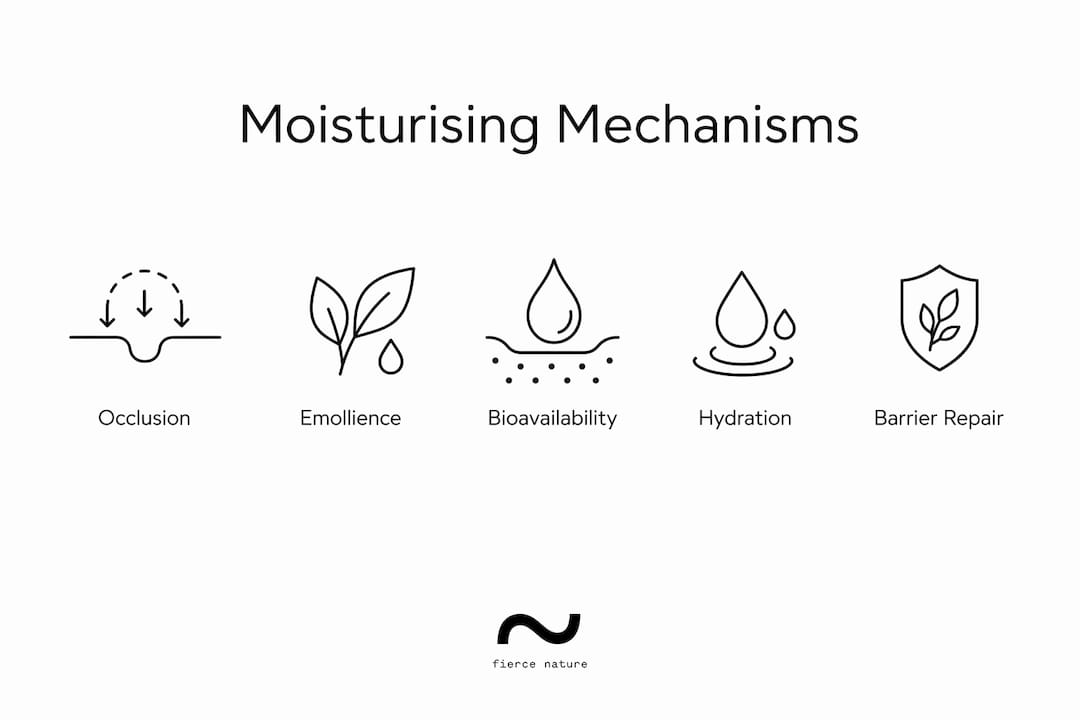
Emollience. Between each corneocyte (the flattened cells of your outer skin layer) there are tiny gaps filled with intercellular lipids. When those lipids are depleted, skin looks dull and feels rough. Emollients supply replacement lipids that integrate into those spaces, restoring a smoother, more supple surface. Research published in peer-reviewed dermatology literature shows emollients enhance hydration and skin texture by integrating with intercellular lipids directly.
Bioavailability. Not all lipids are equal. Some penetrate the stratum corneum and contribute to the intercellular lipid matrix; others sit on the surface. Tallow’s saturated and monounsaturated fatty acids give it a balance of occlusive and bioavailable lipid benefits that many botanical oils lack, making it especially effective at nourishing skin at a structural level.
Petrolatum sets the occlusion benchmark. Historic comparisons show that petrolatum at modest concentrations reduces TEWL far more effectively than many vegetable oils. Tallow, with its rich saturated fatty-acid profile, sits closer to that benchmark than most plant-derived alternatives.
Tallow’s fatty-acid profile closely resembles human sebum and the lipids found in the stratum corneum. That structural similarity is what makes it so compatible and why it absorbs readily rather than sitting on the surface.
Key constituents and what they contribute:
Sourcing matters enormously here. Organic, grass-fed tallow is purer, more stable, and richer in beneficial fatty acids than conventionally sourced alternatives. Fierce Nature uses only premium organic tallow, handmade in the UK, which means no hidden additives and full traceability from farm to jar. You can explore the full range of organic body balms to see exactly what goes into each formulation.
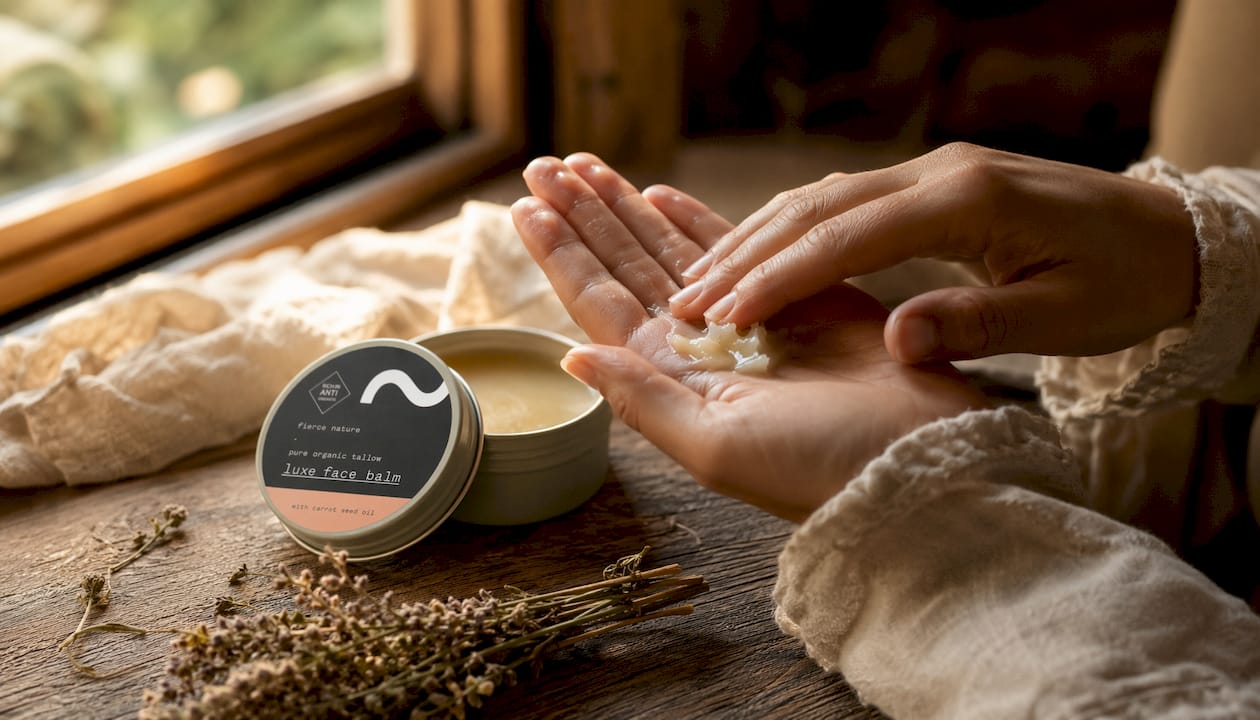
Pro Tip: Warm a small amount of tallow balm between your fingertips for 10–15 seconds before applying. The gentle heat softens the balm and improves spreadability, helping it absorb more evenly and efficiently.
Oil-based balms excel at reducing TEWL and repairing dry, compromised barriers. Water-based moisturisers deliver immediate surface hydration through humectants such as glycerin or hyaluronic acid, which draw water into the upper skin layers. Both have their place; the key is knowing when to reach for each.
Quick comparison:
A common misconception: oil alone does not hydrate. Oils and balms are occlusives and emollients; they retain and replenish lipids, but they do not add water. Humectants are what draw water into the skin. Combining both is where the real benefit lies. Clinical research confirms that pairing a humectant with an occlusive increases the skin’s water-holding capacity more than either ingredient alone.
When to choose a balm:
Apply to slightly damp skin, use sparingly, and always layer lighter products first. That single principle covers most of what you need to know, but here is the full routine:
Dos and don’ts:
Pro Tip: Applying a glycerin or hyaluronic acid serum before your tallow balm creates a moisture sandwich: the humectant draws water in, and the balm seals it there. Research confirms this combination increases water-holding capacity more than either product used alone.
Many people feel immediate relief within hours of their first application. Measurable barrier improvements typically follow over days to weeks, depending on how dry or compromised the skin is to begin with.
Clinical literature supports this timeline: regular moisturiser application increases stratum corneum water content, restores intercellular lipids, and smooths the skin surface, with long-term use aiding barrier continuity. For targeted guidance on dry, itchy skin relief, Fierce Nature’s blog covers real-world use cases in detail.
Most pure tallow balms are low-risk, but added ingredients deserve attention. Check the label carefully before use, and always patch-test.
What to look for on a UK product label:
Balms with low or no water content require fewer preservatives, which is genuinely good news for sensitive skin. Fewer preservatives mean fewer potential irritants. Store your balm away from direct sunlight and heat; a cool, dry spot extends shelf life and preserves the fatty-acid integrity of the tallow. For a broader overview of what to look for, the UK guide to natural skin balms covers labelling and sourcing in detail.
This article is general information, not medical advice. If you have a skin condition, consult a dermatologist or GP before changing your skincare routine.
Clinical literature consistently supports occlusion and emollient action as the primary mechanisms for restoring hydration and barrier function in dry skin.
Key findings in plain language:
For further reading on tallow balm benefits, Fierce Nature’s blog draws on both the science and years of hands-on formulation experience.
Oil-based balms deeply moisturise by combining occlusive barrier action with emollient lipid replenishment and high bioavailability, making them especially effective for dry, compromised, or sensitive skin.
| Point | Details |
|---|---|
| Three core mechanisms | Occlusion, emollience, and bioavailability work together to retain and restore skin moisture. |
| Apply to damp skin | Residual moisture increases occlusive efficacy; always apply balm to slightly damp skin. |
| Layer with a humectant | A glycerin or hyaluronic acid serum underneath a balm increases water-holding capacity more than either alone. |
| Expect results in days to weeks | Most people feel relief within hours; barrier repair typically occurs over several weeks of consistent use. |
| Fierce Nature tallow balms | Handmade in the UK with organic tallow, offering three options suited to face, body, and sensitive skin. |
We chose tallow as the foundation of every Fierce Nature product because it works with your skin, not against it. Its fatty-acid profile mirrors what your skin already produces, which means it absorbs readily and nourishes at a level that synthetic alternatives rarely reach. Tallow has been used for centuries, long before the beauty industry decided that longer ingredient lists meant better results.
Our values are straightforward: organic sourcing, simple formulations, and everything handmade in the UK. We do not add fillers, synthetic fragrances, or unnecessary preservatives. What you see on the label is what is in the jar. Sustainability matters to us too; we source our tallow from grass-fed, organically raised cattle, which supports more responsible land use and produces a purer, more nutrient-rich ingredient.
If you are ready to try a tallow balm, Fierce Nature offers three options, each suited to different needs.
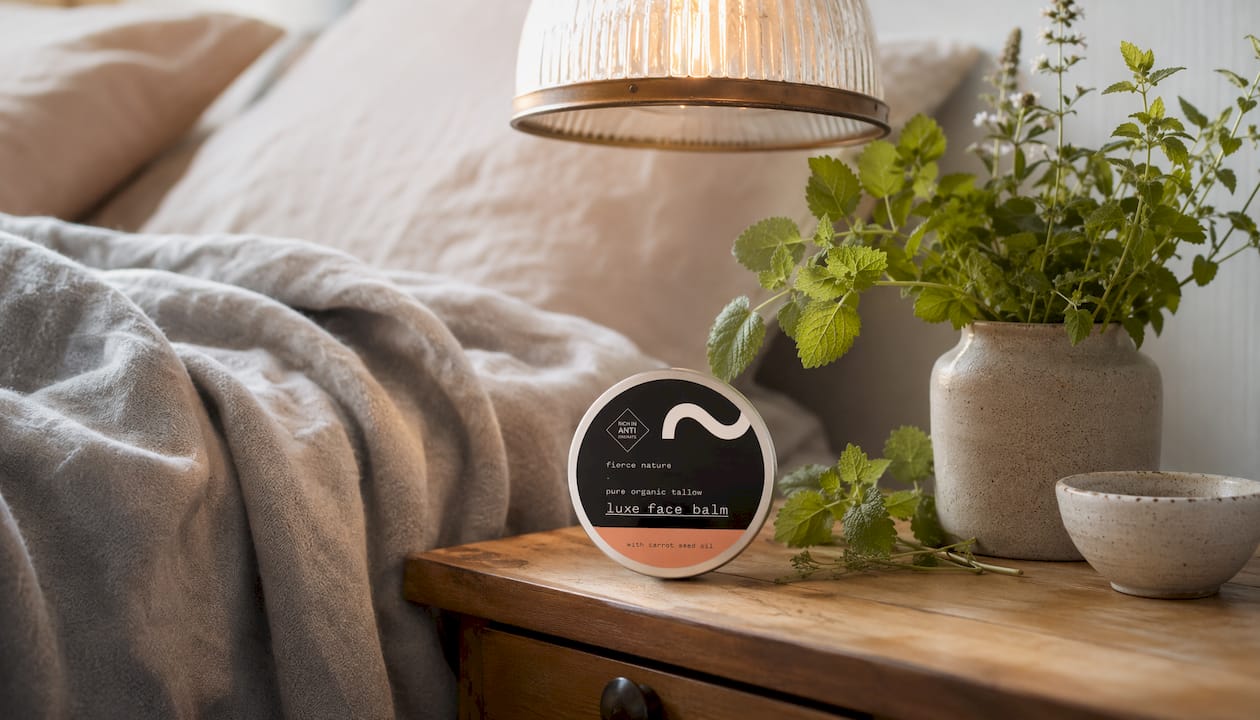
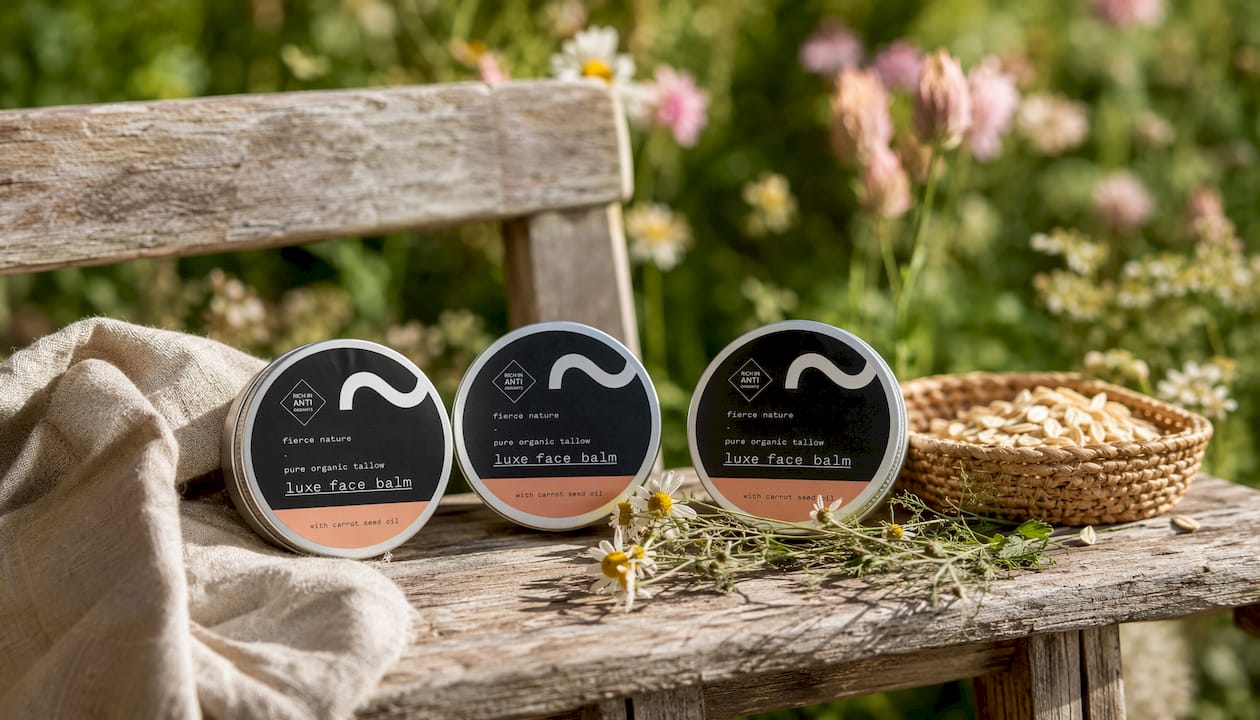
Luxe Balm is the richest of the three, formulated with face care in mind. It delivers deep nourishment for dry, mature, or stressed skin and works beautifully as an overnight treatment. If your skin feels persistently tight or dull, this is where to start.
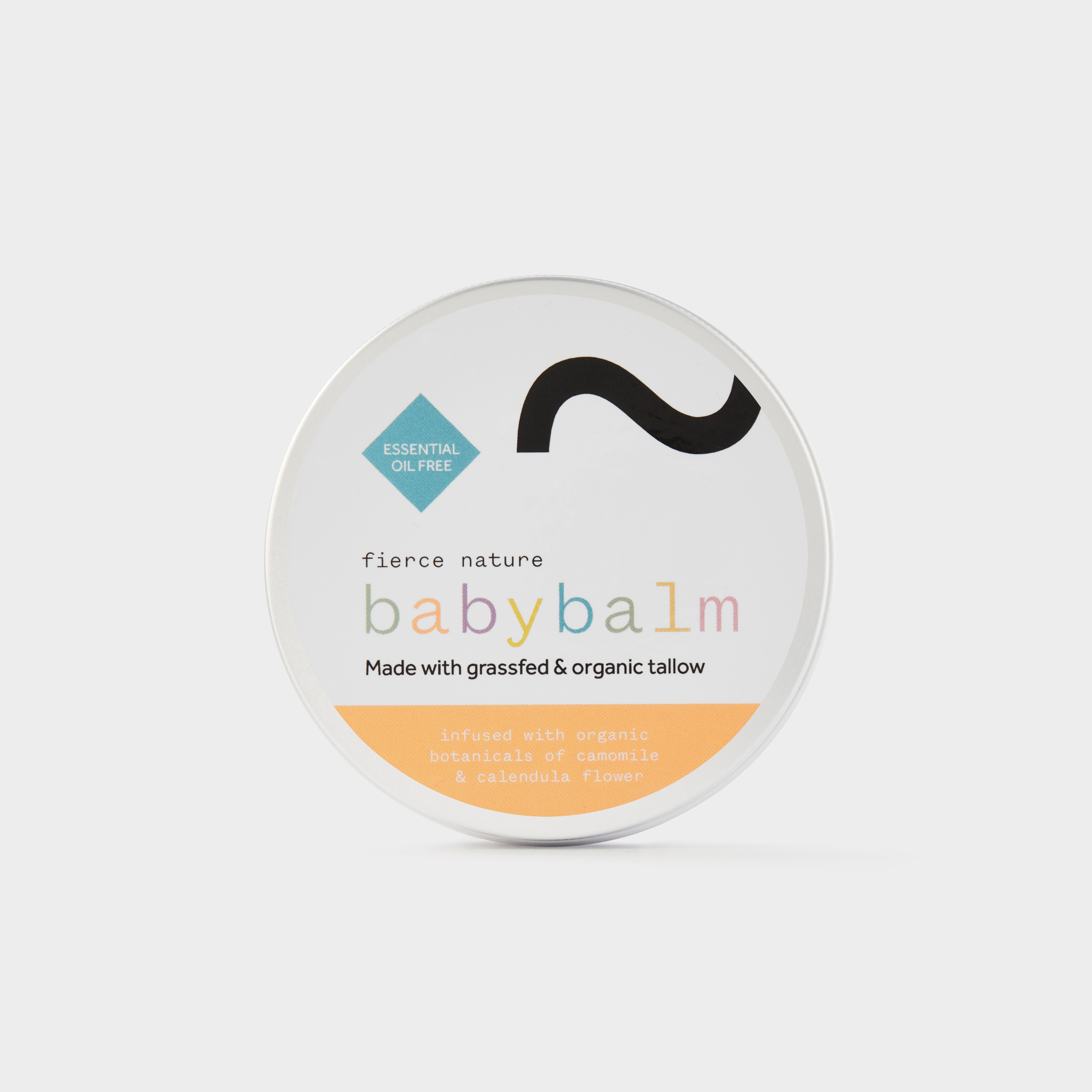
Nourish Balm (Unscented) is the go-to for sensitive skin and body care. No essential oils, no added fragrance — just pure organic tallow and a handful of skin-loving ingredients. Ideal for eczema-prone skin, babies, or anyone who reacts to scented products.
Nourish Balm (Sweet Orange) brings the same nourishing base with a gentle, uplifting citrus scent from sweet orange essential oil. A lovely daily option for those who want a sensory element to their routine without synthetic fragrance. Patch-test first if you have citrus sensitivity.
Visit each product page for the full ingredient list and to place your order.
These sources underpin the mechanisms discussed throughout this article. For medical conditions, consult a dermatologist.
Balms are denser and more occlusive than creams because they contain little or no water. This means they form a stronger barrier against TEWL and deliver a higher concentration of skin-compatible lipids in each application.
Yes, for most skin types. Apply a small amount to slightly damp skin at night; those with oily or acne-prone skin should patch-test first and use sparingly on affected areas.
Unscented tallow balms with minimal ingredients are well suited to sensitive skin. Their low water content means fewer preservatives, which reduces the risk of irritation compared with many water-based moisturisers.
Most people notice reduced tightness within hours. Softer texture typically follows within 3–7 days, and meaningful barrier repair generally takes 2–6 weeks of consistent use.
Tallow’s fatty-acid profile closely resembles human sebum, giving it strong bioavailability. Some botanical oils can disrupt barrier lipids, whereas tallow’s saturated fatty acids make it more stable and predictable for barrier repair.