Cart
0
You may also like



TL;DR:
- A face balm is a water-free, oil and wax-based product that creates an occlusive barrier to seal in moisture and protect the skin. It differs from moisturisers and cleansing balms by its purpose of sealing rather than hydrating or cleansing, making it ideal for dry, sensitive, or compromised skin. To maximize benefits, it should be applied over slightly damp skin as the final step in a barrier-first routine, especially at night.
A face balm is a thick, water-free (anhydrous) skincare product formulated to create an occlusive barrier on the skin, sealing in moisture and shielding the skin from environmental stressors. Unlike standard moisturisers, which are water-based emulsions, a face balm contains no water at all. It relies entirely on oils, butters, and waxes to nourish and protect. Dermatologist Arash Akhavan describes balms as occlusive moisture sealers that are particularly valuable in winter or when the skin barrier is compromised. If your skin feels persistently dry, tight, or reactive, a face balm may be the restorative product your routine is missing.
A face balm is defined as an anhydrous, oil and wax-rich formula whose primary job is to seal moisture into the skin rather than deliver water to it. This single distinction separates it from almost every other product in your bathroom cabinet. Standard moisturisers contain 60 to 90% water alongside humectants and emollients, making them lighter and faster to absorb. A balm, by contrast, sits on the surface of the skin and forms a protective film that slows water evaporation.
The confusion between face balms, moisturisers, and cleansing balms is understandable, but the differences are meaningful. A face balm stays on the skin and works by sealing. A moisturiser hydrates the skin directly. A face cleansing balm, on the other hand, is an oil-based cleanser that emulsifies on contact with water and rinses away with makeup and impurities. Confusing the two leads to very different results, and not always pleasant ones.
Here is a clear comparison to help you choose the right product:
| Product | Base | Function | Rinse off? |
|---|---|---|---|
| Face balm | Oil, butter, wax (no water) | Seals moisture, protects barrier | No |
| Moisturiser | Water-based emulsion | Hydrates and lightly seals | No |
| Face cleansing balm | Oil-based cleanser | Removes makeup and impurities | Yes |
| Face oil | Pure oil blend | Nourishes and softens | No |
Texture is another telling difference. Balms feel noticeably thicker and more substantial than creams or gels. Dermatologist Heather Woolery-Lloyd notes that the waxy texture of balms is a direct trade-off for superior barrier function. If you find a balm feels heavy, that is the occlusive layer doing its job.
Pro Tip: If you are new to balms, try applying a small amount to dry patches on your cheeks or around the nose before committing to full-face use. This lets your skin adjust to the richer texture gradually.
Face balms deliver a specific set of benefits that lighter products simply cannot replicate. The core advantage is the reduction of transepidermal water loss (TEWL), which is the process by which moisture escapes through the outer layers of the skin. By forming a physical barrier, a balm slows this loss and keeps the skin feeling soft and comfortable for longer.
The benefits of face balm extend well beyond basic hydration retention. Here is what regular use can offer:
Soothes dry and sensitive skin. The rich emollient base calms irritation and reduces the tight, uncomfortable feeling that comes with dehydrated skin.
Protects from environmental stressors. Cold wind, low humidity, and central heating all strip moisture from the skin. A balm acts as a physical shield against these conditions.
Supports a compromised skin barrier. For skin dealing with eczema, rosacea, or post-procedure sensitivity, the occlusive layer gives the barrier time to repair without further disruption.
Improves skin comfort overnight. Applied as the final step before sleep, a balm allows nourishing ingredients to work undisturbed for hours.
Nourishes mature skin. As skin ages, it produces less sebum and loses moisture more readily. A balm compensates for this natural decline with concentrated nourishment.
“A balanced skincare routine benefits from a hydrating layer plus a protective layer such as a balm, oil, or butter, tailored to user preference and skin needs.” — Zenmoeller, barrier-first routine guide
The nourishing oils and butters found in a quality natural face balm also contribute to skin softness and radiance over time. This is not an overnight fix but a steady, restorative process. Think of it as feeding your skin rather than simply coating it.
Face balms are best suited to very dry skin, sensitive skin, skin experiencing seasonal dryness, and any skin type with a weakened barrier. They are not exclusively for dry skin types, though. Anyone whose skin feels stripped after cleansing, or who lives in a cold or dry climate, can benefit from incorporating a balm into their routine.
Follow these steps to get the most from your face balm:
Cleanse your skin thoroughly. Start with a clean base. Residual pollution or makeup can prevent the balm from sitting properly on the skin.
Apply your hydrating products first. Use a toner, essence, or serum containing humectants such as hyaluronic acid or glycerin. These draw water into the skin.
Apply the balm while skin is still slightly damp. Applying face balm over hydrated or damp skin maximises the sealing effect. The balm locks in the water that the humectants have drawn in.
Use a small amount. Warm a pea-sized portion between your fingertips and press it gently into the skin. Avoid rubbing, which can disrupt the barrier.
Focus on dry areas if needed. Cheeks, the area around the nose, and the forehead tend to lose moisture fastest. Concentrate application here.
Pro Tip: For oily or combination skin, use your balm as a night-time treatment on dry patches only rather than all over the face. This gives you the barrier benefits without the heaviness.
The most common mistake people make with face balms is applying them to completely dry skin without any hydration underneath. A balm seals whatever is already present on the skin. If that is nothing, the balm simply sits on the surface without much benefit. Hydrate first, then seal. That sequence is the foundation of an effective barrier-first routine.
For those prone to clogged pores, use balms as spot treatments or reserve them for overnight use rather than applying them all over the face during the day. This approach keeps the skin nourished without the risk of congestion.
A natural face balm is formulated without water, which means it also requires no preservatives to prevent bacterial growth. This is one of the reasons natural and organic balms tend to be gentler on sensitive skin. The absence of water removes the need for the synthetic stabilisers and antimicrobials that can trigger reactions in reactive skin types.
The typical ingredient list for a natural face balm includes:
Plant butters. Shea butter and cocoa butter are the most common. Both are rich in fatty acids and provide deep emolliency. Shea butter is particularly valued for its anti-inflammatory properties.
Carrier oils. Jojoba oil, coconut oil, rosehip oil, and sweet almond oil each bring different fatty acid profiles. Jojoba closely mimics the skin’s natural sebum, making it exceptionally well tolerated.
Waxes. Beeswax and carnauba wax provide structure and the characteristic firm texture of a balm. They also contribute to the occlusive film that sits on the skin.
Botanical extracts. Calendula, chamomile, and lavender are frequently included for their soothing and skin-calming properties.
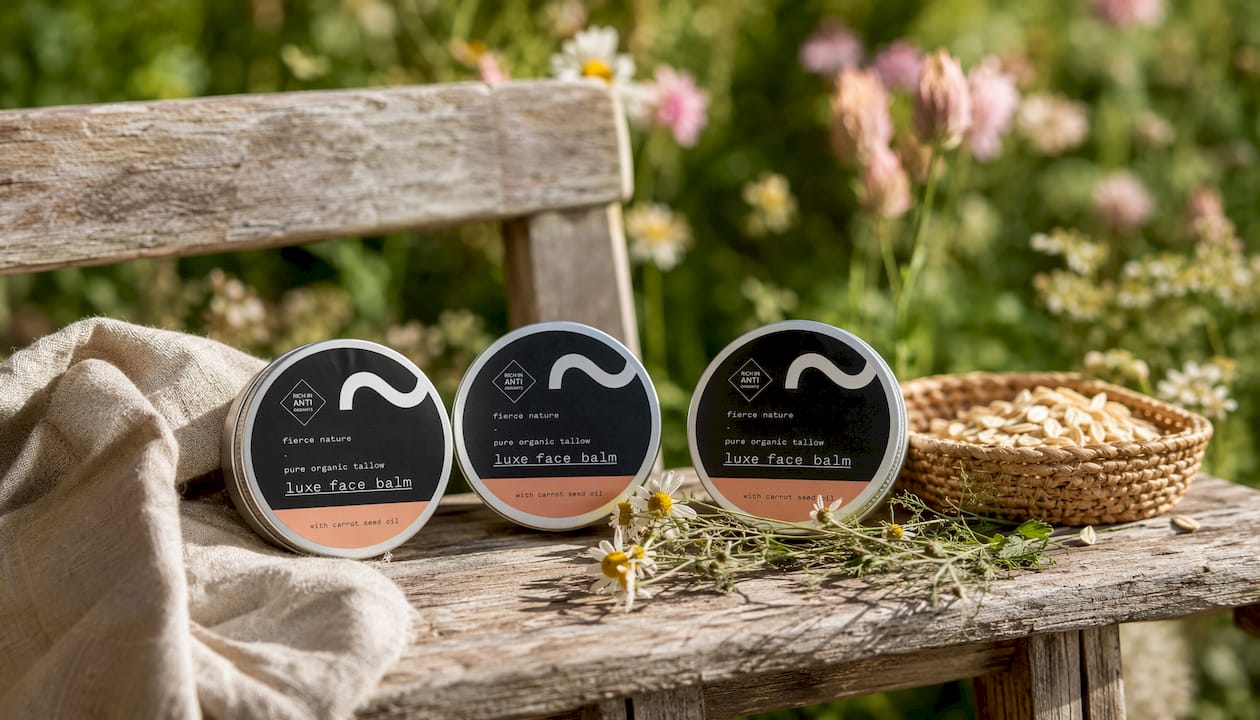
Tallow. Used for centuries as a skin emollient, pure organic tallow is rich in vitamins A, D, E, and K. Its fatty acid profile closely mirrors that of human skin, giving it exceptional bioavailability and deep-penetrating nourishment.
The table below shows how common ingredients function within a balm formulation:
| Ingredient | Type | Primary role |
|---|---|---|
| Shea butter | Plant butter | Emollient, anti-inflammatory |
| Beeswax | Wax | Structure, occlusive barrier |
| Jojoba oil | Carrier oil | Sebum-mimicking, nourishing |
| Organic tallow | Animal fat | Deep nourishment, barrier repair |
| Calendula extract | Botanical | Soothing, skin-calming |
Ingredient choice directly affects the texture, scent, and feel of the finished product. A balm built on beeswax and cocoa butter will feel firmer and more solid than one made primarily with jojoba and shea. Neither is better. The right choice depends on your skin’s needs and your personal preference for texture. What matters most is that every ingredient earns its place and that the formulation is free from synthetic fillers, fragrances, and preservatives that can undermine the very skin health you are trying to support.
A face balm is an anhydrous, oil-based product that seals moisture into the skin and protects the barrier, making it most effective when applied over a hydrating layer.
| Point | Details |
|---|---|
| Definition of face balm | A water-free, oil and wax-based product that forms an occlusive barrier on the skin. |
| Balm vs moisturiser | Moisturisers hydrate with water; balms seal in moisture without any water content. |
| Best application method | Apply over damp or freshly moisturised skin to maximise the sealing effect. |
| Ideal skin types | Very dry, sensitive, compromised barrier, mature, or seasonally dry skin benefit most. |
| Natural formulations | Look for plant butters, carrier oils, waxes, and tallow with no synthetic preservatives. |
Most skincare guides tell you to use a face balm as your final step, full stop. That is correct, but it misses the more important point: the timing within your day matters just as much as the timing within your routine. I have seen countless people apply a rich balm in the morning, then wonder why their skin feels congested or why their makeup sits strangely. The issue is not the balm. It is the context.
Balms are, in my experience, fundamentally night-time products for most people. At night, your skin is in repair mode. Cortisol levels drop, cell turnover increases, and the skin is far more receptive to nourishment. A balm applied before sleep works with these natural rhythms rather than against them. In the morning, unless your skin is genuinely very dry or you are heading into harsh weather, a lighter moisturiser is almost always the better choice.
The second misunderstanding I encounter regularly is the idea that a balm replaces hydration. It does not. A balm is a seal, not a source of water. Applying it to dry, dehydrated skin without anything underneath is like putting a lid on an empty pot. You need to bring moisture to the skin first, through a toner, serum, or water-based moisturiser, and then apply the balm to hold that moisture in place. This two-step approach is what actually produces the glowing, plump skin that people associate with a well-nourished complexion.
I also want to address the texture concern directly. Yes, balms feel different to creams. They are richer, sometimes slightly waxy, and they do not absorb instantly. That is not a flaw. That is the mechanism. If you are expecting a balm to feel like a gel moisturiser, you will always be disappointed. Adjust your expectations and your application technique, and the results will follow. Start with a tiny amount, press rather than rub, and give it a few minutes to settle. Your skin will thank you for it.
— Ralph Barrozo
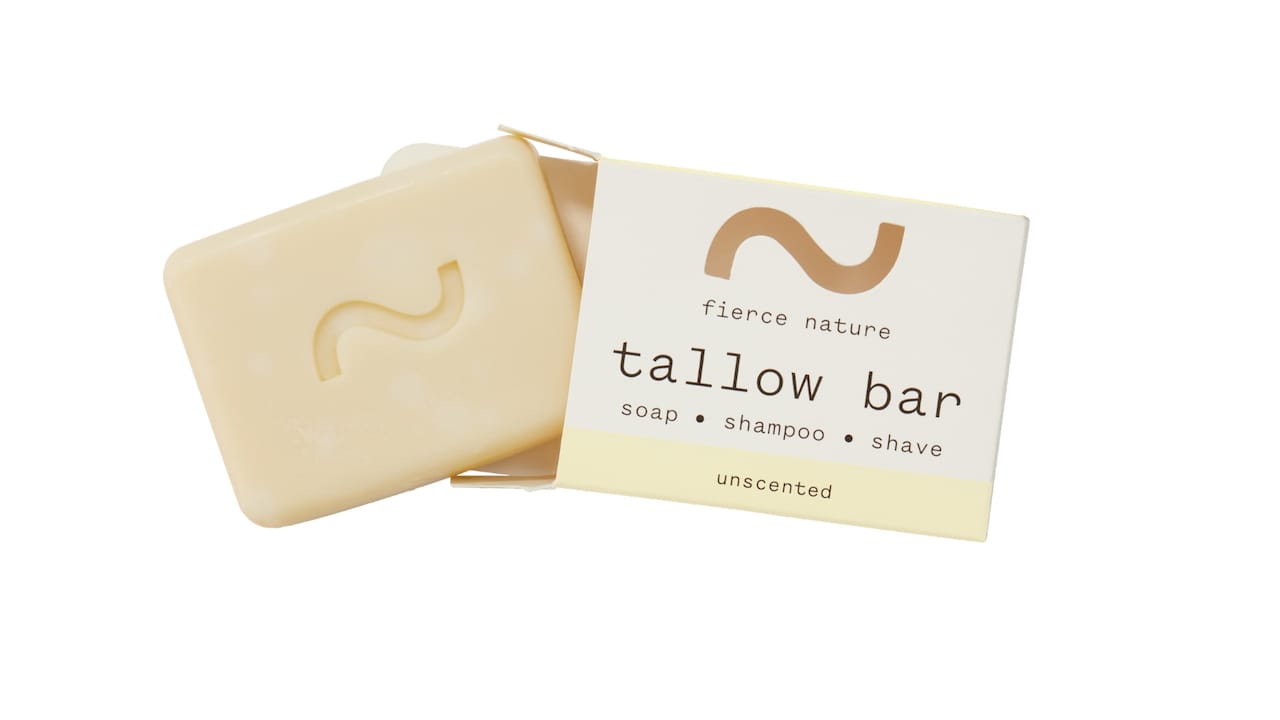
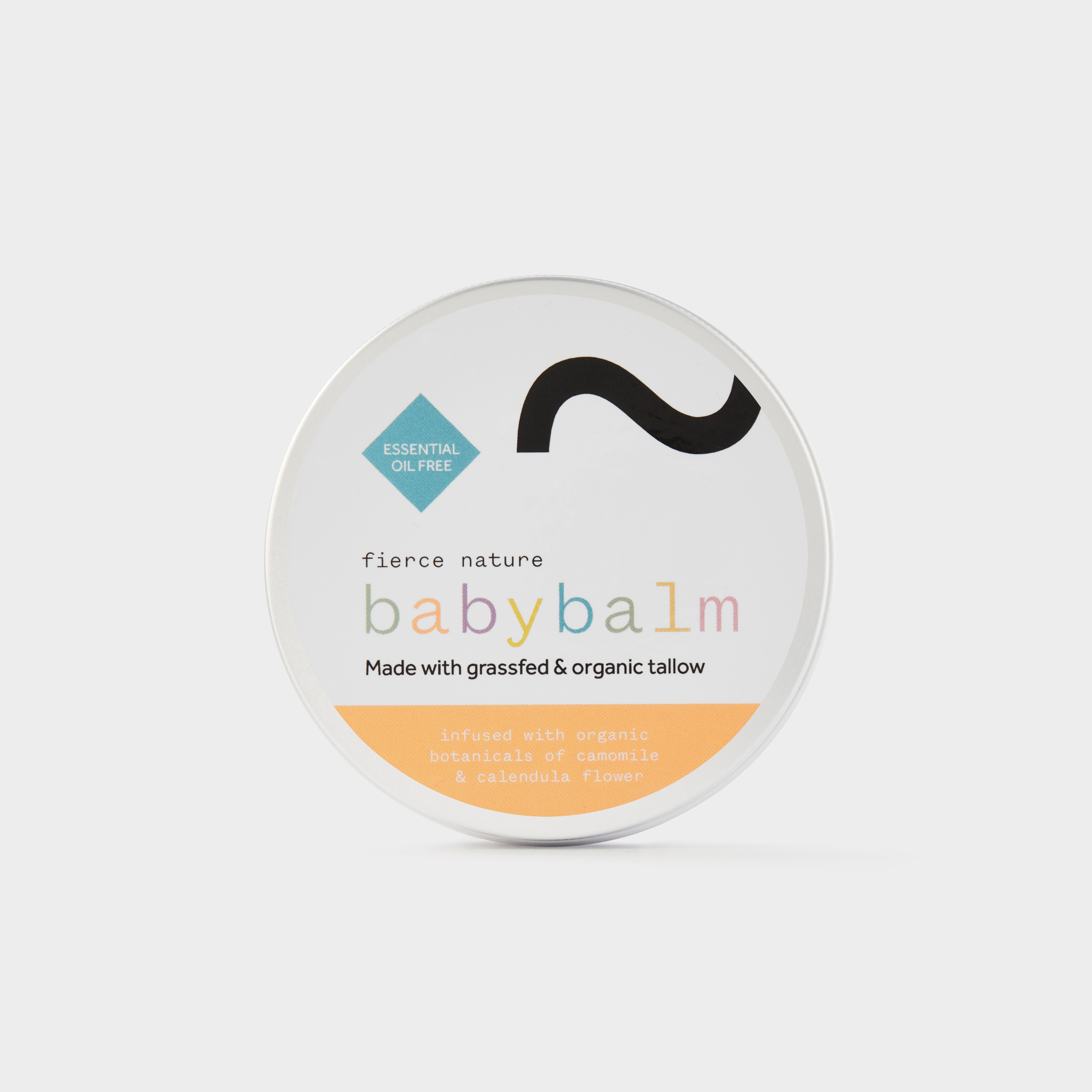
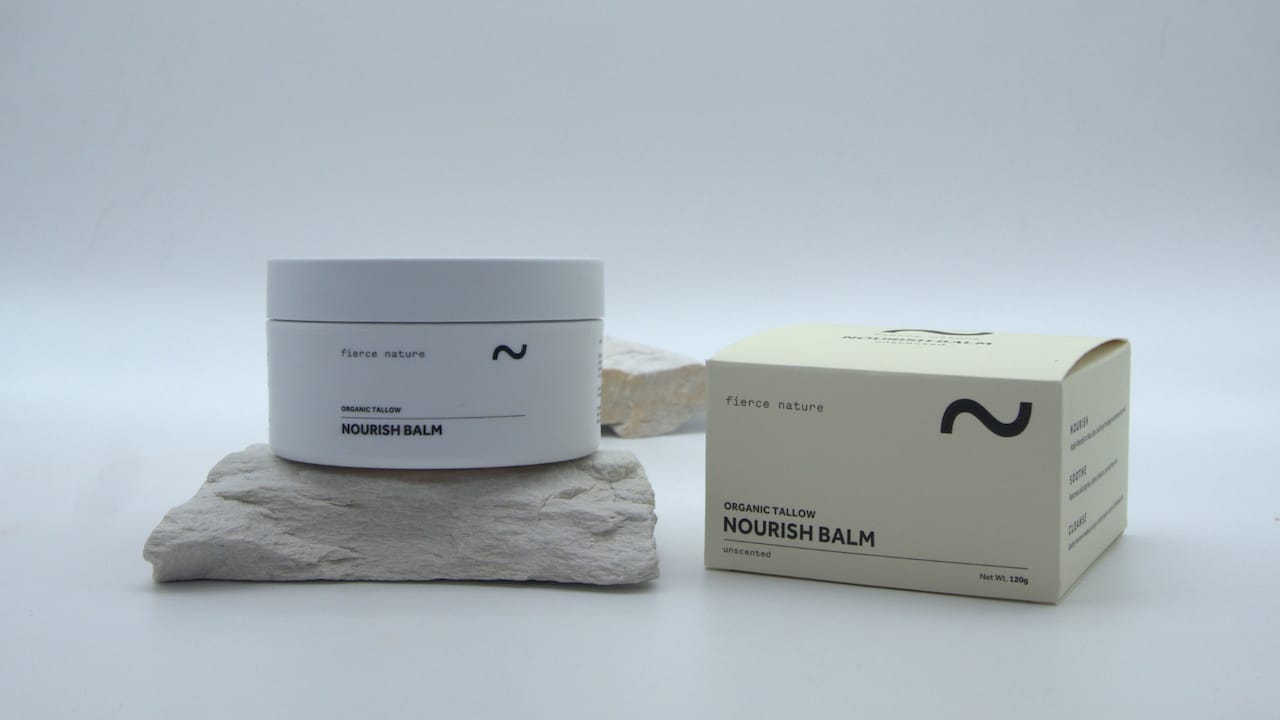
Fiercenature handcrafts every balm in the UK using pure organic tallow as the foundation, alongside plant butters, carrier oils, and botanical extracts. No synthetic preservatives, no harsh fillers, and no empty promises. If you are ready to build a natural skincare routine that genuinely nourishes your skin, Fiercenature’s organic face and body balms are a strong place to start. Each formulation is designed to work with your skin’s natural biology, not against it. Whether you are drawn to the unscented nourish balm or the sweet orange variant, you will find a product made with ingredients your skin can actually recognise and use.
A face balm is used to seal moisture into the skin and form a protective barrier against environmental stressors. It is most effective as the final step in a skincare routine, particularly for dry, sensitive, or compromised skin.
A face balm is anhydrous (water-free) and works by creating an occlusive seal on the skin, whereas a moisturiser is a water-based emulsion that delivers hydration directly. Balms are thicker and more protective; moisturisers are lighter and faster to absorb.
A face cleansing balm is an oil-based cleanser that emulsifies when massaged into the skin and rinsed with water, removing makeup and impurities. It is a completely different product to a moisturising face balm and is not left on the skin.
Face balm is well suited to sensitive skin, particularly natural formulations made without water, synthetic preservatives, or artificial fragrance. The absence of these common irritants reduces the risk of reactions, and the rich emollient base soothes and calms reactive skin.
Many face balms are formulated with the same nourishing ingredients as body balms and can be used on both. Products labelled as face and body balms are specifically designed for dual use, making them a practical and economical choice for full-body nourishment.