Cart
0
You may also like



TL;DR:
Choosing UK clean beauty brands requires verifying third-party certifications and assessing ingredient transparency to avoid marketing claims.
A balanced routine focuses on brands with certified ingredients, minimal irritants, and consistency over frequent switching.
Choosing clean beauty UK brands means selecting products with verified ingredient safety, transparent sourcing, and ethical standards that genuinely match your skin and values. The term “clean beauty” is unregulated in the UK, meaning any brand can use it without meeting a defined standard. That makes your own evaluation skills the most powerful tool you have. Brands like Pai Skincare and Evolve Organic Beauty have built strong reputations by going beyond marketing language and earning third-party certifications. This guide gives you a clear, practical framework to cut through the noise and find products that truly nourish your skin.
Third-party certifications are the most reliable way to verify a brand’s claims. Because “clean beauty” carries no legal definition in the UK, a badge from an independent body carries far more weight than any marketing copy on the packaging.
The three certifications worth prioritising are:
COSMOS Organic — Awarded by the Soil Association in the UK, this certification verifies that organic ingredients meet strict sourcing, processing, and environmental standards. It covers both the ingredient and the manufacturing process.
Leaping Bunny — The globally recognised cruelty-free standard. A Leaping Bunny logo confirms that neither the finished product nor any ingredient was tested on animals at any stage of production.
The Vegan Society — Confirms no animal-derived ingredients and no animal testing. Brands like Pai Skincare, Evolve Organic Beauty, and Faith in Nature commonly hold one or more of these certifications.
Each certification reflects a different commitment. COSMOS Organic speaks to ingredient sourcing. Leaping Bunny speaks to animal welfare. The Vegan Society speaks to both. A brand holding all three has passed multiple layers of independent scrutiny.
Pro Tip: Visit the certifying body’s website directly, such as cosmos-standard.org or leapingbunny.org, and search the brand by name. Logos can be copied; verified listings cannot.
Certifications also protect you from greenwashing. A brand using words like “pure,” “natural,” or “green” without a third-party badge is making a marketing claim, not a verified one. The absence of certification is not automatically a red flag, but it does mean you need to dig deeper into the ingredient list yourself.
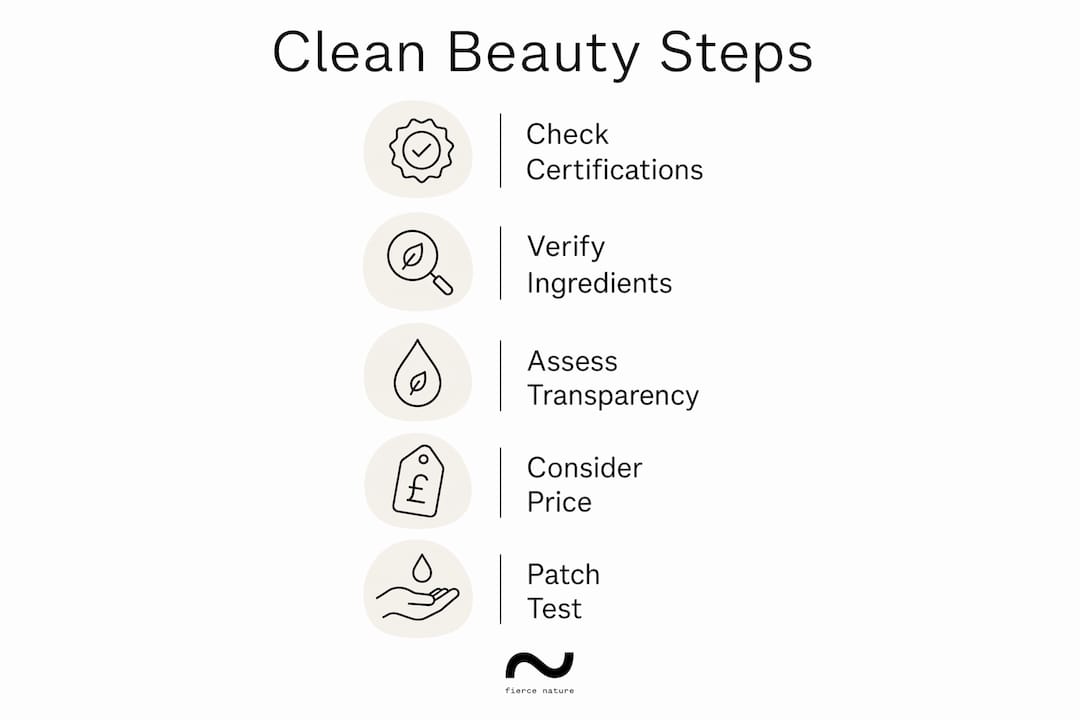
Brand transparency is the second pillar of choosing well. A trustworthy brand publishes its full ingredient list using INCI (International Nomenclature of Cosmetic Ingredients) names, the standardised scientific naming system used across the EU and UK. If a brand hides behind vague terms like “proprietary blend” or “fragrance complex,” that is a warning sign.

The most common misconception in clean beauty is that natural automatically means safer. Ingredient quality and stability often matter more than origin. A lab-synthesised, bio-compatible ingredient can be gentler and more stable than a raw botanical extract. The goal is skin compatibility, not simply a plant-derived origin story.
Here is how to evaluate a brand’s ingredient approach:
Read the full INCI list. Ingredients are listed in descending order of concentration. The first five ingredients make up the bulk of the formula. Check what they are and whether they suit your skin type.
Identify potential irritants. Essential oils, citrus extracts, and high-fragrance botanicals can trigger reactions, particularly on sensitive skin. Fragrance-free and minimalist formulations are the safest choice for those with reactive skin.
Look for science-led actives alongside botanicals. Blending plant-based botanicals with proven actives delivers both soothing and results-driven benefits. Think niacinamide alongside rosehip, or hyaluronic acid alongside calendula.
Check for greenwashing signals. Vague claims, excessive use of “eco” imagery without certification, and ingredient lists buried in small print are all signs to investigate further. Fierce Nature’s guide to greenwashed beauty products walks through real examples worth knowing.
Assess the brand’s communication style. Brands that genuinely prioritise safety explain their ingredient choices. They do not just list them.
Pro Tip: If a brand’s website makes it difficult to find the full ingredient list before purchase, that difficulty is itself a transparency issue. Move on.
For those with sensitive or reactive skin, the natural skincare for sensitive skin approach focuses on fewer ingredients, no synthetic fragrance, and formulas that work with your skin barrier rather than stripping it.
UK clean beauty pricing spans a wide range, and higher price does not always mean better ingredients. Understanding the brackets helps you set realistic expectations.
| Price bracket | Typical range | What to expect |
|---|---|---|
| Affordable | Under £20 | Single-use products, simpler formulas, fewer certifications |
| Mid-range | £20–£40 | Certified organic options, fuller ingredient transparency, better packaging |
| Premium | Over £40 | Science-led actives, multi-use formulas, refillable systems, luxury textures |
| Luxury | Over £100 | Bespoke formulations, rare botanicals, high-end brand experience |
UK clean beauty pricing spans from under £20 to over £100, with subscription discounts and free shipping commonly available at mid-range and above. That means a £35 product with a subscription discount and free delivery can offer better value than a £25 product bought individually.
When assessing value, look beyond the price per unit:
Concentration matters. A small pot of a highly concentrated balm often outperforms a large bottle of a diluted serum.
Multi-use products reduce overall spend. A face balm that doubles as a lip treatment and cuticle nourisher replaces three separate products.
Refillable systems lower the long-term cost. Brands offering refills typically price them at 20–30% less than the original purchase, though this varies by brand.
Certifications add genuine value. A COSMOS Organic certified product at £30 has been independently verified. A non-certified product at £20 has not.
The sweet spot for most UK consumers sits in the £20–£40 mid-range, where certified, transparent brands offer strong ingredient quality without luxury pricing.
A clear process removes the guesswork. Follow these steps to find brands that genuinely suit your skin and your values.
Identify your primary skin concerns. Write down your top two or three. Dryness, sensitivity, uneven tone, and signs of ageing each call for different ingredient profiles. Be specific: “dry and reactive” points you toward fragrance-free, barrier-supporting formulas.
Match your concerns to brand philosophies. Brands focused on sensitive skin, such as those offering fragrance-free and minimalist ranges, suit reactive complexions. Brands with a strong active-ingredient focus suit those targeting pigmentation or fine lines. Fierce Nature’s organic skincare guide for 2026 covers how to align certification standards with your skin goals.
Check certifications and ingredient transparency. Use the criteria from the certification section above. Verify badges on the certifying body’s website. Read the INCI list before purchasing.
Consider packaging sustainability. Refillable options reduce waste meaningfully, but only when the system is practical. Well-designed refillable systems must be simple, durable, and practical to make a real difference. Check whether refills are easy to source and whether the base packaging is built to last.
Narrow your selection to one or two brands. Consistency in brand choice nurtures skin health better than frequent switching. Choosing one or two trusted brands tailored to your skin concerns gives your skin time to respond and makes it easier to identify what is working.
Patch test every new product. Apply a small amount to the inner arm or behind the ear for 24–48 hours before full use. This applies even to certified organic products, because natural ingredients can still cause reactions in some people.
Sticking to this process takes less than 30 minutes per brand and saves you from costly mistakes and skin setbacks.
Even well-informed shoppers fall into predictable traps. Knowing them in advance keeps your routine on track.
Confusing marketing labels with certifications. Words like “natural,” “pure,” “eco,” and “green” are unregulated. Only a named third-party certification carries verified meaning.
Overloading on essential oils. High concentrations of lavender, citrus, or peppermint oils feel luxurious but can disrupt the skin barrier, particularly for sensitive or eczema-prone skin. Fragrance-free does not mean less effective.
Switching products too frequently. Most active ingredients need 6–8 weeks of consistent use to show results. Changing brands every few weeks prevents you from ever seeing the full benefit.
Ignoring refill practicality. A refillable system that is difficult to use or hard to source refills for does not reduce waste in practice. Assess the system before committing to the packaging.
Assuming price signals quality. A £15 certified organic bar soap can outperform a £60 uncertified serum on both safety and skin nourishment.
“The most effective clean beauty routine is not the most expensive one. It is the most consistent one, built on products you understand and trust.”
Patch testing deserves its own emphasis. Reactive skin does not care whether an ingredient is natural or synthetic. Testing before full application is the single most practical step you can take to protect your skin and your investment.
Choosing clean beauty UK brands well requires ingredient knowledge, certification verification, and a consistent routine built around your specific skin needs.
| Point | Details |
|---|---|
| “Clean beauty” is unregulated | Rely on third-party certifications like COSMOS Organic and Leaping Bunny, not marketing language. |
| Certifications are verifiable | Check brand listings directly on certifying body websites to confirm badge authenticity. |
| Natural does not mean safer | Ingredient quality and skin compatibility matter more than whether an ingredient is plant-derived. |
| Consistency beats variety | Sticking with one or two trusted brands gives your skin time to respond and improves results. |
| Mid-range offers the best value | The £20–£40 bracket delivers certified, transparent formulas without luxury pricing. |
We built Fierce Nature because we lived the consequences of not knowing what was in our products. Growing up surrounded by mainstream cosmetics, the skin rashes and reactions felt personal and confusing. It took years of research into gut health and toxic load to understand that the beauty industry’s promises were built on a foundation of harsh chemicals dressed up in beautiful packaging.
What we have learnt is this: the brands worth trusting are the ones that make their ingredient lists easy to find, explain their sourcing choices, and do not hide behind vague “natural” claims. Certifications matter, but so does the story behind the formula. We use pure organic tallow as the foundation of our products because its bioavailability means it genuinely feeds the skin at a cellular level. It is not a trend ingredient. It has been used for centuries, and it works.
We prioritise transparency over trend-chasing. When a new “hero ingredient” appears in the clean beauty space, we ask whether it genuinely serves the skin or whether it serves a marketing cycle. Most of the time, the answer is the latter. The skin does not need novelty. It needs nourishment, consistency, and ingredients it recognises.
Our recommendation is always to start simple. Choose one or two products from a brand whose values and ingredient philosophy you understand. Give them time. Your skin will tell you what it needs far more clearly than any marketing campaign will.
— Fierce Nature
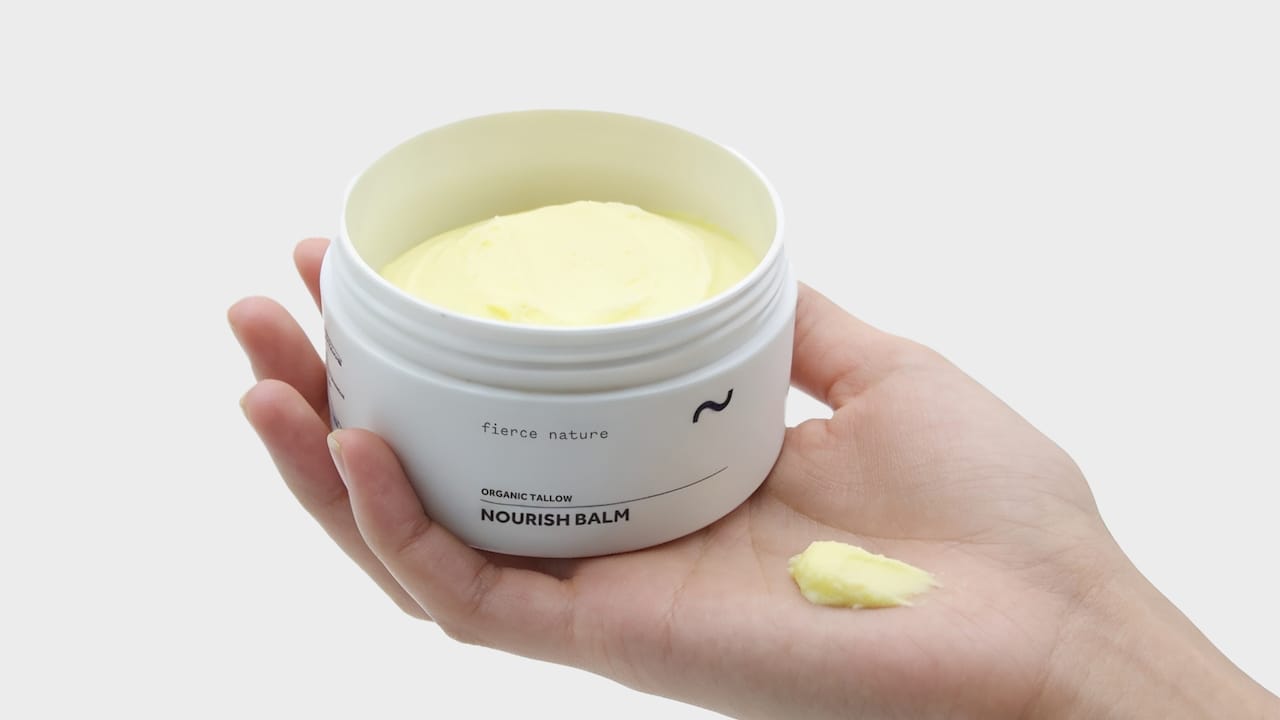
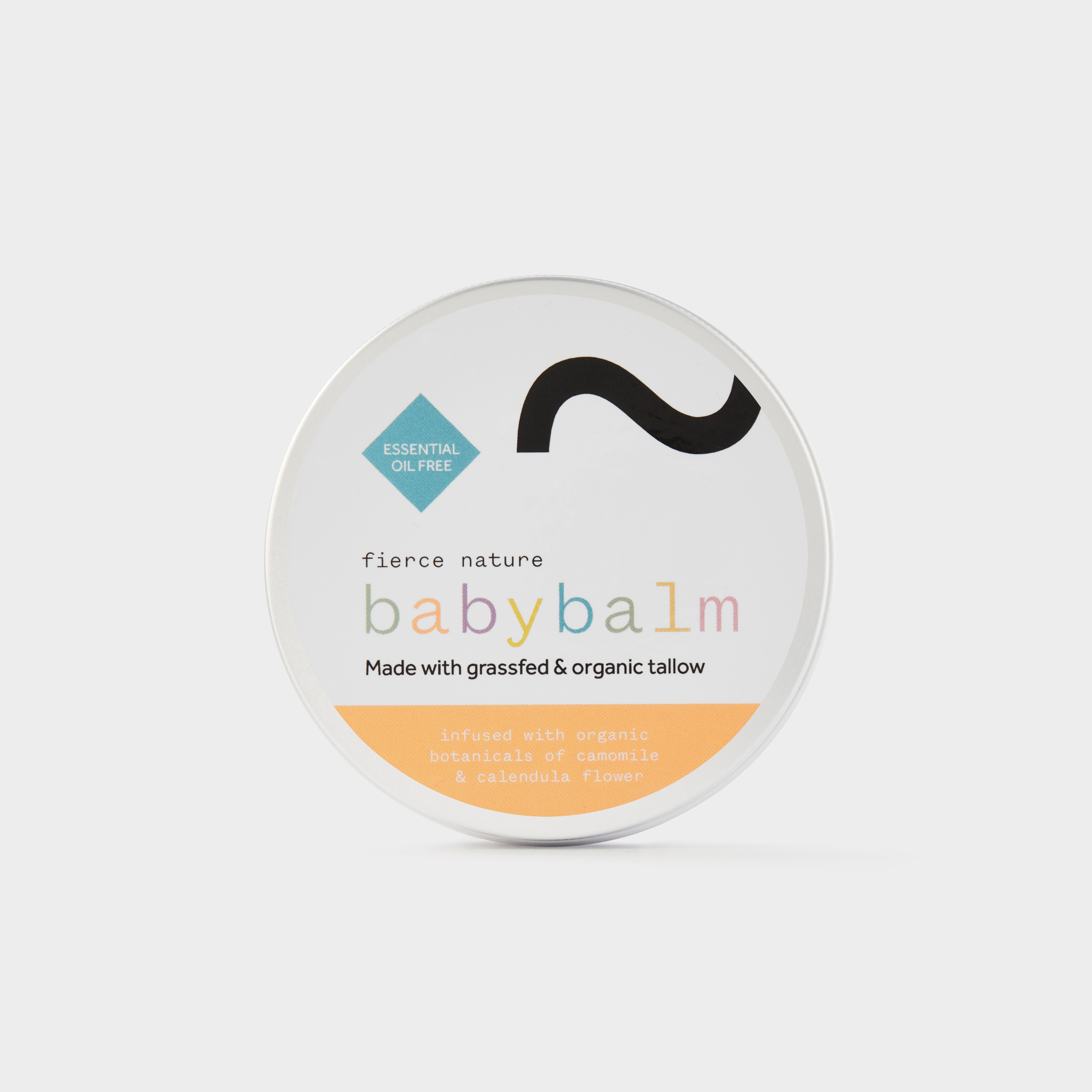
Fierce Nature crafts every product by hand in the UK, using pure organic tallow and naturally sourced ingredients with full transparency on every label. Whether you are building your first clean routine or refining an existing one, the range covers face balms, natural skin tints, and non-toxic baby skin essentials for the most delicate skin. The Unscented Tallow Bar is a practical starting point: fragrance-free, multi-use, and built on an ingredient that has nourished skin for centuries. Every product in the Fierce Nature collection is made without synthetic fragrance, harsh preservatives, or hidden fillers. Browse the full range and find a routine that works with your skin, not against it.
“Clean beauty” is an unregulated term in the UK, broadly used to describe products with safer ingredients, greater transparency, and ethical sourcing. Because it carries no legal definition, third-party certifications like COSMOS Organic and Leaping Bunny are the most reliable indicators of genuine standards.
COSMOS Organic, Leaping Bunny, and The Vegan Society certification are the three most credible markers. Each covers a different area: ingredient sourcing, animal testing, and vegan formulation respectively.
Natural ingredients are not automatically safer. Fragrance-free and minimalist formulations are the most advisable choice for sensitive skin, as heavy essential oils and botanical extracts can irritate the skin barrier even when plant-derived.
The mid-range bracket of £20–£40 offers the strongest balance of certified ingredients, transparency, and value. Subscription discounts and free shipping at this price point improve value further.
Switching brands frequently prevents you from seeing results. Choosing one or two brands suited to your skin concerns and using them consistently for at least six to eight weeks gives your skin the time it needs to respond.