Cart
0
You may also like



TL;DR:
- Switching to a natural skincare routine replaces synthetic products with plant-based, non-toxic options that nourish skin. Patch testing every new product is essential to avoid reactions and ensure safety during the transition. Patience is key, as skin recovery takes four to six weeks, with temporary dryness or purging common early on.
Switching to a natural skincare routine means replacing synthetic, chemical-laden products with plant-based, non-toxic alternatives that nourish your skin rather than burden it. Natural skincare, also known as clean beauty, centres on ingredients your skin can actually recognise and absorb. The benefits are real: reduced irritation, a stronger skin barrier, and a lower toxic load on your body over time. For those with sensitive or reactive skin, this shift can be genuinely life-changing. This guide walks you through every step, from understanding the principles to patch testing safely and choosing the right products for UK skin.
A minimalist approach to sensitive skin reduces irritant exposure and gives your barrier the space to recover. Fewer products mean fewer potential triggers. That is the foundation everything else builds on.
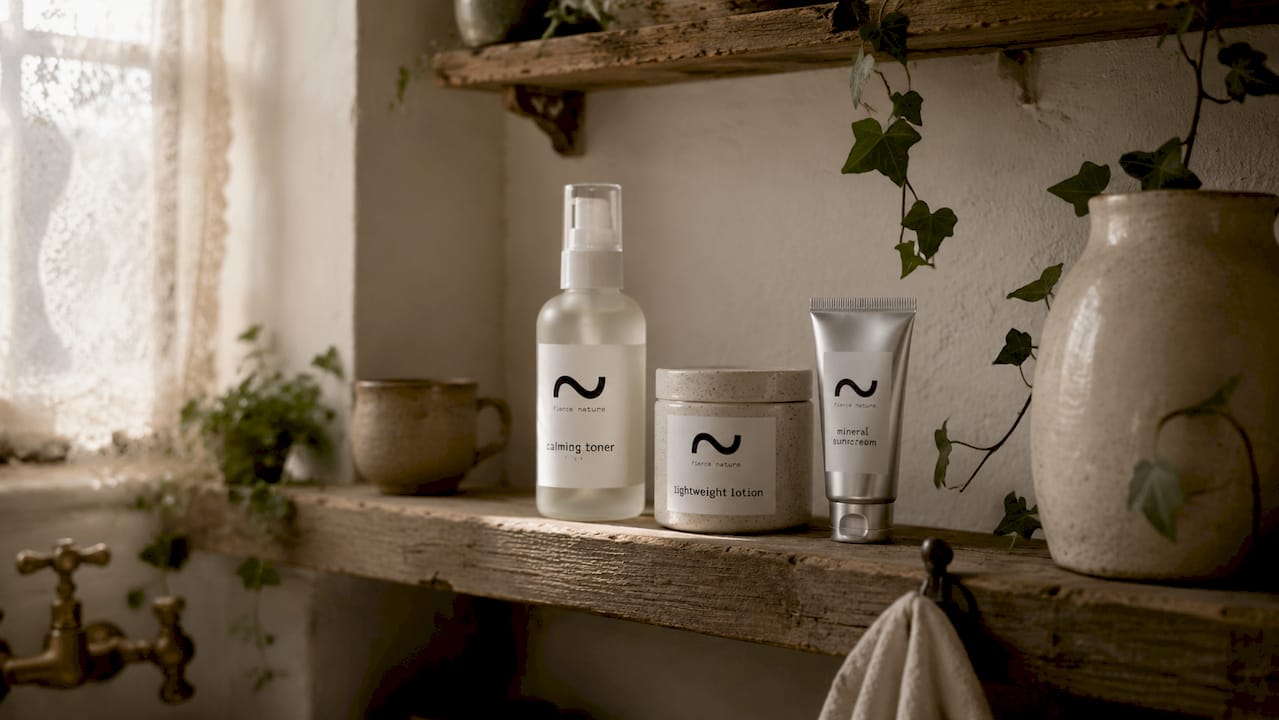
The barrier-first approach is the gold standard for sensitive and reactive skin. Your skin barrier is a thin, protective layer made up of lipids, including ceramides, cholesterol, and fatty acids. When it is compromised, skin becomes red, dry, and reactive. Prioritising gentle cleansing, hydration, and sun protection before introducing any active ingredients is the most reliable path to calmer, more resilient skin.
Here are the core principles to follow when building your natural routine:
Cleanse gently. Choose a mild, fragrance-free cleanser that removes dirt without stripping natural oils. Harsh foaming cleansers disrupt the acid mantle and worsen sensitivity.
Repair the barrier. Use a moisturiser rich in lipids and occlusives. Tallow, shea butter, and plant-based oils all provide the fatty acids your skin needs to rebuild.
Protect with SPF. The NHS recommends SPF 30 as the minimum for daily sun protection. Apply it as the final step in your morning routine.
Sequence correctly. Apply products from thinnest to thickest consistency. Serums go before oils; oils go before balms.
Introduce actives slowly. Once your barrier feels stable, you can cautiously add one active at a time. Niacinamide is among the safest actives for sensitive skin. Retinol and vitamin C should wait until your skin is genuinely settled.
Pro Tip: Start with just three products: a gentle cleanser, a barrier-supporting moisturiser, and an SPF. Give that trio four to six weeks before adding anything else.
Sun protection deserves special attention. The NHS advises applying roughly 35ml of sunscreen to cover the full body, and reapplying after swimming or sweating. Many people underestimate how much product is needed. Natural mineral sunscreens containing zinc oxide or titanium dioxide are excellent choices for sensitive skin, as they sit on top of the skin rather than absorbing into it.
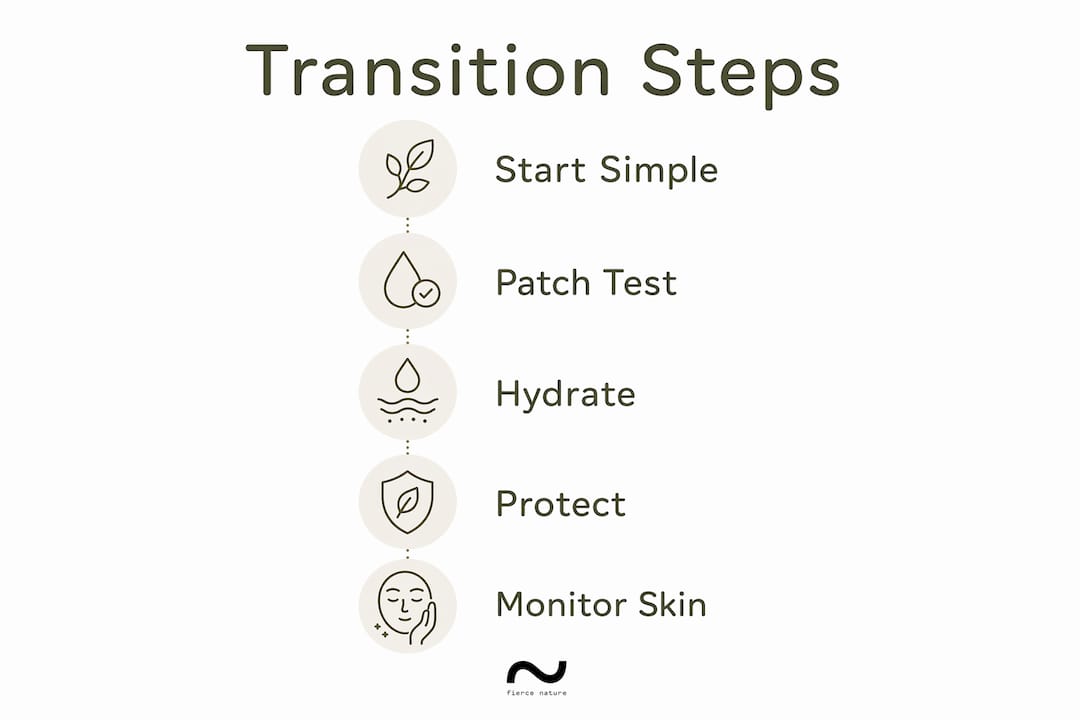
Patch testing is the single most important safety step when you transition to natural products. It identifies allergen triggers before they cause a full-face reaction. NHS-affiliated patch testing uses around 40 common allergens, including preservatives and perfumes, many of which appear in everyday skincare products.
At-home patch testing is straightforward and takes only a few minutes to set up. Follow these steps:
Choose a test site. The inner forearm or behind the ear are ideal. Both areas are sensitive enough to show a reaction but discreet enough not to cause distress.
Apply a small amount. Use a pea-sized amount of the new product on your chosen site. Cover lightly with a plaster if the product is a leave-on formula.
Wait 24–48 hours. Avoid washing the area or applying other products over it during this period.
Check for a reaction. Redness, itching, swelling, or a rash are signs of sensitivity. If any of these appear, remove the product immediately and wash the area with cool water.
Observe for a full week. Some reactions are delayed. Continue monitoring the test site for up to seven days before declaring a product safe for wider use.
Test one product at a time. Introducing multiple new products simultaneously makes it impossible to identify which one caused a reaction.
“Patch testing helps identify allergy triggers with confidence, removing the guesswork from product selection and improving choices based on personal sensitivities.” — The Dudley Group NHS Foundation Trust
During the testing period, avoid tight clothing over the test site and limit vigorous exercise that causes heavy sweating. If you experience a severe reaction, including blistering, significant swelling, or difficulty breathing, seek medical advice immediately. For persistent or unexplained skin reactions, a referral to a dermatologist for professional patch testing is the right step. Specialist testing covers both standard and customised allergen panels, giving you a far more detailed picture of your sensitivities.
The transition to natural skincare is rarely instant. Temporary dryness or purging can occur in the first few weeks as your skin adjusts. This is normal and usually resolves within about four weeks. Understanding what is normal helps you stay the course rather than abandoning a routine that is actually working.
Here is what to expect and how to manage it:
Initial dryness. Your skin may feel drier than usual as it adjusts to the absence of synthetic humectants and silicones. A richer, lipid-based moisturiser will help bridge this period.
Mild purging. Some people experience a brief increase in breakouts as congestion clears. This is different from an allergic reaction. Purging is localised to areas where you normally break out; a reaction spreads more broadly.
Texture changes. Skin may feel different in the first two weeks. Natural oils and balms have a different feel to synthetic creams. Give yourself time to adjust to new textures.
Heightened sensitivity. If you have been using products with alcohol or strong fragrance, your barrier may be more reactive than usual at the start. Stick to the simplest possible routine.
Gradual improvement. Most people notice a genuine improvement in skin comfort, radiance, and resilience after four to six weeks of consistent use.
Pro Tip: Keep a simple skin diary during the transition. Note which products you introduced and when, along with any changes you observe. This makes it much easier to identify what is helping and what is not.
Skin barrier recovery is slow and requires a full skin cycle before you can reliably assess results. Overestimating the speed of recovery leads to premature judgements and unnecessary product changes. Patience is not passive; it is the active ingredient in any successful transition. If symptoms worsen significantly beyond the first two weeks, or if you develop a spreading rash, consult a GP or dermatologist rather than pushing through.
Natural ingredients are not all equal. The best choices for a UK natural skincare routine are those that support the barrier, tolerate the climate, and suit sensitive skin. Gentle, well-tolerated products introduced stepwise minimise reactions and deliver the most consistent results.
| Product type | Key natural ingredients | Best for |
|---|---|---|
| Cleanser | Oat extract, aloe vera, coconut-derived surfactants | Daily cleansing without stripping |
| Moisturiser / balm | Tallow, shea butter, jojoba oil, ceramides | Barrier repair and deep nourishment |
| Facial oil | Rosehip, sea buckthorn, squalane | Radiance and targeted nourishment |
| Sun protection | Zinc oxide, titanium dioxide (SPF 30+) | Daily UV protection per NHS guidance |
| Multi-use balm | Organic tallow, beeswax, plant oils | Face, body, and lip nourishment in one |
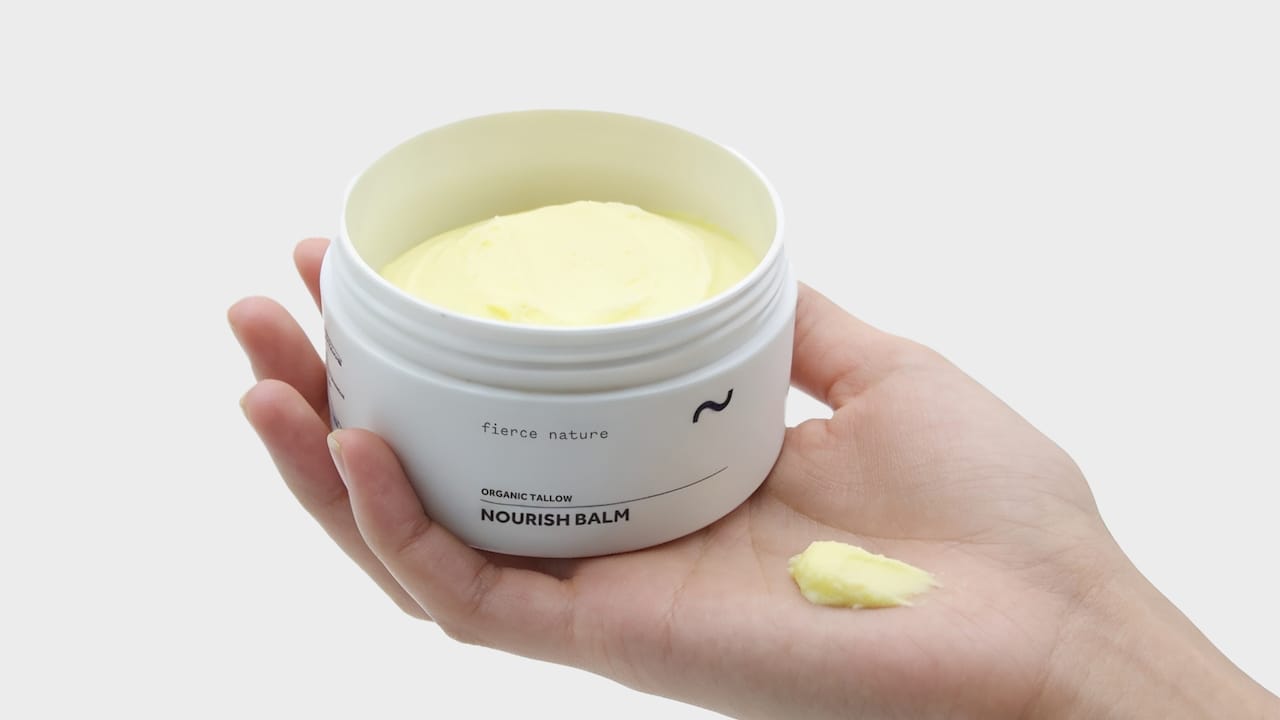
Tallow deserves particular mention. It is one of the most bioavailable skin ingredients available, meaning it penetrates deeply rather than sitting on the surface. Its fatty acid profile closely mirrors that of human sebum, which is why it has been used as a skin emollient for centuries. Fierce Nature builds its entire range around pure organic tallow for exactly this reason.
For those with sensitive skin, fragrance is the most common irritant to avoid. This includes both synthetic fragrance and essential oils. An unscented tallow bar or balm is an excellent starting point. It cleanses, moisturises, and nourishes in one step, which also supports the minimalist approach.
Plant-based sunscreens with SPF 30 or above are the final non-negotiable. Mineral filters like zinc oxide are well tolerated by sensitive skin and align with NHS sun safety guidance. Apply them every morning, regardless of the weather. The UK’s cloud cover does not block UV radiation.
Sustaining a natural routine long term comes down to keeping it simple and listening to your skin. The most common mistake is adding too many products too quickly. A natural skincare routine checklist can help you stay focused and avoid unnecessary additions.
Follow these steps to build and maintain your routine:
Start with cleanser and moisturiser. Replace your existing cleanser and moisturiser first. These are the products you use every day, so getting them right has the biggest impact.
Add SPF. Once your cleanser and moisturiser feel settled, introduce a natural mineral sunscreen. Apply it every morning as the final step.
Wait before adding actives. Give your baseline routine at least four weeks before considering any active ingredients. Niacinamide is the safest first addition for most skin types.
Adjust for the seasons. UK winters are cold and drying. You may need a richer moisturiser from october through march. Summers call for lighter textures and more diligent SPF reapplication.
Review every six weeks. Assess how your skin feels and looks. Make one change at a time and observe the result before making another.
Avoiding overuse of actives is as important as choosing the right ones. More products do not mean better results. A routine with three to five well-chosen products consistently applied will always outperform a ten-step routine used inconsistently. The how-to videos from Fierce Nature offer practical guidance on application techniques that make a real difference to results.
Lifestyle factors also play a role. Drinking enough water, sleeping well, and eating a diet rich in omega-3 fatty acids all support skin health from the inside. Natural skincare works best when it is part of a broader commitment to nourishment, not a standalone fix.
Switching to a natural skincare routine delivers the best results when you start with a simple barrier-first approach, patch test every new product, and give your skin a full four to six weeks to adjust before making any judgements.
| Point | Details |
|---|---|
| Start with three products | Begin with a gentle cleanser, a lipid-rich moisturiser, and an SPF 30+ sunscreen before adding anything else. |
| Patch test every new product | Apply to the inner forearm for 24–48 hours and observe for up to seven days to catch delayed reactions. |
| Allow four to six weeks | Skin barrier recovery takes time; reliable results only emerge after a full skin cycle of consistent use. |
| Avoid fragrance first | Fragrance is the most common irritant in skincare; choose unscented products when starting out. |
| Sustain with seasonal adjustments | Adapt your routine for UK winters and summers to maintain the moisture balance your skin needs year-round. |
At Fierce Nature, we hear the same story often. Someone switches to natural products, feels a little dryness in week two, and concludes that natural skincare does not work for them. They go back to their old routine and the cycle continues. We understand that impulse completely. When you have been promised instant results by conventional beauty brands for years, a four-week adjustment period feels like failure. It is not.
What we have learned, both through our own experience and through the feedback of the people who use our products, is that the skin needs time to remember how to function without synthetic props. Silicones, alcohol, and synthetic emollients do a convincing impression of healthy skin. When you remove them, your skin has to rebuild its own capacity. That process is not glamorous, but the results on the other side are genuine.
We also want to be honest about something the natural beauty world does not always say clearly enough: natural does not automatically mean safe for every skin type. A product made entirely from plant-based ingredients can still cause a reaction if it contains a botanical you are sensitive to. Patch testing is not optional. It is the foundation of a safe transition, and it is something we encourage every person who tries our products to do first.
The environmental dimension matters too. Every time you choose a product made from naturally sourced, non-toxic ingredients, you reduce the chemical load going into waterways and onto your skin. That is a meaningful choice, and one worth making with care and confidence.
— Fierce Nature
Fierce Nature’s range is built for people who want to simplify and nourish, without compromising on results. The unscented tallow bar is the ideal starting point: a multi-use, fragrance-free bar that cleanses and moisturises in one step, making it perfect for sensitive skin during the transition phase. For richer daily nourishment, the Luxe Balm delivers deep barrier repair using organic tallow and plant oils. For sun protection, the Sun Balm SPF 50 provides natural mineral protection that meets NHS sun safety guidance. Browse the full Natural Beauty Collection to find the right products for your skin, and try one at a time, exactly as this guide recommends.
Switching to a natural skincare routine means replacing synthetic, chemical-based products with plant-based, non-toxic alternatives that support your skin barrier and reduce irritant exposure. The focus is on gentle, recognisable ingredients rather than synthetic preservatives, fragrances, or harsh actives.
Most people experience an adjustment period of four to six weeks. Temporary dryness or mild purging can occur in the first few weeks and usually resolves on its own as the skin barrier recovers.
Natural skincare is well suited to sensitive skin when you choose fragrance-free, minimal-ingredient products and patch test before full use. Natural does not automatically mean safe for every skin type, so testing each new product individually is the most reliable approach.
The NHS recommends a minimum of SPF 30 for daily sun protection. Mineral sunscreens containing zinc oxide or titanium dioxide are the best natural options for sensitive skin, as they use physical filters rather than chemical ones.
Tallow, shea butter, jojoba oil, and oat extract are among the most well-tolerated natural ingredients for sensitive skin. Niacinamide is the safest active to introduce first. Avoid fragrance, alcohol denat., and harsh exfoliants until your barrier is fully stable.