Cart
0
You may also like



TL;DR:
- Tallow is an animal fat historically used for wound healing due to its similarity to human skin lipids. Its fatty acids and vitamins support tissue repair, moisture retention, and reduce inflammation, making it effective even today. Modern science and ancient practice confirm that pure, well-rendered tallow is a natural, skin-compatible healing material.
Tallow is a rendered animal fat historically prized as a wound healing agent because its biochemical properties closely mirror those of human skin lipids. This compatibility made it uniquely effective at creating a protective, moist barrier that supports tissue regeneration and resists infection. The Ebers Papyrus, dating to approximately 1550 BCE, records over 800 medical prescriptions, many of which include cattle fat salves for burns and open wounds. That single document tells us tallow for wound treatment was not folk guesswork. It was established medicine. Fierce Nature draws on this same ancestral wisdom when formulating its tallow-based skincare today.
The historical record for tallow in wound care is remarkably consistent across cultures and centuries. Ancient practitioners did not have access to biochemistry, yet they repeatedly reached for rendered animal fat when treating injuries. Their observations were empirical, and they proved accurate.
The Ebers Papyrus is the most cited source, but it is not the only one. The Edwin Smith Surgical Papyrus also employs tallow as a carrier for wound dressings, confirming that its use was standard across Egyptian medical practice rather than isolated to a single text. Egyptian healers recognised that rendered cattle fat held active herbal ingredients against the wound surface far longer than lighter plant oils could manage.
Greek and Roman physicians carried this knowledge forward. Galen, the second-century Roman physician, incorporated animal fats into his wound salves and skin preparations. Roman military surgeons applied fat-based dressings to battlefield injuries as a matter of routine. The logic was practical: tallow created a physical seal over a wound, kept it from drying out, and appeared to slow the spread of infection.
Medieval European healers refined the practice further. They soaked wound dressings in tallow to fight infection and promote healing, and they steeped herbal infusions such as calendula directly into the fat to enhance tissue repair. Tallow-soaked compresses were used to cleanse and preserve wounds, reflecting a working knowledge of antimicrobial properties that would not be formally explained by science for centuries.
Here is a summary of how tallow appeared across historical wound care traditions:
Ancient Egypt (from 1550 BCE): Cattle fat salves recorded in the Ebers Papyrus for burns, wounds, and skin conditions.
Greek and Roman medicine: Animal fat incorporated into wound salves and battlefield dressings by physicians including Galen.
Medieval Europe: Tallow-soaked compresses and herb-infused fat preparations used to cleanse wounds and reduce infection.
Ritual and practical roles: Tallow served both medicinal and symbolic functions, reinforcing its cultural centrality in healing practices.
Pro Tip: If you are researching historical wound healing remedies, the Edwin Smith Surgical Papyrus is worth reading alongside the Ebers Papyrus. Together they give a fuller picture of how systematically ancient Egyptian medicine used tallow.
Tallow’s effectiveness is not simply a matter of historical habit. Its chemistry explains why it worked then and why it continues to work now. The fatty acid profile of tallow closely resembles that of human sebum, the skin’s own natural oil. This similarity means the skin accepts tallow readily rather than treating it as a foreign substance.
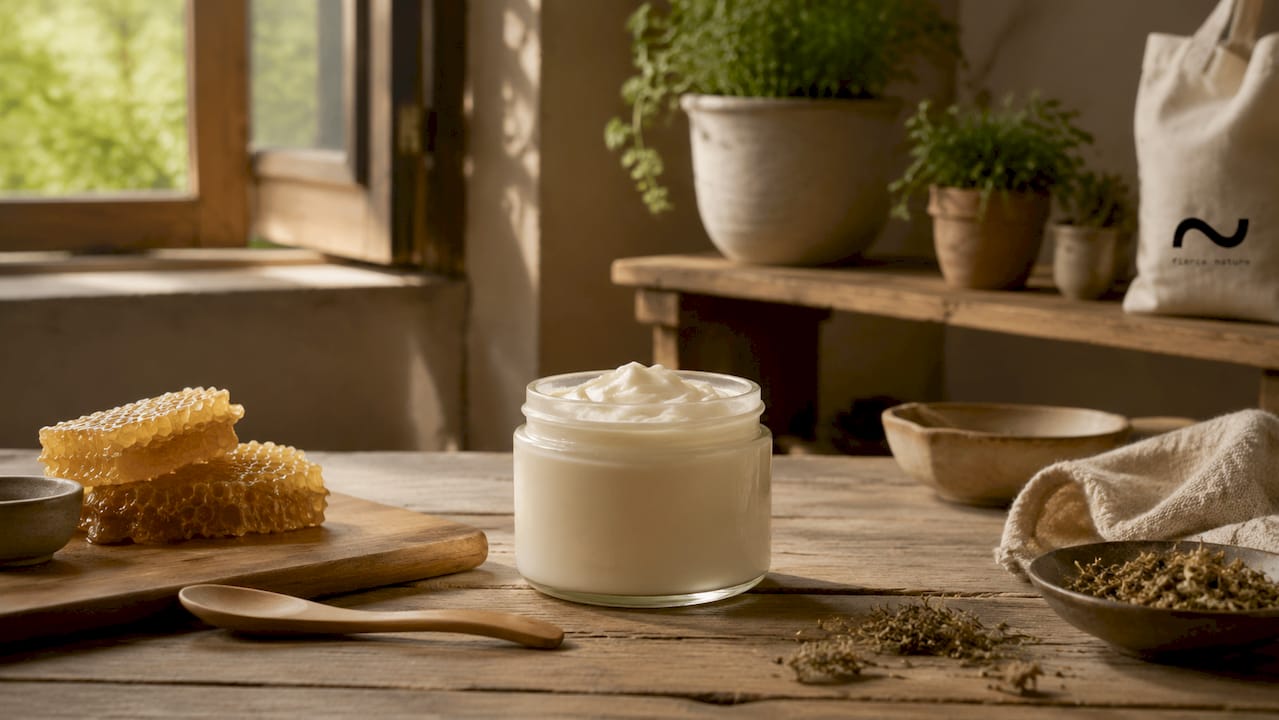
Tallow contains stearic acid, linoleic acid, and oleic acid, all of which are present in healthy human skin. Linoleic acid is specifically anti-inflammatory, reducing redness and swelling around a wound site. Board-certified cosmetic dermatologist Dr Michele Green has emphasised that tallow’s biological compatibility with skin lipids enables effective moisture replenishment and measurable anti-inflammatory benefits. That is a modern clinical voice confirming what ancient healers observed through trial and practice.
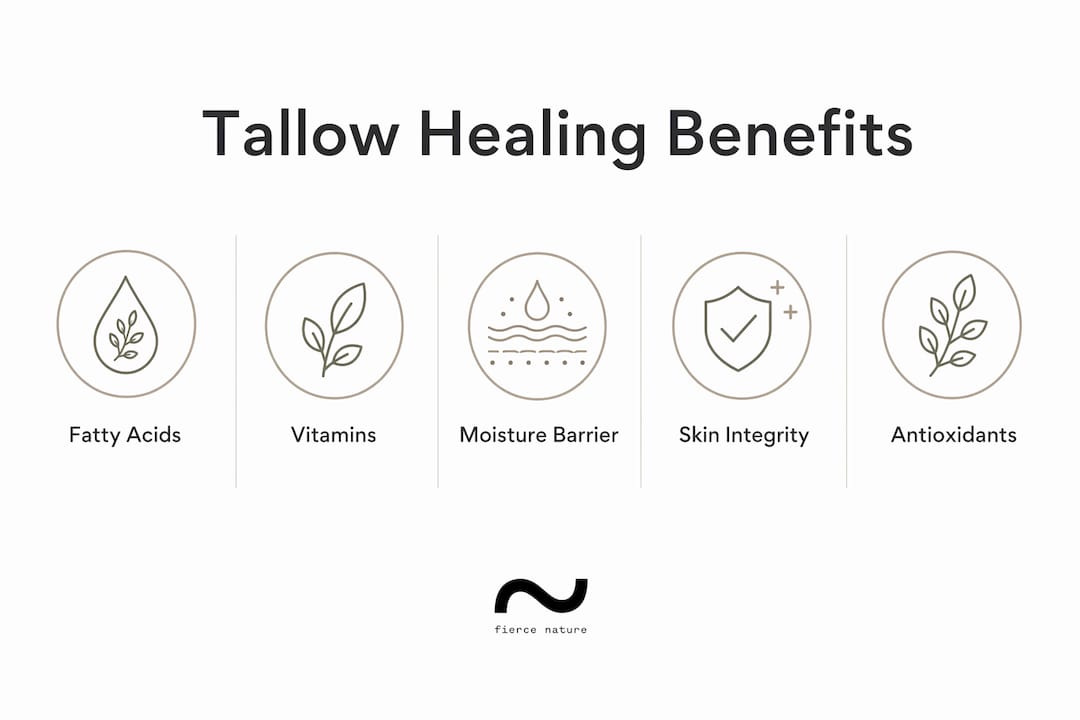
Tallow also carries a meaningful concentration of fat-soluble vitamins. These include vitamins A, D, E, K, and B-12, each of which plays a role in skin repair. Vitamin A supports cell turnover and the formation of new tissue. Vitamin E acts as an antioxidant, protecting fragile healing cells from oxidative damage. Vitamin D modulates the inflammatory response. Together, these nutrients create a genuinely restorative environment at the wound site.
| Nutrient or compound | Role in wound healing |
|---|---|
| Stearic acid | Supports skin barrier integrity and moisture retention |
| Linoleic acid | Reduces inflammation and redness around wound edges |
| Vitamin A | Promotes cell turnover and new tissue formation |
| Vitamin D | Modulates the inflammatory response |
| Vitamin E | Antioxidant protection for healing skin cells |
| Vitamin K | Supports healthy circulation and bruise resolution |
Tallow also acts as an occlusive wound barrier, creating a moist environment that is essential for efficient epithelial cell migration. Keeping a wound moist rather than dry is now a well-established principle in clinical wound care. Tallow achieved this naturally, without synthetic polymers or petroleum derivatives.
Pro Tip: When choosing a tallow product for skin nourishment, look for one that lists grass-fed beef tallow as the primary ingredient. Grass-fed sources tend to carry a higher concentration of fat-soluble vitamins than grain-fed alternatives.
The way tallow was prepared and applied changed significantly across centuries, but the core principle remained constant: purity mattered. Rancid fat could worsen wound irritation rather than soothe it, so careful rendering was essential for medicinal use. Ancient and medieval practitioners understood this, even without the language of oxidation or microbiology.
The evolution of tallow in wound treatment followed a clear progression:
Rendering for purity. Raw animal fat was slowly melted and strained to remove impurities, connective tissue, and water. This process extended shelf life and reduced the risk of rancidity. The cleaner the fat, the safer and more effective the resulting preparation.
Infusion with botanical medicines. Healers across Egypt, Greece, Rome, and medieval Europe steeped medicinal plants directly into warm tallow. Calendula, chamomile, and yarrow were common choices. The fat acted as an excellent carrier for these herbal compounds, prolonging active ingredient contact time on the wound surface better than lighter oils could achieve.
Application as wound dressings. Rendered tallow was applied directly to wounds, used to saturate cloth dressings, or formed into solid preparations resembling modern balms. Medieval healers developed tallow-soaked wicks that doubled as medical dressings, a dual-use approach that linked skincare and functional wound care in one material.
Use in athletic and military contexts. Roman gladiators and soldiers used tallow-based preparations both to protect skin before combat and to treat wounds afterwards. Greek athletes applied fat to skin before competition as a protective barrier. The same material served prevention and treatment.
Integration with ritual care. Across many cultures, the application of tallow to wounds was accompanied by ritual practices. This combination of physical and symbolic care delivered bioactive compounds in a moist environment, aligning with what modern clinical science now recognises as best practice for wound management.
The consistency of this approach across unconnected civilisations is striking. Egyptian, Greek, Roman, and medieval European healers all arrived at the same material through observation. That convergence is strong evidence that tallow’s healing properties are real and repeatable.
The modern scientific validation of tallow’s skin compatibility gives historical practice a firm foundation. Tallow is not simply a curiosity from the past. It is a material whose biological compatibility with human skin has now been confirmed by cosmetic dermatologists and skin scientists.
The contemporary relevance of traditional healing with tallow shows up in several practical areas:
Natural balms and wound healing products. Tallow-based balms are used today for dry skin, minor wounds, and post-procedure skin care. Their occlusive and vitamin-rich properties make them well suited to supporting the skin barrier during recovery.
Cosmetic-grade versus cooking-grade tallow. Consumers should prioritise cosmetic-grade, refined tallow for skin applications. Cooking-grade products may contain impurities or additives that are unsuitable for use on skin, particularly on compromised or healing skin.
Compatibility with sensitive skin. Because tallow’s fatty acid profile mirrors human sebum, it tends to be well tolerated by sensitive skin types. This makes it a practical choice for people who react to synthetic emollients or fragrance-heavy formulations.
Integration with modern skin care routines. Tallow works well alongside other natural ingredients. Pairing it with raw honey, beeswax, or plant-based botanicals creates preparations that address moisture, protection, and nourishment together. This mirrors the herb-infused tallow preparations that ancient healers developed through centuries of practice.
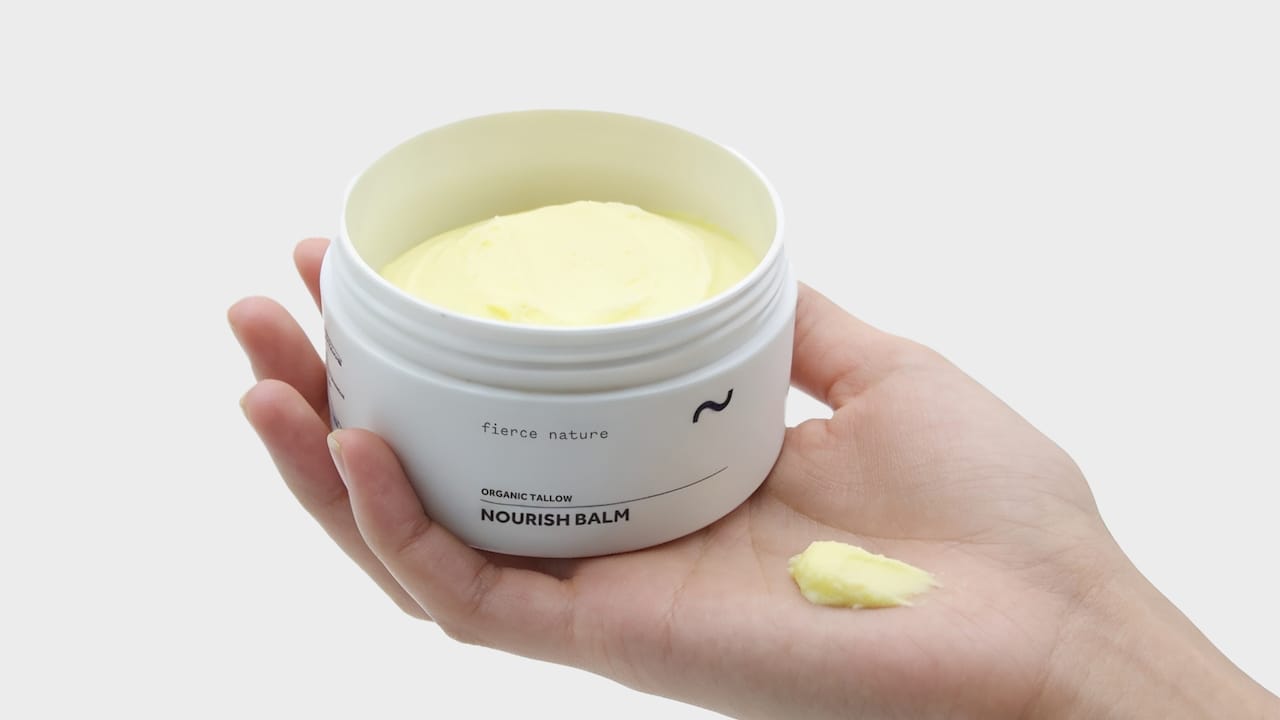
The key caution for modern use is sourcing. The quality of the tallow determines the quality of the result. Fierce Nature uses pure organic tallow as the foundation of its formulations, sourcing it carefully to preserve the fatty acid and vitamin profile that makes it genuinely restorative. You can read more about how tallow supports the skin barrier in this tallow balm benefits guide.
Tallow has been used for wound healing across thousands of years because its fatty acid profile and vitamin content closely match the skin’s own biology, making it a naturally effective barrier and repair agent.
| Point | Details |
|---|---|
| Ancient documentation | The Ebers Papyrus records tallow-based wound salves from approximately 1550 BCE, confirming its early medical use. |
| Biochemical compatibility | Tallow’s stearic and linoleic acids mirror human sebum, supporting moisture retention and reducing inflammation. |
| Occlusive healing environment | Tallow creates a moist barrier that enables epithelial cell migration, a principle now central to clinical wound care. |
| Rendering quality matters | Historically and today, pure, well-rendered tallow is essential. Rancid or impure fat can worsen skin irritation. |
| Modern application | Cosmetic-grade tallow in balms and bars remains a valid, science-supported choice for natural skin nourishment and wound support. |
We have spent years looking at what genuinely nourishes skin, and the answer keeps pointing back to the same place: the land. Tallow is not a trend. It is one of the oldest wound healing materials in recorded human history, and the reason it persisted for thousands of years is simple. It worked.
What strikes us most is how honest ancient healers were in their approach. They did not have laboratories, but they had observation and patience. They noticed that rendered cattle fat kept wounds moist, reduced swelling, and helped tissue close cleanly. They combined it with plants that enhanced its effects. They refined their rendering methods to improve purity. That is not superstition. That is empirical science conducted without the vocabulary.
We also think the modern conversation around tallow sometimes misses the point. The question is not whether tallow is fashionable. The question is whether it is compatible with human skin. The answer, confirmed by cosmetic dermatologists and supported by the biochemical record, is yes. Its fatty acids match our own. Its vitamins support repair. Its occlusive quality protects healing tissue.
At Fierce Nature, we do not use tallow because it is nostalgic. We use it because it is the most bioavailable, skin-compatible base we have found. Every product we make starts from that foundation, and the wound healing balm we formulate reflects exactly this thinking. Ancient wisdom, confirmed by modern science, crafted with care.
— Fierce Nature
Fierce Nature formulates every product with cosmetic-grade organic tallow as its base, honouring the same principles that made tallow a trusted wound healing material for thousands of years. The Multi-Use Tallow Bar delivers deep nourishment through a clean, unscented formula that works with your skin rather than against it. For those seeking targeted skin repair, the Luxe Face Balm combines tallow with complementary botanicals to support the skin barrier and encourage healthy cell renewal. All products are handmade in the UK, free from synthetic additives, and built on the same restorative logic that ancient healers understood long before modern cosmetics existed.
Tallow is rendered animal fat, most commonly from beef, that was historically used in wound healing because its fatty acid profile closely mirrors human sebum. This biological compatibility allowed it to create a moist, protective barrier that supported tissue repair and resisted infection.
The Ebers Papyrus, dating to approximately 1550 BCE, contains over 800 medical prescriptions including cattle fat salves for burns and wounds. The Edwin Smith Surgical Papyrus also records tallow as a carrier for wound dressings in ancient Egyptian medicine.
Tallow contains fat-soluble vitamins A, D, E, K, and B-12. Vitamin A supports cell turnover, vitamin E provides antioxidant protection, and vitamin D helps regulate the inflammatory response, all of which contribute to effective wound repair.
Yes. Board-certified cosmetic dermatologist Dr Michele Green confirms that tallow’s fatty acid profile enables effective moisture replenishment and anti-inflammatory benefits. Cosmetic-grade, refined tallow remains a valid choice for natural wound support and skin nourishment.
Cosmetic-grade tallow is refined specifically for skin application, with impurities and unsuitable additives removed. Cooking-grade tallow may contain residues that are inappropriate for use on skin, particularly on sensitive or healing tissue, and should be avoided in skincare preparations.